Last Updated: June 28, 2026 | Originally Published: April 28, 2025
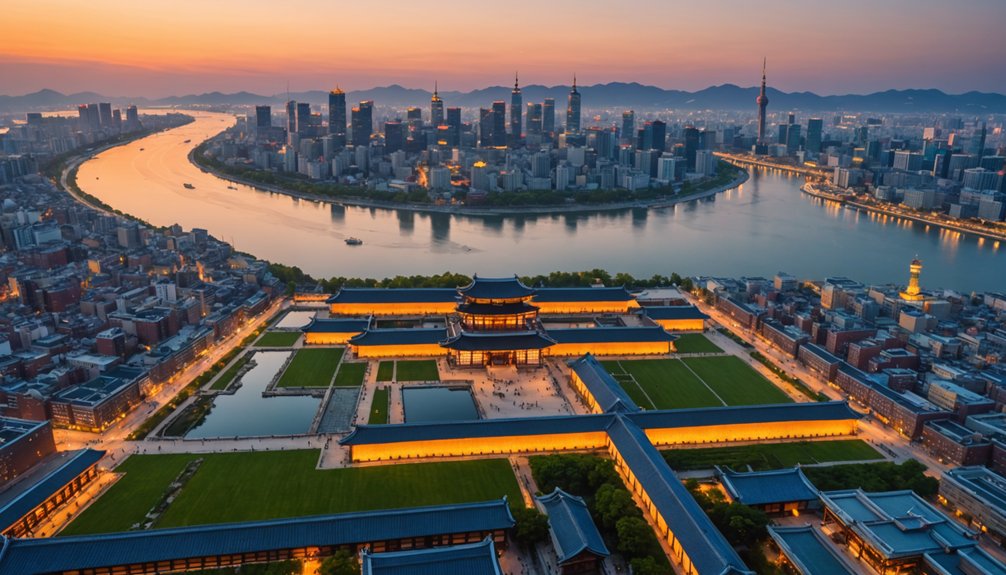
Start your 24 hours in Seoul at Gyeongbokgung Palace during the 10 AM guard ceremony, then grab some royal tteokbokki nearby. Hit the subway (avoid rush hour!) with a T-Money card to explore Changdeokgung’s Secret Garden by afternoon. Rent a free bike to cruise Hangang Park at sunset. End your day at Deoksugung, open until 9 PM. Wear a hanbok for free palace entry. The full Seoul experience awaits beyond these highlights.
Read our full South Korea Travel Guide 2026 for everything you need to plan your Korea trip.
Explorer Insights
- Visit Gyeongbokgung Palace before 10 AM for the guard ceremony, saving time by wearing a hanbok for free entry.
- Travel efficiently using a T-Money card during off-peak hours (10:30 AM-3 PM) to avoid crowds and maximize sightseeing time.
- Explore Changdeokgung’s Secret Garden in the afternoon, booking the 70-minute guided tour in advance.
- Experience Seoul’s street food culture by trying tteokbokki, gimbap, and hotteok for affordable meals between attractions.
- End your day at Deoksugung Palace, which remains open until 9 PM for enchanting night views.
4 Hours in Seoul{var1}
Whether you’re stuck on a layover or just breezing through, Seoul delivers serious bang for your time-strapped buck. The city isn’t messing around with its modern attractions.
Zip up Namsan Seoul Tower via cable car for jaw-dropping 360-degree views, or check out the futuristic curves of Dongdaemun Design Plaza. It’s wild stuff. Efficient public transportation makes it possible to reach most neighborhoods and attractions quickly and affordably.
Seoul’s skyline game is next-level – cable cars to cloud-piercing towers and buildings that look straight outta sci-fi.
For cultural experiences without the palace tour rigamarole, duck into Bukchon Hanok Village. Traditional Korean houses right in the middle of the concrete jungle. Weird, right? Remember to keep your voice down since this is a residential area where locals live their daily lives.
If you’ve got at least 8 hours to kill, hop on the AREX from Incheon and explore. Less time? The airport’s Cultural Street works too.
Seoul doesn’t care about your schedule. It impresses either way.
Seoul’s Historic Palaces{var1}
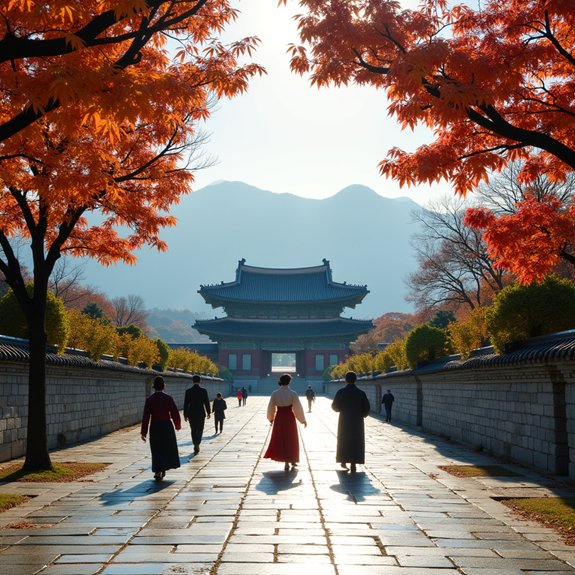
You’ll want to catch Seoul’s five royal palaces at sunset when they’re bathed in golden light – trust me, Gyeongbokgung’s massive grounds look even more impressive then.
Don’t miss the Secret Garden tour at Changdeokgung Palace, a UNESCO site where Korean royalty once strolled among 300-year-old trees and serene ponds.
After palace-hopping, grab some traditional tteokbokki from a nearby street vendor; nothing beats spicy rice cakes after a day of pretending you’re Joseon royalty. Gyeongbokgung Palace, centerpiece of Korean heritage, was originally constructed in 1395 and has survived centuries of destruction and restoration to remain a majestic symbol of the Joseon Dynasty. If you’re near Deoksugung Palace, take a stroll along the elegant stone-wall road that borders this unique downtown sanctuary.
Royal Palaces at Sunset
As the sun begins to set over Seoul’s ancient skyline, the city’s royal palaces transform from daytime tourist attractions to magical evening wonderlands.
It’s prime time for sunset photography, especially during that golden hour before darkness falls. Navigating the city in the evening is easy thanks to Seoul’s extensive public transit system, which allows quick access to these historic sites no matter where you start your journey.
Want night access? You’ve got options.
Gyeongbokgung offers seasonal night viewings in spring and fall, while Changdeokgung’s “Moonlight Tour” is worth every won of its 30,000 price tag. During these night viewings, you can explore areas like Gwanghwamun Gate and the stunning Gyeonghoeru Pavilion.
Seriously popular though – tickets vanish fast.
For spontaneous types, Deoksugung and Changgyeonggung stay open until 9 PM regularly.
No special booking needed. Just show up.
Pro tip: wear a hanbok.
Free entry at Gyeongbokgung, even when sold out. Yes, really.
Evening tours sell out lightning-fast.
Book way ahead. Or don’t. Your FOMO, not mine.
Savor Traditional Korean Tteokbokki
The humble tteokbokki you’re devouring from street vendors has a seriously royal pedigree.
Before becoming Seoul’s favorite street food, it graced royal tables during the Joseon Dynasty. Seriously. The original version—Gungjung Tteokbokki—wasn’t even spicy. Fancy soy sauce, beef, and pine nuts instead of that fiery red sauce you’re slurping down.
The tteokbokki history you’re tasting began centuries ago, first mentioned in a 19th-century cookbook. The earliest forms were part of important ritual ceremonies where rice cakes held cultural significance.
That gochujang version everyone knows? Only invented in 1953 when someone dropped rice cakes into the wrong dish. Happy accidents, right?
Today’s tteokbokki variations are endless. Creamy carbonara-style. Cheese-covered masterpieces. Seafood-packed bowls. Even back-to-basics royal court versions.
After visiting Gyeongbokgung, head to nearby Samcheong-dong for the good stuff. Your taste buds won’t regret it.
With the Yeongchumun western gate now open at Gyeongbokgung, exploring nearby hidden gems like Seochon Village is more convenient than ever, making it easy to dive into authentic flavors and local culture after your palace visit.
Secret Palace Garden Tours
Hidden behind Changdeokgung Palace walls lies Korea’s most breathtaking royal retreat – the Secret Garden.
Forget wandering freely—you’ll need a guided tour to see this UNESCO site. Non-negotiable rules here, folks.
Tours last about 70-90 minutes. You’ll walk. A lot. Sometimes on uneven terrain. Worth it though—you’re stepping where Joseon royals once escaped court drama. If you’re interested in staying in a similar traditional pension house, Jeonju offers a variety of exquisite hanok accommodations that give you a complete cultural experience.
The Secret Garden (also called Huwon or Biwon) costs extra—5,000 KRW for adults on top of your palace ticket. Originally designed as a private royal retreat, this 78-acre sanctuary showcases the perfect harmony between nature and architecture.
Book online or try your luck day-of. Each tour caps at 100 people.
What’ll you see? Pristine ponds, royal pavilions, and trees older than America.
The garden follows pungsu principles—Korean feng shui—blending nature with royal sophistication.
No Monday visits. They’re closed.
Cherry Blossom Season{var1}{context}
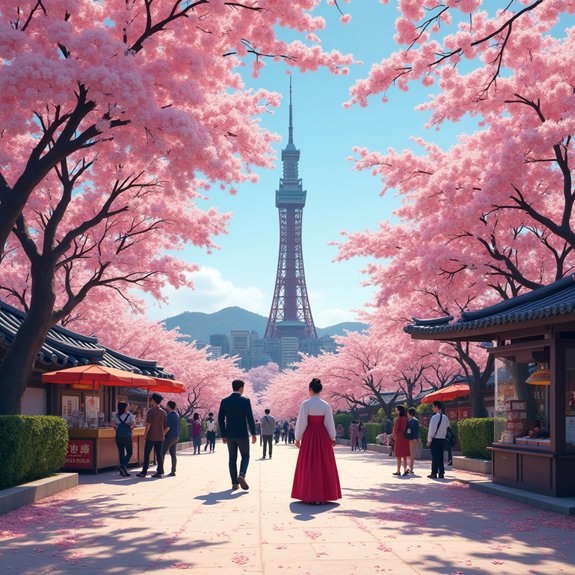
You’ll want to time your Seoul visit for early April to catch Yeouido Park’s spectacular “Pink Petal Paradise” with its 1,800 cherry trees lining a 1.7km path.
For even more top cherry blossom viewing spots in Korea, consider exploring Gyeongju’s Bomun Lake, Jinhae’s Romance Bridge, or Jeju Island’s early blossoms for a longer spring itinerary.
Don’t forget to check those rain forecasts—nothing kills blossom viewing like unexpected downpours.
Peak bloom for 2026 is expected April 4-10, perfect timing for the Yeouido Spring Flower Festival where you can enjoy night illuminations and ditch the insane weekend crowds.
The beauty of these blossoms is particularly special because the fleeting petals begin to fall shortly after reaching their full bloom.
Yeouido Pink Petal Paradise
Visiting Seoul in April? You’ve timed it perfectly for cherry blossom madness.
Yeouido’s 1.7km stretch explodes with over 1,800 Yoshino cherry trees, all 30-40 years old and showing off.
The Yeongdeungpo Yeouido Spring Flower Festival transforms the area behind the National Assembly Building.
Food stalls everywhere. Street performances. Artists sketching. Total chaos on weekends—but worth it.
Go early (like 9AM) or on weekdays. Trust me. For a completely different cherry blossom experience outside Seoul, consider Jeju Island’s Cherry Blossom Road, which offers a stunning canopy of pink blossoms best viewed from late March to early April.
Take Line 9 to National Assembly Station (Exit 6). It’s free to enter, which is nice.
Roads close during peak times, so forget driving.
Night viewing is actually better—they light up those trees like a pink Christmas. Stunning against the Han River backdrop.
When the wind blows, the falling blossoms create a magical effect that feels like pink floral rain throughout the park.
April Rain Forecasts Essential
While those cherry blossoms enchant, April’s weather brings drama of its own. You’ll want to pack that umbrella. Seoul averages 3 inches of april rainfall spread across 8 rainy days. Not constant downpours, thankfully.
The month starts drier (1.9 inches) but ends wetter (3.2 inches). Your chances of getting soaked increase from 17% to 24% through April. That’s life.
Good news for cherry blossoms? Light rain (around 5mm) typically won’t destroy your flower-viewing dreams. If you’re caught in a spring shower while exploring, knowing basic greetings and etiquette can help you navigate local comfort and courtesy.
Seoul’s 2026 bloom forecast: March 31 start, April 8 peak bloom. Perfect timing.
Watch for those odd mid-April cold snaps. And that “yellow dust” from Chinese deserts? Real thing. Annoying. April falls right in the middle of the yellow dust season that affects Seoul’s air quality from March to May.
Late April generally delivers that postcard-worthy spring weather you’re hoping for.
-Hour Palace-To-Market Route{var1}
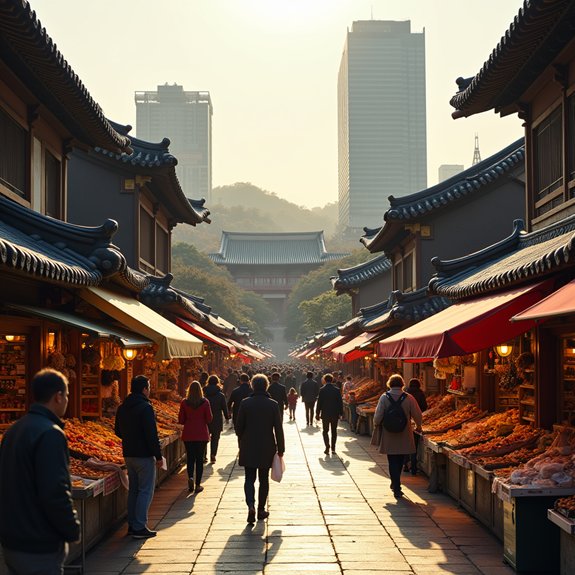
This 3-hour palace-to-market trek connects two Seoul essentials.
Start at Gyeongbokgung, Seoul’s largest palace. Built in 1395 – yeah, it’s old. Palace exploration costs ₩3,000, but free if you’re young, old, or wearing a hanbok (smart move).
Don’t miss the guard ceremony at 10am. Tuesday? Palace’s closed. Tough luck. Ferries connecting islands in the Seto Inland Sea in Japan demonstrate how history, tradition, and local life blend at key cultural destinations.
From Gyeongbokgung, you’ve got options. Walk 35 minutes, subway 20, or taxi 5. Feeling fancy? Stop at Insadong or Bukchon Hanok Village midway – ancient houses squeezed between skyscrapers. Quite the contrast.
End at Gwangjang Market for legit Korean market cuisine. It’s been feeding people since 1905. When you arrive at the market, be prepared to spend about ₩10,000 for lunch while sampling the diverse Korean street foods on offer.
Try bindaetteok or those addictive mayak kimbap rolls. They’re called “drug kimbap” for a reason. You’ll be hooked.
Subway Map Essential{var1}
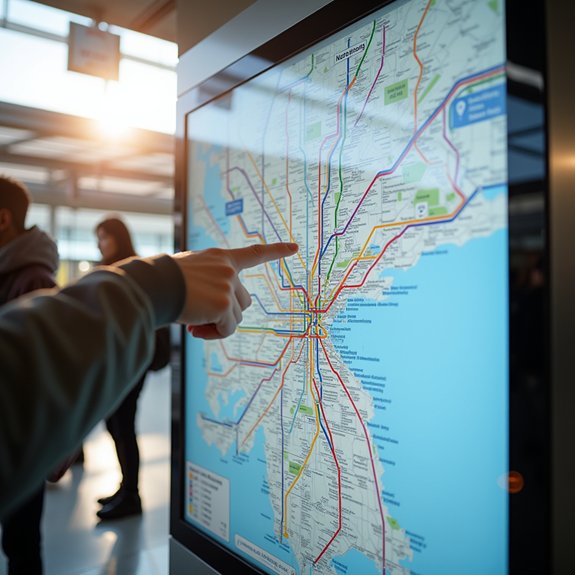
Grab a T-Money card on day one—saves you cash, tracks transfers, and works on buses too.
You’ll thank yourself for avoiding the subway between 7:30-9am and 5:30-7pm, when Seoul’s army of commuters turns trains into sardine cans.
The gorgeous Hangang riverside paths connect many major stations, perfect for when you’re sick of being underground and need some actual fresh air.
Seoul’s subway system is among the most extensive networks in the world, boasting over 330km of track and high automation for efficient and affordable travel.
With the distance-based fare system, longer trips cost more, starting at 1,400 won for journeys under 10km.
T-Money Card Benefits{var1}
For seamless travel around Seoul, a T-Money card is non-negotiable. This little plastic miracle saves you money and hassle. You’ll get ₩100 off every ride, plus transfer discounts between subway lines and buses. No more fumbling with cash or single tickets. Just tap and go.
The T-Money advantages extend beyond transit. Card usability is surprisingly extensive:
- Swipe it at convenience stores for that late-night ramen fix when you’re too exhausted to count won.
- Pay for taxis displaying the T-Money logo after a night out when math becomes challenging.
- Use it at subway station lockers when your shopping addiction exceeds your carrying capacity.
You can supplement your T-Money convenience with offline navigation apps to find your way when Wi-Fi is scarce or to check subway and bus routes in real time.
Purchase a T-Money card for as little as 3,000 KRW at any convenience store throughout the city.
Don’t forget to tap when exiting. Seriously. You’ll pay extra if you don’t. The card never expires, so keep it for your next trip!
Seoul Traffic Rush Hours{var1}
Two critical timeslots will make or break your Seoul adventure: 7-9 AM and 6-8 PM weekdays.
That’s when the city’s workforce surges through the transit system like salmon swimming upstream. Not pretty.
The subway congestion reaches absurd levels—some lines hit 252% capacity. Yes, you read that right.
Line 2 and Line 7? Notorious offenders. Imagine 6.6 people crammed into one square meter. Personal space? Gone. In such crowded conditions, remember that non-verbal communication like nodding or using polite gestures is key, as shouting or raising your voice is considered rude in Korea.
Your best bet? Travel between 10:30 AM and 3 PM, or after 8:30 PM. Trust me.
Business districts like Gangnam and major transfer points get especially chaotic.
You’ll want Naver Map or KakaoMap—not Google—for real-time navigation.
They’ll even tell you which subway car to board for the fastest exit. Genius during rush hour madness.
The extensive network with 23 lines and 768 stations provides countless options to navigate around the crowded times.
Hangang Riverside Paths{var1}
Stretching along Seoul’s mighty Hangang River, the riverside paths connect 12 distinct parks that form an urban sanctuary covering a whopping 40 square kilometers.
Originally built in the 1980s, these parks now attract nearly 60 million visitors annually. Not too shabby for some glorified riverbanks. For visitors navigating the area, multilingual travel guides and digital tools can help with reading Korean signs and finding their way easily.
When visiting, you’ve got options. Lots of them.
- Rent a bike – Well-maintained paths connect all parks and even satellite cities. A mere 3,000 won per hour gets you wheels. Just bring ID.
- Try water sports – From kayaking to windsurfing, the river’s your playground. Duck boats for the romantics.
- Picnic like a local – Order chimaek (chicken and beer) delivery right to your spot. Absolutely brilliant system. Be sure to check out Banpo Hangang Riverside Park, situated between the Banpo and Hannam bridges on the south bank of the river.
Subway access points vary. Yeouido and Ttukseom parks? Direct connections. Others require a bit of a trek.
Elderly Travelers’ Restroom Locations{var1}
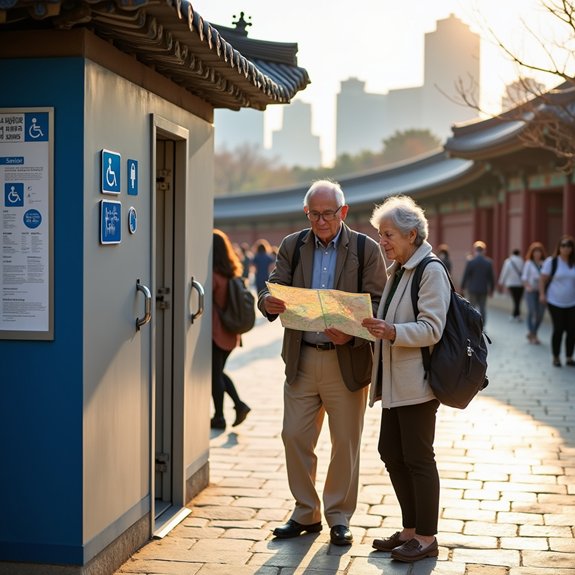
Finding restrooms in Seoul won’t be a headache for elderly travelers. The city’s packed with clean, accessible options everywhere you turn. Subway stations? Life savers. Most have accessible facilities specifically designed for those with mobility issues. Perfect for when nature calls mid-adventure.
Subway systems in Seoul and Busan make commuting especially convenient for elderly travelers, as most stations include accessible toilets and elevators.
| Location | Accessibility Features |
|---|---|
| Subway Stations | Elevators, accessible toilets |
| Shopping Malls | Modern facilities, spacious stalls |
| Tourist Sites | Single-user accessible rooms |
| Han River Parks | Renovated restrooms, might need wipes |
Tourist attractions like Gyeongbokgung have dedicated accessible restrooms, though watch for those unpaved paths. Honestly, department stores offer the cleanest options. Fancy, even. Seoul’s commitment to public sanitation was significantly influenced by historical events like the Olympics. Some older stations might lack elevators, so plan accordingly. Restroom accessibility for elderly visitors is surprisingly good. Seoul’s serious about elderly facilities. Bring tissues just in case.
Honor Elders at Banquets{var1}
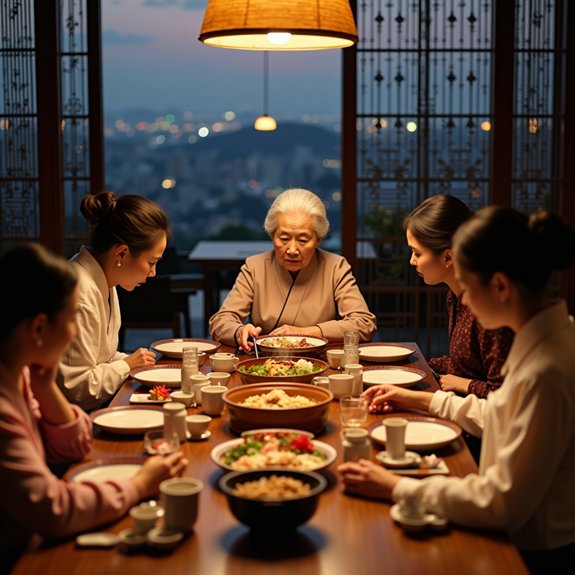
Respecting elders sits at the heart of Korean culture, especially during celebratory banquets where age-based hierarchy defines every interaction.
Whether you’re attending a Hwangap (60th birthday) or Gohuiyeon (70th birthday) celebration, banquet etiquette demands attention to detail. Elder respect isn’t optional—it’s essential. Hwangap marks the completion of a 60-year lunar cycle, a significant milestone in Korean tradition.
- Wait your turn – Never start eating before the eldest person picks up their utensils. Just sit there. Stare at your food if you must. As with the etiquette at Seoul’s street food markets, demonstrating patience and deference is a mark of true respect.
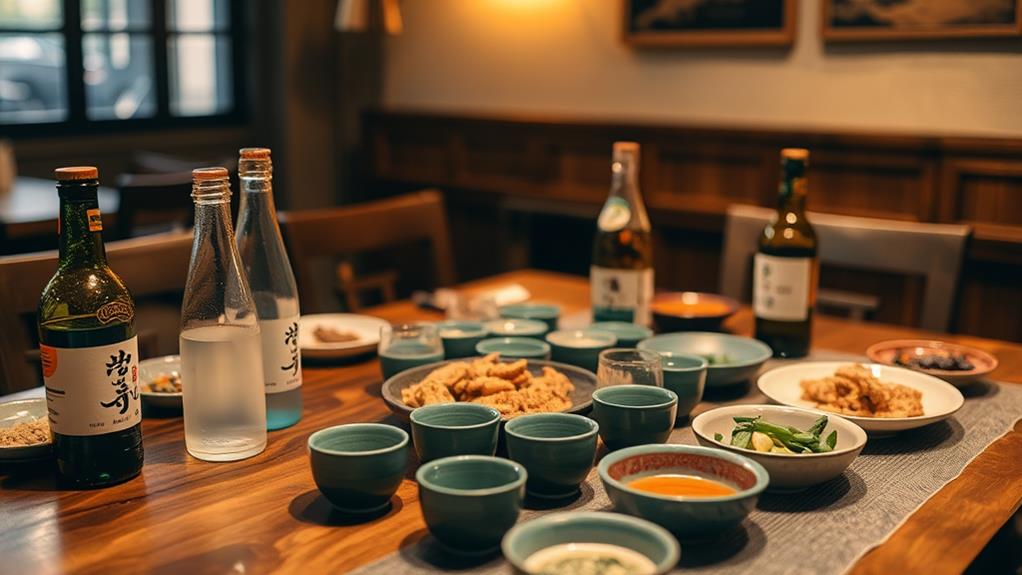
- Two-handed service – Pour drinks for elders using both hands and receive items the same way. One-handed? You might as well slap them.
- Toast properly – When offering drinks to the honoree, consider kneeling. Shows respect. They raised kids in harder times than you’ll ever know.
Medical Services Near Palaces{var1}
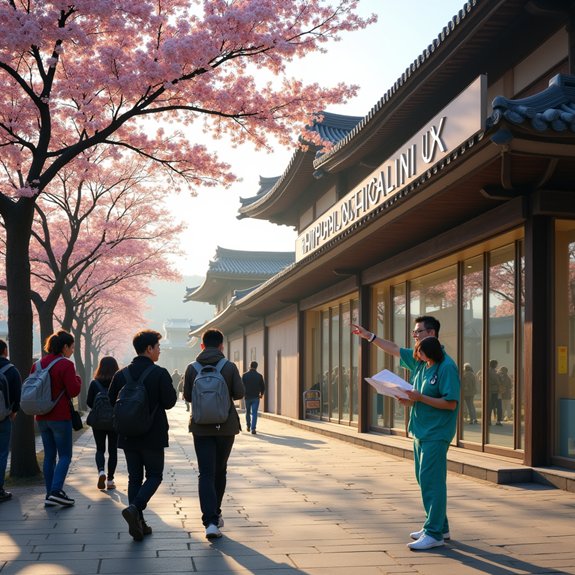
While exploring Seoul’s magnificent palaces, you’ll inevitably need medical care at some point—whether it’s blisters from excessive walking or that street food revenge.
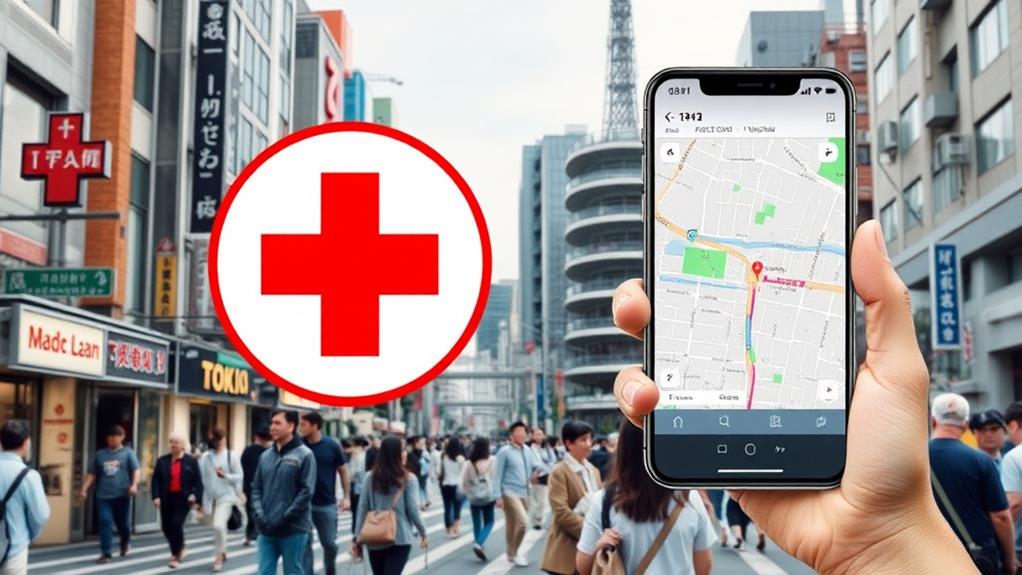
Seoul National University Hospital sits near Changgyeonggung Palace with multilingual staff. Perfect when your stomach rebels. Consider carrying address cards with your destination written in Korean or Japanese, a tip borrowed from navigating taxis in Japan, to help communicate your needs efficiently in case of language barriers.
Medical salvation awaits at Seoul National University Hospital, where multilingual staff will rescue your insides from culinary adventures gone wrong.
Kangbuk Samsung Hospital? Right by Gyeongbokgung with 700 beds. Let’s hope you don’t need one.
For international patient services, you’re covered. Most major hospitals have dedicated centers with language support. No awkward charades necessary.
Need something specific? There’s Integrative Mental Health Seoul for your palace-induced existential crisis, or try Sijoong for traditional Korean medicine—acupuncture might fix those tired legs.
Hospital accessibility is excellent. All are near subway stations. Severance Hospital is approximately 50 minutes from Incheon International Airport if you need care right after arrival. Your medical emergency won’t ruin your cultural immersion. Unless it does.
Budget-Friendly Seoul Markets{var1}
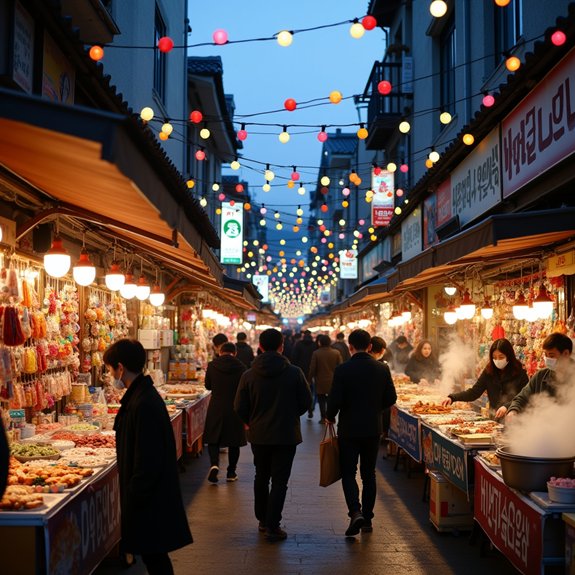
You’ll spend around 60,000-90,000 won daily in Seoul, depending on how much street food you stuff in your face at markets like Namdaemun or Gwangjang. For a taste of Tokyo, try budget-friendly ramen where hearty bowls can be found for 800-1,200 yen, often with English menus and meal ticket machines outside the shop. Museum passes with student discounts cut costs dramatically—just flash that student ID and watch prices drop by 30-50%. Seoul’s underground shopping centers offer the best refuge when it rains, plus dirt-cheap fashion that won’t empty your wallet. Dongdaemun Market is especially worth visiting with its impressive collection of 26 shopping malls and thousands of specialty shops selling everything from textiles to electronics.
Average Daily Costs in Won{var1}
Budgeting for Seoul’s markets won’t break the bank, but it helps to know what you’re getting into. Your average daily expenses will vary wildly depending on how fancy you want to get.
Budget travelers can expect around ₩68,016 ($47 USD) daily, while mid-range folks spend ₩172,849-₩178,547 ($118-$122 USD). Comfortable mid-range travelers typically enjoy better accommodation options without sacrificing experiences. Market food is absurdly affordable.
- Street food hits the sweet spot – gimbap for ₩1,500, tteokbokki between ₩2,500-₩4,000, and hotteok for just ₩1,000 in smaller markets.
- Gwangjang Market’s famous stalls serve full meals like bibimbap (₩6,000-₩7,000) or bindaetteok (₩5,000).
- Namdaemun offers dumplings for ₩5,000-₩7,000 and crazy-cheap clothing (tees under $5).
Sticking to public transportation, especially the subway, is a proven way to keep your daily costs down—single subway rides start at ₩1,350. Done.
Student Discount Museum Passes{var1}
For culture vultures on a budget, Seoul’s museums offer serious student savings that’ll stretch your won further.
The National Museum of Modern and Contemporary Art (MMCA) is a total no-brainer—free entry with your undergraduate ID. No nationality restrictions. Sweet. For travelers relying on digital tools, translation apps for South Korea can make navigating museum information and signage much easier.
Student eligibility is pretty straightforward. Under 24? You’re in for free anyway.
Bringing friends? Tough luck—COVID’s limited bookings to just two tickets per ID. Museum access has gotten tricky for groups lately.
The National Folk Museum is another freebie, though you’ll still pay to enter Gyeongbokgung Palace to reach it. Always present your student ID when purchasing tickets to verify your status and access these discounts.
No parking there, by the way.
ICOM cardholders get the same perks as students.
The kids’ museum requires advance booking—Korean language only. Deal with it.
Frequently Asked Questions
What Is the Best Currency Exchange Option in Seoul?
For the best currency exchange in Seoul, hit up Myeongdong Embassy Exchange or Jeil Exchange Center.
They’ll give you competitive exchange rates without gouging you. Local banks work too, but their rates aren’t always stellar.
WOW Exchange machines are perfect if you’re in a hurry – no lines, just cash. Money Box locations are solid options.
Skip the airport exchanges unless you’re desperate.
Are Credit Cards Widely Accepted at Seoul Markets?
Like a shy date, Seoul’s markets are slowly warming up to credit card usage.
Traditional markets still mostly want cash—old habits die hard. But things are changing! Since March 2026, over 300 Myeong-dong street vendors started accepting cards.
Tourist areas? You’re good. Hidden gems and smaller stalls? Bring won.
Markets are in flux, but cash remains king for authentic market experiences.
How Safe Is Seoul for Solo Female Travelers?
Seoul is incredibly safe for solo female travelers. Period. The crime rate is super low, and public areas are monitored with CCTVs everywhere.
Safety tips? Basic stuff works. Women-only subway cars run at night. The city’s safety index is 75 – pretty impressive.
Korean culture respects personal space, so you’ll rarely feel uncomfortable. Solo travel here is straightforward. Most areas stay safe after dark, especially tourist spots like Myeongdong.
What Are Seoul’s Tipping Customs for Tourists?
Forget what you know about tipping. Seoul doesn’t do it. Period. Restaurants, bars, taxis—tips aren’t expected and can actually offend people.
Service charges are typically included in your bill anyway. No need to slip the hotel staff extra cash or frantically calculate percentages. Locals might even refuse your money.
Just say “gamsahamnida” instead. A bow works too. Trust me, it’s invigorating not worrying about tipping etiquette for once.
Can I Use Translation Apps Effectively in Seoul?
Translation apps are a traveler’s best friend in Seoul – they’ll save your bacon when you’re lost!
Popular options like Papago and Google Translate offer essential translation app features like camera translation, voice capabilities, and conversation modes. They work great for basics, not perfect for slang.
Internet can be spotty sometimes. Still, these language barrier solutions make traversing Seoul much easier. Just download offline packs before you go. Boom. Problem solved.
Conclusion
You’ve just scratched Seoul’s surface. Twenty-four hours isn’t enough—not even close. The palaces, markets, and cherry blossoms deserve days, not hours. But hey, sometimes a taste is all you need. The city pulses 24/7, impossibly ancient and ridiculously modern at once. Grab that subway map. Find those restrooms. Honor the elders. Seoul waits for no one.
More on Transportation:

Written by Sam Konneh
Sam Konneh is an AI strategist and digital marketer based in Seoul, South Korea. With years spent living, working, and exploring across Korea, Japan, and China, he shares firsthand insights into East Asia's cultures, hidden gems, and everyday life. A graduate of Inha University and KDI Graduate School, Sam combines data-driven expertise with on-the-ground experience. His journey also includes studying in Malaysia and traveling through Southeast Asia. Through practical tips, local stories, and travel guides, he helps fellow explorers discover both the celebrated highlights and the lesser-known corners of East Asia.