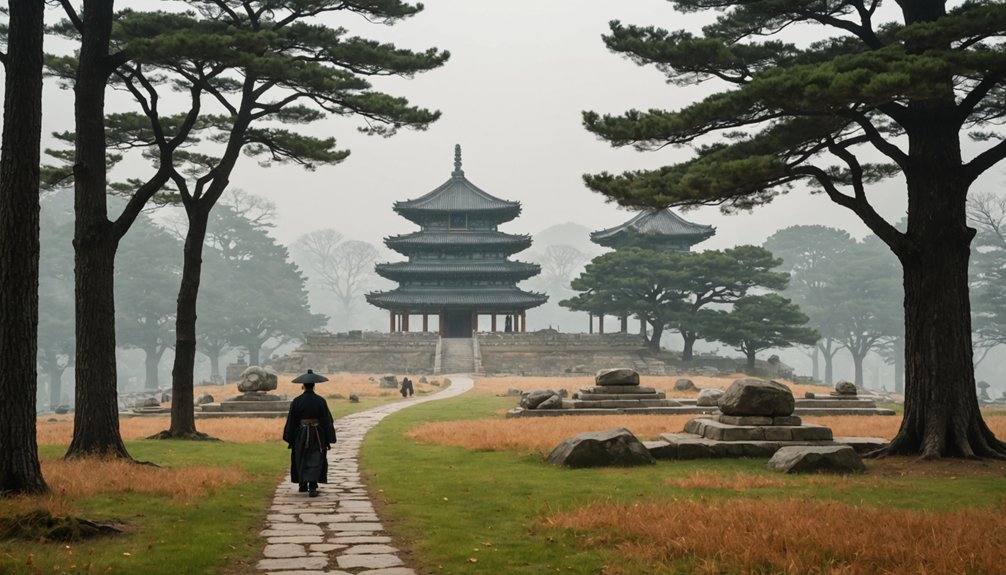
Last Updated: June 28, 2026 | Originally Published: February 20, 2026
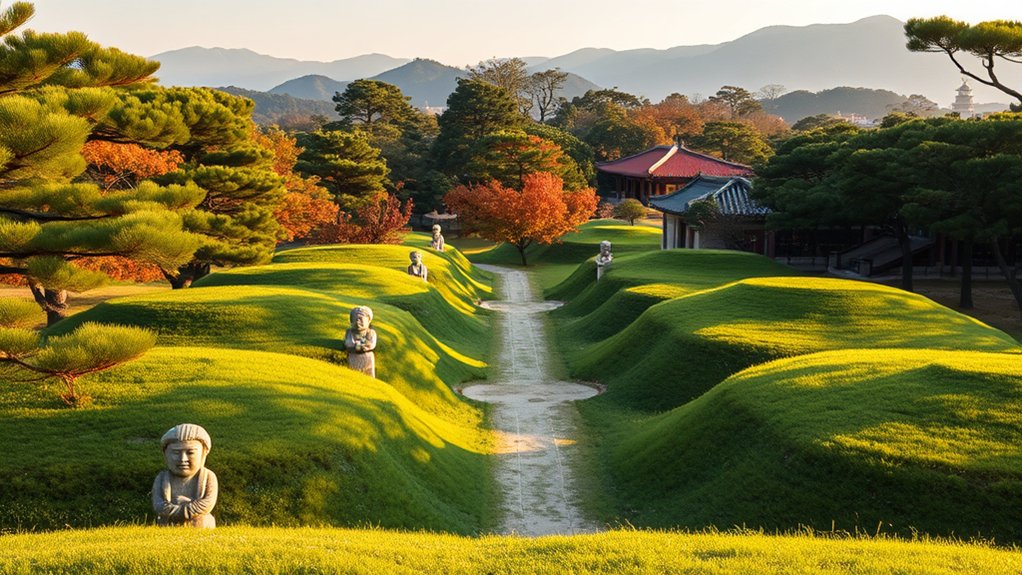
You’ll find forty royal tombs from Korea’s Joseon Dynasty scattered within 40 kilometers of Seoul, each one a UNESCO World Heritage masterpiece that tells the story of 500 years of Korean burial traditions. These sacred grounds blend ancient engineering with strict Confucian principles – think 109 layers of fabric wrapping royal corpses and stone tigers guarding the gates. From soil-cement foundations to elaborate ceremonies, these tombs aren’t just burial sites – they’re windows into Korea’s royal past.
Read our full South Korea Travel Guide 2026 for everything you need to plan your Korea trip.
Explorer Insights
- 40 royal tombs from the Joseon Dynasty are located within 40km of Seoul and received UNESCO World Heritage status in 2009.
- The tombs feature unique architectural elements, including soil-cement foundations, waterproof stone walls, and precisely aligned chambers.
- Visitors can witness traditional ceremonies and ancestral worship rituals still actively performed at these sacred burial sites.
- Each tomb follows strict geomantic principles with Hongsalmun gates marking the transition between mundane and sacred spaces.
- September and October offer the best visiting conditions, with minimal rain and opportunities to participate in seasonal festivals.
Tour Ancient Korean Tombs
- T-shaped shrines mark ceremonial spaces where ancient rituals took place.
- Burial mounds face south toward water, with protective hills behind them.
- Guard houses and royal kitchens show these weren’t just graves – they were complexes.
- Stone statues and steles (those tall commemorative stones) line the sacred pathways.
- The layout principles of these royal tombs mirror those found in Changdeokgung Palace, which was designed to embrace the natural topography following traditional Korean principles.
- Each tomb complex features a distinctive burial mound surrounded by stone statues and protective structures
- Wooden shrines and royal kitchens stand as evidence of continuous ancestral worship
- Strategic placement follows geomantic principles – because location matters, even in death
- Guard houses and ceremonial buildings create a mini-city dedicated to honoring royal ancestors
- T-shaped wooden shrines and ceremonial kitchens mark each royal tomb site
- Burial mounds face south toward water, with protective hills behind
- Annual rituals blend Confucian ceremonies with shamanic elements
- Stone statues and longer spirit paths distinguish kings’ tombs from those of their consorts
- Pack a sturdy tripod – those 27-second exposures won’t shoot themselves
- Hit Daereungwon Complex early for that iconic single blossom tree shot
- Dodge the crowds by shooting on weekdays (trust me, tourists aren’t your friend)
- Keep your aperture small (f/8-f/16) for sharp tomb-to-sky detail
- Premium access to off-limits palace sections ($500+ archaeologist-led tours)
- Timed entry for ideal sunset reflections on Wolji Pond
- Sound equipment provided for clear commentary in crowded spots
- Traditional Hanbok rentals available for authentic photo sessions
- Digital navigation tools showing tomb layouts and construction techniques
- Touch-screen displays revealing burial customs and ceremonial practices
- Interactive models demonstrating architectural features and feng shui principles
- Virtual reconstructions of state funeral processions and rituals
- SUDAM offers traditional Korean food, but BBQ? That’s unclear
- Buenos Aires Wine & Steak does grilling, but it’s Argentinian (plot twist!)
- Caffe Bene serves coffee. Not exactly what you’re craving
- Handmade hanji paper shops, where 90% of Seoul’s traditional paper crafts are sold
- Historic tea houses like Kyung-in Art Gallery, serving traditional Korean teas since 1976
- Antique stores packed with Joseon-era treasures (40% of Korea’s antique shops are here)
- Ssamziegil complex for contemporary artisan workshops and unique souvenirs
- Well-maintained walking paths circle the tombs, giving you different angles to appreciate the stone carvings and architectural details.
- Strategic viewing platforms are positioned to showcase the best feng shui elements and natural landscapes.
- Museums and interpretive centers near the viewing areas provide close-up looks at replica artifacts.
- Guided tours enhance your experience with historical context, even if you’re kept at a distance.
- Most viewing areas are shoes-on zones, especially photo spots like Daereungwon
- You’ll need comfortable walking shoes for those hiking trails around the tombs
- Indoor areas follow typical Korean customs – watch what locals do
- No reported shoe theft issues here (unlike some urban temples – thank goodness!)
- Show up at 9am sharp – you’ll beat the tour groups and have time for a peaceful breakfast in Insa-dong
- Visit during winter months (December-February) when crowds thin out
- Skip Tuesdays entirely – place is closed anyway
- Plan around cherry blossom season unless you enjoy shuffling through selfie sticks
- Each tomb faces south toward water (because apparently royal spirits prefer a water view)
- Stone figures of military officers, civil officials, and animals guard the tombs 24/7
- Ceremonial areas include separate buildings for ancestor worship rituals
- Most tombs sit backed against hills, following traditional pungsu principles for maximum spiritual protection
The three main sections of tomb complexes include areas around Jeongjagak, spaces past the gate, and the sacred burial grounds.
Ancient Tomb Construction Methods
Peering into an ancient Korean tomb reveals construction methods so clever they’d make modern engineers jealous.
You’ll find soil cement strengthening soft ground beneath massive burial mounds – yeah, they thought of everything. These weren’t simple holes in the ground.
The ancient builders coated stone walls with clay, then added leaves and branches for waterproofing. Smart, right? They discovered impressive ways to transport heavy materials, using wooden lumber traces found at excavation sites.
Inside, you’ll discover insanely well-engineered ceilings supporting tons of weight. No shortcuts here.
Square chambers with perfectly aligned corridors showcase their precision, similar to how Google Maps helps modern travelers navigate Japan’s complex transit systems.
The higher the deceased’s rank, the fancier their digs. Elite tombs featured stone platforms for head, shoulder, and foot rests. Talk about eternal comfort!
They even solved the entrance problem with paired stone slabs and doorjambs. Ancient ingenuity at its finest.
Sacred Burial Ground Rules
When you step onto these sacred burial grounds, you’re not just walking through another tourist trap – you’re entering a domain where geomancy rules supreme.
These aren’t your average resting places. Each tomb follows strict placement rules: mountain backdrop, stream in front. Perfect feng shui, ancient style. The tombs were built over five centuries long, from 1408 to 1966. Sites like these are more accessible than ever thanks to Korea’s extensive domestic flight network, which lets travelers reach key historical regions across the country quickly and comfortably.
You can’t just wander anywhere you please. There’s a method here. The hongsalmun gates mark your shift from mundane to sacred ground.
Ancient burial rules were dead serious about this stuff – pun intended. Tiger and sheep statues guard the upper sections, while horses and military figures keep watch below.
Access? Highly restricted. Even today, these sites maintain their sacred atmosphere through continued ceremonial use.
Think of it as the world’s longest-running show of respect – five centuries and counting.
UNESCO Royal Burial Grounds
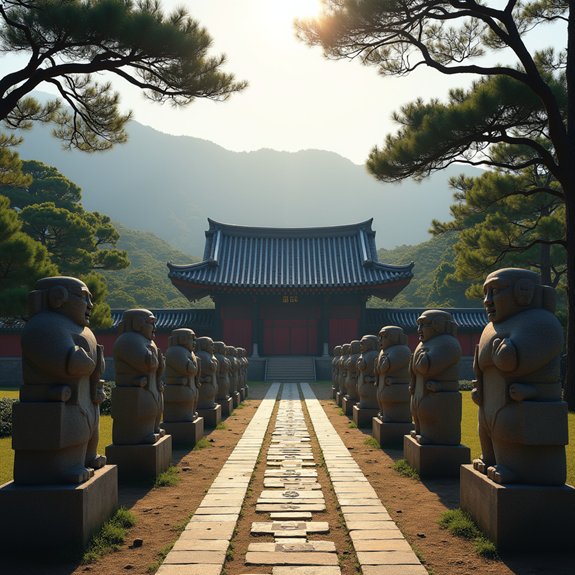
Since earning UNESCO World Heritage status in 2009, these royal burial grounds have become a jaw-dropping showcase of Korea’s 5,000-year burial tradition. These aren’t your average tombs – they’re masterpieces of Korean burial architecture, following strict “baesung imsu” principles. Hills behind, water in front. Perfect feng shui, ancient style. Regular state rituals continue to be performed at these sacred burial grounds. Visitors can easily access these sites using China’s extensive high-speed rail network that connects major cities across the country.
| Feature | Location | Purpose |
|---|---|---|
| T-shaped Shrine | Ceremonial Area | Ancestral Worship |
| Stone Guardians | Tomb Perimeter | Spiritual Protection |
| Red-spiked Gates | Entrance | Royal Authority |
You’ll find 40 of these royal tombs within 40km of Seoul, each managed by South Korea’s Cultural Heritage Administration. They’re living proof of how the Joseon dynasty handled their dead – with serious style and strict hierarchy. Five centuries of funeral traditions, all wrapped up in one stunning UNESCO package.
UNESCO-Listed Joseon Dynasty Tombs
When you’re exploring Seoul’s historic sites, you’ll find these royal tombs aren’t your average burial grounds – they’re architectural masterpieces that scream power and tradition.
The Joseon Dynasty went all out with their final resting places, creating elaborate complexes that perfectly blend Korean design with strict Confucian principles. These UNESCO-listed sites showcase burial traditions that lasted over 500 years, and let’s be honest, they really knew how to send off their royals in style. Visitors can enjoy easy access from Seoul, with a quick trip to Cheongnyangni station followed by a short bus ride. If you’re looking for more unique cultural experiences in South Korea, the Boryeong Mud Festival held annually in July offers a completely different immersion into Korean culture.
Royal Architecture and Design
As you stroll through Seoul’s outskirts today, you’ll find royal tombs that put modern cemeteries to shame. These aren’t your average burial grounds – they’re masterpieces of tomb symbolism and architectural harmony.
Every site was strategically chosen, with hills protecting the back and water views to the south. Pretty sweet real estate, even for dead royalty.
The layout’s genius lies in its three-part design: burial area, ceremonial zone, and entrance.
And talk about security – these places came equipped with red-spiked gates and stone guardians. No grave robbers welcome here.
The whole setup follows Confucian protocols while working with the natural landscape. Unlike their rigid Chinese counterparts, these tombs flex with the terrain’s natural flow. The forty royal graves are spread across eighteen different locations.
Smart design meets spiritual feng shui, Korean style.
Similar attention to harmony with nature can be found in Shanghai Jiao Tong University’s engineering campus, where modern facilities blend with traditional Chinese garden elements.
Burial Rituals and Traditions
While modern burials might involve a fancy casket and some flowers, Joseon Dynasty royals took death prep to a whole new level. The historical significance of these tombs is mind-blowing – we’re talking 19 layers of wrapping on day three, then bam! Ninety more layers on day five. You can’t make this stuff up.
These royal customs weren’t just about wrapping bodies like ancient mummies. They’d spend up to seven months getting everything perfect. A cotton ball test between the king’s upper lip and nose was the official way to confirm death.
The coffins? Decorated with celestial animals and Big Dipper symbols. Location was everything – hills in the back, water in the front, and definitely within 40km of Seoul. Talk about high maintenance!
Even after burial, the tombs needed constant attention. Five thousand workers to build one tomb? That’s what we call job security in ancient Korea.
Much like China’s Forbidden City with its imperial ceremonies and elaborate protocols, these Korean royal tombs reflected the divine authority and cosmic significance attributed to East Asian monarchs.
Royal Tombs: Sacred Burial Grounds
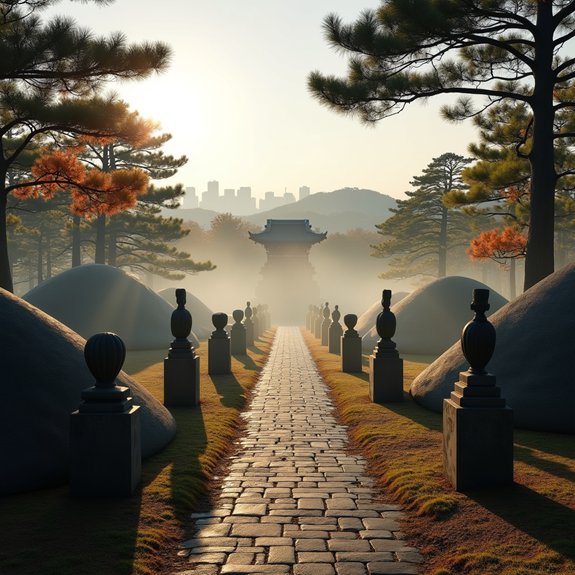
When you’re standing at these sacred Joseon Dynasty tombs near Seoul, you’ll quickly notice they weren’t exactly going for subtle – these are full-on displays of royal power and ancestral worship.
The burial grounds follow strict feng shui principles, with elaborate stone carvings and ceremonial buildings that’ll make your local cemetery look like a parking lot. Located in the bustling Gangnam district, these burial sites provide a peaceful natural escape from urban life. Even today, these sites remain active places of worship where traditional ceremonies continue, complete with food offerings and classical Korean music. The area is also easily accessible thanks to the high-speed KTX train, which connects major cities and enhances travel efficiency across South Korea.
Ancient Burial Site Practices
Behind every great Korean royal tomb lies centuries of meticulous planning, ancient wisdom, and a whole lot of *pungsu*.
You’ll find these aren’t just holes in the ground – they’re masterpieces of burial ceremonies and tomb symbolism that’ll make your local cemetery look like child’s play.
Want to know what makes these places special? They’re built according to strict Confucian principles, with every stone statue and ceremonial building placed just so.
From the 15th to early 20th century, the Joseon Dynasty didn’t mess around when it came to burying their royals. Each tomb had to be perfectly positioned – not too close to other tombs, easy to visit, and smack in the middle of what they considered good feng shui.
No pressure, right?
Similar to traditional Hanok houses, these royal tombs were constructed using natural materials that harmonized with the surrounding landscape.
The entire construction process was carefully documented in Uigwe and Neungji for future generations to reference.
Sacred Royal Burial Rituals
Before a Joseon king could rest in peace, they’d to endure one seriously complex burial ritual. You’d think being dead was the hard part – but no.
First, they’d wrap the royal corpse in 19 layers of fabric. Not enough? Let’s add 90 more layers just to be sure. Talk about overdressing.
The whole process took up to seven months, with 5,000 workers building elaborate tomb sites within 40km of Seoul. Each location had to follow strict feng shui principles: hills for protection, southern exposure, and water views. Pretty picky for someone who’s deceased. A shaman performed exorcisms at each royal burial site to ensure the soul’s peaceful transition to the afterlife.
For those seeking a different spiritual experience, Korea offers numerous templestay programs where visitors can participate in Buddhist meditation and ceremonies across the country.
Today, these sacred offerings and ancestral lineage traditions continue. You’ll find annual rites performed with ritual music and dance, though urban sprawl has eaten away at many original tomb sites. Some are down to just 20% of their former glory.
Tomb Architecture and Design
The architecture of these royal tombs isn’t just fancy dirt piles – it’s a masterclass in ancient Korean engineering. You’ll find stone chambers, roofed passageways, and massive earthen mounds that’ve stood the test of time. Pretty impressive, right?
The funerary architecture screams status – literally. Every design element, from the entrance features to burial platforms, shows off who’s who in the royal pecking order. Think stone slabs with fancy headrests and shoulder-rests. Just as Japanese island ferries connect remote destinations to the mainland, the layout of these tombs links royal ancestors to the living landscape, emphasizing their enduring legacy.
Tomb symbolism runs deep, following strict Confucian traditions and pungsu principles that blend nature with human elements. Nothing’s random here. These tombs contain rich grave goods and unique mural paintings that tell stories of the deceased.
Want the real kicker? These aren’t just holes in the ground. They’re UNESCO World Heritage sites, carefully positioned to work with the landscape. Ancient Korea’s version of feng shui – but with more dirt.
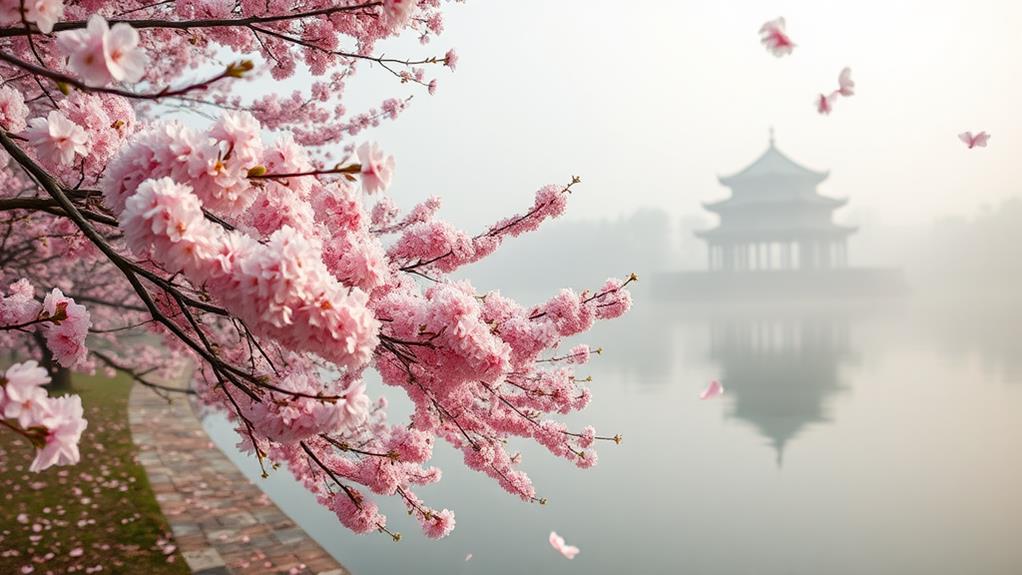
Spring Cherry Blossom Season
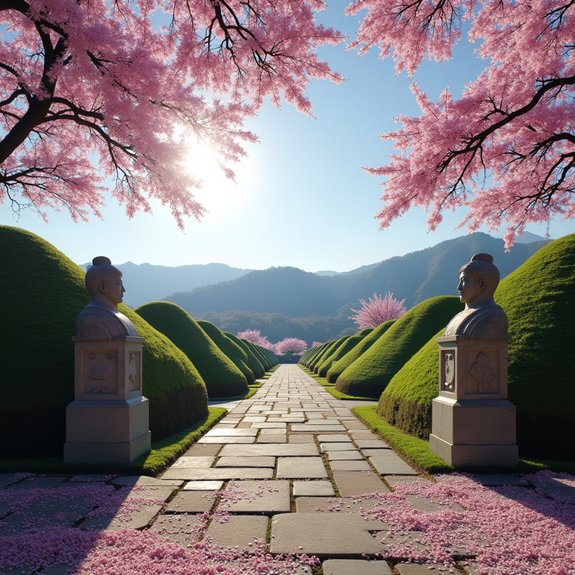
Spring in Seoul isn’t playing around when it comes to cherry blossoms. You’ll find these delicate blooms exploding across the city from April 2-9, with prime Cherry Blossom Photography opportunities at sunrise – before the selfie crowds descend.
Let’s be real: these aren’t just pretty trees. Their Cultural Significance runs deep, symbolizing life’s fleeting nature against Seoul’s ancient royal tombs. The light spring layers you pack will come in handy with temperatures ranging from 9°C to 18°C in April.
Want the best views? Changgyeonggung Palace delivers historical drama with your florals. Or hit up Kyunghee University’s blossom-lined paths – way less crowded than the tourist magnets.
Catch the action at Yeouido Festival (April 6-15), where 1,400+ trees put on a serious show. Pro tip: take Line 9 subway unless you enjoy sitting in cherry blossom traffic. Because that’s definitely a thing here. During the same spring season, don’t miss festivals of lanterns, which blend modern pop culture with centuries-old traditions and light up Seoul’s nightscape.
Royal Ancestral Rites in Spring
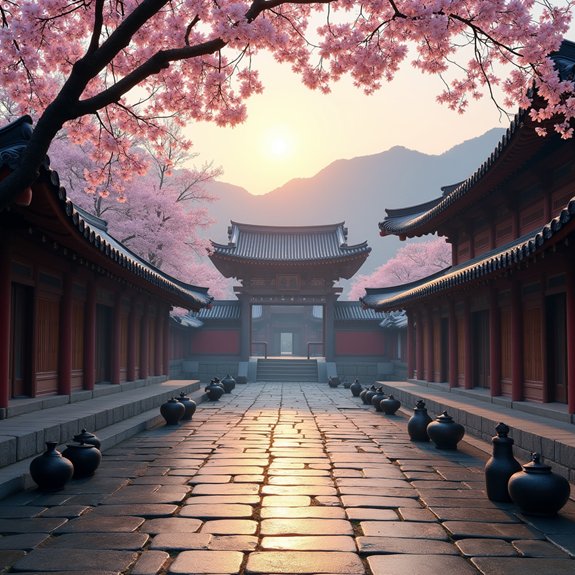
While modern Seoul buzzes with K-pop and street food, ancient spirits still command serious respect at Jongmyo Shrine’s spring rituals.
Every May, you’ll witness 1,200 performers in historical dress parading through downtown Seoul – quite a sight between the skyscrapers. They’re heading to perform ancestral offerings that’ll take over five hours. No joke.
These aren’t just any old ceremonies. UNESCO’s stamped them with world-heritage status, and they’re performed exactly as they were during the Joseon Dynasty.
The spring rituals at Yeongnyeongjeon Hall feature traditional musicians playing 15th-century tunes while dancers move with precise, centuries-old steps. The mesmerizing Parilmu dance involves 64 female performers moving in perfect synchronization.
Twenty different foods get arranged in bronze vessels – because apparently, royal ancestors are pretty particular about their dining setup. Talk about high-maintenance relatives.
International students wishing to experience these cultural traditions must secure a proper D-2 student visa before their educational journey in South Korea begins.
Seasonal Rainfall and Festivals Calendar
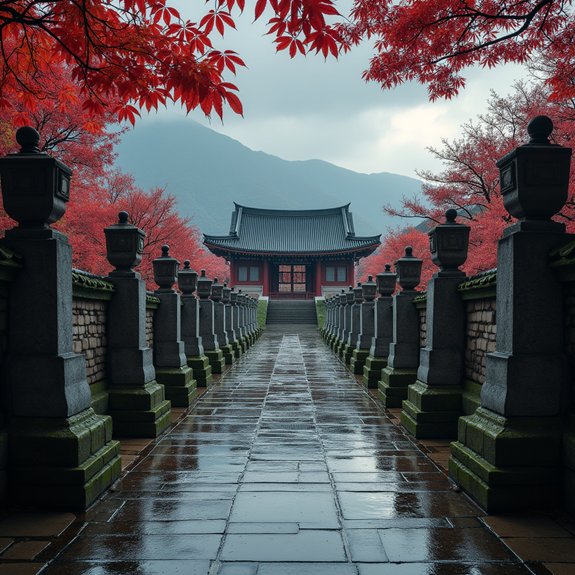
Planning your visit to Seoul’s royal tombs? You’ll want to dodge those brutal summer monsoons – trust us. With a whopping 800mm of rain dumping between June and August, timing is everything for these sacred sites. To help plan ahead, visitors can access detailed precipitation data through the Korea Meteorological Administration.
| Season | Festival Highlights | Weather Reality |
|---|---|---|
| Spring | Ancestral rites | Random showers, dust storms |
| Summer | Indoor ceremonies | Monsoon mayhem, floods |
| Fall | Harvest festivals | Perfect. Just perfect. |
| Winter | Night illuminations | Cold but manageable |
| Early Spring | Blossom events | Getting wetter |
If your plans include public transit, having real-time bus information at your fingertips can make navigating to festivals during rainy months much smoother. The cultural significance of seasonal festivals hasn’t changed in centuries – they’ve just moved indoors during the wet months. Smart thinking, right? September and October are your golden tickets: minimal rain, comfortable temps, and outdoor celebrations in full swing. July’s a mess – only 27% sunshine and constant thunderstorms. Skip it.
Royal Joseon Dynasty Burial Sites
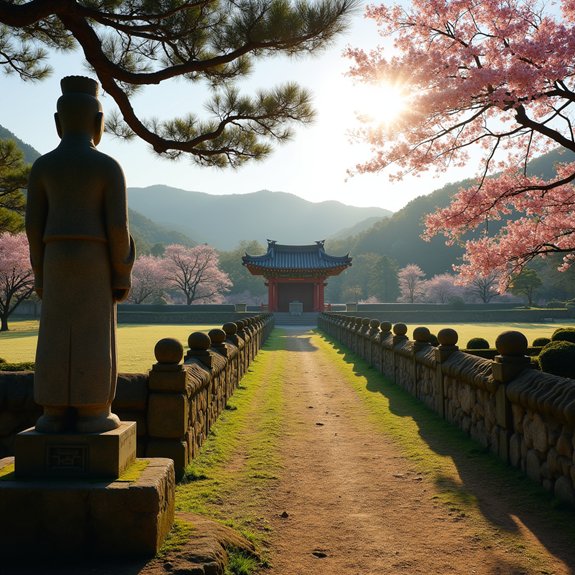
You’ll find these royal burial sites scattered across Seoul like an ancient king’s version of real estate investing – prime hilltop locations with great feng shui were absolutely essential.
Each tomb complex is a carefully orchestrated display of power, featuring stone warriors standing guard, elaborate pavilions, and burial mounds that’ll make you wonder how they hauled all those rocks up there without modern equipment. Many visitors are surprised to learn that international students in South Korea can receive generous scholarships covering tuition, living expenses, and even airfare.
The Joseon rulers weren’t exactly modest about their final resting places, and their elaborate funeral ceremonies could last for months – talk about going out with a bang.
These sacred grounds, encompassing forty royal tombs across South Korea, represent an extraordinary preservation of the Joseon Dynasty’s complete royal lineage.
Burial Location Selection Process
Selecting a royal tomb location in Joseon Korea wasn’t exactly a casual affair. You couldn’t just point to a random spot and say, “Bury me there!” The selection criteria were ridiculously specific – and they weren’t messing around.
First, you’d need those perfect protective hills, ideally south-facing with water nearby. The location had to be within 40 km of Seoul – close enough for ceremonies but far enough to keep things secure. Talk about picky! Each site needed to follow pungsu principles, basically Korean feng shui on steroids. Just like how in-depth analysis helps modern professionals make informed decisions, these ancient practices were based on careful examination.
The whole process could take 27 months and involved temporary construction camps to keep everything hush-hush.
Even with 5,000+ workers on the job, they’d take their sweet time getting those 70 procedural steps just right. Perfectionism at its finest.
Today, visitors can use the convenient T-money card system to reach these historic royal tomb sites via Seoul’s comprehensive public transit network.
Sacred Tomb Design Elements
After months of obsessing over the perfect burial spot, Joseon royalty didn’t skimp on the tomb design either.
The sacred geometry is mind-blowing – three distinct zones that’d make today’s architects jealous. You’ve got your Jeongjagak for chatting with the dead, a fancy gate area where earth meets heaven, and the burial mound itself. Pretty extra, right? Gyeongju’s historic hotels showcase similar reverence for architectural design, blending ancient concepts with modern comfort.
The tomb symbolism hits you everywhere you look. Stone warriors stand guard for eternity (talk about job security), while carved zodiac animals keep watch from retaining walls. The vibrant dancheong painted patterns adorned many ceremonial structures at these sacred sites.
There’s even a special two-level road system – spirits get the upper path, while mere kings had to take the low road during ceremonies.
And that red-spiked gate? It’s not just for show – it marks where the sacred stuff begins and the ordinary world ends.
Royal Funeral Ceremony Traditions
Ever wonder what happens when a Joseon king kicks the bucket? You’d be amazed at the meticulous planning that went into these royal send-offs. They didn’t even wait for death – the coffin-making started the moment a prince became king. Talk about being prepared!
The actual process was intense. First, they’d confirm death with a cotton ball under the nose (no fake-outs allowed).
Then came the royal spa treatment – washing the body with birch wood and rice water. But here’s the kicker: they stuffed the king’s mouth with rice and a pearl before the funeral procession began. The king’s body would be placed in special changung containers that were burned after the mourning ceremonies.
The whole affair lasted months, with three separate offices managing everything while the royal family donned mourning attire and fasted. No fast food runs for the king’s sons – they went hungry for three whole days.
After the funeral, many noble families would visit Hanok guesthouses near royal tombs to pay respects to the deceased monarch.
Symbolic Guardian Stone Statues
Once the king was laid to rest, an army of stone guardians took over the watch. You’ll find these intricate sentinels standing proud around royal tombs – tigers snarling at evil spirits, sheep radiating peaceful vibes, and horses ready to gallop into the afterlife. Talk about taking your job seriously.
The guardian symbolism doesn’t stop there. Civil officials clutch their scepters while military guys brandish swords, all arranged in perfect symmetry.
The stone craftsmanship is mind-blowing – every wrinkle in their robes, every fierce expression carved with incredible detail. These aren’t just random decorations. Each statue plays its part in an elaborate spiritual defense system, blending Confucian order with folk beliefs. The Illeung Royal Tomb showcases particularly delicate sculptures of these civilian and military officers.
Ancient Koreans weren’t taking any chances with their royal souls. When visiting these sites, remember to obtain an International Driving Permit if you plan to rent a car for your journey across the Korean countryside.
Modern Preservation Techniques Today
While ancient kings may be long gone, their tombs are getting some serious 21st-century TLC. Modern conservation efforts are mind-blowing – from high-tech 3D scanning to cutting-edge drainage systems. You’ll find heritage management teams working their magic across all 40 royal burial sites. The latest development includes drone monitoring systems to provide enhanced oversight of the tombs. For visitors planning to see these sites, booking tickets online is highly recommended to guarantee entry during peak times, especially when using Korea’s efficient train network.
| Conservation Area | Challenge | Solution |
|---|---|---|
| Stonework | Weathering | Targeted restoration |
| Urban Growth | Encroachment | Buffer zones |
| Education | Access | Digital archives |
| Cultural Legacy | Preservation | Annual rituals |
They’re not messing around. UNESCO experts drop by for advisory missions, impact assessments get super detailed, and there’s this whole multi-level preservation system in place. And get this – they’re even using augmented reality apps now. Talk about bringing ancient history into the future! The tombs aren’t just sitting there collecting dust – they’re living, breathing cultural sites getting the royal treatment they deserve.
Tomb Photography at Sunset
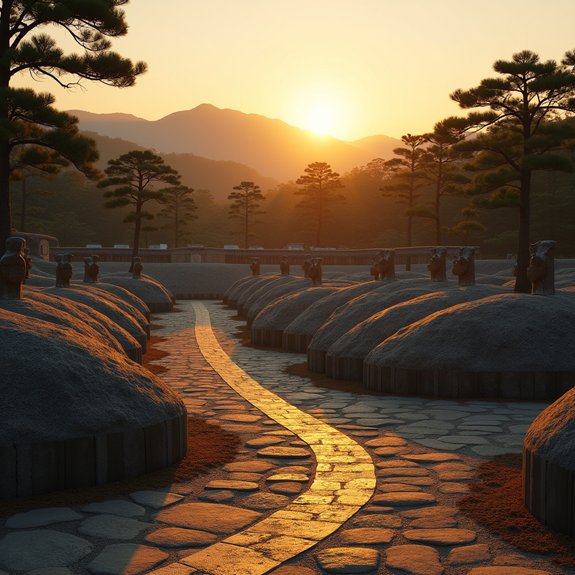
To capture the royal tombs at their most majestic, you’ll need to master the art of sunset photography. Timing is everything. The golden hour, just before sunset, bathes these ancient mounds in warm, ethereal light. Blue hour follows, transforming burial sites into mysterious silhouettes against the twilight sky. The Silla kingdom remnants create a uniquely atmospheric backdrop for photographers. For a similar experience with vibrant colors, consider visiting Namsan Park during the peak autumn foliage season from late October to early November.
Skip the harsh midday sun – it’s amateur hour. Instead, let the low-angled evening light accentuate those geometric mounds.
Your wide-angle lens (12-24mm) will thank you, especially when framing those stone guardian statues against the fading light.
Private Twilight Palace Tours
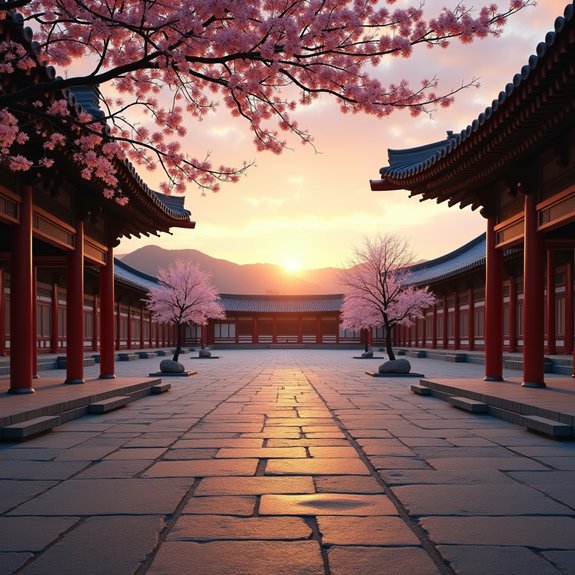
You’re in for a treat with these private twilight palace tours – they’re not your average tourist trap.
The VIP packages let you explore restricted areas of Donggung Palace that most visitors never get to see, complete with expert guides who know every secret passageway and hidden story. Many experienced guides like Katrina and Joy receive consistently stellar reviews for their deep historical knowledge and storytelling abilities.
As the sun sets over Wolji Pond, you’ll witness moonlit historical reenactments that bring ancient Silla royal ceremonies back to life. For an even richer experience, some tours now incorporate insights about the nearby UNESCO World Heritage sites that highlight the region’s royal legacy.
Exclusive VIP Package Details
Three exclusive features set these VIP twilight palace tours apart: priority access, private guides, and intimate group sizes.
You’ll skip those annoying queues – straight to the good stuff. Your knowledgeable guide isn’t juggling a massive group; they’re focused on giving you the inside scoop.
And yes, you’ll feel pretty special with your customized route through these ancient halls. Talk about VIP experiences. You can enhance your visit by wearing a traditional hanbok dress for guaranteed entry and a more authentic cultural experience.
Want to really show off? Some packages throw in traditional performances or a taste of royal cuisine. Because nothing says “exclusive access” like sampling centuries-old recipes while others are stuck taking selfies outside.
The tours run through both Gyeongbokgung and Changdeokgung palaces, with routes that can be tweaked just for you. Small groups, big experiences.
If you need transportation to the palace, remember to greet your taxi driver with polite phrases like “annyeonghaseyo” to make a good impression during your journey.
Behind-the-Scenes Palace Access
Beyond those fancy VIP perks lies an even more intriguing side of Seoul’s royal palaces – the behind-the-scenes access you’ll get during private twilight tours.
Let’s face it: hidden chambers and royal secrets just hit different when you’re exploring after dark. For travelers seeking an even deeper immersion into Korean tradition, staying in a historic Bukchon Hanok Village guesthouse after your palace adventure offers an authentic glimpse into centuries-old architecture and culture.
Your private guide will reveal stories you won’t find in history books while you wander through illuminated courtyards and restricted areas.
At places like Deoksu Palace, you’ll get up close with its fascinating blend of Korean and Western architecture.
The twilight ambiance? Absolutely magical.
Sometimes you’ll even score special access to areas that regular tourists can’t enter.
And if you’re lucky, your tour might include traditional Korean snacks – because nothing says “royal experience” quite like munching on court-inspired delicacies while uncovering centuries-old palace mysteries.
For extra convenience, visitors can take advantage of free luggage storage when planning return visits to explore more historical sites.
Moonlit Historical Reenactments
While regular palace tours wrap up at sunset, Seoul’s royal compounds truly come alive during their mesmerizing moonlit reenactments.
You’ll witness the Royal Family’s Walk at Geunjeongjeon Hall twice nightly, with performers in stunning period costumes bringing history to life. It’s cultural immersion at its finest.
These moonlight reenactments aren’t your typical tourist trap. They’re meticulously choreographed affairs, running from 7:00 to 9:00 PM at various palaces. Just like the daytime Changing of the Guards ceremony, these evening performances showcase authentic historical traditions. For a unique photo opportunity reminiscent of Kyoto’s torii gate tunnels, consider visiting early or late in the evening, when soft lighting and smaller crowds create a magical atmosphere.
Gyeongbokgung’s the hotspot – but good luck scoring tickets. They limit it to 2,000 visitors daily, and they’re free. Free!
The catch? You’ll need lightning-fast fingers on TicketLink when bookings open.
Want bonus points? Show up in hanbok. You’ll get in free and feel like Joseon royalty yourself. Just don’t expect the actual king to make an appearance.
Interactive Tomb Replica Exhibits
You’ll be amazed at how modern technology brings ancient royal tombs to life through interactive exhibits at Seoul’s Royal Tomb Museum.
These hands-on experiences let you explore detailed replicas and digital reconstructions, making history feel real and immediate rather than stuck in dusty textbooks. Just as bangae agricultural rituals on Jeju Island are reimagined each year in the Jeju Fire Festival, these interactive exhibits offer immersive ways to engage with Korea’s cultural heritage.
Learn the fascinating stories of King Seongjong and other Joseon rulers buried at these sacred sites.
While virtual reality tours and 3D models are cool, it’s the combination of tech and tradition that really makes these exhibits worth your time:
Hands-on Historical Experiences
Although history museums often keep their precious artifacts locked behind glass, the Royal Tombs experience near Seoul isn’t your typical “look but don’t touch” affair.
You’ll find immersive storytelling through hands-on replica stations, where you can actually handle reproduced artifacts under expert supervision. Pretty cool, right?
The interactive workshops take things up a notch. You can try your hand at traditional seal-carving and bookbinding, directly connecting to the tomb artifacts you’ve just explored.
During special exhibitions, you’ll catch ritual reenactments at Jongmyo Shrine – they’re surprisingly intense. On Children’s Day, families can enjoy these cultural activities completely free of charge.
At night, the tombs transform completely. The seasonal evening tours at Seonjeongneung use ambient lighting to create an atmosphere that’s both eerie and fascinating.
History comes alive here. No dusty displays. No keeping your hands in your pockets.
Digital Tomb Navigation Tools
Modern technology has revolutionized how we experience these ancient tombs. Through digital navigation tools, you’ll explore every nook and cranny of these royal burial sites – without disturbing a single speck of dust. Pretty neat, right?
LIDAR mapping and 3D scanning have created insanely detailed virtual replicas. You can literally walk through digital reconstructions of restricted areas from your couch.
The multilingual AR interfaces overlay historical data as you explore, while photogrammetry captures surface textures so realistic you’ll swear you’re touching ancient stone. Digital renderings show how Queen Munjeong ruled while her son King Myeongjong was too young to govern.
Want to see a burial ceremony from centuries ago? Time-period reconstructions bring these rituals back to life.
Virtual walkthroughs let you examine tomb layouts up close, while interactive quizzes keep your brain engaged.
Finally, tomb exploration that doesn’t require a dusty archaeology degree.
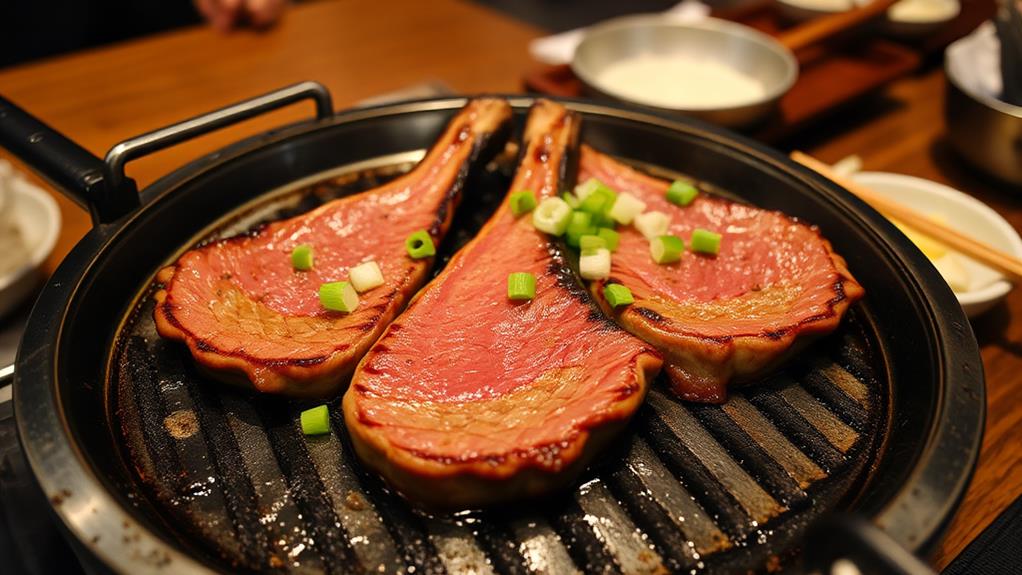
Traditional Korean BBQ Near Tombs
Finding traditional Korean BBQ near Seoul’s royal tombs is surprisingly tricky. You won’t find any dedicated BBQ spots within walking distance of Seolleung or Jeongneung.
Let’s be real – you’ll need to venture out for proper Korean BBQ.
Here’s what you’re dealing with near the tombs:
Your best bet is heading to Sancheong Charcoal Garden (30-40 minutes away) for black pork. Yang Good serves exceptional kimchi stew and BBQ dishes if you’re willing to make the trip.
For serious BBQ action, you’ll need to commit to some travel time. The closest legitimate Korean BBQ spots like Chungkiwa Town are a 20-30 minute subway ride away.
Not ideal, but hey, that’s Seoul for you.
Traditional Insadong Shopping District
After exploring Seoul’s royal tombs, you’ll want to head straight to Insadong, where traditional Korean culture comes alive in the most shopping-packed way possible.
You can’t miss the district’s signature blend of old and new, from centuries-old hanok buildings to modern art galleries crammed into every corner. The area originally served as a home for government officials during the early Joseon Dynasty before evolving into today’s cultural hub.
While tourist crowds can be overwhelming (seriously, 100,000 weekly visitors!), the authentic cultural experience is worth it, especially if you follow these essential stops:
Handmade Paper Art Shops
Insadong’s handmade paper art shops are a treasure trove of traditional Korean craftsmanship.
You’ll find master artisans working their magic at spots like Doori Hanji and Il-Shin Pil Bang, where hanji workshops and artisan demonstrations will make your inner craftsperson squeal with delight.
Want the cream of the crop? Head to Dong Yang Hanji for top-quality paper supplies, or check out the historic 100-Year-Old Hanji Shop – yeah, that’s literally its claim to fame.
These shops aren’t just about selling paper; they’re keeping an ancient art form alive. From delicate calligraphy tools to handcrafted boxes, you’ll find everything needed to channel your inner Korean artist. Many shops now require online ordering only.
Trust us, it’s impossible to leave empty-handed.
Traditional Tea Houses Experience
Need an escape from Seoul’s frenzied pace? Duck into Insadong’s traditional tea houses for some serious cultural immersion. Trust me, these aren’t your average coffee shops.
Head to Anguk Station on Line 3 and you’ll find yourself in tea paradise. Dawon Traditional Tea House leads the pack, but don’t overlook gems like Moon Bird Only Thinks of the Moon – yes, that’s really its name.
The tea tasting experience here is next level. Think pine needle tea, seasonal treats, and honey cookies served in centuries-old wooden interiors. Savor your drinks while gazing at the serene courtyard view.
These spots nail the ambiance: paper windows, low seating, and lighting that’ll make you forget about your Instagram feed.
Between sips of traditional tea at Hanok Tea House, you’ll get a crash course in Korean heritage. No textbooks required – just pure, unfiltered culture.
Cultural Souvenir Shopping Tips
Speaking of cultural immersion, let’s talk shopping – and not just any shopping. Insadong’s maze of traditional crafts and cultural heritage items will blow your mind. From handmade hanbok accessories to Buddhist prayer beads, this place is a treasure trove of authenticity. Visit Nadeulee next to Bonjuk for an incredible selection of Korean traditional tableware and unique patterned cups.
| Must-Have Souvenirs | Where to Find Them |
|---|---|
| Personalized Stamps | Ssamzigil Mall |
| Hanji Paper Crafts | Nagwon Arcade |
| Buddhist Bracelets | Street Vendors |
| Ceramic Teaware | National Souvenir Centre |
| Folk Art Prints | Courtyard Shops |
Let’s be real – you’re not leaving without some K-pop merch. But don’t skip the traditional stuff. Those wind chimes with fish-shaped pendants? Pure Joseon-era magic. Pro tip: bring cash. Those sweet vendor freebies won’t happen with your credit card. Most shops run 10 AM to 8 PM, perfect for your cultural shopping spree.
Seasonal Tomb Site Routes
You’ll find yourself spoiled for choice when it comes to seasonal tomb-hopping routes, starting with spring’s cherry blossom trails that transform these royal grounds into pink wonderlands.
The summer evening walks offer a cool escape from Seoul’s concrete jungle, with shaded paths that’ll make you forget you’re in one of the world’s biggest cities. The paths lead visitors through sacred grounds that hold forty royal tombs across South Korea.
Come winter, these same ancient paths take on an entirely different character, with snow-dusted royal tombs creating scenes straight out of a Korean period drama – minus the palace intrigue.
Spring Cherry Blossom Trail
The spring cherry blossom trails near Seoul’s royal tombs transform these ancient sites into a magical spectacle each year.
You’ll find these blooming beauties from late March to early April, and trust me, they’re worth braving the crowds for. Perfect for cherry blossom photography, especially at spots like Seoul National Cemetery. The 173 flower paths selected by Seoul’s government offer endless opportunities for exploration.
Want the full cultural experience? Hit up one of the cherry blossom festivals – they’ve got traditional performances and plenty of local flavor.
The UNESCO sites are particularly stunning when those pink petals start falling. Getting there’s a breeze – just hop on the subway or bus. Some walking required, but hey, that’s what trails are for.
Pro tip: timing’s everything. These blossoms don’t stick around long, typically showing their stuff for a few short weeks. Nature’s quite the tease.
Summer Evening Walking Routes
While cherry blossoms steal the spring spotlight, summer evenings at Seoul’s royal tombs offer their own brand of magic.
You’ll find scenic routes winding through Seonjeongneung’s wooded grounds, where tomb guardians make sure you’re not wandering where you shouldn’t. The evening ambiance? Pure serenity.
You’re getting three royal tombs for the price of one here – Kings Seongjong and Jungjong, plus Queen Jeonghyeon. Lucky you.
The grounds are surprisingly peaceful, especially compared to the chaos at nearby Coex Mall. There’s decent access via Seollung Station, and they’ve even thought about wheelchair users and parents with strollers. The affordable 1,000 KRW entrance fee makes this historical site accessible to everyone.
Just remember to bring water and respect those spirit paths. Trust me, the tomb guardians take their jobs seriously. Perfect for escaping Gangnam’s summer madness.
Winter Snow-Covered Paths
Despite Seoul’s bustling urban sprawl, winter transforms these royal tombs into something straight out of a snow globe. You’ll find pristine snow-covered paths winding through UNESCO heritage sites, perfect for snow hiking and winter photography. Bundle up – it’s cold, but totally worth it. The tranquil grounds are a popular destination for early morning exercise among locals who visit starting at 6 AM.
| Location | Winter Features | Best Time to Visit |
|---|---|---|
| Jeongneung | Wildlife spotting | Early morning |
| Seonjeongneung | Urban park setting | Midday |
| Tumuli Park | 23 ancient tombs | Late afternoon |
| Yungneung | Pine tree trails | Sunrise |
| Geolleung | Forest landscapes | Sunset |
Let’s be real – these aren’t your average tourist spots. They’re serene winter wonderlands with historical significance. You’ll spot everything from traditional Joseon architecture to botanical specimens, all dusted in snow. Just don’t get too close to the actual tombs. Seriously, they’re kind of strict about that.
Take Express Train A’REX
Fast-moving A’REX express trains zip between Seoul Station and Incheon International Airport every 30 minutes – but they won’t get you anywhere near Seoul’s Royal Tombs.
Sure, it’s a speedy 43-minute airport transfer, and you’ll pay 13,300 won for that express train convenience. But for the Royal Tombs? Wrong direction entirely.
You’re better off forgetting about the A’REX. Want the tombs? You’ll need different options.
The commuter rapid train costs less at 3,700 won, but that’s still not your solution. Head to Cheongnyangni Station instead, where Korail trains can get you closer to your destination.
Passengers can enjoy comfortable seating on the express train, though that’s little consolation when heading the wrong way.
Or grab a bus from Seoul Express Terminal to Yeongwol. Just remember – those UNESCO sites aren’t exactly subway-friendly.
Sometimes the scenic route is your only route.
Take Metro Line 4
Metro Line 4 won’t get you to Seoul’s Royal Tombs either – sorry to burst that bubble.
While you’ll find awesome stations like Myeong-dong and Chungmuro on this line, tomb exploration isn’t in the cards here. Nope, not even close.
Truth is, Line 4’s more about shopping districts than cultural significance. The line has grown significantly since its opening, with expansions from Sanggye to Danggogae in 1993.
Line 4’s true identity lies in its retail heart, leaving historical landmarks for Seoul’s other metro routes to handle.
Want to see those UNESCO-listed Joseon Dynasty tombs? You’ll need to hop onto different lines or grab a taxi. Line 5 and Line 8 will get you to Donggureung, while the Suin-Bundang Line leads to Seonjeongneung.
But hey, Line 4’s still useful – it’s got English signs everywhere and connects to other lines that’ll actually get you where you want to go.
Just remember to avoid rush hour. Trust me on that one.
Fixed-Rate Airport Taxi Service
Several fixed-rate airport taxi services make getting to Seoul’s Royal Tombs a breeze, with prices starting around ₩50,000 for private transfers.
You’ll find plenty of options at both terminals – International (Gates 2-3) and Domestic (Gates 6-8). No surprises, no meter watching, no stress.
Pre-booked transfers are your best bet. Companies like Klook and Welcome Pickups offer English-speaking drivers and fixed-rate pricing that includes those pesky tolls and taxes.
They’ll even track your flight and adjust pickup times if you’re delayed. Late-night surcharges kick in from 10 PM to 4 AM – yeah, everything costs more after dark.
Want a luxury van? Got you covered. Need a child seat? Just ask, though it’ll cost you an extra ₩5,000-₩10,000. Based on 4.7 out of 5 stars from nearly 2,000 reviews, the service quality is consistently excellent.
Accessible Viewing Platforms at Tombs
While you can’t exactly walk up and touch these ancient royal tombs, there’s still plenty to see from the designated viewing spots. The accessible viewpoints offer remarkable visitor experiences, letting you take in the grandeur of these historic sites while preserving them for future generations. The spacious parking area makes it convenient for visitors arriving by car to explore the tomb complex.
Let’s be honest – the restriction barriers aren’t exactly thrilling, but they’re protecting centuries of Korean heritage. Worth it.
Remove Shoes at Tomb Gates
Despite what you might expect at these royal tombs, there’s no strict rule about removing your shoes at the gates.
While Korean cultural respect typically includes indoor footwear etiquette, tomb visits are different. The massive complexes are mostly outdoors, with unpaved trails that definitely require sturdy shoes. The upcoming 2026 Heritage Festival will showcase these historic sites in their full grandeur.
Here’s what you should know about footwear at royal tombs:
Fun fact: Those ancient royals? They were buried with fancy gold and bronze shoes. Not exactly hiking material.
Student Discounts for Tomb Entry
Looking for student discounts at Seoul’s royal tombs? The situation’s a bit murky. While UNESCO-associated sites sometimes offer student breaks, specific student pricing for Seoul-area tombs isn’t crystal clear.
Student pricing at Seoul’s royal tombs remains unclear, despite UNESCO sites occasionally offering discounts for students.
You’ll need your student ID – that’s non-negotiable for any cultural site discounts in Korea. Student eligibility criteria vary by location, and discount verification methods depend on who’s managing the tomb (national or local authorities). Consider that some guided heritage tours offer $36 per person rates for exploring historical sites.
Some tombs charge as little as $2-5 for regular admission anyway. Not exactly breaking the bank.
Want to save more? Keep an eye out for Cultural Heritage Day in May – sometimes entry’s completely free.
Or check university bulletin boards for group rates. They’re not always advertised, but they exist. Just don’t expect any massive savings like those “student special” pizza deals.
Traditional Dress Entry Benefits
Want free entry to Seoul’s royal sites? Put on a hanbok. It’s that simple. Both traditional and modern versions of Korea’s iconic dress will get you through the gates without spending a dime.
Just make sure you’re wearing it properly – we’re talking a well-tied jeogori top and either a chima skirt or baji pants. No sloppy styling allowed. You must keep your upper and lower garments on at all times while visiting.
The hanbok benefits aren’t limited to the five grand palaces. You’ll get free access to royal tombs too. It’s a sweet deal that highlights the cultural significance of this elegant attire.
Locals and tourists alike are jumping on the hanbok bandwagon – and why wouldn’t they? You can rent one from the countless shops near historical sites. Perfect for those Instagram-worthy shots while immersing yourself in Korean heritage.
Just remember: modesty is key. Keep it classy, folks.
Free Palace Concerts Year-Round
When the sun sets over Seoul’s grand palaces, the real magic begins.
You’ll find palace music experiences that’ll transport you straight back to Korea’s royal past. Let’s be real – some of these concerts aren’t actually free, but there’s plenty of free concert accessibility during special events.
The good stuff happens in May and September, when traditional gugak music fills the air at Gyeongbokgung, Changdeokgung, and other palatial venues. In Spring 2026, visitors can experience A Time Travel themed festival celebrating King Sejong’s era.
Sure, you’ll need to pay palace admission, but that’s a small price for royal entertainment. The crown jewel? The 100 Artists Concert at Gyeongbokgung. It’s not free, but it’s worth every won.
Evening performances kick off at 19:30, lasting a neat 50 minutes. Just remember – you’ll need those mobile reservation cards. No ticket, no show.
Emergency Shelter Locations by Palace
Safety comes first at Seoul’s grand palaces, even if you’re too busy snapping selfies to notice. Each palace has designated shelter zones and emergency protocols that you’d better pay attention to – your Instagram story can wait. The principal royal residence Changdeokgung remains one of the most historically significant emergency shelter locations due to its extensive grounds.
| Palace | Emergency Shelter | Access Point |
|---|---|---|
| Gyeongbokgung | Eastern Donggung | Exit 5 Station |
| Deoksugung | Stone-wall Area | City Hall Station |
| Changdeokgung | Huwon Gardens | Hyehwamun Gate |
| Gyeonghuigung | Secondary Buildings | Palace Gates |
| Changgyeonggung | Main Courtyard | Metro Links |
Let’s be real – those gorgeous wooden structures aren’t exactly fireproof. That’s why shelter accessibility matters. You’ll find emergency signage throughout, and security staff ready to guide you. The courtyards and rebuilt gates serve as assembly points, while nearby metro stations offer quick evacuation routes. Modern times, ancient places – it’s a delicate balance.
Hospital Emergency Line: 119
Three digits could save your life in South Korea – that’s 119, the country’s powerhouse emergency response system.
It’s brilliantly simple. No area code needed. Works from any phone. Even finds your location automatically, because let’s face it – in an emergency, who’s time to explain where they are?
Don’t speak Korean? No problem. While operators start in Korean (naturally, it’s their country), they’ll connect you with English-speaking help.
Or there’s always 1330 for faster language assistance. The system’s wired into everything – fire departments, ambulances, pre-hospital care. The fire and ambulance services dispatch from the same emergency line, making response coordination seamless.
It’s all integrated, computerized, and running 24/7. Just dial and stay on the line. That’s it. Emergency response teams will be racing to your location before you can say “안녕하세요” (hello).
Pack Umbrella for Storms
Although packing an umbrella seems like common sense for touring Korea’s royal tombs, it could actually get you killed during a storm. Metal umbrellas are lightning magnets, and those fancy heritage site photos aren’t worth the risk.
For proper storm preparation, ditch the umbrella and opt for a waterproof jacket instead. Keep your emergency supply kit ready with flashlights and first aid supplies for unexpected severe weather. You’ll want your hands free anyway – trust me. Keep your electronics in dry bags and wear rubber-soled shoes.
And please, don’t be that tourist huddling under a tree or next to a tomb’s stone monuments during a thunderstorm. Lightning loves tall objects.
If you’re caught in the open, crouch low with your feet together. Better yet, head to actual shelter – not those decorative pavilions that’ll leave you soaked.
And wait 30 minutes after the last thunder before venturing out again.
Avoid Crowded Palace Mealtimes
Want to know the worst time to visit Seoul’s most famous palace? It’s between 11am-3pm, when everyone and their grandmother decides to crowd the grounds.
Trust me, meal options get tricky during peak hours.
For serious crowd avoidance, try these timing hacks:
Pro tip: The underground Gwanghwamun Plaza food court is your best friend for lunch.
Or sneak over to Samcheong-dong’s cafes – they’re just a quick walk from the east gate, without the tourist chaos.
Consider catching the changing of the guard at 10am instead of the more crowded 2pm ceremony.
Korean Palace Guard Changes
You’ll find the palace guards decked out in vibrant reds and blues, wielding traditional weapons and sporting those incredibly dramatic hats that make you wonder how they keep their balance.
The changing of these guards happens twice daily at 10:00 AM and 2:00 PM near Gwanghwamun Gate – each show running about 20 minutes (unless it’s Tuesday, raining, or someone cranked up the thermostat to ‘scorching’). You can also watch the guard dispatch ceremony at 11:00 AM and 1:00 PM, which lasts about 10 minutes.
If you’re really into the whole royal guard thing, you can even try on their uniforms between ceremonies, though you probably won’t look nearly as imposing as they do.
Guard Uniforms and Colors
When Joseon Dynasty guards strutted through Seoul’s palace grounds, their uniforms were a walking rainbow of power.
You’d spot senior officials in striking red Dallyeong, while junior ranks wore blue. The lower ranks? They got stuck with green. And don’t forget those fancy princes – purple for queen’s sons, dark red for concubine’s kids. Pretty obvious who mom was.
But everything changed in 1884. King Gojong said “enough with the red” and made everyone wear black Dallyeong instead. Those Chinese-inspired mandarin squares? They stuck around to show rank.
Ceremonial Weapon Display
Looking like walking armories, Joseon palace guards carried an arsenal that’d make a weapons collector drool. Their ceremonial weaponry significance went way beyond looking cool – each piece broadcast status and authority.
Elite Gapsa guards strutted around with daedo long swords and hwando sabers, while regular troops made do with basic blades.
You’ll spot the deungchae whip – that’s a dead giveaway for high-ranking officers. Don’t mess with the Daejol gatekeepers and their long spears. They meant business.
The royal guard symbolism gets pretty intense: flags for visual commands, hwi signal weapons for timekeeping, the works. Sure, some weapons were just for show, but those daedo swords? Sharp as they come. These weren’t just props – they were power statements, pure and simple.
Performance Times and Locations
Want to catch the royal guard show? You’ve got two chances daily to witness the full spectacle – 10 AM and 2 PM.
Each performance lasts 20 minutes at Gwanghwamun Gate, the palace’s grand entrance. Just don’t show up on Tuesdays. They’re closed. Obviously.
The real magic happens when the guards dispatch to their posts at 11 AM and 1 PM.
It’s a quick 10-minute performance, but trust me – worth sticking around for. If you’re an early bird, catch the training sessions at 9:35 AM or 1:35 PM near Heungnyemun Gate.
Fifteen minutes of pure military precision.
Weather’s the wild card here. Heavy rain, extreme temperatures, or high dust levels?
Show’s canceled. No guards want to mess up those pristine 15th-century uniforms.
How to use
Getting the most out of Seoul’s Royal Tombs isn’t rocket science – you’ve just got to know the lay of the land. These aren’t just fancy burial mounds; they’re living museums of ancestral rites significance and tomb preservation techniques that’ll blow your mind. From Seolleung to Jeongneung, each site tells its own story.
| Zone | Purpose | What You’ll See |
|---|---|---|
| Burial Mound | Royal Rest | Grass-covered hill |
| Ceremonial | Rituals | Stone altar tables |
| Entrance | Protection | Red wooden gates |
| Spirit Road | Procession | Stone animal guards |
| Sacred Space | Worship | Pine tree boundary |
Head to these spots via subway (seriously, it’s easy) or join a tour group if you’re feeling social. Pro tip: hit the tombs during spring cherry blossoms or fall foliage for killer photos. But remember – these aren’t picnic grounds. Show some respect.
Replace Seoul, Korea with the palace name in your ZimmWriter bulk or custom outline tool
To swap out Seoul with Gyeongju in your ZimmWriter tool, you’ll need to navigate through five centuries of royal tomb history.
Let’s be real – Gyeongju’s got the goods when it comes to tomb preservation techniques. We’re talking 150+ Silla-era tombs scattered throughout the city, some reaching a whopping 23 meters high.
Unlike Seoul’s Joseon Dynasty tombs, Gyeongju’s ancient burial artifacts tell a much older tale, dating back to 57 BC.
The city’s packed with these massive burial mounds, particularly in the Great Tumuli Park. Pretty impressive how they’ve managed to keep these treasures intact, despite modern development creeping in.
The UNESCO folks certainly thought so – they slapped that World Heritage status on it back in 2000.
Science keeps digging up new finds, too. History never sleeps in Gyeongju.
SEO Links Ancient Tomb Histories
When ancient Korean royalty needed prime real estate for their eternal rest, they didn’t mess around. They built 42 spectacular tombs across 18 locations, following ridiculously detailed feng shui principles.
Yeah, we’re talking next-level planning here.
These ancient tombs weren’t just fancy burial spots – they’re living history. Each site tells historical narratives through stone guardians, double chambers, and precise architectural details. Tigers ward off evil, sheep represent peace, and horses show royal status.
No random decorations here, folks.
The coolest part? These places still matter. People perform the same memorial rites they’ve been doing for 600+ years.
That’s right – modern Koreans are keeping ancient traditions alive at these sites, following those same old Confucian protocols their ancestors used.
Talk about commitment to tradition.
, , , and create structured subheadings and lists for richer content.
You’ll find the Joseon Dynasty’s royal tombs scattered around Seoul like an ancient real estate developer’s portfolio – only these plots come with ancestral spirits.
The elaborate burial customs weren’t just about stashing away dead kings; they were carefully planned architectural statements meant to show off royal power and protect royal souls.
These aren’t your average burial grounds – we’re talking entire complexes with ceremonial areas, stone statues, and specific feng shui requirements that would make modern architects scratch their heads.
Historical Significance Overview
While most ancient burial grounds crumble into dust, the Royal Tombs of the Joseon Dynasty stand proudly across 18 spectacular sites near Seoul.
These aren’t your average graves – they’re masterpieces of cultural heritage, strategically placed to face south with mountains behind and water in front. Talk about location, location, location!
You’ll find these UNESCO-recognized sites scattered around Seoul, including the posh Gangnam district (yes, that Gangnam).
Each tomb showcases Korea’s dedication to ancestral veneration through its T-shaped shrines, stone sculptures, and meticulously planned ceremonial areas. The natural surroundings aren’t just pretty – they’re part of the design.
What’s really cool? These tombs are still active. Koreans perform annual memorial rites here, keeping centuries-old traditions alive and kicking.
Royal Burial Customs Explained
Preparing a Joseon royal for burial wasn’t your average funeral prep – it was an intense, mind-boggling ritual that’d make modern morticians break into a cold sweat.
First, they’d wrap the body in an absurd 109 layers of cloth – yes, you read that right. Talk about overdressing!
But wait, there’s more. The tomb symbolism went way deeper than just fancy wrapping. Imagine this: 5,000 workers hustling to build these massive three-zone tombs, complete with stone guardians and ritual spaces.
Location? That was another whole drama. Royal lineage determined everything – from the tomb’s spot (within 40km of Seoul, thank you very much) to its feng shui setup.
Mountains behind, water views ahead. Because apparently, even in death, these royals needed a killer view.
Frequently Asked Questions
Are There Any Ghost Stories or Supernatural Legends Associated With the Royal Tombs?
Like whispers in ancient stone, supernatural beliefs swirl around these royal tombs.
You’ll hear locals talk about ghost sightings near the iron rods that dot some sites – nobody’s quite sure why they’re there. Paranormal activity? Maybe.
The tombs’ massive size and eerie atmosphere, mixed with traditional shamanistic rituals and feng shui practices, have sparked countless spooky tales.
Pretty creepy for UNESCO sites, right?
What Happens if Archaeologists Discover New Artifacts Within the Tomb Grounds?
When new artifacts pop up, you can’t just grab and go.
There’s a strict protocol – first, the site gets locked down faster than your phone after too many wrong passwords. The Cultural Heritage Administration swoops in, and everyone follows rigid excavation protocols.
You’ll see experts doing non-invasive scans before touching anything. Then it’s all climate-controlled storage and fancy lab tests.
No Indiana Jones stuff allowed here.
How Were the Specific Locations for These Royal Tombs Originally Chosen?
You’d better believe these tomb locations weren’t random picks. They followed strict pungsu principles – think feng shui with attitude.
The perfect spot? South-facing hills with water nearby. Location significance was everything.
They’d scout for places where mountains could guard the dead and rivers could nourish their spirits. Burial rituals demanded this perfect balance of nature and sacred space.
Pretty picky for a final resting place, right?
Do Any Royal Family Members Still Visit These Tombs for Private Ceremonies?
Yes, modern Korean royal family descendants still conduct tomb visits and royal ceremonies at these ancestral burial sites.
They’re pretty serious about it too. While most rituals are now private affairs, you’ll spot them performing ancestor worship rites during major holidays like Seollal and Chuseok.
Not exactly your average family reunion – these ceremonies follow ancient Confucian traditions. Royal protocol lives on, even today.
What Security Measures Protect These Tombs From Grave Robbers and Vandals?
You’ve got multiple layers of tomb security here – no grave robber’s getting lucky.
There’s 24/7 surveillance with drones and guards patrolling the perimeter fences. They’re not messing around.
Remote sensors catch anyone who shouldn’t be there, while AI systems analyze suspicious activity.
Plus, vandalism prevention includes strict legal penalties.
The whole setup’s backed by UNESCO’s oversight and local task forces.
Pretty hardcore protection, honestly.
Conclusion
You’ll never find more spectacular royal burial grounds than Seoul’s ancient tombs. These UNESCO treasures offer a mind-blowing glimpse into Korea’s imperial past, especially during cherry blossom season when the sites transform into pink wonderlands. Whether you’re a history buff or just looking for incredible photo ops, the tombs deliver. They’re massive, they’re mysterious, and they’re absolutely worth your time. Trust us – your Instagram will thank you.
More on Transportation:

Written by East Asia Explorer Editorial Team
Sam Konneh is an AI strategist and digital marketer based in Seoul, South Korea. With years spent living, working, and exploring across Korea, Japan, and China, he shares firsthand insights into East Asia's cultures, hidden gems, and everyday life. A graduate of Inha University and KDI Graduate School, Sam combines data-driven expertise with on-the-ground experience. His journey also includes studying in Malaysia and traveling through Southeast Asia. Through practical tips, local stories, and travel guides, he helps fellow explorers discover both the celebrated highlights and the lesser-known corners of East Asia.