Last Updated: June 28, 2026 | Originally Published: February 20, 2026
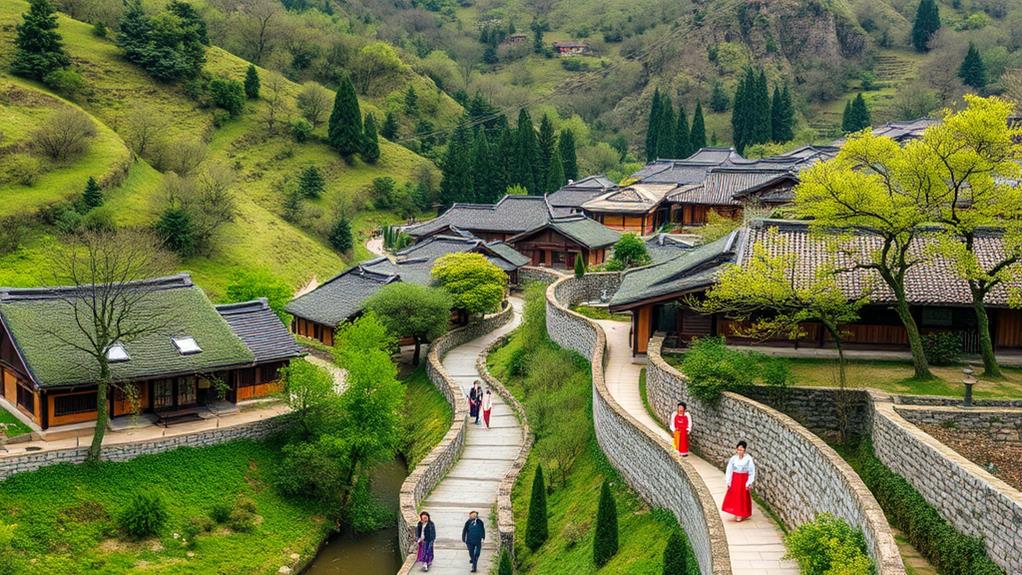
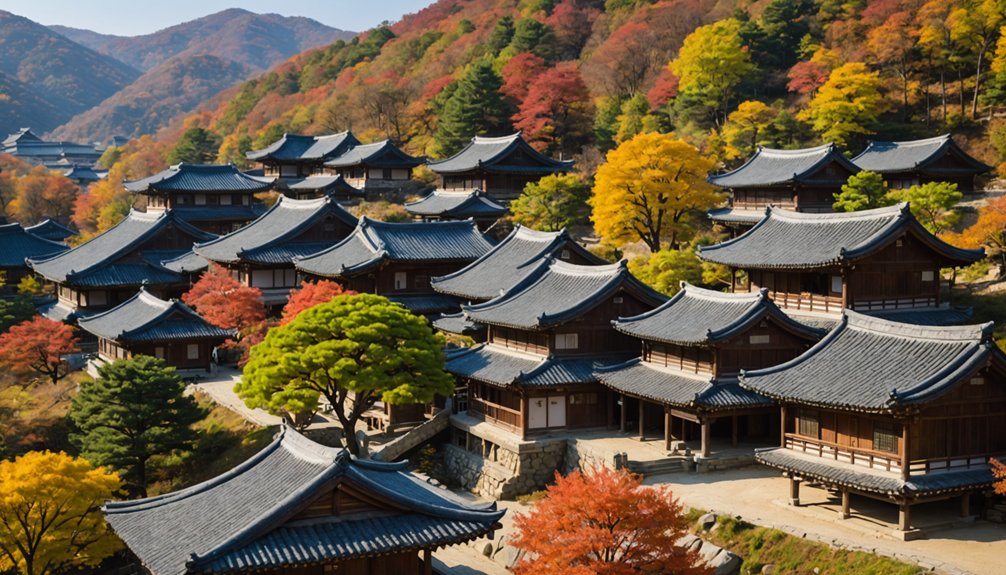
You’ll find two UNESCO treasures in Andong: Hahoe Folk Village preserves authentic Joseon Dynasty life with traditional wooden houses still inhabited by descendants of original families. Nearby, Dosan Seowon showcases Yi Hwang’s 16th-century Confucian academy with its striking lecture halls and scholarly atmosphere. Both offer distinct experiences—one of daily village traditions, the other of intellectual heritage. The mask dance performances? Absolutely worth sticking around for.
Read our full South Korea Travel Guide 2026 for everything you need to plan your Korea trip.
Explorer Insights
- Andong Hahoe Folk Village is a UNESCO World Heritage Site preserving traditional Korean lifestyle from the Joseon Dynasty.
- Dosan Seowon is a historic Confucian academy founded in 1574 that reflects scholarly traditions and architectural harmony.
- Both sites showcase authentic Korean architecture, with Hahoe featuring traditional yangdong houses and Dosan exhibiting scholarly structures.
- The Hahoe Mask Dance performances and museum provide cultural insights into traditional Korean folk customs.
- Located in Andong, these complementary sites offer comprehensive perspectives on both everyday life and intellectual heritage of historical Korea.
Historical Significance of Andong’s Cultural Heritage Sites
Nestled in the heart of Korea’s spiritual landscape, Andong’s cultural heritage sites stand as living symbols to the country’s rich Confucian history. (see Korea Tourism Organization) South Korea welcomed 16.8 million international visitors in 2026, up 52% year-over-year (Korea Tourism Organization).
You’ll find two standouts here – Andong Hahoe Folk Village, a UNESCO World Heritage Site, and Dosan Seowon, a centuries-old academic shrine.
Hahoe Folk Village isn’t just pretty – it’s a pristine time capsule of Joseon Dynasty life. The real deal.
Meanwhile, Dosan Seowon has been schooling folks in Confucian principles since 1574. Four hundred years! Built to honor Confucian scholar Yi Hwang, it’s basically Korea’s philosophical headquarters.
These sites aren’t random tourist traps. They’re the backbone of Korean cultural preservation.
Wooden buildings. Ancient customs. Scholarly tradition.
Andong doesn’t just remember history – it lives it, breathes it.
Much like the layout of the Forbidden City, these Korean sites reflect deeply rooted philosophies and traditions, preserving cultural identity through architecture and ritual.
Architectural Wonders of Hahoe Folk Village
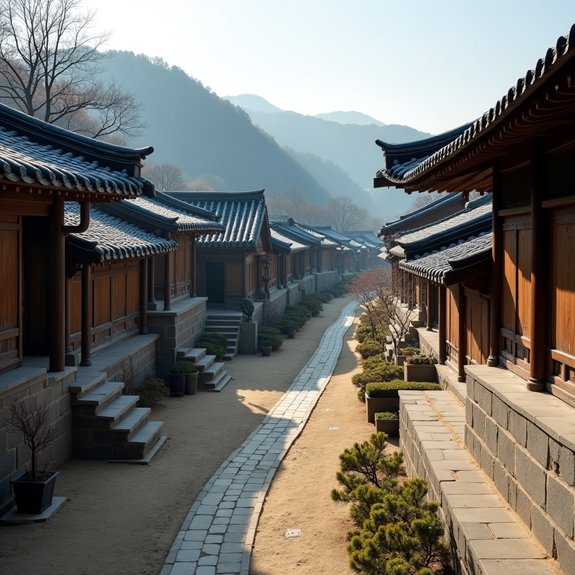
When you walk through Hahoe Folk Village, you’re not just sightseeing – you’re time traveling. This UNESCO World Heritage Site perfectly preserves the architectural style of the Joseon Dynasty, no filter needed.
Step into a living museum where centuries-old Korean traditions breathe through every wooden beam and clay tile.
The traditional Korean houses, or “yangdong,” are built with nothing fancy – just wood and clay. Simple. Effective. Brilliant.
They’re arranged according to Confucian principles, facing the river and mountains because, apparently, good feng shui was a big deal.
Inside these structures, you’ll find “sarangbang” for men and “anbang” for women. Separate quarters. Different times.
The Hahoe Mask Museum? Worth seeing. These masks aren’t just decorations – they’re cultural heritage in wooden form. South Korea’s mobile internet speed averages 195 Mbps, ranking 2nd globally (KTO).
Over 200 traditional houses still stand, living proof that sometimes, the old ways were the best ways. For travelers arriving via domestic flights, Korea’s efficient air network connects Andong to major cities like Seoul and Busan, ensuring easy access to this historic gem.
The Legacy of Toegye Yi Hwang at Dosan Seowon
Just a short walk from Hahoe Folk Village stands Dosan Seowon, a place that’ll make history buffs weak in the knees.
Founded in 1574, this Confucian academy honors the legendary Toegye Yi Hwang, who’d already been dead four years by then. Talk about a posthumous tribute.
You’ll notice the stunning location immediately. Perfect feng shui. Mountains. Water. Tranquility for those scholarly types.
The main lecture hall, Dosan Seodang, took four years to build. Look for the small wooden tablet with Chinese characters. Educational commitment at its finest.
Yi Hwang wasn’t just about dusty books. The guy loved nature. Planted plum trees. Dug a lotus pond. Very on-brand for a Confucian philosopher in South Korea.
Twice yearly, commemorative ceremonies still celebrate his teachings. Four centuries later, people still care. Impressive.
If you ever find yourself asking for directions to Dosan Seowon, using a few polite Japanese phrases like “Sumimasen” and “Dosan Seowon wa doko desu ka?” can be especially helpful during your travels. (see Korail)
Daily Life and Traditions in Hahoe Village
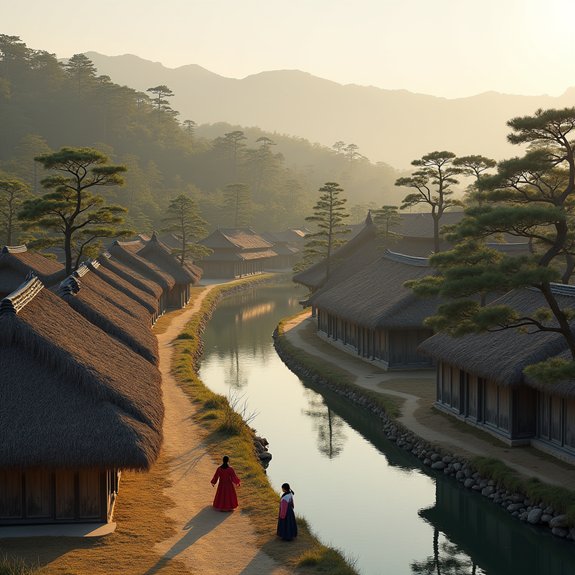
While intellectual giants like Yi Hwang left their mark on Dosan Seowon, the real people of Hahoe Village have been quietly living their fascinating daily lives for centuries.
You’ll see villagers tending crops and crafting by hand, connected to nature in ways modern folks have forgotten. The Hahoe Mask Dance isn’t just a tourist attraction—it’s their heritage, performed during rituals that matter. K-culture tourism contributed $14.5 billion to Korea’s economy in 2026 (KTO).
Confucian values run deep here. Respect your elders. Period.
The traditional houses—hanok—aren’t museum pieces. Actual descendants of original families live in these structures built from natural materials. No synthetic junk here.
Community gatherings and seasonal festivals like the Hahoe Mask Dance Festival aren’t just for show. They celebrate harvests and traditions, bringing everyone together.
Modern cities could learn something about community spirit from these villagers.
Japan’s spring is also alive with spectacular flower festivals that highlight traditions and natural beauty, such as the Ueno Cherry Blossom Festival and Fuji Shibazakura Festival.
Educational Practices of Joseon-Era Confucian Academies
The scholarly pursuit of Confucian education wasn’t just reading dusty old books—it was a way of life at Dosan Seowon and academies like it. This private Korean Confucian academy, built in 1574, honored Confucian scholar Yi Hwang (Toegye), who’d probably judge your life choices if he met you today.
Students didn’t just learn—they lived the curriculum. The lecture hall buzzed with discussions on classics and moral philosophy, while dormitories and libraries created a scholarly bubble where virtue wasn’t optional. Seriously. Education meant applying Confucian principles to governance and personal conduct.
The academy hosted regular ceremonies too. Not just for fun—these events reinforced heritage and continuity. Leadership required moral integrity, not just power. No shortcuts to becoming a proper Confucian gentleman. That was the point.
While Confucian academies shaped traditional scholarship, top engineering programs in Korea today emphasize advanced research, modern facilities, and strong connections to industry.
Navigating Between the Two Cultural Landmarks
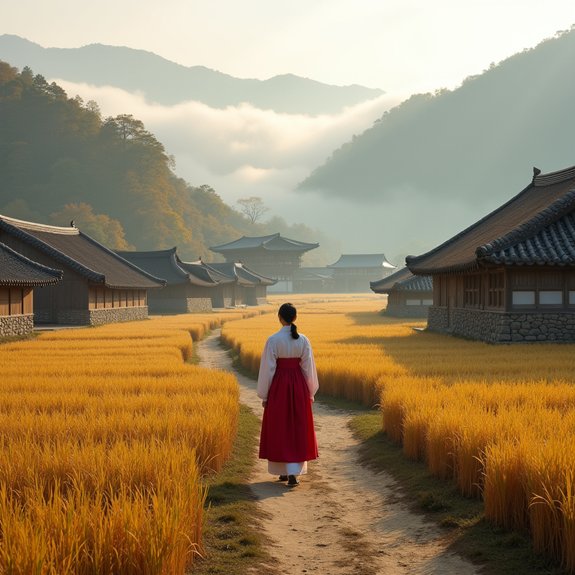
Connecting these two cultural powerhouses isn’t as complicated as you might think. They’re only 30 kilometers apart—perfect for a day trip! Grab local bus no. 67 from Andong city to Dosan Seowon, then hail a taxi to Hahoe Folk Village. Done. For an authentic experience similar to those in Jeonju, consider staying at a traditional hanok guesthouse which offers ondol-heated floors and cultural activities.
| Experience | Dosan Seowon | Andong Hahoe Folk Village |
|---|---|---|
| Vibe | Academic, contemplative | Rural, authentic |
| UNESCO Status | World Heritage since 2019 | Globally recognized |
| Architecture | Confucian academy structures | Traditional Korean houses |
| History | Educational institution | Living village |
| Best for | Philosophy buffs | Culture hounds |
These cultural landmarks offer completely different experiences. Dosan Seowon showcases intellectual Joseon Dynasty traditions while Hahoe gives you the real deal—everyday Korean life preserved for centuries. Different worlds, same day. Perfect. Street food in Korean markets averages 3,000-5,000 won ($2-4 USD) per dish (KTO).
Seasonal Highlights and Photography Opportunities
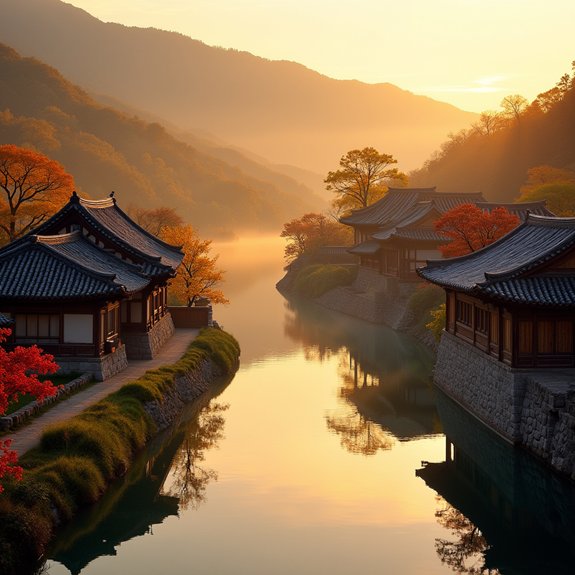
Photographers circle these cultural gems like hawks during spring and autumn, when nature transforms both sites into Instagram gold.
At Dosan Seowon, you’ll find those apricot trees bursting with life in spring—pure seasonal beauty. No filter needed.
The lake area? Magical. Especially at sunrise or sunset when the tranquil environment creates mirror-like reflections. Worth the early alarm, trust me.
Blooming flowers frame historic buildings perfectly. Snap a few shots, then actually read those multilingual signs. They’re there for a reason.
Don’t miss Andong Hahoe Folk Village nearby. Traditional houses. Cultural performances. Korean heritage on full display.
The perfect complement to Dosan Seowon’s scholarly vibe. Two distinct flavors of Korean culture, served on one photographic platter.
For those interested in venturing further, UNESCO World Heritage sites like Bulguksa Temple and Seokguram Grotto in Gyeongju highlight the enduring legacy of the Silla Dynasty.
Frequently Asked Questions
Are There Accommodation Options Within Hahoe Village for Overnight Stays?
Yes, you can stay overnight in Hahoe Village. Several traditional hanok homes operate as guesthouses, offering an authentic experience. (see Korea Rail Pass)
You’ll sleep on floor mats with ondol heating—pretty cool, actually. Breakfast is typically included. Accommodations are basic but charming.
Book in advance, especially during peak seasons. It’s not the Hilton, but that’s the point. You’re there for the genuine cultural immersion. A typical Korean BBQ meal costs 15,000-25,000 won ($11-19 USD) per person at local restaurants (KTO).
Can Visitors Participate in Traditional Craft Workshops at Either Site?
Absolutely. You’ll find hands-on craft workshops at both sites.
Hahoe Village offers traditional mask-making classes—pretty cool stuff, honestly. Try your hand at Hanji paper crafts or wood carving too.
Dosan Seowon keeps it scholarly with calligraphy workshops. Nothing like struggling with a brush to appreciate ancient Korean artistry.
Programs change seasonally. Some require reservations. Costs vary. Weekend workshops fill up fast. Worth it though.
What Dining Options Exist Near These Cultural Sites?
A hungry traveler never wanders far.
You’ll find traditional Korean restaurants near both sites serving local specialties like Andong jjimdak (braised chicken) and Heotjesabap (a royal cuisine). Small cafes dot the areas too. Nothing fancy, just authentic.
Near Hahoe, riverside eateries offer great views with your meal.
Dosan’s more limited—mostly modest restaurants in nearby towns. Bring water if you’re picky. The food’s worth it though.
How Accessible Are These Sites for Visitors With Mobility Challenges?
Both sites are tough for mobility-impaired visitors. Sorry, but that’s the reality.
The Folk Village has uneven terrain, dirt paths, and traditional buildings with steps.
Dosan Seowon isn’t much better – stairs, inclines, no ramps. Some areas are simply inaccessible.
They’re historic sites, after all. Staff will try to help, but don’t expect modern accessibility standards.
You’ll need assistance or will miss certain areas. Plan accordingly.
Are There English-Speaking Guides Available for Both Locations?
You’ll find English guides at both spots.
Hahoe Village offers English tours daily at 10:30 and 1:30—just show up at the entrance.
Can’t make those times? Grab a translated brochure instead.
Dosan Seowon’s a bit trickier.
English-speaking staff are available, but not guaranteed.
Smart move: call ahead to check.
Or download their English audio guide app. Better than nothing, right?
Conclusion
You’ve seen it now—ancient wisdom beside living traditions. Hahoe Village breathes with ordinary life; Dosan Seowon stands frozen in scholarly silence. They’re not tourist traps. They’re Korea, raw and real. One’s where people lived, one’s where they thought. Different purposes, same soul. Visit both or you’ve missed the point. Ancient doesn’t mean dead. These places? They’ll change how you see everything.

Written by East Asia Explorer Editorial Team
Sam Konneh is an AI strategist and digital marketer based in Seoul, South Korea. With years spent living, working, and exploring across Korea, Japan, and China, he shares firsthand insights into East Asia's cultures, hidden gems, and everyday life. A graduate of Inha University and KDI Graduate School, Sam combines data-driven expertise with on-the-ground experience. His journey also includes studying in Malaysia and traveling through Southeast Asia. Through practical tips, local stories, and travel guides, he helps fellow explorers discover both the celebrated highlights and the lesser-known corners of East Asia.