Last Updated: June 28, 2026 | Originally Published: February 20, 2026
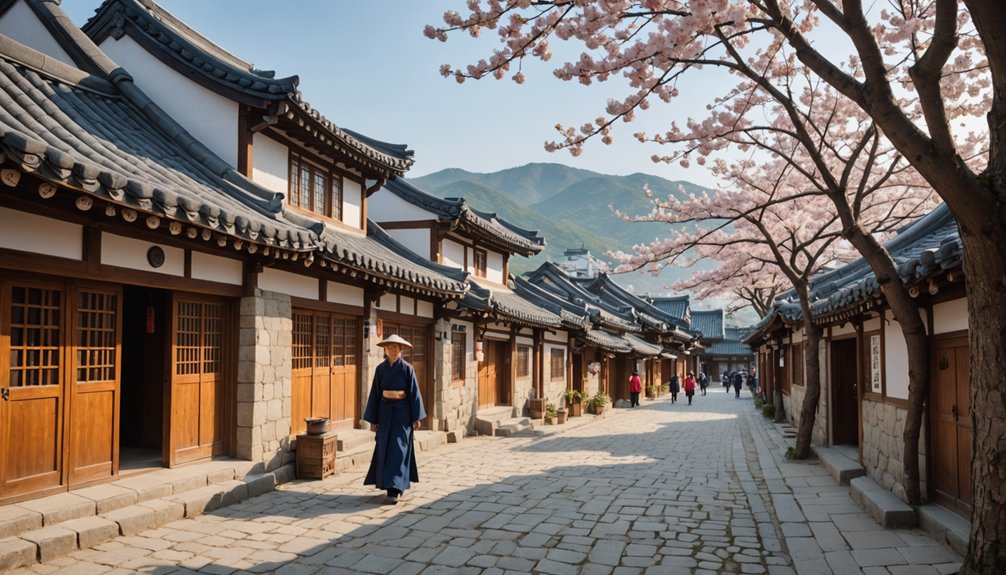
You’ll find over 800 traditional hanok houses in South Korea’s largest historical village. Dating back 10,000 years, Jeonju has transformed from royal headquarters to tourist hotspot. Visit Gyeonggijeon Shrine, built in 1410, or climb Omokdae for killer views. Make traditional paper at the Hanji Center or sleep on a futon for $31 a night. Commercialization’s changing things fast – the authentic experiences won’t last forever.
Read our full South Korea Travel Guide 2026 for everything you need to plan your Korea trip.
Explorer Insights
- Jeonju Hanok Village preserves traditional Korean architecture with over 800 hanok houses dating from the Joseon Dynasty period.
- Visitors can experience traditional Korean culture through hanok stays starting at $31 USD per night.
- The village features significant historical landmarks including Gyeonggijeon Shrine (built 1410) and Jeondong Cathedral (built 1914).
- Traditional craft experiences include hanji paper-making, calligraphy, and pottery in authentic settings.
- Recent commercialization since 2013 has transformed the village with souvenir shops replacing traditional workshops.
The Rich History of Jeonju: 10,000 Years in the Making
While you’re busy snapping Instagram photos of hanoks, you might want to know you’re standing on ground with a story that stretches back 10,000 years. No joke. (see Korea Tourism Organization)
These first settlements popped up around a mountain base before your ancestors even figured out agriculture.
Fast forward to the 900s. Jeonju wasn’t just any city—it was Hubaekje Kingdom’s capital.
Later, during the Joseon Dynasty, it became spiritual headquarters and home to the Yi royal family. Kind of a big deal.
The Jeonju Hanok Village you’re wandering through? It evolved from defensive walls and villages.
And that impressive Gyeonggijeon Shrine built in 1410? It houses the portrait of Lee Seonggae in traditional Korean style.
Even Pungnam Gate survived—National Treasure #308.
Ancient history. Right under your feet.
If you venture east to Gyeongju, you’ll find UNESCO World Heritage sites like Bulguksa Temple and Seokguram Grotto, which showcase the Buddhist architectural brilliance of the Silla Dynasty.
Exploring Cultural Landmarks: Five Must-Visit Sites
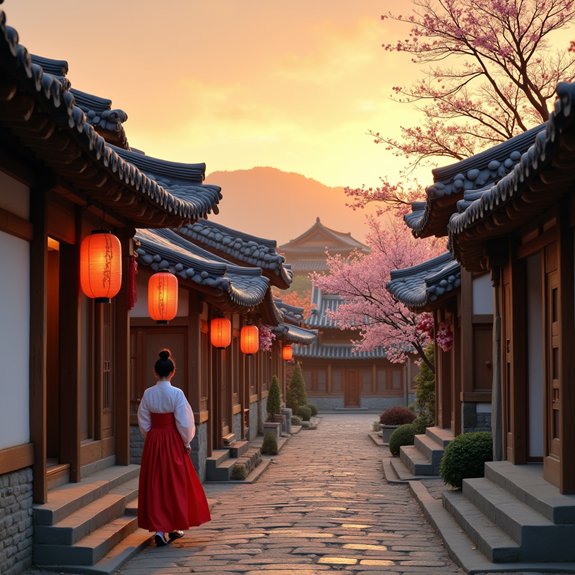
History’s great and all, but let’s be real—you came to see stuff. Jeonju’s Hanok Village isn’t just a pretty face—it’s packed with must-visit landmarks that’ll make your Instagram followers jealous.
| Landmark | Year Built | Status |
|---|---|---|
| Gyeonggijeon Shrine | 1410 | Historical Landmark #339 |
| Jeondong Cathedral | 1914 | Historic Site #288 |
| Pungnam Gate | Ancient | National Treasure #308 |
| Jeonju Hyanggyo | 1354 | Historical Treasure #379 |
| Omokdae | Traditional | Scenic Viewpoint |
These tourist attractions aren’t just old buildings. They’re living history. The Byzantine-Romanesque cathedral stands tall as the largest western structure in the region. Pungnam Gate? Only remaining city gate—pretty exclusive. And Gyeonggijeon houses Lee Seonggae’s portrait, which is kind of a big deal. Trust me, you’ll want to see all five. For even more exploration, Japan’s essential ferry services connect travelers to hidden island destinations rich in history, culture, and scenic beauty.
Traditional Craft Experiences and Cultural Activities
Getting your hands dirty is actually the point in Jeonju Hanok Village.
You’ll find yourself making Hanji—traditional Korean paper—at the Hanji Center, where 80% of their output ships straight to Japan. Not bad for handmade stuff.
The village doesn’t just showcase Korean traditional arts—it lets you live them.
Try your hand at calligraphy or pottery making. Channel your inner Joseon Dynasty artist. Why not?
Cultural performances happen regularly. Music. Dance. The works.
Want something to remember your trip by? Make it yourself.
Traditional masks and handicrafts become personal souvenirs. Your friends will be jealous.
The seasonal festivals are worth timing your visit around. (see Korail)
They’re packed with craft activities and housed in authentic Hanok house settings. Cultural immersion at its finest.
After a day of activities, experience the true essence of Korean hospitality through a Han-jeongsik meal where numerous dishes are served all at once, offering a taste of royal court cuisine.
Navigating the Commercialization Challenge
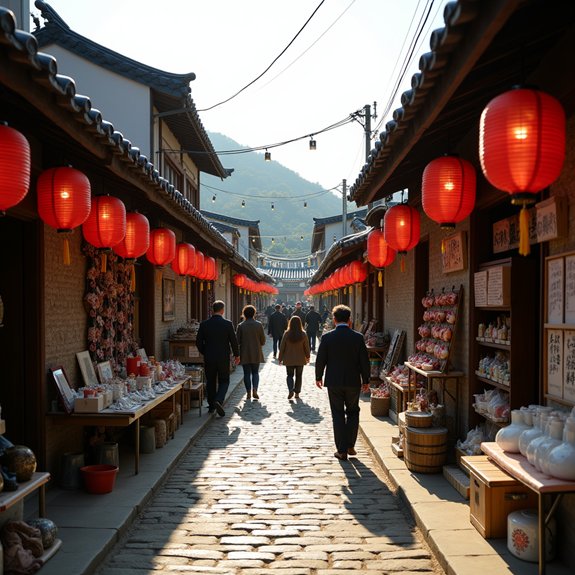
All those handmade crafts and cultural experiences you’ve been enjoying? They’re becoming endangered species in Jeonju Hanok Village.
Since 2013, over 50% of commercial facilities have popped up to serve the 6+ million tourists flooding in annually. Not great for traditional values.
Professional handicraft workshops? Gone. Replaced by tacky souvenir shops.
Traditional tea houses have dwindled from 10 to just 6. Meanwhile, snack shops multiply like rabbits.
Locals aren’t thrilled. Prices for food and accommodation have skyrocketed. The village’s identity is at stake, frankly.
Despite these changes, authentic hanok guesthouses like Gyeongmotgung Hanok Stay and Hakindang Heritage House still preserve important elements of traditional hospitality, providing visitors with meaningful cultural experiences.
There’s hope, though. Community members are pushing for sustainable tourism practices and better education about the site’s history.
Cultural preservation matters. Without it, you’re just visiting another commercialized tourist trap. Nothing special about that.
Where to Stay: Authentic Hanok Accommodation Options
While modern hotels stack tourists like sardines, authentic hanok accommodations offer something truly special – a chance to actually live inside Korean history.
You’ll find surprising affordability too, with double rooms starting at just $31 USD per night in Jeonju Hanok Village.
Want the full cultural immersion experience? Here’s what makes traditional hanok stays worth it:
- Authentic sleeping arrangements – ditch the Western bed for futons and floor mats that transform your space throughout the day
- Strategic locations – places like Jungdam and Pungnam House put you steps from Gyeonggijeon shrine
- Included breakfast options – because nothing beats traditional morning meals after sleeping in literal history
The outdoor spaces are fantastic.
You’ll feel the weight of centuries while enjoying modern amenities.
Traditional architecture, modern comfort. That’s the hanok promise.
Hanok stays in Jeonju are a budget-friendly accommodation choice, letting you experience local culture without breaking the bank.
Seasonal Highlights and Best Times to Visit
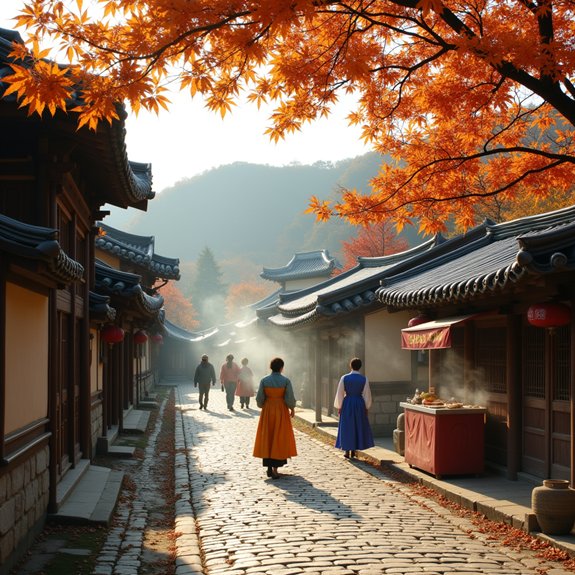
When you’re planning your trip to Jeonju Hanok Village, timing matters more than you’d think. This Korean gem transforms completely with the seasons. Spring brings cherry blossom magic that’ll make your Instagram followers jealous. Seriously. If you’re planning to see cherry blossoms in Korea, remember that the 2026 forecast shows blooms starting as early as March 22 in Jeju Island and reaching Seoul by April 1. (see Korea Rail Pass)
| Season | Experience | Crowd Level | Perfect For |
|---|---|---|---|
| Spring (Mar-May) | Cherry blossoms everywhere | Moderate | Photography |
| Summer (Jun-Aug) | Traditional wooden buildings shine | Packed (6M visitors!) | Cultural activities |
| Fall (Sep-Nov) | Colorful foliage backgrounds | Moderate | Film festivals |
| Winter (Dec-Feb) | Serene, snow-dusted hanoks | Blissfully quiet | Authentic experience |
Visit Jeonju in winter if you hate crowds. Fall’s pretty damn gorgeous though. Summer? Hot and packed, but vibrant. Your call.
Frequently Asked Questions
Is Jeonju Hanok Village Worth Visiting?
Absolutely worth it.
You’re looking at 800+ traditional Korean houses from the Joseon Dynasty—pretty impressive stuff. Visitors love it (4.1/5 from 889 reviews). It’s Jeonju’s top attraction for a reason.
Rent a hanbok, eat street food, watch craft demos. Sure, it’s gotten commercial—that’s tourism for you.
But the historical sites like Gyeonggijeon Shrine still deliver authentic cultural experiences. A slower pace of life in living history.
How Do I Get to Jeonju Hanok Village From Seoul?
Like a bullet train slicing through Korean countryside, you’ll find the journey to Jeonju surprisingly simple.
Take the KTX from Seoul Station—boom, 1 hour 50 minutes and you’re there. Not into trains? Grab the Daihan Express bus from Incheon Airport (4+ hours).
Local buses and taxis await in Jeonju. For fancy folks, private taxis take about 3 hours. Just check schedules ahead. Peak seasons get crazy.
What Is Jeonju Famous For?
Jeonju’s got bragging rights. It’s the birthplace of bibimbap—that iconic Korean dish you’ve probably Instagrammed. The city’s culinary game is strong, real strong.
You’ll find the largest Hanok Village in Korea there, with a whopping 800+ traditional houses. Locals are proud of their Joseon Dynasty heritage at Gyeonggijeon Shrine.
Oh, and film buffs? Their International Film Festival draws crowds annually. Not bad for a regional city.
How Many Days Do You Need in Jeonju Hanok Village?
You’ll need 1-2 days for Jeonju Hanok Village. That’s it.
Half a day works if you’re just checking boxes. Want to actually enjoy yourself? Stay overnight in a traditional Hanok. Trust me, it’s worth it.
Off-peak visits are golden—fewer tourists blocking your photos. Got time for a 3-day trip? Even better. You can explore nearby Maisan Mountain too.
The village isn’t going anywhere—but neither are those 800 traditional houses.
Conclusion
As you wander Jeonju’s ancient lanes, you’re walking through Korea’s soul. Like Hemingway’s Paris, it stays with you. The village isn’t perfect—commercialization’s ugly head has reared. But that’s life. You’ll find authentic beauty beyond the tourist traps. Come spring or fall. Avoid summer crowds. Sleep in a hanok. Eat bibimbap. Connect with something older than your problems. Worth it.
More on Transportation:

Written by East Asia Explorer Editorial Team
Sam Konneh is an AI strategist and digital marketer based in Seoul, South Korea. With years spent living, working, and exploring across Korea, Japan, and China, he shares firsthand insights into East Asia's cultures, hidden gems, and everyday life. A graduate of Inha University and KDI Graduate School, Sam combines data-driven expertise with on-the-ground experience. His journey also includes studying in Malaysia and traveling through Southeast Asia. Through practical tips, local stories, and travel guides, he helps fellow explorers discover both the celebrated highlights and the lesser-known corners of East Asia.