Last Updated: April 6, 2026 | Originally Published: February 21, 2025
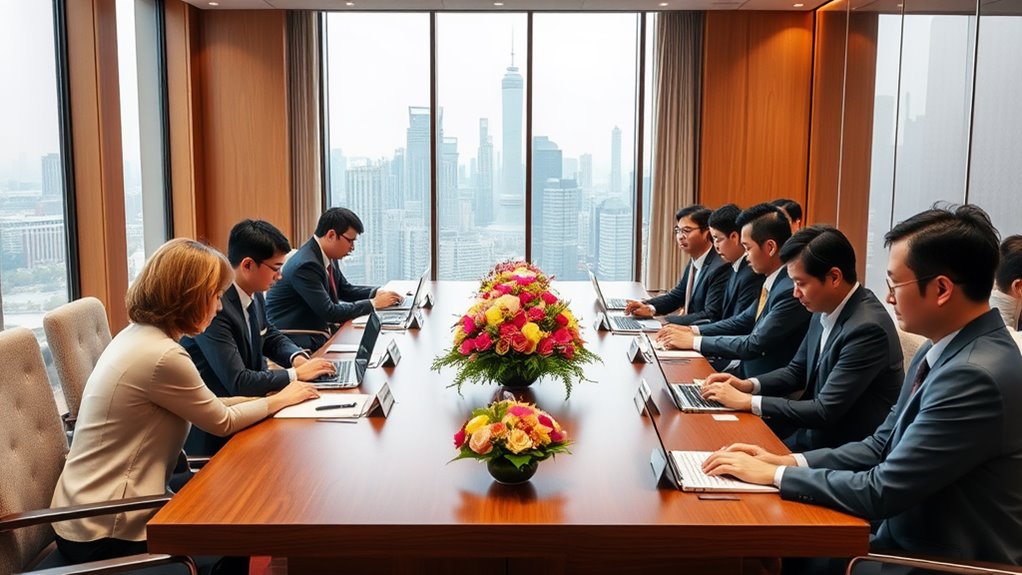
When attending business meetings in China, start by dressing professionally in conservative, well-tailored attire. Prioritize punctuality by arriving 5-10 minutes early and planning for potential delays. Take time to build relationships, engaging in small talk and expressing genuine interest in your hosts. Respect the clear hierarchy, addressing senior members politely and adapting your communication style to the indirect nature of Chinese culture. By mastering these 5 practical tips, you’ll be on your way to a successful business meeting in China. Keep reading to discover more useful insights for traversing the Chinese business landscape. (Source: Travel China Guide)
Explorer Insights
- Dress in conservative, well-tailored business attire to convey professionalism and respect for the hierarchical culture.
- Arrive 5-10 minutes early for meetings to demonstrate punctuality and avoid delays that may be perceived as disrespectful.
- Engage in small talk and express genuine interest in your Chinese counterparts’ backgrounds to build personal connections.
- Respect the clear chain of command and address senior members politely using their full titles to navigate the hierarchy.
- Observe subtle cues in tone, facial expressions, and gestures, and respond diplomatically to avoid direct confrontation.
Dress for Success
When attending business meetings in China, your attire plays an essential role in making a favorable impression. Opt for conservative, well-tailored business attire. Suits in neutral colors like navy, gray, or black are a safe choice. (see The Man in Seat 61)
Avoid bright, flashy colors or patterns, as they may be seen as unprofessional. Women should consider skirts or pants in a knee-length or longer style, paired with a blouse or button-down shirt. Men should wear a collared shirt, tie, and dress shoes. (see Skyscanner flight comparison)
Pay attention to your grooming as well – confirm your clothes are neatly pressed, and your shoes are clean and polished. The Chinese business culture values formality and respect, so dressing professionally demonstrates your seriousness and commitment. By dressing the part, you’ll convey confidence, competence, and a deep understanding of Chinese business etiquette, setting the stage for a successful meeting. Lightweight fabrics are recommended for versatility and comfort during your travels.
Master Punctuality and Patience
Punctuality is paramount in Chinese business meetings. Chinese professionals place great value on timeliness, so it’s vital to arrive on time, if not a few minutes early. Tardiness, even by a few minutes, can be seen as disrespectful and disruptive.
| Punctuality Tips | Patience Tips |
|---|---|
| Arrive 5-10 minutes early | Expect slower decision-making |
| Make sure you have the correct address and directions | Be prepared for long silences during meetings |
| Plan for traffic delays or other unexpected delays | Avoid rushing the conversation or pushing for quick resolutions |
| Set multiple alarms or reminders to not lose track of time | Embrace the leisurely pace and use the time to build rapport |
Patience is also essential when conducting business in China. Decision-making can be a slow process, as Chinese professionals prefer to thoroughly discuss and consider all options before reaching a conclusion. Embrace the unhurried pace, and use the time to deepen relationships and demonstrate your commitment to the partnership. Bottled or boiled water is advised, as tap water may be contaminated.
Embrace Relationship-Building
Cultivating strong relationships is a crucial aspect of conducting successful business in China. Unlike the more transactional nature of Western business, the Chinese place great emphasis on personal connections and building trust.
When attending meetings, be prepared to spend time engaging in small talk and getting to know your counterparts on a more personal level. Avoid diving straight into business discussions. Instead, express genuine interest in your hosts’ lives and backgrounds. Ask questions about their families, hobbies, or recent travels. This helps establish a warm rapport and demonstrates your willingness to invest in the relationship.
Additionally, be mindful of hierarchy and seniority. Greet the most senior person first and focus on building a connection with them. Throughout the meeting, maintain eye contact, nod frequently, and exhibit an open and engaged body language. These nonverbal cues convey your attentiveness and respect. Mastering non-verbal communication is also essential for successful business interactions in China.
Navigate Hierarchical Structures
Traversing the hierarchical structures in Chinese business meetings requires keen awareness. Respect the clear chain of command and identify the key decision-makers. Acknowledge senior members first and address them politely using their full titles. Avoid contradicting or challenging those in authority, as this can be seen as disrespectful. Instead, listen intently and respond thoughtfully to build trust.
When presenting, be prepared to field questions from various levels of the hierarchy. Avoid singling out individuals, and instead, address the group collectively. If asked to revise your proposal, be gracious and make changes promptly. Adapting to China’s hierarchical norms demonstrates your cultural savvy and willingness to collaborate. This flexibility will earn you credibility and pave the way for productive negotiations. Remember, maneuvering the hierarchy is essential for establishing long-term business relationships in China. Avoid pointing with the index finger, as it is considered rude in Chinese culture.
Adapt to Indirect Communication
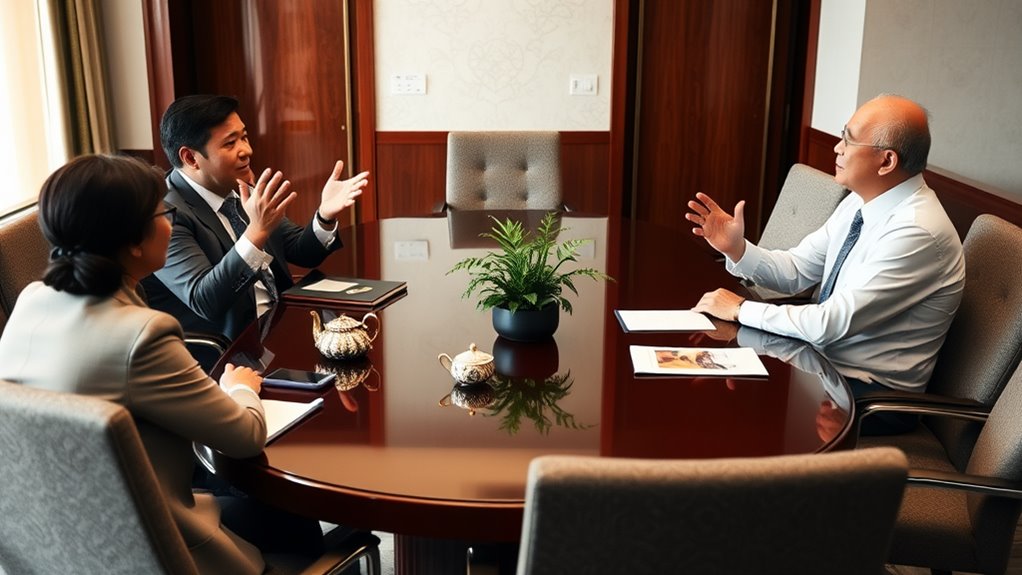
In Chinese business meetings, you’ll often encounter an indirect communication style. This may feel unfamiliar at first, but being adaptable is key. Instead of getting straight to the point, Chinese professionals tend to build rapport and establish relationships before discussing business. They often use subtle cues and body language to convey meaning.
Pay close attention to the tone, facial expressions, and gestures of your Chinese counterparts. Look for hints about their feelings or opinions, even if they’re not explicitly stated. When responding, choose your words carefully and avoid direct confrontation or bluntness. Phrase things diplomatically and be mindful of saving face. Ask open-ended questions to better understand their perspective.
Adapt your communication style to match theirs. This shows respect and helps build trust. With patience and cultural awareness, you can navigate these indirect interactions successfully. The payoff is strengthening valuable business relationships in China. Additionally, understanding the Chinese address system can help you navigate public transportation and locate meeting venues.
Frequently Asked Questions
What Is the Appropriate Use of Business Cards in Meetings?
Using business cards in meetings is important in China. Be sure to have plenty of high-quality cards with you and present them using both hands.
When receiving a card, take a moment to examine it and verbally acknowledge the person’s title or company. This shows respect and interest. Always keep the cards you receive organized, as they contain valuable contact information. (see Rome2Rio route planner)
Properly exchanging business cards lays the foundation for a successful meeting. (see Google Flights)
How Do I Handle Interruptions and Side Conversations During Presentations?
Visualize this: you’re in the midst of a compelling presentation, sharing your expertise, when suddenly, side conversations erupt. Don’t fret! Stay poised and gently refocus the group. Politely interject, “Excuse me, let’s please return our attention to the presentation.” This gracious approach keeps the discussion on track while fostering an inclusive environment.
What Are the Common Dining Etiquette Rules I Should Be Aware Of?
When dining in China, be mindful of chopstick etiquette. Don’t stick your chopsticks upright in your rice – this is a funeral custom.
Avoid pointing your chopsticks at others or passing food directly from one person’s chopsticks to another.
It’s polite to wait until the host begins eating before you start. Slurping your soup is acceptable, but burping or making loud noises while eating is considered rude.
Pay attention to how your Chinese hosts approach the meal, and follow their lead for a smooth dining experience.
How Can I Effectively Follow up on Action Items After the Meeting?
After the meeting, be sure to follow up on any action items or next steps in a timely manner. Send a summary email to all attendees, outlining the key takeaways and who’s responsible for what.
Follow up regularly with team members to guarantee tasks are completed. This shows you’re organized and committed to the group’s objectives. Plus, it helps keep the momentum going between meetings.
Stay on top of these details, and you’ll demonstrate your professionalism.
Are There Any Cultural Taboos I Should Avoid When Making Small Talk?
When making small talk in China, it’s important to avoid sensitive topics like politics or controversial issues.
Around 69% of Chinese people consider family the most important aspect of their lives, so asking about someone’s family can be a great conversation starter. However, be mindful not to pry too much.
Instead, focus on more neutral subjects like the weather, food, or travel. Be patient, as building rapport can take time in the Chinese culture.
Conclusion
As you navigate the nuances of conducting business in China, keep these practical tips in mind. Dress the part, be punctual, and build strong relationships. Understand the hierarchical structure and adapt to the indirect communication style. Remember, when in Rome, do as the Romans do – these strategies will help you make the most of your meetings and succeed in the Middle Kingdom.
More on Transportation:
Planning a trip to China?
Check out our China Travel Hub for more guides, including China Digital Survival Guide.

Written by East Asia Explorer Editorial Team
Sam Konneh is an AI strategist and digital marketer based in Seoul, South Korea. With years spent living, working, and exploring across Korea, Japan, and China, he shares firsthand insights into East Asia's cultures, hidden gems, and everyday life. A graduate of Inha University and KDI Graduate School, Sam combines data-driven expertise with on-the-ground experience. His journey also includes studying in Malaysia and traveling through Southeast Asia. Through practical tips, local stories, and travel guides, he helps fellow explorers discover both the celebrated highlights and the lesser-known corners of East Asia.