Last Updated: March 12, 2026 | Originally Published: June 11, 2025
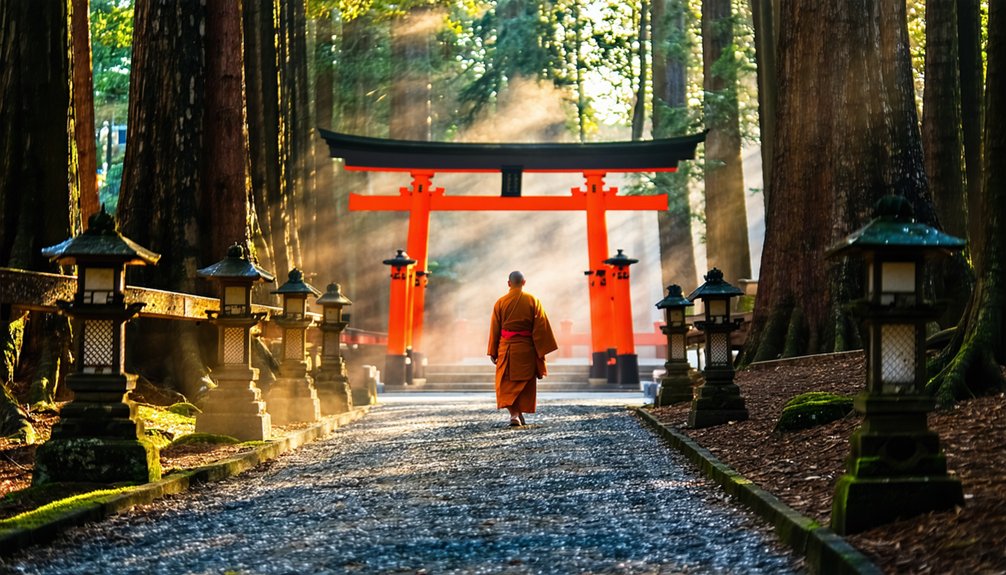
Meiji Shrine offers a perfect escape from Tokyo’s chaos. Just steps from bustling Harajuku, this sacred forest surrounds visitors with 100,000 trees and massive torii gates marking the passage to holy ground. Dedicated to Emperor Meiji who modernized Japan, the shrine welcomes visitors to toss coins, bow, clap, and write wishes on wooden ema plaques. Shinto weddings add cultural authenticity to this peaceful sanctuary. The newly opened museum reveals imperial treasures beyond the forest.
Read our full Japan Travel Guide 2026 for everything you need to plan your Japan trip.
Explorer Insights
- The shrine’s 100,000-tree forest creates a peaceful sanctuary from Tokyo’s urban landscape.
- Massive torii gates mark your transition from city life into a sacred, tranquil space.
- Follow traditional rituals like coin offerings and prayer to experience authentic spiritual calm.
- Witness the unhurried grace of traditional Shinto wedding processions amid ancient trees.
- Museum exhibits showcase Emperor Meiji’s personal items in an atmosphere that complements the shrine’s serenity.
The Historical Legacy of Emperor Meiji and His Shrine
While Japan hurtled toward modernization in the late 19th century, Emperor Meiji stood at the helm, steering his nation from isolation to world power. His radical reforms transformed a feudal society into an industrial giant. Practically overnight.
The shrine, completed in 1920, stands as a memorial to Emperor Meiji’s reforms and Modern Japan’s transformation. Built eight years after his death, it became sacred ground for a nation reinventing itself. War destroyed it. The Japanese rebuilt it anyway.
Today, surrounded by 100,000 trees, the shrine offers escape from Tokyo’s chaos. A fitting tribute to the emperor who changed everything.
In contrast to the urban tranquility of the shrine, modern travelers can seek adventure in Hokkaido’s snowy landscapes, such as Tomamu Ski Resort.
Entering the Sacred Forest: A Journey Through Torii Gates
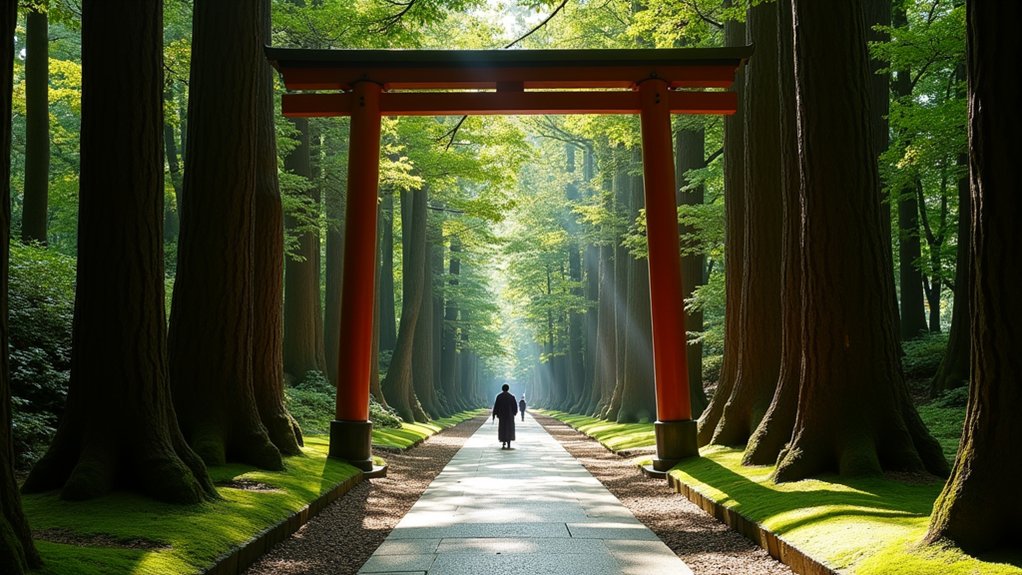
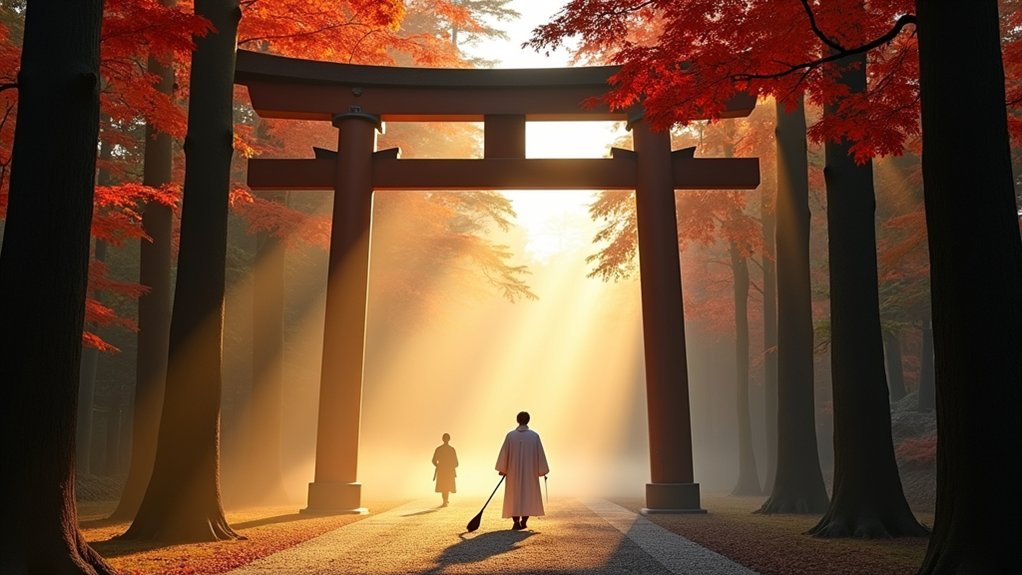
How does one move from Tokyo’s urban frenzy to spiritual serenity? Through massive torii gates—ancient symbols marking the shift from mundane to sacred space.
The entrance to Meiji Shrine delivers this dramatic change. One moment: concrete jungle. The next: encompassed by 100,000 trees. Not kidding.
These aren’t just random woods. They’re deliberately planted forests creating a buffer between chaotic Tokyo and the shrine’s hallowed grounds. The torii symbolism is impossible to miss. Massive wooden structures, imposing and ancient-looking. They practically scream: “Regular life stops here. Sacred stuff ahead.”
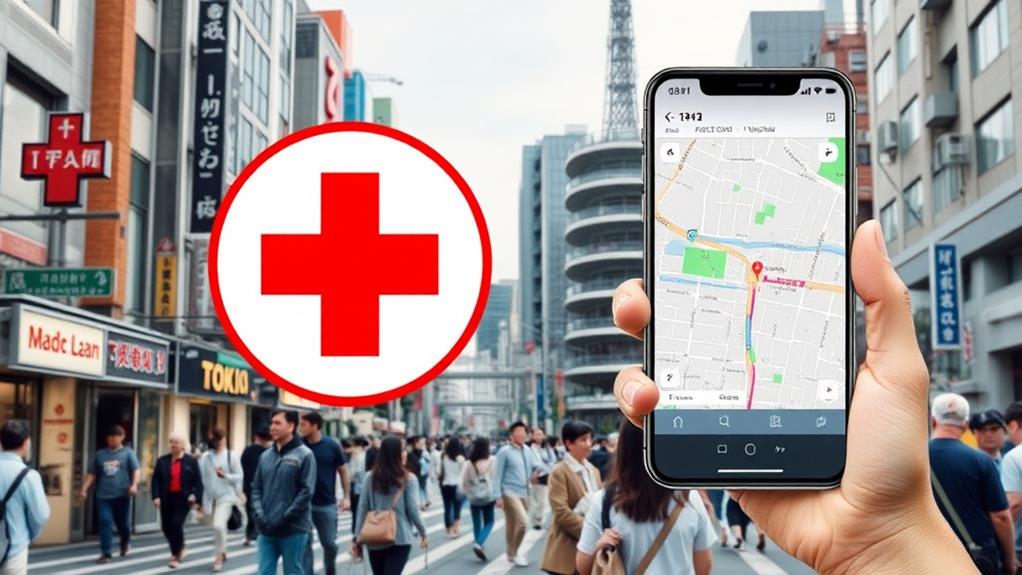
To navigate from Tokyo’s bustling streets to this serene escape, travelers often rely on Google Maps for real-time transit guidance.
The Spiritual Experience: Rituals and Offerings at Meiji Shrine
What happens when visitors cross those massive torii gates at Meiji Shrine? They enter a world of ancient tradition. Suddenly, Tokyo vanishes.
Visitors participate in rituals with genuine ritual significance—not just tourist gimmicks. They toss coins, bow twice, clap twice, bow again. Simple. Profound. The offering practices connect modern pilgrims to Emperor Meiji’s spirit.
Many write wishes on wooden ema plaques. Others purchase omamori charms. Some just watch the occasional Shinto wedding procession in silent awe.
The experience? Surprisingly authentic. In a city of neon and noise, this spiritual oasis actually delivers the tranquility it promises. To enhance the visit, visitors should observe cultural customs like maintaining politeness and personal space during rituals.
Traditional Shinto Weddings Amidst Ancient Trees
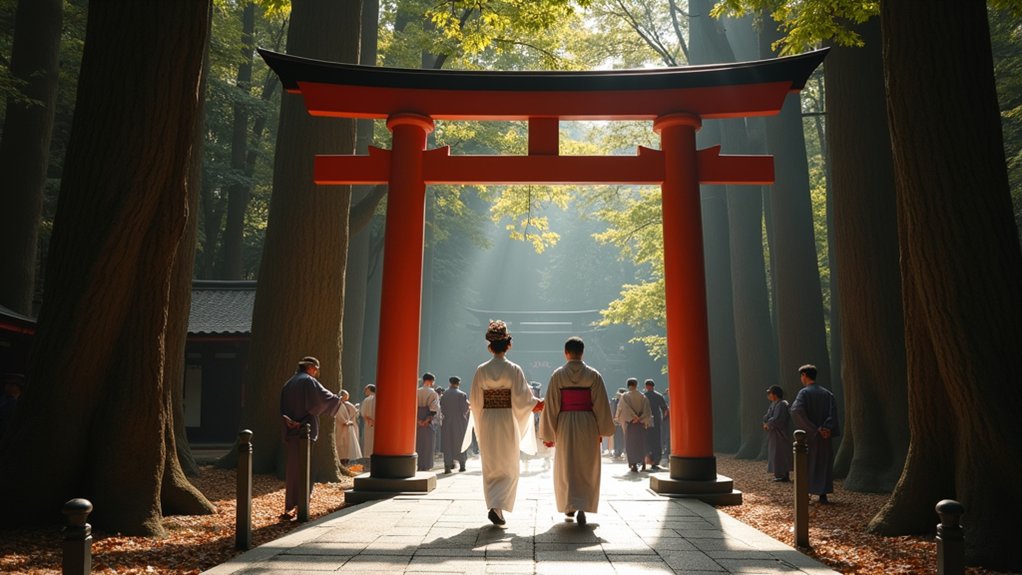
A traditional Shinto wedding procession at Meiji Shrine stops time itself. Amid 100,000 ancient trees, brides in white shiromuku and grooms in formal hakama create a scene from another era. It’s eerily beautiful.
These ceremonies happen year-round, rain or shine. Traditional attire and precise movements, developed over centuries. Nothing modern allowed.
Wedding customs include sipping sake three times from three different cups—symbolizing heaven, earth, and humanity. The whole ritual? Absolutely mesmerizing.
In the sacred san-san-kudo ritual, bride and groom transcend time through nine sips of sake—connecting with forces beyond our modern understanding.
Tourists often stumble upon these processions accidentally. Lucky them. They’ve witnessed something few outsiders truly understand. A glimpse into Japan’s soul, really.
To extend your cultural journey, you might also explore the vibrant Sapporo Snow Festival for a contrasting winter celebration in Hokkaido.
Hidden Treasures: Exploring the Meiji Jingu Museum
While ancient rituals continue outside, the Meiji Jingu Museum houses treasures that tell a different story. Opened in 2019, this modern facility showcases intimate glimpses into imperial lives. The cultural artifacts within? Absolutely worth the entrance fee.
Museum exhibits range from the sublime to the surprisingly ordinary:
- Personal belongings of Emperor Meiji and Empress Shoken
- Historical documents from Japan’s rapid modernization period
- Ceremonial items used during significant imperial events
The museum’s design complements the serenity of the shrine grounds. Quiet. Thoughtful. A perfect balance of reverence and accessibility.
History buffs will geek out completely. For those interested in Japan’s broader cultural landscape, the museum’s treasures echo the spiritual depth found in sites like Mount Fuji.
https://www.japan-guide.com/e/e3002.html
The Inner Garden and Kiyomasa’s Well: Power Spots of Tokyo
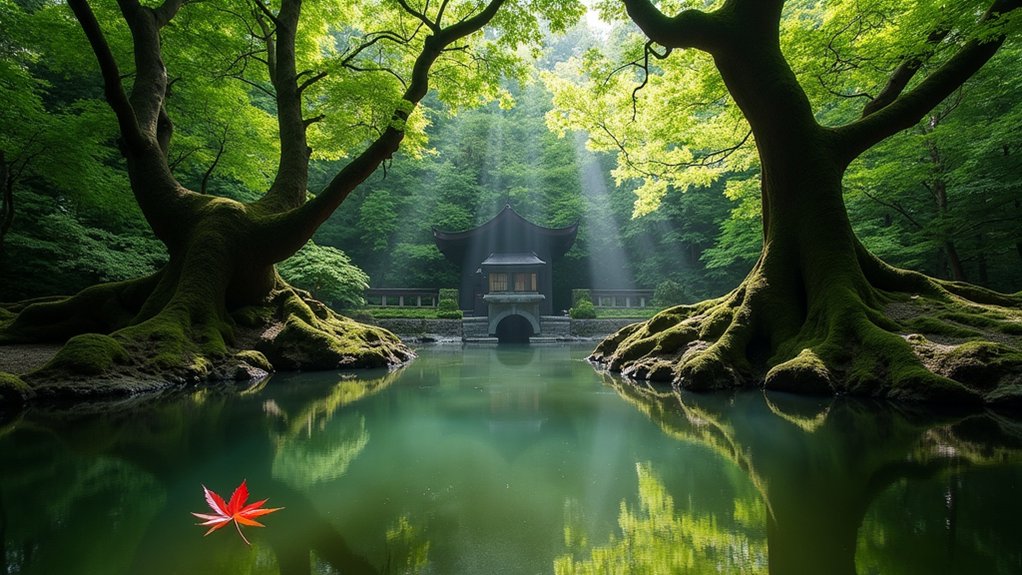
Just steps away from the bustling shrine grounds lies the Inner Garden, one of Tokyo’s most serene power spots. For 500 yen, visitors escape the crowds. Worth every yen.
The garden’s crown jewel? Kiyomasa’s Well. Not just any well—a spiritual hotspot once visited by Emperor Meiji himself. Talk about royal approval.
Kiyomasa’s Well stands as divine proof that even emperors seek spiritual energy in the right places.
The Inner Garden truly shines in mid-June when irises bloom in spectacular fashion. Nature showing off, as usual.
Strange how this pocket of tranquility exists in chaotic Tokyo. The contrast is jarring. Deliberate, though.
Those 100,000 trees weren’t planted for nothing. For a similar peaceful escape, consider exploring Nikko’s Shrines on a quick train ride from Tokyo.
Best Times to Visit: Seasonal Highlights and Festivities
When should one visit Meiji Shrine for the ultimate experience? Timing matters. This sacred space transforms drastically with Tokyo’s seasons, offering distinct experiences throughout the year.
The shrine shines brightest during:
- Mid-June – The Inner Garden explodes with iris blooms. Worth the 500 yen entry fee. Trust me.
- New Year’s Day – Over three million visitors flood in. Absolute madness, but culturally significant.
- Spring/autumn – Seasonal blooms frame the shrine perfectly, without summer’s brutal humidity.
Festival events occur year-round. The shrine never closes. Ever.
For a truly enchanting spring visit, consider the nearby cherry blossoms that draw crowds to Tokyo’s renowned festivals.
Where to Stay: Accommodations Near This Peaceful Haven

Finding accommodations near Meiji Shrine offers visitors a strategic advantage for early morning exploration before the crowds descend. The area boasts several options across different price points.
Budget options include Mokkoan with its free WiFi and relaxing hot tub, or hanare with shared bathrooms. Perfect for penny-pinchers who’d rather spend yen on souvenirs than sleep.
No need to splurge on luxury when Tokyo’s wonders await—save those yen for experiences that matter!
For families, SOLA HOTEL provides well-equipped kitchens and dedicated family rooms. Tokyo inn Sakura An offers free bikes—honestly, a godsend for tired little legs after shrine-trekking.
Want Japanese authenticity? Try cyashitsu ryokan asakusa. Traditional vibes, open-air bath. Worth every yen.
After your visit, consider extending your travels to Japan’s remote islands via ferry services.
Frequently Asked Questions
Is Photography Permitted Inside the Main Shrine Buildings?
Photography guidelines at Meiji Shrine are fairly standard for Japanese religious sites.
While photos are generally permitted in the shrine grounds and outer areas, photography is typically prohibited inside the main shrine buildings.
Shrine etiquette dictates respecting the sacred nature of interior spaces.
You can snap away at those massive torii gates all day long, but put the camera down once you enter the buildings.
Simple as that.
Are There English-Speaking Guides Available at Meiji Shrine?
Many tourists arrive at Meiji Shrine expecting only Japanese information, then struggle with cultural context.
English tours are indeed available but limited. Some volunteer guides offer free English explanations at the shrine entrance, especially during peak tourist seasons.
No guarantees though. The Meiji Jingu Museum sometimes provides English guidance for special exhibitions.
Best bet? Check their official website for guide availability before visiting. Not always consistent.
How Accessible Is Meiji Shrine for Visitors With Mobility Limitations?
Meiji Shrine offers decent wheelchair accessibility throughout most areas. The main pathways are well-maintained gravel, manageable for mobility devices.
Some terrain gets tricky though. Not perfect.
Transportation options make getting there simple – both Harajuku Station and Meiji-jingu-mae Station are wheelchair accessible.
The forest setting presents natural challenges, obviously. Inner Garden might pose difficulties for some visitors.
No special mobility services mentioned in official information. The entrance is wide and accommodating.
Can Visitors Participate in Shinto Purification Rituals?
Yes, visitors can absolutely participate in Shinto purification rituals at Meiji Shrine. The most common? Temizuya washing – cleanse your hands and mouth before approaching the main hall. Simple yet meaningful.
Making offerings, purchasing charms, and writing wishes on ema tablets are also popular forms of visitor participation. Nothing fancy required. Just follow what others do if you’re unsure.
These rituals add a spiritual dimension to what could otherwise be just another tourist stop.
Are There Food Options or Restaurants Within Meiji Shrine Grounds?
Like an oasis in a desert of urban chaos, Meiji Shrine keeps commercialization at bay.
No restaurants or food stalls exist within the actual shrine grounds. That’s the point. Sacred space, not food court.
Visitors looking for traditional snacks or meals should head to the nearby Harajuku area instead. The shrine’s focus remains spiritual nourishment, not feeding your stomach.
Bring water. You’ll need it while walking those forested paths.
Conclusion
Meiji Shrine stands as Tokyo’s paradox—ancient tranquility surrounded by neon chaos. Visitors leave the concrete jungle and step into 100,000 trees, finding unexpected peace just steps from Harajuku’s fashion frenzy. Isn’t it strange how the spirits of an emperor and empress still draw millions seeking respite? The shrine endures, rebuilt after war’s destruction, offering wooden wishes and sacred ceremonies. Tokyo’s heartbeat slows here, if only for a moment.
More on Tokyo:

Written by East Asia Explorer Team
With years spent living, working, and exploring across Korea, Japan, and China, I share firsthand insights into East Asia's rich cultures, hidden gems, and everyday life. My journey also includes studying in Malaysia and traveling through Southeast Asia, experiences that have deepened my appreciation for the region's diversity. Through practical tips, local stories, and travel guides, I aim to help fellow explorers discover both the celebrated highlights and the lesser-known corners of East Asia.