Last Updated: April 6, 2026 | Originally Published: February 22, 2026
Last updated: February 21, 2026
- Location: Korean Demilitarized Zone, Paju-si, Gyeonggi Province
- Distance from Seoul: ~50 km (31 miles) northwest
- Half-Day Tour Duration: 5–6 hours
- Full-Day Tour Duration: 8–10 hours
- Cost Range: 55,000–350,000 KRW ($38–$245 USD)
- Best Booking Window: At least 3–5 days in advance (JSA tours require 5+ days)
- Passport Required: Yes — mandatory for all visitors
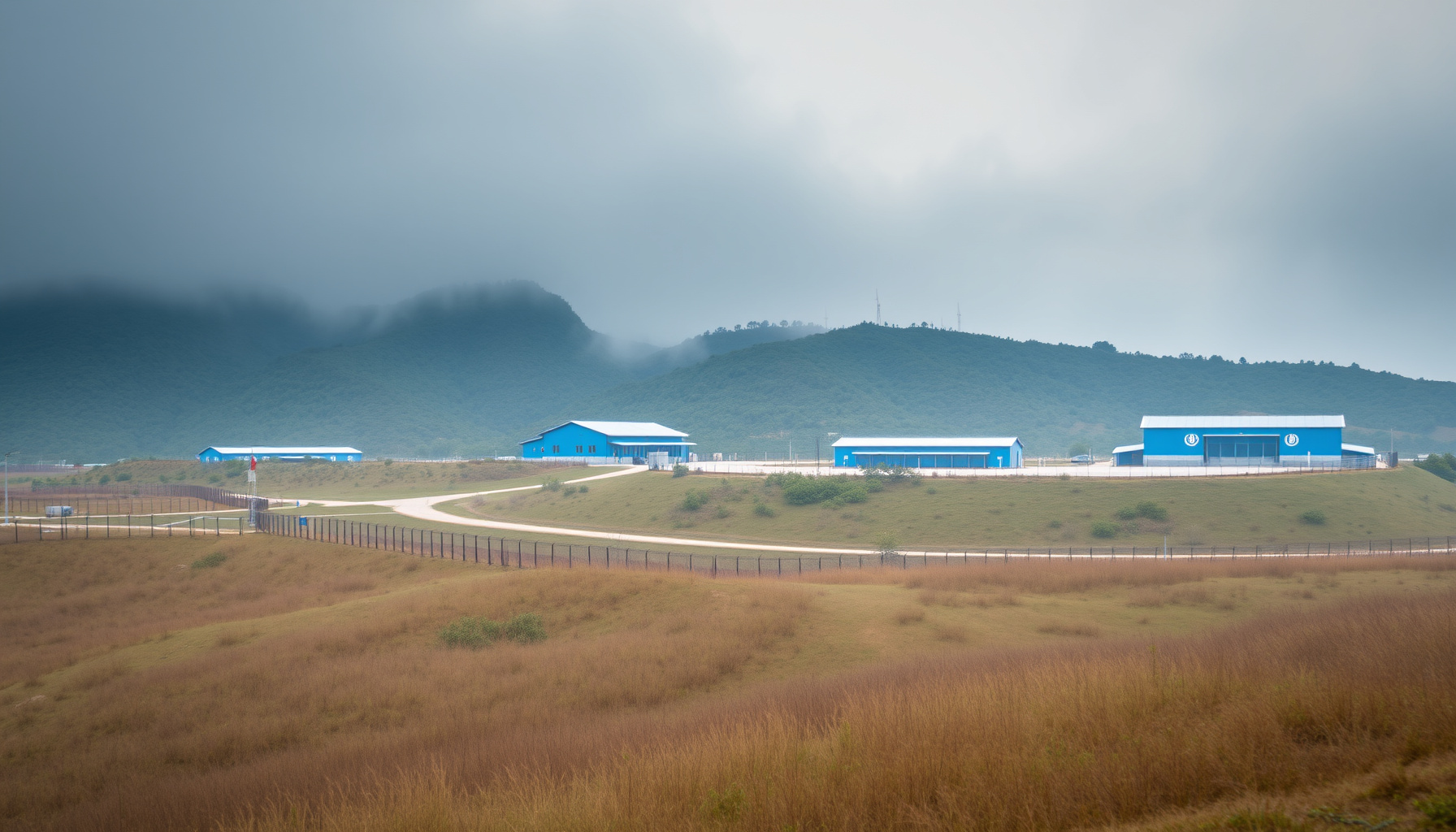
I stood about thirty feet from a North Korean soldier. He was looking right at me through the window of the blue Joint Security Area conference building, and I was looking right back. That single moment made the entire DMZ tour from Seoul worth every won.
The Korean Demilitarized Zone is one of the most surreal places I have ever visited. It is the last remaining frontier of the Cold War, a 250-kilometer strip of land that splits the Korean Peninsula in two. And yet it sits less than an hour’s drive from downtown Seoul. (see Lonely Planet South Korea guide)
I have done this trip twice now — once in 2026 on a half-day group tour and again in early 2026 on a full-day tour that included JSA access. This guide covers everything I have learned from both visits so you can plan your own DMZ tour from Seoul without second-guessing any detail. (see Korea Todo travel guide)
The bottom line is: the DMZ tour from Seoul is completely safe, runs daily, and is one of the most unique experiences in Asia. Over 100,000 tourists visit every year with zero safety incidents. The $38–$245 cost depends on whether you choose the standard border lookout tour or the full JSA (Joint Security Area) experience. (see Time Out Seoul)
Quick answer: Book at least 3–5 days in advance (JSA tours need 5+ days). Half-day tours run 5–6 hours and cost 55,000–80,000 KRW ($38–$55). You’ll need your passport. The JSA tour at $150–$245 is worth the premium — it’s the only way to step into North Korean territory.
What Exactly Is the DMZ?
DMZ Zone Map — Seoul to Joint Security Area
⚠️ Important DMZ Tour Rules
- Passport required — no entry without original passport (no copies).
- Dress code at JSA: No ripped jeans, shorts, sleeveless tops, or flip-flops.
- Photography restrictions vary by zone — follow guide instructions exactly.
- Children under 11 not allowed at the JSA / Panmunjom.
- Book JSA tours at least 3–5 days ahead — approval takes time.
The DMZ is a buffer zone roughly 4 kilometers wide that runs across the entire Korean Peninsula. It was established by the 1953 Korean Armistice Agreement at the end of the Korean War. Despite the name, it is one of the most heavily militarized borders on earth.
Within the DMZ, you will find the Joint Security Area (JSA) at Panmunjom, where North and South Korean soldiers stand face to face. There are also infiltration tunnels, observation posts, propaganda villages, and a train station that was built for a reunification that never came. It is a place frozen in time.
Why visit? Because standing at the border between two technically still-at-war nations gives you a gut-level understanding of Korean history and geopolitics that no documentary or textbook can match. If you are planning a trip to South Korea, the DMZ should be high on your list.
Types of DMZ Tours Available in 2026
Tours pick up from central Seoul hotels or meet at a designated point (usually Insadong or Dongdaemun).
First stop — civilian access zone. View the Freedom Bridge and Korean War memorials.
Walk 73 metres underground into a tunnel North Korea dug toward Seoul. Hard hats provided.
Panoramic views into North Korea. Binoculars reveal Kaesong Industrial Complex and Propaganda Village.
The last station before North Korea. A symbolic and haunting stop.
Usually in the Imjingak area. Korean bibimbap or set menus at the tour restaurant.
Joint Security Area visit — stand in the blue UN buildings on the actual border. Requires extra booking.
Back at the drop-off point by early evening.
You cannot visit the DMZ on your own. Civilian access is only possible through authorized tour operators, and you must be part of an organized group. Here are your main options in 2026.
Half-day DMZ tours typically last 5 to 6 hours. They usually cover Imjingak Park, the 3rd Infiltration Tunnel, Dora Observatory, and Dorasan Station. These tours do not include JSA access. They run in the morning or afternoon and cost between 55,000 and 80,000 KRW ($38–$56 USD).
Full-day DMZ and JSA tours run 8 to 10 hours and include everything in the half-day tour plus a visit to the Joint Security Area at Panmunjom. These cost 100,000 to 130,000 KRW ($70–$91 USD). If you can only do one version, pick this one. The JSA is the highlight by a wide margin.
USO tours are run through the United Service Organizations and have been the go-to option for JSA access for decades. They cost around 88,000 KRW ($62 USD). Availability fluctuates based on military operations, so book well in advance.
Private tours cost more — 200,000 to 350,000 KRW ($140–$245 USD) — but you get a dedicated guide, flexible scheduling, and a more personal experience. Great for photographers or anyone who wants to ask a lot of questions without feeling rushed.
Comparing Popular DMZ Tour Providers
I have researched and compared the main operators running DMZ tours from Seoul in 2026. Here is how they stack up.
| Tour Provider | Duration | Price (KRW / USD) | JSA Access | Includes |
|---|---|---|---|---|
| USO Tour | ~8 hours | ~88,000 KRW ($62) | ✅ Yes | JSA visit, 3rd Tunnel, Dora Observatory, lunch |
| Klook DMZ Tour | 5–10 hours | 65,000–120,000 KRW ($45–$84) | ✅ Full-day only | Hotel pickup, English guide, varies by package |
| VIP Travel DMZ | 9–10 hours | 110,000–130,000 KRW ($77–$91) | ✅ Yes | JSA, 3rd Tunnel, Dorasan Station, lunch, hotel pickup |
| Koridoor Tours | 8–9 hours | 100,000–125,000 KRW ($70–$88) | ✅ Yes | JSA, all main sites, lunch, transport from Seoul |
My recommendation: if JSA access matters to you (and it should), go with a full-day tour from VIP Travel, Koridoor, or the USO. Half-day tours are fine if you are short on time, but you will miss the most memorable part of the experience.
What You Will See on a DMZ Tour
Every DMZ tour from Seoul covers a slightly different combination of sites. Here are the main stops and what to expect at each one.
Joint Security Area (JSA) — Panmunjom
This is the famous spot where the two Koreas meet. You will step inside one of the blue UN conference buildings that straddle the Military Demarcation Line. For a brief moment, you are technically standing in North Korea. Your military escort will explain the rules, and trust me, you will follow them.
Photography rules at the JSA are strict. You can take photos facing north, but not south (to protect military positions). No waving, pointing, or making gestures toward the North Korean side. I saw a soldier on the northern side watching us through binoculars the entire time we were there.
Imjingak Park
Imjingak is the most accessible DMZ site and the starting point for most tours. The Freedom Bridge is here — it was used for prisoner exchanges after the Korean War. There are also prayer ribbons tied to the fence, left by families separated during the conflict. The emotional weight of this place catches you off guard.
3rd Infiltration Tunnel
North Korea dug multiple tunnels under the DMZ for a potential surprise invasion. The third tunnel was discovered in 1978 and runs about 73 meters underground. You walk down a steep, narrow passage to reach it. If you are claustrophobic or have bad knees, this one can be tough. Hard hats are provided and required.
Dora Observatory
From Dora Observatory, you can look directly into North Korea on a clear day. Binoculars are available for 500 KRW. You can spot Kaesong city and the propaganda village of Kijong-dong, where North Korea maintains a cluster of empty buildings and the world’s tallest flagpole. Photography is allowed only past a marked yellow line.
Dorasan Station
Dorasan is the last train station before North Korea. It was built in anticipation of eventual reunification and cross-border rail travel. The signs still point toward Pyongyang. The station is modern and clean but eerily quiet. No trains run north from here. It is a hopeful and heartbreaking place at the same time.
How to Book a DMZ Tour from Seoul in 2026
Booking is straightforward, but you need to plan ahead, especially if you want JSA access. Here is what I recommend.
Book at least 5 days in advance for JSA tours. The military requires passport details to run background checks before you are cleared to enter the Joint Security Area. Half-day tours without JSA access can sometimes be booked 2 to 3 days out, but do not count on last-minute availability during peak season (April through October).
Where to book: You can book directly through tour operator websites, through platforms like Klook or GetYourGuide, or through your hotel concierge. I booked my 2026 trip through Klook and had no issues. Booking through aggregator platforms sometimes gets you a small discount and easier cancellation terms.
Confirmation process: After booking, you will need to submit a scan or photo of your passport. You will receive a confirmation email within 24 to 48 hours. Keep this confirmation on your phone — you will need to show it at the pickup point.
For more on planning your Korea itinerary around the DMZ visit, check out our South Korea travel hub.
What to Wear and Bring
- Passport: You MUST bring your physical passport. No passport = no entry. Copies and photos on your phone are not accepted.
- Dress code (JSA only): No flip-flops, sandals, sleeveless shirts, ripped jeans, shorts above the knee, or military-style clothing. Business casual is the safest bet.
- Age restriction: Children under 10 are not allowed on JSA tours. Some operators set the minimum at 12.
- Nationality restrictions: As of 2026, South Korean nationals follow a separate booking process. Visitors from certain countries may face additional screening. Check with your tour operator.
- No large bags: Backpacks and large bags are not permitted in the JSA. Small crossbody bags and clutches are generally fine.
- Photography: Cameras are allowed at specific points only. Your guide will tell you when you can and cannot shoot. Telephoto lenses over 200mm may be restricted.
- Alcohol: Do not show up to your tour under the influence. You will be turned away.
The dress code trips people up more than anything else. I watched a couple get pulled from my 2026 tour at the checkpoint because one of them was wearing athletic shorts. Do not risk it. Wear long pants and closed-toe shoes.
- ✅ Physical passport (not a copy)
- ✅ Booking confirmation (on phone or printed)
- ✅ Long pants (no ripped jeans)
- ✅ Closed-toe shoes (no sandals or flip-flops)
- ✅ Collared shirt or modest top (no sleeveless)
- ✅ Light jacket or layers (tunnels are cold year-round)
- ✅ Sunscreen and hat (summer months)
- ✅ Camera with charged battery
- ✅ Small crossbody bag or clutch only
- ✅ Cash for souvenir shops and binoculars (KRW)
- ✅ Water bottle (refill opportunities are limited)
- ✅ Snacks (lunch is usually included on full-day tours, but just in case)
Typical Full-Day DMZ Tour Schedule
Here is what a standard full-day DMZ tour from Seoul looks like, based on my most recent trip in 2026. Exact times vary by operator.
The whole day runs tight. Do not expect long breaks or free-roaming time. Every stop is timed, and your guide will keep the group moving. That said, there is always enough time for photos at each location.
Tips From My Experience
After two DMZ visits, here is what I wish someone had told me before my first trip.
Sit on the right side of the bus. On the drive north, the right side gives you better views of the Imjin River and the military checkpoints along the way. It is a small thing, but it sets the mood before you even arrive.
Eat a solid breakfast. If you are on a full-day tour, lunch usually does not happen until 11:30 AM or later. With a 7 AM pickup, that is a long stretch on an empty stomach. Grab something from a convenience store beforehand.
Bring cash in Korean won. The souvenir shops and binocular stations at Dora Observatory only accept KRW. Cards are hit or miss. I would bring at least 10,000 to 20,000 KRW in small bills.
Go on a weekday if possible. Weekend tours tend to be more crowded, which means more time waiting and less time at each stop. Tuesday through Thursday is the sweet spot. Monday tours are not available because the JSA is closed on Mondays and certain Korean holidays.
The 3rd Tunnel is physically demanding. The walk down and back up is steep, about a 350-meter descent at an 11-degree incline. If you have mobility issues, ask your operator about accessibility options. Some tours offer alternative viewpoints above ground.
Winter visits are cold but less crowded. I went in January 2026 and had smaller groups and shorter wait times. But the wind at Dora Observatory was brutal. Dress in serious layers if you are visiting between November and March. The tunnel, on the other hand, stays around 15 degrees Celsius year-round.
Rules and Restrictions You Need to Know
The DMZ is an active military zone, and the rules reflect that. Your tour guide will repeat them multiple times, but knowing them in advance helps.
Follow your guide at all times. Do not wander off the group, even by a few meters. Straying from the designated path can create a genuine security incident. This is not a suggestion — it is a strict military requirement.
No pointing toward North Korea. This applies at the JSA and Dora Observatory. Pointing can be interpreted as a provocative gesture. Keep your hands at your sides or holding your camera.
Photography is controlled. Your guide will announce when you can take photos and in which direction. At the JSA, you can photograph northward but not southward. At some checkpoints, all photography is prohibited. Follow instructions to the letter.
Cancellations happen. Tours can be cancelled on short notice due to military operations, diplomatic events, or heightened tensions. This has happened to me — my original booking in late 2023 was cancelled two days before the date. You will get a full refund, but there are no guarantees of rebooking immediately. Build flexibility into your South Korea itinerary to account for this possibility.
Getting to the Pickup Point
Most DMZ tours pick up from central Seoul locations. The two most common meeting points are near Myeongdong Station (Line 4) and Hongdae Station (Line 2). Some operators also pick up at major hotels in the Gangnam or Jongno areas.
Arrive at least 10 minutes early. Tours leave on time because the military checkpoints operate on a fixed schedule. If you miss the bus, you miss the tour. There are no partial refunds for latecomers.
If you are coming from outside Seoul, consider staying in the city the night before. The earliest pickups are at 6:30 AM, and public transit might not get you there in time if you are coming from Incheon or Suwon.
Is the DMZ Tour Worth It?
Absolutely. I have traveled to more than thirty countries, and the DMZ remains one of the most impactful places I have ever visited. It is not a feel-good tourist attraction. It is uncomfortable, eye-opening, and deeply human.
The half-day tour is good. The full-day tour with JSA access is great. If you have the budget and the schedule, spend the extra money on the full-day option. Standing in that blue building at Panmunjom, knowing that you are straddling the border between two nations still technically at war, is an experience that stays with you.
For everything else you need to plan your trip to South Korea, head over to our Korea travel guide.
Frequently Asked Questions
Can I visit the DMZ without a tour?
No. The DMZ is a restricted military zone, and civilian access is only permitted through authorized tour operators. You cannot drive or walk to the DMZ on your own. All visitors must be part of an organized group, and passport details must be submitted in advance for military clearance. The only exception is Imjingak Park, which is open to the public without a tour, but it sits outside the DMZ itself.
How far in advance should I book a DMZ tour in 2026?
For half-day DMZ tours without JSA access, booking 3 to 5 days ahead is usually enough. For full-day tours that include the Joint Security Area, book at least 5 to 7 days in advance. Your passport information needs to clear a military background check, and that process takes time. During peak travel months (April through October and Korean holidays), I recommend booking 1 to 2 weeks out to guarantee your spot.
What happens if my DMZ tour gets cancelled?
Cancellations happen due to military exercises, diplomatic events, or elevated tension levels on the peninsula. If your tour is cancelled, you will receive a full refund from the operator. Most providers will also try to rebook you on the next available date. To protect yourself, book your DMZ tour for early in your trip so you have backup days. Travel insurance that covers tour cancellations is also a smart move.
Are DMZ tours safe?
Yes. Hundreds of thousands of tourists visit the DMZ every year without incident. You are accompanied by military personnel and professional guides throughout the entire visit. The tour routes are well-established and security protocols are thorough. That said, it is a real military zone, not a theme park. Follow every instruction from your guide and military escorts, and you will be fine.
Can children go on a DMZ tour?
Children can join half-day DMZ tours with no age restriction, though very young kids may find the experience long and tiring. For JSA tours, most operators require visitors to be at least 10 years old, and some set the minimum at 12. The 3rd Infiltration Tunnel involves a steep, narrow walk underground that is not suitable for strollers or small children. Check with your tour operator for their specific age policies before booking.
Do I need to tip my DMZ tour guide?
Tipping is not mandatory in South Korea, but it is appreciated for DMZ tour guides who often have deep personal connections to the history they are sharing. If your guide did a good job, 5,000 to 10,000 KRW ($3.50 to $7 USD) is a generous and appropriate tip. Some operators include a suggested tip amount in their booking confirmation.
Related Reading
More on Transportation:

Written by Sam Konneh
Sam Konneh is an AI strategist and digital marketer based in Seoul, South Korea. With years spent living, working, and exploring across Korea, Japan, and China, he shares firsthand insights into East Asia's cultures, hidden gems, and everyday life. A graduate of Inha University and KDI Graduate School, Sam combines data-driven expertise with on-the-ground experience. His journey also includes studying in Malaysia and traveling through Southeast Asia. Through practical tips, local stories, and travel guides, he helps fellow explorers discover both the celebrated highlights and the lesser-known corners of East Asia.