Last Updated: March 12, 2026 | Originally Published: January 19, 2025
Electric scooters are reshaping Korean urban transport in 3 key ways. For one, you'll find compact, eco-friendly scooters conveniently available on street corners, making it easy to zip around cities and explore. Plus, rental apps let you access quick transportation whenever you need it. Additionally, cities are investing in dedicated scooter lanes and charging stations, reducing traffic and emissions. It's an affordable, flexible alternative to cars that promotes healthier active lifestyles. While there are regulatory challenges to address, industry partnerships are driving innovation to enhance scooter safety and sustainability. With all these advancements, you'll see why electric scooters are revolutionizing how people get around Korea. (Source: Korea Tourism Organization)
Read our full South Korea Travel Guide 2026 for everything you need to plan your Korea trip.
Explorer Insights
- Electric scooters are widely available across Korean cities, providing a convenient and eco-friendly transportation option for traversing hilly neighborhoods and reaching distant destinations.
- Sustainable mobility solutions, such as dedicated scooter lanes and charging stations, are emerging to reduce traffic congestion and carbon footprints in Korean cities.
- Regulatory challenges, including ensuring rider safety and addressing environmental concerns, are being addressed through collaboration between regulators and industry stakeholders.
- Industry partnerships and innovation, such as public-private collaborations and exploring new technologies, are fostering the integration of electric scooters with existing public transit systems.
- The integration of electric scooters is reshaping the future of urban transport in Korea, enhancing connectivity, promoting eco-friendly and active transportation, and positioning the country as a leader in sustainable urban mobility.
Convenience and Accessibility Boost
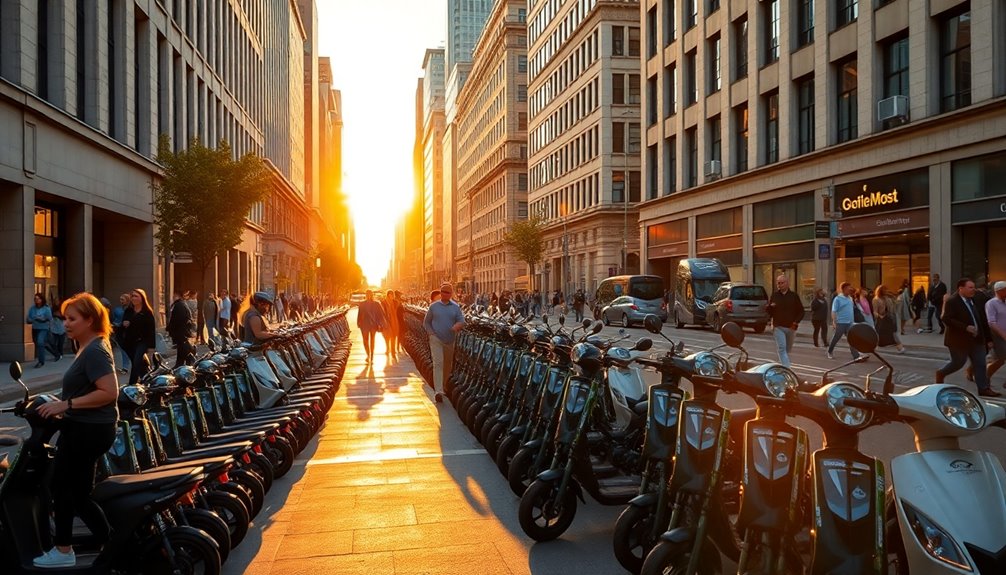
With their ease of use and widespread availability, electric scooters have revolutionized urban commuting in Korea. You'll find these compact, eco-friendly vehicles conveniently parked on nearly every street corner, making it a breeze to zip around the city. Just download a rental app, access a nearby scooter, and you're off – no hassle of finding parking or waiting for public transport.
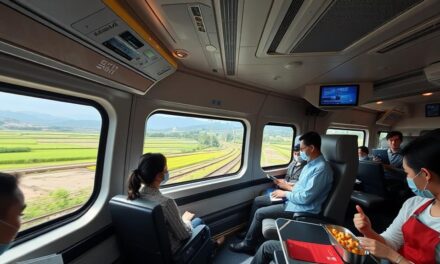
The accessibility of electric scooters is a game-changer. Even if your destination is a bit too far to walk, you can easily hop on a scooter to cover the distance quickly. This is especially handy for traversing hilly neighborhoods or reaching that trendy cafe tucked away on a side street. Plus, the smooth, quiet ride allows you to soak in the sights and sounds of the city as you travel. The high-speed KTX train network connects major cities across the country, making it easy to travel between destinations.
Whether running errands or exploring Seoul's vibrant neighborhoods, electric scooters provide a convenient, flexible way to get around.
Sustainable Mobility Solutions Emerge
As electric scooters gain popularity, they're also proving to be a sustainable mobility solution for urban areas. These compact, emission-free vehicles are reducing traffic congestion and carbon footprints across Korean cities. You can now commute quickly and conveniently while minimizing your environmental impact.
Many cities are investing in dedicated scooter lanes and charging stations to support this eco-friendly mode of transportation. Riders enjoy the flexibility to zip around crowded streets and easily access hard-to-reach destinations. Plus, electric scooters are an affordable alternative to cars, making them accessible to a wider range of people.
Importantly, these sustainable mobility options also promote healthier lifestyles. Instead of being sedentary in a vehicle, scooter riders get light exercise during their journeys. The smooth, quiet ride allows you to better appreciate your surroundings too. In addition, rechargeable transit cards can be convenient for using electric scooters along with other public transportation modes.
Regulatory Challenges and Opportunities
Regulatory frameworks haven't quite caught up with the rapid rise of electric scooters. As these innovative mobility solutions reshape urban transport in Korea, policymakers face both challenges and opportunities.
| Regulatory Challenges | Regulatory Opportunities |
|---|---|
| Ensuring rider safety | Establishing clear operating guidelines |
| Integrating scooters with existing infrastructure | Incentivizing sustainable transportation options |
| Addressing environmental concerns | Fostering public-private partnerships |
| Balancing innovation and control | Promoting multimodal mobility solutions |
While maneuvering this evolving landscape, regulators must strike a delicate balance. They need to foster innovation, protect public safety, and promote sustainable transportation. By collaborating with industry stakeholders and learning from global best practices, Korean cities can access the full potential of electric scooters to enhance urban mobility. Striking the right regulatory balance is key to reshaping the future of transportation in Korea.
Frequently Asked Questions
How Do Electric Scooters Address the Last-Mile Problem?
Electric scooters can really help solve the last-mile problem. You can use them to connect your journey from the bus or train station to your final destination.
They're super convenient – just hop on and zip right to your doorstep! No more wasted time walking those extra blocks.
With an electric scooter, you can cover that last stretch quickly and efficiently. It's a game-changer for urban travel, making your commute or sightseeing a breeze.
What Are the Impacts of Electric Scooters on Urban Congestion?
Electric scooters can actually help reduce urban congestion in a few key ways. They take up less space on the roads than cars, so they can help ease traffic flow. Plus, people who use electric scooters instead of driving may free up parking spaces and reduce the number of vehicles clogging up city streets.
And with their agility, scooters can zip through traffic jams more easily than larger vehicles. So in many cities, electric scooters are proving to be a smart solution for tackling congestion.
How Do Electric Scooters Compare to Traditional Public Transportation?
When comparing electric scooters to traditional public transportation, you'll find some key differences. Electric scooters offer more flexibility and convenience, allowing you to travel directly to your destination without fixed routes or schedules.
However, public transport generally provides greater capacity and reliability, especially for longer or more crowded trips. Consider your specific needs and the local infrastructure to determine which option works best for your urban travel needs.
What Safety Measures Are in Place for Electric Scooter Users?
When riding electric scooters, your safety is the top priority. Most cities have implemented safety measures to protect scooter users. You'll often find designated scooter lanes, speed limits, and helmet requirements.
Be sure to follow all local traffic laws and regulations to avoid accidents. Many scooter rental companies also provide safety gear like helmets, so take advantage of these resources. With a bit of caution, you can enjoy the convenience of electric scooters while staying safe on the roads.
How Are Electric Scooter Companies Addressing Privacy and Data Concerns?
As an electric scooter user, you're probably wondering how companies are addressing your privacy and data concerns. Well, many are taking steps to protect your information.
They may use encryption, limit data collection, and allow you to opt-out of sharing your location. Plus, some offer transparency about how they use your data.
Conclusion
You'll be amazed at how electric scooters are transforming urban transport in Korea. Convenience and accessibility have skyrocketed, ushering in sustainable mobility solutions. But hold onto your handlebars, as regulatory challenges abound – yet these also present exciting opportunities to revolutionize the way you explore Korea's vibrant cities. Buckle up and get ready for an electrifying journey!
More on Transportation:

Written by East Asia Explorer Team
With years spent living, working, and exploring across Korea, Japan, and China, I share firsthand insights into East Asia's rich cultures, hidden gems, and everyday life. My journey also includes studying in Malaysia and traveling through Southeast Asia, experiences that have deepened my appreciation for the region's diversity. Through practical tips, local stories, and travel guides, I aim to help fellow explorers discover both the celebrated highlights and the lesser-known corners of East Asia.