Last Updated: April 8, 2026 | Originally Published: February 20, 2026
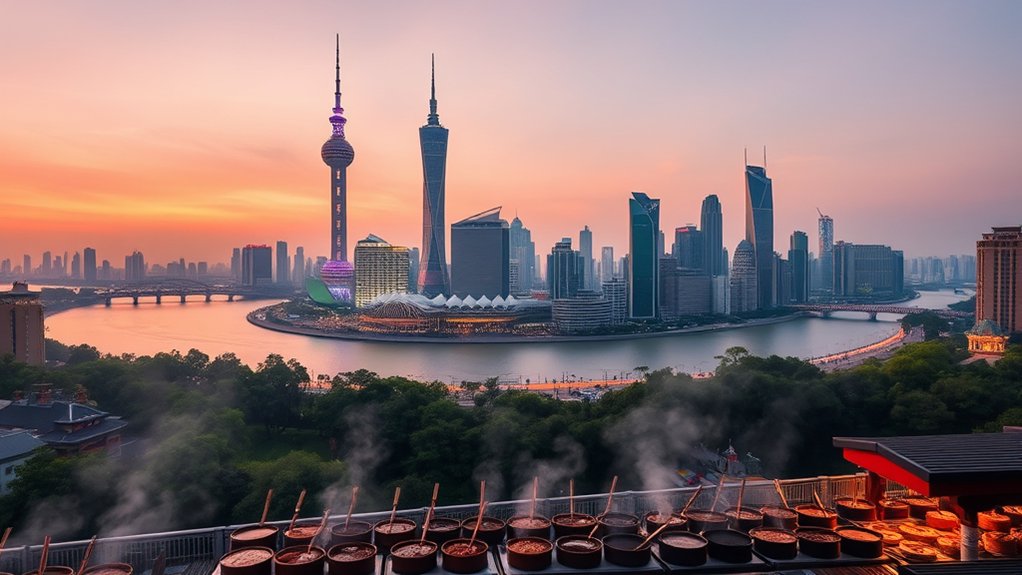
Guangzhou’s modern skyline is dominated by the 600-meter Canton Tower with its jaw-dropping Skydeck views. You’ll feast on authentic dim sum at Panxi Restaurant while soaking in tea culture at traditional houses like Shuimu Lianqing. Don’t miss Zaha Hadid’s Opera House or the massive Canton Fair with 31,000+ exhibitors. Navigate easily on Metro Line 3, running 6 AM to 11:30 PM daily. A ¥400 daily budget gets you far in this fascinating metropolis.
Explorer Insights
- Canton Tower offers 360-degree panoramic views from its 488-meter Skydeck, transforming into a colorful illuminated landmark at night.
- Panxi Restaurant, established in 1947, serves authentic dim sum including rabbit dumplings and steamed chicken feet beside scenic Liwan Lake.
- The Canton Fair hosts over 31,000 exhibitors across three phases, with metro Line 8 providing direct access.
- Guangzhou’s metro system operates daily from 6:00 AM to 11:30 PM, with discounts available through Metro Cards.
- Budget travelers can enjoy meals under ¥20 at street food hubs, with mid-range hotels averaging ¥220 per night.
Canton’s Modern Metropolis
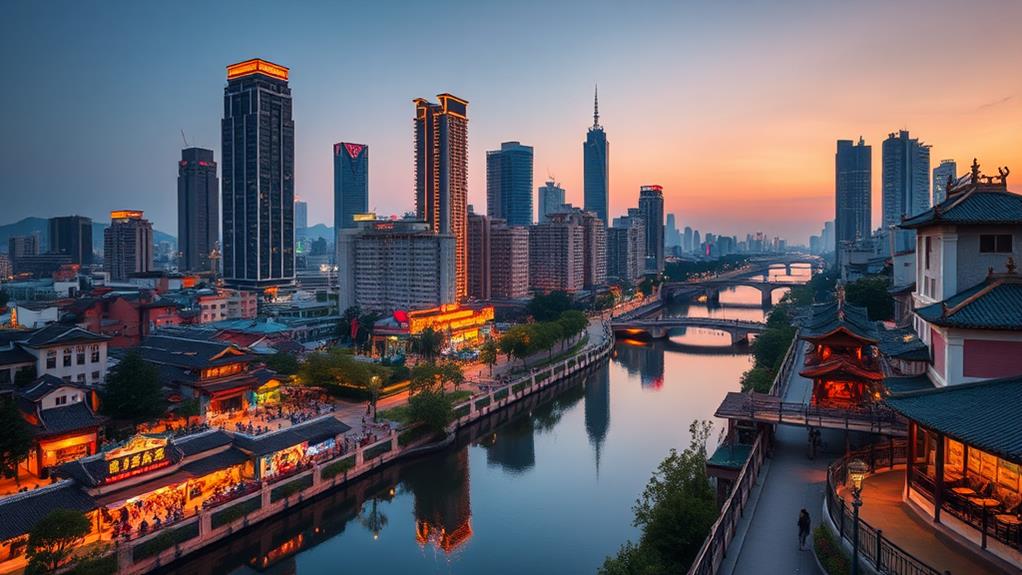
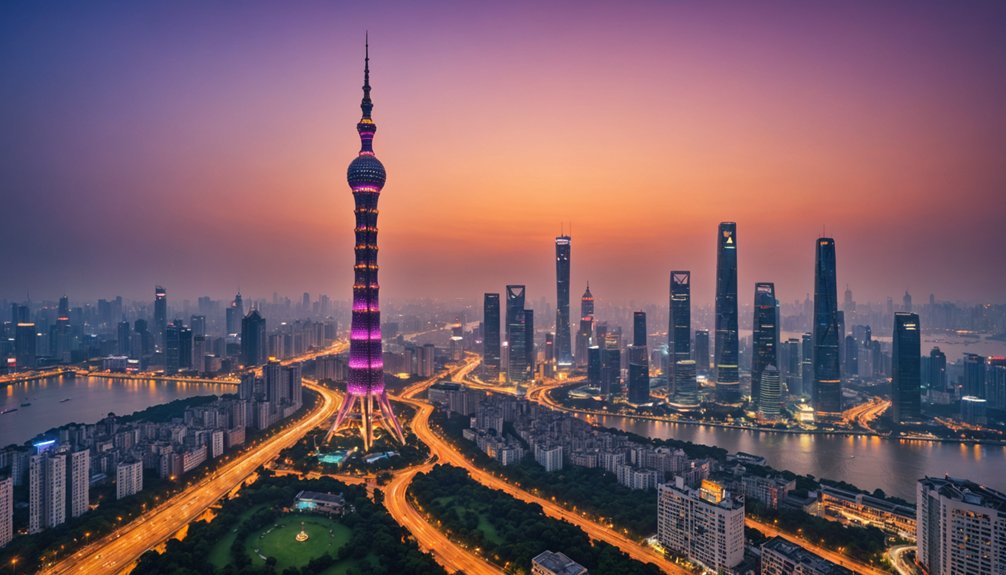
While many Chinese cities chase the future, Guangzhou actually caught it. Walk through Zhujiang New Town and you’ll see why. The 600-meter Canton Tower twists dramatically against the sky—a hyperboloid masterpiece that doesn’t just impress, it dominates.
The urban architecture here isn’t playing around. Guangzhou Opera House and the lotus-inspired Display Center by GMP Architects stand as bold statements. Not subtle. Never apologetic. Zaha Hadid’s innovative architectural masterpiece attracts visitors for both performances and its striking design.
Audacious designs that don’t whisper—they shout their ambition through concrete, glass and steel.
Cultural integration happens naturally as historic neighborhoods bump against glass skyscrapers. It’s jarring. It’s fascinating. It works.
The Guangdong Museum and Olympic Stadium round out this modern landscape where tradition and innovation collide daily.
Green spaces break up the concrete, proving Guangzhou understood something essential: sustainable cities need breathing room. Even metropolises need lungs.
Much like South Korea’s KTX train system that revolutionized transportation with speeds up to 305 km/h, Guangzhou embraces efficiency and technological advancement in its urban planning.
Canton’s Vibrant Megacity
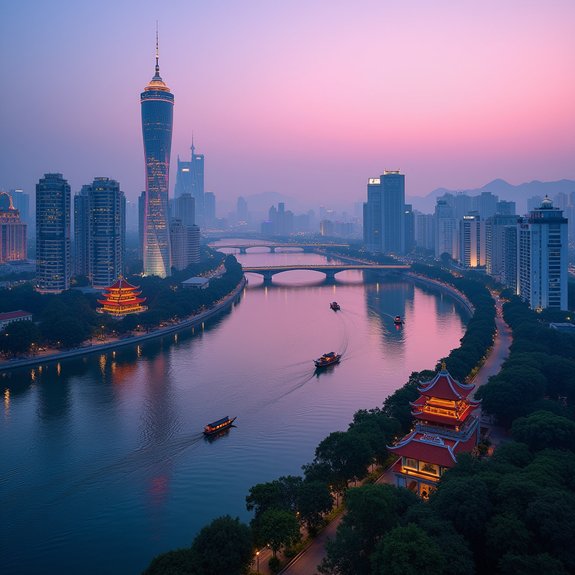
You’ll find Canton Tower’s Skydeck offers the city’s most jaw-dropping panorama, with all 14.88 million residents sprawled beneath you (well, minus the ones inside with you).
For authentic dim sum, skip the tourist traps and head to Panxi Restaurant, where locals have been slurping wonton soup since before your grandparents were born. With China’s high-speed rail network continuing to expand, visitors can quickly connect to Guangzhou from major cities, making it easier than ever to taste your way through the heart of Cantonese cuisine.
Canton’s secret tea houses, tucked away from the mega-malls and skyscrapers, still maintain centuries-old yum cha traditions – though you’ll need a local’s help to find the best ones.
The city continues to expand at an impressive pace, with statistics showing a consistent growth trend of approximately 2% annually over recent years.
Canton Tower’s Skydeck Views
Where can you stand 488 meters above Guangzhou and feel like you’re floating among the clouds? The answer’s obvious: Canton Tower‘s record-breaking outdoor observation deck.
This isn’t just any viewing platform. It’s 177 square meters of jaw-dropping, 360-degree panorama. Perfect for Skydeck photography enthusiasts. Trust me.
The tower’s waist-like design—inspired by female hip joints, of all things—makes for some seriously unique shots. The tower’s unique shape was created using parametric design methods, incorporating columns, rings, and braces as structural elements.
Come for the scenic sunset, stay for the night lights. The tower transforms after dark. Colorful illuminations. Breathtaking city views. Worth every yuan of that ¥2.8 billion price tag.
Once the world’s tallest tower until Tokyo Skytree came along. Typical.
But who cares about records when you’re standing on top of Guangzhou? For seamless exploration, leverage real-time navigation tools to pinpoint the fastest routes to nearby attractions before or after your visit.
Dim Sum at Panxi Restaurant
Three generations of dim sum perfection await at Panxi Restaurant, Guangzhou’s crown jewel of Cantonese cuisine. Established in 1947, this lakeside gem serves up culinary traditions on historic Southern Han Dynasty grounds. You’ll feast like royalty in a palace-like setting.
Dim sum history comes alive here. Those rabbit-shaped dumplings? Not just cute—they’re legendary. The water chestnut cake? Worth the trip alone. For the full experience, visit during weekday mornings when the restaurant is less crowded compared to the busy weekends.
If you’re seeking inspiration for a savory snack elsewhere in Asia, crispy Korean fried chicken in Busan’s top spots offers double-fried perfection with creative flavors and cozy settings.
| Signature Dish | Taste Profile | Best Time |
|---|---|---|
| Rabbit Dumplings | Delicate, savory | Morning |
| Steamed Chicken Feet | Bold, pungent | Brunch |
| Water Chestnut Cake | Sweet, revitalizing | Afternoon |
Make reservations. Seriously. Locals pack this place, and you don’t want to miss dining under ancient banyan trees beside Liwan Lake. It’s a national treasure for a reason.
Canton’s Secret Tea Houses
Beyond Guangzhou’s famous dim sum scene lies a quieter, more contemplative world. Tea houses in Canton aren’t just places to drink—they’re community gatherings steeped in tradition. Period.
You’ll find spots like Shuimu Lianqing in Tianhe where Guangzhou tea culture thrives in traditional ambiance. Morning rituals here are serious business, with locals sipping strong black or oolong varieties while gossiping over dim sum.
Not a morning person? Chun Ya Yuan stays open until 2am.
These havens blend old and new seamlessly. Ancient decoration meets innovative blends. Perfect for social experiences without the chaos of restaurants. Similar to Japanese taxis, remember to show clear directions by writing down your destination in local characters to avoid miscommunication.
The expansive Liuhua Teahouse next to Liuhua Lake offers evening guzheng performances that enhance the traditional Chinese atmosphere.
Most places welcome reservations. Take the metro—it’s easy. And yes, some staff speak English. But honestly, pointing works too. Tea transcends language barriers. Always has.
Canton Fair Experiences{context}
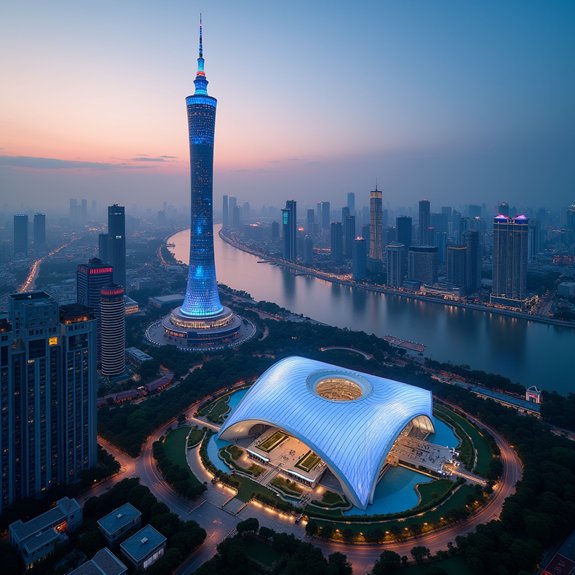
When exploring the Canton Fair‘s export pavilions, you’ll face a staggering 31,000+ exhibitors spread across three distinct phases—plan for at least 2-3 full days to navigate the 1.5 million square meter complex.
You’re smart to arrive early (before the 10 AM crowd surge) and use Line 8 metro for direct access, especially if staying in nearby Haizhu District.
Don’t forget monsoon season prep if visiting during the spring session: May brings unpredictable downpours, and you’ll be trekking between buildings with 200,000+ other buyers from 219 countries. The recently concluded 136th fair welcomed a record-breaking 253,000 foreign buyers from 214 countries and regions.
For international visitors, maximizing travel convenience is possible with credit cards with no foreign transaction fees, such as those offering robust travel rewards and lounge access.
Canton Fair’s Export Pavilions
Maneuvering the export pavilions at Canton Fair feels like walking through a miniature version of global commerce.
You’ll find yourself surrounded by 31,000 exhibitors—4,200 of them brand new—all vying for international connections across 55 product sections.
The National Pavilion houses over 30,000 exhibitors, while the Brand Pavilion showcases companies with elite certifications.
Want export opportunities? Head to Zone A for consumer electronics and machinery. Zones B and C? That’s where household goods shine. Save on getting around the fairgrounds by considering a transportation card for seamless and discounted transit across Guangzhou’s extensive public network.
The real kicker: 55% of exhibitors are targeting EU, ASEAN, and Middle East markets.
Good luck visiting all 74,000 booths in the 1.55 million square meter space. Seriously, bring comfortable shoes.
The fair runs 9:30 to 6:00 daily. No exceptions. Weekends included.
For the 137th Spring Exhibition, plan your visit during one of the three specific phases happening April 15-19, April 23-27, or May 1-5, 2026.
Monsoon Season Prep Essentials
Surviving Guangzhou’s monsoon season during the Canton Fair requires military-grade preparation—or at least a really good plan.
You’ll face April-to-June deluges with May dumping a whopping 280mm of rain while you’re trying to do business. Fun times.
Your monsoon preparedness kit? Non-negotiable. Pack quick-dry clothes, waterproof shoes, and a compact umbrella that won’t flip inside out at the first gust.
Those afternoon downpours don’t mess around.
Schedule outdoor activities before noon. Seriously.
For transportation, forget taxis when it pours—metro Lines 8/18 to Pazhou Complex are your best friend.
Consider using the underground metro system as it’s one of the fastest, easiest, and cheapest ways to travel around Guangzhou during monsoon season.
And your weather gear should include DEET repellent because mosquitoes love monsoon season as much as you’ll hate it.
Plastic sleeves for business cards. Always.
Consider visiting during autumn months instead when temperatures are cooler and rainfall significantly decreases, making it one of the best times to experience the Canton Fair.
Fast-Paced Weekend Explorer
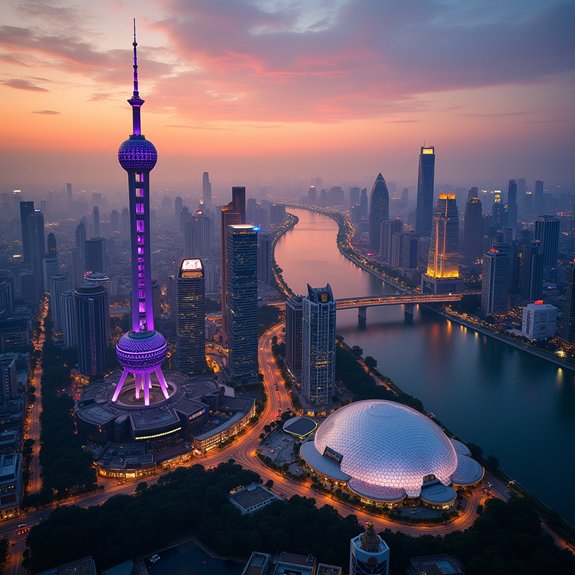
Only have 48 hours in Guangzhou? You’ll need to hustle. Seriously.
Start at Canton Tower for those jaw-dropping city views – worth every yuan. Remember to check if the university programs in Guangzhou offer Chinese Government Scholarships to support your studies.
Then hit Temple of Six Banyan Trees and Chen Clan Ancestral Hall.
Can’t miss the cultural festivals happening year-round. Local markets like Qingping offer authentic souvenirs without the tourist markup.
Eat dim sum. Just do it. Beijing Road has snacks galore between shopping sprees.
Shangxiajiu Pedestrian Street delivers both retail therapy and street food – two birds, one stone.
Consider taking a Pearl River Night Cruise to see the illuminated skyline while relaxing after a day of exploration.
Get around on the metro. It’s cheap, fast, ridiculously clean. Skip taxis during rush hour – you’ll thank me later.
Pack light for spring or fall visits. Summer? Unbearable humidity. Winter? Surprisingly chilly. You’ve been warned.
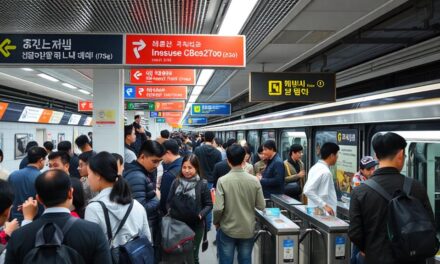
Metro Line 3’s Coastal Loop
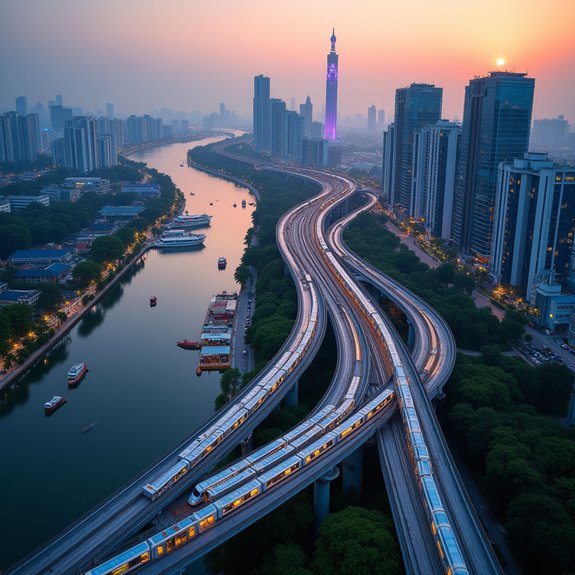
Despite popular belief, Metro Line 3 doesn’t actually form a coastal loop yet—it’s only approved up to Haibang, not all the way to Hai’ou Island.
You’ll get weekday discounts on your Metro Card while exploring attractions like Canton Tower and Shamian Island’s waterfront paths. Guangzhou’s metro system is part of China’s dominance in public transportation, which now accounts for two-thirds of all new metro lines opened globally in 2026.
E-hailing prices surge during rush hours, so the metro’s 74.83 kilometers and 16 stations might be your wallet’s best friend. For travelers concerned about personal care while on the go, consider investing in a compact clipper set that includes essential manicure tools in a protective case for organization during your adventures.
Metro Card Discounts Weekdays
While traversing Guangzhou’s sprawling metro system, you’ll want to grab a Yang Cheng Tong card ASAP. Forget special weekday discounts on Line 3 – there aren’t any. But don’t sweat it.
The real magic happens with that 5% instant discount on every ride. Twenty yuan deposit gets you started. Worth it. The card works everywhere – buses, ferries, you name it. Most lines operate daily from 6:00 AM to 11:30 PM, giving you plenty of time to explore the city. Perfect for weekday travel when you’re rushing between meetings or tourist spots.
Ride often? Even better. After your 16th trip each month, you’ll score a whopping 40% off. That’s serious savings for frequent commuters. Similar to Korea’s T-money card, you can enjoy transfer discounts when switching between transportation modes within a time limit.
No Yang Cheng Tong? You’re literally throwing money away. The card’s cross-transit compatibility makes weekday navigation a breeze. Simple math, really.
Guangzhou’s E-Hailing Surge
Three game-changing stations have landed on Guangzhou’s Metro Line 3 Coastal Loop, transforming how you’ll navigate the city’s eastern edge. The 9.58 km Haibang extension connects you directly to Panyu’s business hotspots and links with Line 4. Urban mobility just got easier. No more ridiculous cross-town Didi trips! The extension is part of an impressive network that operates entirely in tunnels, making Line 3 the longest rail tunnel system of its kind.
If you’re planning to explore Guangzhou or other Chinese cities, don’t forget to check for cheap domestic flights when booking your travels, as locking in fares early can free up your budget for more local experiences.
| Station Impact | E-hailing Trends |
|---|---|
| Reduced long trips | More last-mile rides |
| Station pickup zones | App integration |
| Rush hour relief | Short-hop connections |
| Property value boost | Fare adjustments |
The extension’s completely reshaping eastern Panyu District. Expect booming residential areas and fresh retail spots popping up. Commuters win big with those 2-4 minute peak frequencies. And yes, full accessibility at all stations – elevators, escalators, the works. Pandemic delays? Who cares. It’s here now!
Shamian Island Waterfront Paths
Shamian Island’s waterfront paths offer the ultimate urban escape along Guangzhou’s Pearl River.
The tree-lined promenade isn’t just pretty—it’s stunning. Perfect for scenic strolls away from the city’s chaos.
You’ll find European colonial architecture everywhere. Weird, right? In Guangzhou of all places.
Take Metro Line 3 to Huangsha Station—easy access, zero hassle. Trust me.
Evenings here are magical for waterfront photography. The skyline lights up. The river glimmers. Locals and tourists alike snap away. After your walk, you might crave seafood specialties inspired by East Asian islands like Jeju, renowned for dishes such as abalone porridge and sea urchin soup.
Hungry? Duck into one of the quirky cafés after your walk. They’ve got everything from local dishes to Western fare.
Spring and autumn visits are best. Summer’s just too damn hot.
The island hosts cultural events sometimes. Luck out and you might catch one.
Most visitors spend 2-3 hours exploring the peaceful ambiance and historical significance of this unique island.
SIM Card Purchase Locations
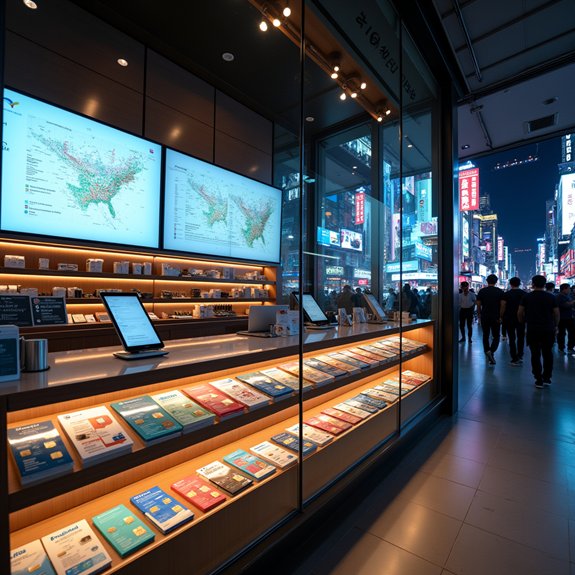
Guangzhou Baiyun Airport offers multiple places to grab a SIM card right after landing. You’ll find the major carriers strategically positioned for your convenience. Don’t leave without one. Seriously.
For prepaid SIM flexibility, travelers can choose from a range of daily, weekly, and monthly plans tailored for short-term stays and easy top-ups.
The SIM card comparisons are straightforward—China Mobile gives you better rural coverage, while Unicom and Telecom excel in urban areas. Airport vendors are open 24/7, so no worries about arrival time. Registering your SIM requires valid passport identification according to Chinese regulations.
| Provider | Location | Best For | Price Range |
|---|---|---|---|
| China Mobile | T1 Gate 6 | Rural areas | ¥10-300 |
| China Unicom | T1 Gate 7 | Urban data | ¥50-200 |
| China Telecom | T2 Gate 1 | 5G in city | ¥50-300 |
| Third-party | Both terminals | Basic plans | Varies |
Remember—passport required! All SIMs activate on the spot.
Tea Ceremony Respect Customs
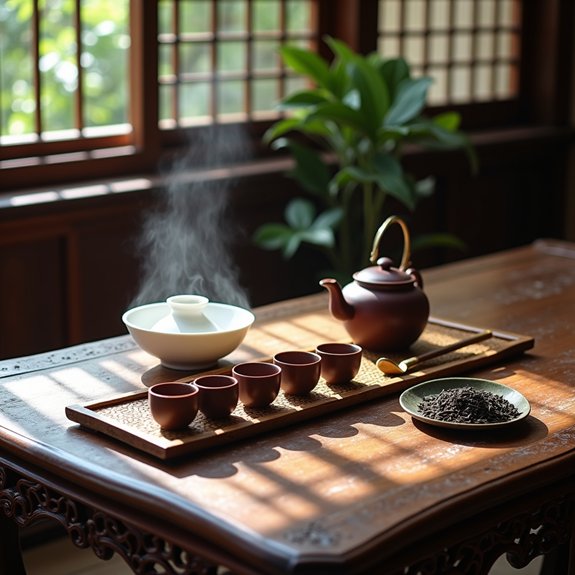
While visiting Guangzhou, experiencing a traditional Chinese tea ceremony isn’t just about sipping tea—it’s a ritual steeped in respect and centuries of tradition.
You’ll need to know the basics of tea etiquette to avoid looking like a complete tourist. When attending, always use both hands to hold your teacup. Sit up straight, for goodness’ sake! The seating isn’t random—there’s a whole system based on family position. Men opposite the bride, women opposite the groom. Traditional dress is appreciated. No slouching allowed. In many traditional tea houses, the tranquil setting and thoughtful architecture are designed to create a calm and respectful atmosphere for these ceremonies.
The cultural significance goes beyond the drink itself. These 20-25 minute ceremonies honor guests and showcase the tea’s quality. Finger tapping originated when Emperor Qian Long traveled in disguise among his citizens to understand their daily lives.
Want to show gratitude? Tap your fingers—though saying “thanks” works better. Seriously, it’s not rocket science.
Air Quality Mask Necessity
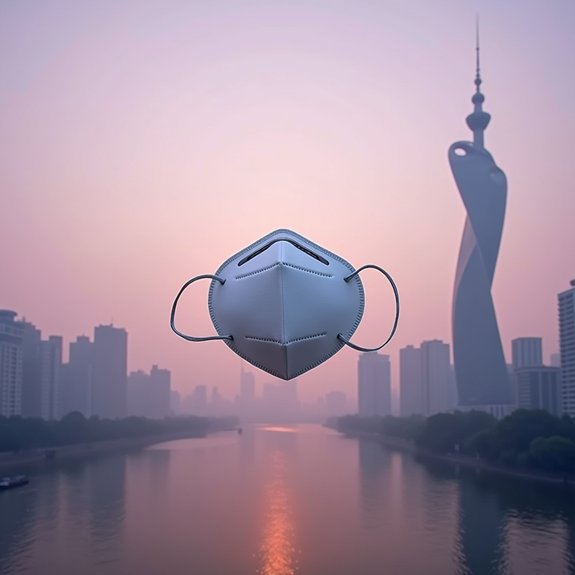
Maneuvering the air quality situation in this sprawling metropolis means facing a harsh truth—you’ll need a mask.
Guangzhou’s AQI fluctuates between moderate and downright hazardous, with PM2.5 levels hitting 86 µg/m³. Not exactly what your lungs signed up for on vacation.
Smart travelers come prepared. The mask market here is booming for good reason.
- Nanotechnology filters capture those nasty PM2.5 particles your bronchial tubes hate
- Activated carbon layers trap gases and odors from Guangzhou’s urban jungle
- Electrostatic filtration handles larger particles that basic masks miss
- Smart masks with air quality sensors let you know when things get really bad
Many visitors also rely on offline translation apps to navigate local pharmacies and understand mask packaging, especially where English labeling is scarce.
Current readings show PM2.5 AQI at , which falls in the “Unhealthy for Sensitive Groups” category according to global standards.
Check real-time AQI before heading out. Your future self (and respiratory system) will thank you.
400 Daily Budget Range
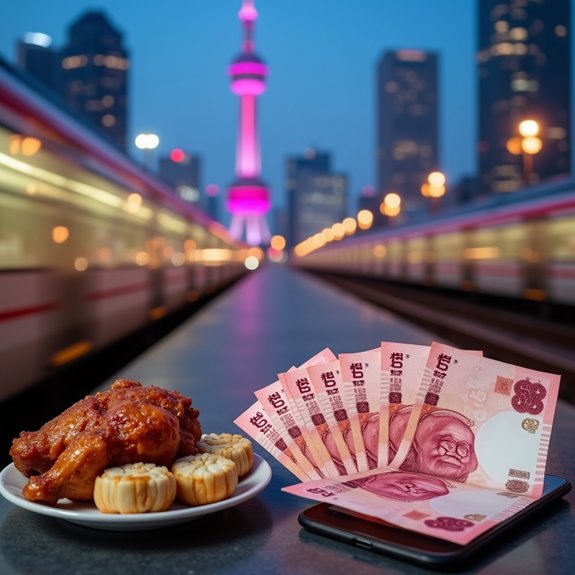
If you’re watching your wallet, mid-range local hotels cost around ¥220 per night – a far cry from the $100+ luxury options.
You’ll find unexpected savings with student meal cards, offering discounts at many campus-adjacent eateries.
Don’t forget Guangzhou costs 23% less than the average U.S. city, so your money stretches further here.
For authentic local flavors, explore the city’s famous dim sum dishes that typically cost only around $2 (15 CNY) per dish.
Budget travelers can also save by utilizing public transportation cards which offer discounted bus and subway fares, making getting around more affordable.
Mid-Range Local Hotels ¥220
Guangzhou’s mid-range hotel scene hits the sweet spot for travelers who aren’t looking to splurge or slum it.
Most comfortable stays fall between ¥200-300 per night, with standard amenities you’d actually want. Book weekdays for an instant 15-20% discount. Smart.
The city’s affordable stays distribute strategically across key districts:
- Tianhe – Business-friendly franchises with executive upgrades
- Baiyun – Airport-adjacent chains connected to metro lines
- Liwan – Old Town charm with local market access
- Yuexiu – Heritage zone proximity to Beijing Road shopping
You’ll always get WiFi, AC, and electric kettles. Many properties offer washing machines for extended stays, similar to Oakwood Premier Guangzhou. For budget travelers seeking more affordable options, Shanghai Fish Inn provides clean, cozy rooms near major attractions.
Want better? Mid-tier perks include minibars and rain showers.
Canton Fair dates? Prepare for 30-50% markups.
Book direct for free breakfast. Worth it.
Student Meal Cards Discounts
Three key student meal strategies can revolutionize your Guangzhou food budget. University canteens are dirt cheap (¥8-15 per dish) compared to commercial spots. Don’t be fooled—that’s serious savings. Tapping into Beijing’s affordable street food specialties could also further stretch your daily budget, with classic dishes like baozi and jianbing selling for just a few yuan.
Prepaid campus cards sometimes include reload bonuses. Free money! Who doesn’t want that? Check for those sweet 5% credits on ¥100 top-ups. For international students, many campus cafeterias now offer special meal options similar to China Airlines’ vegetarian and religious meal selections.
| Location | Savings | Student Discounts | Best Time |
|---|---|---|---|
| University Canteens | ¥12+ per meal | Subsidized pricing | All day |
| Night Markets | ¥10-25 dishes | Informal bargaining | After 8pm |
| Late-Night Halls | Extra 10-20% off | Meal plans required | After 9pm |
| Group Hotpot | ¥30-50 per person | With 4+ people | Weeknights |
Street food hubs along Beijing Road keep you fed for under ¥20. Perfect for daily budgets between ¥50-80. Survival 101.
Frequently Asked Questions
Are English Menus Common in Local Guangzhou Restaurants?
English menus aren’t common in most local Guangzhou restaurants.
You’ll struggle, especially at street food stalls and traditional eateries serving local specialties. Tough luck.
Some tourist-friendly spots use picture menus – a lifesaver!
High-end places and hotel restaurants? Different story. They’re more likely to accommodate you.
Areas with lots of expats tend to have better options.
Technology’s helping though – translation apps are becoming your new best friend in Guangzhou’s food scene.
What Is the Best Time of Year to Visit Guangzhou?
Did you know 85% of travelers report better experiences visiting Guangzhou outside summer months?
You’ll want to hit Guangzhou during its best seasons – October to December or February to March.
Climate variations matter here. Brutal summers? Skip ’em.
Spring brings pleasant 15-25°C temperatures. Perfect for exploring.
The city transforms after May. Rain. Lots of it. Nobody needs that vacation dampener.
Fall and early spring. That’s your sweet spot. Less sweat, more fun.
Is Haggling Acceptable at Guangzhou Markets?
Yes, haggling is absolutely expected in Guangzhou markets. It’s not just acceptable – it’s practically mandatory!
Your bargaining techniques should include starting at half the asking price and building relationships with vendors. Market etiquette demands respect and patience. Fixed prices? Not here. Relationships matter. Speak basic Mandarin if you can.
Different markets have different rules though. Food stalls? Fixed prices. Fabric markets? Negotiate hard. That’s just how it works.
How Safe Is Guangzhou for Solo Female Travelers?
Guangzhou is surprisingly safe for solo travel. High daylight safety (75/100) and decent nighttime ratings (65/100) make it better than you’d expect.
Violent crime? Low. Pickpocketing? Watch out in crowds—that’s your biggest worry.
Well-lit streets in Tianhe and Yuexiu are your best bets after dark.
Safety tips: use DiDi instead of random taxis, stay in hotels with 24/7 security, and don’t flash valuables around.
Language barriers exist. Not perfect, but pretty solid.
What Power Adapters Are Needed for Electronics in Guangzhou?
You’ll need a universal travel adapter in Guangzhou. Period.
The city uses three main power adapter types: Type A (flat pins), Type I (three flat pins, diagonal), and Type C (European round pins). Most hotels have Type I outlets.
Your charging options? Get something with multiple USB ports and surge protection.
Modern laptops and phones usually handle 220V fine, but hair dryers? Check the label first.
Don’t cheap out on adapters – fried electronics make terrible souvenirs.
Conclusion
You’ve witnessed it now. The Pearl River—life’s blood pumping through Canton’s concrete heart. Ancient tea customs meeting glass skyscrapers. The Metro Line 3 whisking you through centuries in minutes. ¥400 daily? Worth every yuan. Smog masks aren’t fashion statements, they’re survival gear. Guangzhou isn’t just another Chinese city. It’s tomorrow, wrapped in yesterday’s silk. Chaotic. Beautiful. Contradictory. Yours to remember.
More on Food & Dining:

Written by East Asia Explorer Team
With years spent living, working, and exploring across Korea, Japan, and China, I share firsthand insights into East Asia's rich cultures, hidden gems, and everyday life. My journey also includes studying in Malaysia and traveling through Southeast Asia, experiences that have deepened my appreciation for the region's diversity. Through practical tips, local stories, and travel guides, I aim to help fellow explorers discover both the celebrated highlights and the lesser-known corners of East Asia.