Last Updated: April 8, 2026 | Originally Published: February 22, 2026
Introduction
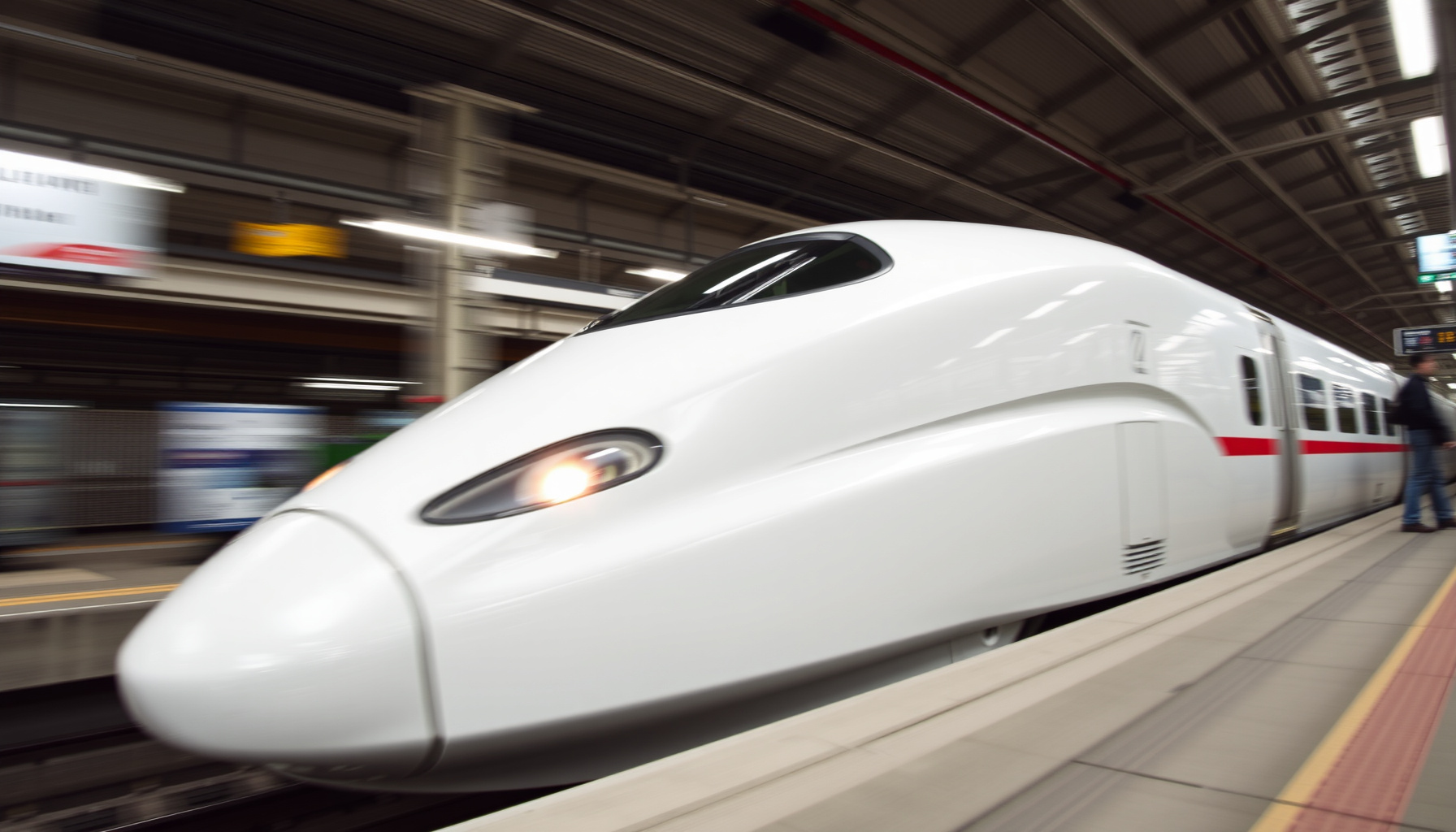
I still remember the first time I slipped into a Shinkansen seat and felt the doors seal with a soft “shh-chunk.” Thirty seconds later the platform was sliding backward at a surreal 320 km/h (200 mph) while I sipped a vending-machine coffee. That was 1998, and since then I’ve ridden every bullet-train line from Kagoshima to Hokkaido, logging more than 50,000 km on the world’s busiest high-speed network. The Shinkansen isn’t just fast; it’s a cultural icon, a feat of engineering, and—once you know the ticketing quirks—the smoothest way to see Japan.
Read our full Japan Travel Guide 2026 for everything you need to plan your Japan trip.
Conceived for the 1964 Tokyo Olympics, the first “0 Series” trains hit 210 km/h and changed how the world thought about rail travel. Today, the E10 and N700S can cruise at 320 km/h, arriving on time to the second—even during typhoons. In this guide I’ll walk you through every way to buy a ticket in 2026, from the newest smartphone apps to the same green-window ticket counters that have served travelers for six decades.
Types of Shinkansen Tickets
| Ticket Type | What It Is | Best For | Price Range (2026) |
|---|---|---|---|
| Unreserved seat (jiyūseki) | Cheapest ticket; board any non-reserved car on the same day | Off-peak travel, spontaneous riders | Base fare only, ~¥200–¥400 less than reserved |
| Reserved seat (shiteiseki) | Guaranteed seat on a specific train | Weekends, holidays, peace of mind | Base + ¥530–¥1,000 |
| Green Car (first class) | 2+2 seating, wider recliners, quieter cabin | Work trips, comfort seekers | Base + ¥4,000–¥8,000 |
| Gran Class (business class) | 2+1 seating, complimentary meal & drink, dedicated steward | Ultra-luxury, special occasions | Base + ¥18,000–¥21,000 |
| Non-reserved Green Car | Rare option on some N700S services—Green car quality without reservation | Green comfort on a whim | Same as Green Car |
Japan Rail Pass vs. Point-to-Point Tickets
The eternal question: should you drop ¥50,000 on a rail pass or pay as you go? Here’s my rule of thumb after 25 years of budgeting trips for friends.
When the JR Pass Wins
- You’ll ride two or more long-distance legs (e.g., Tokyo–Kyoto–Hiroshima) within 7 days.
- Your itinerary includes day-trips to places like Nikko (¥5,780 return) or Kanazawa (¥14,120 return).
- You value seat reservations—all free with the pass.
Prices (2026):
- 7-day: ¥50,000 (≈ $340)
- 14-day: ¥80,000 (≈ $545)
- 21-day: ¥100,000 (≈ $680)
When Point-to-Point Wins
- One-off Tokyo–Kyoto return (¥27,740 total) still leaves you ¥22,260 under the 7-day pass price.
- Your itinerary is regional—lots of Kansai or Kanto local trains but no Tokyo–Osaka bullet train.
- You must ride the Nozomi (fastest) on the Tokaido line—JR Pass excludes it.
Break-even calculator hint: add up your planned routes; anything above ¥50,000 in 7 days makes the pass a bargain.
How to Buy Tickets: Step-by-Step
Option 1 — Buy at the Station (Ticket Machines / Midori-no-Madoguchi)
- Find the machines: look for lime-green touchscreens labeled “Ticket Reservation” near the Shinkansen gates.
- Select English (top-right button).
- Choose “Purchase Shinkansen Ticket.”
- Enter your route: start station, end station, date, time (±30 min window).
- Pick seat class—Unreserved, Reserved, Green, or Gran.
- Insert cash (¥10,000 bills accepted) or tap Suica/Pasmo. The machine prints your ticket set.
- For Midori-no-Madoguchi (green ticket windows), queue up and show your passport. Staff speak English at Tokyo, Shin-Osaka, Kyoto, Hiroshima, Sendai, and Sapporo.
Payment: machines accept cash and most IC cards; staffed counters take Visa, Mastercard, Amex, UnionPay.
Option 2 — Buy Online via Smart EX / JR Ticket Apps
- Smart EX (JR Central): covers Tokaido & San’yo lines. Requires a Japanese credit card or Apple/Google Pay linked to a Japanese bank. Book up to 30 days out, store ticket on Suica/IC.
- Ekinet (JR East): for Tohoku, Hokkaido, Joetsu, Hokuriku. Now accepts some foreign Visa/Mastercard. You receive a QR code; tap it on gate scanners.
- JR-West Online: similar for Sanyo & Kyushu lines.
Pro: reserve seats at 6:00 AM sharp for Golden Week departures. Con: foreign credit cards often rejected—have a Plan B.
Option 3 — Buy via Overseas Booking Sites
| Site | English Support | Markup vs Station | Delivery |
|---|---|---|---|
| JapanRail.com | Excellent | +5 % | E-ticket or hotel pickup |
| JRailPass | Good | +6 % | Worldwide EMS |
| Klook | Great | +7 % | Hotel kiosks |
Popular Shinkansen Routes & Prices
| Route | Line | Journey Time | Unreserved (¥) | Reserved (¥) | Green Car (¥) |
|---|---|---|---|---|---|
| Tokyo → Kyoto | Tokaido | 2 h 15 m | 12,850 | 13,870 | 19,290 |
| Tokyo → Osaka | Tokaido | 2 h 30 m | 13,320 | 14,340 | 19,760 |
| Tokyo → Hiroshima | Tokaido/San’yo | 4 h | 17,340 | 18,380 | 24,870 |
| Tokyo → Sapporo | Hokkaido (2030) | 4 h + | 26,640+ | — | — |
| Tokyo → Sendai | Tohoku | 1 h 40 m | 10,890 | 11,410 | 15,390 |
| Osaka → Hiroshima | San’yo | 1 h 25 m | 9,560 | 10,580 | 15,080 |
Seat Selection Tips
Mt. Fuji appears on the right side window when traveling Tokyo→Kyoto. Choose D or E seat rows 9–11 for unobstructed photos. On the return leg, flip to the left side.
- Non-reserved vs Reserved: Go unreserved on weekday mornings (after 9 AM) for Tokyo→Nagoya/Osaka. Reserve everything during Golden Week (late Apr–early May) and Obon (Aug 12-15).
- Quiet Cars: Cars 8–10 on N700S are marked “Quiet Seat.” Conversations under a whisper only.
- Multi-purpose Rooms: Cars 6 and 13 have fold-down seats for strollers, wheelchairs, or nursing mothers.
| Seat Class | Seat Width | Legroom | Recline | Power Outlet | Best For |
|---|---|---|---|---|---|
| Ordinary | 45 cm | 90 cm | 10° | Every seat | Budget travelers, commuters |
| Green Car | 52 cm | 110 cm | 20° | Every seat + USB-C | Long trips, remote work |
| Gran Class | 56 cm | 130 cm | 40° | AC + USB-C + wireless charging | Splurge, honeymoons, VIP |
Boarding the Shinkansen: What to Expect
- Read your ticket: example “Nozomi 151” on 25 Jun, car 8, seat 7C. The train name matters—Hikari and Kodama are slower.
- Platform gates: insert paper ticket or tap IC card. Don’t forget to take it back—gates eat uncollected tickets after 30 s.
- Queue up: floor decals show car numbers and boarding order. First boarding group (blue) enters 3 min before departure.
- Luggage: overhead rack fits 55 cm suitcases depth-wise. Oversize (160 cm linear sum) requires a free seat reservation on Tokaido line after 2026—book via “Seat Reservation” machines.
- Food: grab an ekiben at the station or wait for the trolley cart (“service sales”—every 30 min). Hot coffee in cans is ¥150.
Common Mistakes to Avoid
DO
- Exchange your JR Pass voucher at the airport or major station before the first ride.
- Reserve seats even with a JR Pass during Golden Week, Silver Week, and New Year.
- Double-check the car number on your ticket—trains can be 16 cars long.
- Enjoy your ekiben inside the train; it’s part of the culture.
- Speak softly; Japanese commuters treat the cars as libraries.
DON’T
- Try to board a Nozomi or Mizuho with a JR Pass—it’s not valid.
- Miss your reserved train; you can still use an unreserved car, but you forfeit the seat fee.
- Bring a suitcase > 160 cm linear without a reservation on Tokaido line; conductors can deny boarding.
- Talk on the phone in Quiet Cars—stick to text or use the vestibule.
FAQ: Shinkansen Tickets
Q: Can I use a credit card at ticket machines?
A: Most machines in Tokyo, Shin-Osaka, and Kyoto accept Visa/Master; rural stations often cash-only. Staffed counters take all cards.
Q: Is the JR Pass worth it in 2026?
A: Yes, if your planned point-to-point fares exceed ¥50,000 (7-day). Example: Tokyo–Kyoto–Hiroshima–Sendai totals ¥47,930, so add a Nikko day-trip (¥5,780) and you’re already ahead.
Q: Can I take the Nozomi with a JR Pass?
A: No. Pass holders must ride Hikari or Kodama on the Tokaido & San’yo lines. Nozomi and Mizuho are excluded.
Q: How early should I arrive?
A: 5–10 minutes. Trains depart to the second; doors close 1 minute before.
Q: Are there luggage lockers?
A: Yes, every major station has small (¥300), medium (¥500), and large (¥700) coin lockers—IC cards accepted.
Conclusion
Armed with this roadmap, you can stride into any Shinkansen station and secure the perfect ticket in under five minutes—whether you’re a spontaneous backpacker grabbing an unreserved seat or a planner locking down Gran Class months ahead. In 2026 the bullet trains are faster, greener, and still the most civilized way to cross Japan.
So pick your route, charge your Suica, and let the rails whisk you from neon skyline to cedar forest before the foam settles on your canned coffee. I’ll see you in car 7—window seat, of course. Compare current JR Pass prices and order online at the official JR Pass website. Check live timetables on the JR East official site. The Japan National Tourism Organization has comprehensive rail travel guides.
More on Shopping:

Written by Sam Konneh
Sam Konneh is an AI strategist and digital marketer based in Seoul, South Korea. With years spent living, working, and exploring across Korea, Japan, and China, he shares firsthand insights into East Asia's cultures, hidden gems, and everyday life. A graduate of Inha University and KDI Graduate School, Sam combines data-driven expertise with on-the-ground experience. His journey also includes studying in Malaysia and traveling through Southeast Asia. Through practical tips, local stories, and travel guides, he helps fellow explorers discover both the celebrated highlights and the lesser-known corners of East Asia.