Last Updated: March 19, 2026 | Originally Published: February 24, 2025
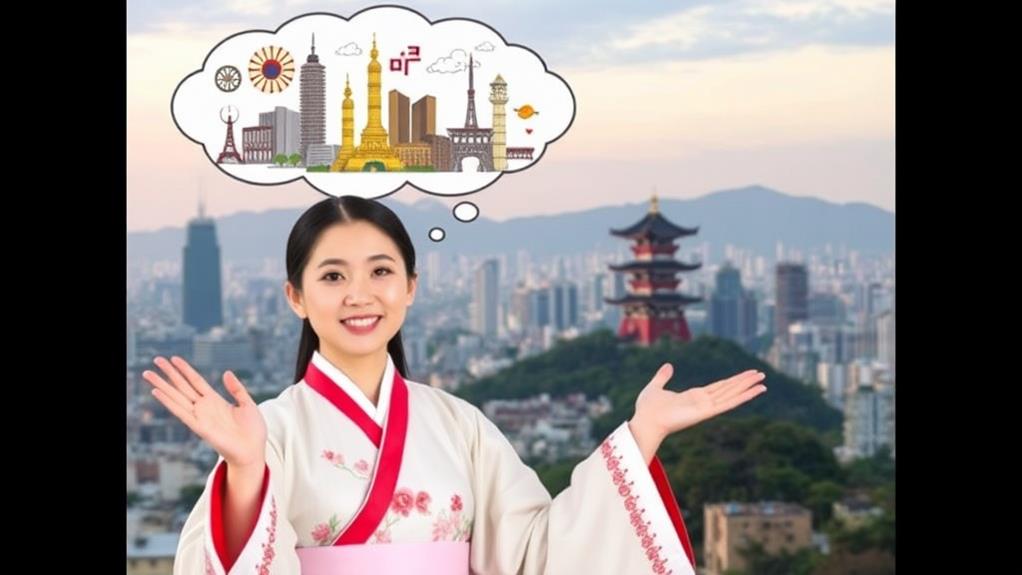
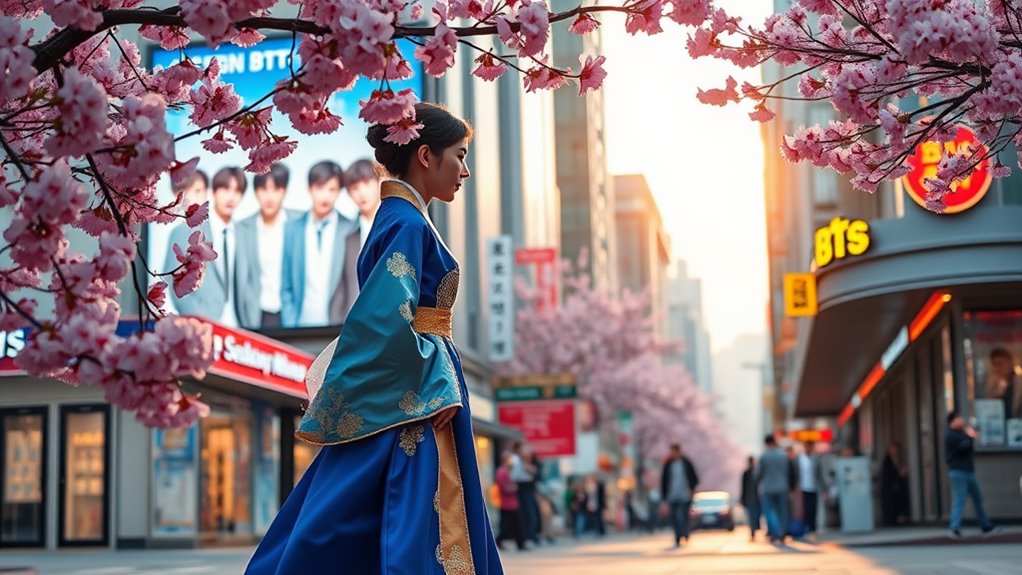
You'll find K-culture bridges the traditional and modern, from K-pop's global reach to hanbok's timeless elegance. Today's entertainment scene blends centuries-old traditions with digital innovation, creating a unique cultural experience that's captured worldwide attention. With over 150 million K-pop fans and a thriving entertainment industry worth billions, Korean culture offers both ancient wisdom and contemporary creativity. Discover how these fascinating elements come together to shape Korea's cultural identity. (Source: Korea Tourism Organization)
Explorer Insights
- K-pop artists blend traditional Hanbok elements into modern performances, creating a bridge between historical and contemporary Korean culture.
- Global K-pop fanbase of 150 million provides exposure to traditional Korean culture through multimedia entertainment platforms.
- Traditional Korean elements, from fashion to instruments, are seamlessly integrated into modern K-pop productions and performances.
- Digital platforms enable worldwide audiences to explore both K-pop and traditional Korean cultural elements simultaneously.
- Cultural exports featuring both modern and traditional elements have doubled to $10.3 billion, demonstrating successful cultural fusion.
The Global Rise of K-Pop's Cultural Impact
The explosive rise of K-pop has transformed the global music landscape, with over 150 million fans worldwide embracing this dynamic cultural phenomenon. You'll find passionate fan communities spanning from Brazil's energetic online campaigns to Japan's thriving merchandise markets, showing just how far this movement has spread.
When you explore K-pop's reach, you'll notice how social media has played an essential role in connecting fans across continents. Thanks to multilingual releases in English, Japanese, and Mandarin, you can now enjoy your favorite songs in different languages. The movement's also expanding beyond just music – you'll see K-pop stars influencing global fashion trends and becoming brand ambassadors. Whether you're streaming FIFTY FIFTY's "Cupid" or attending a KCON event in your city, you're part of a growing cultural wave that's reshaping entertainment worldwide. With a clear majority of female fan base driving the movement forward, K-pop continues to shape modern pop culture in unprecedented ways. Essential Korean travel apps can help you navigate new cities while immersing yourself in the vibrant K-culture.
Understanding Hanbok's Historical Significance
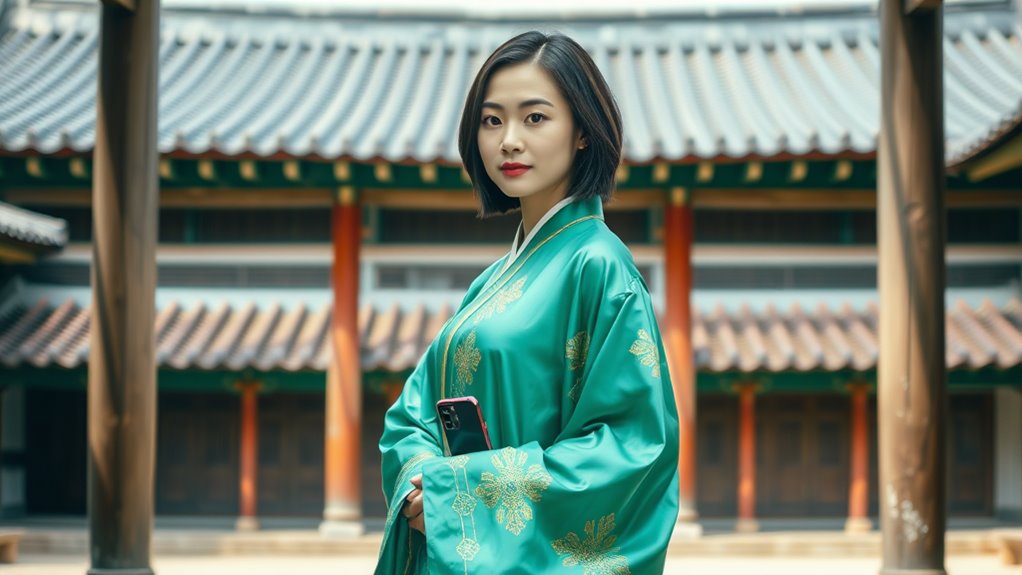
While exploring Korea's rich cultural heritage, you'll discover that hanbok's journey spans over 1,600 years of fascinating history. You can trace its origins back to the Three Kingdoms period, where ancient murals in Goguryeo tombs first captured its distinctive design.
When you look at traditional hanbok, you'll notice its beautiful blend of straight lines and gentle curves, created to allow easy movement through loose sleeves and flowing silhouettes. The garment tells stories through its colors and materials – white fabric once marked nobility, while vibrant hues celebrated special occasions. During the Joseon dynasty period, hanbok reached its most recognizable form that we know today. Shaman rituals and practices were also deeply intertwined with state affairs during this time.
Today, you'll see Koreans wearing hanbok during important celebrations like Seollal (Lunar New Year) and Chuseok (Thanksgiving). The design has evolved for modern times while keeping its essential elements, making it a powerful symbol of Korean cultural identity.
Digital Transformation of Korean Entertainment
Moving from traditional garments to modern entertainment, Korea's digital revolution has transformed how you'll experience its popular culture. You'll find entertainment at your fingertips through streaming platforms, with services like Melon leading the way even before Spotify existed. Korea's tech giants are investing heavily in creating immersive digital experiences, from IPTV to cutting-edge metaverse platforms. The government has committed USD187 million to develop a comprehensive metaverse ecosystem that will revolutionize entertainment delivery.
- Watch your favorite K-pop stars through YouTube channels and social media platforms that offer real-time interactions
- Access bilingual content that makes Korean entertainment more accessible than ever
- Enjoy Korean shows and movies through partnerships with global streaming services like Netflix
- Connect with artists directly through specialized platforms like Weverse and VLive
The entertainment industry's digital transformation isn't just about technology – it's about bringing Korean culture closer to you, wherever you are in the world.
Modern K-Culture's Economic Influence
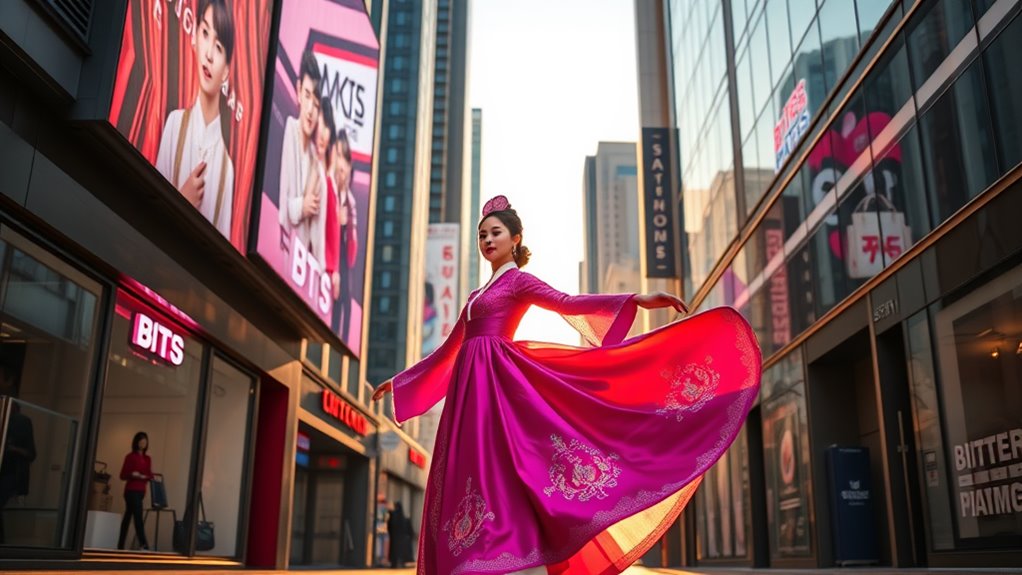
Beyond entrancing global audiences, Korean cultural exports have become a powerful economic force that you'll see reflected in impressive numbers. From 2016 to 2019, you'll notice how cultural exports doubled from $5.1 billion to $10.3 billion, showing just how fast K-culture is growing worldwide.
When you look at today's figures, you'll be amazed to see the K-pop events market valued at $8.1 billion in 2026, with experts predicting it'll reach $20 billion by 2031. This growth isn't just about money – it's creating real opportunities for people too. Between 2017 and 2021, the Korean Wave generated 160,000 new jobs, and the industry continues to expand. You'll find that major entertainment agencies have tripled their revenue to nearly $3 billion in recent years, proving that K-culture's influence keeps getting stronger. The Korean Wave's success is evident in its remarkable 37 trillion won in economic effects from 2017-2021, demonstrating its substantial impact on the global market. Sustainability trends in China, Japan, and Korea are also driving the growth of eco-friendly fashion and home decor in the K-culture market.
Bridging Traditional and Contemporary Korean Arts
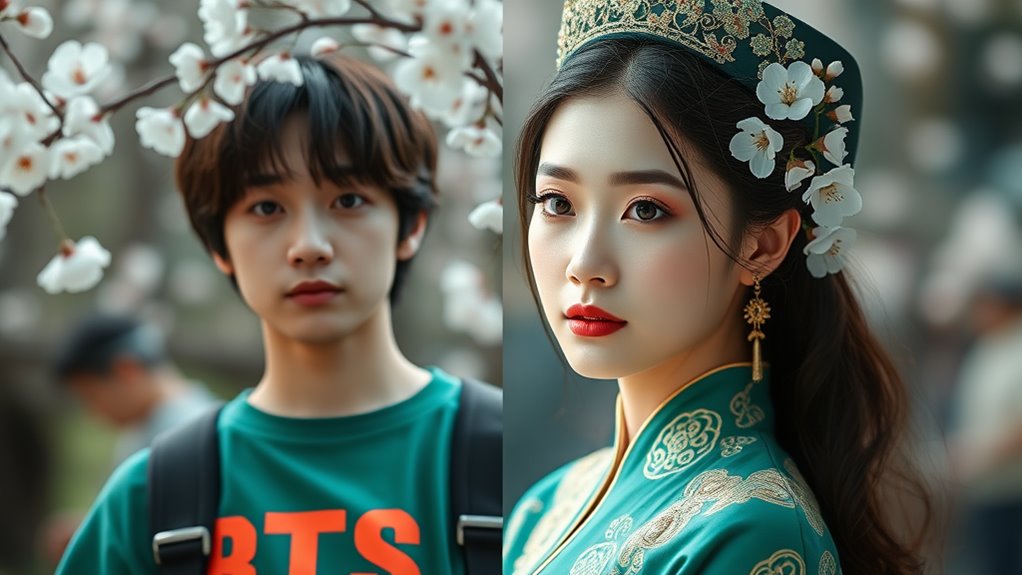
The rich economic success of K-culture has opened new doors for an amazing artistic evolution in South Korea. You'll find traditional elements beautifully woven into modern expressions, from hanbok-inspired fashion in K-pop performances to contemporary art that blends ancient techniques with digital innovation. Cultural fusion continues to evolve as diverse people worldwide embrace and adapt Korean traditions to create new artistic expressions.
- Watch K-pop groups like NewJeans perform at historic sites, wearing modernized hanbok that bridges past and present
- Experience art exhibitions where traditional hanji paper meets digital technology
- Listen for traditional instruments like gayageum in your favorite K-pop songs
- Discover how Korean artists mix Western techniques with traditional minimalist styles
As you explore Korean arts, you'll notice how seamlessly they've managed to preserve their cultural heritage while embracing modern creativity. This unique blend has helped Korean arts capture hearts worldwide, making traditional elements feel fresh and relevant to today's audiences. Additionally, lightweight Japanese yukatas provide a comfortable option for travel, allowing for a more immersive cultural experience.
Cultural Exchange Through Music and Fashion
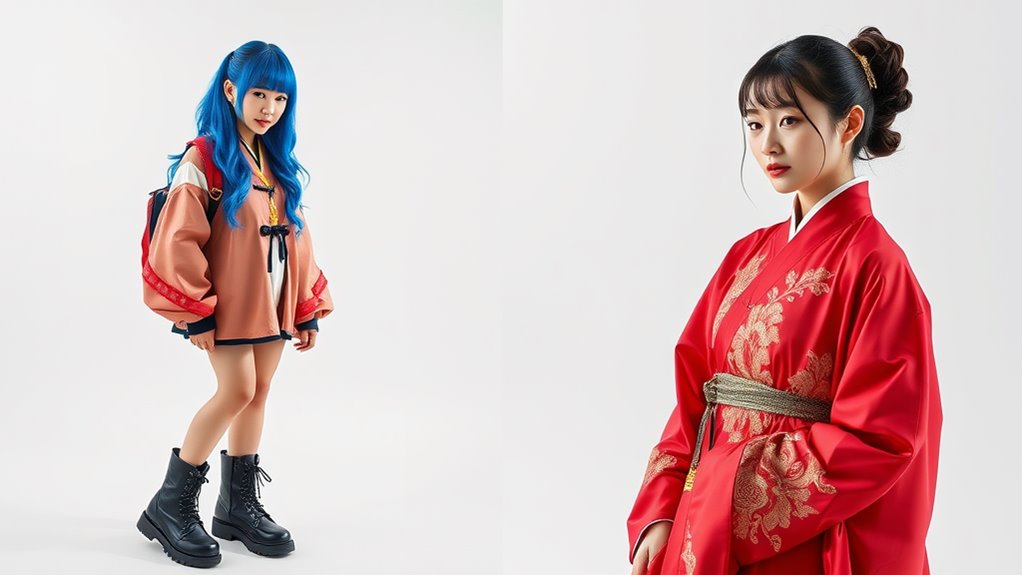
While K-Pop's infectious beats and bold fashion have conquered global charts, you'll find that its influence extends far beyond just music. When you explore K-Pop culture today, you're witnessing a powerful blend of Eastern and Western styles that's reshaping global fashion and entertainment.
You can see this cultural exchange everywhere, from luxury brands partnering with Korean idols to the growing popularity of gender-neutral fashion inspired by K-Pop stars. Whether you're watching music videos or browsing social media, you'll notice how K-Pop artists mix high fashion with streetwear to create unique looks that fans worldwide love to recreate.
The numbers tell an amazing story: K-Pop's global fanbase has grown from 9 million to 225 million in just ten years, with fan clubs now active in 119 countries. This cultural phenomenon has helped South Korea's global influence ranking surge from 31st to 7th in just five years. Discover the beauty of Asian-inspired travel journals on our website, where you can find stylish journals that capture the essence of K-Pop and Korean culture.
Frequently Asked Questions
How Can International Fans Properly Pronounce Korean Names and Song Lyrics?
To properly pronounce Korean names and lyrics, you'll want to break down each syllable and practice the basic rules. Start with consonant sounds, paying attention to final consonants like 받침 (batchim). When you see names like "Park," pronounce it as "Bak," and remember that vowels like "ah" and "eh" have distinct sounds. You can use online tutorials and K-pop lyrics as practice materials, focusing on one syllable at a time until it feels natural.
What Are the Cultural Taboos to Avoid When Attending K-Pop Events?
At a recent BTS concert in Seoul, a fan learned the hard way about concert etiquette when their unauthorized camera was confiscated. When you're attending K-pop events, you'll want to avoid taking photos when it's not allowed, wearing offensive cultural costumes, or bringing banned items like selfie sticks. Don't mock other fandoms, use racially insensitive language, or disrespect cultural elements. Remember to check venue rules and respect local customs for a positive experience.
How Do Korean Beauty Standards Differ From Western Beauty Ideals?
You'll notice that Korean and Western beauty standards differ quite a bit. Korean beauty favors slim V-shaped faces, fair "glass skin," and youthful features, while Western ideals celebrate more diverse looks. In Korea, you'll see a focus on porcelain complexions and delicate features, compared to Western preferences for tanned skin and curvier figures. Korean standards also emphasize strict skincare routines, while Western beauty often embraces a more natural, effortless approach.
Where Can Beginners Learn Basic Korean Language Through K-Pop Songs?
You can start learning Korean through K-pop songs using several beginner-friendly methods. Platforms like Lingopie Music offer interactive lyrics with translations, while slower songs like IU's "Lilac" help you grasp pronunciation. Focus on tracks with repetitive choruses, like BTS's "Just One Day" or iKON's "Love Scenario." You'll find helpful resources on YouTube channels that break down lyrics, and websites like Genius provide Korean-English translations for easy study.
What Is the Significance of Fan Colors Assigned to Different K-Pop Groups?
Fan colors play a critical role in K-pop culture as they help you identify different fandoms and create unity among fans. You'll see these official colors in lightsticks, merchandise, and concert venues, where they create stunning visual displays. They're not just pretty – they represent your group's brand identity and carry deep emotional meaning. When you're at concerts, you'll notice how these colors bring fans together, creating a sense of belonging and shared experience.
Conclusion
Your journey through Korea's vibrant culture, from the electric energy of K-pop to the graceful sweep of traditional hanbok, shows how old and new flow together like streams joining a mighty river. You'll find that diving into Korean entertainment, fashion, and arts opens doors to deeper cultural understanding. Whether you're watching music videos or trying on a hanbok, you're now part of Korea's ongoing cultural story.
More on Korea:
Planning a trip to Korea?
Check out our Korea Travel Hub for more guides, including Korean BBQ Guide.

Written by East Asia Explorer Team
With years spent living, working, and exploring across Korea, Japan, and China, I share firsthand insights into East Asia's rich cultures, hidden gems, and everyday life. My journey also includes studying in Malaysia and traveling through Southeast Asia, experiences that have deepened my appreciation for the region's diversity. Through practical tips, local stories, and travel guides, I aim to help fellow explorers discover both the celebrated highlights and the lesser-known corners of East Asia.