Last Updated: April 8, 2026 | Originally Published: February 22, 2026
Last updated: February 2026
Top Areas: Dotonbori, Shinsekai, Kuromon Market, Tenjinbashisuji Shopping Street
Average Budget Per Meal: 500–1,500 JPY ($3.30–$10 USD)
Daily Food Budget: 2,000–7,000 JPY ($13–$47 USD) depending on style
Best Time to Go: March–May and October–November for mild weather; evening for the full experience
Cash or Card: Carry cash — many street stalls are cash-only in 2026
Key Phrase to Know: Kuidaore (食い倒れ) — “eat until you drop”
(see Japan Guide)
I first walked into Dotonbori on a rainy Tuesday evening in 2019, jet-lagged and starving. A woman behind a tiny counter handed me a boat of freshly spun takoyaki, and I burned the roof of my mouth within three seconds. That moment turned me into an Osaka street food obsessive. I’ve been back four times since, including a three-week trip in early 2026.
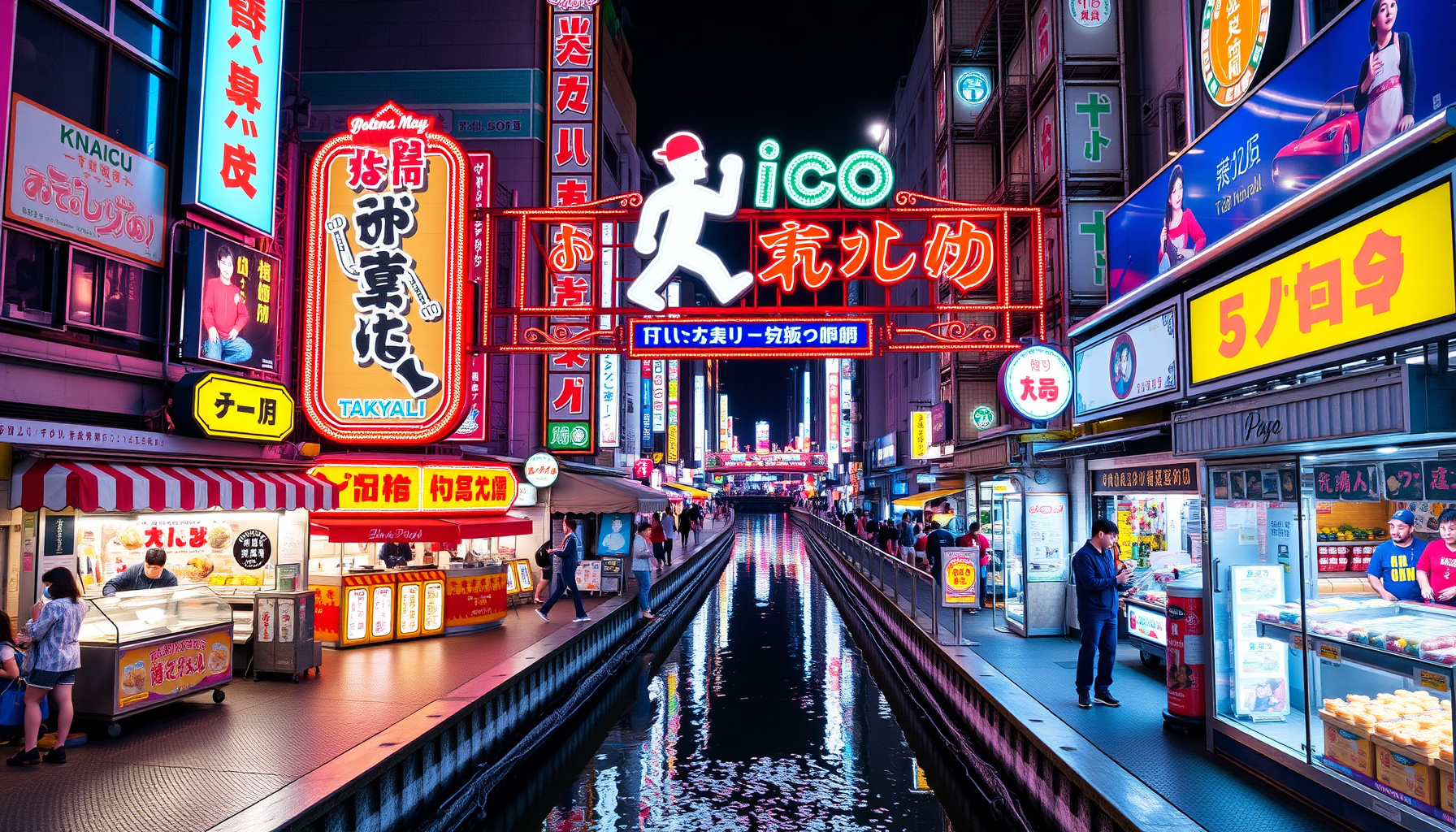
Osaka is not subtle about food. Where Tokyo and Kyoto have a certain restraint, Osaka screams at you with giant mechanical crabs, neon-lit octopus signs, and hawkers calling out from every stall. This city invented the concept of kuidaore — eating yourself into ruin — and it wears that title proudly. (see Japan National Tourism Organization)
This guide covers everything I’ve learned across those trips. Real prices from 2026, the actual streets worth your time, dishes ranked by how much I’d walk for them, and the practical stuff nobody tells you until you’re standing at a stall wondering if you can use your Suica card. (You usually can’t.) (see Japan Rail Pass official site)
If you’re planning a wider trip, check out our complete Japan travel hub for more destination guides.
Why Osaka Is Japan’s Street Food Capital
| Dish | What It Is | Price Range | Where to Find It | Must-Try Spot |
|---|---|---|---|---|
| Takoyaki 🐙 | Octopus balls in batter with bonito & mayo | ¥500–800 / 8 pieces | Dotonbori, Namba | Aizuya (1st takoyaki shop, est. 1933) |
| Okonomiyaki 🥞 | Savoury pancake with cabbage & toppings | ¥800–1,400 | Dotonbori, Namba Walk | Mizuno (70+ years, Dotonbori) |
| Kushikatsu 🍢 | Deep-fried skewers — meat, veg, seafood | ¥100–300 per skewer | Shinsekai district | Daruma (the original chain, Shinsekai) |
| Ikayaki 🦑 | Grilled squid on a stick | ¥400–600 | Osaka Tennoji area, festivals | Tsuruichi near Dotonbori |
| Taiko Manju 🥟 | Drum-shaped sweet bean paste buns | ¥150–200 each | Kuromon Market, Shinsekai | Kuromon Market stalls |
| Negiyaki 🧅 | Green onion pancake (lighter than okonomiyaki) | ¥700–1,000 | Fukushima district | Yamamoto Negiyaki |
| Kitsune Udon 🍜 | Thick noodles with sweet fried tofu | ¥600–900 | Any Osaka udon shop | Udon Yamacho, Namba |
| Dorayaki 🍡 | Red bean paste sandwiched in pancakes | ¥150–300 | Dotonbori, convenience stores | Naniwaya original shop |
Osaka Dotonbori & Namba Street Food Map
Every city in Japan has street food. But Osaka treats eating on the go as a civic identity. The kuidaore philosophy dates back to the Edo period when Osaka was the country’s commercial center. Merchants here spent lavishly on food while Kyoto’s money went to clothing and Tokyo’s to status. Centuries later, that attitude hasn’t changed.
What makes Osaka street food different from, say, Bangkok or Mexico City? Specialization. Most stalls here do one thing, and they’ve been perfecting that one thing for decades. The takoyaki vendor on the corner of Sennichimae isn’t experimenting with fusion flavors — they’re adjusting the batter-to-octopus ratio by fractions of a gram.
There’s also the price factor. In 2026, you can eat three full street food meals in Osaka for under 2,500 JPY ($16.50 USD). That’s almost impossible in Tokyo. The cost of living gap between Japan’s two biggest cities shows up nowhere more clearly than at the food stalls.
And then there’s the attitude. Osaka people are famously direct and warm. Stall owners will joke with you, teach you how to eat their dish, and occasionally shove free samples into your hand before you’ve even stopped walking. It’s a different energy from the polite formality you find in most of Japan.
Must-Try Osaka Street Foods
I’ve eaten my way through dozens of Osaka street foods across multiple trips. Here are the ones that matter, with 2026 prices I personally paid or verified.
| Dish | What It Is | Price Range (JPY) | Price (USD) | Where to Try |
|---|---|---|---|---|
| Takoyaki | Crispy-outside, molten-inside octopus balls (6–8 pcs) | 500–800 | $3.30–$5.30 | Aizuya (Tenjinbashisuji), Takoyaki Doraku Wanaka (Dotonbori) |
| Okonomiyaki | Savory cabbage-based pancake with toppings of your choice | 800–1,500 | $5.30–$10 | Mizuno (Dotonbori), Fukutaro (Namba) |
| Kushikatsu | Deep-fried skewered meat, seafood, and vegetables (5–10 pcs) | 800–2,000 | $5.30–$13.30 | Daruma (Shinsekai), Yaekatsu (Shinsekai) |
| Gyoza | Pan-fried pork and cabbage dumplings (6 pcs) | 300–500 | $2–$3.30 | Gyoza no Ohsho (multiple locations), Horai (Dotonbori) |
| Ramen | Rich pork-bone broth noodle soup, Osaka-style | 800–1,200 | $5.30–$8 | Kamukura (Dotonbori), Ichiran (Dotonbori) |
| Kobe Beef Street Steak | Premium wagyu beef grilled on a stick or small plate | 1,500–3,000 | $10–$20 | Kuromon Market stalls, Dotonbori wagyu vendors |
| Taiyaki | Fish-shaped pastry filled with red bean, custard, or sweet potato | 200–400 | $1.30–$2.70 | Naruto Taiyaki Honpo (multiple locations) |
| Ikayaki | Whole grilled squid on a stick, brushed with soy glaze | 400–600 | $2.70–$4 | Kuromon Market, Shinsekai stalls |
Takoyaki — The Dish That Defines Osaka
You cannot visit Osaka and skip takoyaki. These octopus-filled batter balls are cooked in special cast-iron molds, turned constantly with metal picks until the outside crisps and the inside stays almost liquid. The standard serving is 6 to 8 pieces, topped with brown sauce, Japanese mayo, bonito flakes, and green onion.
Here’s the thing most guides won’t tell you: the tourist-facing takoyaki in Dotonbori is fine, but it’s not the best. Head to Aizuya near Tenjinbashisuji station — they’ve been operating since the 1930s and many locals call them the birthplace of takoyaki. A plate of eight runs about 600 JPY ($4 USD) as of early 2026.
Wait at least two minutes before eating. I’m not joking. The inside is nuclear-hot, and every first-timer learns this lesson the hard way. I certainly did.
Okonomiyaki — Osaka’s Savory Pancake
Okonomiyaki translates roughly to “grill what you like,” and that’s exactly the idea. The base is a batter of flour, grated yam, eggs, shredded cabbage, and tenkasu (tempura scraps). From there, you add pork, shrimp, squid, cheese, mochi, or basically anything you want.
The Osaka style is mixed all together before grilling, unlike Hiroshima’s layered version. Most okonomiyaki places have a hot griddle built into your table so the pancake stays warm while you eat. A standard pork okonomiyaki runs about 900–1,200 JPY ($6–$8 USD) at most sit-down spots in 2026.
Mizuno in Dotonbori consistently ranks among the best. Expect a wait of 30–60 minutes during peak hours, but the yamaimon-yaki (their signature with mountain yam) is worth standing in line for.
Kushikatsu — The No-Double-Dip Rule
Kushikatsu is Shinsekai’s signature dish: skewers of meat, seafood, and vegetables coated in a light panko batter and deep-fried. Each skewer gets one dip in the communal sauce trough. One dip. That’s the rule. Signs everywhere will remind you: nido-zuke kinshi — absolutely no double dipping.
A set of 5 to 10 skewers typically costs 800–2,000 JPY ($5.30–$13.30 USD), depending on what you order. Pork and onion skewers are cheap. Shrimp and asparagus cost more. The experience at Daruma in Shinsekai is classic, with the angry-faced mascot statue out front acting as a landmark.
The Supporting Cast
Beyond the big three, don’t sleep on gyoza at 300–500 JPY ($2–$3.30) for six perfectly crispy dumplings. Ikayaki — whole grilled squid brushed with soy and served on a stick — runs 400–600 JPY ($2.70–$4) and is best at Kuromon Market where they grill it to order.
For dessert, taiyaki (fish-shaped pastries) cost 200–400 JPY ($1.30–$2.70) and come filled with red bean paste, custard cream, or sweet potato. And if you’re feeling extravagant, the Kobe beef street steak vendors at Kuromon Market sell small cuts of A5 wagyu for 1,500–3,000 JPY ($10–$20). Is it the best value? No. Is it an incredible three bites of beef? Absolutely.
Best Food Streets and Markets in Osaka
Osaka’s street food scene is concentrated in a few specific neighborhoods. Each one has a distinct personality. Here’s how they compare based on my visits in 2026.
🏳 Dotonbori
Nearest Station: Namba (various lines)
Pros:
- Highest density of food stalls in Osaka
- Open late (many stalls until 11 PM+)
- Iconic atmosphere with neon signs and canal views
- Easy to reach from any part of the city
Cons:
- Extremely crowded, especially weekends and holidays
- Some tourist-trap pricing at the most visible stalls
- Quality varies — popularity doesn’t always equal good
Best for: First-timers, night eating, takoyaki, okonomiyaki, ramen
🏳 Shinsekai
Nearest Station: Dobutsuen-mae (Midosuji/Sakaisuji lines)
Pros:
- Home of kushikatsu — dozens of specialist shops
- Retro Showa-era atmosphere with Tsutenkaku Tower
- Less polished, more authentic local feel
- Generally cheaper than Dotonbori
Cons:
- Narrower food variety compared to Dotonbori
- Some areas feel run-down (though improving)
- Fewer late-night options
Best for: Kushikatsu, budget eating, retro atmosphere, repeat visitors
🏳 Kuromon Market
Nearest Station: Nippombashi (Sakaisuji/Sennichimae lines)
Pros:
- Best fresh seafood in Osaka — sashimi, grilled fish, oysters
- Wagyu beef steak vendors with A5 quality
- Covered market — great on rainy days
- Morning to afternoon hours (good for early eaters)
Cons:
- Noticeably more expensive than other areas
- Heavily tourist-oriented, especially since 2023
- Closes early (most stalls done by 5 PM)
Best for: Seafood lovers, wagyu beef, morning food crawls
The Secret Fourth Option: Tenjinbashisuji Shopping Street
Most guides focus on the big three above, but Tenjinbashisuji is my personal favorite for street food in 2026. At 2.6 kilometers, it’s the longest shopping street in Japan, and it’s overwhelmingly local. You won’t see tour groups here. You will see retired Osaka residents eating takoyaki at 10 AM because that’s just what people do.
Aizuya, which many food historians consider the original takoyaki shop, is here. So are dozens of small kushikatsu joints, udon shops, and wagashi (Japanese sweet) vendors that charge half what Dotonbori does. Take the Sakaisuji Line to Tenjinbashisuji Rokuchome station and start walking south. Give yourself two hours minimum.
For more tips on getting around Japan’s cities efficiently, our Japan travel guide covers transit passes and regional planning.
How Much Does Osaka Street Food Cost? A 2026 Budget Breakdown
One of the best things about Osaka street food is the range. You can eat well on a tight budget or spend more for premium ingredients without ever sitting in a formal restaurant. Here’s what daily food spending actually looks like in 2026.
| Spending Level | Daily Cost (JPY) | Daily Cost (USD) | What That Gets You |
|---|---|---|---|
| Budget | 2,000–3,500 | $13–$23 | Convenience store breakfast, takoyaki or gyoza lunch, ramen dinner. No frills but totally satisfying. |
| Mid-Range | 4,000–7,000 | $27–$47 | Cafe breakfast, okonomiyaki lunch, kushikatsu dinner with a beer, taiyaki snack. Comfortable and varied. |
| Splurge | 8,000–15,000 | $53–$100 | Kuromon Market seafood breakfast, wagyu beef lunch, premium okonomiyaki dinner, multiple snacks and drinks. |
My average daily spend across three weeks in Osaka in 2026 was about 5,200 JPY ($34.50 USD) on food, eating exclusively at street stalls, market vendors, and small counter-service restaurants. I didn’t feel like I was holding back at all. That included a couple of splurge days at Kuromon Market that pulled the average up.
The biggest budget hack is knowing that convenience stores (konbini) in Japan are genuinely good. A 7-Eleven onigiri for 150 JPY and a can of coffee for 130 JPY is a solid breakfast. Save your street food budget for lunch and dinner when the stalls are actually open and at their best.
Practical Tips for Eating Street Food in Osaka
Osaka is easy to navigate as a food tourist, but there are a few things that’ll make your experience smoother. These come from mistakes I’ve personally made.
Cash Is Still King
Japan has gotten much better about accepting credit cards and IC cards at restaurants and shops. Street food stalls have not. In 2026, I’d estimate 60–70% of the stalls I visited in Dotonbori were cash-only. In Shinsekai and Tenjinbashisuji, that number was closer to 80%. Withdraw yen from a 7-Eleven ATM (they all accept foreign cards) and keep 5,000–10,000 JPY on you at all times.
Don’t Walk and Eat
This is probably the most important cultural note for Western visitors. Eating while walking is considered rude in Japan. Most street food stalls have a small standing area or counter nearby where you’re expected to eat. Finish your food there, throw away your trash in the provided bins (or carry it with you — public trash cans are rare), and then move on.
Will anyone yell at you if you walk and eat? No. But you’ll get looks, and the stall owners appreciate it when you respect the custom. It also means you actually taste the food instead of inhaling it between photo stops.
Navigating Allergies and Dietary Restrictions
This is the hard part. Osaka street food relies heavily on wheat (takoyaki batter, okonomiyaki, kushikatsu coating), seafood (bonito dashi is in almost everything), eggs, and soy. If you have serious allergies, prepare allergy cards in Japanese before you go. Google Translate’s camera mode is also helpful for reading ingredient signs.
Vegetarian and vegan eating is possible but limiting at street stalls. Okonomiyaki can sometimes be made without meat, and some kushikatsu places offer vegetable-only sets. But dashi stock (made from bonito fish flakes) is in most savory dishes. The situation is improving in 2026 compared to even a few years ago, but it still requires planning.
Timing Your Eating
Most Osaka street food stalls open around 11 AM and stay open until 9 or 10 PM. Dotonbori stalls often run until 11 PM or midnight. Kuromon Market is the exception — it runs from about 9 AM to 5 PM, and the best seafood sells out by early afternoon. My strategy: Kuromon in the morning, Tenjinbashisuji or Shinsekai for a late lunch, and Dotonbori after dark when the neon makes everything taste better.
Useful Japanese Food Vocabulary
You don’t need to speak Japanese to eat in Osaka — pointing and holding up fingers works fine. But knowing a few words makes the whole experience better, and stall owners genuinely light up when you try.
| Japanese | Romaji | Meaning |
|---|---|---|
| いただきます | Itadakimasu | Said before eating — “I humbly receive” |
| ごちそうさま | Gochisousama | Said after eating — “Thank you for the meal” |
| おいしい | Oishii | “Delicious!” — use it generously |
| 一つください | Hitotsu kudasai | “One, please” — point at what you want and say this |
| お会計 | Okaikei | “The check, please” |
| 辛い | Karai | “Spicy” — useful if you want to avoid or request heat |
| アレルギー | Arerugii | “Allergy” — borrowed from English, widely understood |
| おすすめ | Osusume | “Recommendation” — ask what the stall owner suggests |
Best Times to Visit Osaka for Street Food
Osaka is a year-round food city, but the season you visit affects what’s available and how comfortable you’ll be eating outdoors.
Spring (March–May): My top pick. Cherry blossom season brings special seasonal treats, the weather hovers around 15–22°C (59–72°F), and the crowds are manageable outside of Golden Week (late April to early May). I went in April 2026 and it was perfect — warm enough to enjoy standing outside eating takoyaki, cool enough that the food stalls didn’t feel oppressive.
Summer (June–August): Hot and humid, often above 33°C (91°F). Standing over a hot griddle eating okonomiyaki in August is an endurance test. But summer brings kakigori (shaved ice), cold ramen, and beer gardens, so it’s not all suffering. Rainy season (tsuyu) typically hits in mid-June to mid-July.
Autumn (September–November): The second-best window. October and November bring comfortable temperatures and autumn food specials — sweet potato everything, seasonal mushroom dishes, and new-harvest rice. Fewer tourists than spring.
Winter (December–February): Cold but manageable (3–10°C / 37–50°F). Hot ramen, steaming oden, and warm taiyaki feel extra satisfying. New Year’s period (late December to early January) sees many small stalls close for holidays, so plan around that.
Osaka Street Food FAQ
Is Osaka street food safe for tourists?
Yes, extremely. Japan has some of the strictest food safety standards in the world, and that extends to street stalls. In all my trips to Osaka, I’ve never had a food safety issue. The stalls are clean, ingredients are fresh, and turnover is high (meaning food doesn’t sit around). Use normal common sense — eat at places with a line of locals, and you’ll be fine.
Can I eat Osaka street food if I’m vegetarian or vegan?
It’s possible but challenging. Most broths use bonito dashi (fish-based), okonomiyaki typically contains eggs, and kushikatsu is inherently meat-heavy. Your best bets are vegetable kushikatsu sets, some temple-area shops that offer shojin ryori (Buddhist vegetarian cuisine), and the growing number of vegan-friendly cafes in the Amerikamura district. Prepare allergy and dietary cards in Japanese before your trip — it makes communication much easier.
How much cash should I carry for a day of street food eating?
For a full day of grazing, 5,000–7,000 JPY ($33–$47 USD) in cash is comfortable for a mid-range eater. If you’re on a tight budget, 3,000 JPY ($20 USD) will get you through three meals and a snack. Keep some 100-yen and 500-yen coins handy — stalls often prefer exact change, and it speeds up the line.
What’s the best order to visit the food areas?
My recommended route for a single day: Start at Kuromon Market around 9–10 AM for fresh seafood and wagyu samples while the quality is highest. Take the subway to Shinsekai for kushikatsu around noon. Walk or train to Tenjinbashisuji for a mid-afternoon snack of takoyaki at Aizuya. End at Dotonbori after sunset when the neon signs are on and the energy peaks. This route flows south to east to north to central and avoids backtracking.
Do I need to make reservations for any Osaka street food spots?
Not for actual street stalls — you just queue up. But a few of the famous sit-down spots like Mizuno (okonomiyaki) and some of the higher-end kushikatsu restaurants in Shinsekai can have 30–90 minute waits during peak hours. No reservation system exists for most of these; you simply show up and wait. Arrive before 11:30 AM for lunch or before 5:30 PM for dinner to minimize the line.
Is tipping expected at Osaka street food stalls?
No. Tipping is not part of Japanese culture and can actually cause confusion at small stalls. The price on the sign is what you pay. If you want to show appreciation, saying “oishii” (delicious) and “gochisousama” (thank you for the meal) will earn you a genuine smile. That means more to stall owners than extra yen.
Osaka street food isn’t just about the food itself — it’s about the culture of eating openly, joyfully, and without pretension. No dress codes. No reservations. Just you, a paper boat of takoyaki, and a city that wants you to eat until you can’t move. That’s kuidaore. That’s Osaka.
Start planning your food-focused trip with our Japan travel hub, where you’ll find guides to Tokyo, Kyoto, and beyond.
Related Reading
More on Food & Dining:

Written by Sam Konneh
Sam Konneh is an AI strategist and digital marketer based in Seoul, South Korea. With years spent living, working, and exploring across Korea, Japan, and China, he shares firsthand insights into East Asia's cultures, hidden gems, and everyday life. A graduate of Inha University and KDI Graduate School, Sam combines data-driven expertise with on-the-ground experience. His journey also includes studying in Malaysia and traveling through Southeast Asia. Through practical tips, local stories, and travel guides, he helps fellow explorers discover both the celebrated highlights and the lesser-known corners of East Asia.