Last Updated: March 12, 2026 | Originally Published: February 26, 2025
You'll discover South Korea's vibrant cities showcase a fascinating blend of old and new. Seoul's dynamic landscape splits into traditional Gangbuk, with its cultural landmarks and markets, and modern Gangnam, known for luxury shopping and corporate hubs. Meanwhile, Busan, the country's largest port city, offers beautiful beaches and the famous Jagalchi Fish Market. From efficient public transport to sustainable design, these cities highlight how Korean innovation meets heritage. Let's explore what makes each destination uniquely special. (Source: Korea Tourism Organization)
Read our full South Korea Travel Guide 2026 for everything you need to plan your Korea trip.
Explorer Insights
- Seoul's urban landscape seamlessly blends ancient cultural landmarks with modern innovation through excellent public transportation and mixed-use development.
- The Han River divides Seoul into Gangbuk's traditional charm and Gangnam's modern luxury, each offering distinct cultural experiences.
- Gangnam generates 25% of Seoul's GDP and features premium shopping, while Gangbuk preserves historical significance through traditional markets.
- Busan, South Korea's largest port city, combines maritime heritage with modern appeal through its famous fish markets and beaches.
- OCEANIX Busan demonstrates South Korea's commitment to innovation as the world's first prototype floating city with sustainable technologies.
The Heart of Korea: Seoul's Dynamic Urban Landscape
When you visit Seoul, South Korea's bustling capital city, you'll discover a fascinating blend of ancient history and modern innovation that's been carefully shaped over more than 600 years. Nestled along the Han River, Seoul combines ancient defensive walls with gleaming skyscrapers like the Lotte World Tower, showing you how tradition meets progress at every turn.
You'll find it easy to explore the city thanks to its excellent public transport system and walkable neighborhoods. The city's innovative approach to urban planning includes mixed-use development that seamlessly integrates residential, commercial, and recreational spaces. From the shopping haven of Myeongdong to the tech-savvy streets of Gangnam, each district offers its own unique charm. The city's smart planning means you're never far from green spaces, with parks and restored waterways providing peaceful retreats from urban life. Seoul's commitment to sustainability shows in its abundant public spaces and eco-friendly design, making it a model for modern city living. The extensive subway network spanning over 350 km with 23 lines connects key districts, attractions, and residential areas throughout the city.
Gangnam vs. Gangbuk: A Tale of Two Districts
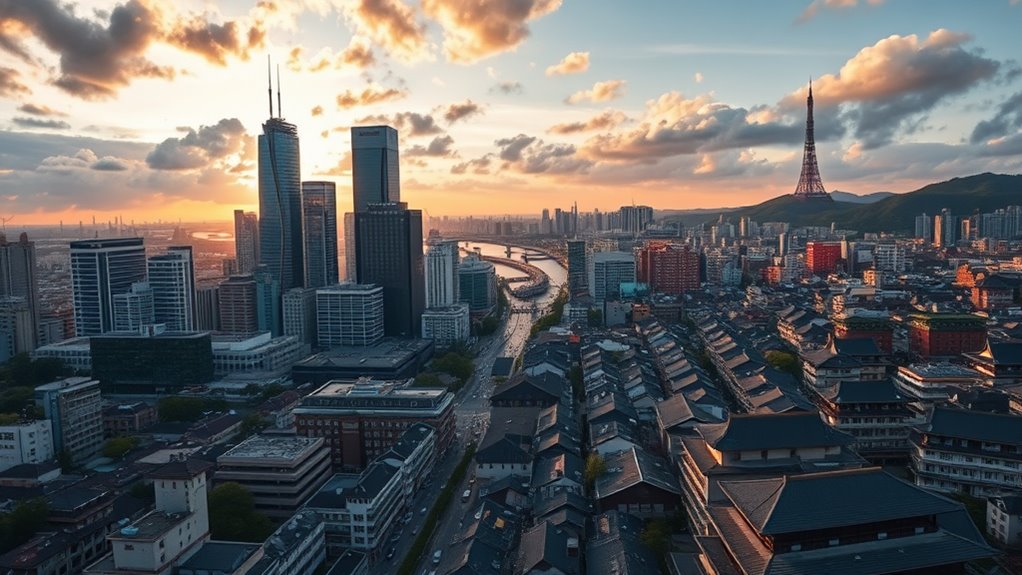
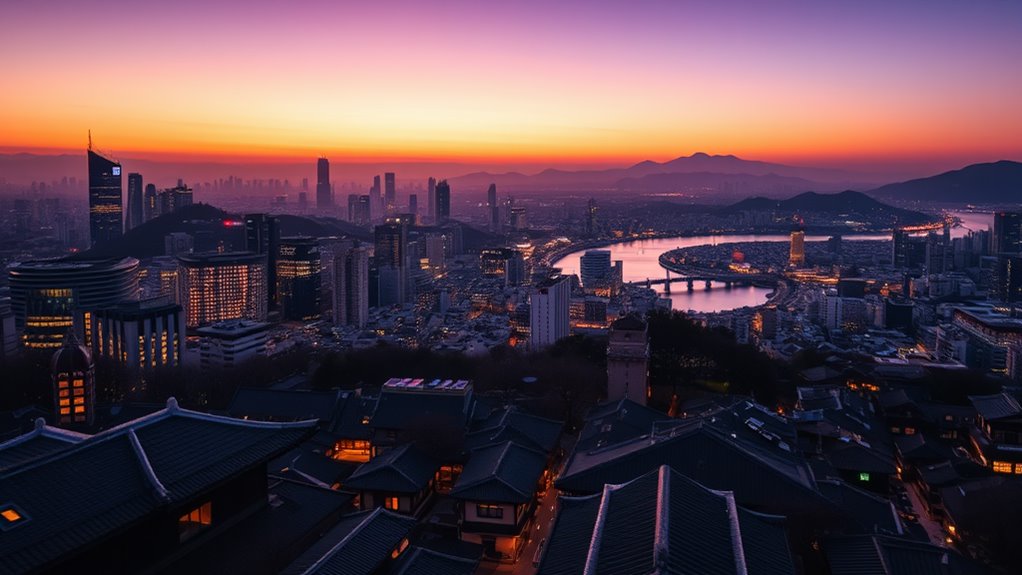
When you're exploring Seoul, you'll quickly notice how the Han River splits the city into two distinct worlds – the traditional Gangbuk in the north and the modern Gangbuk in the south. While Gangbuk welcomes you with its historic palaces, winding alleyways, and preserved hanok homes that tell stories of Korea's rich past, Gangnam dazzles with its gleaming skyscrapers, tech hubs, and trendy entertainment districts. Rapid economic growth has transformed Gangnam from primarily rice paddies in the 1980s into a thriving commercial center. You'll find the contrast fascinating as you move between Gangbuk's cultural landmarks and traditional markets to Gangnam's luxury shopping centers and corporate headquarters, each offering unique experiences that showcase Seoul's remarkable evolution.
Historical Development Patterns
Since the late 1960s, Seoul's dramatic transformation has created a fascinating tale of two distinct districts – Gangnam and Gangbuk. You'll find these areas developed quite differently due to government planning and security concerns, especially after the 1968 Blue House raid.
- Security pushed development south, with Gangnam becoming a "second Seoul" away from the DMZ.
- The government offered tax breaks and housing lotteries to attract middle-class residents to Gangnam.
- New bridges and expressways made Gangnam more accessible, sparking rapid growth. Seoul's high-speed rail network has also played a key role in connecting Gangnam to other parts of the city.
- While Gangbuk kept its traditional charm and historical significance, it received less investment and faced restrictions on new development. Today, you'll experience this contrast firsthand – Gangnam showcases modern high-rises and luxury shopping, while Gangbuk preserves Seoul's cultural heritage through its ancient palaces and traditional neighborhoods. The transformation is particularly striking considering Gangnam was once filled with farmland and mulberry fields before its rapid development began.
Lifestyle and Culture Contrasts
Modern Seoul's dynamic personality comes alive in the stark differences between Gangnam and Gangbuk districts. You'll find two distinct worlds within one city, each offering unique experiences that showcase Korea's blend of old and new.
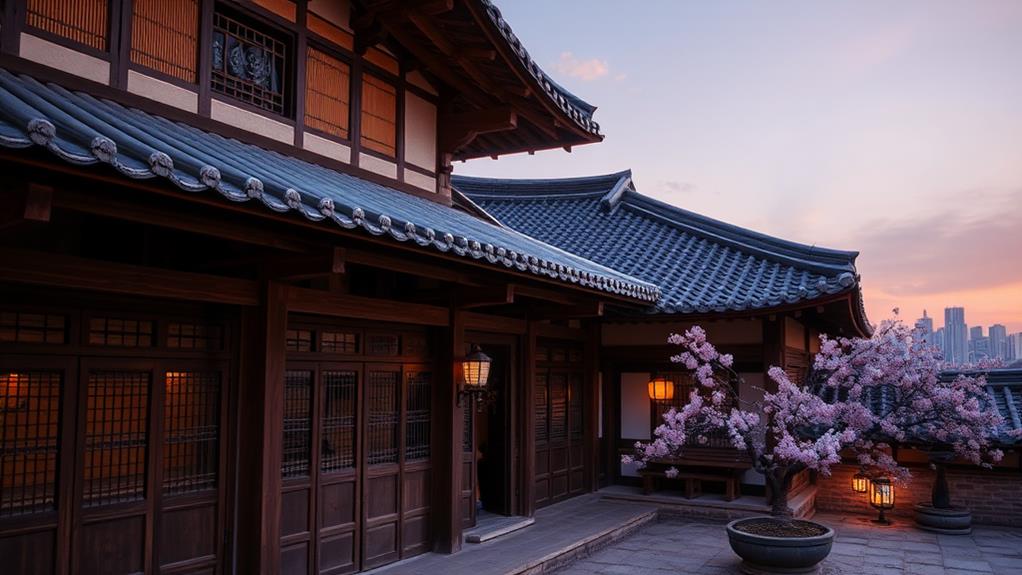
In Gangbuk, you can immerse yourself in traditional culture, wandering through historic hanok neighborhoods and watching palace guard ceremonies. The area's local markets and street food stalls give you an authentic taste of Korean daily life. The district is home to five royal palaces that stand as testament to Korea's imperial history. Jongmyo Shrine, a UNESCO World Heritage site, is also located in Gangbuk. Meanwhile, Gangnam pulses with modern energy, where you'll discover high-rise buildings, luxury shopping, and trendy nightlife spots. Young professionals flock to its rooftop bars and international restaurants, while K-pop culture thrives in its entertainment venues.
Whether you prefer traditional charm or contemporary excitement, both districts offer fascinating glimpses into Seoul's diverse character.
Modern Investment Distribution
The stark investment differences between Seoul's Gangnam and Gangbuk districts tell an eye-opening story of South Korea's economic divide. You'll notice Gangnam's incredible investment surge, with local buyers snapping up apartments at a rate that's 51.7% higher than last year. Meanwhile, Gangbuk has seen foreign investment drop by 17.6%. The area's reputation as a safe asset class continues to attract investors seeking stable returns.
Here's what's driving Gangnam's remarkable growth:
- Rising housing prices that consistently outpace Seoul's average, with Seocho-gu seeing a stunning 209.7% increase in apartment purchases
- The district's powerful economic influence, generating 25% of Seoul's GDP from just 2.5% of residents
- Strong rental market spillover effects that spread to neighboring regions, making it an attractive investment hub
- Beachfront hotels in the nearby Busan area, which offer a popular getaway for Gangnam residents and investors.
Busan's Maritime Heritage and Modern Appeal
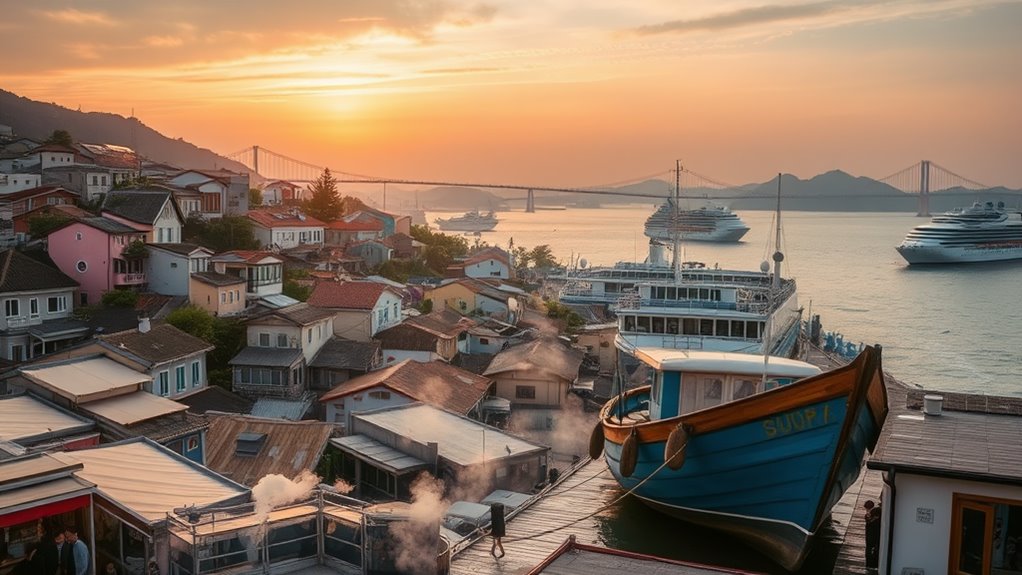
Moving beyond Seoul's urban buzz, you'll find Busan's unique blend of maritime history and modern importance shaped by its role as South Korea's largest port city. From the bustling international container terminals that handle 80% of the country's shipping traffic to the beloved Haeundae Beach where locals and tourists gather, Busan showcases how ancient trading roots have evolved into contemporary success. You can experience this fascinating mix at the famous Jagalchi Fish Market, where traditional seafood vendors operate just steps away from gleaming high-rises and state-of-the-art port facilities. The city is breaking new ground with the development of OCEANIX Busan, the world's first prototype floating city designed to house 12,000 residents while incorporating sustainable technologies and green initiatives. [Busan also boasts a variety of must-visit beaches, including Gwangalli Beach and Songjeong Beach, each offering unique coastal experiences.
Port Influence and Growth
Few ports in Asia can match Busan's remarkable journey from ancient maritime outpost to modern mega-hub. You'll find a rich history stretching back to the Three Kingdoms era, when this strategic location first emerged as a fundamental trading point along the Maritime Silk Road.
The port has since fostered steady growth through partnerships with major global ports like Port of Rotterdam and others across Europe, Asia, and North America. Today, you're looking at one of the world's busiest ports, and here's what makes it truly special:
- It's played a pivotal role in Korea's development since 1876, serving as a gateway between Korea, Japan, and China
- The port proved indispensable during the Korean War, helping stabilize the economy through critical supplies and aid
- It's now the world's fifth-busiest container port, handling over 20 million containers annually
- Busan is also a hub for domestic flights within South Korea, connecting the city to other major destinations across the country.
Beach Culture Meets Trade
Busan's identity shines brightest where its bustling port meets its beautiful beaches, creating a unique blend of maritime commerce and coastal leisure. You'll find world-class beaches like Haeundae and Gwangalli offering stunning views of both natural beauty and urban innovation, with skyscrapers and the illuminated Gwangan Bridge creating a mesmerizing backdrop.
While you explore the city's coastal charm, you won't want to miss the Jagalchi Fish Market, where you can sample fresh live seafood at the market, a testament to the city's fishing tradition. Take a stroll along the Igidae Coastal Trail or Dongbaek Island's pristine paths for breathtaking ocean vistas. As one of the world's busiest ports, you'll witness massive container ships in the distance while enjoying modern attractions like drone light shows over Gwangalli Beach, perfectly capturing Busan's harmony of tradition and progress. Additionally, the city boasts an array of seafood specialties that showcase the region's maritime heritage.
Transportation Networks Connecting Major Cities
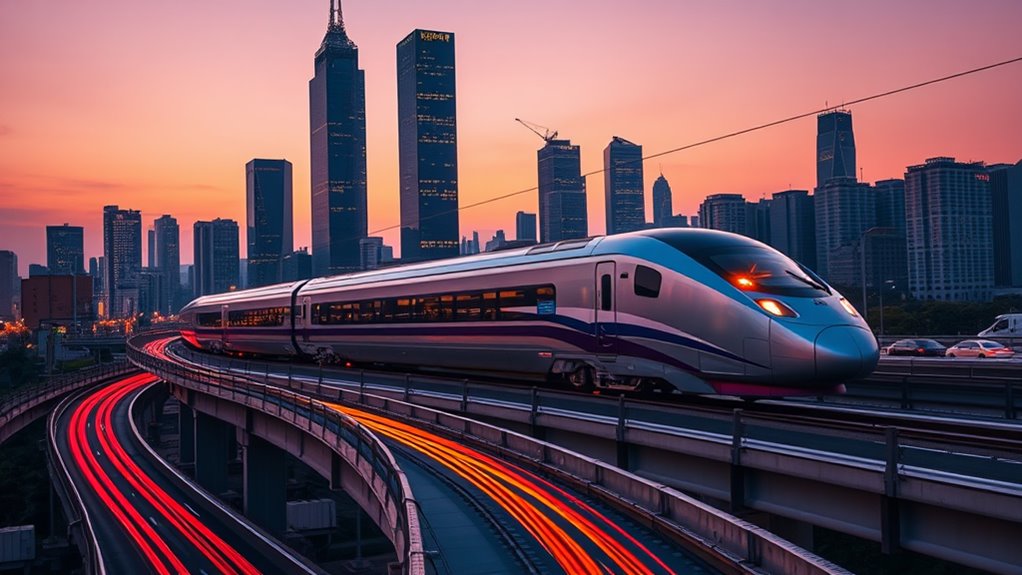
The well-connected transportation networks of South Korea make exploring its major cities a breeze for travelers. You'll find an extensive subway system in Seoul that operates from early morning until midnight, with clear signs in Korean, English, and Chinese to help you navigate easily. Travelers can take advantage of Tmoney card discounts when paying for their rides. The convenient T-money card lets you transfer between lines for free and save on fares.
When you're ready to venture beyond Seoul, you've got excellent options to reach other cities:
- High-speed KTX trains connect major cities on 5 main routes
- SRT services offer faster travel from Suseo Station
- Intercity buses provide flexible alternatives with color-coded routes
You'll love how these modern transportation options make it simple to explore South Korea's vibrant cities, with reduced travel times and frequent departures throughout the day.
Cultural Landmarks Across Urban Centers
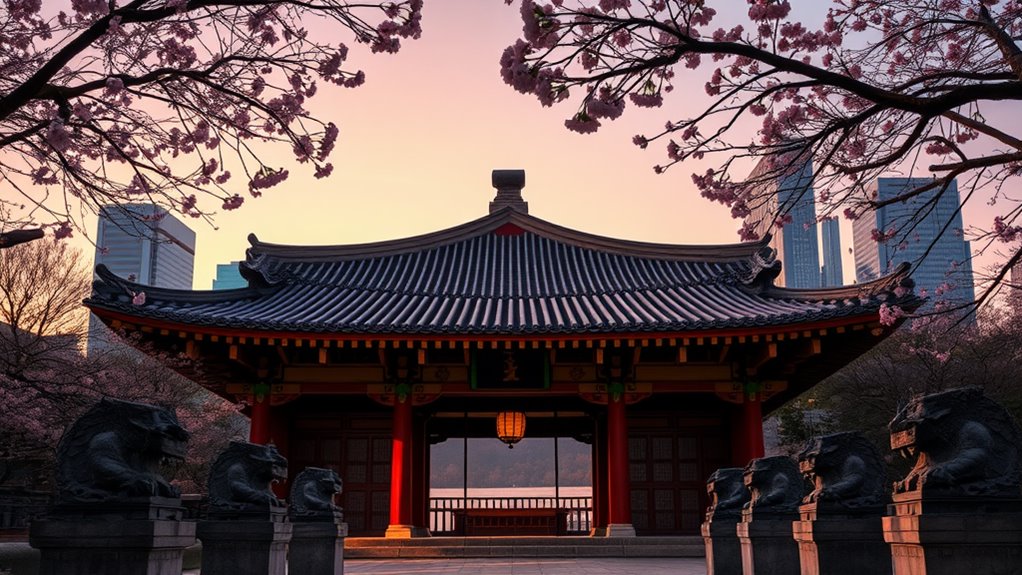
South Korea's vibrant cities showcase an incredible blend of historical and modern cultural landmarks that you'll want to explore. You can start your journey at Gyeongbokgung Palace, the main royal palace from 1395, where you'll discover beautiful gates and two fascinating museums. For a peaceful escape, head to Changdeokgung Palace's Secret Garden, a UNESCO site that perfectly combines nature with traditional architecture.
In Seoul's heart, you'll find the charming Bukchon Hanok Village, where you can experience life in traditional Korean houses and try on colorful hanbok clothing. For a taste of modern Korea, don't miss the futuristic Dongdaemun Design Plaza, featuring stunning LED installations and innovative exhibition spaces. The city's Buddhist temples, like Jogyesa, offer a serene contrast to the bustling urban environment. The iconic N Seoul Tower provides panoramic city views from its 236-meter height. Visitors can also explore the many hanok guesthouses in Seoul and across South Korea to immerse themselves in the country's traditional architecture and culture.
Economic Powerhouses: Business Districts and Trade Hubs
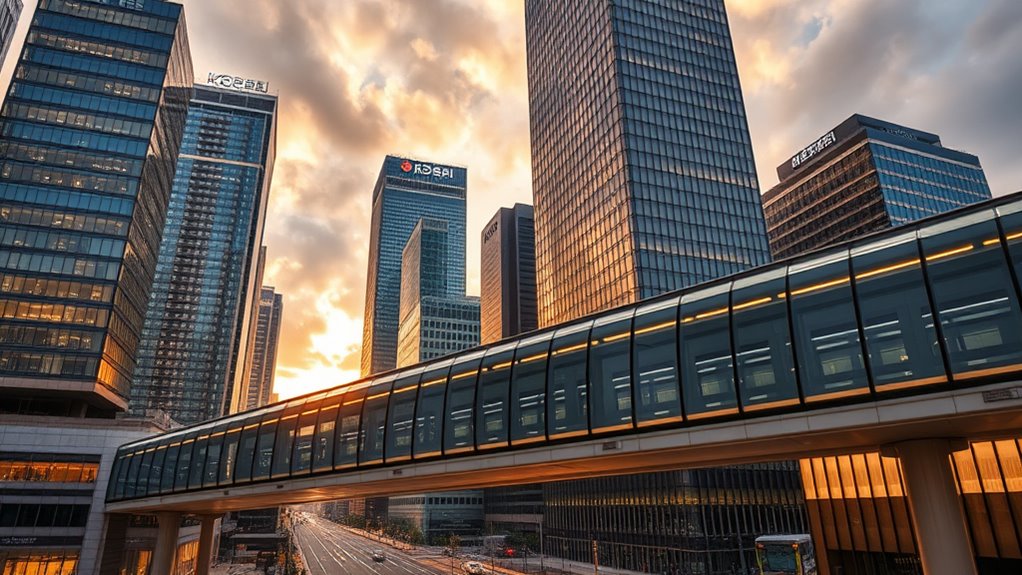
Modern economic powerhouses await you across Seoul's dynamic business districts, where towering skyscrapers and bustling financial centers showcase Korea's impressive economic growth. You'll discover three distinct business hubs that drive the city's economy:
- The Central Business District (CBD) in Jung and Jongno houses Korea's financial heart, with major banks and law firms calling it home.
- Gangnam Business District (GBD) stands out with its wide boulevards and thriving tech scene, making it Seoul's modern face of innovation.
- Yeouido Business District (YBD), set on a Han River island, serves as the city's stock exchange center and international finance hub. These districts are well-connected for business travelers and tourists alike through subway stations in each block.
Urban Green Spaces and City Planning
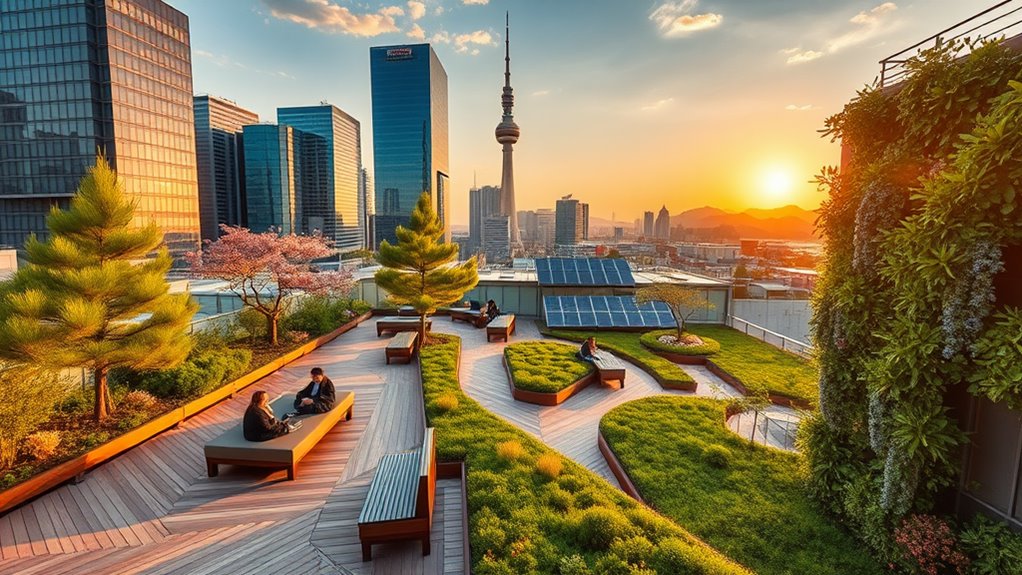
While Seoul's rapid growth transformed it into an economic powerhouse, you'll find the city hasn't forgotten its connection to nature and green spaces. You can explore nearly 28% of the city's green coverage, including beautiful mountainous areas and well-planned parks that give each resident about 16.5 square meters of natural space. The city faces ongoing challenges with urban environmental problems like fine dust, flooding, and heat waves.
As you wander through Seoul, you'll discover amazing eco-friendly projects like the restored Cheonggyecheon Stream and the revitalized Han River area, where nature meets urban design. The city's committed to growing even greener, with creative solutions like rooftop gardens and environmentally conscious building designs. Though some neighborhoods have better access to parks than others, Seoul's working hard to make sure everyone can enjoy these natural spaces, especially through community-driven projects and careful urban planning.
Coastal Life in South Korea's Port Cities
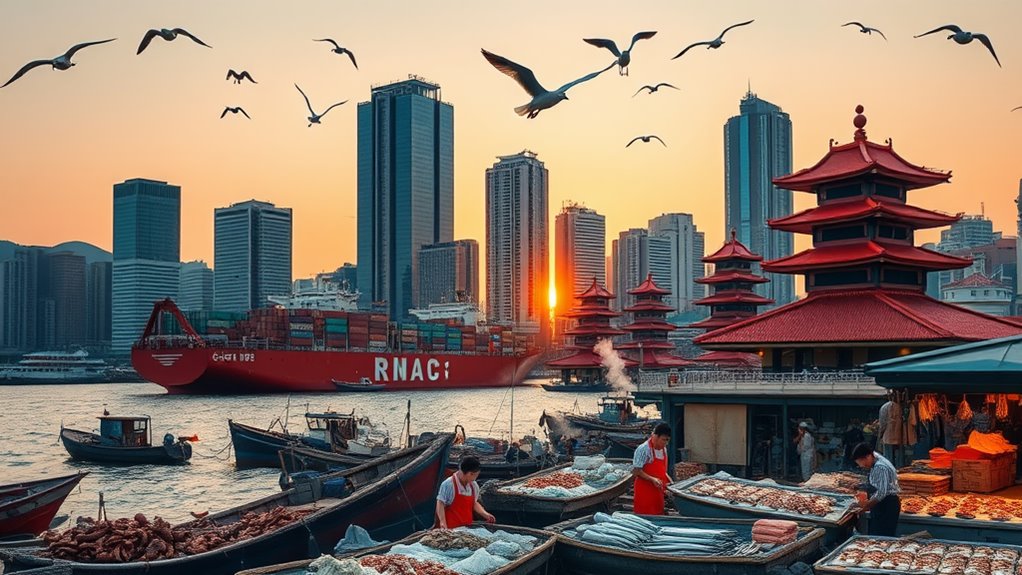
Korea's bustling port cities serve as vibrant gateways where ancient maritime traditions meet modern innovation. You'll discover a fascinating blend of historical fishing markets and cutting-edge shipping facilities that keep these coastal hubs thriving. From Busan's famous Jagalchi Market to Incheon's modern terminals, there's so much to explore along Korea's dynamic coastline. For official maritime inquiries and information, visitors can contact the Korea.kr email system.
Korea's coastal cities blend centuries-old maritime heritage with cutting-edge ports, creating dynamic hubs where tradition and progress coexist harmoniously.
Here's what you can't miss when visiting Korea's major ports:
- Experience the sights and sounds of Busan's waterfront, where you can watch massive container ships while enjoying fresh seafood
- Take a ferry from Incheon to explore routes connecting to China, perfect for extending your Asian adventure
- Visit Ulsan's coastal parks, where you'll find beautiful walking trails overlooking the East Sea and industrial maritime activities
Medical Tourism and Healthcare Innovation
Why not combine your Korean adventure with world-class medical care? You'll join over 600,000 international patients who chose South Korea for their health needs in 2026, making it a leading destination for medical tourism. From skin treatments to plastic surgery, you'll find high-quality care at competitive prices.
You can explore various treatment options, with dermatology being the most popular choice among visitors. Medical tourism has shown steady growth since 2009, with only a brief pause during the COVID-19 pandemic. If you're interested in traditional approaches, Korean medicine has seen a huge rise in popularity, offering unique healing experiences. While receiving care, you can enjoy cultural wellness activities like relaxing in jjimjilbang spas or finding peace during temple stays.
With patients coming from 198 countries, you'll be in good company. The country's modern medical facilities welcome visitors from around the world, especially those from Japan, China, and the United States.
Architectural Evolution in Korean Metropolises
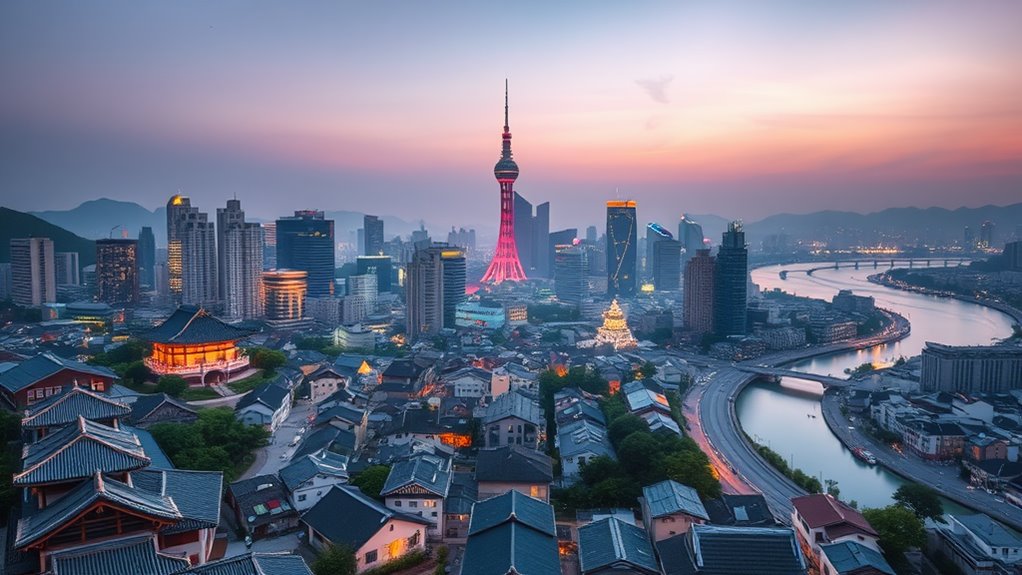
You'll notice right away how South Korea's cities showcase a fascinating blend of ancient traditions and cutting-edge architecture, from restored Joseon Dynasty palaces to gleaming modern skyscrapers. As you explore metropolitan areas like Seoul and Busan, you'll see how urban planning has evolved from traditional geomantic principles to today's sustainable smart cities, with landmarks like Cheonggyecheon Stream embodying this transformation. Walking through these dynamic cityscapes, you'll discover how iconic buildings like the Seoul Arts Centre and restored hanok villages create a unique architectural identity that honors Korea's past while embracing its future. The district of Gangnam stands as a prime example of how the nation's growth-driven authoritarian era shaped urban development, with its grid of wide boulevards and towering commercial buildings.
Traditional Meets Modern Design
Throughout South Korea's bustling metropolises, you'll discover a fascinating blend of architectural styles that tells the story of a nation embracing its future while honoring its past. From ancient wooden temples to sleek modern towers, you'll find a unique harmony between tradition and innovation that makes Korean cities so alluring.
When exploring Korea's architectural wonders, don't miss:
- The Dongdaemun Design Plaza's futuristic curves, which create an amazing contrast with nearby traditional markets
- Gyeongbokgung Palace's classic wooden structures and sloping roofs, showcasing timeless Korean design
- The innovative Ewha Womans University campus, where modern architecture pays tribute to traditional hanok rooflines
You'll see how contemporary buildings like the Lotte World Tower incorporate traditional Korean motifs into their cutting-edge designs, creating a perfect balance between old and new. Seoul's transformation over two thousand years has created an architectural landscape that continues to redefine urban living while preserving cultural heritage.
Urban Planning Through Ages
The transformation of South Korea's urban landscape began in earnest during the 1960s, marking a pivotal era in the nation's architectural journey. You'll find the ambitious post-war developments of this period still shaping the cities you see today.
When you explore modern Seoul, you're walking through the legacy of major infrastructure projects from this transformative time. The city's planners tackled population growth through innovative developments like the Gangnam and Yeouido plans, which turned these areas into the bustling districts you now know. The principles of Confucian hierarchical design are still evident in how neighborhoods and civic spaces are organized. They also focused on critical infrastructure, including the Cheonggyecheon Stream project and essential transportation networks.
As you navigate Seoul's subway system or cross the Han River on the Yanghwa or Hannam bridges, you're experiencing the results of this foundational period that set the stage for South Korea's remarkable urban evolution.
Landmark Buildings Shape Cities
South Korea's architectural heritage stands as a living museum, where ancient palaces share city blocks with soaring modern towers. You'll discover stunning royal residences like Gyeongbokgung and Changdeokgung, both UNESCO World Heritage sites that showcase Korea's traditional beauty and craftsmanship.
The 63 City landmark provides visitors unparalleled views of Seoul's dynamic skyline from its observation deck. As you explore these architectural wonders, don't miss these highlights:
- The Secret Garden at Changdeokgung Palace, where you'll find perfect harmony between buildings and nature
- Bulguksa Temple's intricate stone pagodas, telling stories from the 8th-century Silla Dynasty
- Deoksugung Palace's unique blend of East and West, featuring both Korean and Western-style buildings
When you visit these landmarks, you're walking through centuries of Korean history. Each site offers a glimpse into different eras, from ancient Buddhist temples to royal palaces that adapted to changing times.
Night Markets and Street Food Culture
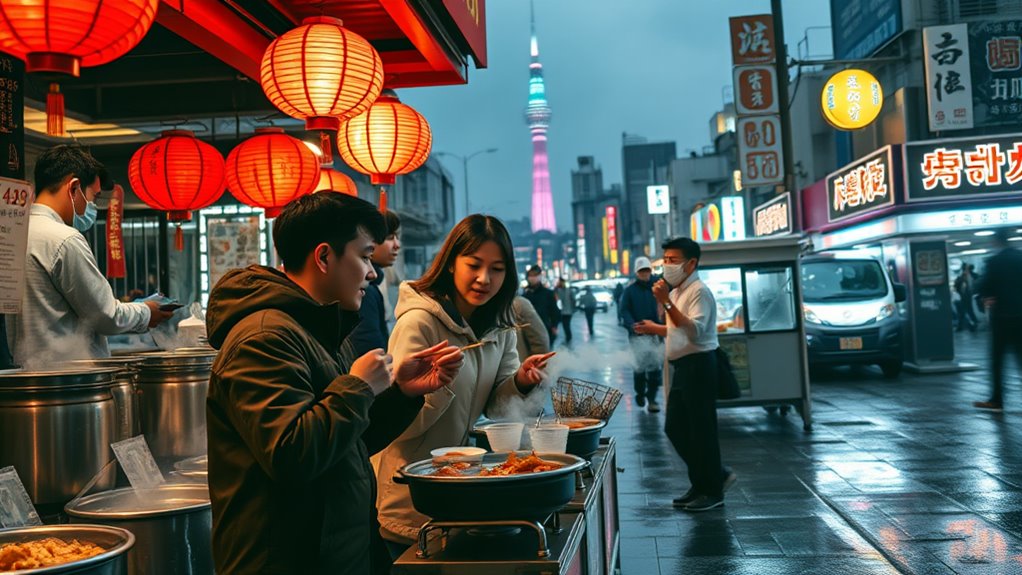
Stepping into Korea's vibrant night markets, you'll discover a sensory wonderland where modern culture meets time-honored traditions. From Pohang's bustling Yeongil Bay to Daegu's historic Seomun Market, these evening bazaars draw millions of visitors who come to experience the country's dynamic street food scene.
You'll find comfortable seating areas and welcoming vendors ready to serve up iconic dishes like tteokbokki and hotteok. The success of these markets has boosted local businesses' sales by up to 30 percent. Whether you're craving spicy rice cakes in Myeongdong or crispy bindaetteok in Gwangjang Market, there's something for every taste. Most markets operate Friday through Sunday, making them perfect for weekend exploration. During summer months, don't miss invigorating treats like naengmyeon and patbingsu, while winter visitors can warm up with steaming cups of tea and fresh hotteok pancakes.
Regional Festivals and Urban Entertainment
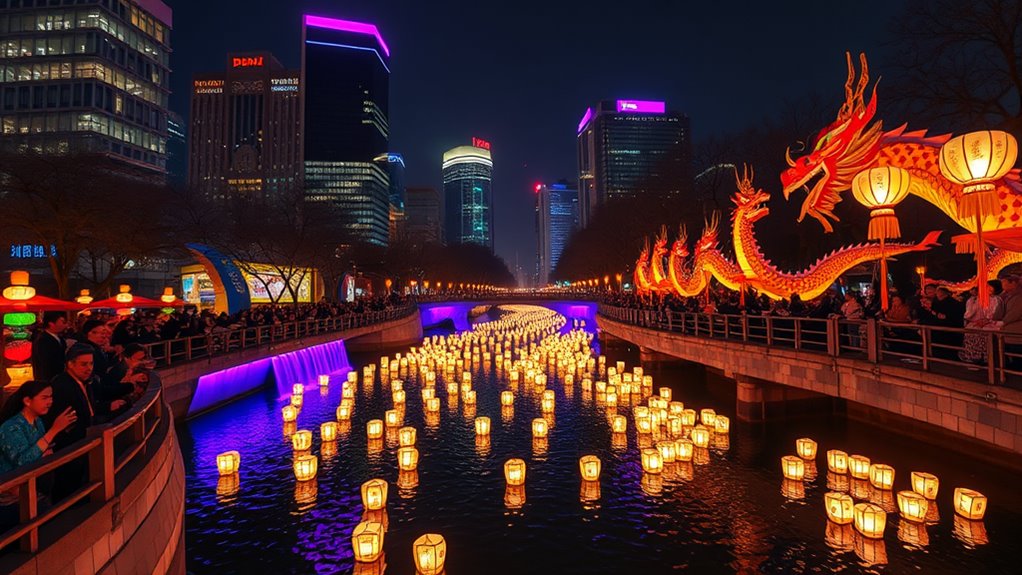
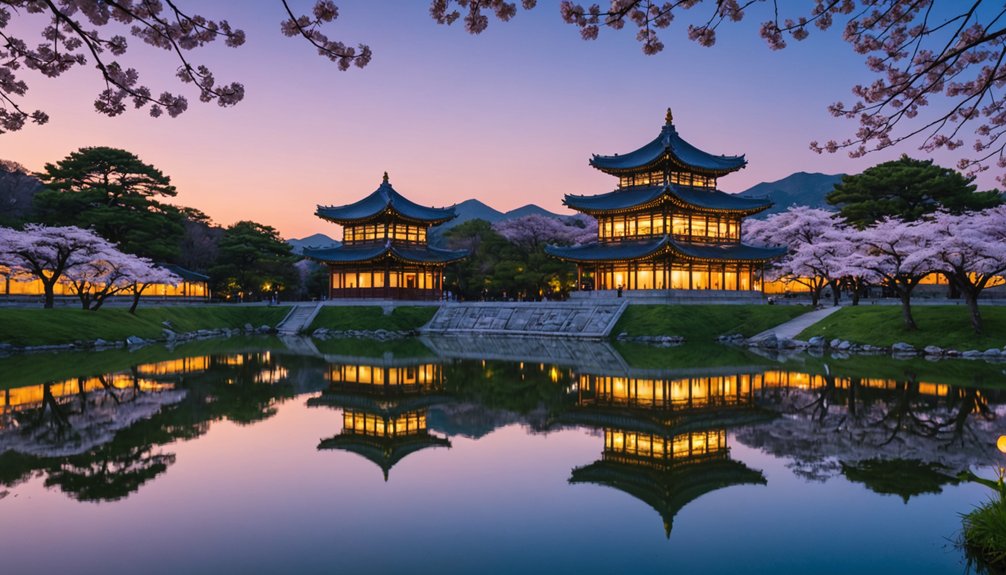
Beyond the tantalizing aromas of night markets, you'll find South Korea's cities come alive through vibrant festivals and modern entertainment districts. You can experience cultural traditions at the Jinhae Cherry Blossom Festival, where over 300,000 trees paint the landscape pink, or join locals at the UNESCO-recognized Dano Festival for traditional wrestling and cultural rituals. The Buddha's Birthday celebrations transform temples nationwide with stunning lantern displays and cultural performances.
South Korea's urban landscapes burst with cultural energy, from cherry blossom celebrations to ancient wrestling matches at traditional festivals.
For urban excitement, head to these popular entertainment zones:
- Myeongdong's bustling streets, where shopping and dining options seem endless
- Hongdae's creative district, filled with indie music venues and colorful street art
- Dongdaemun Design Plaza, where futuristic architecture meets cultural exhibits
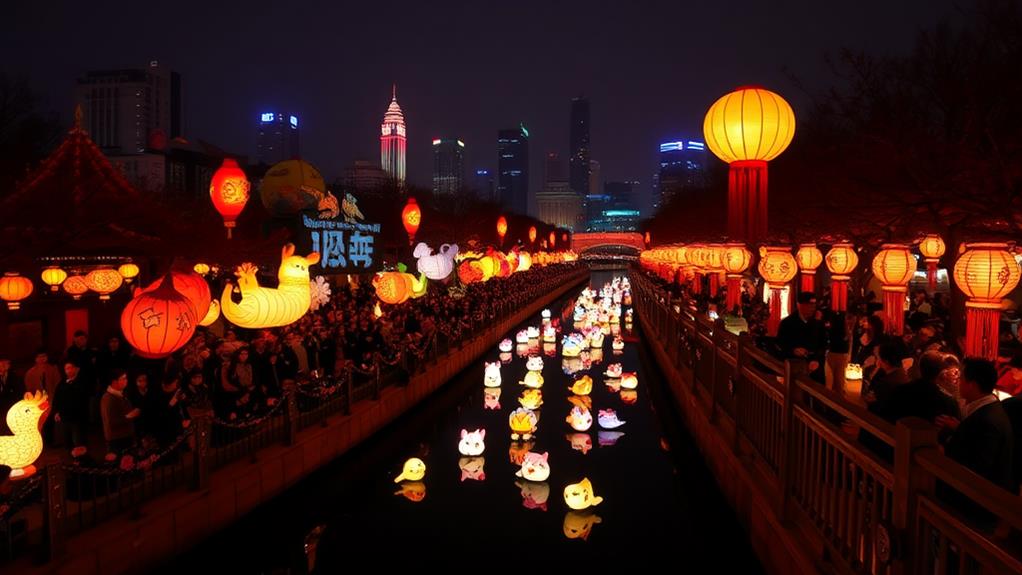
Don't miss the spectacular Jinju Lantern Festival, where thousands of glowing lanterns illuminate the Namgang River, creating unforgettable nighttime views that celebrate Korean history and artistry.
Frequently Asked Questions
What Are the Best Months to Avoid Yellow Dust in Korean Cities?
You'll find the cleanest air in South Korea from June through September, when yellow dust levels are at their lowest. Summer monsoon rains help clear the air, making these months ideal for outdoor activities. If you're visiting during other seasons, you'll want to avoid March and April, as these spring months typically have the highest yellow dust concentrations. Consider traveling to coastal cities like Busan or Jeju Island, where air quality is generally better.
How Do Foreigners Typically Find Apartments in South Korean Metropolitan Areas?
Did you know that over 90% of expats in South Korea use online platforms or real estate agents to find their apartments? You'll find it easiest to start your search on English-friendly websites like Enkor Stay or Rentberry, which offer detailed listings with photos and pricing. If you prefer personal assistance, you can work with real estate agents, though they'll charge 1-2 months' rent as a fee. For short-term stays, furnished options through Nestpick are increasingly popular.
Which Cities Offer the Most Affordable Living Costs for International Students?
You'll find the most budget-friendly living costs in cities like Busan and Daejeon, where you can get studio apartments for ₩300,000-₩600,000 monthly, much cheaper than Seoul's rates. These cities offer lower food prices and transportation costs too. If you're looking to save even more, consider smaller cities like Gwangju or Daegu, where you'll find affordable goshiwons starting at ₩150,000 and cheaper restaurant meals around ₩6,000-₩10,000.
How Late Do Subway Systems Run Between Major Korean Cities?
While you might worry about getting stranded late at night, you'll find Korea's subway system quite accommodating. Most lines run from 5:30 AM until midnight daily, with some Seoul Metro lines extending until 1 AM on weekdays. If you're traveling between major cities, you'll want to plan ahead since schedules can vary. The AREX airport line runs later than most, and you'll find regional Korail lines have different timetables depending on your destination.
What Are the Quiet Residential Districts Preferred by Expat Families?
You'll find several peaceful neighborhoods perfect for expat families in Korea. Hannam-dong offers luxurious homes near Itaewon's amenities, while Seongbuk-dong provides spacious housing with parks and green spaces. If you're looking for a quieter part of Gangnam, consider Daechi-dong with its family-friendly atmosphere. For more affordable options, Yonhi-dong's a great choice, offering larger homes and easy access to international schools while maintaining a peaceful environment.
Conclusion
You'll find that South Korea's cities offer far more than just the Instagram-worthy spots you've seen online. While you might think it's all about trendy cafes and K-pop in Gangnam, you're in for a surprise. From Busan's seafood markets to Seoul's historic palaces, each city tells its own unique story. Don't limit yourself – there's a whole country waiting beyond those popular tourist checkpoints where locals actually live their daily lives.
More on Seoul:

Written by East Asia Explorer Team
With years spent living, working, and exploring across Korea, Japan, and China, I share firsthand insights into East Asia's rich cultures, hidden gems, and everyday life. My journey also includes studying in Malaysia and traveling through Southeast Asia, experiences that have deepened my appreciation for the region's diversity. Through practical tips, local stories, and travel guides, I aim to help fellow explorers discover both the celebrated highlights and the lesser-known corners of East Asia.