Last Updated: February 22, 2026 | Originally Published: April 27, 2025
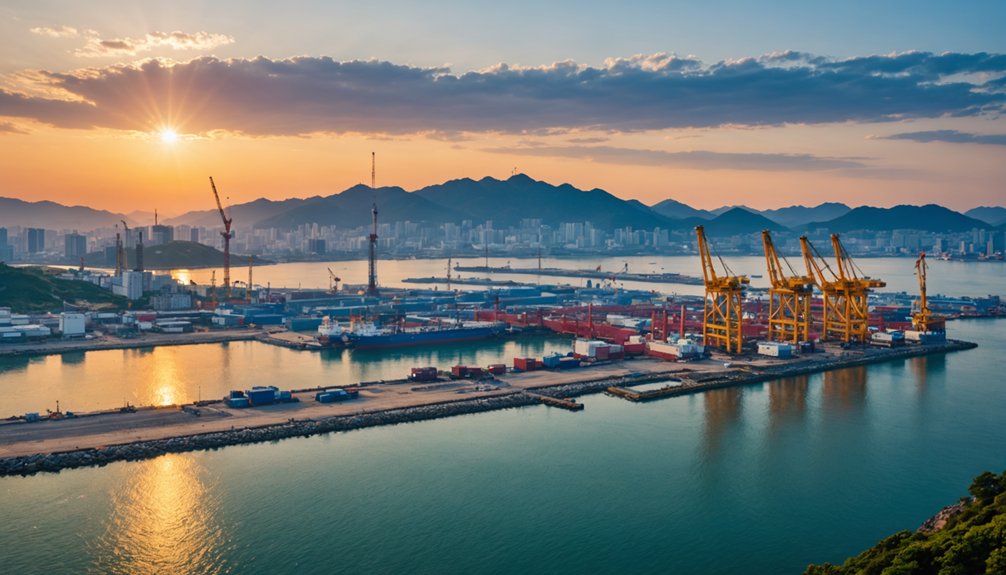
Ulsan blends industrial might with stunning coastal beauty. You’ll find cherry blossoms in spring, vibrant foliage in autumn, and mild winters perfect for exploring. KTX trains connect major cities, making navigation a breeze. Don’t miss the coastal pathways from Ilsan Beach to Daewangam Park. Grab fresh seafood at local markets, try traditional pottery workshops, or book a harborview boutique inn. This gritty-meets-pristine city offers experiences you won’t find anywhere else in Korea.
Explorer Insights
- Ulsan offers a unique fusion of industrial landscapes alongside pristine coastlines and natural attractions like Daewangam Park.
- The city is best visited in spring (April-June) for cherry blossoms or autumn (September-November) for vibrant foliage and hiking.
- KTX trains connect major cities to Ulsan in under an hour, with extensive bus services making navigation simple.
- Cultural experiences include traditional temple workshops, village protection rituals, and industrial tourism showcasing engineering marvels.
- Visitors can enjoy coastal attractions via Painted Wharf Pathways, fresh seafood markets, and boutique harborview accommodations.
Optimal Seasons for Ulsan
While planning your trip to Ulsan, timing matters—a lot.
Spring hits different here—April to June brings mild temperatures and those Instagram-worthy cherry blossoms everyone obsesses over. Worth it though.
Autumn’s the smart traveler’s choice. September through November? Vibrant foliage everywhere. Perfect for hiking and pretending you’re outdoorsy.
Summer? Hot and sticky, honestly. But the beaches deliver. Swimming and water sports make up for the humidity. July and August crowd the coastline. Obviously.
Winter flies under the radar. December to February stays surprisingly mild compared to other Korean regions. Cultural sites without selfie sticks in your face? Yes, please.
Pro tip: time your visit with seasonal festivals. Local traditions. Authentic experiences. You know the drill.
Spring travelers in Japan can catch iconic scenes at must-visit flower festivals that showcase everything from cherry blossoms and tulips to fields of vibrant moss phlox and wisteria.
Pack for Ocean Winds
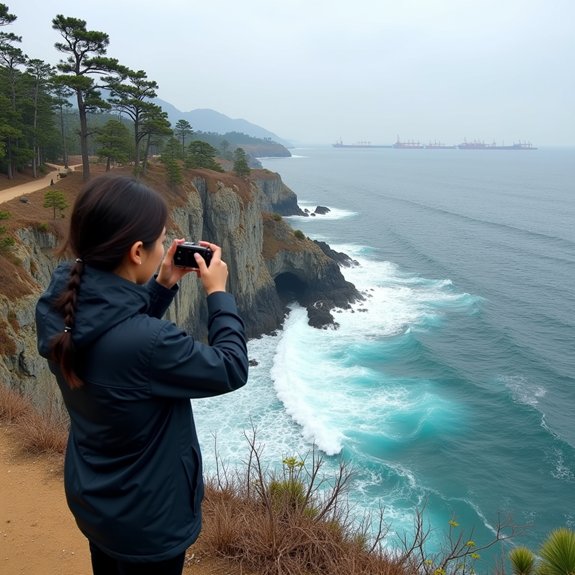
Wind dominates the Ulsan coastal experience—and it’ll make or break your trip if you’re unprepared. Those Instagram-worthy views at Ilsan Beach come with gusty trade-offs. Trust me.
When hiking Daewangam or hunting for treasures in tidal pools, you’ll need gear that works with—not against—the elements.
| Time of Day | What to Wear | Why Bother |
|---|---|---|
| Morning | Layers + Windbreaker | Sunrise chills are real |
| Midday | Lightweight, breathable | Ocean winds actually help |
| Evening | Add a layer | Temperatures drop fast |
| Seafood Market Trips | Comfortable footwear | You’ll thank me later |
| Beach Exploration | Sun hat + Sunscreen | Reflective water = double burn |
Don’t skimp on sun protection—the ocean reflection intensifies UV exposure. And those coastal activities? Much less miserable when you’re dressed right.
For outdoor adventures, consider packing a water-resistant, travel-size sunscreen to ensure broad-spectrum protection that lasts through wind, sweat, and coastal humidity.
Industrial-Coastal Charm Fusion
Ulsan’s compelling mix of gritty industry and pristine coastline creates a tourist experience you won’t find on typical Korean itineraries.
You can watch massive ships being built at the industrial complex in the morning, then hike through pine-scented paths at Daewangam Park by afternoon—talk about contrast.
The city’s unique charm extends to its cultural offerings, from temple visits with traditional flower arranging to coastal villages where artisans craft bamboo-ringed pottery before serving you an invigorating bowl of mulhoe, the seafood soup that’ll make you forget you’re in Korea’s industrial heartland.
For travelers who love quick access to breathtaking natural scenery, consider how Tokyo offers easy day trips to places like Hakone for iconic views of Mount Fuji, hot springs, and panoramic lake cruises.
Whale-Watching Industrial Complex
Three distinct experiences await you at Ulsan’s remarkable Whale-Watching Industrial Complex.
You’ll be amazed by the Jangsaengpo Whale Museum—South Korea’s only whale-themed museum. It’s not just boring displays; it’s Ulsan’s maritime legacy brought to life through interactive exhibits and massive whale models. Pretty impressive.
Next door, the Whale Culture Village drops you into a 1960s whaling community. Complete with replica buildings. Authentic? Surprisingly, yes.
Meanwhile, the industrial backdrop is no eyesore. Ulsan’s shipbuilding yards—economic powerhouses—create an oddly fascinating contrast against the pristine coastal landscape.
Head to Ganjeolgot Cape for proof. The lighthouse there offers sunrise views that’ll make you forget you’re standing near one of Asia’s largest industrial complexes. Weird but wonderful.
For travelers navigating Ulsan and beyond, offline maps and real-time transit apps can make exploring coastal and industrial sights seamless.
Temple-Side Flower Arranging
The magical fusion of spirituality and artistry happens at Ulsan’s temple-side flower arranging workshops. You’ll find yourself nestled among ancient buildings, hands busy with seasonal blooms. Seoknamsa Temple offers the most stunning backdrop—industrial Ulsan feels worlds away here.
The natural beauty surrounding these temples isn’t just pretty—it’s purposeful. Workshops incorporate local flora, connecting you to Ulsan’s rich biodiversity while teaching cultural significance. No flower knowledge required.
The spiritual atmosphere is palpable. Seriously. Many visitors come for Instagram shots but leave with unexpected calm. It’s mindfulness practice disguised as creative fun.
Year-round sessions welcome both tourists and locals. The contrast is striking: delicate arrangements against Ulsan’s powerful industrial-coastal landscape.
Temple-side flower arranging. Classic Korea meets modern sanctuary. Perfect balance.
For those inspired by affordable cost of living and the creativity seen in other digital nomad hotspots, Ulsan’s blend of nature and industry adds its own unique charm.
Daewangam Coastal Hiking
Nestled between industrial skylines and crashing waves, Daewangam Park delivers coastal hiking that’ll stop you in your tracks.
The winding trails cut through dense pine forest, leading to that legendary Daewangam Rock. Yeah, a queen supposedly protected the East Sea there. Whatever.
You’ll catch panoramic ocean views that’ll make your Instagram followers hate you. Seriously good. Open 24/7 with free parking—no excuses not to go. Sunrise, sunset—take your pick.
The real treat? Those haenyeo women divers grilling fresh seafood right there on the coast. Culture and nature in one spot.
Ulsan’s Gwangju to Ulsan flight route makes it easier than ever for travelers to discover the city’s unique mix of industry and natural beauty.
Ulsan’s weird like that—industrial charm meets serene coastline.
Perfect for nature lovers who don’t mind the occasional factory backdrop. The contrast works. Trust me.
Fresh Mulhoe Coastal Soup
While Ulsan’s industrial skyline looms in the distance, you’ll find yourself mesmerized by the cold, tangy bliss of fresh Mulhoe soup along the waterfront.
It’s a raw seafood extravaganza – fish, shellfish, fresh from the East Sea. No mediocre seafood here.
This coastal cuisine isn’t just food; it’s Ulsan’s maritime legacy in a bowl.
Vegetables, fiery gochugaru, and vinegar dressing create a flavor punch that’ll wake your taste buds from hibernation. Seriously good stuff.
Park yourself at a seaside restaurant, slurp that spicy, revitalizing goodness, and soak in those ridiculous scenic views.
Ocean panoramas with your meal? Yes, please.
Your culinary adventure through Ulsan isn’t complete without this dish.
Industrial city, stunning coastline, exceptional soup. That’s Ulsan for you – contradictions that somehow make perfect sense.
A great way to reach Ulsan and other Korean destinations is to use high-speed rail services, which offer comfort, speed, and scenic travel across the country.
Bamboo-Ringed Pottery Villages
Just beyond Ulsan’s industrial sprawl, bamboo-ringed pottery villages offer a mind-bending fusion of traditional craft and coastal inspiration.
Local artisans work magic with clay, creating pieces that’ll make you rethink what “Made in Korea” means.
You’ll find workshops tucked between serene bamboo groves, where craftspeople blend age-old techniques with designs inspired by Ulsan’s maritime heritage.
No mass production here. Just honest craftsmanship.
The villages are surprisingly eco-friendly—these potters were sustainable before it was cool.
They use local materials and environmentally sound practices that complement the natural surroundings. Perfect.
Visit during one of their cultural festivals for the full experience.
Try your hand at pottery-making, browse galleries, or just soak in the coastal-meets-traditional atmosphere.
It’s a rejuvenating break from Ulsan’s industrial reputation.
And yes, you’ll want to buy something.
Visitors who value authentic discovery will notice how this experience rivals Seoul’s hidden spots, offering creative escapes with a distinct local character.
Harborview Boutique Inns
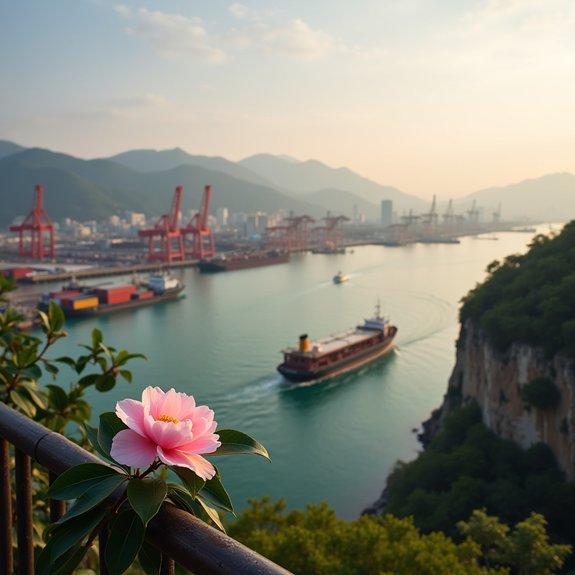
You’ll find Ulsan’s Harborview Boutique Inns offering waterfront luxury that won’t break the bank—think coastal views with your morning coffee, not boring chain hotels.
They’ve nailed the balance between location and amenities, with everything from locally-sourced breakfasts to curated art installations just steps from the harbor.
Staying here puts you at a serious advantage, walking distance to fresh seafood spots and cultural attractions without the hassle of taxis or public transport.
For travelers seeking alternatives across Asia, capsule hotels and pods provide a compact and budget-friendly accommodation option that combines privacy with shared amenities.
Waterfront Luxury Escapes
Ever wondered where to find tranquility amid Ulsan’s industrial buzz? Harborview boutique inns are your answer.
These waterfront luxury escapes offer stunning views that’ll make your Instagram followers jealous. Seriously.
You’ll enjoy stylish interiors, gourmet dining and those rooftop lounges everyone’s talking about. Perfect after a day of exploring.
The personalized services? Next level. They’ll craft tailored itineraries so you don’t waste time figuring things out yourself.
Located near Daewangam Park and Ganjeolgot Cape, you’re perfectly positioned for those breathtaking sunrises everyone pretends to wake up early for.
The coastal attractions are literally minutes away.
Business traveler? These places work for you too.
Nothing beats unwinding in luxury after staring at Ulsan’s industrial skyline all day. Trust me.
For those with a stopover in Seoul, consider the Grand Hyatt Incheon for a seamless and comfortable airport layover experience.
Boutique Amenities Spotlight
What’s inside those Harborview boutique inns that has everyone talking? Rooms that’ll make you swoon, for starters.
Each space blends modern amenities with local Ulsan artwork—honestly, it’s like sleeping in a gallery with really comfortable beds.
You’ll get personalized service. Not the fake kind. The real deal.
Curated experiences include seafood feasts and guided tours to nearby coastal attractions like Daewangam Park. Pretty convenient, right?
The boutique property sits perfectly positioned on Ulsan’s coastline.
The views? Stunning. Absolutely worth the price of admission.
They’re eco-friendly too. Because apparently saving the planet and luxury can coexist.
Sustainable practices throughout the property. No greenwashing here.
Small, thoughtful touches. Big impact. That’s Harborview for you.
For adventurous travelers, consider using budget-friendly transportation options to explore Ulsan’s off-the-beaten-path neighborhoods and scenic coastlines.
Location Advantage Analysis
Strategic location might be Harborview’s most underrated superpower. Nestled between Ulsan’s industrial sector and stunning coastline, you’ll get the best of both worlds. Seriously. Major shipyards and automotive plants? Right there. Daewangam Park and Ganjeolgot Cape? Also right there.
| Location Advantage | What You’ll Experience |
|---|---|
| Industrial Proximity | Zero commute hassle for business travelers |
| Coastal Beauty | Wake up to ocean views. Not kidding. |
| Transportation Networks | Buses and taxis everywhere. No stranding. |
| Urban Vibrancy | City pulse without the headaches |
| Culinary Access | Local seafood that’ll ruin other seafood for you |
The surrounding area’s transportation networks make exploring effortless. You’re never stuck. Urban vibrancy meets coastal tranquility here—a rare combo in Ulsan’s landscape. Perfect home base. No compromises needed.
For travelers mindful of accommodation budgeting, properties with shared kitchens or hostel-style amenities can help reduce overall trip costs by allowing self-catering and affordable lodging options.
Navigate by KTX Connections
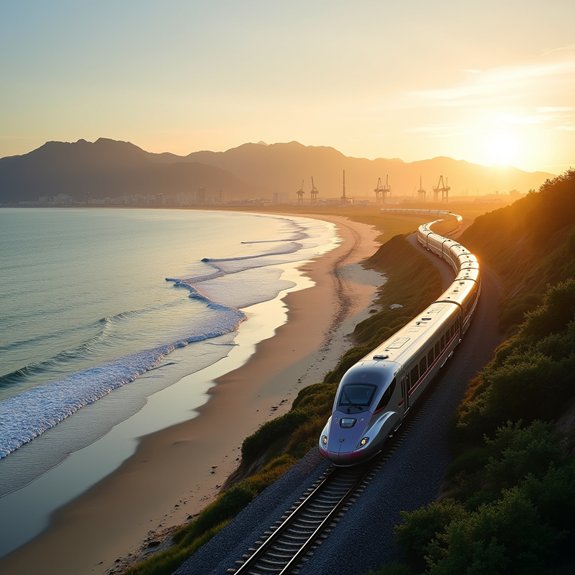
The KTX train whisks you from Daegu to Ulsan in just 50 minutes, with color-coded wharf pathways making navigation a breeze once you arrive.
You’ll need an international driver’s permit if you’re planning to rent a car—trust me, you’ll want one for Ulsan’s spread-out attractions.
Both train and bus networks connect seamlessly to major sites, though the KTX station serves as your gateway to this industrial-meets-nature wonderland.
Arrive at the station at least 30 minutes early to navigate station signs and board stress-free before departure.
Train and Bus Network
South Korea’s exceptional transit system makes reaching Ulsan a breeze. The KTX train whisks you from Daegu in just 50 minutes—quite the time-saver compared to driving. Fast. Comfortable. No traffic headaches.
Bus services run constantly between the cities, so you’re never stuck waiting for hours. Got plans? There’s probably a bus that fits your schedule. Trust me, Korean public transportation puts many countries to shame.
Once you’re in Ulsan, though, you’ll want wheels. The city’s attractions aren’t exactly clustered together. Rent a car or hail taxis. Worth the expense.
The entire country boasts an impressive transportation network, honestly. You’ll navigate between cities with minimal fuss.
Even a transportation novice can figure it out.
Travelers are continually impressed by the exceptional speed and efficiency of Korea’s KTX trains, which reach top speeds of 305 km/h and connect major cities with remarkable punctuality.
International Driver’s Permits Required
Planning to drive in Ulsan? You’ll need an international driver’s permit—non-negotiable. Korean traffic laws don’t mess around with foreign licenses alone. Get your IDP before you arrive.
Exploring Ulsan’s stunning coastal attractions by car offers freedom the trains can’t match. Worth the paperwork hassle? Absolutely.
Here’s what you need to know:
- IDPs are mandatory for all foreign visitors driving in Ulsan
- Car rentals are available at major transportation hubs throughout the city
- The KTX train from Daegu reaches Ulsan in just 50 minutes if driving isn’t your thing
- Bus connections between cities provide alternatives for IDP-less travelers
With the introduction of electronic visa programs in China and Japan, travelers should double-check their visa status and documentation requirements before arriving for a smooth journey.
Your Ulsan travel experience improves dramatically with wheels. The city’s natural parks and shorelines practically beg to be explored at your own pace.
Painted Wharf Pathways
Wandering along Ulsan’s Painted Wharf Pathways feels like stepping into a living watercolor canvas.
These vibrant routes connect the city’s best coastal attractions, perfect for anyone with decent shoes and a camera. You’ll get scenic views at every turn.
After arriving by KTX from Daegu (just 50 minutes—beat that!), you’re ready to explore.
The pathways link everything from Ilsan Beach to Daewangam Park. Walk or cycle. Your choice. They’re designed for both.
Local seafood markets dot the route. Fresh catch from the East Sea. Eat while you stare at the water it came from. Pretty cool.
Buses and taxis are everywhere if your feet give out.
Makes it easy to hit multiple spots in one day. The pathways aren’t going anywhere—but you should.
If you’re planning an overnight trip, learning about the three main sleeper classes on China’s trains can help you make a comfortable journey between cities.
Bow Twice at Jangseungdae
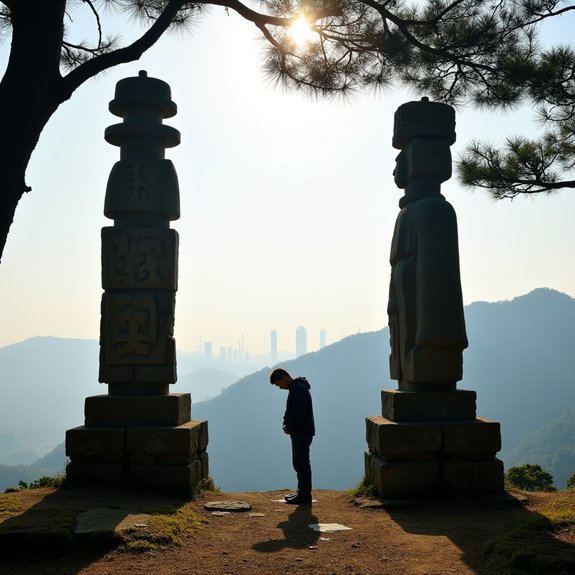
As you stand before the towering wooden guardians of Jangseungdae, you’ll feel their ancient eyes watching.
These traditional wooden totem poles aren’t just Instagram bait—they’re serious cultural significance wrapped in folklore. The coastal views are breathtaking. Absolutely worth the trip.
Don’t be a disrespectful tourist. Bow twice. It’s what locals do, and it might just bring you some luck. Who couldn’t use that?
Show respect where it’s due: bow twice like locals. Your good fortune might depend on it.
The tranquil atmosphere hits you immediately when you arrive. Walk the trails. Breathe. Escape.
- Bow twice to the jangseung for good fortune
- Capture panoramic East Sea views from the lookout point
- Follow the walking trails through the scenic surroundings
- Learn about village protection rituals dating back centuries
Observing basic greetings and etiquette helps travelers show respect and easily connect with locals during their visit.
Typhoon-Ready Coastal Shelters
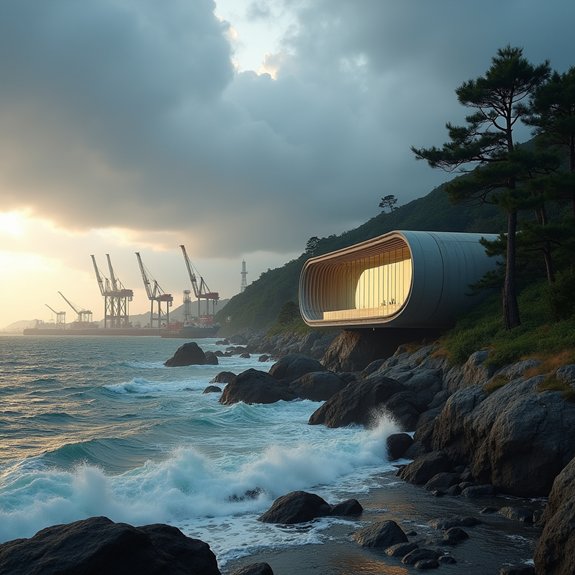
When typhoons come roaring up the Korean peninsula, Ulsan doesn’t mess around. The city’s coastline is dotted with typhoon-ready shelters that’ll keep you safe when Mother Nature throws a tantrum.
These aren’t your average rain shelters. Nope. Built to withstand serious weather events, these reinforced structures can handle winds that would blow your hat to Japan.
Strategically placed in flood-prone areas. Smart. Local officials regularly drill and maintain these facilities—because what good is a shelter that doesn’t work? Duh.
Public awareness campaigns guarantee everyone—yes, even clueless tourists like you—knows exactly where to go during emergencies. The shelters accommodate large groups, so don’t worry about being left outside during the storm. They’ve thought of everything.
For visitors, public transportation makes it affordable and easy to reach these coastal shelters if you need to evacuate quickly.
Won-Saving Harbor Views
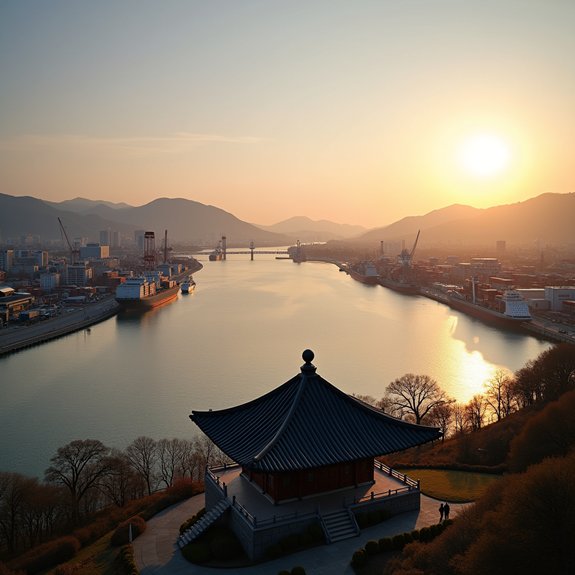
You can enjoy Ulsan’s harbor views without emptying your wallet, with a daily budget of around 85,000 won covering most expenses.
Skip the touristy seafood joints and head straight to the wholesale sashimi spots near Ilsan Beach, where locals actually eat. The freshest catch costs half what you’d pay elsewhere, and sometimes you’ll spot haenyeo divers bringing in their morning haul—much better than those overpriced harbor restaurants.
If you’re craving something different after a day on the coast, Korean Fried Chicken Restaurants in Busan are just a short train ride away and offer everything from double-fried classics in cozy alleys to late-night, beachside bites with ocean views.
85,000 Daily Budget
Surprisingly, Ulsan won’t drain your wallet. With just 50,000-100,000 won daily, you’ll manage meals, transportation, and attraction fees comfortably. The city delivers coastal beauty without the premium price tag.
Your won goes further with these budget stretchers:
- Feast on fresh seafood at local markets for 10,000-30,000 won – grilled fish without the grilled wallet.
- Explore free attractions like Daewangam Park and Ganjeolgot Cape where stunning coastal views cost absolutely nothing.
- Hop on affordable public transportation with bus fares between 1,200-2,000 won – dirt cheap for getting around.
- Park for free at scenic spots like Ilsan Beach and Ganjeolgot Lighthouse – yes, actually free parking exists somewhere in this world.
For those looking for ultra-affordable stays in Korea, explore budget accommodations in Busan to compare options and get more from your travel budget.
Local transportation options make attraction-hopping simple. Budget travelers, rejoice!
Sashimi Wholesale Spots
Nestled along the rugged coastline of Ulsan, sashimi wholesale spots offer the holy grail for seafood lovers and budget travelers alike.
The Jangsaengpo area is where it’s happening—fresh seafood pulled straight from local waters at prices that won’t make your wallet cry.
Head to Jangsaengpo Whale Culture Village. Yes, it’s about whaling history. But the real draw? Those seafood markets with dirt-cheap sashimi. Tuna, mackerel, squid—they’ve got it all, sliced right before your eyes.
The views alone are worth the trip. Nothing beats chomping down on raw fish while staring at the coastal landscape where it was caught hours earlier.
East Sea on your plate, East Sea in your view. Simple math, really. Fresh is an understatement here.
For travelers looking to explore beyond the harbor, Ulsan’s public transit options—while not as extensive as China’s subway network—make it easy to reach coastal escapes and vibrant seafood markets.
Shipyard-to-Sea Day Plans
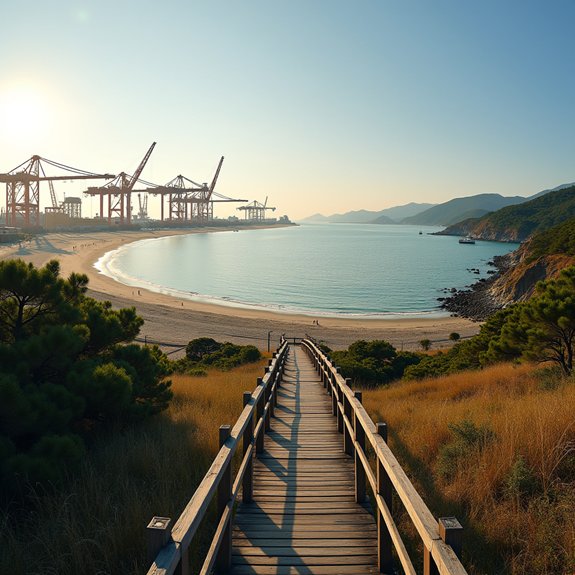
You’re spoiled for choice when planning your Ulsan adventure, from early morning industrial marvels to sunset beach escapes.
Start with the Dawn-to-Wharf Industrial Tour at the massive Ulsan Shipbuilding Industry, where engineering meets ocean in spectacular fashion.
Don’t miss the ancient Petroglyphs and Hot Springs scattered throughout the region, or the Week-Long Whale Route that’ll take you from the fascinating Jangsaengpo Whale Museum to coastal viewpoints that once served as whaling lookouts.
If you’re inspired by traditional Japanese sporting events, consider timing your trip to coincide with the 15-day Sumo Grand Tournament, an unmissable cultural spectacle held each March in nearby Osaka.
Dawn-To-Wharf Industrial Tour
For travelers who crave both natural splendor and industrial might, Ulsan’s Dawn-to-Wharf tour delivers an unforgettable experience.
Start at Ganjeolgot Cape to witness a breathtaking sunrise from Korea’s easternmost point. Worth the early wake-up call. Trust me.
Your day unfolds in four remarkable stages:
- Morning exploration of Jangsaengpo Whale Museum – the country’s only whale-themed museum with interactive exhibits.
- Mid-day tour of Ulsan’s shipyards, including the massive Hyundai Heavy Industries complex.
- Afternoon stroll through Taehwa River Grand Park’s serene bamboo groves and flower displays.
- Evening seafood feast at Ilsan Beach with fresh East Sea catches.
This itinerary perfectly balances industrial marvels with natural retreats.
Massive ships under construction, then peaceful riverside paths. Industrial powerhouse one minute, tranquil escape the next.
If you’re considering driving in Korea, remember the International Driving Permit (IDP) requirement and prepare accordingly.
Petroglyphs and Hot Springs
While the Dawn-to-Wharf tour showcases Ulsan’s industrial might, another day plan reveals the city’s ancient soul.
Head to Bangudae Terrace to view the Ulsan Petroglyphs – ancient rock carvings that’ll transport you back thousands of years. You’ll need a guide. Worth it.
After immersing yourself in prehistoric art, drive to the Taebaek Mountains where therapeutic mineral-rich waters await. These hot springs aren’t just warm – they’re rejuvenating. Your tired muscles will thank you.
Complete your day with a visit to the Jangsaengpo Whale Museum. It’s a fascinating glimpse into Ulsan’s maritime heritage.
From there, the coastal views are stunning. Rugged shorelines. Modern shipyards in the distance. The perfect visual metaphor for Ulsan itself – where ancient history meets industrial powerhouse.
If you visit in late March, you can also catch Ulsan’s cherry blossom season as the city transforms with beautiful spring blooms.
Week-Long Whale Route
If time’s on your side in Ulsan, the Week-Long Whale Route delivers exactly what it promises – a thorough journey from industrial might to natural wonder.
You’ll immerse yourself in the region’s complex whaling history at Jangsaengpo Whale Museum, then shift gears to appreciate conservation efforts. Pretty neat contrast, honestly.
The itinerary hits all the right notes:
- Dawn coastal walks at Ganjeolgot Cape, where the sunrises are worth the early alarm
- Hands-on experiences with local haenyeo, who’ll show you how to grill their fresh catches
- Behind-the-scenes tours of massive shipyards that make Ulsan famous globally
- Downtime at Ilsan Beach, because you’ll need it after all that exploring
Forests, beaches, female divers, industrial giants – a week here covers it all.
To enhance your interactions with the locals during this journey, consider learning basic Korean phrases to show respect for their customs and traditions, which can greatly enrich your travel experience.
Busan vs. Industrial Ulsan
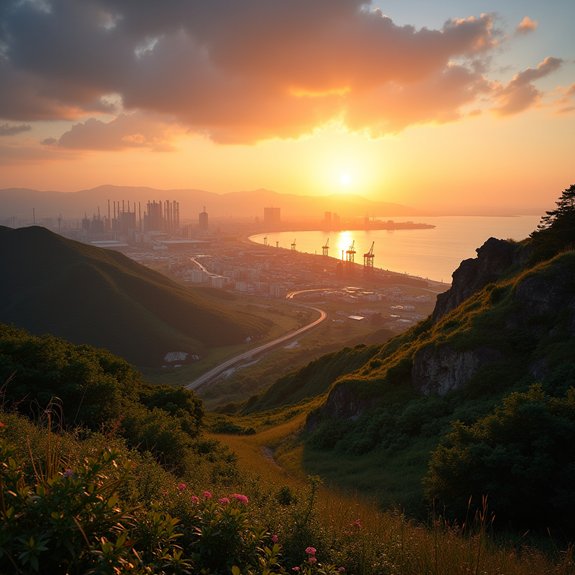
Many travelers debate whether to visit Busan or Ulsan when exploring South Korea’s southeastern coast, but they couldn’t be more different beasts.
Ulsan is an industrial giant—raw, powerful, and surprisingly beautiful. We’re talking massive shipyards and car factories that somehow coexist with stunning coastal views and peaceful nature spots.
Busan? It’s the party-loving sibling. Beaches, festivals, shopping, and nightlife. Fun stuff.
But don’t write off Ulsan travel just because it makes half of Korea’s cars. The city offers unique attractions like whale museums and the gorgeous Taehwa River Park.
No beach selfies with thousands of tourists. Just real Korea.
Sure, Busan has better public transport and more hotels. But Ulsan has something different: authenticity.
Sometimes industrial can be interesting.
Fans of culture might also want to experience UNESCO sites in Kansai, where centuries-old temples and castles showcase the deep historical legacy of Japan.
K-Pop Industrial Workweek
Despite its industrial reputation, Ulsan offers a fascinating peek into the workweek rhythms of Korea’s manufacturing powerhouse. The city’s massive Hyundai facilities and shipyards don’t just build cars and ships—they shape the entire cultural landscape.
During your visit, you’ll notice how industry and entertainment blend:
- Morning shifts change at Hyundai’s plant—world’s largest car factory, no big deal—with thousands of workers flooding coastal-area restaurants.
- Afternoon breaks often feature impromptu K-Pop performances in factory cafeterias.
- Evening wind-downs include industrial-themed karaoke spots where shipyard workers belt K-Pop hits.
- Weekends explode with concerts at venues where nature meets industrial architecture.
Travelers on a budget can draw inspiration from budget-friendly accommodations commonly used in Japan, such as capsule hotels or shared hostels, when seeking affordable stays in Ulsan.
It’s a city of contradictions. Gritty industrial by day, K-Pop energy by night. Not your typical tourist trap, that’s for sure.
Shipyard Whistle Timing FAQ
You’ll never miss the shipyard whistles in Ulsan – their distinctive blasts mark the rhythm of this industrial city at 7:30 AM, break times, and shift ends about every six hours.
The sound carries for miles, reaching most tourist areas and serving as an unexpected soundtrack to your vacation photos.
Locals call it the “heartbeat of Ulsan,” and honestly, it’s become such a tourist curiosity that some visitors actually schedule their sightseeing around hearing the massive industrial symphony.
For those eager to explore the city with ease, Ulsan’s comprehensive public transit network offers reliable connections between major attractions and neighborhoods, making it simple to structure your day around the iconic whistle times.
Whistle Schedule System
While visitors explore Ulsan’s attractions, they’ll inevitably hear the powerful blasts of shipyard whistles cutting through the air.
These aren’t random noises—they’re part of Ulsan’s identity and the backbone of the organized flow in Korea’s shipbuilding industry.
You’ll quickly recognize the rhythm of these industrial complexes by their distinct timing:
- Morning whistle at 8:00 AM – Wake up, folks! Time to build ships.
- Lunch break at 12:00 PM – Even shipbuilders need to eat.
- End of workday at 5:00 PM – Tools down, day’s done.
- Additional whistles for breaks or alerts throughout the day.
The whistles are loud. Really loud. They’ll reach your ears from kilometers away.
All shipyards use synchronized timing—can’t have workers showing up whenever they feel like it!
If you’re taking a taxi near the shipyards, consider using visual aids or key Korean phrases to help drivers understand your destination over the noise.
Sound Range Considerations
Those massive whistles don’t just wake up shipyard workers—they’ll shake your hotel room from kilometers away. Ulsan’s industrial landscape comes with its own soundtrack. The acoustics carry far. Really far. Sound range stretches through residential areas and even tourist spots.
Local authorities publish schedules so you’re not caught off-guard. Smart visitors check these before booking accommodations. Nothing ruins a peaceful morning like a 7 a.m. industrial alarm clock.
| Whistle Time | Purpose | Sound Range | Impact Areas |
|---|---|---|---|
| 7:00 a.m. | Shift Start | Several km | Hotels, East Neighborhoods |
| 12:00 p.m. | Lunch Break | Moderate range | Downtown, Parks |
| 5:00 p.m. | Shift End | Several km | Shopping Areas, Beaches |
| Special | Emergencies | City-wide | All districts |
You’ll get used to it. Eventually.
Ulsan’s proximity to world-famous events like the Boryeong Mud Festival means travelers can experience both industrial vibrancy and unique cultural festivities during their stay.
Impact On Tourism
Travelers fascinated by industrial tourism often wonder if Ulsan’s famous shipyard whistles will ruin their vacation. They won’t. In fact, these distinctive sounds have become part of Ulsan’s authentic experience, marking shift changes at one of the world’s largest shipyards. It’s industrial music, Ulsan-style.
The shipyard’s influence on tourism is unmistakable:
- Guided tours let you witness massive shipbuilding processes up close—educational tourism that’s actually interesting
- Business travelers flock here to see Korea’s industrial powerhouse in action
- Local festivals incorporate shipyard culture, giving you genuine cultural immersion
- The whistle itself becomes a conversation starter with locals
The sound isn’t intrusive. It’s brief, meaningful, and honestly, kinda cool.
Industrial tourism in Ulsan isn’t a compromise—it’s the point.
Conclusion and Final Thoughts on Visiting Ulsan, South Korea
As you conclude your journey through Ulsan, South Korea, you’ll likely find yourself surprised by this underrated gem.
Ulsan offers a perfect blend of industrial might and natural beauty that few Korean cities can match. Missed it on your itinerary? Big mistake.
The tranquil escape of Taehwagang Grand Park contrasts sharply with the city’s industrial reputation. No kidding.
Its rich history shines through at Seoknamsa Temple, while stunning coastal vistas at Ganjeolgot Cape will leave you speechless. Worth the trip alone.
The natural views are impressive, and you won’t be fighting crowds like in Seoul.
Plus, getting there’s a breeze on the KTX from Daegu. Free parking at attractions? That’s practically unheard of these days.
Ulsan deserves more attention. Simple as that.
Frequently Asked Questions
Are There English-Speaking Guides for Ulsan’s Industrial Tours?
Yes, you’ll find English-speaking guides for Ulsan’s industrial tours.
The major facilities like Hyundai Heavy Industries and Hyundai Motor Company offer tours with English guides, especially if booked in advance. Some smaller operations might not.
Tour availability changes seasonally. Your best bet? Contact the Ulsan Tourism Organization directly. They’ll hook you up with the latest info.
Industrial tourism’s pretty big there. Why wouldn’t they accommodate English speakers?
What Local Foods Should Visitors Try in Ulsan?
You’re what you eat, so eat like an Ulsan local.
You’ll love whale meat—yeah, it’s controversial but traditional here.
Try mulhoe (spicy raw fish soup), perfect on hot days.
Don’t miss Ulsan’s famous gajami sikhae, fermented flatfish with spices.
Jangsaengpo’s whale restaurants serve the real deal.
For seafood lovers, anything fresh from Ulsan’s coast won’t disappoint.
Their version of dwaeji gukbap (pork soup) has a unique twist.
Is Ulsan Family-Friendly With Activities for Children?
Yes, Ulsan’s surprisingly kid-friendly.
You’ll find plenty for the little ones at Grand Park with its zoo and amusement rides.
Jangsaengpo Whale Museum? Kids love it.
The Taehwagang River area offers bike rentals and open spaces for running around.
Beaches like Jinha are perfect for family days – clean sand, calm waters.
Science-minded youngsters? The industrial tourism sites turn manufacturing into fascinating experiences.
Not Disney, but definitely enough to keep everyone entertained.
How Accessible Are Ulsan’s Attractions for Visitors With Disabilities?
Ulsan’s making progress, but accessibility isn’t perfect. Major attractions like Taehwagang River Grand Park and Ulsan Grand Park offer wheelchair ramps and accessible bathrooms.
Public transportation? Mixed bag. City buses have low-floor options, but they’re limited. Many industrial tourism sites aren’t fully equipped for mobility challenges.
Coastal areas? Tough terrain. Always check ahead. The city government’s working on improvements—slowly. Not ideal, but not impossible either.
Are There Day Trips From Ulsan to Nearby Natural Attractions?
Imagine mist-covered peaks looming above crystal coastal waters. That’s what awaits you.
You’ve got options. Juwangsan National Park‘s dramatic gorges are just 90 minutes away.
Need beaches? Hit Busan in under an hour.
Gyeongju’s ancient temples and tombs? 30 minutes.
Yeongnam Alps offer serious hiking trails.
The Taehwa River Grand Park? Right in town if you’re lazy.
Most spots are accessible by public transport. No car, no problem.
Conclusion
Ulsan surprises you. Ever wondered how industrial grit and coastal beauty coexist so perfectly? They just do. The shipyards hum while waves crash nearby. It’s weird. It’s wonderful. Not your typical Korean destination, but that’s the point. Catch the sunset at Daewangam Park, listen to factory whistles, then grab fresh seafood. Ulsan doesn’t pretend. Real Korea. Raw beauty. Worth it.
More on Travel Essentials:

Written by East Asia Explorer Team
With years spent living, working, and exploring across Korea, Japan, and China, I share firsthand insights into East Asia's rich cultures, hidden gems, and everyday life. My journey also includes studying in Malaysia and traveling through Southeast Asia, experiences that have deepened my appreciation for the region's diversity. Through practical tips, local stories, and travel guides, I aim to help fellow explorers discover both the celebrated highlights and the lesser-known corners of East Asia.