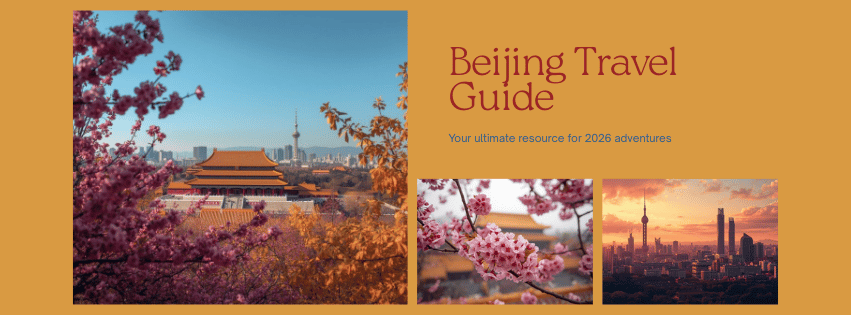
Last Updated: March 2026
Key Takeaways
- Beijing is China’s most visitor-friendly city, with a modern subway system, English signage at major sites, and the country’s easiest visa-free transit options.
- Budget travelers can explore Beijing on 300-500 CNY ($41-$69 USD) per day. Mid-range travelers should plan for 600-1,000 CNY ($82-$137 USD) daily.
- The best time to visit is September through November, when skies are clear and crowds thin out after Golden Week.
- You need 4-5 full days minimum to cover the Forbidden City, Great Wall, Temple of Heaven, and hutong neighborhoods.
- Set up Alipay or WeChat Pay before arriving. Cash is becoming hard to use in Beijing.
- Book Forbidden City tickets online at least 3 days ahead. Walk-up tickets sell out by 9 AM during peak season.
Why Beijing Should Be Your First Stop in China
I landed at Beijing Capital International Airport on a crisp October morning. Within 30 minutes, I cleared immigration, connected to the airport Wi-Fi, and tapped onto the Airport Express train using Alipay. No haggling, no confusion, no stress.
That first experience set the tone for my entire trip. Beijing is, hands down, the easiest Chinese city for first-time visitors. The subway has English announcements. Major attractions accept e-tickets. Hotels are used to foreign guests.
But ease is just the start. Beijing packs 3,000 years of history into a city of 22 million people. You can walk through the same palace gates that emperors used for 500 years at the Forbidden City. You can hike a section of the Great Wall with no one else in sight. You can eat the best Peking duck on the planet for under $15.
Here is why Beijing beats Shanghai or Guangzhou as your entry point:
- History density: Six UNESCO World Heritage Sites within city limits (Forbidden City, Temple of Heaven, Summer Palace, Ming Tombs, Great Wall sections, Grand Canal)
- Food capital: Peking duck, jianbing, zhajiangmian, lamb hotpot, and the best street food scene in northern China
- Transit hub: High-speed rail connects Beijing to Shanghai (4.5 hours), Xi’an (4.5 hours), and Chengdu (7.5 hours)
- 144-hour visa-free transit: Citizens from 54 countries can visit Beijing for up to 6 days without a visa in 2026
When to Visit Beijing (Best Months and Seasonal Guide)
Beijing has four distinct seasons, and picking the right one makes a huge difference. I have visited in both July and October. July was sweltering and hazy. October was perfect. No contest.
| Season | Months | Temp Range | Crowd Level | Best For |
|---|---|---|---|---|
| Spring | Mar-May | 5-26°C (41-79°F) | Medium | Cherry blossoms, mild weather, fewer crowds than autumn |
| Summer | Jun-Aug | 20-35°C (68-95°F) | High | Summer festivals, long days, but hot and humid |
| Autumn | Sep-Nov | 2-26°C (36-79°F) | Medium-High | Best weather, golden ginkgo trees, clear skies, photography |
| Winter | Dec-Feb | -10 to 2°C (14-36°F) | Low | Budget deals, snowy Forbidden City, ice skating at Summer Palace |
My recommendation: Visit in late September or October. The sky turns that deep, crystal blue that Beijing is famous for. Temperatures hover around 15-22°C. The ginkgo-lined streets near Ditan Park turn brilliant gold.
Other dates to dodge include Chinese New Year (late January or February), Labor Day (May 1-5), and Dragon Boat Festival (June). Check the Chinese holiday calendar before booking flights.
Getting to Beijing (Flights, Trains, and Visa)
Beijing has two international airports and is the northern terminus for China’s high-speed rail network. Getting there is straightforward.
By Air
- Beijing Capital International (PEK): The older, busier airport. Terminal 3 handles most international flights. Airport Express train to Dongzhimen station takes 25 minutes (25 CNY / $3.40 USD).
- Beijing Daxing International (PKX): Opened in 2019, stunning architecture, less crowded. Daxing Airport Express to Caoqiao station takes 19 minutes (35 CNY / $4.80 USD). Used by China Southern, China Eastern, and several international carriers.
By High-Speed Train
Beijing is connected to every major Chinese city by the high-speed rail network. The Beijing-Shanghai route is one of the world’s most popular rail journeys.
- Beijing to Shanghai: 4.5 hours, 553 CNY ($76 USD) second class
- Beijing to Xi’an: 4.5 hours, 482 CNY ($66 USD) second class
- Beijing to Guangzhou: 8 hours, 862 CNY ($118 USD) second class
Beijing has three main railway stations: Beijing Station (central), Beijing West (for southern routes), and Beijing South (for Shanghai high-speed trains). Always double-check which station your train departs from.
Visa Info for 2026
China expanded its visa-free transit policy in 2026. Citizens from 54 countries, including the US, UK, Canada, Australia, and most EU nations, can enter Beijing visa-free for up to 144 hours (6 days).
Key requirements for the 144-hour transit visa:
- You must have a confirmed onward ticket to a third country (not your origin country)
- You must stay within Beijing-Tianjin-Hebei region
- Your passport must be valid for at least 6 months
- Fill out the arrival card at immigration honestly and completely
For longer stays, apply for a tourist (L) visa at your nearest Chinese embassy. Processing takes 4-7 business days and costs $140 USD for US citizens, $80-100 for most other nationalities.
Where to Stay in Beijing (Neighborhood Guide)
Beijing is massive. Choosing the right neighborhood saves you hours of commuting. I have stayed in four different areas across multiple trips, and here is what I have learned.
| Neighborhood | Best For | Budget/Night | Nearest Subway | Walkable To |
|---|---|---|---|---|
| Dongcheng (East City) | First-timers, sightseeing | 400-1,200 CNY ($55-$165) | Wangfujing, Dongsi | Forbidden City, Wangfujing, hutongs |
| Xicheng (West City) | History lovers, lake walks | 350-900 CNY ($48-$123) | Xidan, Fuchengmen | Beihai Park, Houhai Lake, hutongs |
| Chaoyang (CBD) | Nightlife, shopping, modern dining | 500-2,000 CNY ($69-$274) | Guomao, Sanlitun | CCTV Tower, Sanlitun, 798 Art District |
| Gulou / Drum Tower | Budget travelers, local vibes | 150-500 CNY ($21-$69) | Guloudajie, Andingmen | Drum Tower, Nanluoguxiang, hutong bars |
My pick for first-timers: Dongcheng district near Wangfujing. You can walk to the Forbidden City in 15 minutes and reach most attractions within 2-3 subway stops. The Holiday Inn Express near Dongsi station is solid value at around 450 CNY ($62 USD) per night.
For a more authentic experience, book a siheyuan courtyard stay in the hutong neighborhoods near Gulou. These traditional courtyard houses offer a real taste of old Beijing. Expect to pay 200-600 CNY ($27-$82 USD) per night.
Splurging? The luxury hotels around Wangfujing and the CBD are world-class. The Peninsula Beijing and Waldorf Astoria sit within walking distance of Tiananmen Square.
For budget accommodation, hostels near Qianmen or Gulou run 80-150 CNY ($11-$21 USD) per bed in a dorm.
Top Attractions and Experiences
Beijing has so many world-class sites that you genuinely need to prioritize. Here are the ones worth your time, ranked by how essential they are.
Must-See (Do Not Skip These)
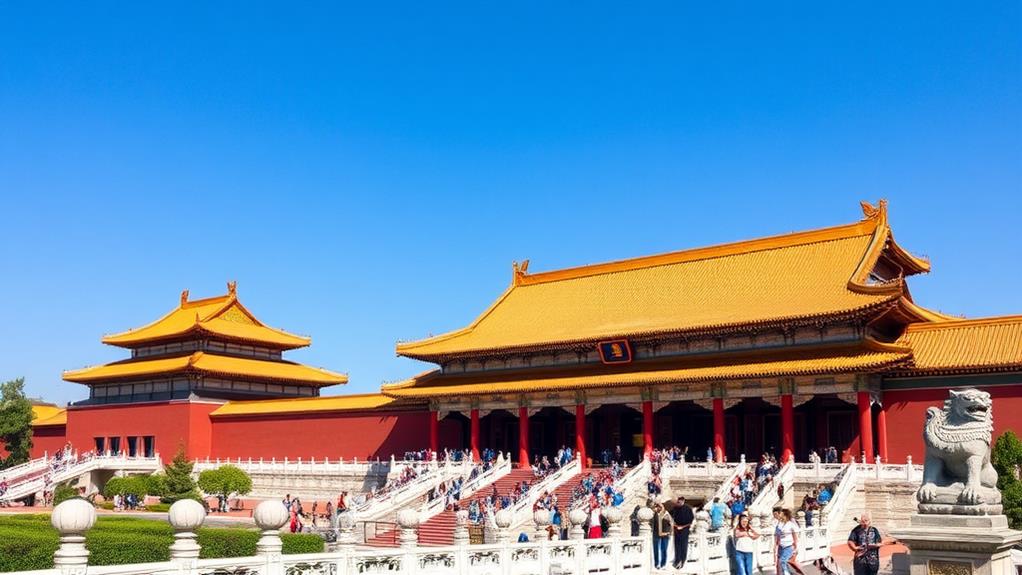
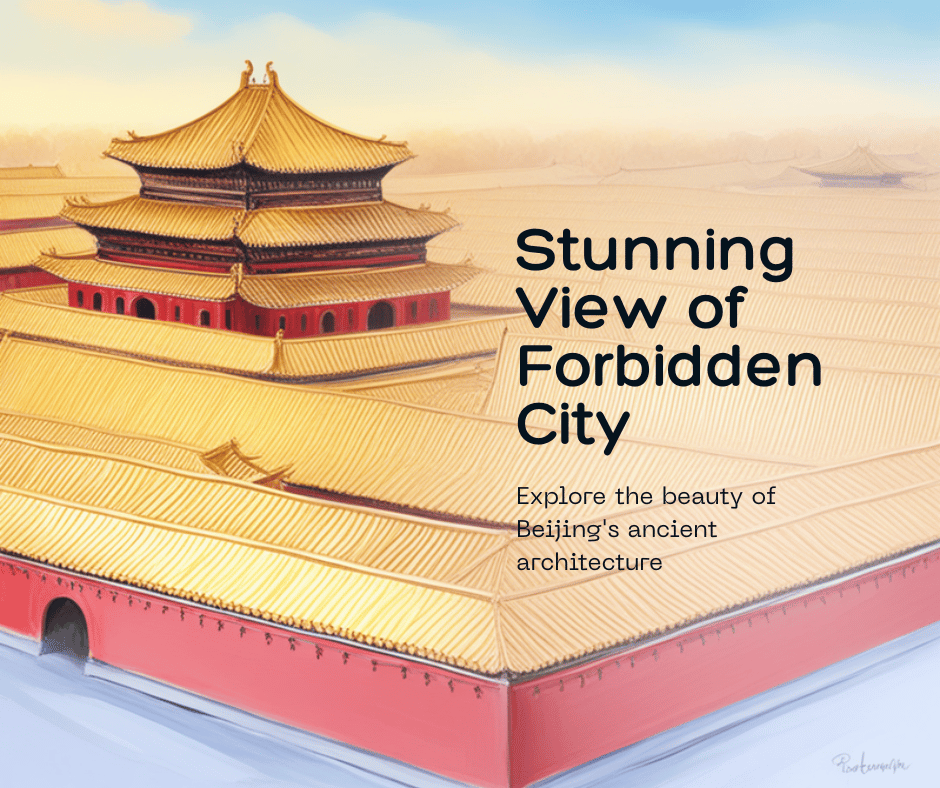
- The Forbidden City (Palace Museum): 500 years of imperial history across 180 acres. Allow 3-4 hours minimum. Entry: 60 CNY ($8.20 USD) peak season, 40 CNY ($5.50 USD) off-season. Book tickets on the Palace Museum WeChat mini-program at least 3 days ahead.
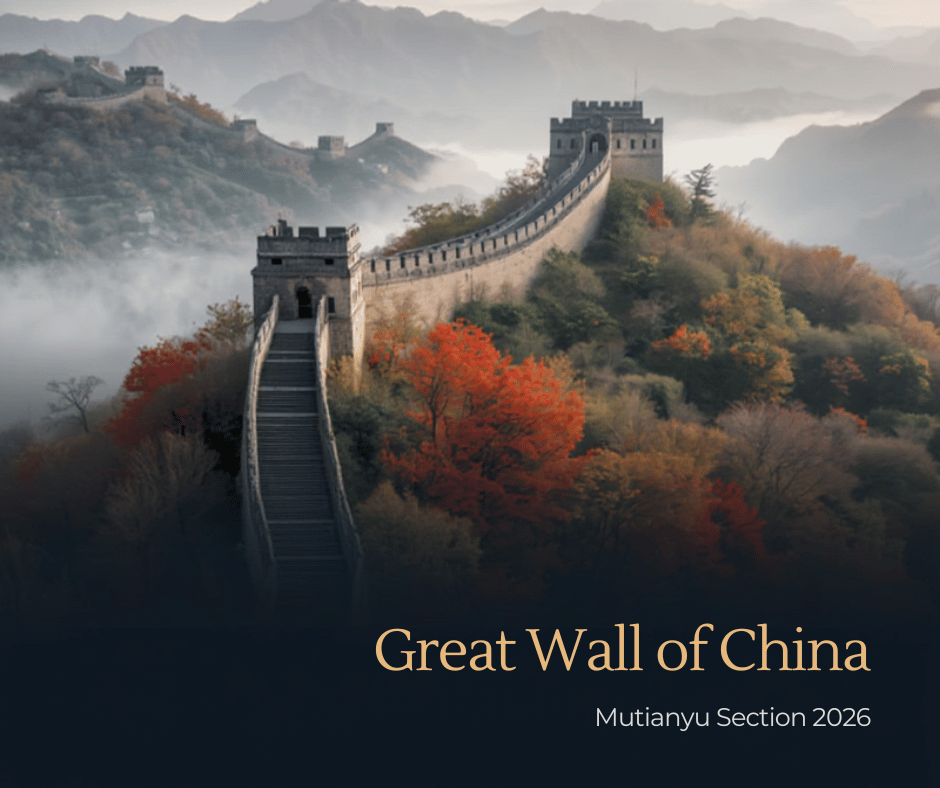
- The Great Wall: Multiple sections within 1-2 hours of Beijing. See the dedicated section below for which one to choose.
- Temple of Heaven: Where emperors prayed for good harvests. The Hall of Prayer for Good Harvests is one of China’s most iconic buildings. Entry: 15 CNY ($2 USD) park only, 34 CNY ($4.70 USD) with all buildings. Arrive before 8 AM to watch locals doing tai chi.
- Summer Palace: A massive imperial garden with Kunming Lake and the Long Corridor. Perfect for a half-day visit. Entry: 30 CNY ($4.10 USD) peak, 20 CNY ($2.70 USD) off-season.
Highly Recommended
- Hutong exploration: Wander the narrow alleyways of old Beijing on foot or by rickshaw. Best areas: Nanluoguxiang, Wudaoying, and the lanes around Houhai Lake. Free to walk; rickshaw tours run 100-200 CNY ($14-$27 USD).
- Tiananmen Square: The world’s largest public square. Free entry, but you need to pass through security and show ID. Best at sunrise when the flag-raising ceremony draws huge crowds.
- 798 Art District: A converted factory complex filled with galleries, cafes, and street art. Free entry to the district; individual galleries may charge 20-50 CNY ($2.70-$6.80 USD). Take subway Line 14 to Jiangtai station.
- Lama Temple (Yonghe Gong): Beijing’s most spectacular Buddhist temple. The 26-meter sandalwood Buddha statue is jaw-dropping. Entry: 25 CNY ($3.40 USD). Subway Line 2 or 5 to Yonghegong station.
For a complete rundown of all the top sites, check my guide to the 10 must-see attractions in Beijing.
“Beijing is one of the few cities in the world where you can experience 3,000 years of continuous history within a single subway ride. The contrast between the 600-year-old Forbidden City and the hyper-modern CBD captures China’s past and future in one frame.” — Dr. Jeffrey Hays, East Asia Cultural Historian, Facts and Details (2024)
The Great Wall: Which Section Should You Visit?
This is the question I get asked most. There are over a dozen Great Wall sections near Beijing. Most tourists default to Badaling because it is famous. That is a mistake during peak season.
I have visited Mutianyu, Badaling, and Jinshanling. Each one offers a completely different experience. Here is an honest comparison.
| Section | Distance from Beijing | Ticket Price (Peak) | Crowd Level | Difficulty | Best For |
|---|---|---|---|---|---|
| Badaling | 70 km (1.5 hr) | 40 CNY ($5.50) | Very High | Easy | Families, accessibility needs |
| Mutianyu | 73 km (1.5 hr) | 40 CNY ($5.50) | Medium | Moderate | Most visitors, photography |
| Jinshanling | 130 km (2.5 hr) | 65 CNY ($8.90) | Low | Moderate-Hard | Hikers, photographers |
| Simatai | 120 km (2.5 hr) | 40 CNY ($5.50) | Low | Hard | Night visits, adventure seekers |
| Huanghuacheng | 80 km (2 hr) | 45 CNY ($6.20) | Low | Moderate | Lakeside scenery, wild wall feel |
My recommendation: Go to Mutianyu. It has the best balance of scenery, restoration quality, and manageable crowds. The cable car (140 CNY / $19 USD round trip) gets you up quickly. The toboggan ride down is genuinely fun.
For a wilder, more adventurous experience, the hidden gem sections like Jiankou or Huanghuacheng are worth the extra travel time. Pack sturdy shoes, water, and snacks. These sections have no vendors.
For the full planning breakdown including transport, tickets, and timing, read my complete Great Wall visiting guide.
Beijing Food Guide: What to Eat and Where
Beijing’s food scene is massive and wildly affordable. I ate like a king for under 100 CNY ($14 USD) a day during my budget trip. Here is what to put on your list.
The Big 5 Beijing Dishes
- Peking Duck (Beijing Kaoya): Beijing’s signature dish. Crispy skin, thin pancakes, scallions, and sweet bean sauce. A whole duck costs 180-300 CNY ($25-$41 USD) at a sit-down restaurant. Read my guide to the best Peking Duck spots in Beijing.
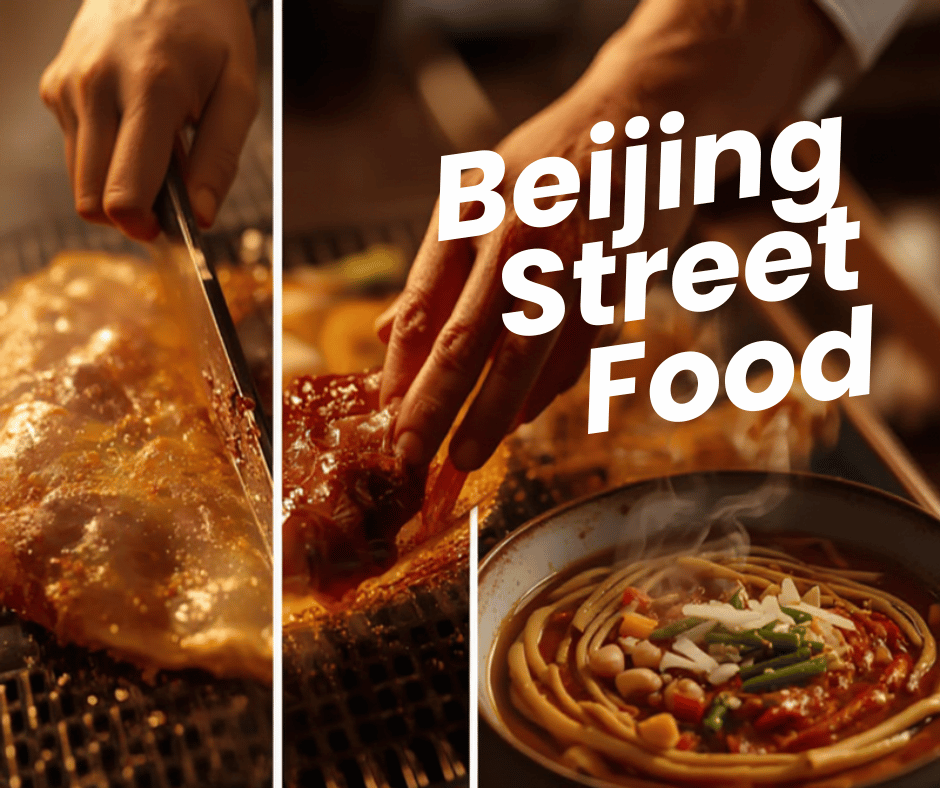
- Jianbing (Savory Crepe): Beijing’s breakfast of champions. A crispy egg crepe with cilantro, scallions, chili sauce, and a fried cracker. 8-15 CNY ($1.10-$2 USD) from street vendors. Best found near subway exits in the morning.
- Zhajiangmian (Fried Sauce Noodles): Thick wheat noodles topped with minced pork sauce and julienned vegetables. A hearty lunch for 20-35 CNY ($2.70-$4.80 USD). Try Haiwaniju near Houhai for an authentic bowl. See also my guide to China’s best noodles.
- Lamb Hotpot (Shuanyangrou): Beijing-style hotpot features thinly sliced lamb in a plain copper pot of boiling water. Dip the cooked meat in sesame sauce. Meals run 60-120 CNY ($8-$16 USD) per person. Donglaishun is the most famous chain.
- Luzhu Huoshao: Stewed offal with tofu and bread soaked in rich broth. It sounds intense, but locals love it. Around 25-40 CNY ($3.40-$5.50 USD) per bowl at old-school eateries near Niujie.
Street Food Worth Trying
Skip the touristy Wangfujing Snack Street (overpriced scorpions and tourist traps). Instead, head to these spots for authentic Beijing street food:
- Guijie (Ghost Street): A neon-lit strip of late-night restaurants. Famous for spicy crayfish (mala xiao longxia). Most dishes 40-80 CNY ($5.50-$11 USD).
- Niujie (Ox Street): Beijing’s Muslim quarter. Try niurou bing (beef-filled pastry, 5 CNY), yangrouhuan (lamb skewers, 3-5 CNY each), and fresh baked naan.
- Huguo Si Xiaochi: A local chain with traditional Beijing snacks. Aiwowo (sweet rice balls), wandouhuang (pea cake), and lvdagun (sticky rice rolls). Most items 5-15 CNY.
For the best cheap eats, look for small restaurants near subway stations where the menu is only in Chinese. If locals are lining up, get in line too.
Getting Around Beijing (Subway, Taxi, and Walking)
Beijing’s public transport is cheap, efficient, and easy to navigate. Here is how to get around without wasting money or time.
The Subway (Your Best Friend)
Beijing’s subway system has 27 lines, over 470 stations, and covers pretty much every tourist spot. It runs from approximately 5:00 AM to 11:00 PM daily.
- Fare: 3-10 CNY ($0.41-$1.37 USD) depending on distance. Most tourist trips cost 3-5 CNY.
- Payment: Tap Alipay or WeChat Pay at the turnstile. You can also buy a Yikatong transit card (deposit 20 CNY) at any station.
- Key lines for tourists: Line 1 (Tiananmen, Wangfujing, Forbidden City), Line 2 (ring line, connects train stations), Line 5 (Temple of Heaven, Lama Temple), Line 8 (Olympic Park).
Taxis and Ride-Hailing
Didi (China’s Uber) works well in Beijing. The app has an English interface. Rides cost about 30-50% less than taxis in most Western cities.
- Base fare: 13 CNY ($1.78 USD) for the first 3 km
- Per km: 2.3 CNY ($0.32 USD)
- Airport to city center: 80-140 CNY ($11-$19 USD) depending on airport and destination
- Typical city trip: 20-50 CNY ($2.70-$6.80 USD)
Walking and Cycling
Central Beijing is surprisingly walkable. The area between the Forbidden City, Tiananmen, and Wangfujing is flat and pedestrian-friendly. The hutong neighborhoods around Gulou are best explored on foot.
Shared bikes (Meituan, Hellobike) are everywhere. Scan the QR code with Alipay to unlock. Rides cost 1.5 CNY ($0.20 USD) per 15 minutes. They are perfect for short hutong hops.
For luggage storage while you explore, most subway stations have lockers (10-30 CNY per day) and hotels will hold bags for free, even if you have already checked out.
How Much Does Beijing Cost? (2026 Budget Breakdown)
Beijing is far cheaper than Tokyo, Seoul, or Hong Kong. Here is what I actually spent during my last 5-day trip as a mid-range traveler.
My Actual 5-Day Spend (October 2026)
| Category | Daily Average (CNY) | Daily Average (USD) | Notes |
|---|---|---|---|
| Accommodation | 380 CNY | $52 | 3-star hotel, Dongcheng district |
| Food | 150 CNY | $21 | Mix of street food, local restaurants, one nice dinner |
| Transport | 35 CNY | $5 | Mostly subway, one Didi ride per day |
| Attractions | 80 CNY | $11 | Entry fees averaged across 5 days |
| Misc | 50 CNY | $7 | SIM card, souvenirs, water |
| Total | 695 CNY | $96 | Mid-range comfort, no scrimping |
Budget Tiers at a Glance
- Backpacker (300-450 CNY / $41-$62 USD per day): Hostel dorm, street food and noodle shops, subway only, free parks and temple exteriors.
- Mid-Range (600-1,000 CNY / $82-$137 USD per day): 3-star hotel or boutique courtyard, mix of restaurants and street food, some taxis, all major attractions.
- Luxury (1,500-3,000+ CNY / $206-$411+ USD per day): 5-star international hotel, fine dining and Peking duck dinners, private car and guide, VIP access at attractions.
Beijing Safety and Practical Tips
Beijing is one of the safest major cities in the world. Violent crime against tourists is extremely rare. That said, you should be aware of a few common issues.
Scams to Watch For
- “Tea ceremony” scam: Friendly English-speaking students invite you to a “traditional tea ceremony.” The bill arrives: 500-2,000 CNY for a few cups of tea. Decline all invitations from strangers near Tiananmen or Wangfujing.
- “Art student” scam: Someone claims to be an art student and invites you to their “gallery.” Same trick, different product. Everything is mass-produced and wildly overpriced.
- Taxi meter scams: Some drivers “forget” to start the meter or take long routes. Always insist the meter is running. Better yet, use Didi where the fare is calculated automatically.
- Counterfeit money: Rare but possible when getting change from small vendors. Check 100 CNY bills for the watermark and tactile ink.
Health and Air Quality
Beijing’s air quality has improved dramatically since 2015. According to the Beijing Municipal Ecology and Environment Bureau, PM2.5 levels dropped by over 50% between 2013 and 2024. Still, bad days happen, especially in winter.
- Download the AQI (Air Quality Index) app and check daily
- Bring N95 or KN95 masks if you have respiratory sensitivities
- On high-pollution days (AQI above 150), stick to indoor activities like museums and malls
- Tap water is not drinkable. Boil it or buy bottled water (2-3 CNY per bottle)
Connectivity
Google, Facebook, Instagram, WhatsApp, and most Western apps are blocked in China. You absolutely need a VPN or a China-ready eSIM that includes VPN access.
Set up Alipay or WeChat Pay before you arrive. In 2026, Alipay allows foreigners to link international Visa and Mastercard credit cards. Almost everything in Beijing is cashless. I went 4 days without touching a single banknote.
Language
English is limited outside of major hotels and top tourist sites. Learn a few survival phrases:
- Hello: Ni hao (nee-how)
- Thank you: Xie xie (shyeh-shyeh)
- How much?: Duoshao qian (dwoh-shaow chyen)
- Where is…?: …zai nar? (…dzai nar?)
- I don’t understand: Wo ting bu dong (woh ting boo dong)
The Google Translate app works offline if you download the Chinese language pack before your trip. It can also translate menus using your phone camera, which is a lifesaver at local restaurants.
Sample 5-Day Beijing Itinerary
This is the itinerary I recommend to friends. It covers all the major sites without feeling rushed. Adjust based on your interests and energy level.
Day 1: Arrival and Tiananmen Area
- Morning: Arrive, check into hotel in Dongcheng. Recover from jet lag with a light walk.
- Afternoon: Tiananmen Square (free, allow 1 hour including security). Walk through the gate toward the Forbidden City entrance. Get oriented.
- Evening: Wangfujing Street for dinner. Try jianbing from a street vendor and browse the Wangfujing Bookstore. Avoid the “snack street” tourist trap.
Day 2: Forbidden City and Jingshan Park
- 8:30 AM: Enter the Forbidden City from the south (Meridian Gate). Spend 3-4 hours walking north through the palace complex.
- 12:30 PM: Exit through the north gate and climb Jingshan Park (2 CNY entry). The hilltop gives you the best overhead view of the Forbidden City. This is the photo everyone takes of Beijing.
- Afternoon: Walk west to Beihai Park. Rent a rowboat on the lake (40 CNY per hour).
- Evening: Peking duck dinner at Siji Minfu near Qianmen (half duck 128 CNY, full duck 198 CNY). Arrive before 5 PM to avoid the line.
Day 3: Great Wall Day Trip
- 7:00 AM: Take Bus 867 from Dongzhimen to Mutianyu (arrive by 9 AM).
- 9:30 AM – 1:00 PM: Hike the wall. Take the cable car up, walk east toward Tower 23 for fewer crowds, then toboggan down.
- 2:00 PM: Lunch at the village restaurants near the parking lot. Fried rice and noodle dishes run 30-50 CNY.
- 4:00 PM: Bus back to Beijing. Rest and recover.
- Evening: Casual dinner at a Guijie restaurant. Try the spicy crayfish (mala xiaolongxia, 80-120 CNY per plate depending on size).
Day 4: Temple of Heaven, Hutongs, and Houhai
- 7:00 AM: Temple of Heaven. Arrive early to watch locals practicing tai chi, ballroom dancing, and calligraphy in the park. Tour the Hall of Prayer and the Echo Wall.
- 11:00 AM: Subway to Gulou hutong area. Walk through Nanluoguxiang (touristy but fun), then turn into the quieter side lanes. Browse small shops, coffee houses, and courtyard restaurants.
- Afternoon: Walk to Houhai Lake. Rent a pedal boat in summer or just walk the lakeside path. Drum Tower and Bell Tower are here too (20 CNY each).
- Evening: Houhai bar street for drinks with a lake view. Bars can be tourist-oriented, but the atmosphere at sunset is hard to beat.
Day 5: Summer Palace and 798 Art District
- 8:30 AM: Summer Palace. Enter through the East Gate. Walk the Long Corridor (728 meters of hand-painted ceiling panels). Take a dragon boat across Kunming Lake (60 CNY). Allow 3-4 hours.
- 1:00 PM: Taxi or subway to 798 Art District (Jiuxianqiao area). Browse galleries, grab coffee at one of the industrial-chic cafes.
- 4:00 PM: Visit the Lama Temple (Yonghe Gong) on the way back to the hotel. Line 2 to Yonghegong station.
- Evening: Final dinner. Splurge on Peking duck at Da Dong (whole duck 328-398 CNY) or keep it casual with lamb hotpot at Donglaishun (80-120 CNY per person).
Frequently Asked Questions About Visiting Beijing
Is Beijing safe for solo travelers?
Yes. Beijing is extremely safe for solo travelers, including women traveling alone. I have walked the hutong neighborhoods well past midnight without concern. Petty theft exists but is uncommon. The biggest risks are scams near tourist sites, not physical safety. Keep your phone and wallet secure in crowded subway cars during rush hour, just as you would in any major city.
How many days do I need in Beijing?
Plan for 4-5 full days minimum. This gives you time for the Forbidden City (half day), Great Wall (full day), Temple of Heaven (half day), Summer Palace (half day), and hutong exploration (half day). If you want to visit the Ming Tombs, 798 Art District, or take day trips, add 1-2 more days. Beijing rewards slow exploration.
Can I get by with English in Beijing?
At international hotels, airports, and major attractions, yes. Everywhere else, limited. Subway announcements and signs are bilingual. Restaurant menus in tourist areas often have English and photos. But at local eateries, markets, and off-the-beaten-path spots, you will need translation apps. Download the Chinese language pack for Google Translate before arriving and set up your VPN so the app works.
Do I need cash in Beijing in 2026?
Barely. Beijing runs almost entirely on mobile payments. Alipay now accepts international Visa and Mastercard, so you can pay for subway rides, street food, restaurants, and taxis with your phone. I recommend keeping 200-300 CNY in cash as backup for rare situations. Some public restroom attendants and very small vendors only take cash. ATMs at Bank of China and ICBC accept foreign cards.
What is the best way to get from Beijing to the Great Wall?
For Mutianyu, take Bus 867 from Dongzhimen (16 CNY, 2 hours) or hire a private car (400-600 CNY round trip). For Badaling, take the S2 commuter train from Beijing North Station (7 CNY, 80 minutes) or the high-speed train from Qinghe Station to Badaling Changcheng Station (35 CNY, 23 minutes). Tour groups are easy to book through your hotel or Klook but eat into your time with multiple stop pickups. For a more in-depth look, read our Great Wall visiting guide.
Is Beijing expensive compared to other Chinese cities?
Beijing is more expensive than second-tier cities like Chengdu or Xi’an but cheaper than Shanghai’s trendier neighborhoods. Hotels and attractions cost slightly more, but food and transport are still very affordable. A budget traveler can manage on 300-450 CNY ($41-$62 USD) per day. The biggest variable is accommodation. Choosing a hostel over a hotel saves you 200-400 CNY per night.
What should I pack for Beijing?
Comfortable walking shoes are essential. You will walk 15,000-25,000 steps per day. Bring layers in spring and fall (mornings are cool, afternoons warm). Summer requires sunscreen, a hat, and light breathable clothes. Winter demands a serious down jacket, thermal base layers, and warm gloves. A portable battery pack for your phone is critical since you will use mobile payments all day. And bring a reusable water bottle to refill at your hotel.
Beijing changed the way I think about China. Before my first visit, I imagined an overwhelming, inaccessible city. What I found instead was a place that is proud of its history, obsessed with good food, and surprisingly easy to navigate. Whether you are standing on the Great Wall at sunrise or eating a 10 CNY jianbing on a random street corner, Beijing has this way of making you feel like you have stumbled into something real.
Start planning. You will not regret it.
Explore more Beijing guides: