Last Updated: April 4, 2026 | Originally Published: February 20, 2026
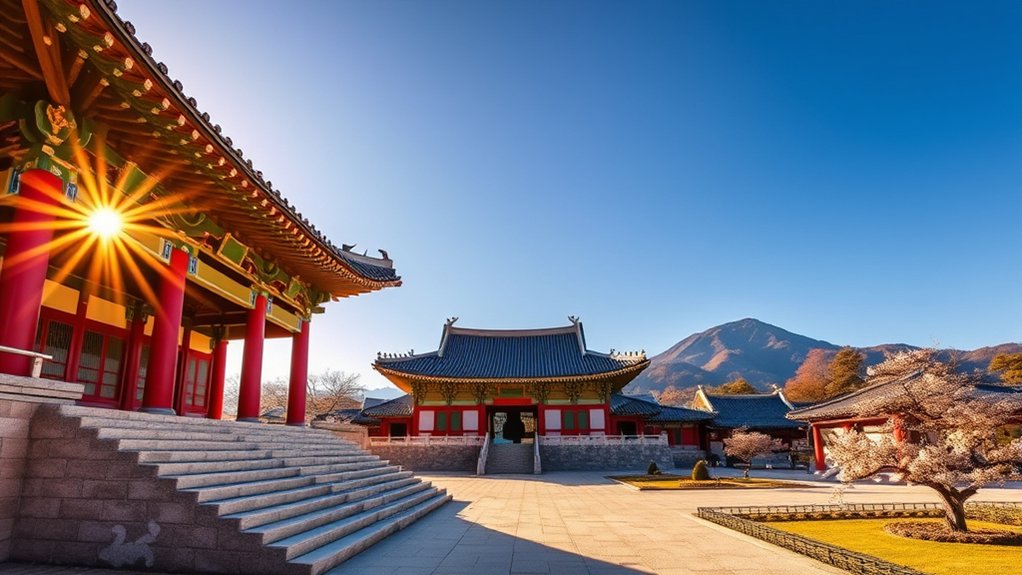
Seoul’s five royal palaces showcase Korea’s regal heritage with stunning architecture and cultural significance. You’ll witness changing guard ceremonies at Gyeongbokgung, explore UNESCO-listed Changdeokgung, and experience magical night tours (book early—they’re popular). Visit during free admission days in January 2026 or purchase the 10,000 won combo ticket for access to four palaces. Arrive early, avoid Tuesdays, and use transit apps to navigate efficiently. The palaces’ symmetrical layouts and harmonious designs tell stories beyond their stone walls. (Source: Korea Tourism Organization)
Explorer Insights
- Seoul’s Five Great Royal Palaces offer unique experiences from UNESCO-listed Changdeokgung to Gyeongbokgung with its famous Guard Changing ceremonies.
- Palace architecture features symmetrical layouts, harmony with nature, and traditional console bracket structures that reflect Korean royal aesthetics.
- Special night tours at Gyeongbokgung Palace operate Wednesday through Sunday in 2026, requiring advance booking through a lottery system.
- Visit during free admission days (January 25-30, 2026) or purchase a 10,000 won combination ticket valid for four palaces.
- Time visits with seasonal events like spring cherry blossoms or autumn foliage, and use navigation apps to efficiently move between palaces.
The Five Great Royal Palaces of Seoul: Origins and Significance
When you dig into Seoul’s history, you can’t miss the five royal palaces.
They’re living monuments of Korea’s past. Gyeongbokgung, built in 1395, was the main show – the beating heart of royal authority. No big deal, just the center of an entire dynasty.
Changdeokgung became the favored residence for many kings, while Changgyeonggung was originally built for King Taejong (dad of the alphabet-inventing King Sejong).
Palace architecture here isn’t just pretty – it’s purposeful. Changdeokgung was designated as a UNESCO World Heritage site in 1997 for its exceptional harmony with nature and distinctive layout.
Then there’s Deoksugung, which started as a royal relative’s pad before becoming a temporary palace after Japan invaded in 1592. Its unique location at a busy downtown intersection makes it easily accessible for modern visitors.
And Gyeonghuigung? The royal backup plan during emergencies. Because even kings needed Plan B.
Royal traditions lived and breathed in these spaces.
Five palaces, one remarkable legacy.
Architectural Marvels: Design Elements That Define Korean Palace Compounds
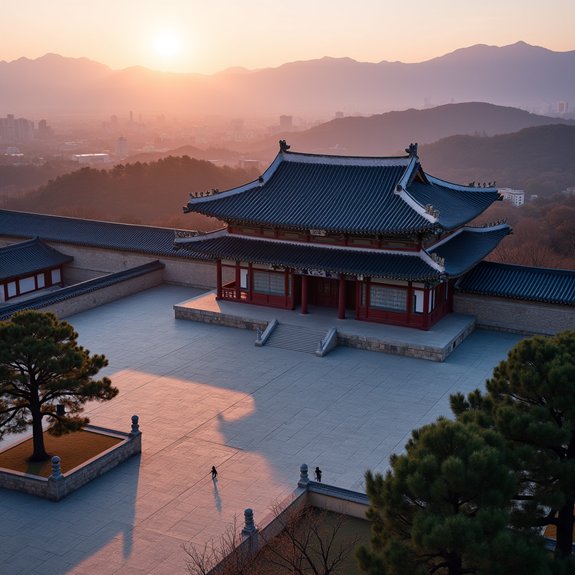
Stepping into a Korean royal palace feels like entering another dimension. The design aesthetics aren’t random—they’re calculated displays of power and philosophy.
You’ll notice the symmetrical layouts immediately. Everything aligns along a central axis. Not by accident. For example, palaces and Korean train stations both thoughtfully guide visitors through ordered spaces, using clear layouts to ensure smooth navigation for all travelers.
Korean palaces blend seamlessly with nature. It’s spatial harmony at its finest. Wooden frameworks support those iconic tiled roofs, while stone foundations elevate important buildings. Practical? Yes. Beautiful? Absolutely.
Courtyards and pathways guide you through deliberately designed spaces. Open areas create tranquility. Closed ones provide intimacy. The whole compound reflects Confucian ideals—hierarchy and balance made physical.
Console bracket structures are distinctly Korean. They support massive roofs while creating generous interior spaces. No claustrophobia here, folks. Each type of building, from jeon to ru, serves specific functions in the royal palace hierarchy.
These aren’t just buildings. They’re statements.
Royal Life Within Palace Walls: Ceremonies, Politics, and Daily Routines
Behind those imposing palace gates, royal life wasn’t just luxurious—it was ruthlessly regimented.
Morning assemblies started before dawn, with sangcham for senior officials and the more formal jocham gatherings held on specific dates each month. Talk about political hierarchy!
Daily routines followed strict protocols. The king’s meals, education sessions with Confucian classics, even leisure activities like archery—all precisely scheduled. The palace environment fostered industry experts who specialized in royal protocols and ceremonies, similar to how NMK Magazine features thought leaders in marketing.
Guards changed twice daily (except Tuesdays), complete with martial arts displays that screamed “don’t mess with us.”
Royal education wasn’t just for show. Princes studied poetry, history, and Confucian texts while queens and concubines participated in state ceremonies with ceremonial significance. This dedication to mindfulness and discipline mirrors the practices found in Korea’s Templestay programs where visitors engage in meditation, chanting, and traditional Buddhist rituals.
Night patrols enforced curfews with drum signals marking time.
In 2026, you’ll experience this regimentation yourself through “Time Travel: King Sejong” reenactments. Not so glamorous after all, huh?
Destruction and Revival: The Journey From Ruins to Restoration
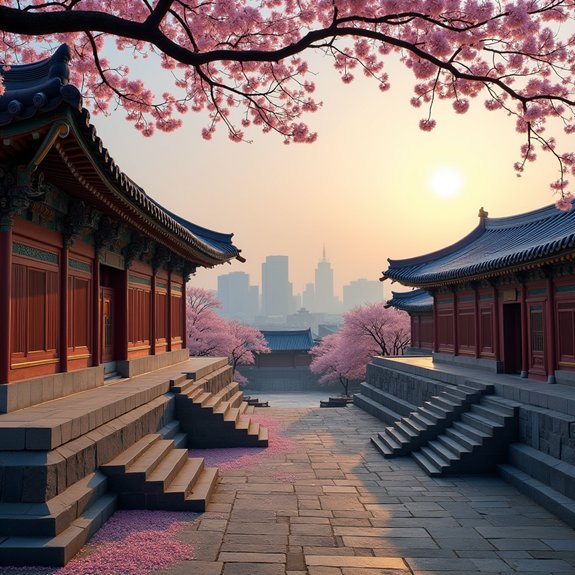
Despite their magnificent appearance today, Korea’s royal palaces weren’t always so pristine—far from it. The story of Gyeongbokgung is particularly brutal—burned during the 1592 Imjin War, abandoned for two centuries, then systematically dismantled during Japanese colonial rule. Talk about cultural erasure.
When you visit these sites, you’re witnessing remarkable cultural resilience in action. After 1990, South Korea finally got serious about restoration:
- The colonial Government-General Building was demolished in 1995-96
- Only 25% of original structures have been rebuilt so far
- Traditional craftsmen work alongside modern architects
- Heated debates continue about architectural authenticity
The palaces you’ll explore represent Korea’s painful journey from colonial subjugation to cultural revival. The comprehensive restoration initiative began with the First Gyeongbokgung Restoration Plan in 1990, aiming to return the palace to its 1888 condition. Much like the UNESCO recognition of Andong Hahoe Folk Village in 2010, these restoration projects showcase Korea’s commitment to preserving its cultural heritage for future generations.
Pretty impressive comeback for buildings that literally ceased to exist for generations.
Planning Your Palace Experience: Practical Tips for Visitors in 2026
You’ll save big on entrance fees by planning your palace visits during Korea’s free admission days—typically certain cultural holidays or the last Wednesday each month.
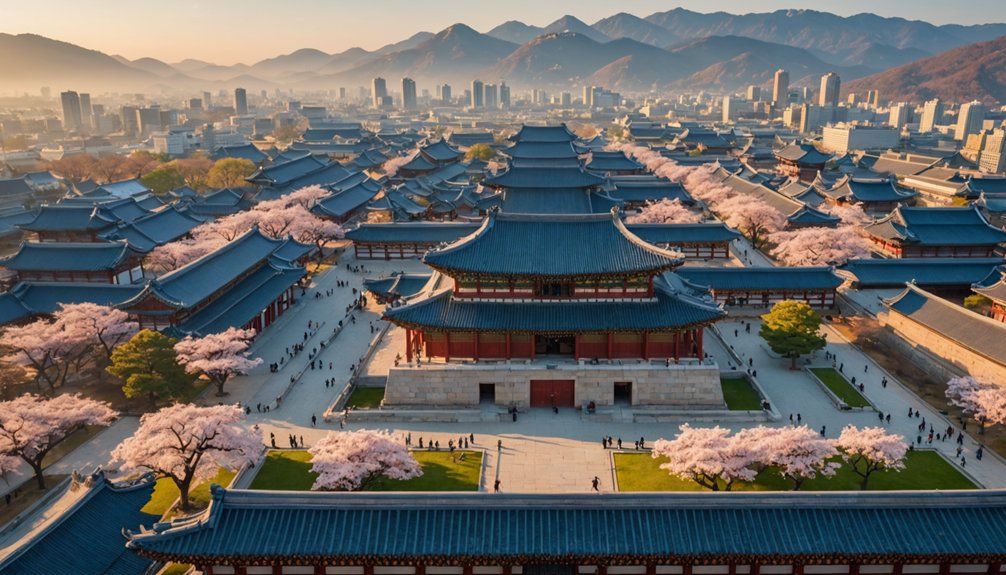
For an Instagram-worthy experience (because let’s face it, that’s half the reason you’re going), time your visit with seasonal events like spring’s cherry blossoms or autumn’s crimson foliage that transform these historic grounds into something straight out of a K-drama.
Night tours at Gyeongbokgung are crazy popular and run through a lottery system, so mark your calendar for booking dates unless you enjoy bitter disappointment. Choosing budget-friendly guesthouses can also help you save on accommodation and free up more funds for your palace adventures.
The impressive changing of the guard ceremony takes place at 10am and 2pm daily except Tuesdays when the palace is closed, with the afternoon performance typically drawing larger crowds.
Admission Strategy
When planning your visit to Korea’s royal palaces in 2026, smart timing and ticket choices make all the difference.
Standard ticket pricing is reasonable—3,000 won for adults, 1,500 won for kids. But why pay at all? Wear hanbok and walk in for free. Seriously.
The Combination Ticket is your best friend if you’re hitting multiple palaces. 10,000 won gets you into four palaces plus Jongmyo Shrine. Valid for three months. Take your time.
- Avoid Culture Day (last Wednesday monthly)—free admission means insane crowds
- Early bird wins—arrive at 9am, when everyone else is still eating breakfast
- Group discounts exist for 10+ people—round up some friends
- Tuesday = closed—don’t be that tourist who shows up anyway
Be sure to catch the Changing of the Guard ceremony at 10am or 2pm, a colorful reenactment of Joseon Dynasty tradition.
Download the Papago app for accurate translations of exhibit descriptions and historical information, as it’s specifically optimized for Korean language and outperforms other translation services at rendering cultural terms.
Seasonal Palace Events
Now that you’ve figured out the ticket situation, let’s talk about when the real magic happens. The palaces truly come alive at night, trust me.
Gyeongbokgung’s Starlight Tour runs April 2-May 17, 2026. Wednesday through Sunday, twice nightly. Not a bad way to spend an evening!
Meanwhile, Changdeokgung’s Moonlight Tour extends from April 10 to June 15, with six sessions every Thursday to Sunday.
These nighttime experiences aren’t just walking tours. You’ll cross the normally off-limits Chwihyanggyo Bridge at Gyeongbokgung. Fancy some royal court cuisine? They’ve got that too.
Don’t miss the seasonal highlights like the Moonlight Lotus Show at Changgyeonggung (April 26-May 4).
Or try the Palace Night Walks at Gyeonghuigung. Breathtaking architecture, Korean classical music. Yeah, way better than daytime visits.
And for spring 2026, you can experience the K-Royal Culture Festival at Geoncheonggung Palace, featuring historical reenactments of King Sejong’s era.
For easy navigation between palaces, consider using Japan Transit Planner which allows you to filter out services and find the quickest routes to your destinations across Japan.
Cultural Heritage Preservation: How Korea Maintains Its Royal Legacy
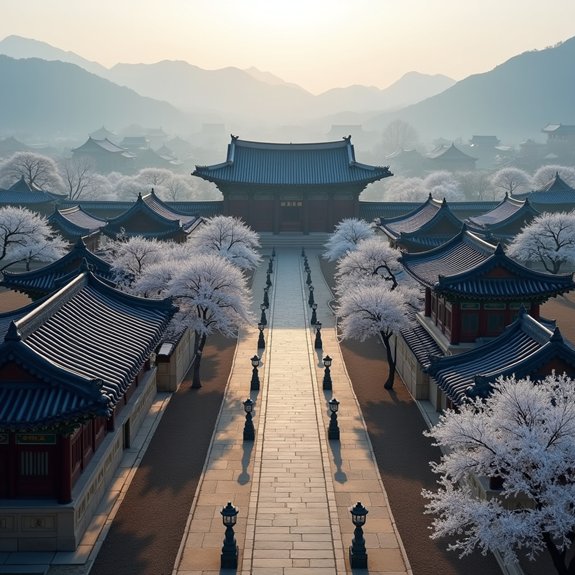
Behind every gleaming palace roof and meticulously maintained royal garden stands an army of dedicated preservationists. Korea doesn’t mess around with its royal legacy.
The 1962 Cultural Heritage Protection Act (updated in 2012) forms the backbone of heritage legislation that keeps these treasures intact. Preservation techniques range from painstaking traditional methods to cutting-edge digital documentation. It’s serious business. Visitors can experience this dedication firsthand during the free admission dates from January 25-30, 2026, as part of the Lunar New Year celebrations. For those with mobility concerns, many heritage sites offer wheelchair accessibility with ramps, elevators, and smooth pathways to improve visitor experience.
Korea’s heritage protection isn’t just law—it’s a seamless blend of ancient wisdom and modern technology.
- The “Living National Treasures” program guarantees ancient skills don’t die with their masters
- Annual maintenance cycles prevent weather damage (Seoul winters aren’t kind to 600-year-old wood)
- Traditional craftsmen still create authentic hanji paper and dancheong paintings for restorations
- UNESCO World Heritage status brings global recognition—and stricter preservation standards
You’re witnessing centuries of history that almost didn’t survive. Thank the preservationists.
Frequently Asked Questions
Are Royal Descendants Involved in Modern Palace Operations?
No, royal descendants aren’t running the show anymore. The royal lineage continues, but their modern significance is purely symbolic.
They’ll occasionally show up for ceremonial events—looking regal in traditional garb—but that’s it. Korea Heritage Service handles all the actual palace operations.
Yi family members are just living their lives, running businesses, and making media appearances. Some, like Crown Prince Andrew Lee, have tech careers completely unrelated to palace management.
Pretty straightforward arrangement, really.
Which Palace Offers the Best Photography Opportunities?
While some think all palaces are created equal, they’re dead wrong.
Gyeongbokgung gives you the whole package: vast courtyards, mountain backdrops, and those guard ceremonies for dynamic shots. You’ll get killer photography tips from locals—shoot during golden hour, obviously. Best angles? Frame Geunjeongjeon with Bukhansan behind it.
Changdeokgung’s Secret Garden rocks for nature lovers.
Deoksugung? Way fewer crowds. Evening shoots there are straight-up magical against the city lights.
When Is the Least Crowded Time to Visit Each Palace?
Palace visitor trends fluctuate dramatically. For Gyeongbokgung, hit weekday mornings or late afternoons. Seriously.
Changdeokgung? Early mornings or those fancy Moonlight Tours. You’ll thank me later.
Changgyeonggung is already less packed, but weekdays and evening hours (7-9 PM) are golden.
Seasonal crowd patterns make Deoksugung actually bearable on weekdays and early mornings.
Most palaces are tourist nightmares during weekends and holidays. Don’t say I didn’t warn you.
Can Visitors Wear Traditional Hanbok Inside the Palaces for Free?
Yes, you absolutely can! Wear a hanbok and you’ll get free entry to all five royal palaces. Pretty sweet deal.
Hanbok rentals are available at shops surrounding the palaces, typically starting around 15,000-30,000 won.
It’s not just about saving money though. Donning traditional Korean attire transforms your visit into authentic cultural experiences.
You’ll feel like royalty while wandering ancient grounds. Plus, you’ll take killer photos that’ll make your Instagram followers jealous. Win-win.
What Hidden Architectural Symbols Appear Throughout the Palace Compounds?
Look closely – these palaces are packed with hidden meanings.
You’ll spot Haetae carvings guarding against fires, five-clawed dragons (royal flex!), and phoenixes marking royal pathways. The architectural details aren’t random.
Seven mythological creatures perch on Geunjeongjeon’s roof. Dragon-shaped tiles? Fire prevention. Even chimneys tell stories with longevity symbols.
Everything’s positioned deliberately – east/west dragon placements follow cosmic order. The number of roof guardians? Totally shows a building’s importance.
Conclusion
Seoul’s royal palaces are living time capsules. You’ll walk where kings once ruled, surrounded by centuries of drama, politics, and culture. Worth every penny of your travel budget. These architectural gems have weathered storms literal and political, yet they’re still standing tall. Don’t just snap photos and dash. Soak it in. Korea’s royal legacy isn’t gathering dust – it’s waiting for you in 2026.
More on Transportation:
Planning a trip to Korea?
Check out our Korea Travel Hub for more guides, including Korean BBQ Guide.

Written by East Asia Explorer Team
With years spent living, working, and exploring across Korea, Japan, and China, I share firsthand insights into East Asia's rich cultures, hidden gems, and everyday life. My journey also includes studying in Malaysia and traveling through Southeast Asia, experiences that have deepened my appreciation for the region's diversity. Through practical tips, local stories, and travel guides, I aim to help fellow explorers discover both the celebrated highlights and the lesser-known corners of East Asia.