Last Updated: April 8, 2026 | Originally Published: February 22, 2026
China
Destinations • Last updated: February 21, 2026 (see Travel China Guide)
Visiting the Great Wall of China (2026 Guide): Which Section is Actually Best?
Every single traveler who goes to Beijing asks the exact same question: “Which section of the Great Wall should I
visit?” It is the defining dilemma of Chinese tourism. The wall stretches for over 13,000 miles across the
northern border of the country, meaning calculating the perfect great wall of china day trip
requires a bit of strategy. (see China Highlights)
I have hiked five different sections of the wall over the past six years. Some were completely overrun by massive
tour groups equipped with matching hats and megaphones. Others were so remote that I was literally pulling wild
bushes out of the ancient stone paths to get a clear footing, not seeing another human for hours.
If you are planning your 2026 itinerary, understand that you are not just choosing a geographic location; you are
picking an entirely different physical and psychological experience. Whether you want to take a pristine
chairlift up and ride a toboggan down, or embark on a grueling, sweat-drenched, five-hour hike across unrestored
crumbling guard towers, this guide breaks down exactly how to do it. (see Lonely Planet China guide)
Beijing (Most accessible sections are 1.5 – 3 hours away)
Tickets require your physical passport number via
WeChat/Trip.com.
September to October (Clear skies, cool weather)
High. Expect thousands of uneven, steep stairs.
The Badaling Section: The Crowded Classic
Great Wall Sections — Difficulty Rating (1–10)
Mutianyu
★★★★☆
Price: ¥65 (~$9) + cable car
Crowds: Moderate
Best overall for visitors. Fewer crowds than Badaling, accessible, amazing views.
Badaling
★★★☆☆
Price: ¥65 (~$9)
Crowds: Very crowded
Most accessible but overwhelmingly busy. Best avoided on weekends/holidays.
Jinshanling
★★★★★
Price: ¥65 (~$9)
Crowds: Low crowds
Perfect for photography. Mix of restored and wild sections. Stunning at sunrise.
Simatai
★★★★☆
Price: ¥65 + night tour
Crowds: Low crowds
Only section open for night visits. Dramatic views. Book in advance.
Great Wall of China — Main Sections Near Beijing
Let’s get this one out of the way first. Badaling is the most famous, most restored, and overwhelmingly the most
crowded section of the wall. When you see news broadcast footage of thousands of people packed
shoulder-to-shoulder on the wall like sardines, you are looking at Badaling.
It is the section closest to Beijing and is directly connected by a high-speed train that drops you off literally
beneath the entrance. For this reason, it is the primary target for domestic mega-tours. Unless you are
incredibly short on time, or require extensive wheelchair accessibility (which Badaling is uniquely equipped for
with ramps and elevators), I strongly recommend skipping it. The sheer density of people severely subtracts from
the majestic atmosphere of the site.
The Mutianyu Section: The Perfect Balance
For 90% of international tourists in 2026, Mutianyu is the correct choice. It is beautifully restored,
dramatically situated along sharp mountain ridges, and significantly less crowded than Badaling. The
infrastructure here is incredibly smooth, largely because it is the section most foreign diplomats and
dignitaries are brought to.
Mutianyu is famous for two things. First, it features heavily concentrated watchtowers (22 towers over a 1.4-mile
stretch), which makes for stunning photography as the wall snakes its way over the hills. Second, the descent
involves a wildly fun, winding metal toboggan slide that curves all the way down the mountain to the base
village.
How Do You Get Started to Mutianyu?
You can take the Mubus (a dedicated tourist shuttle) directly from downtown Beijing near Dongzhimen subway
station. It departs around 8:00 AM and gets you to the base by 9:30 AM before the major crowds arrive. You get
about five hours on the wall before the bus takes you back to the city center.
The Jinshanling Section: The Hiker’s Dream
If you own proper hiking boots and genuinely want to earn your photos, Jinshanling is where you go. Located about
2.5 to 3 hours northeast of Beijing, it sits further out, which naturally filters out about 80% of the casual
tourist crowd. You can easily walk here for thirty minutes without passing another person.
What makes Jinshanling so highly regarded is the contrast. The first half of the main hike consists of
beautifully restored brickwork, but as you push further east toward Simatai, the wall degrades into its raw,
original state. Trees grow out of the watchtowers, bricks are crumbled into loose gravel, and the sheer
drop-offs become incredibly dramatic. This untouched “wild wall” section provides a profound sense of antiquity
that the pristine restored sections lack.
How Do You Get Started to Jinshanling?
Public transport here is highly fragmented and confusing for non-Chinese speakers. Your best bet is to book a
shared transport van (usually arranged by your hostel or via Trip.com) or hire a private driver for the day. A
private driver will usually cost around 700 to 900 RMB ($100 – $125 USD) for the entire 8-hour round trip.
2026 Ticket Pricing Breakdown
Since the end of the pandemic restrictions, China’s ticketing systems have moved almost completely digital. You
must book tickets via official WeChat Mini-Programs or platforms like Trip.com using your passport number.
Walk-up ticket windows still exist, but daily capacity limits mean turning up without a reservation is risky.
| Section | Adult Entrance Fee | Round-Trip Cable Car | Vibe / Crowds |
|---|---|---|---|
| Badaling | 40 RMB (Peak) / 35 RMB (Off-Peak) | 140 RMB | Extremely Crowded, Hyper-commercialized. |
| Mutianyu | 45 RMB (Year-Round) | 140 RMB (Or 140 RMB for Chairlift up + Toboggan down) | Moderate Crowds, Tourist-friendly, Well-developed. |
| Jinshanling | 65 RMB (Year-Round) | 80 RMB | Low Crowds, Rugged, Quiet, Highly photogenic. |
Estimated
Total Cost per Person (Including Beijing Transport)
Car)
~90 RMB ($12)
Toboggan)
~265 RMB ($37)
1-Way Cable Car)
~345 RMB ($48)
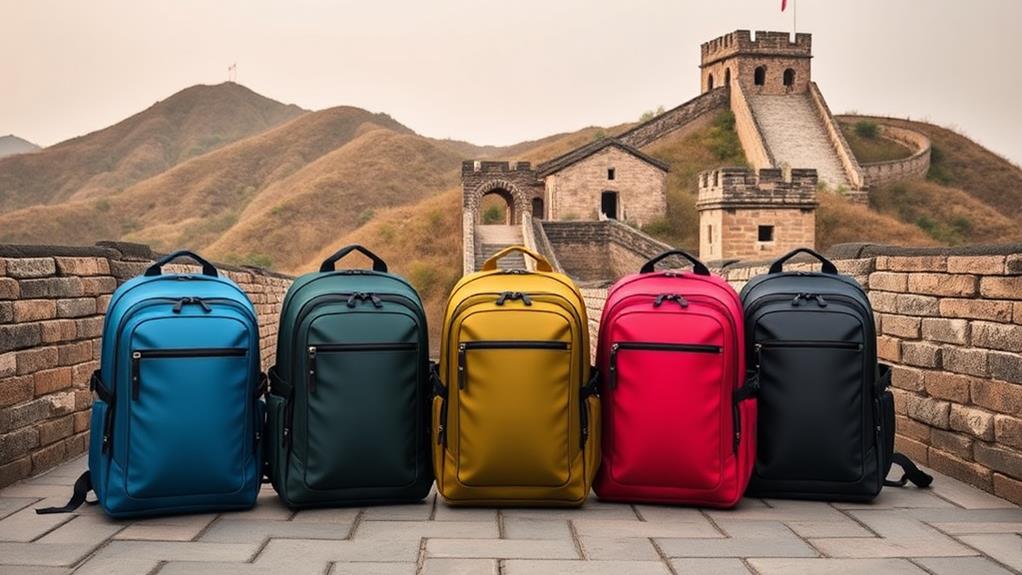
What to Pack for Your Hike?
Do not underestimate the physical toll of climbing the wall. The steps are notoriously uneven. Some stairs are
two inches high, while the very next step requires lifting your leg past your knee. You will sweat profusely, no
matter what time of year you go.
👟 Essential Great Wall Packing List
- Your Original Passport: They will scan it at the final turnstile gate. Without it, you
cannot enter. - Huge Amounts of Water: Buy water in downtown Beijing before you leave. The vendors
scattered along the watchtowers charge up to 6x the normal price. - Grippy Hiking Shoes: The ancient stones have been smoothed out by millions of footsteps
and become incredibly slippery, especially if there has been any recent rain. - Snacks/Packed Lunch: Getting off the wall to eat at the base restaurants takes a
massive chunk of time out of your day. Eat a sandwich up in a watchtower instead. - Toilet Paper & Hand Sanitizer: The public bathrooms at the base are usually decent,
but they rarely stock toilet paper. Bring your own.
Handling the “Wild Wall” Safely
If you choose to hike Jiankou or the unrestored eastern half of Jinshanling, you are encountering what locals
call the “Wild Wall.” This is entirely “at your own risk” territory. The Chinese government does not actively
maintain these bricks, and there are no guardrails preventing a fatal fall.
The golden rule of the Wild Wall is to never hike alone. Because the geography is so isolated, twisting an ankle
here can escalate into a massive emergency very quickly. Cell reception on these high ridges is actually
surprisingly excellent due to nearby telecom towers, but an extraction by local authorities will be incredibly
slow and highly embarrassing.
When you hit sections where the stairs have eroded completely into 45-degree gravel slopes, do not try to walk
down them facing forward. Turn around, face the wall, and bear-crawl down hand-and-foot backwards. It looks
ridiculous, but it is the only way to avoid sliding uncontrollably.
Final Thoughts for Your 2026 Trip
Visiting the wall never loses its impact. Even standing in the sweltering humid heat of July or shivering in the
biting sub-zero winds of January, the sheer scale of human willpower required to build this structure across
such hostile terrain is paralyzing to comprehend.
Skip Badaling. Take the tourist-friendly route at Mutianyu if you want a great hike capped off with a thrilling
toboggan slide down the mountain. Or, lace up your absolute best hiking boots and tackle the rugged, isolated
beauty of Jinshanling. Either way, get out of downtown Beijing and earn your views.
Adventure
You survived the wall, but the capital has much
more to offer. Check out our comprehensive guides to the Forbidden City and navigating the ancient hutong
alleyways.
Related Reading
More on Transportation:

Written by Sam Konneh
Sam Konneh is an AI strategist and digital marketer based in Seoul, South Korea. With years spent living, working, and exploring across Korea, Japan, and China, he shares firsthand insights into East Asia's cultures, hidden gems, and everyday life. A graduate of Inha University and KDI Graduate School, Sam combines data-driven expertise with on-the-ground experience. His journey also includes studying in Malaysia and traveling through Southeast Asia. Through practical tips, local stories, and travel guides, he helps fellow explorers discover both the celebrated highlights and the lesser-known corners of East Asia.