Last Updated: June 28, 2026 | Originally Published: February 26, 2025
You'll discover China's most magnificent UNESCO sites in 2026 through carefully planned visits to iconic locations. From the sacred Buddhist monasteries of Mount Wutai to the mysterious Terracotta Warriors in Xi'an, each destination offers unique experiences throughout the year. Visit the Forbidden City in spring for cherry blossoms, explore the Great Wall's Mutianyu section for family-friendly access, and time your journeys during off-peak seasons for smaller crowds. The ancient wonders of China await your next adventure. (Source: Travel China Guide city guides)
Explorer Insights
- Visit the Terracotta Warriors during spring or fall, arriving at 8:30 AM to avoid crowds and secure advance tickets online.
- Explore Mount Wutai's 41 Buddhist monasteries, which showcase ancient religious traditions and meditation practices in China.
- Choose Mutianyu section of the Great Wall for family visits, featuring 23 watchtowers and convenient cable car access.
- Experience the Forbidden City in off-season (November-March) for smaller crowds, reduced admission, and unique snow-covered photo opportunities.
- Observe giant pandas in UNESCO-protected Wolong Nature Reserve during early morning hours when they're most active.
Sacred Mountains and Their Ancient Mysteries
China's sacred mountains have captivated spiritual seekers and travelers for thousands of years, with each peak holding its own fascinating history and religious significance. You'll discover amazing Buddhist monasteries at Mount Wutai, where 41 ancient structures tell stories of devotion and meditation. (Source: UNESCO China Heritage Sites)
These peaks serve as communication between heaven and earth according to Taoist beliefs. As you explore these sacred peaks, you'll encounter different bodhisattvas who protect each mountain. Manjusri watches over Wutai, while Samantabhadra guides visitors at Mount Emei. At Putuo, you'll find temples dedicated to Avalokitesvara, the deity of compassion, and Jiuhua honors Ksitigarbha, guardian of the underworld. The Taoist mountains offer their own mysteries, with Wudang's martial arts heritage and Longhu's dragon legends. These peaks aren't just scenic spots – they're living museums where ancient traditions continue to thrive. The Great Wall's cultural significance further enriches the understanding of China's diverse heritage.
Terracotta Warriors: Planning Your Journey to Xi'an
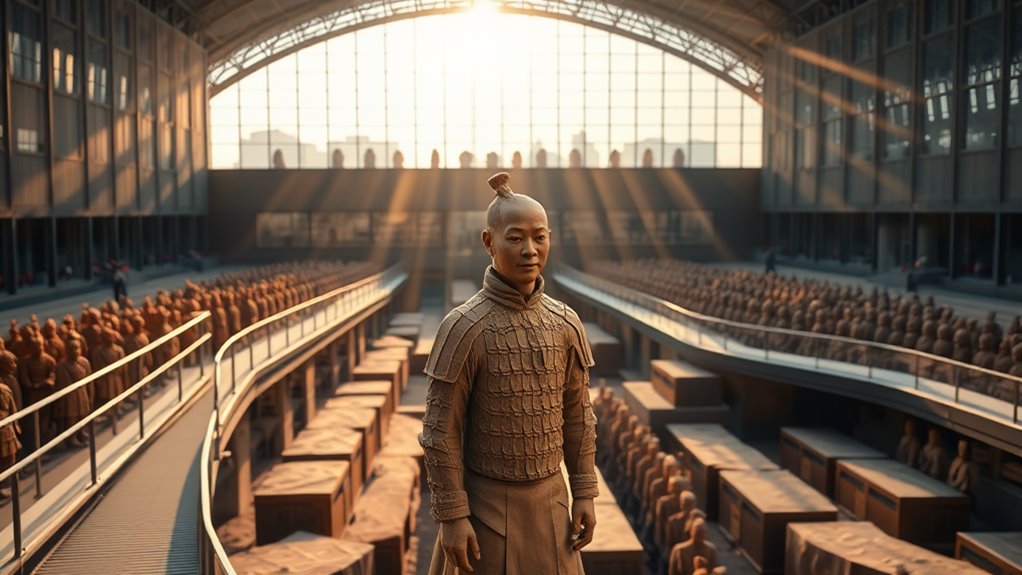
When you're planning your visit to the Terracotta Warriors, you'll want to time your trip during spring or fall to avoid both summer's intense heat and winter's biting cold. You can easily reach the site by taking a shuttle bus from Xi'an's city center to the museum complex, where you'll find well-marked paths leading to all three excavation pits. Consider purchasing tickets in advance to skip long queues at the entrance. For the best photos, bring a camera that performs well in low light conditions, as flash photography isn't allowed inside the pits, and position yourself along the elevated walkways during mid-morning when natural lighting through the skylights is ideal. The entry fee of CNY 120 per person includes access to both the Mausoleum Site Museum and the Terracotta Warriors exhibition, plus convenient shuttle bus service within the complex.
Best Times To Visit
Timing your visit to the Terracotta Warriors can make a huge difference in your overall experience. Spring (March-May) and autumn (September-November) offer the most pleasant weather and fewer crowds, making them ideal seasons for your exploration. With visiting hours varying seasonally, the site closes earlier at 17:30 during winter months from November 16 to March 15. You'll enjoy clearer skies and comfortable temperatures that are perfect for both indoor and outdoor activities.
- Arrive early at 8:30 AM to beat the crowds and enjoy a more peaceful experience
- Avoid major holidays like National Day (October 1-7) and Labor Day (May 1-3)
- Choose weekdays over weekends for substantially smaller crowds
- Plan your visit during spring or autumn for optimal weather and visibility
The Terracotta Army's remarkable craftsmanship and attention to detail is an important aspect to consider when planning your visit.
Remember to book your tickets online in advance, and consider joining a pre-booked guided tour to make the most of your time.
Accessing The Archaeological Site
Now that you know the best times to visit, reaching the Terracotta Warriors site is straightforward with several convenient options. You'll find the site 40 km from downtown Xi'an, with reliable transportation choices to suit your travel style. The high-speed rail network connects Xi'an to major cities across China, making it easily accessible for visitors.
| Transport Option | Details |
|---|---|
| Shuttle Bus | Free service with entry ticket; runs between site and mausoleum |
| Group Tours | Includes round-trip transfer and lunch |
| Self-Drive | Limited parking available; GPS recommended |
| City Bus | Budget-friendly option from Xi'an |
Once you arrive, you'll have access to all three pits, nearby museums, and the Qin Shi Huang Mausoleum with a single ticket. The site is wheelchair accessible, with clear English signage throughout the complex. Operating between 8:30 and 18:30, the site provides ample time to explore all major excavation areas. Remember to purchase tickets through official channels to avoid inflated prices from unauthorized sellers.
Essential Photography Tips
A successful photo session at the Terracotta Warriors requires thoughtful preparation and the right equipment to capture these ancient treasures in their full glory. Since their 1974 discovery, this archaeological marvel has drawn countless visitors seeking to document its magnificence. You'll want to arrive early, between 9 AM and 10:30 AM, to avoid crowds and take advantage of the best lighting conditions. Remember to adjust your camera settings for indoor displays, using higher ISO settings in dim areas and fast lenses for ideal results.
- Use a wide-angle lens (16-35mm) to showcase the impressive scale of warrior pits.
- Keep at least 1m distance from glass displays while shooting close-up details.
- Switch off your flash and shutter sounds to protect artifacts and respect other visitors.
- Consider shooting during weekdays when there's less foot traffic for clearer shots. Visiting the Terracotta Warriors during the week can result in a more peaceful and productive photo experience.
Desert Landscapes and Hidden Lakes of Badain Jaran
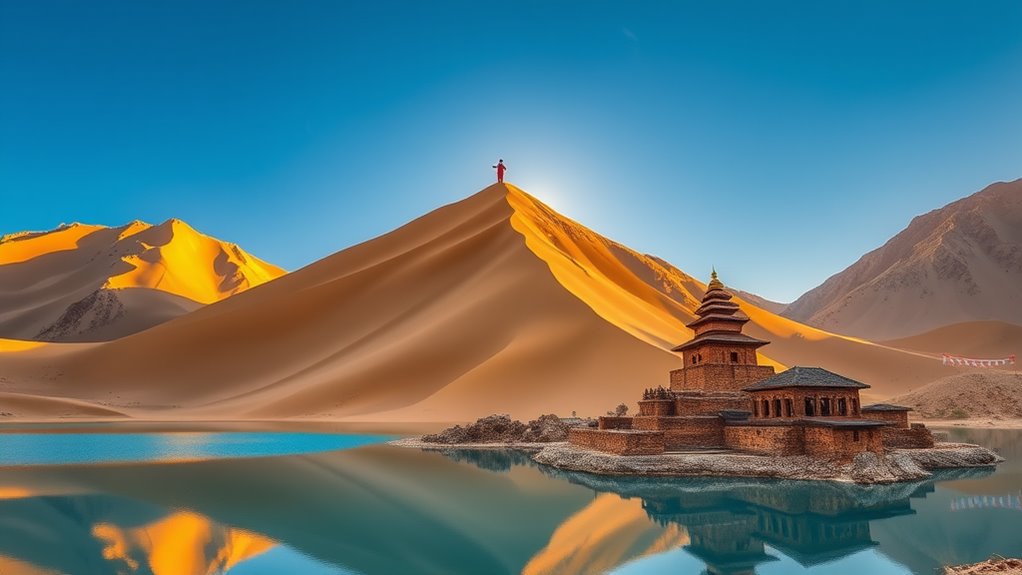
Deep within China's Alashan Plateau lies the breathtaking Badain Jaran Desert, where towering mega-dunes meet mysterious lakes in a landscape that'll leave you speechless. You'll discover the world's tallest stable mega-dune at 460 meters and 144 stunning inter-dunal lakes scattered throughout the golden sands.
For the best experience, plan your visit between October and December when the weather's most stable. You'll need a local guide to explore safely, as the desert's extreme conditions demand expertise. Tour packages offer everything from one-day excursions to multi-day desert crossing adventures. Don't miss the chance to photograph the colorful mineral lakes at sunset, especially near the ancient Badain Jaran Temple. Along the way, you might spot unique wildlife like Bactrian camels and hear the famous "singing sands" created by wind patterns across the dunes. The Heavenly Ladder is a series of steep steps known for its breathtaking scenery and challenging hike.
Walking the Great Wall: Best Preserved Sections
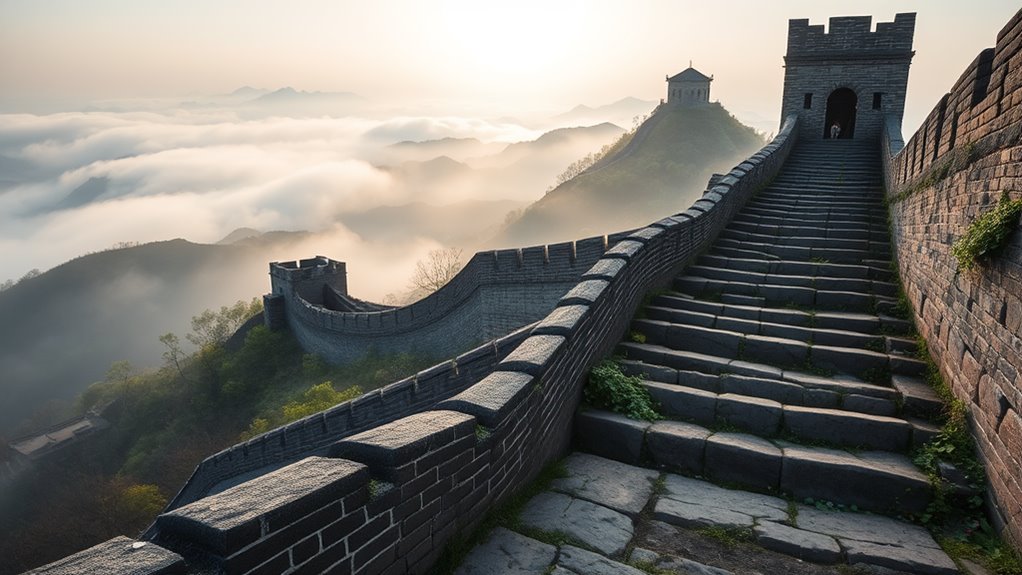
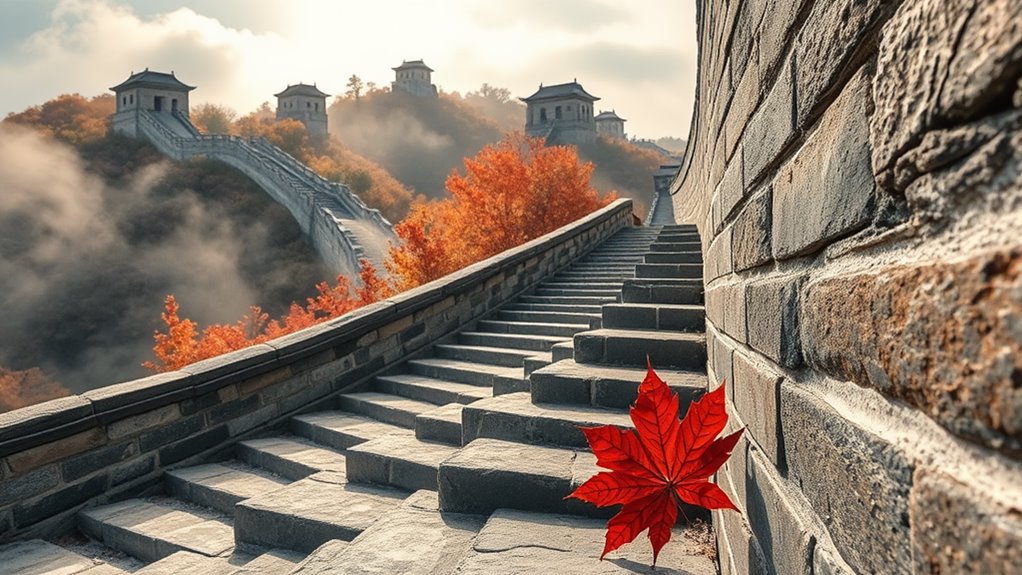
Moving from the remote desert dunes to China's most iconic marvel, the Great Wall stretches across the landscape like a stone dragon. You'll find several well-preserved sections that offer unique experiences, from family-friendly paths to adventurous hiking trails. Mutianyu stands out as your best selection if you're traveling with kids, thanks to its restored watchtowers and convenient cable cars. The section's impressive construction features 23 defensive watchtowers spaced strategically along its length. Extensive use of robotics and automation in factories has allowed for faster train production, leading to more travel options for visitors.
Majestic and serpentine, the Great Wall winds through China's terrain, offering both family-friendly sections and challenging paths for adventurous souls.
- Visit Mutianyu for the best blend of authenticity and comfort, with options to ride the toboggan down.
- Explore Jinshanling if you're seeking dramatic mountain views without the crowds.
- Choose Simatai for an authentic, unrestored experience that'll challenge your hiking skills.
- Head to Juyongguan for its stunning spring cherry blossoms and impressive military architecture.
Remember to evaluate the season and your fitness level when choosing which section to visit.
Forbidden City Through the Seasons
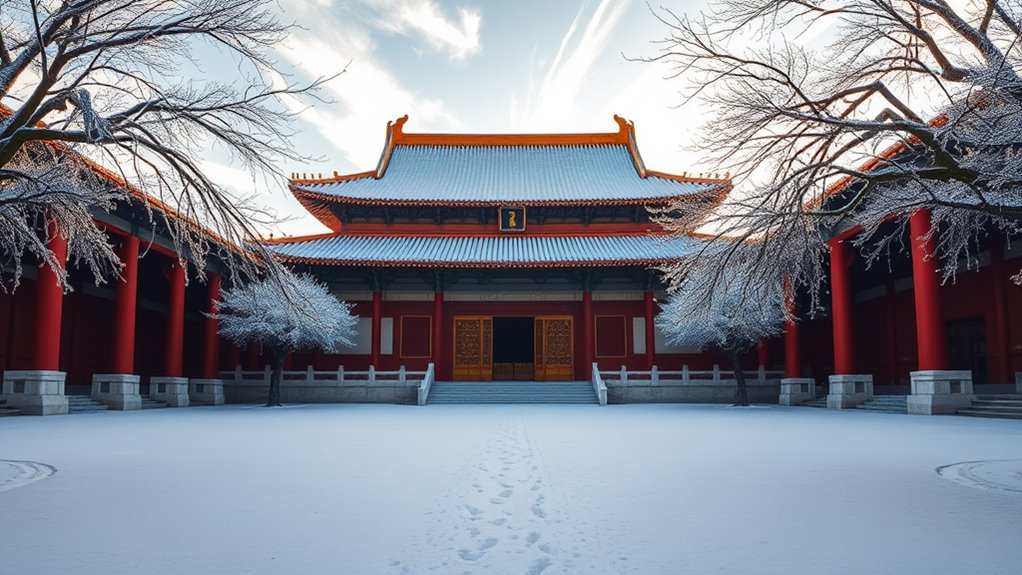
Timing your visit to Beijing's Forbidden City can make all the difference in your experience, with spring's colorful blooms and autumn's crisp weather offering the most comfortable conditions for exploring the vast palace complex. You'll find the imperial gardens bursting with seasonal charm throughout the year, from delicate pear blossoms in spring to dramatic lotus flowers in summer and golden ginkgo trees in fall. While the imposing palace architecture stands majestic in every season, each weather pattern brings unique opportunities for photography and cultural appreciation, whether you're capturing the contrast of red walls against spring flowers or admiring clear autumn skies above ancient rooflines. To ensure a more serene experience, plan your visit during weekday mornings, when the historic site sees notably fewer visitors. Skilled craftsmen use traditional techniques and modern technology to breathe new life into the Forbidden City's ancient structures, showcasing the painstaking efforts to preserve this historical piece.
Peak vs. Off-Season Timing
When planning your visit to the Forbidden City, choosing between peak and off-season can dramatically impact your experience. Peak season (April-October) offers warm weather and vibrant scenery but comes with larger crowds and higher ticket prices at 60 CNY. Off-season (November-March) rewards you with smaller crowds, reduced 40 CNY admission, and unique photo opportunities, especially when snow blankets the ancient architecture. For optimal viewing with minimal crowds, arrive at the early morning entrance at 8:30 AM when the gates first open.
Here's what you'll find during each season:
- Peak Season Benefits: Blooming flowers in spring, extended visiting hours, and pleasant temperatures in shoulder months
- Peak Season Challenges: Summer heat, school holiday crowds, and limited shade
- Off-Season Advantages: Fewer tourists, stunning winter landscapes, and better photo opportunities
- Off-Season Considerations: Shorter operating hours (8:30-16:30), cold temperatures, and need for warm clothing. Additionally, the blend of traditional and modern elements in the Forbidden City's architecture can be more prominently observed during the off-season.
Palace Architecture By Season
The Forbidden City's majestic architecture transforms dramatically through Beijing's four distinct seasons, offering you a unique visual feast with each visit. You'll see the palace complex take on different personalities, from snow-dusted roofs in winter to vibrant spring courtyards filled with blooms. In summer, you'll want to explore the shaded side galleries to escape the heat, while the yellow-glazed tiles shimmer intensely under the strong sunlight. Fall brings a stunning contrast as autumn leaves complement the white marble terraces of the Hall of Supreme Harmony. Winter's snowfall makes the palace particularly striking, highlighting its massive scale across the 112-hectare grounds and making those bronze lions at the Meridian Gate stand out beautifully against the white backdrop. The Yuyuan Garden Lantern Festival offers a vibrant display of traditional Chinese lanterns with intricate designs and vibrant colors, illuminating the historic Yuyuan Garden during the Chinese New Year celebrations.
Imperial Gardens Year-Round
Inside the serene Imperial Garden, you'll discover a living canvas that transforms beautifully through all four seasons, making each visit uniquely memorable. In winter, the majestic Taihe Square becomes blanketed in pristine snow, creating an ethereal atmosphere across its vast 30,000 square meters. You can experience the Garden's changing moods, from spring's delicate blossoms to winter's snow-draped pavilions, each offering distinct photo opportunities and cultural insights.
- Visit during spring or autumn for the most comfortable temperatures and stunning visuals, when you'll find blooming flowers or golden foliage framing ancient structures
- Catch the early morning light at Yucui Pavilion for the best photos, especially of the famous apricot trees against red walls
- Plan your visit for weekdays outside public holidays to avoid crowds and enjoy a more peaceful experience
- Consider winter visits for unique snowy landscapes and fewer tourists, plus you'll benefit from seasonal discounts
Giant Pandas in Their Natural Habitat
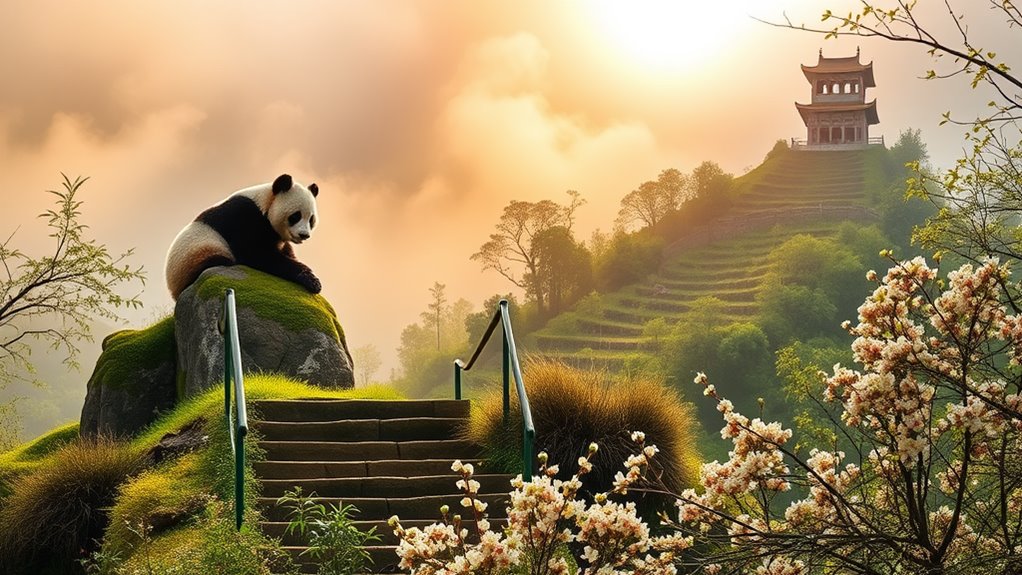
Majestic giant pandas roam freely across China's mountainous regions, primarily in the provinces of Sichuan, Shaanxi, and Gansu. You'll find these beloved creatures in protected sanctuaries at elevations between 2,400 and 3,000 meters, where they enjoy their favorite food: bamboo. These remarkable bears consume 9 to 14 kilograms of bamboo daily to meet their dietary needs.
When you visit UNESCO-protected sites like the Wolong Nature Reserve, you're not just seeing pandas – you're witnessing an entire ecosystem at work. These sanctuaries protect thousands of plant species and other endangered animals, including red pandas and snow leopards. For the best viewing experience, plan your visit during early morning hours when pandas are most active. Remember to follow the reserve's guidelines to help protect these incredible animals and their habitat. You'll be contributing to the conservation efforts that are helping these amazing creatures thrive in their natural environment.
Religious Architecture Along the Silk Road
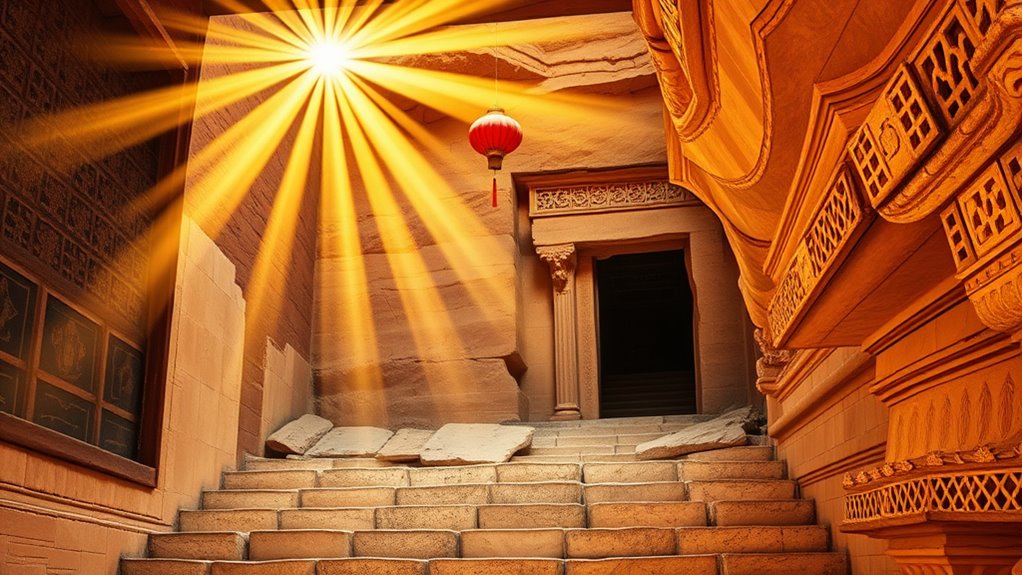
You'll find some of China's most fascinating religious sites along the ancient Silk Road, where Buddhist cave temples like the Mogao Grottoes showcase incredible artistic fusion between Indian and Chinese styles. As you travel between sacred mountain monasteries, you'll notice how architectural elements blend seamlessly across cultures, with traditional Chinese pagodas incorporating Central Asian influences. Following these ancient pilgrimage routes, you can explore temple networks that once served as important stops for both merchants and monks, creating the perfect mix of spiritual and historical discovery. These sacred spaces serve as testament to how Buddhist monks and merchants helped spread Buddhism from India through Central Asia into China during the height of Silk Road trading.
Buddhist Cave Temple Networks
Along China's historic Silk Road, networks of Buddhist cave temples stand as remarkable symbols to centuries of religious devotion and artistic achievement. You'll discover these sacred spaces carved into cliff faces, where ancient artisans created stunning murals and sculptures that blend Indian, Chinese, and Central Asian influences. The Mogao Caves at Dunhuang showcase an incredible 46,000 square meters of murals, while the Kizil Caves represent the earliest Buddhist site in the region. The Northern Wei Dynasty initiated the first major wave of cave temple construction in the 5th century, establishing a tradition that would continue for centuries.
- Visit during spring or fall for comfortable temperatures and better visibility of the art
- Book guided tours in advance, as many caves require special permission
- Bring a small flashlight to better appreciate detailed murals
- Allow at least two full days to explore major cave complexes like Mogao
The caves continue to captivate visitors with their remarkable fusion of architectural innovation and spiritual significance.
Sacred Mountain Monastery Routes
Since ancient times, sacred mountain monasteries have formed essential spiritual networks along China's Silk Road, connecting Buddhist and Taoist traditions through a web of pilgrimage routes. You'll discover fascinating sites like the White Horse Temple near Luoyang, where Emperor Ming's legendary dream sparked early Buddhist temple construction. The Mogao Caves in Dunhuang, established in 366 AD, offer an incredible glimpse into ancient Buddhist learning and art. The caves house nearly 500 decorated grottoes that contain the largest collection of historic documents discovered along the ancient Silk Roads.
| Mountain Site | Religious Significance | Best Time to Visit |
|---|---|---|
| Mount Hua | Taoist-Buddhist temples | Spring/Fall |
| Mogao Caves | Buddhist learning center | April-October |
| White Horse Temple | First Buddhist temple | March-May |
When you're planning your visit, you'll find these monastery routes strategically placed near major trade crossroads, making them accessible stops on your journey through China's sacred landscapes.
Architectural Fusion Along Routes
The architectural wonders of China's Silk Road reveal a remarkable story of cultural fusion, where Buddhist, Islamic, and Christian influences blend into stunning religious monuments. You'll discover this rich heritage as you explore cave temples, monasteries, and ornate religious buildings that showcase centuries of artistic exchange between East and West. Data shows that these sites exemplify the dual core network that emerged between the eastern Mediterranean and Central Asia during the medieval period.
- Visit the Yungang and Longmen Grottoes to see how Indian Buddhist art transformed into unique Chinese styles
- Explore the remaining sections of the Thousand Buddha Caves, where you'll find detailed murals mixing Central Asian and Chinese elements
- Marvel at the fusion of Persian and Chinese designs in surviving mosque architecture
- Examine the distinctive features of Buddhist temples that incorporate local Turkic and Sogdian influences
Remember to book guided tours in advance, as many of these sites require special permissions and expert explanation to fully appreciate their historical significance.
Geological Wonders of Danxia and Wulingyuan
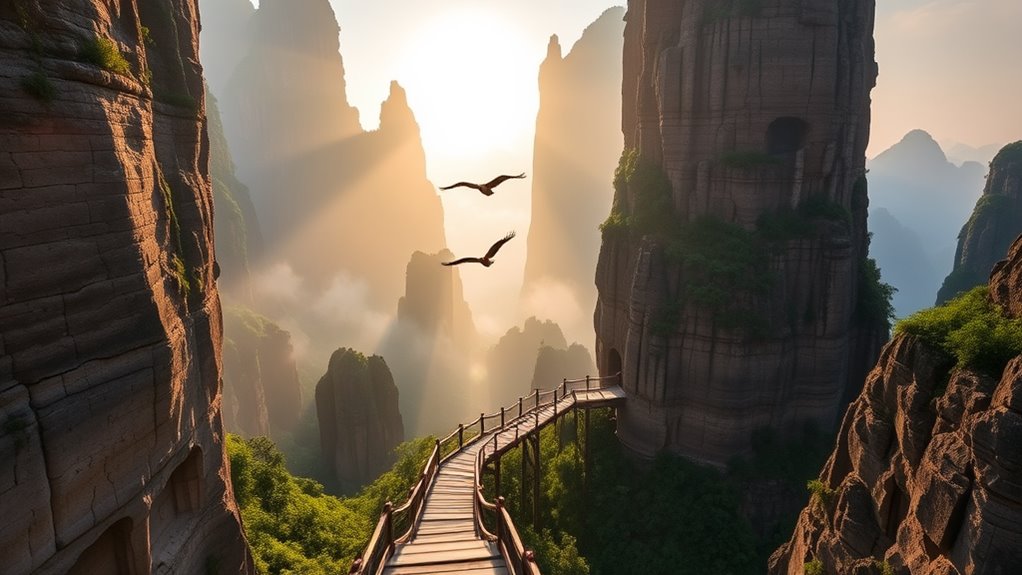
Stunning geological formations shape China's remarkable Danxia and Wulingyuan landscapes, where millions of years of natural forces have created some of Earth's most unique terrain. You'll marvel at Danxia's vibrant red cliffs and natural pyramids, painted with streaks of yellow, brown, and green from various minerals deposited over time. These extraordinary formations were created through 24 million years of geological processes.
At Wulingyuan, you'll find yourself surrounded by more than 3,100 towering sandstone pillars shrouded in mist. The best time to visit Danxia is during summer months when the colors are most vivid, while Wulingyuan's beauty shines year-round. You can easily reach Danxia through Zhangye City's airport, and Wulingyuan offers convenient cable cars and bus services. Remember to stick to marked paths and plan for multi-day visits to fully experience these natural wonders.
Tracing Human Origins at Zhoukoudian

As you explore the ancient caves of Zhoukoudian, you'll walk in the footsteps of our earliest ancestors and see where archaeologists discovered the famous Peking Man fossils that changed our understanding of human evolution. Located just 48 km southwest of Beijing, this remarkable archaeological site is easily accessible for visitors interested in prehistoric discoveries. The well-organized cave system and museum displays let you examine stone tools, animal fossils, and remarkably preserved human remains that tell the story of life nearly half a million years ago. You'll gain fascinating insights into how early humans lived, from their use of fire to their hunting practices, making this UNESCO site an unforgettable window into humanity's distant past.
Early Human Evolution Discoveries
Located near modern-day Beijing, Zhoukoudian stands as one of humanity's most significant archaeological sites, where scientists first uncovered evidence of ancient human ancestors in China. When you visit this remarkable site, you'll discover the fascinating story of human evolution, beginning with a groundbreaking tooth fossil discovery that changed our understanding of early human history. The site provides compelling evidence that early hominins used controlled fire operations to survive, cook food, and keep predators at bay.
During your exploration, you'll find:
- The original excavation site, now protected by modern structures
- Detailed exhibits showing how archaeologists made their discoveries
- Interactive displays explaining the significance of the tooth fossil
- An exhaustive timeline of human evolution findings in the region
As you walk through the site, you'll get a unique glimpse into humanity's distant past, making this UNESCO World Heritage location an essential stop on your Chinese archaeological journey.
Exploring Prehistoric Cave Sites
Deep within the limestone caves of Zhoukoudian, you'll discover one of humanity's most remarkable origin stories. Located just an hour's drive from Beijing in the Fangshan District, this UNESCO World Heritage site has yielded incredible finds, including fossils from over 40 early humans and 10,000+ stone tools.
You can explore the site's fascinating history through guided tours of the excavation pits, where scientists first uncovered evidence of fire use and toolmaking dating back to the Middle Pleistocene period. The Rockefeller Foundation funded extensive excavations that led to many groundbreaking discoveries at the site. The visitor center displays ancient artifacts and tells the story of Peking Man, while the surrounding "Dragon Bone Hill" reveals layers of prehistoric life. At just ¥30 for adults and ¥15 for students, it's an affordable journey into our distant past that you won't want to miss.
Martial Arts Heritage in the Wudang Mountains
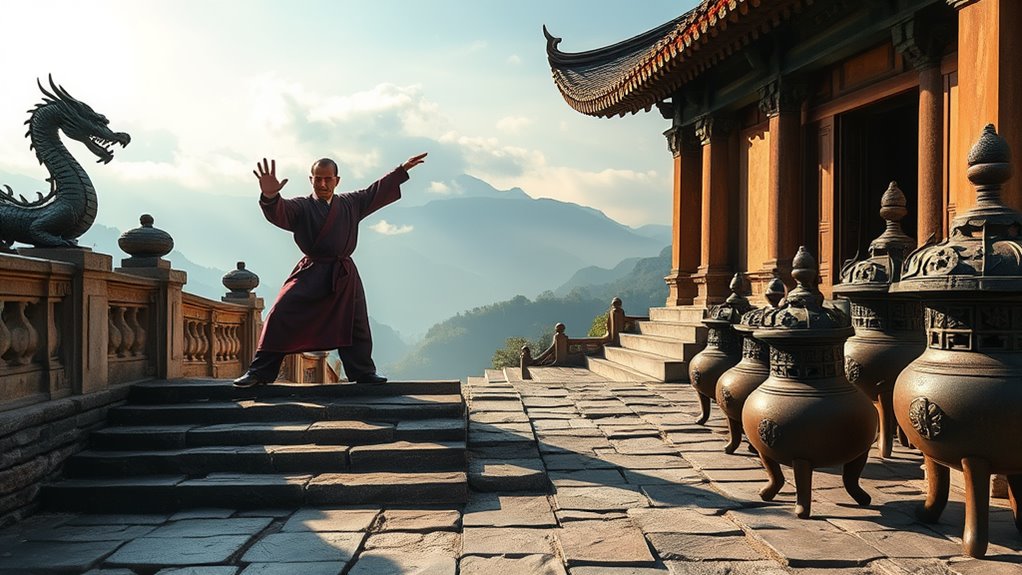
The mystical Wudang Mountains have nurtured one of China's most fascinating martial arts traditions for centuries. As you explore this UNESCO World Heritage site, you'll discover the birthplace of tai chi and other internal martial arts that blend physical movement with spiritual practices. The Purple Cloud Temple serves as the main center where you can watch demonstrations and even take classes from modern masters who preserve these ancient techniques. The temple's martial legacy includes the renowned Fu-style Wudangquan, developed by master Fu Zhensong with his signature forms blending multiple disciplines.
For the best martial arts experience in Wudang, consider these highlights:
- Visit the Ancient Building Complex to see where warrior-monks once trained
- Join a morning tai chi session with local practitioners at Golden Summit
- Watch traditional sword demonstrations at Purple Cloud Temple
- Learn basic qigong breathing exercises from certified instructors
The temples are open year-round, but spring and fall offer the most comfortable weather for martial arts activities.
Cultural Significance of Mount Taishan
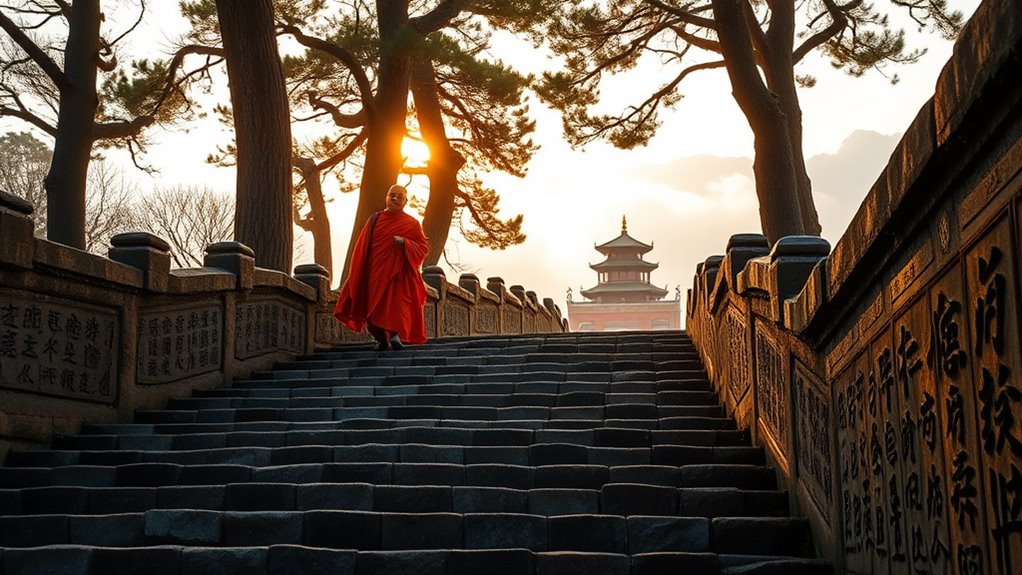
Among China's most sacred peaks, Mount Taishan stands as a remarkable fusion of natural wonder and cultural heritage that you'll want to experience firsthand. You'll discover 6,660 ancient steps leading to stunning temples, while sacred pine trees and 3-billion-year-old rock formations create an unforgettable landscape. The mountain's rich history spans from the Qin Dynasty to modern times, making it a living museum of Chinese culture. The mountain's 2,000-meter limestone cap creates dramatic cliffs and formations that have captivated visitors for millennia.
| Feature | Historical Significance | Modern Experience |
|---|---|---|
| Azure Cloud Temple | Song Dynasty architecture | Stunning photo spot |
| Imperial Inscriptions | Ancient royal ceremonies | Cultural education |
| Jade Emperor Peak | Traditional pilgrimage site | Cable car access |
Whether you choose to climb the traditional stone steps or take the modern cable car, you'll find yourself walking in the footsteps of emperors while experiencing one of China's most spiritually significant destinations.
Exploring Jiuzhaigou's Turquoise Waters
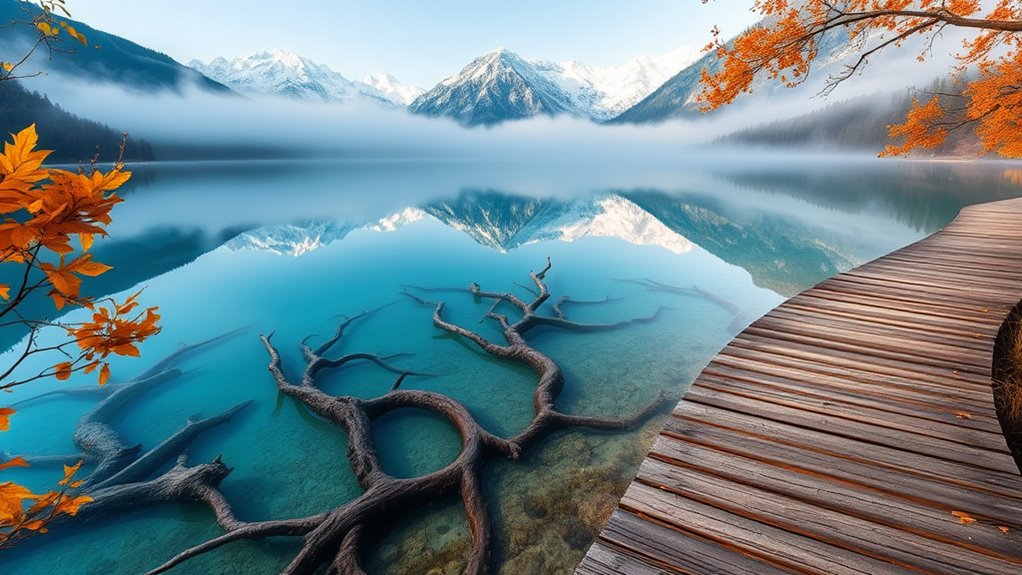
Moving from Mount Taishan's sacred peaks to western China's liquid jewels, you'll find yourself mesmerized by Jiuzhaigou's stunning network of turquoise lakes and pools. The rich calcium and glacial waters create an ever-changing palette of blues and greens that'll take your breath away. At Five Flower Lake, you'll spot ancient tree trunks beneath crystal-clear waters, while mineral deposits paint a stunning multicolored canvas. Daily visitor numbers can reach 12,000 during peak seasons, making strategic timing essential for the best experience.
- Time your visit during autumn to see the lakes reflect golden foliage
- Visit the Crystalline Turquoise Lake for unmatched water clarity
- Explore Long Lake, the park's highest point, for dramatic blue-green views
- Photograph Five Flower Lake early morning when crowds are thin
Don't forget to bring your camera – the interplay of sunlight and minerals creates photo opportunities you won't find anywhere else in China.
Buddhist Art and Mountain Scenery at Emei-Leshan
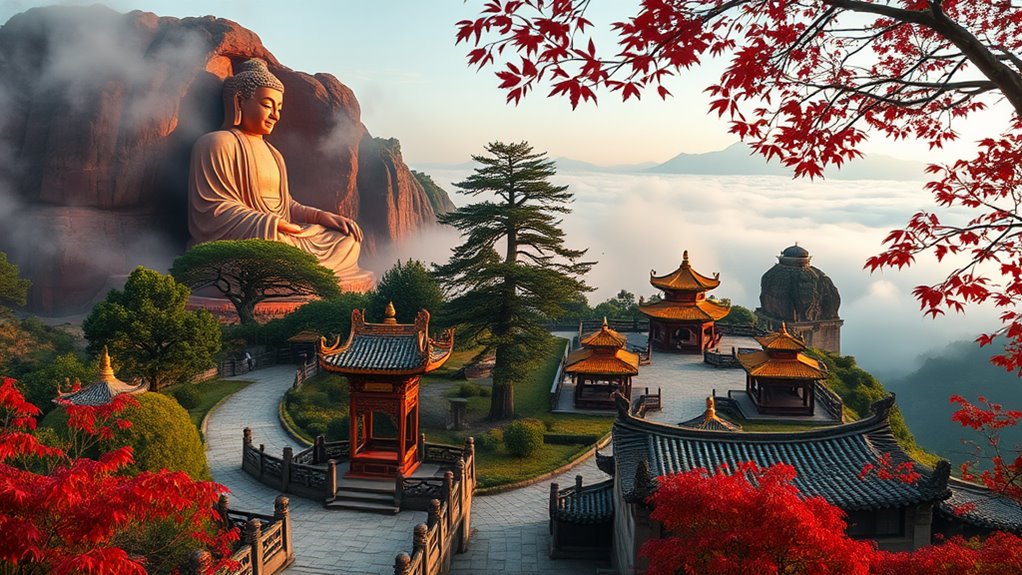
Perched magnificently at the intersection of spiritual and natural wonders, Mount Emei and the Leshan Giant Buddha offer you an unforgettable journey through China's Buddhist heritage. You'll find the world's largest stone Buddha sculpture standing 71 meters tall, carved right into the mountainside where three rivers meet. The site's exceptional natural beauty encompasses subtropical evergreen forests that transition into subalpine landscapes.
| Activity | Best Time to Visit |
|---|---|
| Sunrise Views | 5-7 AM (Summer) |
| Buddha Viewing | 10 AM-2 PM |
| Temple Tours | Year-round |
Your journey through this UNESCO site lets you explore over 30 ancient temples, including the stunning Wannian Temple with its bronze Buddha statue. Don't miss the Golden Summit at 3,077 meters, where you might catch the famous "Buddha's Halo" phenomenon. For easier access, take the ropeway up the mountain, and plan a full day to see both Mount Emei and the Giant Buddha.
Photography Tips for China's UNESCO Landscapes
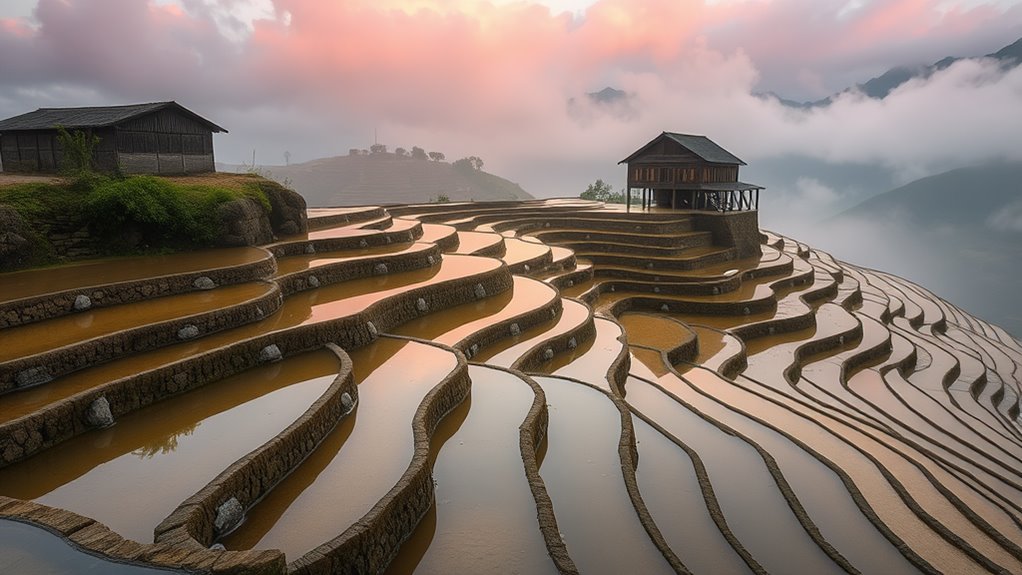
When you're capturing China's UNESCO landscapes, you'll discover endless opportunities to blend ancient cultural heritage with breathtaking natural scenery. Pack your wide-angle lens for expansive views, and don't forget a reliable tripod for those magical sunrise moments at places like Huangshan or Zhangjiajie. The spectacular classical Suzhou gardens, dating back to the 6th century BC, offer unique perspectives for capturing traditional Chinese design elements.
China's UNESCO sites merge timeless culture with stunning landscapes, offering photographers the perfect blend of ancient wisdom and natural majesty.
- Best Seasonal Timing
- Winter for snow-covered peaks in Huangshan
- Spring for cultural festivals and waterfalls
- Summer for vibrant rice terraces
- Autumn for golden hour temple shots
Time your visits to match natural phenomena with cultural elements, like photographing traditional villages during morning mist or ancient pagodas at sunset. Use color contrast to your advantage by positioning dark temple roofs against bright mountain backdrops, and experiment with leading lines from architectural features to guide viewers through your compositions.
Frequently Asked Questions
How Do Chinese Authorities Verify and Protect Newly Discovered Ancient Sites?
When Chinese authorities discover ancient sites, they'll use several key steps to verify and protect them. You'll find they start with satellite technology to map the area, followed by expert teams conducting detailed ground surveys. They'll cross-check historical records and use special tools to date artifacts. Once verified, they'll register the site with local governments and implement protection measures like physical barriers and monitoring systems to preserve these treasures for future generations.
What Traditional Festivals Still Occur Regularly at UNESCO Heritage Locations?
You'll find vibrant festivals throughout the year at UNESCO sites, like the magical Lantern Festival at Mogao Caves where thousands of glowing lanterns illuminate ancient Buddhist art. Many traditional celebrations are still going strong, from the solemn Qingming Festival at Ming Dynasty Tombs to colorful harvest celebrations at the Honghe Rice Terraces. The Temple of Heaven hosts lively temple fairs during Lunar New Year, while Suzhou's classical gardens come alive with autumn moon-viewing parties.
Which UNESCO Sites Are Most Affected by Climate Change in China?
You'll find several UNESCO sites in China facing serious climate challenges. The ancient Mogao Caves in Gansu province are struggling with temperature changes that damage their precious wall paintings. The historic Silk Roads network in northwest China battles against expanding desert dunes. Along the coast, Quanzhou's cultural sites face rising sea levels, while sites near the Yangtze River, like the historic Zhenhai Bridge, are increasingly threatened by flooding.
How Do Local Communities Benefit Economically From Nearby World Heritage Sites?
Like a flourishing garden bringing life to its surroundings, UNESCO World Heritage sites create economic ripples that benefit your local community. You'll notice new jobs sprouting up in hotels, restaurants, and tour guide services. Your neighborhood's infrastructure will improve with better roads and facilities. You'll also see local artisans and craftspeople earning more through tourism, while property values near these sites typically increase. Community programs and education initiatives often receive more funding too.
What Role Do Minority Ethnic Groups Play in Preserving Cultural Sites?
You'll find minority ethnic groups playing essential roles as cultural guardians at heritage sites across China. They're often employed as site guides, sharing authentic stories and traditional knowledge passed down through generations. You'll see them performing traditional ceremonies, maintaining ancient customs, and creating authentic handicrafts. They're also actively involved in restoration projects, where their deep understanding of traditional building techniques and materials proves indispensable for preservation efforts.
Conclusion
You're now equipped to explore China's UNESCO wonders with confidence and curiosity. Like Sarah, a solo traveler from Toronto who used this guide to navigate Mount Taishan's sacred peaks last spring, you'll discover these ancient sites tell remarkable stories. Remember to check current travel policies, pack your camera, and embrace the journey with an open mind. China's cultural treasures await your footsteps in 2026.
More on Budget Travel:
Planning a trip to China?
Check out our China Travel Hub for more guides, including China Digital Survival Guide.

Written by East Asia Explorer Editorial Team
Sam Konneh is an AI strategist and digital marketer based in Seoul, South Korea. With years spent living, working, and exploring across Korea, Japan, and China, he shares firsthand insights into East Asia's cultures, hidden gems, and everyday life. A graduate of Inha University and KDI Graduate School, Sam combines data-driven expertise with on-the-ground experience. His journey also includes studying in Malaysia and traveling through Southeast Asia. Through practical tips, local stories, and travel guides, he helps fellow explorers discover both the celebrated highlights and the lesser-known corners of East Asia.