Last Updated: July 24, 2026 | Originally Published: February 20, 2026
As an Amazon Associate I earn from qualifying purchases. This post contains affiliate links; if you buy through them we may earn a commission at no extra cost to you.
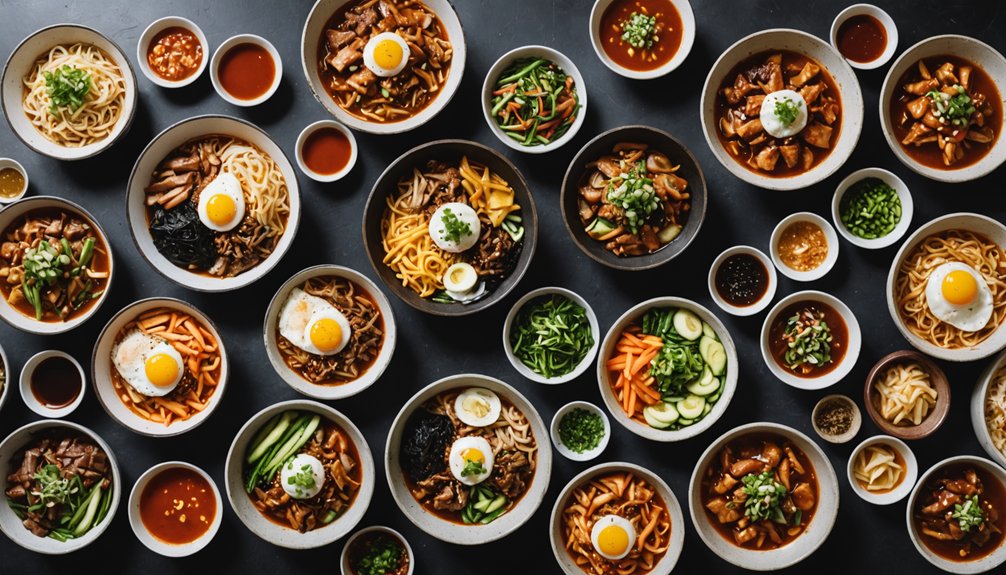
You’re about to eat your weight in bibimbap—a riot of veggies and spicy gochujang—then hit sizzling Seoul BBQ joints where pork belly’s the star and banchan never stops coming. Street stalls tempt you with tteokbokki’s heat, fish cake skewers steaming in broth, and hotteok oozing sweet chaos. Markets like Gwangjang explode with snacks, while Busan slings fresh seafood that snaps with flavor. Think you’re full? Wait till you meet kimchi. Want to see what else Korea throws at your taste buds? (Source: Korea Tourism Organization)
Explorer Insights
- Bibimbap and Korean BBQ are essential culinary experiences, best enjoyed in Seoul’s vibrant markets and upscale Gangnam-Gu restaurants.
- Regional specialties like Jeonju’s bibimbap, Busan’s fresh seafood, and Gwangju’s tteokgalbi highlight Korea’s diverse food culture.
- Iconic street foods such as tteokbokki, eomuk, and hotteok are found at Gwangjang Market, Myeongdong, and Busan’s food stalls.
- Fermented dishes like kimchi and doenjang are integral to meals, with gimjang kimchi-making celebrated in fall.
- Affordable guesthouses in Seoul’s Hongdae and Myeongdong neighborhoods offer convenient access to major food hotspots.
Discovering Seoul’s Culinary Hotspots
You want the real Seoul food tour? Start with bibimbap and Korean BBQ—if you don’t end up covered in sauce, you’re doing it wrong. South Korea welcomed 16.8 million international visitors in 2026, up 52% year-over-year (Korea Tourism Organization).
Hunt down street food stalls in Gwangjang or Myeongdong for crispy hotteok, tteokbokki, and gimbap, because apparently eating while standing is a competitive sport here.
Expect to fight for table space and get buried in banchan, all while pretending not to be emotionally moved by a perfect piece of fried chicken.
For a true taste of Seoul, sample traditional bibimbap hotspots where skilled chefs use carefully-selected ingredients and time-honored methods to create this iconic dish.
Must-Try Dishes in Seoul
Even though Seoul’s got more restaurants than your wallet can handle, let’s be real—some dishes are just non-negotiable. Bibimbap? Absolute must. It’s rice with everything on top. Korean BBQ? You’re not leaving without smelling like grilled meat. And then there’s tteokbokki, those chewy rice cakes drowning in spicy sauce. You can’t escape the street food in Seoul either—hotteok is a sticky, sweet pancake that’s way better than it looks, and gimbap is basically Korean sushi, but more fun and with less attitude. Gwangjang Market serves bindaetteok and kal-guksu, pure comfort food. Oh, and don’t forget banchan—those free side dishes are the unsung heroes of every meal. If you’re heading to Busan, the Korean fried chicken there offers unique flavors from crispy double-fried varieties to spicy fusion delights.
| Must-Try Dish | Where To Eat | Food Type |
|---|---|---|
| Bibimbap | Myeongdong | Main |
| Korean BBQ | Hongdae | Grilled Meat |
| Tteokbokki | Street Vendors | Street Food |
| Hotteok | Gwangjang Market | Street Food |
| Bindaetteok | Gwangjang Market | Pancake |
Where to Eat in Seoul?
Gwangjang Market hits you fast. It’s loud. Tight. Smells like sizzling oil and mung beans crash together. Try bindaetteok, the crunchy legend of street food snacks, or slurp up kal-guksu while squeezing through the crowd.
Myeongdong? A neon fever dream. Tteokbokki, spicy and a little rude, dares you not to sweat. You can snack your way through crispy Tornado Potatoes and sweet hotteok as you dodge crowds and neon signs.
Bukchon Hanok Village calms things down—think traditional Korean vibes, slow meals, old rooftops.
Euljiro dives into pub life, dried pollack beside pitchers of beer, because you can’t be fancy all the time.
Gangnam-Gu? The shiny side of Seoul, with high-end barbecue and fusion plates.
Seoul’s food scene—never boring, always bold.
Must-Try Street Foods Across Korea
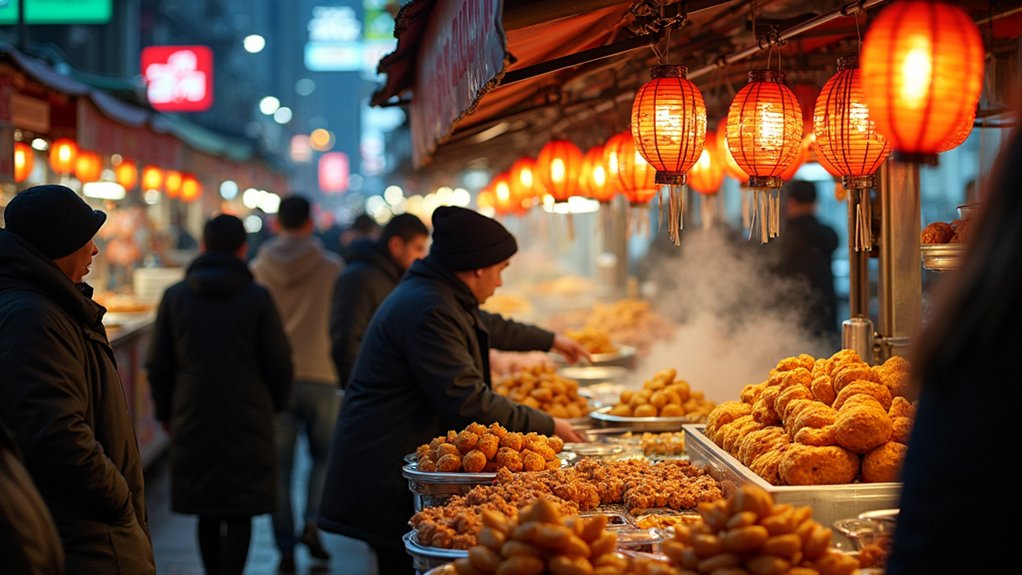
You’re not ready for the sheer weirdness and wonder packed into Korea’s street food scene.
Forget boring—grab a fish cake skewer in Busan, swing by Jeonju for a chocolatey choco pie, gnaw on short rib patties in Gwangju, then top it off with grilled abalone on a stick in Jeju—yes, ocean treasure, roasted just for you.
For a truly immersive dive into Korean food culture, don’t miss the banchan tradition that brings an incredible variety of side dishes and flavors to every meal.
Good luck pretending you’re not impressed.
Busan’s Eomuk (어묵): Savory Fish Cake Skewers
Busan doesn’t mess around when it comes to eomuk. This is street food royalty—fish paste turned into chewy cakes, shoved on skewers, and simmered in a light broth that’ll warm up your soul or at least your frozen fingers.
Stalls line the markets, especially in Busan, where the fish is fresh and vendors have opinions. Some twist up the flavors—spicy, seafood-fusion, whatever keeps things interesting.
You’ll spot locals and tourists slurping the broth or dunking eomuk in that signature spicy sauce. It’s comforting, filling, and honestly, sometimes you just want food that’s bluntly delicious. Korea has over 83,000 registered restaurants in Seoul alone (KTO).
Grab a skewer, join the crowd, and admit it: Busan knows how to do fish cakes right. No pretense. Just pure, savory satisfaction.
For a different kind of must-try street food in Korea, check out Korean BBQ restaurants in Seoul, which offer everything from premium hanwoo beef to interactive grilling experiences.
Jeonju’s Choco Pie (초코파이): A Sweet Local Delight
How does a marshmallow sandwich become a cultural icon? Walk down the streets of Jeonju, and you’ll spot people clutching choco pies like life depends on it.
This isn’t your basic convenience store snack—it started in the 1970s, but Jeonju made it into a legend. Soft marshmallow (or sometimes fresh cream and strawberry jam) wedged between two cakes, sealed in chocolate. Pure nostalgia. Locals swear by it. Tourists—same thing.
Grab one at the market, and suddenly you’re part of some sweet, collective memory. Pair it with coffee or tea? Obviously. It’s not just a snack; it’s Jeonju’s statement.
Basically, skipping the Jeonju choco pie is like visiting Paris and ignoring the croissants. Why bother at all?
If you’re interested in how other regional food traditions celebrate seasonality and presentation, Kaiseki cuisine in Kyoto turns dining into an artful multi-course experience that embodies Japanese culinary heritage.
Gwangju’s Tteokgalbi (떡갈비): Grilled Short Rib Patties
Even before you see the smoke, you can smell tteokgalbi from a block away in Gwangju. This street food isn’t just a snack; it’s a smoky, juicy punch of flavor grilled over charcoal.
Finely minced beef short ribs get mixed with glutinous rice powder—yeah, that sticky stuff—to make patties that hold together but stay tender. They’re slathered in a bold mix of soy sauce, garlic, and sesame oil, which hits your taste buds with savory goodness.
Don’t eat it solo. Wrap those patties in fresh lettuce leaves, add some banchan on the side, and you’ve got a flavor fiesta in your mouth.
Loved locally and spreading beyond Gwangju, tteokgalbi is proof that Korea’s street food game is seriously strong. No nonsense, just tasty.
For food lovers seeking even deeper immersion, South Korea offers kimchi making workshops where you can learn the art of kimchi from expert instructors and take your own creation home.
Jeju’s Grilled Abalone (전복구이): Ocean’s Bounty on a Stick
Nothing screams “you’re on Jeju” like grilled abalone, straight from the ocean and slapped onto a stick. You stroll past a street food stall, and bam—there’s that smoky aroma punching you in the face. The tender meat clings to the skewer, fresh as it gets. Dip it in a sauce, usually soy, garlic, and sesame oil. That’s flavor. And abalone isn’t just tasty—it’s packed with nutrients, so you’re basically eating a vitamin on a stick. Vendors keep things simple. Grill. Sauce. Eat. It’s the ultimate island flex, showing off Jeju’s wild seafood culture and ocean-to-table attitude. Forget dainty bites. This is street food for those who want to taste the sea, not just hear about it. To truly appreciate the culinary delight of Jeju, consider the benefits of maintaining hydrated skin while traveling, such as using a travel-size moisturizer, which helps keep your skin refreshed and protected during long flights.
| Aspect | Details | Why It Matters |
|---|---|---|
| Cooking Style | Grilled over open flame | Smoky flavor, tenderness |
| Serving | On a stick, with dipping sauce | Pure street food comfort |
| Nutrition | High in protein, vitamins, minerals | Tastes good, good for you |
| Experience | Enjoyed on Jeju’s vibrant streets | Freshness, local culture |
Iconic Korean BBQ and Grilled Delights
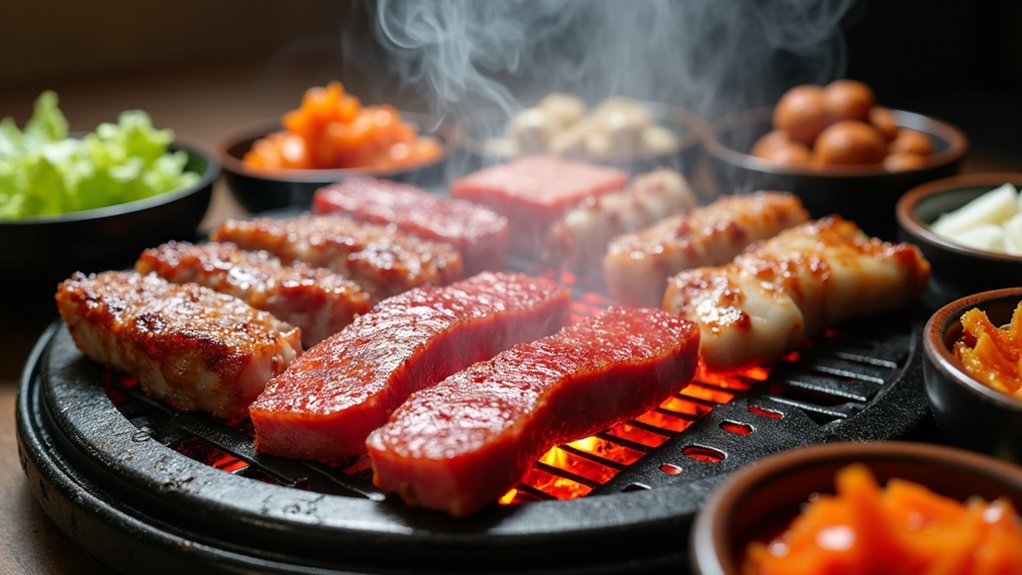
Charcoal smoke, sizzle, and the unmistakable aroma of meat hitting a hot grill—Korean BBQ isn’t just dinner, it’s an event. Korea has over 1,500 hanok (traditional guesthouses), with stays from $40-80 USD per night (KTO).
You sit down and instantly realize: this is all about grilled meats and the thrill of the cook. No one escapes the tongs. You’re handed beef brisket (chadolbaegi), pork belly (samgyeopsal), and short ribs (galbi) and told, “Cook it yourself.”
Fine, it’s actually pretty fun. The flavors are big, the energy even bigger. Forget shy bites—this is communal chaos at its best.
- Korean barbecue isn’t just a meal, it’s an interactive spectacle.
- Expect thick cuts: brisket, pork belly, marinated short ribs, and more.
- Grilled meats are always served with a wild spread of banchan side dishes.
- Best part? The table turns strangers into friends—fast.
For those inspired to recreate the experience anywhere, modern Korean portable BBQ grills let foodies grill on the go, bringing that signature sizzle to outdoor feasts.
Rice Bowls and Hearty Stews: Comfort Food Classics
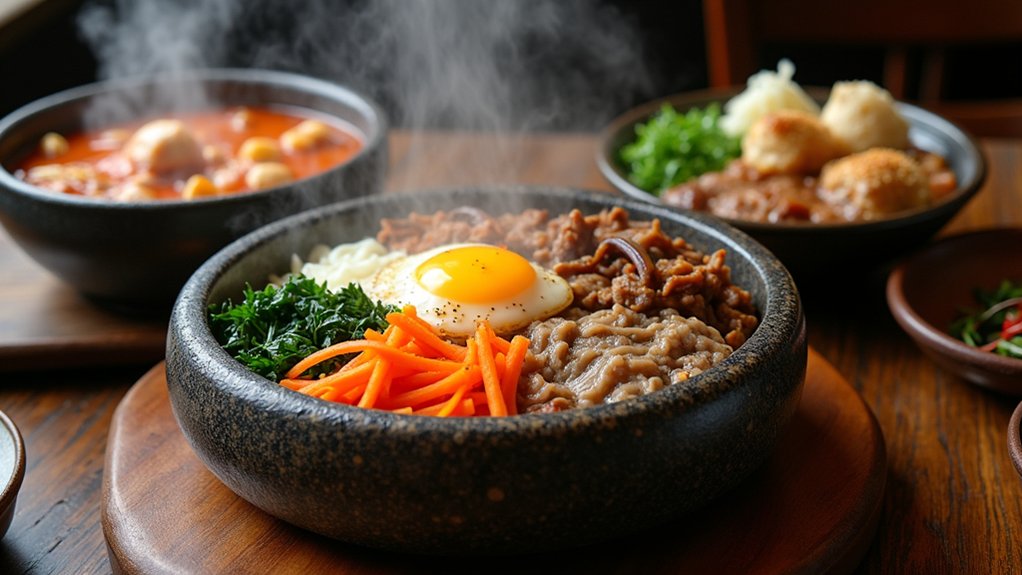
While everyone else is fighting over the last piece of grilled short rib, you’re eyeing the real heroes of Korean comfort food—rice bowls crowned with color and brothy stews that practically hug you from the inside.
Bibimbap stands out as a go-to rice bowl dish, loaded with veggies and a spicy kick from gochujang sauce.
Hearty stews like Gamjatang are pure comfort, offering tender meat and rich flavors that warm you up.
Sundubu jjigae, with its spicy kick and soft tofu, is another winner, especially on a chilly day.
Both offer a truly satisfying culinary experience that will stick with you.
For a restorative meal packed with tradition, ginseng chicken soup (Samgyetang) is a must-try, with local favorites like Tosokchon and Baekje Samgyetang serving up steaming bowls near Seoul’s most iconic neighborhoods.
The Art of Fermentation: Kimchi and Beyond
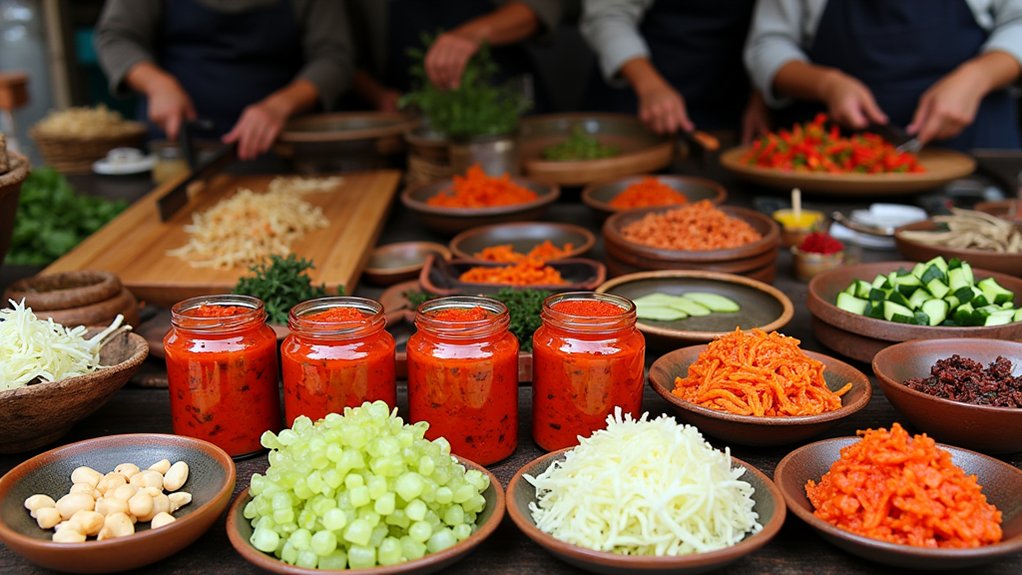
You think kimchi is just spicy cabbage? Cute.
Every fall, families gather for gimjang, a full-blown kimchi-making marathon that’s less of a recipe and more of a wild group project—UNESCO calls it heritage, Koreans call it necessary chaos.
But don’t stop at kimchi; there’s a full lineup of funky, fermented heavyweights like jeotgal, doenjang, and gochujang, each one cranking up the umami and giving Korean food its signature slap of flavor.
No Korean feast is complete without sharing Korea’s national drink, soju, which has been a cornerstone of communal dining since the 13th century.
Gimjang (김장): The Communal Tradition of Kimchi-Making
Autumn hits and suddenly, it’s kimchi chaos. You’re knee-deep in cabbage—elbows out, community center packed, everyone’s talking smack about whose secret recipe reigns supreme.
Gimjang isn’t just about making kimchi; it’s a communal tradition that drags everyone into the madness whether they like it or not. Here’s the brutal breakdown:
- Families and neighbors gather, armed with napa cabbages and radishes.
- Chopping, salting, slathering everything in gochugaru, garlic, ginger, fish sauce—the works.
- Fermentation magic happens, preserving enough kimchi to survive winter (and your mother-in-law’s critiques).
- UNESCO even gave gimjang a gold star in 2013, calling it Intangible Cultural Heritage.
After? Massive feast. Bonding? Mandatory. Leftovers? Endless.
If you’re visiting during kimjang season, having the best travel cutlery sets can make it easier to savor street-side kimchi bites while exploring Korea’s culinary wonders. K-culture tourism contributed $14.5 billion to Korea’s economy in 2026 (KTO).
Beyond Kimchi: Exploring Korea’s Diverse Fermented Delicacies
Craving more than kimchi? Of course you are. Korea’s fermentation game didn’t stop at spicy cabbage.
Let’s talk fermented vegetables—sure, kimchi gets all the glory, but you’ll find radishes and other greens, bubbling away in their spicy bath, joining the sour, funky party.
Now, brace yourself for fermented seafood. Jeotgal isn’t for the faint of heart; it’s salty, pungent, and unapologetic—tiny shrimp or fish, left to ferment until they’re practically legends.
Don’t forget doenjang, a fermented soybean paste that’ll smack you with umami in every bite.
And for thirsty adventurers, makgeolli, that milky rice wine, does its own fermenting magic.
Every bite shouts: tradition, patience, and a total disregard for blandness.
Japan’s major cities also showcase seamless subway systems that make culinary adventures across regions quick and accessible.
Sweets and Desserts: From Bingsu to Hotteok
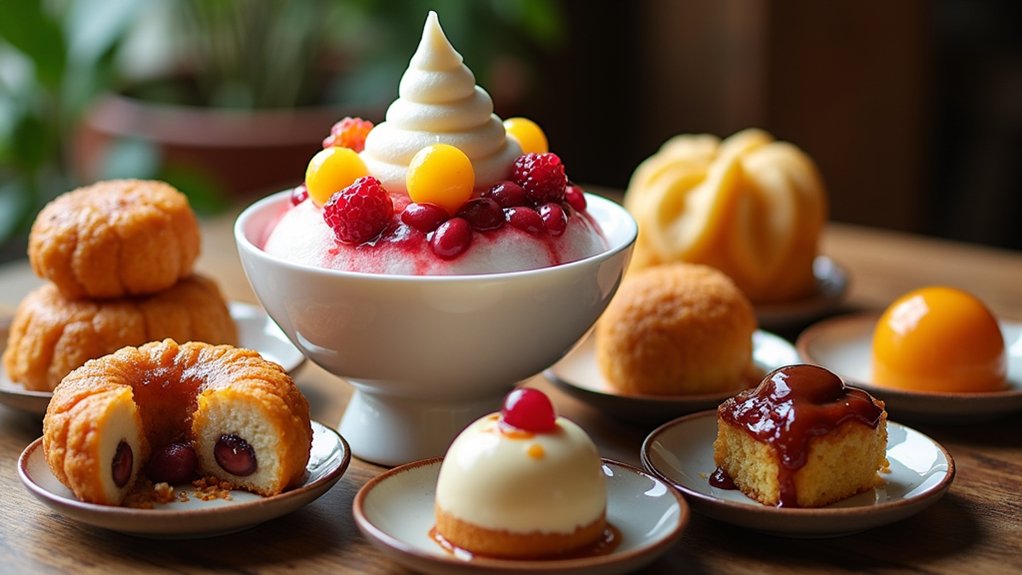
You’ve got to try bingsu—this is Korea’s over-the-top answer to plain ice cream, except here it’s a mountain of shaved ice drowning in all the red bean paste, fruit, and condensed milk you can handle.
Forget small portions; bingsu’s a dessert built for bragging rights and hungry friends, because nobody finishes one alone.
It’s cold, massive, and honestly, kind of ridiculous—in the best possible way.
For a true taste of Sulbing Korean Dessert Cafe, order their signature injeolmi bingsu topped with chewy rice cakes, almond flakes, and roasted soybean powder.
Bingsu (빙수): Korea’s Iconic Shaved Ice Dessert
Bingsu isn’t just a dessert. It’s Korean food engineering at its finest. Imagine a mountain of fluffy shaved ice, ready to collapse under the weight of outrageous toppings. You don’t get a boring scoop here. You get a feast.
- Bingsu’s roots go all the way back to Korea’s Joseon Dynasty—something your history teacher probably never mentioned.
- The classic? Patbingsu: sweet red bean paste slathered over ice, with fruit, condensed milk, and sometimes even ice cream.
- These days, bingsu is a playground—mango, matcha, chocolate. Go wild.
- This dish isn’t for loners. It’s made for sharing, with portions that dare you to finish alone, especially when the sticky summer heat kicks in.
Many Korean meals are accompanied by a variety of side dishes called banchan, which add to the communal and festive experience of desserts like bingsu.
Bingsu melts fast. So should you.
Seafood Specialties of Busan and Jeju Island
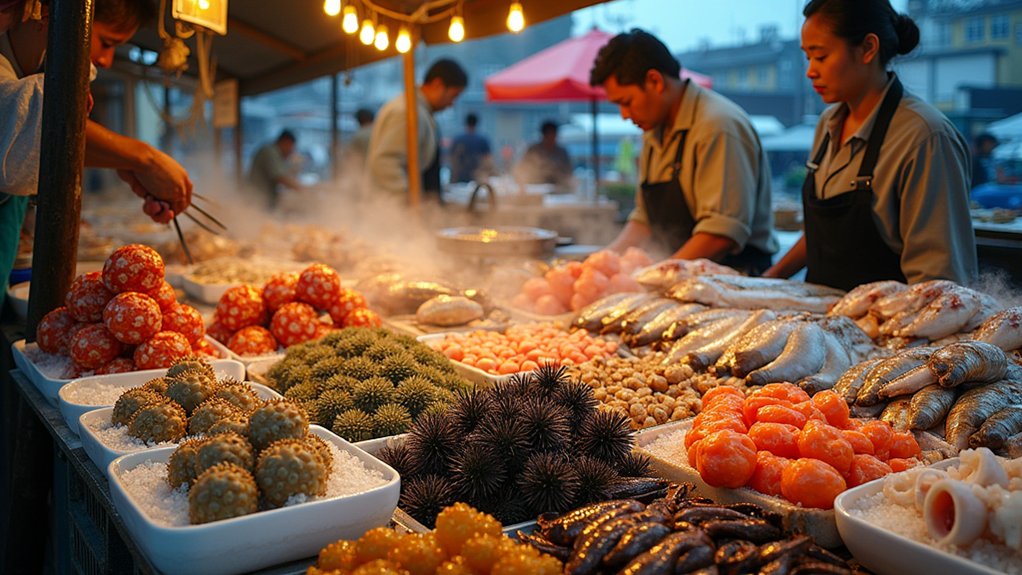
Busan throws fresh seafood at you left and right—especially at the wild Jagalchi Fish Market. You want oysters? Squid? Fish you’ve never seen before? Done.
Locals serve it all every way possible: raw, grilled, or in stews that frankly have no business being that good. You’ll probably run into sannakji, the infamous live octopus dish. Yes, it really moves on your plate.
Raw, grilled, or bubbling in stews—Busan’s seafood goes all out. And yes, you might meet sannakji, wriggling right on your plate.
Jeju steps up with abalone, grilled or in bubbling stews. You get this ridiculous combo of ocean-fresh seafood with Korean classics—gochujang, sesame oil—making every bite ridiculously flavorful. The KTX high-speed train connects Seoul to Busan (325 km) in just 2 hours 15 minutes (Korail).
Don’t miss out on Sokcho, where the vibrant seafood pancakes are a local hit, served fresh alongside other regional delicacies in the bustling market alleys.
Ocean views. Seafood overload. Zero regrets.
Traditional Markets and Night Food Alleys
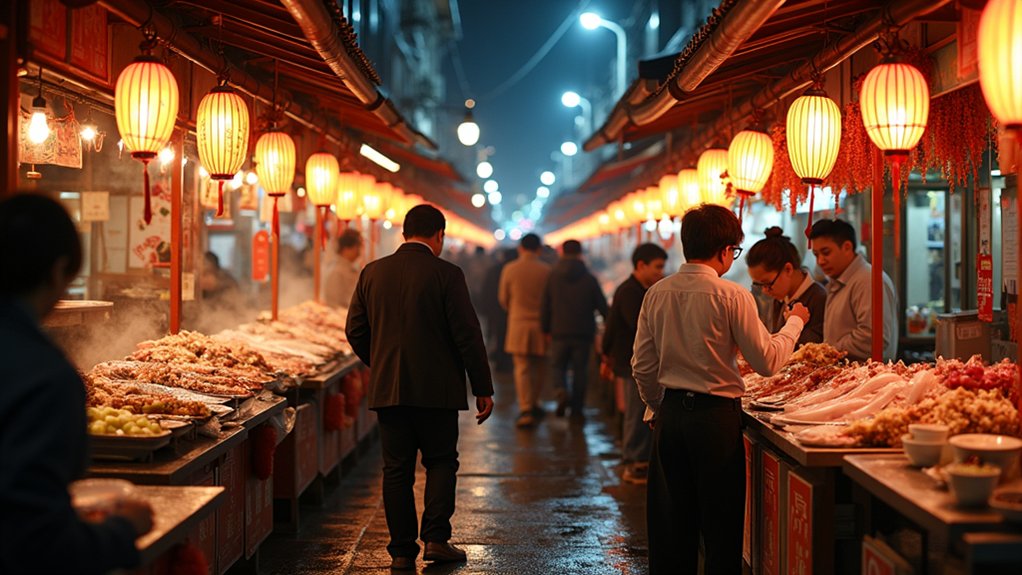
Step away from those ocean views for a second—because the real chaos kicks in at Korea’s traditional markets and night food alleys. You want noise, drama, and a whiff of sizzling oil hot enough to melt your shoes? You’ve come to the right place.
Gwangjang Market is a sensory assault—bindaetteok (mung bean pancakes) crackling in massive pans, kal-guksu noodles steaming, and endless banchan teasing from every stall.
Head to Namdaemun if you crave street food diversity, from spicy tteokbokki to juicy mandu. By night, Myeongdong and Hongdae transform into a neon carnival of hotteok, gimbap, and cheesy hotdogs—because you probably weren’t planning to sleep anyway.
For the ultimate Korean street food specialties, sample tteokbokki, kimbap, and mandu at local markets and discover why Seoul’s quick eats are unmatched in taste and value.
- Gwangjang Market: bindaetteok, kal-guksu.
- Namdaemun Market: banchan, tteokbokki, mandu.
- Myeongdong: hotteok, street snacks, late-night bites.
- Hongdae: gimbap, cheesy hotdogs, food for insomniacs.
Drinking Traditions: Soju, Makgeolli, and Pub Eats
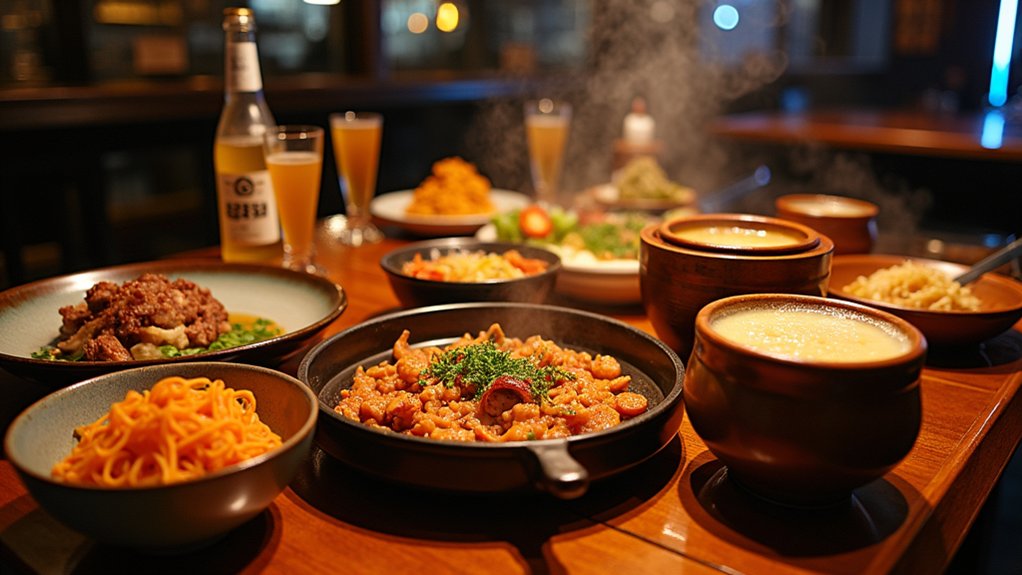
Even if you’re not big on rules, Korea’s drinking culture will school you fast—grab a bottle of soju and suddenly, you’re in a crash course on respect, ritual, and just how much fried chicken you can inhale at once.
Soju isn’t just a drink, it’s basically a rite of passage. People pour for each other—don’t even think about serving yourself. Then comes the soju bomb, a not-so-subtle test of your tolerance.
If sweet, milky makgeolli is on the table, expect a cold bowl and some crispy haemul pajeon, because that combo’s legendary when it rains.
Pub eats, from tteokbokki to mountains of chicken, are meant to be shared, fueling both conversation and another round.
Don’t forget the drinking games—absurd, loud, and unavoidable.
According to Korean dining etiquette, using two hands when pouring or receiving a drink shows respect and is an essential part of social gatherings in Korea.
Regional Favorites: Unique Dishes From Every Corner
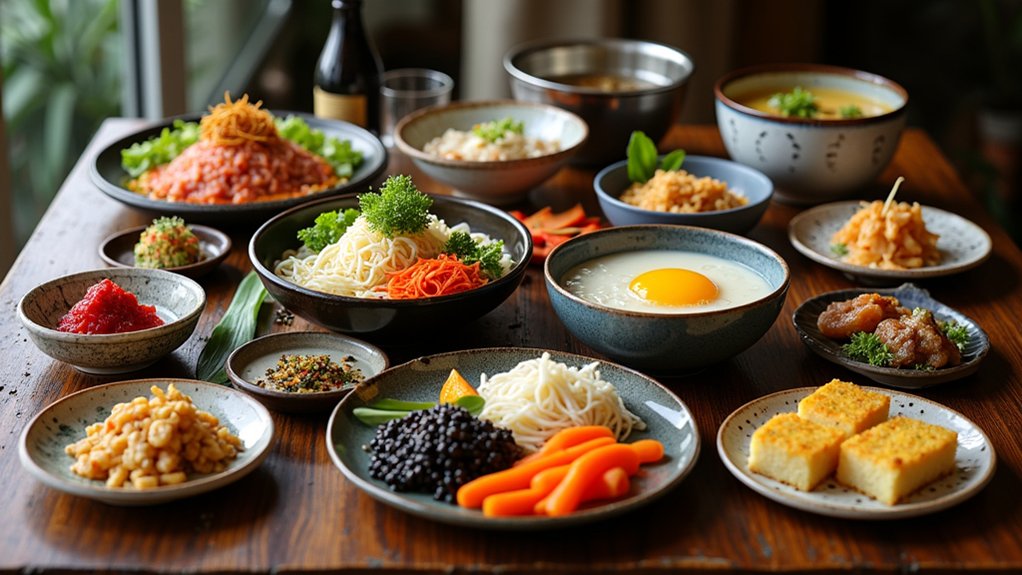
While every corner of Korea is ready to fight you over who does food best, each region’s got its own signature dish—locals don’t play around when it comes to bragging rights.
For a real taste of Korea, you’ve got to dig into the regional legends:
- Jeonju’s bibimbap is the poster child—rice, veggies, meat, fried egg, and more sides than you can count. Not up for debate.
- Down south, Busan owns the seafood dishes game. Grab a plate of hoe (raw fish)—it’s fresh enough to stare back at you.
- Gyeongju? They bake Hwangnam bread—sweet, red bean-filled, and historical. Tourists hoard it. Locals eye-roll.
- In Gangwon-do, cold makguksu buckwheat noodles cut through the mountain air like sarcasm at a family dinner.
If you’re planning to travel for these flavors, consider budget-friendly accommodation options in cities like Seoul, where affordable guesthouses in neighborhoods such as Hongdae and Myeongdong make your food adventures easy on the wallet.
Conclusion
Let’s face it—Korean food just isn’t about filling your stomach. It’s a full-contact sport, a group project with serious flavor. Hungry? Grab some bulgogi, shout over bubbling jjigae, and wrestle for the last slice of jeon. Every meal’s a communal ritual, each bite a bite of history passed down by hands, not recipe books. Harmony? Sure. But mostly, it’s just damn good fun—so why eat alone when you could eat like a legend?
More on Food & Dining:
Planning a trip to Korea?
Check out our Korea Travel Hub for more guides, including Korean BBQ Guide.

Written by East Asia Explorer Editorial Team
Sam Konneh is an AI strategist and digital marketer based in Seoul, South Korea. With years spent living, working, and exploring across Korea, Japan, and China, he shares firsthand insights into East Asia's cultures, hidden gems, and everyday life. A graduate of Inha University and KDI Graduate School, Sam combines data-driven expertise with on-the-ground experience. His journey also includes studying in Malaysia and traveling through Southeast Asia. Through practical tips, local stories, and travel guides, he helps fellow explorers discover both the celebrated highlights and the lesser-known corners of East Asia.