Last Updated: April 8, 2026 | Originally Published: October 12, 2023
As you journey from Lanzhou to Beijing, you'll encounter three must-try noodle dishes that showcase China's diverse culinary landscape. Start with Lanzhou's famous beef noodle soup, featuring hand-pulled noodles in a flavorful broth. Next, savor Xi'an's Biang Biang noodles, known for their wide, chewy texture and spicy sauce. Finally, indulge in Beijing's Zhajiang Mian, where thick noodles meet a savory pork sauce. Each dish offers a unique taste experience, from aromatic broths to bold flavors. You'll find these noodles in local eateries, street stalls, and restaurants along your route. There's more to discover about these mouthwatering specialties. (Source: Travel China Guide)
Read our full Beijing Travel Guide 2026 for a complete overview of getting there, where to stay, what to eat, and daily itineraries.
Explorer Insights
- Lanzhou Beef Noodle Soup features hand-pulled noodles and aromatic broth, best enjoyed in local shops.
- Xi'an Biang Biang Noodles are known for thick, belt-like noodles served with spicy sauce and fresh toppings.
- Beijing Zhajiang Mian combines thick wheat noodles with savory ground pork sauce and crunchy cucumber.
- Each dish offers unique flavors and textures, representing distinct regional culinary traditions.
- These noodle dishes showcase China's diverse food culture, from northwestern Lanzhou to central Xi'an and Beijing.
Lanzhou Beef Noodle Soup
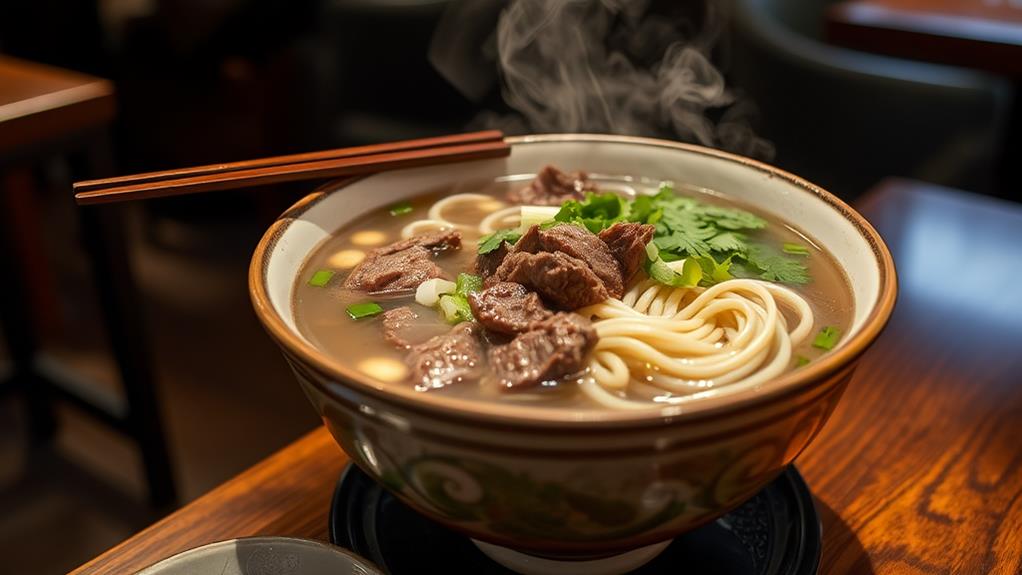
Slurp your way through a steaming bowl of Lanzhou Beef Noodle Soup, an iconic dish hailing from the northwestern city of Lanzhou. This comforting meal is a must-try when you're exploring China's diverse culinary landscape. You'll find it's the perfect blend of tender beef, aromatic broth, and hand-pulled noodles that'll warm you up on chilly days.
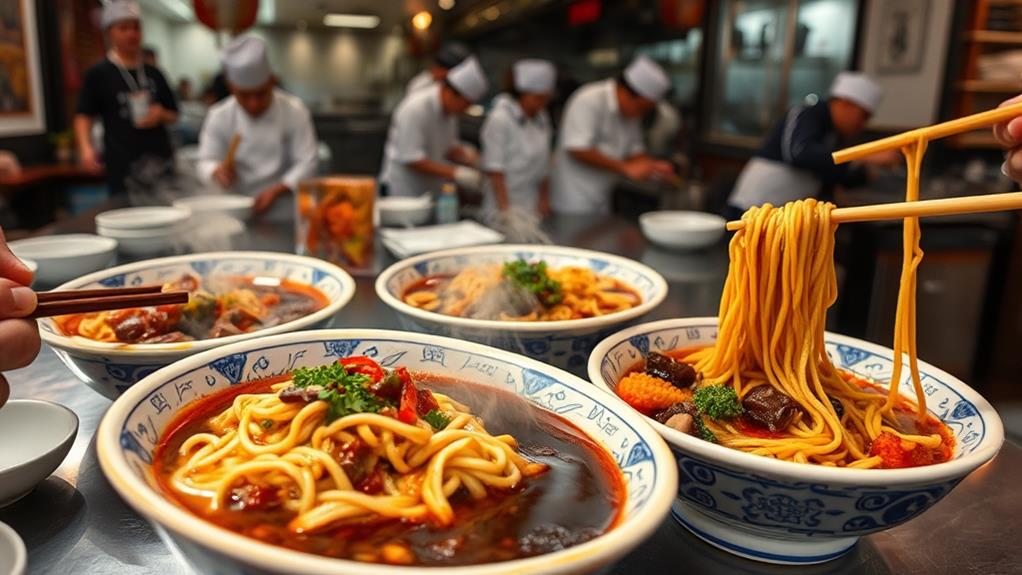
When you order this delicious soup, you'll be amazed by the skill of the noodle makers. They stretch and fold the dough repeatedly, creating long, perfectly chewy noodles right before your eyes. The clear broth is flavored with beef, radish, and a mix of spices that'll tantalize your taste buds.
Here's what to expect in your bowl:
- Hand-pulled noodles (choose your preferred thickness)
- Tender slices of beef
- Fresh cilantro and green onions
- A flavorful, clear broth
For the best experience, visit a local noodle shop in Lanzhou or look for authentic Lanzhou beef noodle restaurants in other Chinese cities. Remember to slurp your noodles – it's a compliment to the chef and helps cool them down as you eat!
Xi'an Biang Biang Noodles
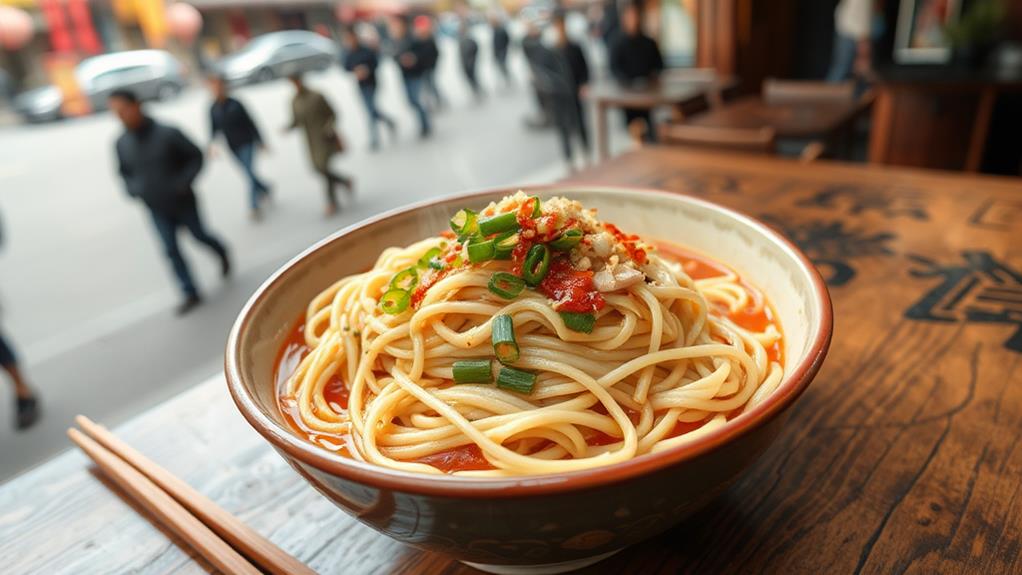
From the northwest, we move eastward to Xi'an, where you'll encounter another noodle sensation: Biang Biang Noodles. These thick, hand-pulled noodles are a local favorite and a must-try for any food lover visiting the city. They're named after the sound made when the dough is slapped against the counter during preparation.
When you order Biang Biang Noodles, you're in for a treat. The wide, chewy noodles are typically served with a spicy sauce, tender pieces of meat, and fresh vegetables. It's a hearty dish that'll warm you up and satisfy your hunger. Here's what makes these noodles special:
- The noodles are incredibly wide, often as wide as a belt
- They're hand-pulled, giving them a unique texture
- The sauce is a perfect blend of spicy and savory flavors
- Each bowl is customizable with various toppings
As you explore Xi'an, you'll find Biang Biang Noodles in many local eateries. Don't be shy to ask locals for their favorite spots. Remember, part of the fun is watching the noodle-making process, so keep an eye out for restaurants with open kitchens.
Beijing Zhajiang Mian
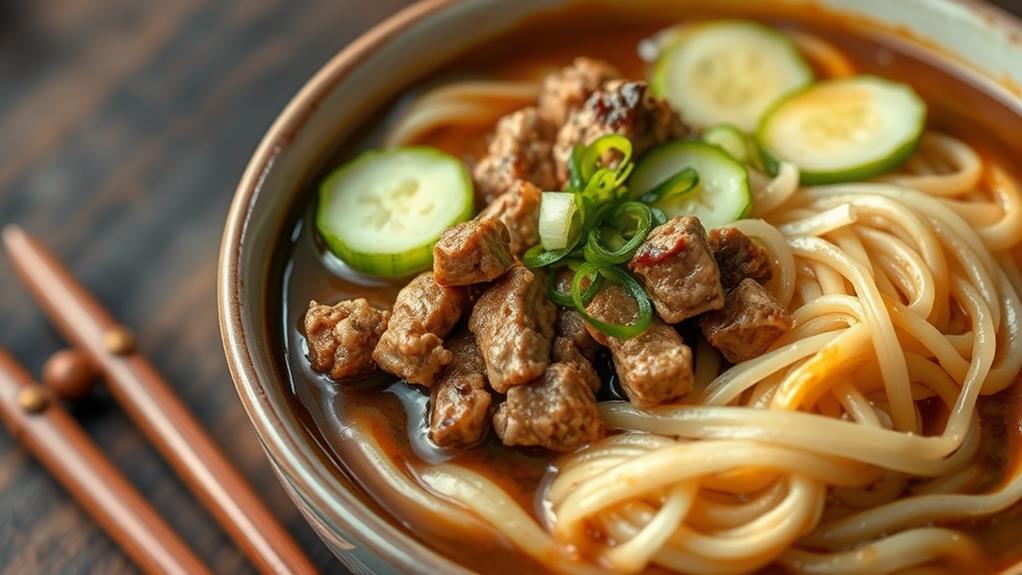
Noodle enthusiasts, your journey through China's best noodles continues in Beijing with Zhajiang Mian. This iconic dish is a must-try when you're in the capital city. You'll find a bowl of thick wheat noodles topped with a savory sauce made from ground pork and fermented soybean paste.
The name "Zhajiang" means "fried sauce," and that's exactly what gives this dish its unique flavor. As you dig in, you'll notice the perfect balance of salty, sweet, and umami tastes. The sauce is often garnished with julienned cucumber, giving the dish a revitalizing crunch.
To enjoy Zhajiang Mian like a local:
- Mix the noodles and sauce well before eating
- Try it with a side of vinegar for extra tang
- Look for restaurants that specialize in Beijing cuisine
You'll find this dish in many eateries across Beijing, from street-side stalls to upscale restaurants. It's a filling meal that'll keep you energized as you explore the city's sights. Don't forget to pair it with a cold beer or invigorating tea for the full experience!
Quick Comparison: China's Top 3 Noodle Dishes
Here's how these three iconic noodle dishes stack up against each other, so you can decide which one to try first on your trip.
| Feature | Lanzhou Beef Noodle | Xi'an Biang Biang | Beijing Zhajiang Mian |
|---|---|---|---|
| Price (2026) | ¥8-15 ($1-2) | ¥12-20 ($1.50-3) | ¥15-25 ($2-3.50) |
| Noodle Type | Thin, hand-pulled | Wide, belt-like | Thick wheat |
| Spice Level | Mild (add chili oil) | Medium-hot | Mild (savory) |
| Served | In hot broth | Dry with sauce | Dry with sauce |
| Best For | Cold mornings, quick breakfast | Filling lunch, spice lovers | Easy dinner, picky eaters |
Pro Tip: Most noodle shops in China open early (around 6 AM) and serve breakfast crowds until 10 AM. That's when the noodles are freshest and the lines are shortest.
How to Order Noodles in China (Without Speaking Chinese)
Ordering noodles in China doesn't require fluent Mandarin. Most noodle shops have picture menus or display boards with photos of each dish. Point at what you want and hold up fingers for the number of bowls.
A few useful phrases to keep on your phone:
- "Yi wan" (一碗) – One bowl
- "Bu yao la" (不要辣) – No spice
- "Wei la" (微辣) – Mild spice
- "Da wan" (大碗) – Large bowl
- "Xiao wan" (小碗) – Small bowl
Payment is almost always through WeChat Pay or Alipay in 2026. Cash works at some traditional shops, but don't count on it. Check our China Digital Survival Guide for setting up mobile payments before your trip.
One more thing: don't expect napkins or tissues at most noodle shops. Bring your own pack of pocket tissues – you'll thank us later when the chili oil hits.
Frequently Asked Questions
What Are the Health Benefits of Eating Chinese Noodles?
Like a warm hug for your body, Chinese noodles offer several health benefits. You'll get a good dose of carbohydrates for energy, and many noodle dishes include vegetables, adding vitamins and fiber to your meal. Some noodles are made with whole grains, which are great for your heart health. If you choose noodle soups, you're also getting hydration. However, be mindful of sodium levels in some dishes. Enjoy noodles as part of a balanced diet for the best benefits.
How Do Chinese Noodle-Making Techniques Differ From Other Asian Countries?
You'll notice some key differences in Chinese noodle-making compared to other Asian countries. Chinese techniques often involve hand-pulling or knife-cutting noodles, creating unique textures. They're also known for using wheat flour more frequently. In contrast, Japanese noodles like ramen are often machine-made and boiled, while Korean noodles might use different starches like sweet potato. Each country has its own special methods, but China's hand-crafted approach stands out for its artistry and variety of noodle shapes.
Are There Vegetarian or Vegan Options for Traditional Chinese Noodle Dishes?
Yes, you'll find plenty of vegetarian and vegan options for traditional Chinese noodle dishes! Many restaurants offer meat-free versions of popular noodle soups and stir-fries. You can try veggie-packed dishes like Buddha's Delight noodles or Vegetable Lo Mein. Don't forget to ask for tofu as a protein substitute. In Buddhist temples, you'll often find delicious vegan noodle dishes. When ordering, just make certain to specify "no meat" or "vegetarian only" to guarantee your meal fits your dietary needs.
What Are the Best Wine Pairings for Chinese Noodle Dishes?
When it comes to pairing wine with Chinese noodle dishes, you're in for a treat! You'll find that light, crisp whites like Riesling or Gewürztraminer complement spicy noodles beautifully. For richer, soy-based noodles, try a Pinot Noir or Syrah. If you're having seafood noodles, a Sauvignon Blanc or Chablis works wonders. Don't be afraid to experiment – you might discover your own perfect match. Remember, the best pairing is always the one you enjoy most!
How Has Globalization Influenced the Evolution of Chinese Noodle Cuisine?
Globalization has greatly influenced Chinese noodle cuisine. You'll find that traditional recipes have been adapted to suit international tastes, and new fusion dishes have emerged. Western ingredients are now often incorporated into noodle dishes, creating exciting flavors. Chinese noodles have also spread worldwide, inspiring chefs in other countries to create their own unique twists. At the same time, you'll notice that global food trends have influenced how Chinese noodles are prepared and presented in China itself.
More on Food & Dining:
Planning a trip to China?
Check out our China Travel Hub for more guides, including China Digital Survival Guide.

Written by Sam Konneh
Sam Konneh is an AI strategist and digital marketer based in Seoul, South Korea. With years spent living, working, and exploring across Korea, Japan, and China, he shares firsthand insights into East Asia's cultures, hidden gems, and everyday life. A graduate of Inha University and KDI Graduate School, Sam combines data-driven expertise with on-the-ground experience. His journey also includes studying in Malaysia and traveling through Southeast Asia. Through practical tips, local stories, and travel guides, he helps fellow explorers discover both the celebrated highlights and the lesser-known corners of East Asia.