Last Updated: July 27, 2026 | Originally Published: October 24, 2023
Quick Answer: Xinjiang Lamb Skewers (Chuanr)
- Regular chuanr cost 5-8 CNY per skewer; large-format skewers run 15-25 CNY — minimum order is usually 5
- Best markets: Erdaoqiao Grand Bazaar in Urumqi and the Kashgar Old City night market near Id Kah Mosque Square
- Flights to Urumqi Diwopu Airport take approx. 3 hours from Beijing (China Southern CZ / Air China CA, from 400 CNY); Lanxin HSR covers Lanzhou to Urumqi in approx. 7 hours
- Carry your passport at all times — security checkpoints at markets and transport hubs scan IDs; budget 20-30 extra minutes per venue
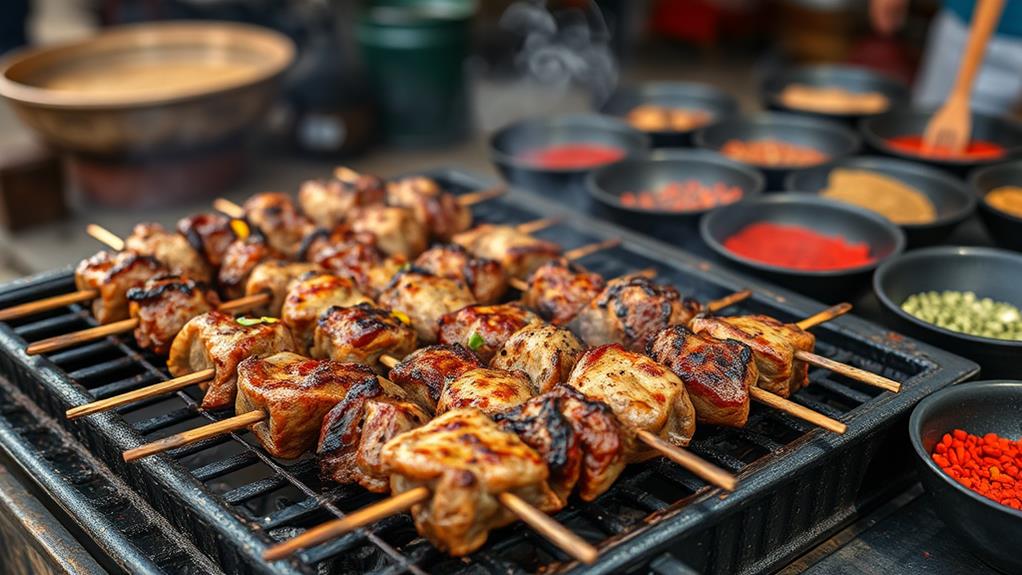
Sampling Xinjiang’s lamb skewers (chuanr) is one of the most distinctive food experiences in all of East Asia. They go well beyond a simple street snack — they’re a window into Uyghur culinary heritage, built on lamb from the high-altitude pastures of the Tianshan range, seasoned with Xinjiang’s signature cumin and chili, and grilled over charcoal. After wandering through Urumqi’s Erdaoqiao Grand Bazaar at dusk, joining the queue at a stall where smoke hangs thick in the air, and eating a skewer still spitting fat — you understand why this dish has spread to every city in China and beyond. Last updated: July 2026.
Explorer Insights
- Where to go: Erdaoqiao Grand Bazaar (Urumqi) and the Kashgar Old City night market near Id Kah Mosque Square are the two must-visit spots
- What to pay: 5-8 CNY per regular skewer; order in sets of 5 or 10; large-format da chuan skewers cost 15-25 CNY
- Getting there: Fly into Urumqi Diwopu Airport (URC) — China Southern Airlines (CZ) and Air China (CA) both serve this route from Beijing in about 3 hours
- Security reality: Xinjiang has ID checkpoints at market entrances, train stations, and tourist sites — your passport is your entry ticket
- Best season: Late June through September, when evenings are warm enough for outdoor grilling markets
A Taste of Xinjiang
Step onto the evening streets of Urumqi and the aroma hits you before you see the stalls. Charcoal smoke and cumin — a combination so distinctive it’s now the smell of Xinjiang in most travellers’ memories.
The skewers, known locally as chuanr, are a staple of Uyghur cuisine. Lamb is cut into small bite-sized cubes, threaded onto long metal skewers, and grilled over coals in a long narrow channel grill. The fat drips and flames jump up, creating the char that defines the flavour.
When you’re ready to order, hold up fingers for the number you want — vendors understand. Grab them hot, bite carefully (the metal skewer holds heat), and eat standing up with the locals.
Pro Tip
Watch which stalls have the longest queue of locals rather than tourists. At Erdaoqiao Grand Bazaar, the busiest vendor in the inner courtyard consistently draws 20+ people — that queue is your quality filter.
Where to Find the Best Lamb Skewers in Xinjiang
The specific markets matter enormously. Here are the four best destinations, with what to expect at each.
| Market | City | Price (regular / large) | Best Time |
|---|---|---|---|
| Erdaoqiao Grand Bazaar, inner courtyard food stalls | Urumqi | 6-8 / 20-25 CNY | 6pm – 10pm daily |
| Xinhua South Road Night Market | Urumqi | 5-7 / 15-20 CNY | 7pm – midnight |
| Kashgar Old City Night Market, Id Kah Mosque Square | Kashgar | 5-6 / 18-22 CNY | 7pm – 11pm (later in summer) |
| Turpan Qingnian Lu Market, near Emin Minaret | Turpan | 5-7 / 15-18 CNY | 8pm – midnight (peak: July-Aug) |
Kashgar’s market, clustered around the 14th-century Id Kah Mosque Square, is generally considered the most atmospheric setting. Prices here are slightly lower than Urumqi because the tourist infrastructure is thinner.
Warning
At Erdaoqiao Grand Bazaar, the entrance checkpoint requires both passport scanning and WeChat QR code registration. If your WeChat is linked to a foreign number, this may take 5-10 minutes. The checkpoint queue at peak hours (7-8pm) can add 20 minutes to your entry time — plan accordingly.
Getting to Xinjiang: Flights, Trains and What to Expect
Xinjiang is China’s largest administrative region — roughly the size of Western Europe. Urumqi Diwopu International Airport (IATA: URC) handles the bulk of arrivals:
- Beijing to Urumqi: approx. 3 hours; China Southern Airlines (CZ) and Air China (CA) fly multiple times daily. Book via Trip.com 4-6 weeks out for 400-900 CNY economy
- Shanghai to Urumqi: approx. 4.5 hours; 600-1,200 CNY economy; direct services on CZ and Xinjiang Airlines (XO)
- Xi’an to Urumqi: approx. 2 hours; often the cheapest gateway if combining a Silk Road itinerary with the Terracotta Army visit
- Kashgar from Urumqi: 1h 40min domestic hop, from 250 CNY on Xinjiang Airlines — fly direct if Kashgar is your main destination
By train: The Lanxin High-Speed Railway covers Lanzhou to Urumqi in roughly 7 hours (G-class trains). Classic overnight sleeper trains from Beijing take approx. 40 hours. Book via Trip.com’s train module.
Pro Tip
Xinjiang runs on Beijing time officially, but locals informally operate on “Xinjiang time” — 2 hours behind. When a food stall says it opens at “8pm,” clarify which time standard. Most night markets effectively start when it gets dark — around 9-10pm Beijing time in summer.
On arrival — the checkpoint reality. All visitors to Xinjiang must carry valid ID at all times. For foreign nationals, this means your passport. Security checkpoints are present at train station entrances, airport arrivals, major market entrances (including Erdaoqiao Grand Bazaar and Kashgar Old City gate), and tourist-attraction ticketing areas. Build 20-30 extra minutes into your schedule for each major venue.
The Art of Spicing
Once you’ve savored the succulent lamb, you’ll notice the complex interplay of spices. Here’s a quick guide:
| Spice | Taste | Aroma | Heat Level |
|---|---|---|---|
| Cumin | Earthy, nutty | Strong, warm | Mild |
| Chili | Spicy, fruity | Sharp, pungent | Hot (adjustable) |
| Garlic | Pungent, savory | Strong, fragrant | None |
| Black Pepper | Spicy, woody | Earthy, piney | Moderate |
| Sesame | Nutty, sweet | Mild, toasty | None |
Each vendor has their own special mix, so try a few to find your favourite.
Grilling Techniques and Traditions
When you’re in Xinjiang, you’ll see skilled grillers tending to rows of sizzling skewers — a technique refined over generations. The grills are long, narrow channels packed with glowing coals. Skewers are placed closely together so the meat stays juicy. As fat drips onto the coals, it creates a smoky flavour that’s simply irresistible.
According to the China Tourism Academy, chuanr culture is one of the defining food practices of the Silk Road corridor, with variants found from Xi’an to Kashgar along the old trading routes.
Cultural Significance
Lamb skewers in Xinjiang represent more than just a tasty meal; they’re a cultural cornerstone. They symbolise Uyghur hospitality and community, often shared among friends and family during gatherings and celebrations.
The preparation and consumption of lamb skewers reflects the region’s nomadic heritage. The simple recipe has its roots in the pastoral lifestyle of Xinjiang’s people — lamb from Tianshan mountain pastures, fire from desert charcoal, spices from Silk Road trade.
Street Food Phenomenon: Prices and What to Order
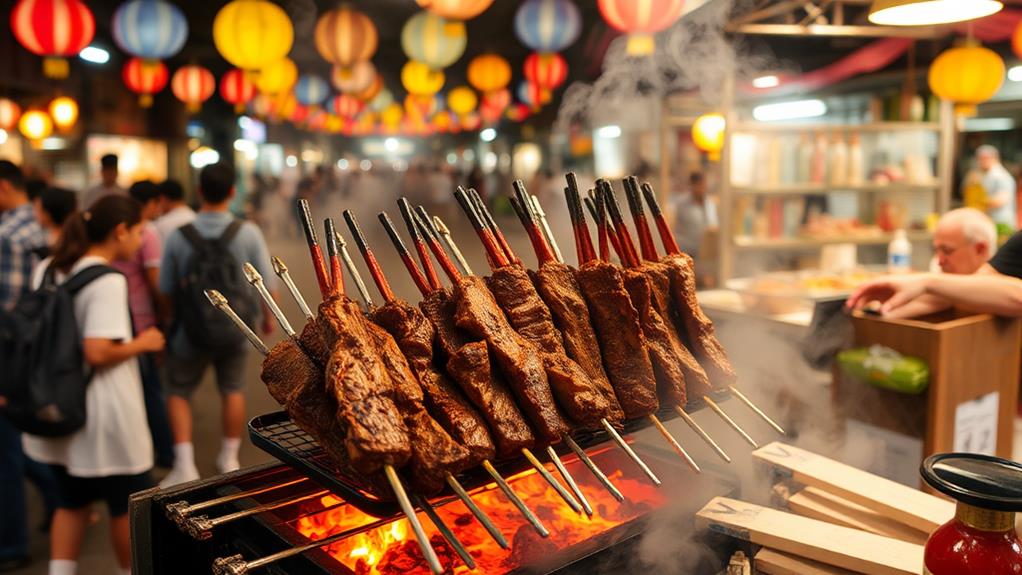
Xinjiang’s streets come alive with the sizzle and aroma of lamb skewers from around 6pm each evening. 2026 prices:
- Regular chuanr (4-6 small pieces of lamb): 5-8 CNY each — order a minimum of 5
- Da chuan (large skewer, 2-3 bigger pieces): 15-25 CNY each
- Kidney or offal skewers: 6-10 CNY each, popular among locals
- Naan bread to accompany: 3-5 CNY per piece
Pro Tip
Cash is strongly preferred at most chuanr stalls, especially in Kashgar and Turpan. While Alipay and WeChat Pay work at Erdaoqiao, smaller vendors often don’t accept foreign-linked apps. Keep 50-100 CNY in small bills when exploring night markets.
Nutritional Benefits
While you’re savoring those delicious lamb skewers, you’re also getting some nutritional benefits. Lamb is a great source of protein. A serving of 5 regular skewers provides roughly 25-30g of protein — a solid meal, not just a snack. Key nutrients include:
- Vitamin B12, important for your nervous system
- Iron, which helps carry oxygen in your blood
- Zinc, supporting your immune system
Pairing With Local Beverages
Xinjiang offers some unique beverage options that perfectly complement your lamb skewers:
- Milk tea (nai cha): A creamy, slightly salty drink popular throughout Xinjiang
- Pomegranate juice: Sweet and tart — Turpan’s pomegranates are particularly famous
- Kvass: A fermented rye-bread beverage with a unique flavour; common at Erdaoqiao Grand Bazaar
- Xinjiang Wusu Beer: The local brew — light and refreshing, popular enough to have spread nationwide
Regional Variations
Diversity characterises Xinjiang’s lamb skewer scene:
- Urumqi (urban fusion): Vendors cater to diverse palates — both traditional and modern variations, some with soy sauce or garlic marinades
- Kashgar (traditional south Xinjiang): Heavier spicing, chili-forward, often served with hand-pulled naan. Meat cuts tend to be larger chunks from the shoulder
- Turpan: Slightly sweeter spice profile, sometimes accompanied by dried Turpan raisins — an excellent contrast to the salt and smoke
- Hotan: Known for using White Jade River lamb (high-altitude pastures), considered the richest flavour base in the region
Global Culinary Impact
Per the China Tourism Academy’s culinary export research, chuanr stalls have appeared in over 30 countries, often operated by Uyghur diaspora communities maintaining traditional recipes. The dish has found global audiences wherever East Asian food culture has spread.
Key Takeaway
Xinjiang’s lamb skewers are most authentically experienced at Erdaoqiao Grand Bazaar in Urumqi or the Kashgar Old City night market. Budget 50-80 CNY for a full street-food meal (10 skewers + drink + naan). Carry your passport for all checkpoint entries, and plan for Xinjiang time vs Beijing time confusion at evening markets.
Frequently Asked Questions
How much do Xinjiang lamb skewers cost?
Regular chuanr skewers cost 5-8 CNY each at most Xinjiang night markets. Larger “da chuan” skewers run 15-25 CNY. A satisfying meal of 8-10 skewers plus a drink costs around 50-80 CNY. Kashgar is slightly cheaper than Urumqi.
Where are the best places to eat lamb skewers in Xinjiang?
The top two spots are Erdaoqiao Grand Bazaar (Urumqi) and the Kashgar Old City night market near Id Kah Mosque Square. Both are accessible by taxi or DiDi ride-hailing.
Are There Vegetarian Alternatives to Xinjiang Lamb Skewers?
Yes. You’ll find vegetable skewers (eggplant, green pepper, corn), tofu skewers, and naan bread at most stalls. Request “sucai chuan” (vegetable skewers). Tofu skewers cost 3-5 CNY each.
What is the Best Time of Year to Visit Xinjiang for Lamb Skewers?
Late June through September is ideal. Summer evenings are warm, outdoor markets run until midnight, and the Turpan grape harvest (August) adds seasonal fruit pairings. Winter visits are possible — Urumqi has indoor bazaars — but the open-air night market culture peaks in summer.
Do I need to carry my passport to access Xinjiang food markets?
Yes. Carry your passport at all times in Xinjiang. Checkpoint staff at market entrances, transport hubs, and tourist sites scan IDs for all visitors. Some checkpoints also require WeChat QR code registration — set this up before arriving. Budget 20-30 extra minutes for entry at major markets during peak hours.
Are There Any Religious or Cultural Restrictions When Eating Xinjiang Lamb Skewers?
Xinjiang lamb skewers are halal — prepared according to Islamic dietary law. You won’t find pork at authentic Uyghur chuanr stalls. When eating at a halal stall, it’s respectful to honour that dietary standard.
Can Xinjiang Lamb Skewers Be Prepared at Home Outside of China?
Yes — the key is the spice blend: whole cumin seeds toasted then crushed, dried chili flakes, salt, and a small amount of sesame. Use lamb shoulder or leg cut into 2cm cubes. Grill over charcoal (not gas) for the closest flavour.
Last updated: July 2026. Prices are indicative and may vary by vendor and season. Carry your passport for all Xinjiang checkpoint entries. Source: Travel China Guide, China Tourism Academy.
More on Food & Dining:
Planning a trip to China?
Check out our China Travel Hub for more guides, including China Digital Survival Guide.

Written by Sam Konneh
Sam Konneh is an AI strategist and digital marketer based in Seoul, South Korea. With years spent living, working, and exploring across Korea, Japan, and China, he shares firsthand insights into East Asia's cultures, hidden gems, and everyday life. A graduate of Inha University and KDI Graduate School, Sam combines data-driven expertise with on-the-ground experience. His journey also includes studying in Malaysia and traveling through Southeast Asia. Through practical tips, local stories, and travel guides, he helps fellow explorers discover both the celebrated highlights and the lesser-known corners of East Asia.