Last Updated: February 23, 2026 | Originally Published: February 23, 2025
As the vibrant hues of autumn descend upon China, you'll be captivated by three must-see cultural festivals. First, the centuries-old Mid-Autumn Festival celebrates the harvest season and the brightest full moon of the year – families gather to enjoy mooncakes and stunning lantern displays. Next, the Lantern Festival marks the end of Chinese New Year with breathtaking lantern shows and traditional delicacies. Finally, Qingming Festival, or "Tomb Sweeping Day," honors ancestors through kite flying and visiting gravesites. These vibrant celebrations offer a glimpse into China's rich heritage – continue reading to discover more about these autumn marvels. (Source: Travel China Guide)
Explorer Insights
- The Mid-Autumn Festival is a centuries-old tradition celebrated across China, marking the harvest season and the brightest full moon of the year.
- The Lantern Festival, which takes place on the 15th day of the first lunar month, is renowned for its stunning displays of colorful lanterns.
- The Qingming Festival, also known as "Tomb Sweeping Day," is celebrated by families honoring their ancestors by visiting and cleaning gravesites.
- Bride price, a traditional custom where the groom's family offers money or goods to the bride's family, is an important part of Chinese weddings.
- Ancestral worship, which involves visiting ancestral homes and shrines to pay respects, is a significant aspect of Chinese culture, reflecting the deep-rooted respect for elders and ancestors.
Mid-Autumn Festival
The Mid-Autumn Festival, also known as the Moon Festival, is a centuries-old tradition celebrated across China. This joyous occasion usually falls in late September or early October, marking the harvest season and the brightest full moon of the year.
During this festival, families gather to enjoy the stunning moon, savor delicious mooncakes, and partake in various cultural activities. You'll find vibrant lantern displays, dragon and lion dances, and enchanting music performances that evoke the rich heritage of China. Mooncakes are often exchanged as gifts among loved ones, symbolizing family reunions.
Whether you're witnessing the mesmerizing fireworks over the Huangpu River in Shanghai or joining the lively celebrations in Beijing's Tiananmen Square, the Mid-Autumn Festival promises an unforgettable cultural immersion that'll leave you with cherished memories.
Lantern Festival
Following the Mid-Autumn Festival, China welcomes another vibrant celebration – the Lantern Festival. This joyous event takes place on the 15th day of the first lunar month, marking the end of the Chinese New Year celebrations.
As the name suggests, the festival is renowned for its stunning displays of colorful lanterns illuminating the night sky. The Lantern Riddle Competition at the festival encourages exploration and discovery of the festival's various areas.
Families and friends come together to enjoy traditional delicacies, such as tangyuan – sweet glutinous rice balls, while admiring the mesmerizing lantern displays. One of the highlights of the Lantern Festival is the lantern-lighting ceremony, where people gather to release beautiful lanterns into the air, each carrying their wishes and hopes for the new year. The streets come alive with lively parades, lion and dragon dances, and the delightful sounds of Chinese music.
Whether you're fascinated by Chinese culture or simply seeking a unique and memorable experience, the Lantern Festival is certainly a must-see event during your travels in China.
Qingming Festival
Another significant autumn cultural festival in China is the Qingming Festival, often referred to as "Tomb Sweeping Day." This solemn occasion falls on the 15th day after the spring equinox, typically in early to mid-April. It's a time for families to honor their ancestors by visiting and cleaning their gravesites. The bride price is a custom where the groom's family offers money or goods to the bride's family.
Some key aspects of the Qingming Festival include:
- Tomb Sweeping: Families gather at the graves of their ancestors to clean the site, offer flowers, and burn incense or paper money as offerings.
- Kite Flying: As a symbol of letting go of the past, kite flying is a popular activity during Qingming.
- Traditional Foods: Qingming is associated with eating special foods like qingtuan, a sticky rice ball with green food coloring.
- Ancestral Worship: Visiting ancestral homes and shrines to pay respects is an important part of the festival.
Whether you're interested in cultural traditions or simply seeking a unique experience, the Qingming Festival is a fascinating autumn event in China.
Frequently Asked Questions
What Are the Traditional Foods Eaten During These Festivals?
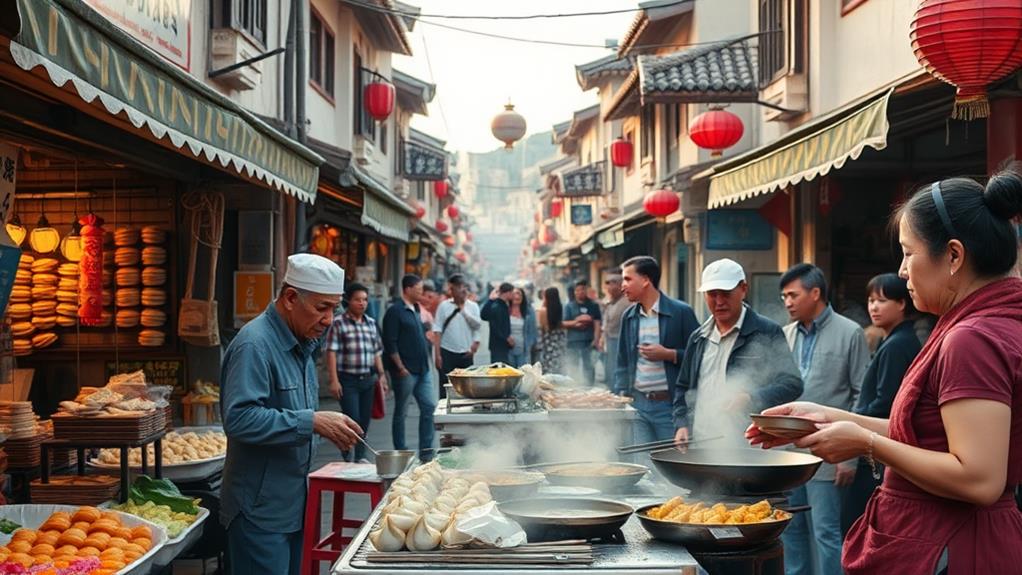
When attending autumn cultural festivals in China, you'll find an array of traditional foods to indulge in. From savory dumplings and noodle dishes to sweet moon cakes and glutinous rice balls, the flavors of the season are sure to delight your taste buds.
Don't be afraid to try local specialties – you might just discover a new favorite! Remember to pace yourself, as there's bound to be plenty of delicious options to sample.
How Do the Festival Celebrations Differ Across Different Regions of China?
Autumn in China is a kaleidoscope of cultural celebrations, each region painting a unique festival portrait.
In the north, you'll witness lively lantern displays, while the south dazzles with dragon boat races. Venture to the east, and you'll savor flavorful mooncakes, a delightful tradition.
From the vibrant lantern festivals to the alluring dragon boat races, exploring China's autumn celebrations is a feast for the senses, offering a glimpse into the country's rich cultural tapestry.
What Are the Historical Origins and Significance of These Festivals?
China's autumn festivals have deep historical roots and profound cultural significance. The Mid-Autumn Festival, for instance, dates back to the Tang Dynasty and celebrates the harvest moon. It's a time for families to gather, enjoy mooncakes, and appreciate the moon's beauty.
The Double Ninth Festival honors the elderly and commemorates a legendary hero's victory. These festivals allow you to immerse yourself in China's rich traditions and experience the country's vibrant cultural heritage firsthand.
What Are the Common Cultural Activities and Customs Observed During the Festivals?
During these lively autumn festivals, you'll enjoy a variety of cultural activities and customs. From vibrant parades with colorful costumes and lively music to traditional games, delicious seasonal foods, and compelling performances, there's something for everyone to experience.
You might even get the chance to participate in ceremonial rituals or make crafts. These festivals are a wonderful way to immerse yourself in the rich cultural heritage of China.
How Can International Visitors Participate in and Experience These Cultural Festivals?
As an international visitor, you can immerse yourself in China's vibrant cultural festivals! Plunge into the traditions by attending lively performances, joining in traditional activities, and exploring local cuisine.
Many festivals offer guided tours, allowing you to learn from knowledgeable locals. Don't be afraid to ask questions and engage with the community – they'll be delighted to share their cultural heritage with you.
With an open mind and a spirit of adventure, you'll create unforgettable memories at these enthralling events.
Conclusion
As the autumn leaves start to dance in the crisp air, you'll be enchanted by China's vibrant cultural festivals. From the Mid-Autumn Festival's glowing lanterns to the Qingming Festival's solemn traditions, each celebration is a delightful feast for the senses, like a warm cup of tea on a chilly day. Get ready to immerse yourself in China's rich heritage and create unforgettable memories this autumn.
More on China:
Planning a trip to China?
Check out our China Travel Hub for more guides, including China Digital Survival Guide.

Written by East Asia Explorer Team
With years spent living, working, and exploring across Korea, Japan, and China, I share firsthand insights into East Asia's rich cultures, hidden gems, and everyday life. My journey also includes studying in Malaysia and traveling through Southeast Asia, experiences that have deepened my appreciation for the region's diversity. Through practical tips, local stories, and travel guides, I aim to help fellow explorers discover both the celebrated highlights and the lesser-known corners of East Asia.