Last Updated: March 19, 2026 | Originally Published: April 26, 2025
Read our full South Korea Travel Guide 2026 for everything you need to plan your Korea trip.
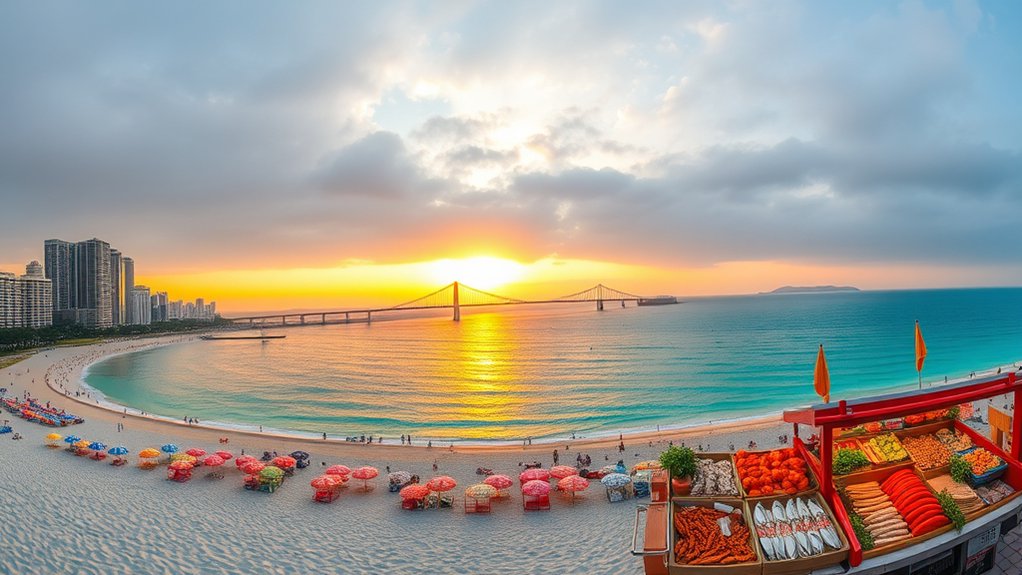
In Busan, you’ll find pristine beaches like Haeundae and Gwangalli, where you can lounge by day and feast on fresh seafood by night. Don’t miss Haedong Yonggungsa Temple perched on coastal cliffs—arrive early for sunrise views. Explore the colorful maze of Gamcheon Cultural Village and slurp authentic dwaeji gukbap (pork stew). The city’s efficient transport system makes hopping between sights a breeze. The coastal charm awaits beyond Seoul’s shadow. (Source: UNESCO Korea Heritage Sites)
Explorer Insights
- Haeundae Beach spans 1.5km with white sand, vibrant seafood options, and nearby cultural attractions like Dalmaji Hill.
- Gwangalli Beach hosts popular fireworks festivals, while Songjeong Beach offers a quieter alternative with spicy seafood ramen.
- Haedong Yonggungsa temple provides stunning coastal views, especially at sunrise, and is near the less crowded Songjeong Beach.
- Gamcheon Cultural Village features colorful houses, murals, and winding alleys across nine districts.
- Local cuisine highlights include dwaeji gukbap (pork stew) at restaurants like Namakzip and fresh seafood along the coastal beaches.
Cherry Blossom Spring Paradise
While spring in Korea brings cherry blossoms everywhere, Busan stands out as a true blossom paradise. (Source: Korea Tourism Organization)
You’ll find pink petals “teeming on every corner” from mid-March – earlier than Seoul, thanks to the southern coastal location. Lucky you. Peak cherry blossom season in Busan is typically from March 23 to March 30.
Oncheoncheon Cafe Street isn’t just pretty – it’s practical.
Grab coffee, snap photos, watch petals fall. Cherry blossom traditions here blend natural beauty with modern leisure.
Beaches and blossoms? Only in Busan.
For spring photography tips: hit Namcheon-dong’s densely covered streets or Nakdonggang Riverside during golden hour. Daejeo Eco Park offers an impressive 12-kilometer tunnel of cherry blossoms along the Nakdonggang River.
The blooms only last two weeks. Seriously. Don’t procrastinate.
Peak bloom happens late March through early April.
Check local forecasts before booking. The festivals sell out fast, with illuminations at night that’ll make your Instagram followers jealous.
Coastal City Transport Card
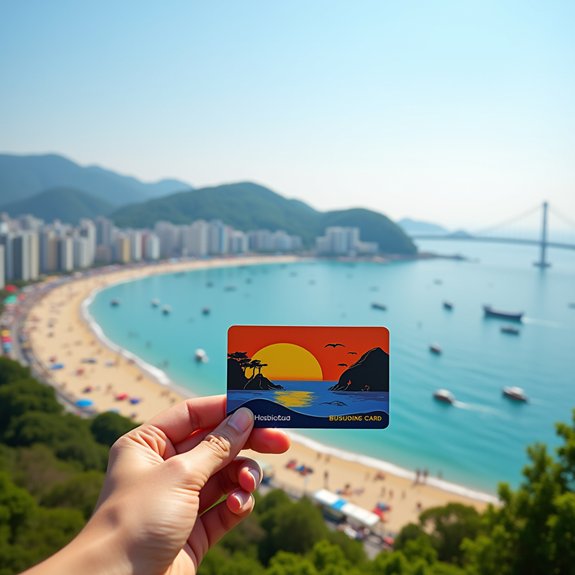
After you’ve finished swooning over those fleeting cherry blossoms, you’ll need to actually get around this sprawling coastal city. Busan’s transport card system is surprisingly efficient. You’ve got options – Cashbee, Mybi, or the nationwide T-money card. Don’t be that tourist fumbling with cash. Transport card benefits include discounted fares and seamless transfers between buses and subways. For Mybi Card customer inquiries, you can reach their service center at ☏ 1588-8990.
| Card Type | Coverage | Special Feature |
|---|---|---|
| Cashbee | Metro, buses, taxis | Works on toll roads too |
| Mybi | Metro, local buses | Busan-specific only |
| T-money | Nationwide transit | Use in Seoul and beyond |
Grab your card at any convenience store or metro station. Standard fare runs 1,300 KRW for 10km trips. Kids get fare discount options when birth dates are registered. Tap when entering AND exiting. Seriously. The locals will thank you. If you’re hoping to save on travel, consider using midweek transit times, as flights and even some trains in Japan are often cheaper during these periods.
Glistening Haeundae Beachfront Paradise
You’ll find more than just swimmers and sunbathers at Haeundae’s famous 1.5-kilometer stretch of urban beach paradise.
This sprawling sandy haven, accommodating up to 120,000 visitors at once, sits at the heart of Busan’s vibrant seafood scene and cultural hotspots. Travelers can make the most of their time here by using navigation and maps apps to easily find nearby attractions, restaurants, and the best viewing spots.
Wander from the beachfront to explore nearby attractions like Dalmaji Hill, catch the wild Polar Bear Festival in January, or simply join the millions who flock here each season for a perfect mix of city convenience and coastal beauty. The beach boasts an inviting white sand beach approximately 70-90 meters wide, perfect for leisurely strolls along the shoreline.
Gamcheon Cultural Village Views
Perched dramatically on a hillside above Busan, Gamcheon Cultural Village stuns visitors with its cascading arrangement of colorful houses.
Once a 1920s working-class neighborhood turned refugee settlement, it’s now an Instagram paradise. You’ll get lost. That’s the point.
Wander through nine distinct districts connected by labyrinthine alleys. Gamcheon murals guide you upward, with metal fish markers showing the way. Adding to the village’s vibrant atmosphere, sampling local cuisine and souvenirs in nearby markets is highly recommended for a taste of Busan’s unique flavors and culture.
Don’t miss the Little Prince statue – everyone’s fighting for that photo.
From elevated walkways, you’ll catch panoramic views of Busan’s cityscape and ocean beyond. Worth the leg workout, trust me.
A significant transformation occurred in 2009 when the village underwent major renovation projects that converted abandoned houses into galleries and shops.
Head to Toseong Station, then grab a 10-minute bus. Spend 2-3 hours exploring.
Spring for cherry blossoms, autumn for perfect temps. The stairs are brutal. You’ve been warned.
Temple Tea Ceremony Traditions
While Busan dazzles with its beaches and urban energy, the city’s ancient tea traditions remain largely hidden from casual tourists.
The Darye ceremony, steeped in Korean Buddhist practices, offers a rare glimpse into cultural heritage that’s survived centuries.
You’ll sit cross-legged—no exceptions—in provided hanbok attire while practicing the Gujeunggupo method. Nine times dried. Seriously intense flavor.
The ceremony unfolds in three silent phases where your napkin-folding skills will be tested.
The Busan Museum Cultural Center hosts free daily tea ceremony mindfulness sessions.
Twenty minutes of your life that’ll feel like an eternity if you’re fidgety. Worth it though.
Sessions run three times daily, except Fridays and Mondays. Perfect detour after sweating at Haeundae Beach.
No talking, just drinking. Simple as that.
Geumgangsa Temple at the foot of Geumjeongsan Mountain offers an authentic tea ceremony experience where participants can immerse themselves in the tranquil atmosphere.
Taejongdae Cliff Hiking
Despite its name, Taejongdae has nothing to do with Haeundae Beach—they’re on opposite sides of Busan. This coastal gem offers rugged Taejongdae trails with jaw-dropping sea views. Not for flip-flop wearers. Seriously. The tram service stops operating after 6 PM, so plan accordingly if you’re hiking later in the day. For travelers with extra bags, luggage storage options in major Asian cities mean you can explore hands-free before check-in or after check-out.
| Trail Section | Difficulty | Photography Tip |
|---|---|---|
| Observation Deck | Easy | Frame the 3-story tower against coastal waves |
| Yeongdo Lighthouse | Moderate | Golden hour shots enhance cliff textures |
| Mangbuseok Rock | Challenging | Zoom lens for Tea Kettle Island lighthouse |
| Primordial Forest | Moderate | Dappled light through dense canopy |
The iconic red-and-blue circular art installation makes for killer coastal photography. Plan for 4+ hours of hiking, pack water, and wear proper shoes. The hop-on-hop-off train saves time, but you’ll miss half the fun. Autumn views are clearest—you might even spot Japan’s Tsushima Island.
Sizzling Dwaeji Gukbap Stew
Busan’s soul-warming dwaeji gukbap isn’t merely a pork stew—it’s local identity served in a bowl.
Near Haeundae Beach, establishments like Namakzip and Hapcheon Gukbapjip showcase dwaeji gukbap origins through minimalist approaches. Pure vegetable-based broths. Limited seasoning. Just salt and pepper. Period.
The pork broth techniques? Nothing short of magical. They repeatedly drench and drain the meat to eliminate gaminess. Sounds tedious? It is. But you’ll taste why it matters. For a flavorful contrast, many visitors also savor Korean fried chicken at nearby shops, with crispy, double-fried pieces and refreshing pickled radish sides.
You’ll find these restaurants prepare limited daily batches in porcelain-lidded bowls. Show up late and you’re out of luck. Tough break.
Don’t miss pairing your stew with traditional kimchi varieties. The contrasting flavors? Perfection.
And seriously, what’s better than slurping rich pork soup while gazing at paradise beachfront views? This hearty dish is especially popular during the colder months when its comforting warmth becomes most appreciated.
Gwangalli’s Moonlit Cocktail Bars
As the sun sets over Gwangalli Beach, a magical transformation occurs. The bridge lights up, casting a glimmering reflection on the water. This is prime cocktail time, folks.
Gwangalli’s moonlit ambiance isn’t just pretty—it’s intoxicating. You’ll find Hongdan Bar mixing Darae No. 2 with Korean gin and Jeju kiwi. Not your thing? Try Fuzzy Navel instead. The cocktail variety here is ridiculous. With the addition of fresh Jeju seafood like grilled abalone and octopus on many menus, your late-night cravings are more than satisfied.
Live music pumps from Sam Ryan’s and HQ Gwangan while you sip.
Need a break from cocktails? Rainbow Beer’s craft selection pairs perfectly with that moonlit beach view. Wine lovers aren’t forgotten either—Bar di.lan and Vanguard have you covered. The Kent Hotel offers unlimited wine options with fantastic bridge views for those seeking a more upscale experience.
The beachfront restaurants serve fresh seafood alongside your drinks. It’s basically heaven for night owls.
Seriously, these moonlit bars are Busan at its finest.
Seafront High-Rise Hotels
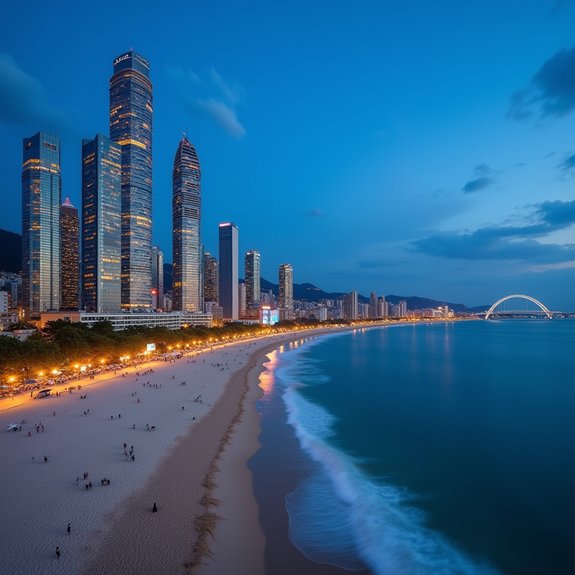
Busan’s high-rise hotels don’t mess around—you’re paying for those floor-to-ceiling ocean views, and they deliver.
Park Hyatt and Signiel Busan tower above the cityscape, with their 30th-floor lobbies and infinity pools that seemingly spill into the East Sea.
Your splurge gets you more than just a bed; think champagne lounges, thalassotherapy treatments, and swim-up bars where you can sip cocktails while watching Haeundae’s golden shoreline. For travelers seeking similar floor-to-ceiling windows and breathtaking cityscapes in Seoul, luxury properties like the Four Seasons Hotel Seoul are renowned for their stunning panoramic views and premium amenities.
The Signiel Busan earns its impressive 4.9 rating with a dedicated snack room serving champagne and convenient proximity to dining options.
Luxury Sky-High Accommodation
The cityscape of Busan transforms dramatically when viewed from the upper floors of its luxury seafront high-rises.
Park Hyatt Busan stands out with its curved glass facade and minimalist interiors—oak flooring, warm woods, and a 30th-floor reception complete with actual trees. Not bad.
You’ll find ocean views everywhere. Floor-to-ceiling windows frame Gwangan Bridge and marina vistas. Trust me, they’re worth the splurge.
Want luxury amenities? Take your pick. Park Hyatt offers high-end restaurants serving Korean classics and French cuisine.
Signiel Busan’s champagne service by their ocean-view pool might make you forget your budget concerns.
The Westin and Grand Josun sit directly on Haeundae Beach, while Ananti Cove delivers jaw-dropping sunsets from sea-facing rooms.
For the ultimate experience, consider accommodations near Haeundae Beach that provide easy access to both sand and city attractions.
Staying in this area also puts you close to Busan’s most famous beaches, making it easy to enjoy both seaside relaxation and urban attractions in one visit.
Ocean Views Guaranteed
Looking for guaranteed ocean views? Busan’s high-rise hotels deliver—no compromises.
You’ll wake up to the sea at Haeundae-gu’s Grand Josun or Park Hyatt in Marine City, where floor-to-ceiling windows frame the Gwangan Bridge like a postcard. Seriously, it’s ridiculous. Many of these hotels are conveniently accessible via public transport apps, making seaside stays practical as well as picturesque.
The Westin Josun puts you right on the sand. Roll out of bed, hit the beach. Done. Perfect for sunset photography enthusiasts who can’t be bothered to travel far.
Signiel Busan offers oceanfront dining with champagne service—because watching waves apparently requires bubbles.
Meanwhile, Ananti at Busan Cove provides quieter sunset views without the crowds.
Most properties offer easy access to public transport, local seafood joints, and water activities.
The architecture’s not bad either—Park Hyatt’s curved glass façade is actually worth looking at.
With 41 floors high, Lotte Hotel Busan stands as another impressive skyscraper option for travelers seeking panoramic city and ocean vistas.
Amenities Worth Splurging
While standard hotel amenities bore most travelers, Busan’s seafront high-rises take things to absurd heights—literally. Park Hyatt’s 30th-floor reception sets the tone immediately: real trees indoors and jaw-dropping views before you’ve even checked in. With Travelers’ Choice Awards recognizing top properties in Busan, you can trust that these luxury accommodations meet exceptional standards.
| Splurge-Worthy Feature | Where to Find It | Worth It? |
|---|---|---|
| Infinity pools with panoramic views | Park Hyatt Busan | Absolutely (bring 10,000 KRW for a bathing cap) |
| Luxury spas with couples treatments | Paradise Hotel | Yes (oceanfront relaxation) |
| Private oceanfront dining | Park Hyatt restaurants | French-Korean fusion? Of course |
Floor-to-ceiling windows come standard in these towers. Oak floors. Soundproofed rooms. Digital check-in. It’s excessive. It’s unnecessary. You’ll love every minute. The Marina-facing balconies make morning coffee an event, and Haeundae Beach is just a 6-minute walk away when you’ve had enough pampering. If you’re planning a layover in Seoul, options like Incheon Airport hotels offer just as impressive amenities for a restful stop between flights.
Subway Map Digital Kiosk
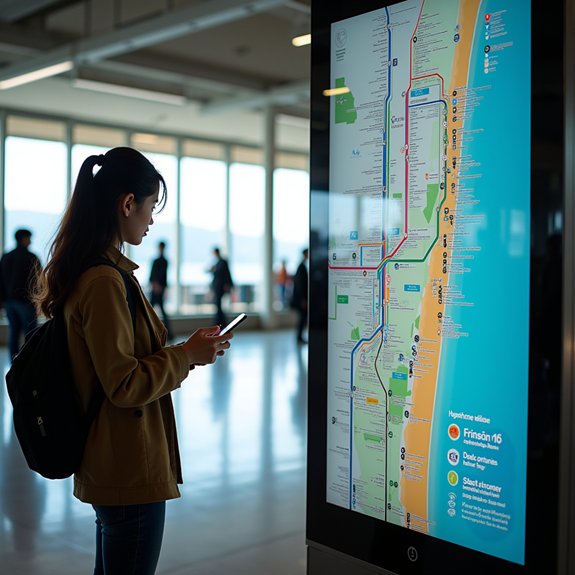
You’ll find Busan’s subway digital kiosks super handy for grabbing QR tickets before hopping on those Seoul-Busan KTX trains (yes, you can actually score discount rental packages through the interactive touchscreens).
After exploring the city’s underground network, use the kiosk’s map function to locate stations nearest to those gorgeous coastal cliffside cycling trails that everyone’s posting about. For peace of mind while exploring, consider using portable travel safes to securely store valuables like cash, passports, or electronics in your luggage or daypack. If you have luggage while exploring, take advantage of convenient locker facilities provided by Busan Transportation Corporation at multiple stations throughout the city.
Seoul-Busan High-Speed Trains
Connecting Seoul and Busan couldn’t be easier with several high-speed train options at your fingertips. The KTX bullet trains get you there in just 2 hours 15 minutes—high speed efficiency at its finest. Good luck finding that kind of time-saving elsewhere. Plus, you’ll enjoy scenic views of the Korean countryside whizzing by your window. The trains operate on the Gyeongbu train line that spans approximately 400 kilometers.
| Train Type | Travel Time | Starting Price |
|---|---|---|
| KTX | 2h 15m | 49 EUR/54 USD |
| ITX | 4h 34m | 44 EUR/48 USD |
| Mugunghwa | Longer | Cheaper |
With more than 55 daily KTX departures, scheduling’s a breeze. Trains have food service onboard. Booking tickets in advance is recommended, especially for high-speed trains during peak times and holidays. Book through Rail.Ninja or Korail. Stations offer amenities and multilingual support. No excuses for getting lost.
KTX Discount Rental Packages
Looking to save serious cash while zipping around Korea? KTX discount rental packages are your golden ticket. Seriously.
These packages offer unlimited travel options on high-speed trains, regular trains, and even tourist lines. The benefits of KTX passes can’t be overstated – unlimited economy rides for a fixed price. You can also take advantage of essential domestic flight routes for quick connections between popular Korean cities.
Choose between Consecutive Passes (for back-to-back travel days) or Flexible Passes (pick your days). Genius.
Some packages throw in sweet extras like AREX tickets for airport transfers, Kakao taxi coupons, and even rent car discounts.
Digital kiosks at stations make navigation a breeze, especially when integrated with subway maps.
Book online or at stations. Do it early. Peak travel times get crazy.
Combine your train adventures with cultural activities for the full experience. Your wallet will thank you.
Remember that these discounted travel options are exclusively for foreigners, so have your passport ready when purchasing or using the pass.
Coastal Cliffside Cycling Trails
Ready to ditch the trains and feel the wind in your hair? Busan’s coastal cycling trails offer breathtaking views with a side of quad-burning challenge. The East Coast trail connects right to the city, spanning 720km with some serious hills. Not for beginners. Period.
You’ll pedal past fishing villages, sandy beaches, and quirky storytelling murals that make even the toughest climbs worthwhile. This route is significantly more challenging than other Korean cycling paths due to its hilly terrain.
Rent bikes near major trailheads (helmet = non-negotiable)
Check digital kiosks for maps and subway connections
Prepare for that annoying 4.8km gap in the East Coast Route
Visit Eulsukdo Eco Park for riverside cycling with wetland views
Pack for changing weather (the coast is moody, just like your ex)
If you need to ask for directions or communicate with locals, learning a few essential phrases, like “eodi isseoyo?” for “Where is…?” in Korean, can make your ride smoother.
Cycling tips: Bring water. Stay fit. Use navigation. The terrain’s varied and sometimes unforgiving, but those cliff views? Worth every drop of sweat.
Bow Before Temple Offerings
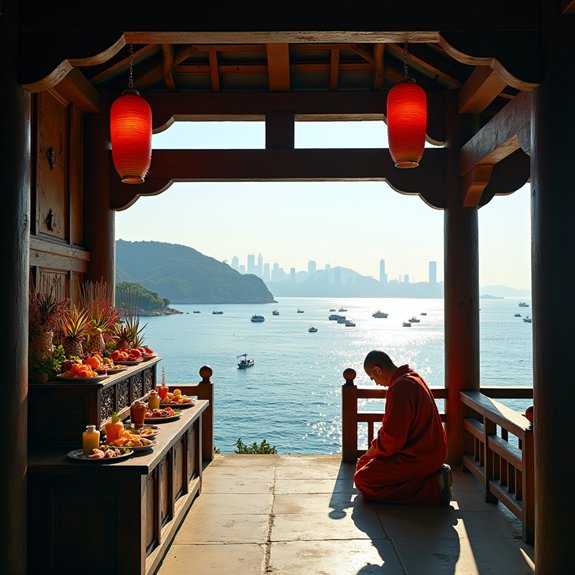
Stepping into Busan’s temples means encountering a world where ancient offerings bridge the gap between the spiritual and physical.
You’ll see locals placing incense, prayer beads, and food at altars throughout Beomeosa and Haedong Yonggungsa. Temple etiquette matters here—no loud talking or pointing at Buddha statues. Seriously.
The offering significance goes beyond mere ritual. It’s connection. History. Respect. For travelers, understanding proper etiquette is essential for a respectful and meaningful experience within Korea’s cultural and spiritual spaces.
When you witness a tea ceremony or meditation session, you’re not just watching—you’re absorbing centuries of tradition.
During Buddha’s Birthday, the temples transform. Lanterns everywhere. Chanting monks. The scent of incense thick in the air. Haedong Yonggungsa becomes especially magical with its vibrant paper lanterns decorating the coastal temple grounds.
Want the full experience? Join a guided tour.
Or better yet, participate in a temple stay at Beomeosa. Nothing beats sleeping where monks have meditated for generations.
Typhoon Season Preparation Tips
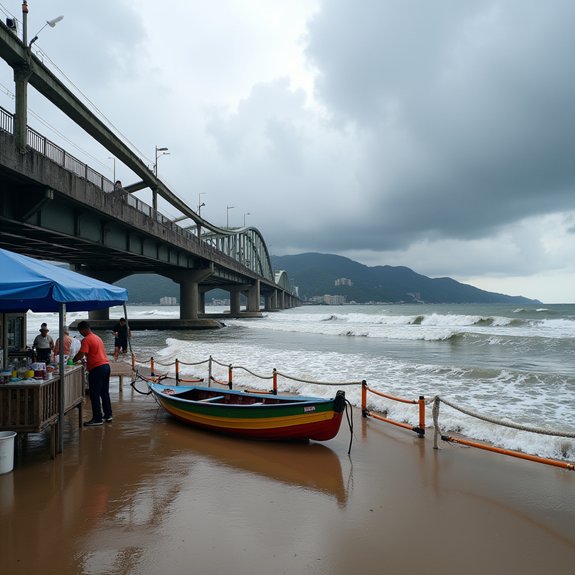
Though Busan charms visitors most of the year, typhoon season demands your serious attention. When planning your trip, don’t skip your typhoon preparedness checklist. Seriously. Weather turns fast here, and your beachside selfies could become disaster photos.
Create emergency action plans before arrival. Know your hotel’s evacuation routes. Monitor weather forecasts obsessively. Simple stuff keeps you alive. Be especially vigilant during the peak typhoon months between July and September.
- Stock up on bottled water and non-perishable snacks
- Download emergency communication apps that work offline
- Save emergency contacts including your country’s embassy
- Keep cash on hand—power outages mean no ATMs
- Identify nearby shelters and hospitals in your area
Travelers should also prepare for upfront medical payments in emergencies, as hospitals in the region often require cash for treatment.
After storms pass, avoid floodwaters at all costs. They’re filthy and dangerous. Don’t be that tourist who needs rescuing because you wanted to “see the damage.”
Busan Seafood Market Bargains
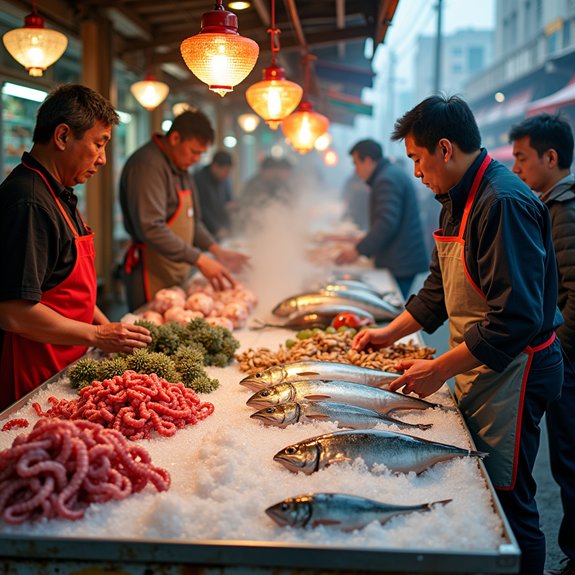
You’ll want to set aside 75,000 won daily for your Busan seafood market adventure, which sounds steep but covers those king crabs you’re definitely craving.
Buying a local transport pass saves you serious cash getting to and from the market – trust me, you’ll be too stuffed to walk back to your hotel.
The pass also lets you escape quickly when those aggressive “Ja-galchi ajumas” start forcing octopus samples on you, not that you’d complain. Like in Seoul’s street food markets, cash is generally the preferred way to pay for seafood at Busan’s bustling stalls.
Remember that Jagalchi Market is completely closed on Tuesdays during the first and third weeks of each month, so plan your seafood feast accordingly.
75,000 Daily Budget
Jagalchi Market, Busan’s seafood paradise, won’t break your bank if you play it smart. Fresh fish runs about 10,000 KRW per portion, while cooking fees add another 10,000-25,000 KRW.
Two people can feast for 45,000-80,000 KRW ($34-60 USD). Budget friendly dining is absolutely possible here. Experience a blend of traditional and modern selling methods throughout the market. Inspired by China, where a vibrant vegetarian dining scene thrives in places like Pure Lotus in Beijing and Gongdelin in Shanghai, Busan also embraces a variety of culinary experiences.
For seafood market tips that’ll save you won:
- Visit early (5 AM) for the freshest catches and potentially lower prices
- Negotiate prices or buy in bulk for better deals
- Choose moderately priced options like octopus (5,000 KRW) instead of pricey crab
- Split larger seafood portions between your group
- Add affordable signature items like 2,000 KRW crab rice
Avoid peak tourist days (1st and 3rd Tuesdays) for steady pricing. The market’s free to enter. Bargain hunting never tasted so good.
Buy Local Transport Pass
While exploring Busan’s seafood markets offers a feast for your senses, traversing the city shouldn’t drain your wallet. Grab a transport pass. Seriously. The Hanaro Card is your best bet—works everywhere and gives you sweet transfer discounts between buses and metro. You can use your valid T-money card from Seoul if you already have one.
| Transport Pass Options | Benefits |
|---|---|
| Hanaro Card | Official transit pass with transfer discounts |
| Cashbee Card | Works for metro, buses, taxis, even toll roads |
| VISIT BUSAN PASS | Transport + attraction discounts, seafood market deals |
| Commuter Pass | Fixed rates: 1-day, 3-day, or 30-day options |
| Mobile Pass | Buy online, use through Busan Subway app |
Recharge at convenience stores or metro stations. Easy. Commuter pass benefits include unlimited rides for fixed periods—perfect if you’re hitting multiple markets daily. For the best value, using public transportation is the top way to keep travel costs low when exploring all that Busan has to offer. No brainer.
Seaside Adventure Blueprints
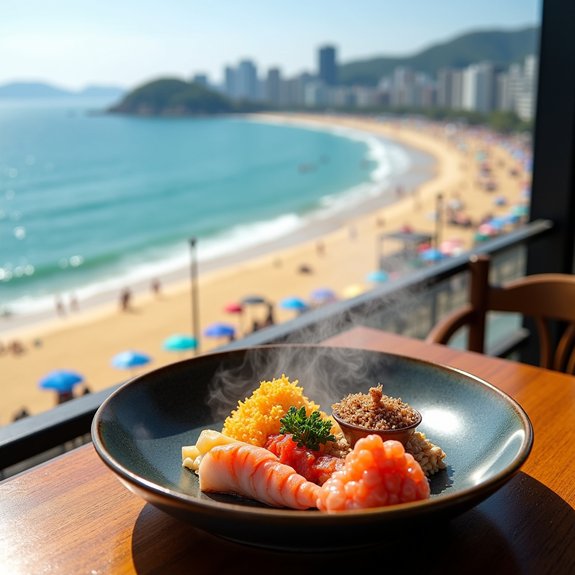
You’ll find endless adventure blueprints along Busan’s coastline, from beach-hopping seafood crawls to temple-coastal explorations.
Start your day at Jagalchi Fish Market for the freshest catch, then wander to Haeundae Beach for afternoon sun and water sports – nothing beats seafood with sand between your toes. Renting a car in China often requires a Chinese driver’s license, so make sure to research travel requirements if you’re extending your journey across borders.
Take time to explore the charming Haeundae Traditional Market with its fairy light-adorned stalls.
For the ambitious traveler, try the mountain-to-sea weekly exploration, combining hikes at Taejongdae with cycling along Gwangalli’s shoreline for those postcard-worthy sunset views.
Beach-Hopping Seafood Adventure
Saltwater and sizzling seafood – Busan’s beaches offer more than just waves and sand. Each shoreline has its own culinary identity. If Korean BBQ is on your mind after a long day in the sun, Seoul’s renowned Maple Tree House is famed for high-quality hanwoo beef and interactive grill-at-the-table experiences.
Haeundae pairs beach activities with grilled eel and raw fish platters near Dongbaekseom. Gwangalli serves fresh oysters against the dramatic Gwangandaegyo Bridge backdrop. Not hungry yet? You’ll be. Busan attracts both domestic and international visitors seeking unique coastal experiences.
- Haeundae Beach: Sand festivals and Night Beach events with live seafood grills
- Gwangalli Beach: Fireworks festivals with pop-up seafood buffets
- Songjeong Beach: Surf shacks serving spicy seafood ramen + grill-your-catch stations
- Songdo Beach: Historic vibes with the Cloud Trails skywalk and cliffside seafood spots
- Dadaepo Beach: Secluded sunset views with raw fish trucks and tofu stew stalls
Temple-To-Beach Coastal Exploration
Ready to swap seafood for spirituality? Haedong Yonggungsa isn’t your average temple—it’s perched right on the coastline. Rare for Korea. Founded in 1376, rebuilt in the 70s, still stunning.
Get there early. Like, 5:30 AM early. Trust me on this one. You’ll descend 108 steps with the sunrise painting everything gold. Perfect for those Instagram shots everyone back home will secretly hate you for. If your trip coincides with early March, consider witnessing the Jeju Fire Festival, a dramatic island event where ancient fire rituals light up the night.
Temple rituals include tossing coins at the fountain (because why not?) and wandering lantern-lined paths. The sound of waves adds a uniquely peaceful dimension to your spiritual experience. No speaking loudly. Yes, you can take photos.
Afterward? Beach relaxation at nearby Songjeong. Less crowded than touristy Haeundae.
Wear non-slip shoes—those temple stairs get slick. Nobody wants to faceplant at a sacred site.
Mountain-to-Sea Weekly Exploration
While Busan’s urban sprawl might feel overwhelming, this coastal metropolis offers a perfect week-long mix of mountain hikes and ocean views within minutes of downtown.
Start with Geumjeongsan’s fortress walls for breathtaking sea vistas, then descend to Haedong Yonggungsa Temple where waves crash against ancient Buddhist shrines. Seriously, nothing beats these sunrise views. The temple is uniquely situated by the sea, unlike most traditional mountain temples in Korea.
- Tackle Igidae’s 4.7km cliffside trail for unbeatable Gwangan Bridge panoramas
- Ride glass-bottom cabins on Songdo Marine Cable Car (1.62km of pure anxiety for some)
- Summit Hwangnyeongsan for LED-lit night views—bring your camera
- Explore Huinnyeoul Culture Village’s artsy corners and refugee history
- End at Busan X the Sky’s 100th-floor observatory for 412m-high harbor views
- For those inspired by island escapes just across the water, Japan’s ferry network offers essential routes to remote archipelagos and is a model for maritime connectivity.
Jeju Vs Busan Alternatives
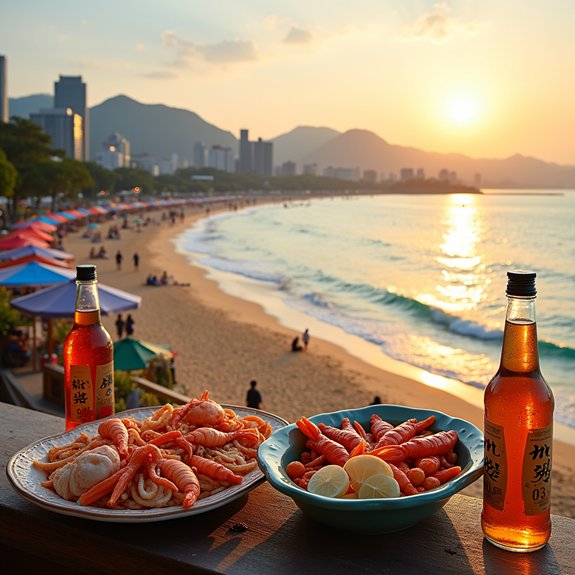
When comparing Jeju Island and Busan, the accessibility factor can’t be ignored. Busan wins hands down with its extensive subway system and affordable public transit. Jeju? You’ll need wheels.
Budget travelers, listen up. Busan’s cheaper. Period. Better accommodation rates, street food that won’t empty your wallet. Jeju’s gorgeous but pricey. If you’re looking to save even more, Tokyo’s budget hotel options like capsule hotels and hostels rival Busan’s affordability and can be useful to compare if you’re considering stops in multiple countries.
| Feature | Busan | Jeju Island |
|---|---|---|
| Transportation | Subway, buses, walkable | Cars, taxis, limited buses |
| Cost | Budget-friendly | Premium prices |
| Natural Beauty | Urban beaches, city views | Volcanic landscapes, pristine shores |
| Nightlife | Vibrant, diverse | Quiet, limited |
Busan attractions include urban beaches and cultural sites. Meanwhile, Jeju Island offers volcanic wonders you can’t find anywhere else in Korea.
Consider your travel time wisely – the high-speed train to Busan takes under 3 hours from Seoul, making it more efficient for short trips.
Truth is, they’re different beasts. Choose accordingly.
Expat Apartment Pricing Skyrockets
Expat wallets are feeling the squeeze in Busan’s rental market these days. With average monthly rents hitting ₩439,738 for a furnished studio, you’ll need to budget carefully. Just as choosing budget-friendly accommodations like hostels or guesthouses can help travelers save money in China, seeking alternatives to high-demand neighborhoods might ease the pressure on your rent.
Living in Busan means stretching your won further as studio rentals climb toward the half-million mark.
Haeundae? Even pricier. The influx of students and tourists isn’t helping matters. Rental increases are outpacing supply, especially for affordable expat housing.
- A single person’s monthly expenses average about $1,207 (housing included)
- Busan remains cheaper than Seoul (small consolation when writing that rent check)
- Location matters—Nam-gu costs considerably less than beachfront properties
- Student areas near universities are seeing particularly fierce competition
- Utilities and additional costs vary wildly depending on your lifestyle choices
Still, at $9,000 per square meter, Busan property remains a relative bargain compared to some Asian cities. The good news is that Busan offers an overall 23% cheaper cost of living than Seoul.
Small comfort when your rent keeps climbing.
Busan International Film Festival
You can’t visit Busan in autumn without experiencing Asia’s premier film event, which has grown from humble beginnings to screening over 350 films from 71 countries.
The red carpets attract A-list Korean celebrities and international stars, making for prime people-watching opportunities if you’re into that sort of thing.
Hit the festival’s main venues in Haeundae and Nampo districts, including the spectacular outdoor “Open Cinema” where films are screened under the stars. Film enthusiasts can also participate in BIFF Everywhere initiative that offers unique audience engagement experiences throughout the festival.
Festival History & Growth
The humble beginnings of Asia’s cinema powerhouse trace back to 1996, when the Busan International Film Festival burst onto the scene with a clear mission—showcase Asian cinema while building global bridges.
What started with 173 films and 184,071 attendees has exploded into a cultural juggernaut.
- From 6 theaters to a $140M architectural masterpiece at Busan Cinema Center
- Audience growth hit 200,000+ annually by early 2000s (not bad for a “small but prestigious” vision)
- Evolved beyond screenings to include markets, pitches, and cross-media content sales
- Championed emerging talent across continents—Africa, Latin America, and Asia
- Maintained its soul despite massive expansion from 31 countries to 85 by 2019
The festival’s 28th edition in 2026 showcased an impressive 269 films from 69 countries, demonstrating its continued global reach.
The festival’s industry impact continues to ripple across global cinema. Period.
Star-Studded Red Carpets
While the festival’s journey from humble origins to global influence tells one story, Busan’s red carpets showcase another kind of spectacle entirely.
BIFF transforms Haeundae-gu into Asia’s hottest celebrity runway each October.
You’ll spot TWICE’s Dahyun making her acting debut with “Sprint,” or catch Ji Chang-wook promoting his Disney+ series. Not your average movie night. Stars from across Asia show up in droves—279 films, 63 countries. Serious star power.
Red carpet fashion ranges from traditional Korean to cutting-edge global styles. The opening night features renowned filmmakers and actors from around the world gathering to celebrate international cinema. Celebrity interactions happen right before your eyes as photographers scramble for the perfect shot.
The whole affair starts at the Cinema Center’s outdoor theater. Perfect lighting for those Instagram-worthy moments.
Brutal truth? The public seating is limited. But hey, there are screens.
Screening Venues Guide
Beyond the red carpets lies a festival-goer’s real playground—BIFF’s sprawling network of screening venues. The heart of the action? Busan Cinema Center with its impressive 4,000-seat BIFF Theater.
You’ll find up to 37 screens across the city during peak festival years. Screening trends show high attendance rates, and venue accessibility is excellent with multiple locations throughout Busan. The festival attracts approximately 200,000 audience members annually, showcasing its immense popularity.
- Busan Cinema Center – the festival headquarters with multiple screens and nearly 4,000 seats
- CGV Centum City – major secondary venue for international premieres
- LOTTE CINEMA – hosts community screenings for broader audience engagement
- Multipurpose spaces – venues double as exhibition areas and discussion forums
- Pandemic adaptability – scaled back to just 6 screens in 2026, but normally offers dozens
Let’s be honest—the real festival happens in these theaters, not on the red carpet.
Conclusion and Final Thoughts on Visiting Busan, South Korea
Busan captivates visitors with its perfect blend of coastal beauty and urban dynamism. This seaside metropolis delivers unforgettable cultural immersion experiences alongside spectacular outdoor activities.
Let’s be real—you’ll kick yourself if you miss autumn’s perfect temperatures and lower hotel rates.
The city’s contrasts make it special. Ancient temples perched on coastal cliffs one day, vibrant street food crawls the next. Haeundae’s iconic coastline. Gamcheon’s rainbow-hued hillsides. Jagalchi’s chaotic seafood stalls.
Time your visit strategically. Catch October’s film festival if you’re into cinema. Summer for beaches. Winter for smaller crowds. For marine enthusiasts, the south region offers gentle waves with wave heights ranging from 0.2 to 0.4m.
Don’t overthink it. Busan rewards spontaneity. Grab a bowl of milmyeon, watch the sunset from Gwangalli, and let this underrated Korean gem work its magic.
Frequently Asked Questions
Is Busan Safe for Solo Female Travelers?
Yes, Busan’s exceptionally safe for solo female travelers.
You’ll find minimal crime – basically zero violent incidents against tourists.
Smart safety tips: stick to well-lit areas at night and book hotels with 24-hour desks.
Solo travel here gets top ratings from women – 4.7/5 on TravelLadies!
The locals? Super helpful when you need directions.
Abundant security cameras everywhere.
Seriously, crime levels are laughably low compared to most cities.
What Korean Phrases Should I Know Before Visiting Busan?
While tourists expect fluent English everywhere, locals appreciate the effort in Korean.
Essential phrases for Busan include “An-nyeong ha-se-yo” (hello), “Gomawo” (thanks), and “Eol-ma-ye-yo?” (how much?).
Master “Ju-se-yo” (please) – it’s your golden ticket.
Local etiquette matters.
Learn “Mwo geo-reo jip-e-se-yo?” for finding restrooms.
Trust me, you’ll need that one after trying Busan’s spicy seafood. Worth every bathroom panic.
How Much Should I Budget Daily for Busan?
Your daily expenses in Busan depend on your style.
Budget travelers get by on $40-45 daily. Mid-range? About $90-100. Luxury seekers? $200+. No joke.
Accommodations eat most of your budget. Hostels cost $10-25, decent hotels $40-80.
Food’s cheap if you want it to be—$3 street food, anyone?
Transportation’s a steal at $3-7 daily. Many beaches and sights? Totally free.
Travel tips: book ahead, eat local.
Are Credit Cards Widely Accepted in Busan?
Credit card usage in Busan is everywhere. You’ll have no problem paying at hotels, restaurants, and shops.
Cards work for 60%+ of transactions nationwide. Subway ticket machines? Take foreign cards.
But don’t count on plastic at traditional markets or with street vendors. They’re stubbornly cash-only.
Smart travelers keep some won handy—about ₩50,000-100,000. Payment methods vary, but contactless is growing fast for purchases under ₩50,000.
What’s the Best Time to Visit Busan Besides Cherry Blossom Season?
Like a wave beckoning you to shore, Busan shines brightest from late summer to early fall.
September and October are perfect—comfortable temperatures, fewer crowds. Done with the tourist crush.
You’ll love beach activities in late summer when the water’s warm but the hordes have thinned out.
And don’t miss those summer festivals! The Busan Sea Festival is worth sweating through July for.
Autumn? Clear skies, cultural vibes. Perfect.
Conclusion
You’ve witnessed Busan’s magic now—from cherry blossoms to the silver screen extravaganza of its film festival. The beaches don’t suck. Period. Subway kiosks make navigation idiot-proof, though your wallet might feel lighter near those seafront accommodations where prices have “adjusted upward.” Between Jeju and here? Tough call. This coastal wonderland delivers culture, seafood, and shorelines that’ll make your Instagram followers question their life choices.
More on Transportation:

Written by East Asia Explorer Team
With years spent living, working, and exploring across Korea, Japan, and China, I share firsthand insights into East Asia's rich cultures, hidden gems, and everyday life. My journey also includes studying in Malaysia and traveling through Southeast Asia, experiences that have deepened my appreciation for the region's diversity. Through practical tips, local stories, and travel guides, I aim to help fellow explorers discover both the celebrated highlights and the lesser-known corners of East Asia.