Last Updated: March 12, 2026 | Originally Published: April 28, 2025
Read our full South Korea Travel Guide 2026 for everything you need to plan your Korea trip.
Hey, you’re plunging into Busan’s electric scene as a first-timer—dive into Haeundae’s white sands for epic swims, or meander Gamcheon’s vibrant murals for a history kick. Catch cherry blossoms exploding in April, but watch for those pesky typhoons that can wreck your vibe. Ferries to Japan? A breeze, if you plan ahead. Oh, and bowing’s a must—mess it up, and you’ll look foolish. Deeper secrets are just around the corner. (Source: Korea Tourism Organization)
Explorer Insights
- Explore Busan’s top attractions like Haeundae Beach and Gamcheon Culture Village for a mix of fun and history.
- Use the efficient subway system and ferry services to navigate the city and nearby islands easily.
- Time your visit for cherry blossom season in April to enjoy festivals and scenic riverside walks.
- Budget wisely with affordable hostels, street food, and free attractions to keep costs low.
- Stay healthy by updating vaccinations and following safety measures in crowded areas.
Discover Busan’s Beaches{var1}
Busan’s beaches? Oh, you’re in for a treat—or a crowd, depending on the season.
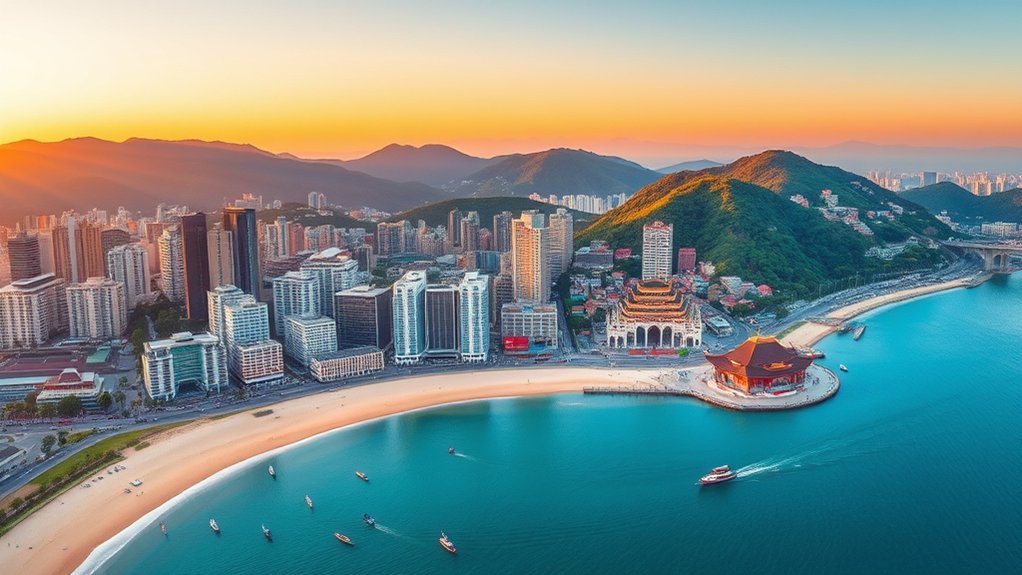
Haeundae’s that iconic 1.5km stretch of white sand, where you immerse yourself in beach activities like swimming in shallow waters or paddleboarding, all while skyscrapers loom like nosy neighbors. The beach also hosts an annual Sand Festival, which showcases magnificent sand sculptures during the summer months.
Haeundae’s iconic 1.5km white sand stretch—dive into swimming or paddleboarding with skyscrapers as nosy neighbors.
Gwangalli offers trendy vibes with jet skiing and those killer sunset views over the Gwangan Bridge—seriously, it’s like the city’s winking at you.
Then there’s Dadaepo, where you catch breathtaking sunsets at the Fountain of Dream; it’s peaceful, unlike the summer madness.
Songjeong lets you surf those consistent waves, and Ilgwang’s family-friendly shallows keep things chill.
You hit these spots for relaxation, water sports, or just chilling with a drink—expect over 10 million others joining the party.
Irreverent? Yeah, but that’s Busan for you. Don’t miss it; it’s raw, real fun.
And if you’re visiting in summer, join the Haeundae Sand Festival for magnificent sand sculptures.
Busan’s Historical Sites{var1}
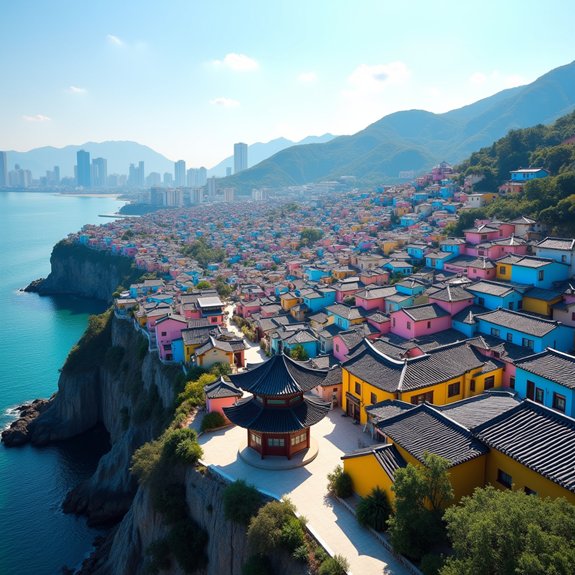
You’re about to wander through Gamcheon Village, that quirky hillside maze of colorful houses built by Korean War refugees in the 1950s—talk about a comeback story.
It’s one of Busan’s real hidden gems, packed with murals and art that slap you with history without the boring lectures. For those interested in island ferry routes, Japan offers essential maritime connections to its lesser-known islands, enriching any regional adventure with a blend of nature and culture.
Sure, you might crave Busan’s seafood specialties later, but first, soak in these spots that actually shaped the city’s past. This village is nestled near Mt. Hwangnyeong, the mountain linked to Busan’s historical name.
Explore Gamcheon Village
Ever wondered how a rundown shantytown from the 1950s Korean War could morph into a vibrant art explosion? That’s Gamcheon Village’s wild ride through village history.
Refugees crammed into tiny hillside shacks, battling no water or sewers—talk about a rough start. But in 2009, artists and officials teamed up, slapping on bright paints and cramming in art installations like murals and sculptures.
Now, you’re traversing a colorful maze, nicknamed “Korea’s Santorini” or “Lego Village”—seriously, it’s like a kid’s fever dream gone right. Stroll the steep alleys, hunt for BTS-themed spots, or grab a stamp tour map. Its location near Busan’s extensive public transportation system makes visiting convenient and budget-friendly.
Panoramic views? Oh, they’re stunning, if you dodge the crowds. This place packs emotion and quirk into every corner. Moreover, this revitalization effort has generated significant economic impact for the community through tourism and local job opportunities.
Busan’s Seafood Specialties
Diving into Busan’s historical gems, you’ve got spots like Beomeosa Temple—its stunning architecture and peaceful gardens hit you right in the feels.
Nearby, BIFF Square dives into Korea’s film roots, blending old-school vibes with modern buzz.
Then there’s the UN Memorial Cemetery, a stark reminder of war’s toll, tugging at your emotions like a punch to the gut.
Oh, and don’t overlook Gupo Waeseong’s ancient fortress—it’s got that raw, time-worn charm.
But wait, after all that history, hit up the seafood markets around these areas; fresh hauls and local recipes like spicy seafood stews will blow your mind, mixing flavors with memories in a seriously irreverent twist.
For more adventure, check out Seokbulsa Temple, which offers a rewarding hike through forested paths after a cable car ride.
After exploring these sites, satisfy your hunger at Geoin Tongdak, one of Busan’s most famous fried chicken restaurants known for its crispy exterior and tender, juicy interior.
Yeah, Busan’s got layers, man.
Busan Hidden Gems
Busan’s hidden historical gems pack a serious punch, blending ancient vibes with that raw, emotional pull.
You’ll wander through Beomeosa Temple, founded in 600 AD—it’s like stepping into a time machine, no joke.
Then hit Gamcheon Culture Village, your go-to for Busan art galleries; those colorful murals will slap you with creativity, making you forget it’s a “hidden” spot.
Don’t overlook Gukje Market, a buzzing Busan local market that screams history—once a refugee hub, now packed with bargains and stories that hit hard.
Geumjeong Mt. Fortress offers rugged hikes with ancient walls that whisper tales, while the Provisional Government Complex pulls at your heartstrings with its war-era grit.
Navigate the city effortlessly with Japan Transit Planner to find the quickest routes to each historical site without getting lost in translation.
And for a deeper historical dive, explore the Modern and Contemporary History Museum in Nampodong, offering free entry and exhibits on colonial perspectives.
Yeah, these spots aren’t just sights; they’re soul-shakers. Explore them, and you’ll get why Busan’s past bites back.
Ideal Festival Seasons{var1}{context}
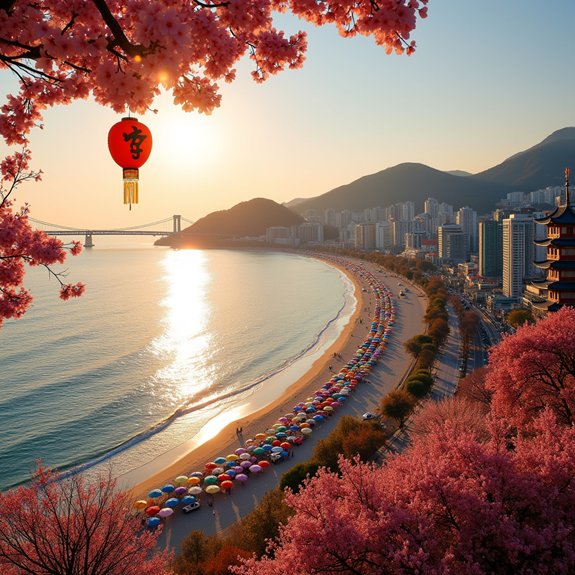
You’ve got to check out Busan’s cherry blossoms in early April, peaking in spots like Namsan-dong and Hwangnyeongsan—it’s like nature throwing a pink party you won’t forget. Cherry blossoms in Busan usually reach their peak bloom in late March, so plan your trip around this time for the best views.
Oh, and summer’s festivals sound fun, but typhoon season can sneak up and wreck your vibe, so keep an eye on that wild weather.
Let’s kick off this chat about ideal festival times, blending those floral highs with a dose of reality. For a standout event during this season, make sure to catch the Nakdonggang Riverside Cherry Blossom Festival from April 4-6 at Daejeo Ecological Park.
Cherry Blossom Highlights
As spring sweeps in, cherry blossoms transform Busan’s spots like Nakdonggang Riverside into a vibrant pink explosion, peaking around late March. Visitors can also explore Daejeo Eco Park, which features a stunning 12-kilometer tunnel of cherry blossoms along the Nakdonggang River.
You’ll feel the magic hit you hard—it’s that breathtaking, with petals practically screaming for your attention. Don’t miss the buzz; these festivals draw crowds for a reason, blending nature’s show with lively vibes. If you’re interested in even more spring color, consider venturing beyond Busan to witness canola flowers in Jeju Island, where golden fields bloom alongside the season’s cherry blossoms.
Oh, and yeah, the timing’s finicky—weather might throw a curveball, but that’s life.
- Snap those shots: Immerse yourself in cherry blossom photography at photo zones in Samnak Eco Park; your Instagram will thank you, or not, if you’re bad at it.
- Feast like a local: Grab festival food at markets—think tasty street eats that hit the spot, no regrets.
- Wander the paths: Stroll Nakdonggang Riverside’s walkways, where blossoms pop against the river; it’s pure eye candy.
- Catch the action: Enjoy busking performances and cultural shows; they’re fun, even if the crowds are a hassle.
- Extend your fun: Head to Myeongpumgaro Park for ongoing activities into early April; blooming ceremonies add that emotional punch.
Typhoon Season Tips
When typhoon season barrels in from July to September, it packs a punch with storms that dump heavy rain and whip up fierce winds across Busan.
You’ll want to brush up on typhoon preparedness tips, like packing waterproof gear and keeping devices charged—trust me, no one enjoys a soggy phone during a blackout. Consider bringing a portable travel safe to keep your valuables protected from water damage during unexpected storms.
Oh, and don’t forget emergency evacuation plans; familiarize yourself with routes and shelters, because ignoring them is just asking for a dramatic rescue story.
South Korea sees about three typhoons a year, often hitting Busan’s coast hard, so monitor forecasts religiously. For example, Typhoon Maemi in 2003 led to 117 fatalities, making it essential to stay vigilant during peak season.
Flights get canceled, ferries halt—yeah, it’s a mess. Stay informed via local updates; your vacation’s no time for playing hero in the rain.
Be smart, not sorry.
Busan Adventure Routes{var1}
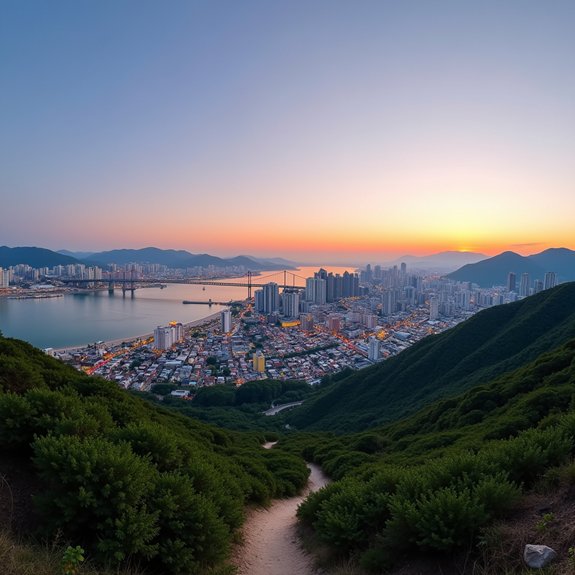
Busan packs a punch with adventure routes that mix thrills, sweat, and killer views—think hiking, cycling, and coastal escapades that’ll get you moving.
You’ll tackle Busan hiking trails that test your grit, zip through Busan cycling paths with ocean breezes, plunge into Busan water sports for a splashy rush, wander Busan eco tours for nature’s raw beauty, and chase Busan nightlife for that edgy vibe. You can also find inspiration for your next ride from Japan’s scenic cycling routes, which offer adventure seekers epic coastal views, mountain climbs, and cultural immersion.
Plus, explore the 4.8km coastal walking trail for a scenic and relaxing addition to your adventures.
Oh, and don’t even think about skipping the sweat—it’s what makes it real.
- Busan hiking: Conquer the Igidae Coastal Trail’s 4.7km moderate path for epic views that’ll blow your mind.
- Busan cycling: Pedal off-road trails in Busan’s hills, feeling the burn on those challenging routes.
- Busan water sports: Splash into Haeundae Beach activities, where waves dare you to get wet and wild.
- Busan eco tours: Explore Nakdong Estuary’s wildlife, learning about ecosystems that are surprisingly alive and kicking.
- Busan nightlife: Hit Dongsaengmal’s night views, where the bridge lights mock the stars with their glow.
Busan Ferry Routes{var1}
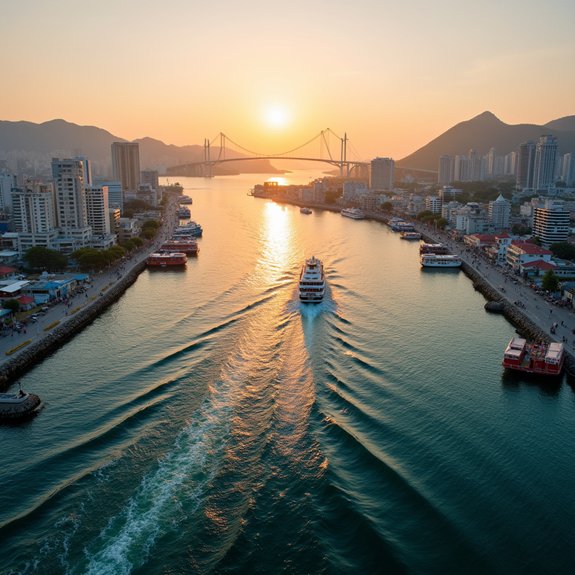
You know, after all that adventuring in Busan, you’re probably thinking about hopping on a ferry instead of dealing with subways or driving headaches.
But hey, let’s not kid ourselves—Busan’s ferry routes to Fukuoka, Osaka, and Tsushima are your ticket to smoother seas, with up to 9 sailings a week from spots like the International Passenger Terminal.
Oh, and if you’re eyeing those riverside biking paths later, remember, these ferries might just save you from traffic jams, taking about 11 hours to Hakata if you’re in a rush. With high-speed rail networks growing in popularity across Asia, ferry travel still offers a scenic and relaxing alternative for reaching Japan. For even more convenience, ferries depart approximately 6 times a day.
Busan Subway Networks{var1}
Imagine this: four main lines power Busan’s subway network, stretching over 116.5 km and linking up 114 stations for a smooth ride. Trains operate from 05:00 to 23:59, ensuring you can catch a ride at convenient times throughout the day.
You’ll zip around effortlessly with subway navigation tips like using the HuMetro app for real-time updates—seriously, it’s a game-changer. Like in other Asian megacities, using rechargeable transit cards in Busan makes transferring and ticketing on subways and buses much more convenient.
And hey, metro safety protocols? Follow them religiously; crowded trains mean no goofing off.
- Master transfers: Hop between lines at hubs like Seomyeon; it’s seamless, not a hassle.
- Check ridership: With 938,000 daily riders, expect crowds—plan your escape routes, smarty.
- Explore routes: Lines connect tourist spots; don’t miss Haeundae via Line 2. Oh, the views!
- Safety first: Stick to designated areas and watch your step—accidents happen, folks.
- Operator know-how: Busan Transportation Corporation runs it; they’re pros, but you stay alert.
Busan Driving Essentials{var1}
Ferries connect Busan to Japan’s Tsushima, Fukuoka, and Osaka, with operators like Kobee and Panstar handling up to nine sailings weekly.
You’ll find these routes a breeze compared to tackling Busan driving tips—think passports required, no shortcuts there.
The Busan Port International Passenger Terminal, at 24 Chungjang-daero, Dong-gu, offers basic facilities like currency exchange, making it your gateway.
Journeys? Hakata’s about 11.5 hours, Osaka’s a whopping 19—slower than flights, sure, but cheaper and more scenic.
If you plan on booking your ferry ahead, schedules fluctuate, so check in advance to avoid last-minute surprises.
Oh, and parking regulations? Forget them on ferries; just show up, board, and enjoy the eco-friendly vibes.
Schedules fluctuate, so check ahead—don’t get stranded like a fool. It’s a leisurely escape, not a race.
Meanwhile, domestic terminals in Choryang-dong keep things simple.
To secure your spot, book through AFerry for affordable options.
Travel smart, you adventurous soul.
Riverside Biking Paths{var1}
Busan’s riverside biking paths hug the Suyeonggang and Nakdong rivers, offering well-maintained routes that even newbies can handle.
You’ll cruise scenic routes with stunning river views, but watch out—those raised platforms might make you feel like you’re on a thrill ride. It’s all about easy pedaling, though; no mountains to conquer here. For a straight and smooth ride, check out the straight bicycle path at Hwamyeong Eco Park.
Oh, and don’t ignore basic cycling tips, like checking for traffic jams near the city. These paths link to bigger adventures, so let’s break it down:
- Suyeonggang’s charm: Hit APEC Naru Park for a breather—it’s got shade and restrooms, perfect for your sweaty self.
- Nakdong’s vibes: Enjoy elevated paths with epic estuary panoramas; it’s like nature’s own catwalk, minus the heels.
- Cross-country link: Connect to the Four Rivers Trail for a epic ride from Incheon—yeah, you’re basically a tour pro now.
- Cycling tips: Stick to flat, paved sections; evening lights help, but avoid typhoon season if you’re not insane.
- Ferry fun: Paths lead to Busan Port for Japan hops—store your bike and sail, because why not mix it up? If you want internet access on your ride, consider portable Wi-Fi devices or local SIM cards for reliable connectivity.
Busan Packing Essentials{var1}
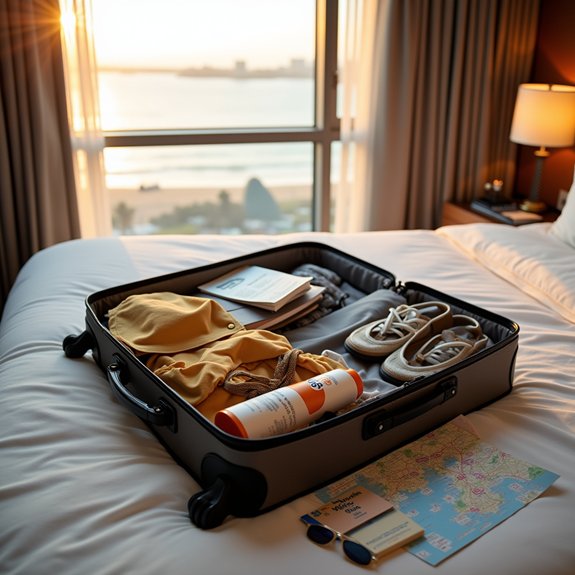
When you’re heading to Busan, packing smart means nailing a few key essentials—think clothing, toiletries, and more—to dodge any travel headaches. Remember to brush up on basic greetings and etiquette to help you navigate local customs, from greetings like “Annyeonghaseyo” to using “shi” after someone’s name. Don’t forget busan climate tips: pack breathable fabrics for that sticky summer humidity, or light jackets for spring’s cool snaps. For busan shopping essentials, grab a cross-body bag to tote your finds securely. Seriously, who wants to sweat through jeans in the heat? Here’s a quick breakdown:
| Category | Item | Why It’s Essential |
|---|---|---|
| Clothing | Waterproof Jacket | Shields you from sudden rain |
| Toiletries | Shampoo | Keeps your hair fresh on the go |
| Accessories | Plug Adaptors | Charges your devices hassle-free |
| Electronics | Power Bank | Prevents dead phone drama mid-explore |
To stay connected while exploring, make sure to include an e-SIM card for reliable navigation and communication. Pack light, but pack right—your trip’s sanity depends on it. Oh, and skip the bulky towels; they’re overrated.
Busan Bowing Etiquette{var1}
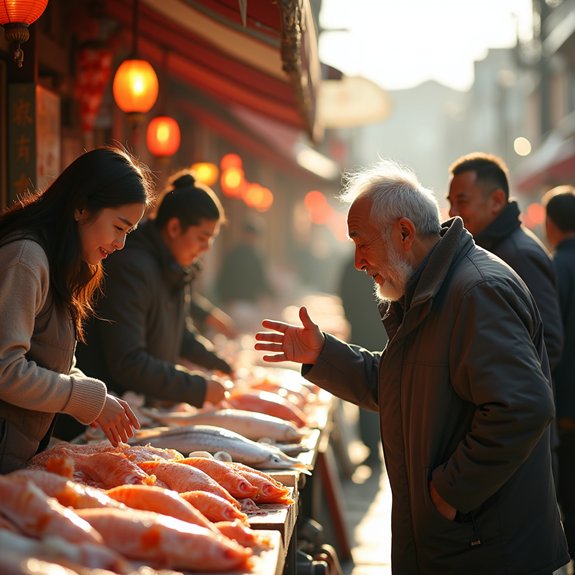
Bowing in Busan? It’s that quirky head-nod thing you’ll spot everywhere, tied to Korea’s bowing customs and respect hierarchy.
Don’t underestimate it—mess up, and you might look like a clueless tourist. This ritual’s all about showing you’re in on the cultural game, rooted in Confucian vibes that demand deference to elders and bosses. Learning basic Korean phrases like “annyeonghaseyo” for greeting and “kamsahamnida” for thank you will further show locals you respect their customs.
It’s sincere, emotional, and kinda fun once you get it.
- Master the basics: Bow from the waist to convey respect, keeping eyes down—none of that half-hearted neck bob.
- Go casual for pals: A light nod works for friends, but amp it up for colleagues; it’s about hierarchy, folks.
- Formal vibes matter: Deepen that bow for big moments, like meetings or thanks—show you’re not just faking it.
- Time it right: Bow when greeting, apologizing, or saying goodbye to superiors; it’s your social ticket.
- Feel the culture: It’s about harmony and status—get this wrong, and oops, you’ve disrupted the peace. Seriously, it’s a trip!
For women performing a formal bow, make sure to place your hands on forehead before gracefully lowering yourself to avoid any cultural faux pas.
Busan Health Precautions{var1}
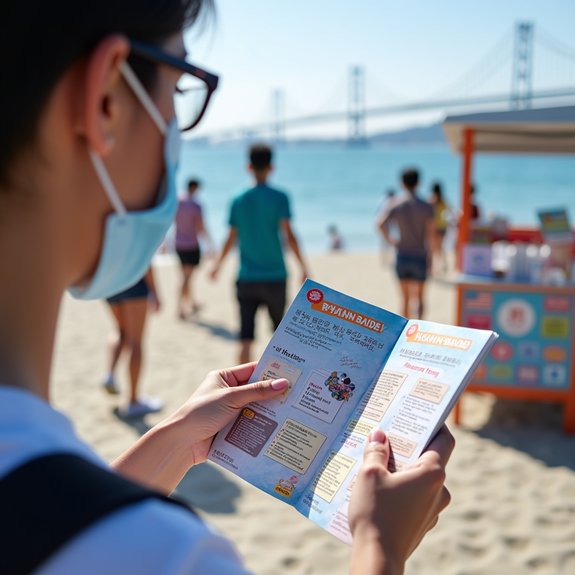
Traveling to Busan means dodging health curveballs, so get your vaccinations sorted first—it’s that simple. Update your routine shots like MMR and flu, and consider hepatitis A/B if you’re eating street food. Also, don’t overlook the polio vaccine, as additional adult booster is recommended due to global case increases.
Japanese encephalitis? Grab it for rural trips during mosquito season. Don’t forget typhoid or rabies if you’re adventuring outdoors—seriously, wildlife bites aren’t a joke. For added safety, remember the importance of mosquito repellents to reduce the risk of insect-borne illnesses, especially in peak seasons.
Now, health insurance is non-negotiable; snag coverage for emergencies, like evacuations to Busan National University Hospital. You’ll thank me when you’re not stuck with a massive bill.
Oh, and seasonal risks? Brace for yellow dust in spring—wear that N95 mask, or regret it. Summer’s monsoon brings flooding; avoid wading, stay hydrated, and dodge fungal infections with smart clothing.
Winter pollution? Masks again, because breathing coal fumes isn’t exactly a vacation highlight. Stay vigilant, traveler—you’ve got this.
Busan Expense Breakdown{var1}
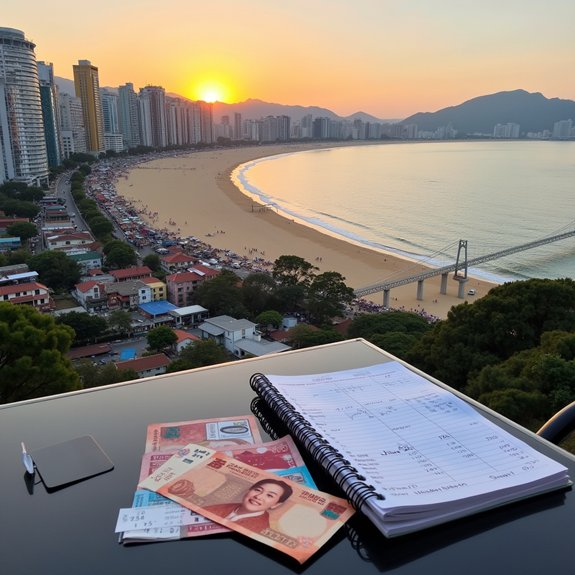
You know, you’re gonna feel the pinch with Busan’s transit costs, hitting anywhere from $7 to $55 a day depending on your rides and routes—it’s no joke. But hey, throw in some budget hacks like booking spots early or grabbing those affordable street eats, and you’ll stretch your cash further than you thought. Seriously, it’s almost laughable how a few smart moves can turn expenses into a non-issue, if you’re paying attention. In Busan, subway fares are only about $1 for trips under 10 km, helping you keep more money in your pocket. Additionally, exploring local food options like Tteokbokki can provide filling and flavorful meals at a budget-friendly price.
Busan Transit Costs{var1}
Busan’s transit costs hit hard and fast, starting at a base ₩1,300 for metro rides up to 10km. You’ll navigate public transport like metro lines and city buses, juggling your travel budget with fare discounts and transit cards that ease the sting. For added convenience, mobile tickets must be downloaded through the app to handle fare adjustments based on your category. Some cities in Japan, such as Tokyo, Osaka, and Kyoto, utilize IC cards to simplify public transportation payments, enabling easy travel across different rail systems.
- Public transport options: Mix metro lines, city buses, and taxis for seamless moves—think ₩1,300 base metro versus ₩4,800 taxi start. Ouch.
- Fare discounts: Snag youth or child rates; buses offer 50–65% off, but don’t expect miracles on that travel budget.
- Transit cards: Use CashBeam for metro-bus transfers at ₩500 off—it’s your wallet’s best friend, seriously.
- Travel tips: Time transfers right; free metro switches within 10 minutes, or pay up. Night services? Buses hit ₩2,000–₩2,500, no joke.
- Taxi services: Base fares climb to ₩7,500 for deluxe—add surcharges after 11 p.m., and suddenly you’re rethinking that ride.
Busan Budget Hacks{var1}
How exactly do you stretch your won in Busan without the usual tourist traps?
Start with budget accommodation—hostels or guesthouses for 15,000-30,000 KRW a night, or crash in a jimjilbang for even less. It’s not luxurious, but who needs fancy sheets when you’re saving big? Options like Nampo Homestay Guesthouse offer cozy, clean rooms at affordable rates in central locations, providing an authentic Korean guesthouse experience.
For food savings, plunge into street eats like tteokbokki for under 5,000 KRW, or hit Jagalchi Market for fresh seafood deals. Skip pricey restaurants; grab groceries from Emart or convenience stores instead—meals that won’t empty your wallet. Also, try Gimbap for an affordable and quick meal option.
Explore free spots like Haeundae Beach or Gamcheon Village; they’re scenic and stingy on costs. Staying near these areas, such as at the Haeundae Capsule Hotel or Gamcheon Culture Village Hostel, helps maximize your experience without breaking the bank.
Oh, and avoid peak season—prices spike, and that’s just annoying.
Free walking tours? Score. You’re welcome.
Frequently Asked Questions
What Visa Is Required for Visiting Busan?
Imagine this: you’re eyeing Busan, but visa requirements could trip you up.
For visiting, you need a valid passport, and most folks require a tourist visa (C-3) for stays up to 90 days—unless you’re from visa-free countries like the US or UK.
Oh, and don’t forget K-ETA if you’re exempt; it’s a hassle, but skip it and you’re out of luck.
Check facts, folks—entry’s strict.
Yeah, it’s that simple.
Is English Widely Spoken in Busan?
Is English widely spoken in Busan? Not really—it’s a moderate scene here.
Language barriers crop up often, especially outside tourist interactions where folks might chat in English.
South Korea’s overall proficiency hits 523 on the EPI, lower than Seoul’s 562.
So, you’re in for some smooth talks, but don’t bet on it; prepare for awkward pauses and that classic “huh?” moment.
Yeah, it’s real.
Which Neighborhoods Are Safest for Tourists?
You’re wondering which neighborhoods are safest for tourists?
Busan’s crime rate is ridiculously low—way below global averages, imagine that!
Haeundae Beach boasts a strong police presence, keeping things chill with its beachy vibes and a nod to Gyeongju Culture’s harmony.
Seomyeon’s crowds deter nonsense, while Nampo’s markets buzz safely.
Pick these spots; you’re set for zero drama. Stay aware, have fun!
How Do I Exchange Currency in Busan?
Exchanging currency in Busan? You hit local banks and exchanges at Gimhae Airport, Seomyeon, or Nampo-dong for straightforward swaps.
Use crisp, higher-denomination bills—yeah, they actually matter. Digital options like Wise give mid-market rates, skipping markup nonsense.
Korean Won’s got bills up to 50,000 won, coins down to 1 won, but those tiny ones? Practically useless.
Compare rates, don’t get ripped off. Seriously.
What Apps Help With Busan Navigation?
Finding your way around Busan is like dodging rain in a storm—chaotic but doable with the right tools.
You’re relying on top navigation apps like KakaoMap and Naver Map for public transport. KakaoMap nails hyper-accurate bus data, real-time tracking, and 3D views—oh, and it mocks your delays with precise ETAs.
Naver Map dishes out subway routes, offline maps, and live schedules. Both serve up traffic updates, but hey, don’t blame them if you miss a train. Use ’em smart.
Conclusion
So, you’ve hit Busan’s beaches, wandered its historical gems, timed those festivals just right, and tackled adventure routes like a pro. Ferries whisked you around, packing was a breeze, bowing felt oddly fun, health stayed in check, and expenses? Well, let’s call that a ‘spontaneous donation’ to memories. It’s all wrapped up—Busan’s vibe hits different, leaving you grinning, even if your wallet’s whispering complaints. Immerse yourself next time; it’s pure magic.
More on Transportation:

Written by East Asia Explorer Team
With years spent living, working, and exploring across Korea, Japan, and China, I share firsthand insights into East Asia's rich cultures, hidden gems, and everyday life. My journey also includes studying in Malaysia and traveling through Southeast Asia, experiences that have deepened my appreciation for the region's diversity. Through practical tips, local stories, and travel guides, I aim to help fellow explorers discover both the celebrated highlights and the lesser-known corners of East Asia.