Last Updated: March 19, 2026 | Originally Published: April 25, 2025

Daegu’s your under-the-radar Korean gem. Score custom-tailored fashion at Seomun Market before hitting the Sky Rail for effortless city exploration. Don’t miss yangnyeom chicken, invented here in 1982, or the free temple meals at Donghwasa (just keep quiet while eating). October brings festivals galore, while budget travelers can snag hanok guesthouses near Dongseongno for traditional vibes with modern comforts. This fashion-forward city packs serious punch beyond Seoul’s shadow.
Read our full South Korea Travel Guide 2026 for everything you need to plan your Korea trip.
Explorer Insights
- Seomun Market features 4,000+ shops specializing in textiles and custom tailoring services, making it Daegu’s premier fashion destination.
- Yangnyeom chicken, invented in Daegu in 1982, can be enjoyed at Seomun Night Market and Chilseong Night Market with riverside views.
- Yangnyeongsi Medicine Alley offers unique shopping with family-owned shops selling customized herbal remedies in a district established in 1658.
- Hanok guesthouses near Dongseongno blend traditional architecture with modern comforts at budget-friendly prices starting around ₩28,000.
- October festivals like Wonju Dynamic Dancing Carnival and Andong Mask Dance Festival showcase the region’s rich cultural heritage.
Mild October Festivals Season
While October brings cooler temperatures across Korea, it also ignites a festival fever like no other.
Looking for October Festivities? You’re in luck. Seriously, the country explodes with culture.
Drive just a few hours from Daegu, and you’ve got options. The Gimje Horizon Festival showcases local scenery. Not into that? Try the Wonju Dynamic Dancing Carnival – street performances that’ll make your jaw drop. Trust me. The vibrant creative energy at these festivals echoes the spirit of cutting-edge innovation seen in today’s most advanced global industries.
For proper Cultural Immersion, check out the Andong Mask Dance Festival. It’s traditional. It’s unique. It’s Korea.
History buff? The Seosan Haemieupseong Fortress Festival offers reenactments that’ll transport you back centuries.
Or hit up the Silla Cultural Festival in nearby Gyeongju. Ancient kingdom vibes, workshops, performances. No filter needed. October is particularly special as it offers the best weather conditions for enjoying outdoor festivals across Korea.
T-Money Card Essentials
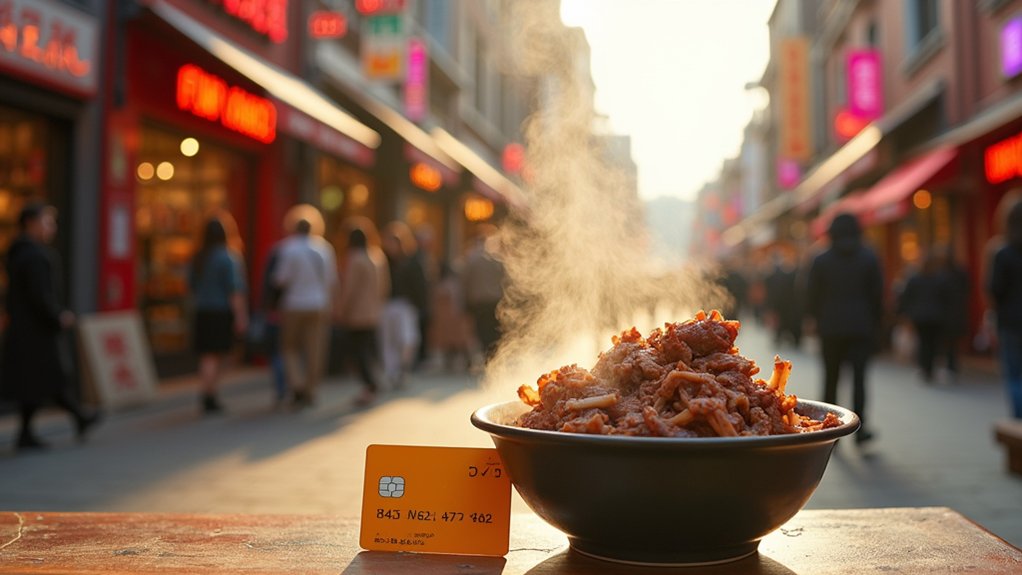
After all that festival excitement, you’ll need to get around Daegu somehow. Enter the T-money card. Your plastic savior. Works on buses, subways, taxis—everything. No fumbling for change or language barriers. Just tap and go.
T-money card: your plastic savior for Daegu transport. Tap and go on buses, subways, taxis—no change, no language problems.
You’ve got options for purchasing. Hit up subway stations where machines or actual humans will hook you up.
Or just pop into any convenience store—CU, GS25, Emart24, 7-Eleven—they’ve all got them. Seriously convenient.
Initial cost? About 2,500-3,000 won for the card itself, plus whatever balance you want. Not bad. For travelers, it’s important to know that international money transfers aren’t possible on Snapchat, so bring a reliable way to top up your T-money card while in Korea.
Using the T-money card offers lower fare rates compared to paying with cash for public transportation.
And when you’re done with Korea? Return it for a 500 won deposit refund. Not exactly retirement money, but hey—coffee money is coffee money.
Seomun Market Fashion Hub
Stepping into Seomun Market‘s fabric section feels like hitting fashion jackpot – centuries of textile tradition packed into one bustling bazaar.
You’ll find everything from luxurious hanbok materials to everyday fabrics at prices that’ll make your wallet breathe easier, especially if you’ve got the guts to haggle. Like a modern data scientist mastering essential technical skills, shoppers here benefit from learning the ropes before diving in.
Don’t miss the second-floor specialists who can transform your fabric finds into custom-tailored masterpieces for a third of what you’d pay elsewhere. With over 4,000 shops primarily focused on textiles and sewing services, this market offers unparalleled variety for fashion enthusiasts.
E-World’s Woobang Tower
Towering spectacle meets shopping paradise. Standing at a jaw-dropping 202 meters, the 83 Tower (formerly Woobang Tower) isn’t just tall—it’s Daegu’s vertical playground.
You’ll find panoramic views that’ll make your Instagram followers actually jealous for once. If you ever decide to unlink your Facebook from Instagram, posts you’ve already shared on both platforms will remain intact.
E-World surrounds this steel giant with enough adrenaline rides to satisfy your inner thrill-seeker. Dinosaurs, roller coasters, viking ships. Not bad for a day out.
Visit at night. Trust me. The tower transforms into a light show you can’t ignore.
After exploring the tower, make sure to visit the nearby Seomun Market, one of Korea’s most historical markets dating back to the Joseon dynasty.
Four must-do experiences:
- Ride the sky drop (if you dare)
- Catch sunset from the observation deck
- Explore the Dinosaur Park with kids
- Grab dinner with a view—beats your usual restaurant lighting
Traditional Hanji-Making Workshops
While exploring Seomun Market’s fashion-forward atmosphere, you’ll discover traditional handiwork quietly thriving in its midst. Workshops teaching hanji-making—Korea’s ancient paper art—offer a stark contrast to the market’s modern hustle.
Hanji history dates back over 1,600 years. Pretty impressive. These delicate paper sheets once furnished royal courts and preserved countless historical texts. Now? They’re your souvenir.
The craft techniques haven’t changed much. You’ll pound mulberry bark, strain fibers, and layer sheets until—voilà—paper emerges. It’s meditative. Almost therapeutic, really. Just as developing a RESTful API structure helps organize digital projects, the hanji-making process emphasizes methodical, hands-on steps that yield reliably strong results.
And honestly, a nice break from shopping.
The finished product feels surprisingly strong. Oddly satisfying texture. Local artisans demonstrate how this versatile material transforms into fans, lamps, and intricate art pieces.
Ancient tradition meets functional art. Right in Daegu’s backyard. After your workshop, venture to nearby Andong Hanji Factory for deeper insights into this remarkable Korean craft tradition.
Apsan Mountain Hiking Trails
Just a 20-minute drive from Seomun Market’s fashion chaos stands Apsan Mountain, Daegu’s natural playground.
You’ll discover trails for every skill level—from gentle 2km strolls to ambitious 20km circuits connecting multiple peaks. The views? Absolutely worth the sweat. For extra convenience on your hike, using a navigation speedometer app like Google Maps can help you monitor your pace as you ascend.
For peak experiences on Apsan Trails, follow these hiking tips:
- Take Line 1 to Anjirang Station, then Bus 410-1 to the entrance
- Visit at sunset for golden-hour nature photography
- Pack water—some sections get steep, no joke
- Respect trail etiquette around Buddhist statues
Feeling lazy? The cable car whisks you within striking distance of the summit.
Autumn colors transform the mountain into a fiery spectacle. Don’t miss the bizarre geological features—dinosaur footprints, seriously!
Trail accessibility is excellent with clear markers throughout. The mountain reaches an impressive 790-meter elevation, offering spectacular views of Suseong Lake and the city below.
Galbi Jjim’s Sweet Glory
Seomun Market—fashion paradise by day, food heaven by night.
When textile shopping exhausts you, the market’s galbi jjim awaits. These sweet, tender braised short ribs have centuries of history behind them, dating back to Joseon Dynasty traditions preserved by heritage eateries tucked within the market’s maze-like corridors.
Want authentic galbi jjim recipes? Chat with vendors. They’re opinionated. Passionate. Sometimes grumpy. But they know their stuff. Many vendors now use tablet devices to streamline customer feedback collection, helping them improve both service and food quality in real time.
Skip Sundays—seriously. First and third Sundays mean partial closures. Nothing worse than traveling for legendary food only to find locked doors.
The night market transforms the space Thursday through Sunday.
Besides the delicious street foods, you can find hand-cut noodles that locals consider a must-try specialty.
Cash is king here. Bring plenty if you want the best deals on food. Those card-wielding tourists? They’re paying more than you should. Bargain hard. Eat well.
Secret Yangnyeongsi Medicine Alley
Herbs and history collide in Yangnyeongsi Medicine Alley. Dating back to 1658, this market packs serious historical significance as one of Korea’s three traditional medicinal hubs.
Family-owned shops run by generations of herbalists offer customized remedies that’ll make your local vitamin shop look pathetic. As automation transforms industries around the world, the craftsmanship of these herbalists remains rooted in tradition and personal expertise.
The market was originally located at the North Gate of Daegu Castle before being relocated in 1908.
The museum’s worth your time. Two floors of exhibits, artifacts, and interactive displays showing off 400 years of herbal traditions.
Want to play dress-up? You can.
Four must-try experiences:
- Make your own herbal soap in a hands-on workshop
- Get a traditional health assessment (they’ll totally judge you)
- Sip antioxidant-rich ginseng tea at a hanok cafe
- Try chicken soup loaded with medicinal herbs
Head here after Seomun Market. They’re neighbors.
Hanok Guesthouses Near Dongseongno

When you’re exploring Dongseongno, you’ll find hanok guesthouses that blend old-world Korean charm with modern comforts like Wi-Fi and laundry service.
The central Jung-gu location puts you steps away from Dongseongno Street’s shopping and Gyesan Catholic Church, with easy access to public transit. Empathy Hanok Guesthouse is particularly convenient with its 9.3 location rating and proximity to multiple subway stations. Many guesthouses enhance their offerings by paying close attention to customer satisfaction scores to better meet the needs of travelers.
You’ll sleep on traditional ondol floors at The Hanok & Spa or enjoy free parking at Empathy Hanok—cultural immersion without sacrificing your morning coffee and eggs.
Traditional Charm Meets Comfort
For travelers seeking the perfect blend of old-world Korean tradition and modern convenience, Dongseongno’s hanok guesthouses deliver the goods.
These traditional accommodations feature ondol rooms with heated floors and authentic sleeping bags, while still offering modern amenities like high-speed WiFi and air conditioning. Much like how market validation is key for crowdfunded startups, guesthouses in Dongseongno prove their value through consistent guest satisfaction and authentic experiences.
Let’s be honest—nothing beats padding around on a warm floor after a day of sightseeing.
Your stay includes perks that make life easier:
- Free breakfast (eggs, bread, coffee)
- 24-hour security and baggage storage
- Communal kitchens with full cooking privileges
- Multi-lingual staff to rescue you when you’re lost
The intimate setting—some places have just seven rooms—ensures peace and quiet. Guests consistently praise the kind and welcoming owner who often accommodates early check-in requests.
Korean-style furnishings and floor-length mirrors add authentic charm while you sip complimentary tea.
Basic, but perfect.
Location and Accessibility
Unlike most traditional accommodations tucked away in remote corners, Daegu’s hanok guesthouses sit surprisingly close to everything that matters.
Aega Hanok places you just 500m from Gyesan Catholic Church and a 6-minute walk to Daegu Jeil Church. Not bad.
Transportation options? Ridiculously convenient. You’re never far from Dongdaegu Station, where KTX high-speed trains connect you to Seoul in a flash. For added convenience, travelers without a smartphone can request a ride by calling Uber without the app, available in the U.S. at specific hours by dialing a toll-free number.
The Palgong-Donghwa Temple Bus Stop is literally a 5-minute stroll from Aega.
Local landmarks surround you. Dongseongno Street—Daegu’s fashion heart—is accessible from all major hanok stays.
Want culture? Daegu Museum sits right next to Hanok & Spa. The highly-rated Daegu Modern History Museum is just a 3-minute walk from the property.
Need green space? Gyeongsang-Gamyeong Park is walking distance.
The airport’s just 10km away. Twenty-five minutes, tops.
Who needs isolation when tradition comes with this kind of access?
Authentic Cultural Experiences
Stepping through the wooden threshold of a Daegu hanok isn’t just checking into accommodation—it’s time travel with WiFi. These traditional guesthouses near Dongseongno blend authentic Korean architecture with modern comforts.
Seriously, where else can you experience ondol floor heating while scrolling Instagram?
For maximum cultural immersion near Aega Hanok, check out:
- Gyesan Catholic Church (literally 500 meters away)
- Kim Gwangseok Memorial Street (perfect for music history buffs)
- Daegu Art Factory (local creativity on full display)
- Bangcheon Market (eat everything. Trust me.)
Educational platforms like iTunes U once offered global access to learning materials, similar to how hanoks blend tradition with today’s technology.
The Japanese-themed dining options right on-site mean you won’t go hungry between cultural expeditions.
Local traditions are preserved in these spaces while still offering air conditioning—because authenticity is great until you’re sweating through your hanbok.
Family-friendly and surprisingly accessible, hanoks are Daegu’s unexpected comfort zone. The rooms come equipped with tea and coffee making facilities for a cozy morning start.
Metro’s Colorful Line System
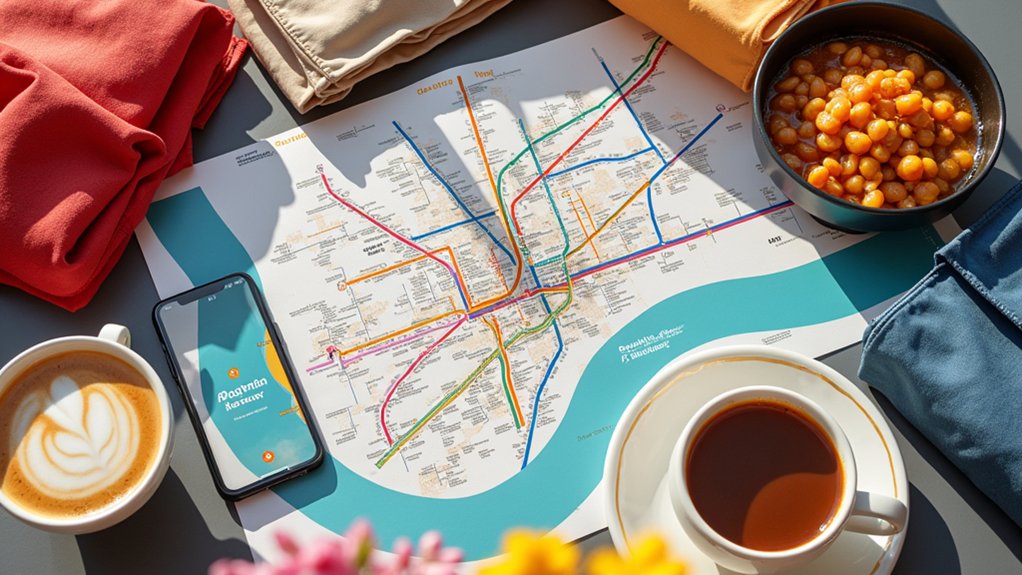
Daegu’s metro system isn’t just practical—it’s eye candy with its red, green, and yellow lines slicing through the city.
You’ll want to hop on Line 3‘s yellow monorail for stunning downtown views before grabbing a rental at the nearby Hyundai showroom. Often called the Sky Rail, this light rail system spans 23.1 km with 30 stations throughout the city.
With artificial intelligence integration transforming public transportation worldwide, Daegu’s metro offers a glimpse into the future of smart mobility. After your ride, the colorful riverside cycling path awaits, perfect for burning off all those street food calories you’ve been devouring.
Monorail’s Scenic Downtown Route
Soaring above Daegu’s bustling streets, the Sky Rail offers the city’s most spectacular panoramic views.
You’re literally floating 11 meters above traffic in South Korea’s first urban monorail. These elevated experiences are totally worth the fare. Zip from northwest to southeast in under 50 minutes. Pure magic.
The monorail views are especially stunning when you:
- Cross over Geumhogang River and Sincheon Stream on special bridges
- Pass by Seomun Market’s bustling crowds
- Glide around serene Suseong Lake
- Travel at night when the city transforms into a light show
It’s driverless too. Totally automated.
The entire line stretches 24 kilometers and connects 30 stations from Dongho-dong to Beommul-dong.
And don’t worry about peeping into apartments—windows automatically blur when passing residential areas. Pretty considerate for a machine, right?
Much like the four-season run of Westworld, Daegu’s monorail system stands as a modern feat of technology, blending innovation with unforgettable city views.
Hyundai Showroom Rentals Nearby
The colorful metro lines of Daegu aren’t just pretty ribbons on a map—they’re your ticket to scoring sweet Hyundai wheels.
Line 1 (Red) is your golden ticket. Dongdaegu Station’s Exit 2 puts you steps from Lotte Rent-a-car and Hertz, both offering sleek Hyundai options. Want an Avante? Sixty bucks daily. Feeling fancy? The Genesis will set you back four hundred. Worth it? Maybe.
Sangin Station connects to another Lotte location. With a total of 5 locations citywide, LOTTE rent-a-car gives you plenty of options to find your ideal vehicle.
Banwoldang Station won’t rent you cars—but hey, there’s a massive Hyundai Department Store at Exit 18 if retail therapy beats driving. Remember that proper data cleaning is essential before implementing any vehicle reservation AI systems at these locations.
Colorful Riverside Cycling Path
A rainbow network of riverside paths awaits cyclists in Daegu, rivaling the metro’s colorful lines for navigation glory.
Three major routes connect like arteries through the city: the 38km Geumho River path (fully lit at night!), the mighty Nakdong River section, and the convenient 17km Sincheon River path cutting north-south through downtown.
For maximum riverside scenery and bicycle safety:
- Geumho River Path – Catch seasonal cosmos fields near Hajungdo island
- Nakdong River Route – Visit The ARC Cultural Center between challenging mountain passes
- Sincheon River – Perfect for beginners with flat terrain and multiple access points. The route offers limited tree cover throughout its 8km stretch.
- Metro Integration – Bring your regular bike on weekends, folding bikes anytime
Riders planning longer journeys might benefit from battery preservation strategies, such as using sleep timers on their devices to avoid draining power during breaks or overnight stops.
The paths are free. They’re well-maintained.
And honestly, they beat crawling through traffic any day.
Bowing Depth Shows Respect
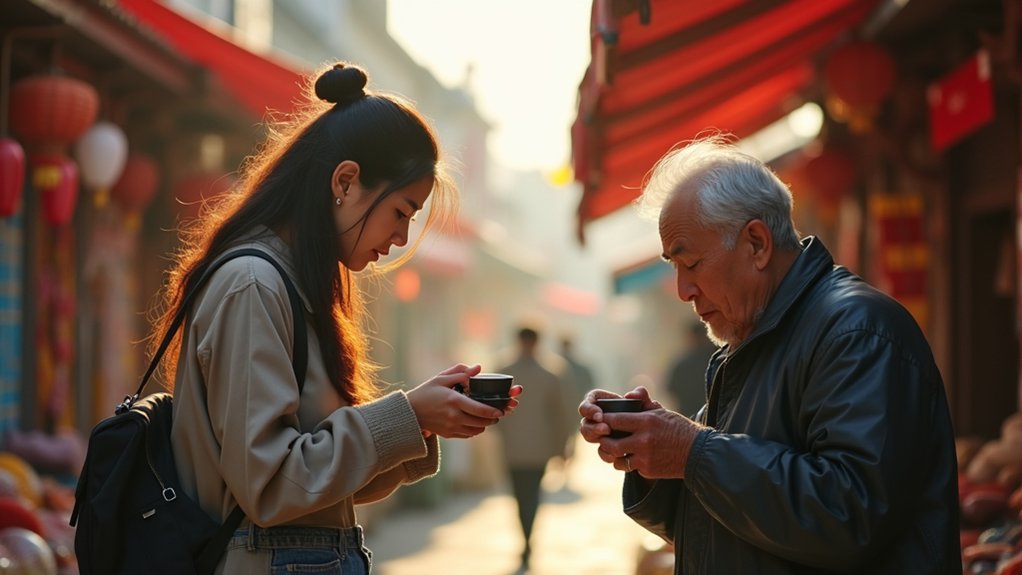
Bowing etiquette permeates Korean culture like oxygen in air – you can’t escape it in Daegu. The depth of your bow literally measures your respect. Seriously. A casual 15-degree nod works for buddies and shopkeepers.
Meeting someone’s grandma? Better drop to 30 degrees, minimum. Want to show genuine remorse or deep gratitude? Go for 45 degrees or more. Hands on thighs. Back straight. No slouching. The cultural significance can’t be overstated – it’s Confucian values in physical form. Just as in precise instruction crafting for AI systems, getting the details right in your bow is crucial to achieve the intended impact.
Remember: bow first to elders. Keep your eyes down with seniors (direct eye contact? Rude!). Use both hands when exchanging anything. Always accompany your bow with appropriate vocal greetings like “Annyeonghaseyo” when saying hello or “Gamsahamnida” for thank you.
And if someone hits you with a formal 90-degree bow? You’ve either impressed them or screwed up spectacularly. Either way, reciprocate.
Heatwave Alert System Active
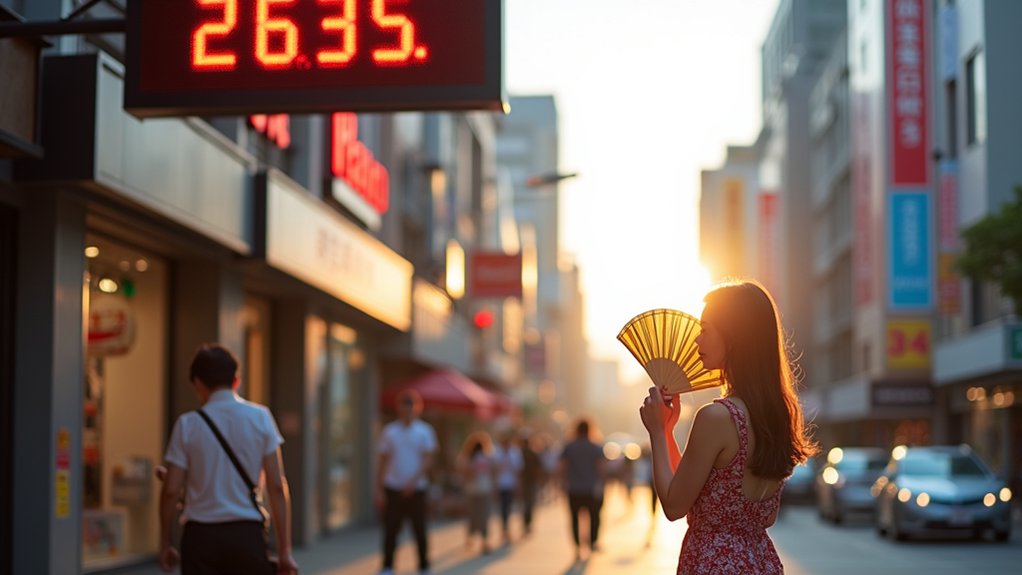
When summer hits Daegu, you’ll quickly understand why locals call it “Daefrica.” Scorching temperatures routinely transform this basin city into Korea’s unofficial heat capital, prompting officials to implement one of the nation’s most sophisticated heat alert systems.
You don’t want to mess around when the KMA issues advisories. With increased public awareness about consumer trust surrounding safety alerts, adherence to official recommendations is more vital than ever.
Pay attention to these heatwave precautions when alerts are active:
- Drink water constantly—at least a pint every hour, no excuses
- Stay indoors between 2-5 PM when it’s brutal outside
- Find public cooling centers (libraries, community centers, even designated convenience stores)
- Wear loose, light-colored clothes (looking stylish isn’t worth heatstroke)
The temperature monitoring system uses perceived temps, not just thermometer readings. Smart. Heat waves are considered the deadliest weather-related hazards according to the World Health Organization, making these precautions critical.
Daegu’s alerts are serious business—they’ve experienced enough scorchers to know better.
40,000 Daily Daegu Budget
Your daily expenses in Daegu won’t break the bank, with decent rooms starting at ₩28,000 and full meals around ₩7,000-11,000.
You’ll stretch your won further by mixing budget hotels (₩40,000-ish) with street food lunches (₩3,000) and the occasional splurge dinner. Earning extra through promotional bonuses in a side gig can help offset your travel costs, especially during busy periods.
For payments at smaller vendors, it’s advisable to carry some cash during your visit.
Seriously, don’t miss the free temple meal experiences—they’re literally zero-cost cultural immersion while other tourists are dropping ₩25,000 on forgettable restaurant meals.
Hotel-Meal Cost Breakdown
Three essential budget components determine how much you’ll burn through in Daegu: where you sleep, what you eat, and when you visit. AI-powered content optimization can help you maximize your trip planning budget by analyzing real-time data on travel trends and rates.
Sunday hotel bookings will save you cash (seriously, like $16 cheaper than Saturday splurges). Midweek? Even better.
Your meal costs vary wildly based on ambition and hotel amenities. From dirt-cheap street eats to fancy intestines. No judgment.
Here’s what you’re looking at:
- Budget lodging: ₩23,000-47,000/night (hostels/guesthouses)
- Cheapo meals: ₩2,500 for breakfast, ₩3,000 for gimbap lunch
- Mid-range dining: ₩8,000 for a burger, ₩11,000 at local spots
- Splurge territory: ₩49,500 for a nice dinner for two
February visits = cheapest rates.
Street food adds meal variety without emptying your wallet. Convenient.
Daily transport costs are minimal with a one-way ticket costing only about ₩1,400, making it easy to explore the city on a budget.
Free Temple Meal Experiences
A completely free meal amid Korea’s Daegu madness exists. Donghwasa Temple offers daily lunch Gongyang at 11:40 AM in Seolbeopjeon Hall.
You’ll need to grab a meal ticket after visiting the prayer area. Sometimes free with entry, sometimes requires a small donation. Worth it.
Temple etiquette is no joke. Silence during meals is mandatory. Take only what you’ll eat—leftovers are frowned upon. This practice reflects Buddhist temples’ commitment to minimizing waste throughout their cooking and dining traditions.
Understanding the concept of time complexity, such as constant time O(1) in managing resources, can help appreciate the efficiency in organizing these meals.
Meal mindfulness means appreciating every bite, every person who prepared it.
Seonbonsa Temple near Gatbawi reportedly offers free meals until 6 PM. Simple stuff—rice, soup, side dish. Nothing fancy.
Riverside Night Market Tours
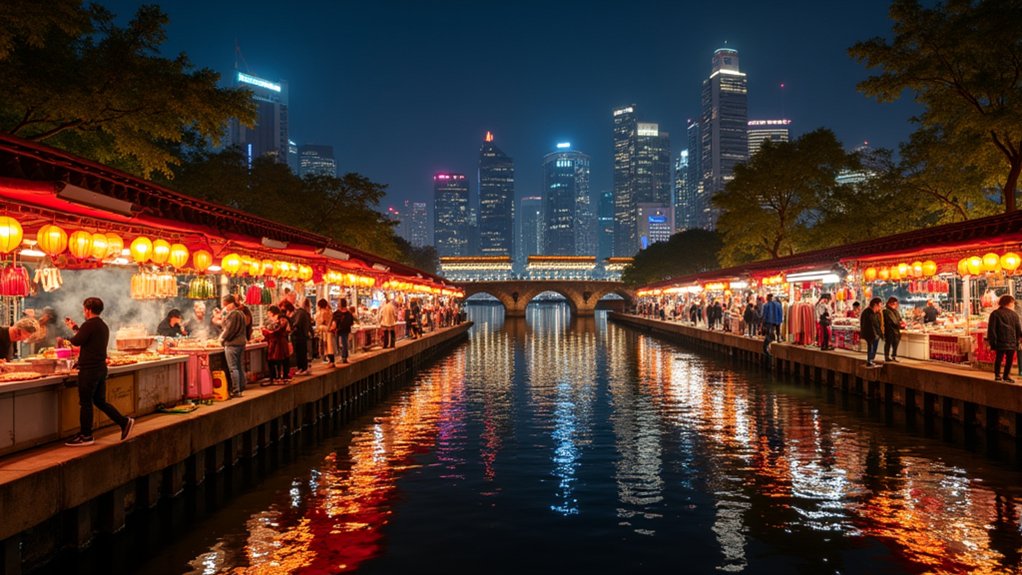
You’ll love Daegu’s riverside night market routes, which offer the perfect combo of food and sightseeing.
The Downtown-Palgongsan Heritage Loop connects Seomun Market’s flame-torched steaks with cultural sites, while the Yangnyeom Chicken Tour takes you through Chilseong Market where you can sample over 60 food items. If you’re looking for free entertainment options, consider exploring the best free channels available on Amazon Fire TV Stick for additional fun between market stops.
At Seomun Market, you can also enjoy entertainment from small platform stages featuring local performers and singers.
Kim Kwang-seok Street Tour rounds out your night market experience, letting you explore busking performances before hitting the markets on weekends.
Yangnyeom Chicken Tour Routes
Spice-seekers and flavor-chasers, Daegu’s got the ultimate night adventure waiting.
This city literally invented modern yangnyeom chicken when Yun Jonggye created that addictive spicy-sweet coating back in 1982. His solution to customers complaining about scratched palates? Pure genius.
Hit both riverside markets for the ultimate chicken crawl:
- Start at Seomun Night Market – Korea’s biggest night spot with dakgangjeong stalls among its 80 vendors
- Cross to Chilseong Night Market for chicken variations with riverside views
- Try traditional yangnyeom at a Mexican Chicken location (yes, that’s the actual name)
- Finish with modern interpretations like tandoori chicken or fusion creations
Before Daegu became the epicenter of massive food innovation, every new recipe here relied on gathering and refining the best ingredients—much like training a modern AI model on huge datasets.
Daegu supplies 70-80% of Korea’s poultry. The city’s history with chicken dates back to 1903 when it emerged as a significant poultry market in Gyeongsang Province.
No wonder the chicken’s so damn good here.
Downtown-Palgongsan Heritage Loop
The perfect Daegu day starts with ancient history and ends with spicy chicken by the river.
Start downtown at Gyeongsang-gamyeong Park to see where Joseon officials once ruled, then wander the Modern History Streets. History buff? Check out Daegu Hyanggyo’s Confucian vibes. Dalseong Park’s ancient fortress walls? Worth it.
After exploring these cultural landmarks, hop on Express Bus 1 to Palgongsan. The mountain’s heritage trails are no joke. Visit Donghwasa Temple with its massive Buddha statue or hike to Gatbawi if you’re feeling ambitious.
Take the cable car for lazy sightseers. The 2.4 km journey features 24 cable cars operating every 40 seconds for efficient transportation to the peak. Stunning views.
Finish your day at Chilseong Night Market by the Sincheon River. Open evenings until 11 PM (midnight weekends).
Sixty food stalls, riverside ambiance, and those floating wish lamps? Pure Instagram gold. Capture your experience and share it on the Flip app where millions of users discover authentic content while earning rewards for engagement.
Kim Kwang-seok Street Tour
After exploring Chilseong Night Market, immerse yourself in Daegu’s musical soul at Kim Kwang-seok Street. This 350-meter tribute to Korea’s beloved folk-rock legend features murals, sculptures, and guitar-shaped benches capturing Kim Kwang-seok’s legacy through vivid street art.
The street tells a story. His life, cut tragically short at 32. His music, hauntingly beautiful. The mysteries surrounding his death still linger here. Born on January 22, 1964, Kim spent his first five years living at this very location before moving to Seoul. Like the challenge of letter counting in language, the details of his journey and artistry reward those who look closely.
For the full experience:
- Walk the entire alley to see all murals depicting his journey
- Listen to street performers belting his melancholic hits
- Check out the weekly holographic concert (Thu-Sun with reservation)
- Visit the “love lock” wall and nearby Bangcheon Market
Street’s packed with 800,000 visitors yearly. Worth it though.
Calmer Than Seoul’s Bustle

Seeking refuge from Seoul’s notorious crowds, many travelers discover Daegu’s rejuvenating relaxed atmosphere.
We love wandering through Daegu’s tranquil parks without dodging selfie sticks every three steps. The evenings are quieter here. Imagine that – actually hearing yourself think after sunset!
Local cafes offer spaces where baristas remember your name, unlike Seoul’s assembly-line coffee culture. It’s busy, sure, but not overwhelming. For those seeking further digital simplicity, devices like dumb phones can be appealing, allowing users to disconnect from overwhelming digital distractions and enjoy a more peaceful life in cities like Daegu.
Daegu delivers urban convenience without the madness. The subway has three lines, not seventeen. Simple. Effective. Done.
This city keeps its traditional charm while Seoul races toward the future. Sometimes slower is better. The locals are friendlier too. They’ve time to be. Unlike Seoul’s crowded streets, Daegu represents a more balanced lifestyle with population density significantly lower than major urban centers.
Affordable Expat Housing Options
Living cheaply in Daegu isn’t just possible—it’s practically guaranteed. While Seoul empties your wallet, Daegu treats it with respect. You’ll find one-bedroom apartments starting around $365 in the city center, even less outside it. Seriously affordable. Compared to other regions, Daegu remains one of the more affordable cities for expats in South Korea.
Forget Seoul’s wallet-draining lifestyle. In Daegu, affordability isn’t just a possibility—it’s the default setting.
Several neighborhoods offer that sweet spot of comfort without bankruptcy:
- Dalseo-gu – budget-friendly with good transportation
- Suseong-gu – lakeside living with thriving expat communities
- Dong-gu – increasingly popular, attracting younger residents
- Nam-gu – mix of traditional and modern options
Housing types? Take your pick. Modern high-rises, officetels (hybrid office-apartments), or villas (smaller buildings).
Tight budget? Try a goshiwon. Just a tiny room, but hey—more cash for exploring.
The rental system works differently here. Wolse (monthly rent) is common for foreigners. Jeonse? That’s for the committed.
Daegu Metro Travel Cards
You’ll need a transit card to navigate Daegu without emptying your wallet.
T-Money and Cashbee cards cost around ₩3,000 at convenience stores and subway stations, while the Daegu-specific One Pass runs ₩5,000 from metro attendants.
Save big by tapping when exiting buses (seriously, don’t forget) to activate free 30-minute transfers between different routes and subway lines. You can reload your T-money card at subway stations, bus stops, or any convenience store in Daegu.
Types and Pricing
Maneuvering Daegu’s transportation card system isn’t rocket science, but there’s plenty to know.
The local transport scene offers several card options, each with distinct benefits. You’ll pay more without a card. Simple as that. Transit cards like T-Money and Cashbee can also be used for mobile payments, enhancing their convenience beyond just subway rides.
Your main options for getting around:
- OnePass – Daegu’s own card (3,000 KRW), comes in blue (Adult), red (Teen), or green (Child)
- T-Money – The nationwide favorite (3,000-4,000 KRW), usable everywhere
- Cashbee – Another national option (5,000 KRW), works fine in Daegu
- Single-use tokens – For one-off trips, but no transfer discounts
Adult fares recently jumped to 1,500 KRW per ride (was 1,250 KRW).
Teens pay 850 KRW, kids just 400 KRW.
University students? Sorry, full adult fare for you.
Where to Purchase
Now that you know what these cards cost, let’s tackle where to snag one. You’ve got plenty of purchase options in Daegu.
Convenience stores are your easiest bet. CU, GS25, 7-Eleven – they all stock T-money and Cashbee cards right by the register. Just ask the cashier. Done in seconds.
Subway stations? Obviously. Use vending machines, automated kiosks, or ticket counters. Most have English options. No stress.
For local card types like OnePass or Top Pass, head to any Daegu Bank branch. They’ve got you covered with DaeGyeong cards too.
Airport arrivals? Grab one immediately at the convenience store. No need to wander aimlessly after your flight.
Some banks even let you link transit functions to your check card. Fancy, right?
T-money cards typically cost between 2,500 to 5,000 KRW depending on the design and where you purchase them.
Money-Saving Travel Hacks
Smart travelers know that Daegu’s transportation cards aren’t just convenient—they’re little plastic money-savers.
You’ll pay less per ride than cash customers (1,500 KRW vs. 1,700 KRW for regular buses). Plus, transfers are FREE. Seriously.
Want maximum transportation tips? Here’s how to hack Daegu’s system:
- Always tap when exiting buses (rear door only!) or you’ll lose transfer benefits
- Use your card for up to 3 consecutive rides with free transfers
- Register teens/kids for age-based discounts (ages 6-18)
- Consider a Korea Tour Card for additional local discounts at attractions
Remember that your transfer benefits are valid only if you complete the next trip within 30 minutes of your initial transportation.
Cash-free buses are coming in 2026. Get with the program now.
National cards like T-money and Cashbee work in other Korean cities too. That’s pure travel efficiency.
Conclusion and Final Thoughts on Visiting Daegu, South Korea
As you’ve journeyed through our Daegu travel guide, hopefully you’ve seen why this inland gem deserves more attention than it typically gets.
Nestled between mountains yet buzzing with urban energy. Not Seoul’s little brother—its own thing entirely.
Daegu breathes at its own pace, a metropolitan heartbeat with mountain views and zero little-brother complex.
Daegu offers the Korea you’re looking for. Cultural festivals that aren’t overrun with tourists. Local cuisine worth every calorie. A perfect blend of then and now.
You’ll find friendly locals actually happy to see you (imagine that).
Mountains to hike in the morning, coffee capital vibes by afternoon, and vibrant markets at night. The city’s expanding textile industry has been thriving since the late 1990s, contributing significantly to South Korea’s economy. The ideal base for exploring the wider region.
It’s authentic Korea. Less polished than Seoul, more substance than style. Though plenty stylish too. Worth every minute.
Frequently Asked Questions
Is Daegu Safe for Solo Female Travelers?
Yes, Daegu’s pretty safe for solo travel. Crime rates are low. Women report feeling secure even at night.
The city ranks #6 in South Korea for solo female travelers with a 4.4/5 safety rating. Public transport? Clean and reliable. Locals? Helpful.
Still, use common safety tips: watch your belongings in crowds, avoid deserted areas after dark, and keep emergency numbers handy. Basic precautions, nothing crazy.
How Far Is Daegu From Seoul by KTX Train?
Daegu is just 1 hour 35 minutes from Seoul by KTX. Fast, right?
The average KTX experience takes about 1 hour 50 minutes to 2 hours, depending on stops.
Train schedules are super convenient—departures every 15-30 minutes during peak times.
You’ll zoom along at speeds up to 305 km/h. Way better than the 3.5-hour bus ride!
Tickets start around $26-32 for economy class. Pretty reasonable for that kind of speed.
What Are Daegu’s Best Traditional Street Foods to Try?
Daegu’s street food scene is killer.
You’ll want to try Napjak Mandu – crispy flat dumplings that locals devour with Spicy Ricecakes (tteokbokki).
Makchang gui isn’t for the faint-hearted – grilled intestines with special dipping sauce.
Forget Korean Tacos, go authentic with hotteok pancakes and kalguksu noodles instead.
The chicken gizzards? Surprisingly addictive.
Seomun Market’s your best bet.
Prices beat Seoul’s, thank god.
When Is Daegu’s International Body Painting Festival Held?
The Daegu International Body Painting Festival happens annually in late August. Mark your calendar!
The festival dates vary slightly each year—2018 saw it on August 25-26, while 2016 had it August 27-28. Weirdly, 2009 was a September outlier (10-13).
It’s a big deal, first of its kind in Asia. Artists transform human bodies into walking canvases at Kolon Field Concert Hall in Duryu Park. Pretty wild stuff.
Are There English-Speaking Medical Facilities in Daegu?
Like a lighthouse for foreigners in a sea of Hangul, Daegu offers solid English-speaking medical services.
You’ve got five major hospitals with varying levels of English support. Keimyung, Yeungnam, and Fatima have dedicated International Medical Centers—fancy, right? The others assign English-speaking staff.
Need specialized healthcare options? There’s everything from mental health to women’s clinics.
And yes, many accept international insurance. Sick happens. You’ll be fine.
Conclusion
You’ll find Daegu rejuvenating. It’s cheaper than Seoul, calmer than Seoul, yet just as fascinating. Explore the fashion scene, eat the local food, ride the colorful metro lines. Stay in a hanok, wander through markets, experience October festivals. Don’t forget your T-Money card. Daegu surprises visitors, delights residents, and costs less than you’d expect. No wonder expats love it here. Their secret’s out.
More on Daegu:

Written by East Asia Explorer Team
With years spent living, working, and exploring across Korea, Japan, and China, I share firsthand insights into East Asia's rich cultures, hidden gems, and everyday life. My journey also includes studying in Malaysia and traveling through Southeast Asia, experiences that have deepened my appreciation for the region's diversity. Through practical tips, local stories, and travel guides, I aim to help fellow explorers discover both the celebrated highlights and the lesser-known corners of East Asia.