

Last Updated: March 19, 2026 | Originally Published: April 26, 2025
Daejeon packs a punch beyond its science reputation. You’ll find cherry blossoms transforming the city each April, while the massive Hanbat Arboretum offers 37 acres of themed gardens. Don’t miss the National Science Museum or O-World’s triple threat of zoo, gardens, and rides. Stay in a traditional hanok near Yuseong hot springs for the full experience. The efficient subway connects everything important. The rest? It’s waiting for curious travelers.
Read our full South Korea Travel Guide 2026 for everything you need to plan your Korea trip.
Explorer Insights
- Daejeon’s National Science Museum and Geological Museum offer interactive exhibits including a T-Rex skeleton for science enthusiasts.
- Cherry blossoms transform the city each April, with Hanbat Arboretum featuring 37 acres of themed gardens.
- O-World combines a zoo, flower gardens, and amusement rides in one location for diverse entertainment options.
- The efficient subway system connects major attractions every seven minutes, with Metro Line 1 linking science districts.
- Experience traditional Korean culture at Hanok accommodations near Yuseong hot springs with heated ondol floors.
Spring Cherry Blossom Season
When was the last time you saw a city transform into a pink paradise overnight? Daejeon does exactly that every early April. The city explodes with color. No warning. Just boom—cherry blossoms everywhere.
Hanbat Arboretum steals the show with its 37 acres of themed gardens. It’s the largest man-made urban arboretum in Korea, and honestly, it shows.
The annual Daejeon Cherry Blossom Festival isn’t messing around either. Thousands flock here for cultural performances and food. Because who doesn’t want to eat while surrounded by nature’s pink confetti?
Want the Instagram shot everyone will envy? Hike up Gyejoksan Mountain. The views are worth the sweat.
Spring temperatures hover between 10-20°C. Perfect weather. Perfect blossoms. Perfect timing.
Daejeon is easy to explore during cherry blossom season thanks to a comprehensive public transit network that includes subways and buses, making travel between festival sites and scenic spots convenient for visitors.
Pack for Mid-Continental Climate
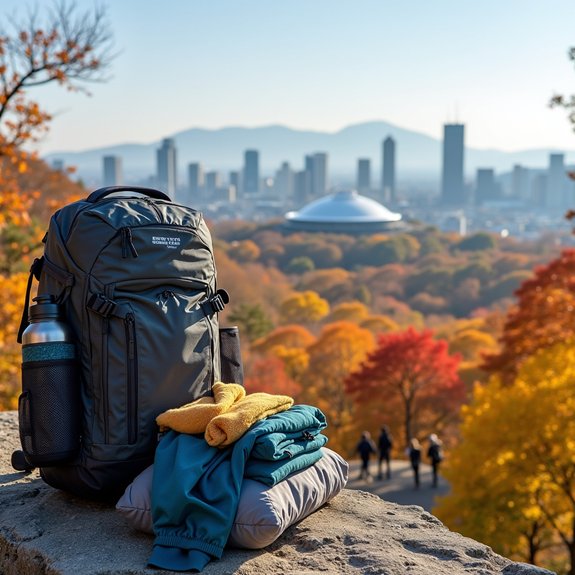
If you’re planning a trip to Daejeon, you’ll need to understand one thing: this city doesn’t do “moderate” when it comes to weather. The mid-continental climate here means business.
Summers? Brutal. Think 30°C+ with humidity that’ll make your hair curl. Pack light, breathable clothes and don’t forget sunscreen. Seriously.
Brace yourself for Daejeon summers—they’re a sweaty, scorching affair that demands strategic packing.
Winters? The opposite extreme. Temperatures plummet below freezing, so packing warm layers isn’t just nice—it’s survival. Bring that insulated jacket. And the hat. And gloves. All of it.
Spring and fall? Now we’re talking! Perfect temps for exploring outdoor attractions. The sweet spot.
Oh, and summer rainfall? Count on it, especially July and August. Throw a waterproof jacket in your suitcase. You’ll thank me later.
If you’re prone to weather-related health issues, locating English-speaking medical services before your trip can provide peace of mind.
Science City Adventures
You’re in for a mind-bending trip through Korea’s science mecca, where the National Science Museum‘s interactive exhibits will make even physics-haters reconsider their stance.
O-World’s triple threat of zoo animals, flower gardens, and stomach-dropping rides offers something for everyone in your crew.
Don’t miss the Geological Museum’s T-Rex skeleton—it’s massive, photogenic, and won’t eat you (promise).
Looking for winter thrills? South Korea boasts world-class ski resorts with modern facilities and slopes suited for every level of skier.
Expo Bridge Spectacle
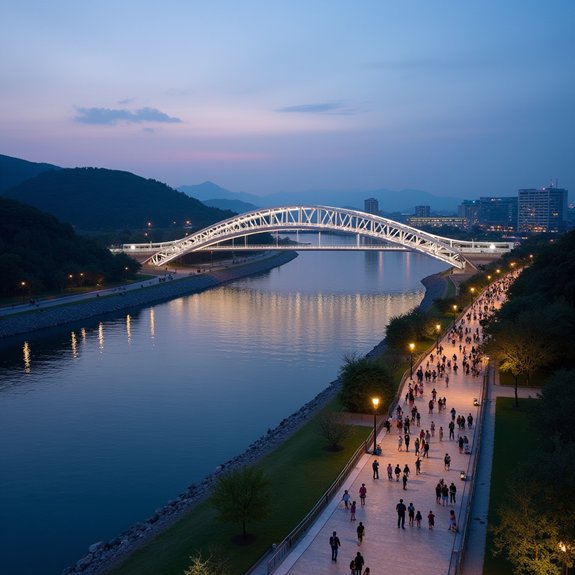
The iconic Expo Bridge transforms into a riot of colors each night, creating one of Daejeon’s most mesmerizing spectacles. Built for the 1993 Daejeon Expo, this isn’t just another pretty structure—it’s a symbol of the city’s dedication to science and innovation. Pretty impressive, right?
As you stroll along this scenic pedestrian walkway, you’ll have picturesque views of the Han River and Daejeon’s skyline. Seriously, your Instagram followers will be jealous.
The bridge connects various attractions within the Expo Science Park, making exploration a breeze. Locals love it here.
The bridge hosts community events and festivals throughout the year, bringing everyone together under those flashy neon lights. Science by day, party bridge by night. That’s Daejeon for you.
For travelers who work remotely, Daejeon offers coworking spaces with high-speed internet and a thriving digital nomad community.
Gongju Palace Folk Performances
Just a short drive from Daejeon’s scientific wonders, Gongju Palace delivers an entirely different kind of spectacle—one that’s been perfected over centuries.
The former Baekje Kingdom capital isn’t just old stones and history. It’s alive.
You’ll witness mesmerizing folk performances that bring traditional Korean culture to life—no boring museum exhibits here. Local artists reenact historical events while musicians create haunting melodies on gayageums and janggus. The rhythmic drumming alone is worth the trip.
These cultural experiences typically coincide with festivals throughout the year. Perfect timing.
The palace grounds themselves? Stunning. You can wander between performances, taking in scenic views that haven’t changed much since kings walked these paths.
Much like the UNESCO World Heritage sites found throughout the Kansai region, Gongju Palace stands as a testament to enduring cultural and historical significance.
Makes science city seem downright modern. Funny how a short drive can transport you across centuries.
Serene Riverside Hiking Trails
After soaking in Gongju’s ancient rhythms, switching gears to explore Daejeon’s natural side feels like finding your zen.
You’ll love Gyejoksan Mountain’s 15 km trail. Stunning views. Zero regrets.
The riverside paths in Daejeon aren’t just pretty—they’re practical.
All skill levels welcome, even if you’re that friend who complains after walking to the mailbox. Families thrive here.
Visit the Hanbat Arboretum while you’re at it.
Themed gardens. Diverse plants. Pure serenity.
The best part? Convenient picnic spots everywhere.
Because hiking makes you hungry. Always.
Getting there won’t stress you out either.
Public transportation drops you right at nature’s doorstep. No complicated travel plans needed. Just you and Daejeon’s tranquil trails.
If you’re planning to travel beyond Daejeon, booking train tickets in advance ensures a smooth and convenient journey across Korea’s rail network.
Spicy Galbi Tech District
Ever wondered where science geeks and foodies collide in perfect harmony? Daejeon’s Spicy Galbi Tech District delivers exactly that. No joke. This buzzing hub in Korea’s “Silicon Valley” serves up innovation with a side of sizzling meat.
| Experience | What to Expect |
|---|---|
| Tech Tours | Research institutes, cutting-edge companies |
| Food Scene | Traditional Korean BBQ, spicy galbi specialties |
| Events | Tech workshops, sustainability demonstrations |
| Culture | Science-meets-culinary fusion atmosphere |
The district sits conveniently close to the National Science Museum—perfect for curious minds. You’ll find interactive learning opportunities everywhere, from impromptu tech demos to formal exhibitions.
The culinary experiences? Mind-blowing. Try the marinated beef ribs. They’re what put the “spicy” in Spicy Galbi Tech District. Science and food. Seriously, what’s not to love?
Brushing up on basic Korean phrases can make your adventures in the Tech District even more memorable and help you connect with locals on a deeper level.
Ancient Shinto Temple Gardens
While Daejeon buzzes with cutting-edge technology, the Ancient Shinto Temple Gardens offer a striking counterpoint to all that modernity.
They don’t actually exist, though. Let’s talk about what’s real here.
You’ll find the National Science Museum instead. Science, not ancient religion, defines this city. The museum’s interactive exhibits on robotics and space travel will blow your mind.
No temples. Just facts.
Want nature? Skip imaginary gardens and explore Hanbat Arboretum – Korea’s largest man-made urban green space.
Or hike Gyejoksan’s 15km trail system. It’s basically a National Park experience without the designation.
After exploring Daejeon’s unique attractions and history, soak your tired feet at Yuseong Hot Springs.
They’re actually ancient. And they actually exist.
For an entirely different travel experience in Asia, consider the Beijing-Shanghai high-speed rail—a 1,318 km journey connecting two of China’s most iconic cities at speeds up to 350 km/h.
Hanok Experience Near Yuseong
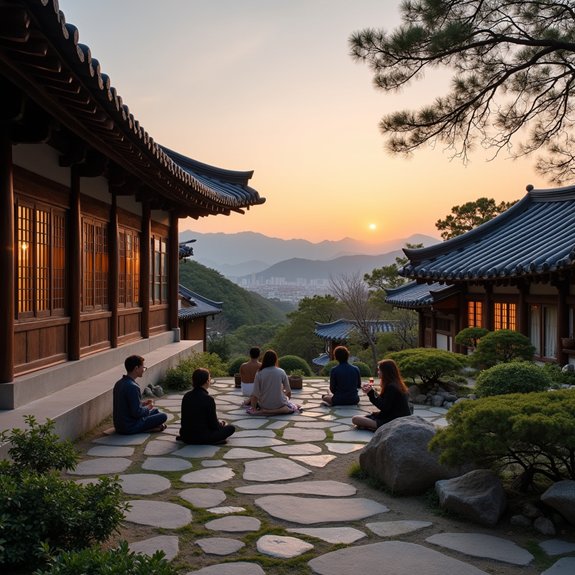
You’ll feel like you’ve stepped back in time when you book a stay at one of Yuseong’s traditional Hanok houses, with their iconic curved roofs and wooden beam structures.
Nothing beats soaking in nearby hot springs after a day of cultural immersion, trust me.
These Hanok experiences often include hands-on workshops where you can try tea ceremonies or Korean cooking—way better than just taking photos of the place.
For travelers seeking a similar blend of traditional hospitality and cultural immersion, Kyoto’s ryokan—like Yuzuya Ryokan in the heart of Gion—offer intimate settings, exquisite kaiseki cuisine, and tranquil gardens for an authentically Japanese stay.
Traditional Architecture Immersion
Why settle for modern hotels when you can sleep in living history? Daejeon’s traditional architecture comes alive at the Hanok experience near Yuseong.
These aren’t just old buildings—they’re wooden masterpieces with tiled roofs and toasty ondol heating systems. History with comfort. Nice.
The restored Hanoks cleverly blend traditional design with modern conveniences. No primitive camping here. You’ll actually enjoy yourself.
Dive into Korean heritage through cultural activities like tea ceremonies, calligraphy, and cooking classes. Skills you’ll forget in a week, but memories that’ll stick.
Gardens and scenic views surround these traditional dwellings, offering a peaceful escape from Daejeon’s urban chaos.
It’s like stepping into a Korean period drama—except you’re the main character.
For comparison, Jeonju is famous for its traditional hanok pension houses, where visitors can enjoy similar cultural experiences, ondol floor heating, and hands-on activities like hanbok try-on in beautifully preserved historic settings.
Hot Spring Hanok Stays
Ever wondered what happens when ancient tradition meets steaming hot springs? You get the perfect Daejeon relaxation combo. Seriously perfect.
Near Yuseong Hot Springs, traditional Hanok accommodations offer the ultimate wellness experience. You’ll sleep on heated ondol floors while wrapped in Korean heritage. No joke, it’s that authentic.
These Hanok stays feature private gardens where you can contemplate life—or just scroll through photos of your day. Whatever works.
The real genius? Location. After exploring Daejeon’s attractions, you’re minutes from therapeutic waters that’ll fix whatever ails you. Science can’t explain why these springs feel so good. They just do.
Ancient architecture, modern comforts, steaming hot springs. Sleep well, wake refreshed. Simple as that.
Staying at a Hanok evokes the tranquility of temple lodgings in Mount Koya, where cultural immersion and peaceful surroundings create a truly restorative escape.
Cultural Workshops Nearby
Several traditional Hanok workshops near Yuseong transform ordinary tourists into honorary Koreans—at least for a few hours.
You’ll dive hands-first into an immersive experience, crafting traditional items while skilled artisans share stories about Korean customs and architecture. Not just watching. Doing.
These Hanok workshops aren’t some tourist trap. They’re legitimate cultural exchange opportunities where you’ll learn to cook local dishes or parade around in hanbok. Instagram gold, honestly.
The best part? Everyone’s welcome. Bring the kids, bring grandma. It’s a fantastic family activity that bridges generations and cultures.
No awkward standing around wondering what to do next.
Book ahead though. These workshops fill up fast. Locals and tourists fighting for spots to learn traditional Korean culture. Worth it.
You can also discover traditional family-run kimchi workshops across Korea, where you’ll learn time-honored techniques and hear the stories passed down through generations.
Subway Connects Science Districts
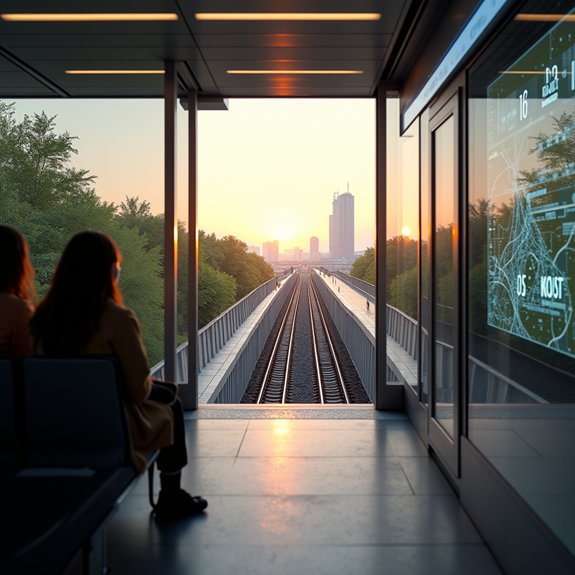
You’ll never waste time waiting for transportation with Daejeon’s efficient subway running every seven minutes to all the science hotspots.
Skip the KIA navigation rental—it’s unnecessary unless you’re heading to remote areas outside the metro’s reach.
The city’s riverside paths offer a revitalizing alternative, perfect for exploring by bike while connecting many scientific attractions without the hassle of traffic.
Apps like Google Maps and offline navigation services are especially helpful for planning routes and exploring areas beyond the subway network.
Swift Subway Every Seven Minutes
Every seven minutes, a sleek train pulls into the station—that’s Daejeon’s Metro Line 1 for you. You’ll never waste time waiting.
The Daejeon Metro connects all major science districts, including the National Science Museum and O-World. Perfect for science nerds and casual tourists alike.
Spanning 22.5 kilometers with 23 stations, it’s your most convenient option for zipping around the city. No car? No problem. The subway’s got you covered.
Free Wi-Fi throughout? Check. Accessibility features? Double check. The system’s clean too—spotless, actually. Koreans don’t mess around with public transportation.
This efficient transit network helps cement Daejeon’s reputation as South Korea’s technology hub. The trains are punctual. Seriously, you could set your watch by them.
For effortless trip planning and public transportation tools, travel apps recommend downloading offline maps and transit apps before arrival.
Reserved KIA Navigation Required
While the subway efficiently connects all major science districts, don’t expect to rely on it exclusively for exploring Daejeon’s sprawling technology campuses.
The Daejeon Metro is fantastic—runs every seven minutes!—but some attractions require additional transportation.
You’ll find the National Science Museum easily accessible via public transport, specifically Metro Line 1. It’s the backbone of educational exploration in this city. Seriously convenient.
For extensive coverage, combine subway travel with the city’s excellent bus network. Together, they’ll get you anywhere worth going. Parks, museums, tech complexes—all connected.
Real-time updates make navigation ridiculously simple. Even for tourists.
The KTX high-speed rail also dumps you right into Daejeon’s scientific heart if you’re coming from another city. No excuses for getting lost. Unless you’re trying to.
For a smoother journey, travelers will benefit from using rechargeable cards that work seamlessly across buses and trains, mirroring the convenience found in other major Asian cities.
Scenic Two-Wheel River Paths
For those seeking a break from Daejeon’s high-tech hustle, the city’s network of river paths offers an entirely different perspective.
The scenic two-wheel paths stretch along Daejeon’s waterways, connecting urban landscapes with surprising pockets of nature. Not a cyclist? Tough luck. This city was made for two wheels.
You’ll find these paths link seamlessly to the science district, making it ridiculously easy to pedal your way to the National Science Museum or Daejeon O-World. No car required. The city’s bike rental services are everywhere.
Spring and autumn transform these river routes into Instagram gold. Seriously. The views are worth the potential saddle soreness.
Plus, you’re being eco-friendly while exploring Daejeon’s hidden corners. Local commuters use these same paths daily—they know what’s up.
Consider bike-sharing services for a cost-effective and flexible way to explore, as similar models throughout Asia make city travel affordable and convenient.
Bowing Before Dining Rituals
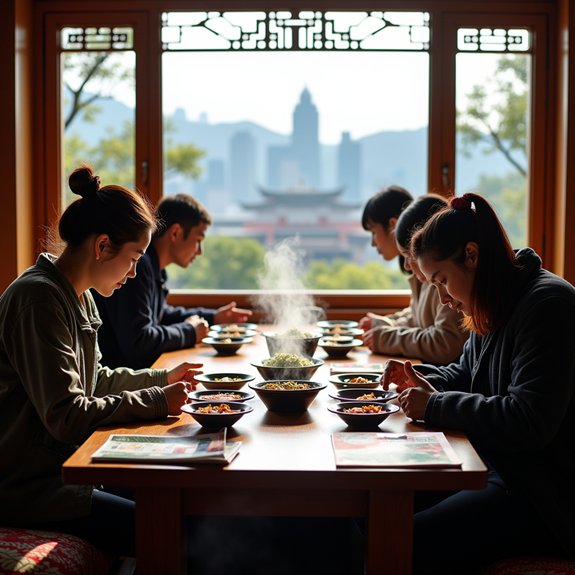
Before diving into Daejeon’s mouthwatering cuisine, you’ll need to master a crucial social skill – the art of bowing. It’s not just a quaint tradition; it’s serious business. Koreans bow to show respect and gratitude before meals. Don’t mess this up.
The deeper you bow, the more respect you’re showing. Simple math.
When dining with locals, wait for the oldest person to start eating. Just sit there. Hungry? Too bad. Patience matters.
Before digging in, you’ll hear “jal meokk겠습니다” – meaning “I will eat well.” Say it. Bow again. Trust me, these small gestures go a long way.
And don’t forget to bow after eating too. It shows you’re not a complete barbarian. Food etiquette matters here.
Removing your shoes before entering someone’s home is another key etiquette practice to remember during meals in Korea.
Air Quality Warning Systems
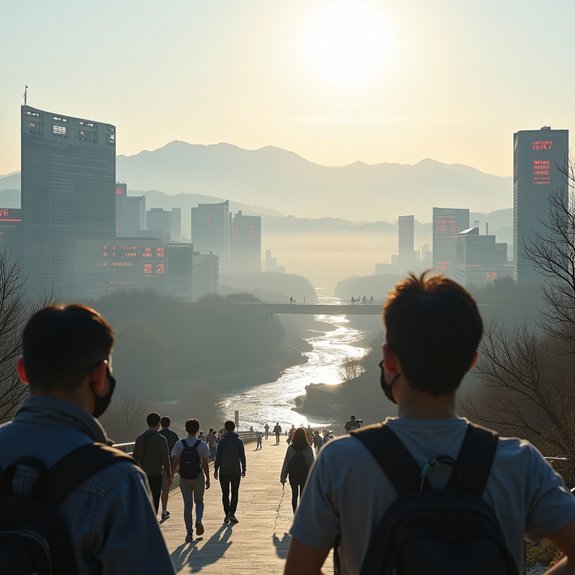
Respect isn’t just for dinnertime in Daejeon – it extends to respecting your lungs too. The city’s got your back with extensive air quality warning systems that monitor pollution levels in real-time. Pretty smart, right?
When PM2.5 concentrations get dicey, you’ll know about it. Alerts pop up on mobile apps and public announcements blare the news. No excuses for being caught unaware.
During winter, pollution can get nasty. Really nasty.
Daejeon’s winter air doesn’t mess around – pollution levels can skyrocket to downright hazardous territory.
These warnings are part of Daejeon’s broader environmental initiatives to boost public health. When alerts go active, locals hunker down indoors, fire up air purifiers, and postpone outdoor plans. The health risks aren’t worth it.
Serious travelers adapt to local conditions – consider yourself informed. Your bronchial tubes will thank you. With emergency assistance coverage, travelers can access help in case air quality triggers health issues during their stay.
Affordable Science City Exploration
You’ll be shocked how far 120,000 won ($100) stretches in Daejeon, Korea’s science capital—think museum hopping, cheap metro rides, and still having cash for souvenirs.
Many temples around the city offer traditional vegetarian lunch programs where you pay what you can, sometimes nothing at all.
Nothing beats free dinosaurs and affordable bibimbap, seriously.
Booking in advance and choosing off-peak travel periods can often unlock the best rates for transportation and attractions.
120,000 Budget Breakdown
Three days in Daejeon won’t break the bank. A thousand bucks? You’ll have plenty left over. The city serves up science and culture without the hefty price tag—places like the National Science Museum and Geological Museum cost nothing. Zero. Free entertainment at its finest.
Accommodations won’t drain your wallet either. S& Hotel and Hotel Graytone Dunsan start around $56 per night. Not bad.
For food, hit Seonhwa-dong Specialty Food Street or slurp noodles at Daeheung-dong Alley. Most meals run under $10. Cheap and delicious.
Getting around? Easy. The metro and buses connect everything important. And if you’re coming from Seoul or Busan, the KTX train gets you there fast.
Nature’s free too—Hanbat Arboretum and Yuseong Hot Springs. Budget-friendly travel at its best.
You can stretch your money even further by using budget-friendly accommodations like guesthouses or hostels, which often include free Wi-Fi and are conveniently located near public transport.
Temple Lunch Programs
While visiting Korea’s science hub, the best-kept secret might be temple lunch programs scattered throughout the city. You’ll enjoy nutritious traditional Korean dishes in a serene environment without breaking the bank. Seriously, it’s dirt cheap.
These programs aren’t just about food. You’re immersing yourself in Buddhist culture. Eat. Meditate. Learn something.
| Temple Experience | What You Get | Atmosphere | Cost |
|---|---|---|---|
| Communal Meals | Traditional Dishes | Peaceful | Low |
| Cultural Immersion | Meditation Sessions | Reflective | Budget-friendly |
| Temple Tours | Local Cuisine | Mindful | Economical |
| Spiritual Heritage | Buddhist Practices | Communal | Affordable |
Daejeon’s rich cultural landscape extends beyond laboratories and museums. These temple lunches offer a moment of calm reflection. Perfect counterbalance to science overload.
For a vibrant international festival experience, Shanghai’s Yuyuan Garden Lantern Festival features handcrafted lanterns, traditional performances, and a stunning illumination of an ancient setting during Chinese New Year.
Science-Themed Weekend Escapes
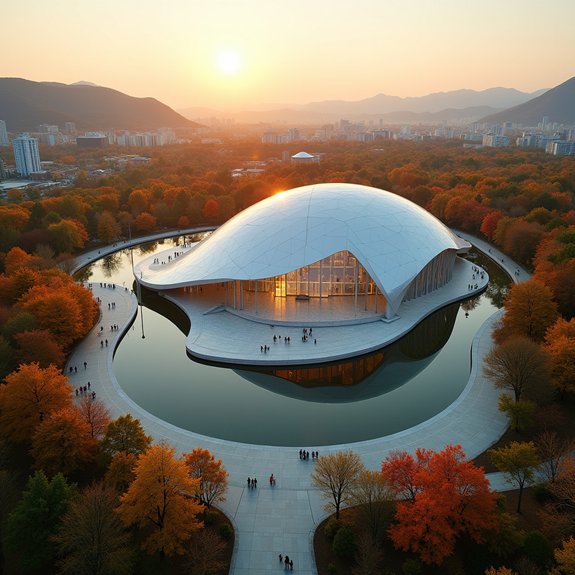
You’ve got three killer science weekend options in Daejeon, and they won’t disappoint.
Hit the Tech Tour with its free National Science Museum and Geological Museum exhibits—perfect for nerds and normal people alike.
If nature’s more your thing, combine science with scenery on the Geumgang Nature Circuit, or time your visit during Science Week for special programs that’ll make your brain actually grow.
For those planning a visit, you can maximize your budget by using house-sitting or home-sharing platforms for affordable accommodations.
Tech Tour-Museum Focus
For science geeks seeking their weekend fix, Daejeon delivers with museums that’ll make your inner nerd rejoice. The National Science Museum is a no-brainer first stop. Interactive displays on robotics, biotech, and space travel will have you pushing buttons like an excited five-year-old. Best part? Admission’s free. Yeah, totally free.
Don’t miss the Geological Museum with its massive T-Rex skeleton. Dinosaurs never get old. English signage means you’ll actually understand what you’re looking at. Imagine that.
Round off your tech tour at Daejeon O-World, the city’s three-in-one attraction combining a zoo, flower land, and amusement park. Perfect for when your brain needs a science break.
The museum’s seasonal science camps focus on environmental conservation too. Science with a conscience. Not bad.
For those who crave adventure beyond the city, Japan’s epic cycling routes like the Shimanami Kaido promise world-class scenery and unforgettable rides.
Geumgang Nature Circuit
Nature nerds, prepare yourselves. The Geumgang Nature Circuit delivers that perfect combo of science and scenery you’ve been craving. Seriously, it’s worth the weekend trip.
The Geumgang River isn’t just pretty—it’s your playground. Hike, cycle, or just watch birds do their thing. Whatever floats your nature-loving boat.
You’ll find the National Science Museum nearby. Interactive exhibits that actually make sense? Shocking, I know. Perfect for families who pretend they’re learning while having fun.
Don’t miss the seasonal workshops. They’ll lecture you about environmental conservation while you’re enjoying yourself. Clever trick.
The whole circuit creates educational experiences without feeling like school. Science and nature, together at last. Mind-blowing stuff.
For travelers planning an extended stay or study adventure, understanding student visa eligibility can make your Geumgang explorations even more rewarding.
Science Week Discovery Tour
While other tourists wander aimlessly, science enthusiasts mark their calendars for Daejeon’s Science Week Discovery Tour.
This isn’t your average museum visit. The National Science Museum—totally free, by the way—packs a punch with interactive exhibits covering everything from dinosaurs to deep space.
You’ll get your hands dirty with hands-on experiments at the Science Alive Discovery Center. Kids love it. Adults too, honestly.
The T-Rex skeleton at the Geological Museum is massive.
For a complete day, hit Daejeon O-World afterward—rides, animals, flowers. The whole package.
The eco-friendly innovation workshops are surprisingly engaging. They’ll have you thinking about renewable energy without boring you to tears.
Science can actually be fun. Who knew?
For an even wider adventure, take inspiration from Japan’s extensive ferry system that connects curious travelers to islands full of unique science, culture, and nature waiting to be explored.
Kyoto Versus Daejeon Comparison
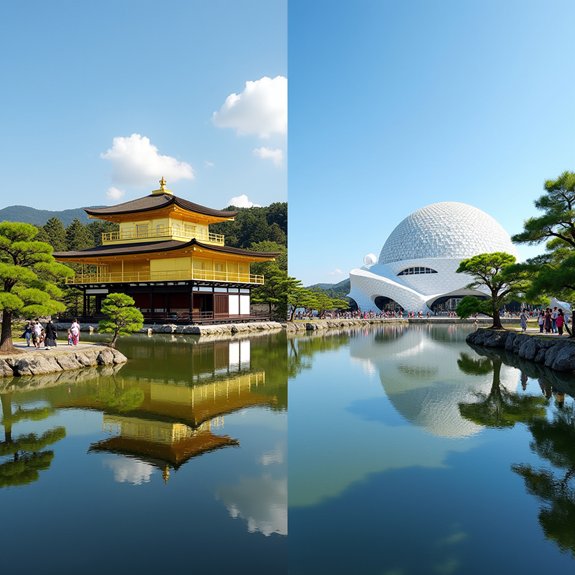
How do two of Asia’s most distinctive cities stack up against each other? Daejeon brings science-forward vibes with free admission to the National Science Museum, while Kyoto charges you to see its temples. Seriously. One’s cutting-edge, one’s ancient. Both beautiful, just different.
Daejeon offers extensive green spaces like Hanbat Arboretum for nature lovers seeking a modern urban experience. Kyoto? Traditional gardens and those Instagram-worthy cherry blossoms.
| Category | Daejeon | Kyoto |
|---|---|---|
| Main Appeal | Science & Technology | Cultural Heritage |
| Cost | More Free Attractions | Entry Fees Common |
| Transportation | KTX High-Speed Rail | Local Trains & Buses |
Kyoto is also home to famous sites like Fushimi Inari Shrine, renowned for its iconic torii gates and deep-rooted Shinto traditions.
Student-Friendly Affordable Housing
Let’s get real about your wallet while visiting Daejeon. This city won’t drain your bank account. Student-friendly options? Plenty.
Daejeon’s budget-friendly accommodations hit the sweet spot between cheap and decent:
- Hotel Graytone Dunsan starts at just $59 per night – perfect when you’re surviving on ramen money.
- Toyoko Inn near the Government Complex offers killer 9.2/10 ratings at $82 – worth every won.
- Hotel Primo ($69) and Hotel March ($73) deliver solid 8.4+ ratings without the premium price tag.
- Most Daejeon hotels, including Ramada, sit right by public transport – no expensive taxis needed.
For thrifty travelers heading to Kyoto, standout options like K’s House Kyoto provide clean dorms, communal kitchens, and central locations without sacrificing comfort or social vibes.
Book early. Seriously. Prices jump during peak seasons. Your future self will thank you.
Local Transport FAQ
You’ll want to master Daejeon’s transport options if you’re staying more than a day.
The metro line zips between major attractions while buses reach practically everywhere – and they won’t break your bank.
Taxis are plentiful but pricier, so stick to trains and buses unless you’re hauling luggage or it’s 2 AM.
If you plan to visit other regions, essential domestic flight routes make exploring Korea fast and convenient.
Train Routes Explained
Daejeon’s train system boils down to three main routes that’ll save you hours of frustration.
The public transport network here isn’t rocket science, despite being in Korea’s science capital.
- Daejeon Metro Line 1 – Runs east to west across the city. Hits major attractions like the National Science Museum and O-World. Perfect for tourists. Use it.
- KTX high-speed rail – Your gateway to Seoul (50 minutes) or Busan (1.5 hours). Sleek, punctual, worth every won.
- Metro Line 2 – Still under development, but will connect north-south parts of the city soon.
- Local connector routes – Short train routes linking suburban areas to main stations.
Navigating the city becomes idiot-proof once you grab a transit card.
Seriously, don’t overthink it.
For comparison, China’s vast cities rely on efficient and extensive metro systems to keep travel simple and fast even for first-timers.
Bus System Basics
While trains get all the glory, the bus system in Daejeon deserves your attention—it’s the unsung hero of local transport. Seriously. With over 60 routes criss-crossing the city, you’re never far from a ride. Local and express options too. Nice.
Fares won’t break your bank—just 1,200 KRW (about a dollar) per trip. Students and seniors pay even less.
The buses connect seamlessly with Daejeon’s metro stations, making transfers a breeze rather than the nightmare you might expect in a foreign city.
The real MVP? Real-time tracking. Check your phone app or glance at electronic displays at bus stops. No more wondering if your bus has come and gone.
The entire transport network in Daejeon just works. End of story.
Using a T-Money card on Daejeon’s buses and subways saves travelers a bit extra on every ride compared to paying cash, and the same card can be used for convenient purchases at local stores.
Taxi Fare Guide
Getting around by taxi in Daejeon won’t empty your wallet entirely, though it’s pricier than buses or metro. Taxis are everywhere and honestly, sometimes worth the extra won when you’re exhausted after a day of sightseeing.
- Base fare: 3,300 KRW covers your first 2km – barely enough to get you anywhere interesting.
- Distance charge: Every 142 meters adds 100 KRW to your tab – those won add up fast!
- Nighttime surcharge: 20% extra between midnight and 4 AM – late-night partying has its price.
- Payment options: Cash or card, your choice – transparent fare calculations mean no surprises.
Most drivers don’t speak English, so have your destination written in Korean.
Or use a translation app. Trust me, pointing randomly at a map doesn’t work.
Conclusion and Final Thoughts on Visiting Daejeon, South Korea
As you wrap up your journey through South Korea’s scientific playground, you’ll likely find yourself surprised by Daejeon’s unexpected charm.
It’s not just nerds in lab coats here. The National Science Museum delivers free, hands-on exhibits that’ll entertain even science-phobes. Trust me.
The city’s parks offer perfect escapes when your brain needs a break.
Hanbat Arboretum. Yuseong Hot Springs. Places to actually breathe.
Cultural experiences abound, especially on Uineungjeongi Street.
Eat everything. Seriously.
Don’t miss Daejeon O-World if you’re traveling with kids—or are just a kid at heart.
Animals, flowers, rides. The trifecta of fun.
This “Silicon Valley” of Korea? It’s got soul beneath the circuits.
Come for the science, stay for everything else.
Frequently Asked Questions
What Is Daejeon’s Traditional Food Specialty?
In Daejeon, you’ll want to try Sanzini Kalguksu—their signature dish.
It’s hand-cut noodles in rich anchovy broth with various seafood. Pretty darn unique to the region. Locals have been slurping this stuff for generations.
There’s also Yongmun Market’s bindaetteok (mung bean pancakes) if you’re feeling adventurous.
The food scene isn’t flashy, but these traditional eats? They’re the real deal. Worth every bite.
Are There English-Speaking Tour Guides Available in Daejeon?
Over 80% of Daejeon’s major attractions offer English-speaking guides.
You’ll find them at the National Science Museum, Expo Park, and most government-run sites. They’re not everywhere, though.
Private guides? Available through KTO’s official website or tourist offices. Some hotels arrange them too.
Language barriers exist in smaller venues.
Backup plan: download a translation app. Seriously, it’ll save your trip when that fancy guide doesn’t show up.
What Nightlife Options Exist in Daejeon?
Daejeon’s nightlife scene isn’t Tokyo-wild, but it’s got options.
Hit up Dunsan-dong for the best bars and clubs – especially around Time World. You’ll find noraebang (karaoke rooms) everywhere.
University areas like KAIST and Chungnam have student-friendly pubs with cheap drinks.
Eunhaeng-dong offers lounges with live music. For international vibes, try Thursday Party or Soul Trane.
Most spots stay open till 2AM. Weekends are busiest, obviously.
How Safe Is Daejeon for Solo Female Travelers?
“Better safe than sorry” doesn’t really apply in Daejeon.
It’s remarkably safe for solo female travelers. Violent crime rates are low, and the city’s well-lit streets feel secure even at night. Public transportation runs reliably late.
Locals are helpful but respectful of personal space. Language barriers exist, sure. Keep normal precautions—nothing extreme needed.
Taxi scams? Rare. Pickpocketing? Not a major issue. Daejeon’s basically your worry-free Korean adventure spot.
What Are the Best Souvenir Shopping Areas in Daejeon?
For souvenir shopping, head to Daejeon’s Eunhaeng-dong area.
It’s packed with local shops selling everything from traditional crafts to trendy Korean cosmetics.
The underground shopping center at Daejeon Station? Surprisingly good deals.
Don’t miss Yuseong Traditional Market for authentic Korean snacks and handmade items.
Dunsan-dong’s modern malls offer higher-end Korean brands.
Pro tip: haggling’s expected at markets, not in department stores.
You’ll find unique science-themed gifts near Expo Park too.
Conclusion
You’ll leave Daejeon with your mind blown. Seriously. Where else can you geek out on science, then chill under cherry blossoms minutes later? It’s Korea’s best-kept secret – way less tourist-crazy than Seoul but packing the same punch. The subway’s stupid-easy. The hanoks are gorgeous. The climate’s tolerable. And it won’t bankrupt you. Daejeon. Go there. Now.

Written by East Asia Explorer Team
With years spent living, working, and exploring across Korea, Japan, and China, I share firsthand insights into East Asia's rich cultures, hidden gems, and everyday life. My journey also includes studying in Malaysia and traveling through Southeast Asia, experiences that have deepened my appreciation for the region's diversity. Through practical tips, local stories, and travel guides, I aim to help fellow explorers discover both the celebrated highlights and the lesser-known corners of East Asia.
