
Last Updated: March 12, 2026 | Originally Published: June 11, 2025
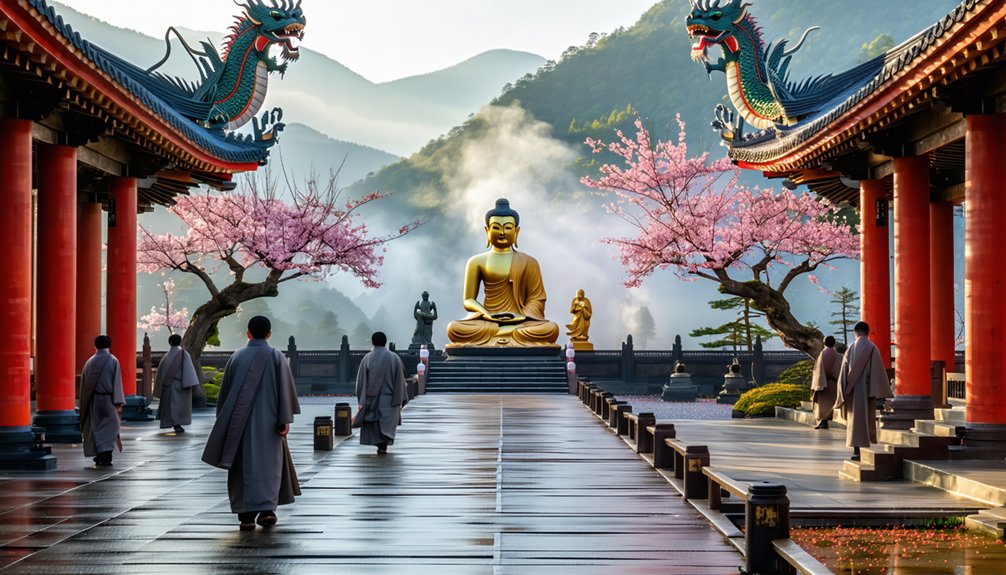
You’ll find Guinsa Temple nestled dramatically in Sobaeksan Mountain’s valleys, a massive Buddhist complex that’s worth the 3-hour trek from Seoul. Founded in 1945 as a tiny hut, it’s now home to 10,000 monks and countless cultural treasures. Navigate sacred gates, witness dawn rituals, and try the temple’s vegetarian meals. Not wheelchair-friendly, though – those stairs are brutal. The temple’s transformation from humble origins to spiritual fortress tells quite a tale.
Read our full South Korea Travel Guide 2026 for everything you need to plan your Korea trip.
Explorer Insights
- Guinsa Temple is Korea’s largest Buddhist complex, established in 1945 and now home to 10,000 monks in Danyang County.
- Visitors journey through symbolic gates including Iljoomun and Sacheonwangum before exploring halls housing irreplaceable Koryo and Joseon Dynasty artifacts.
- Temple architecture features covered galleries connecting major halls with stunning mountain views throughout the expansive complex.
- Visitors can participate in traditional vegetarian temple meals or book overnight Templestay programs for 60,000 KRW.
- The full experience includes witnessing monks’ disciplined daily routines beginning at 3:00 AM with prayer, meditation, and communal activities.
The Journey to South Korea’s Largest Buddhist Temple
When you’re planning to visit Guinsa Temple, brace yourself for a journey that’s as much a part of the experience as the destination itself. This isn’t your typical tourist trap.
Located in Danyang County, this mountain retreat demands commitment. From Seoul? That’s a solid 3-hour drive. Public transport? Nearly 4.5 hours. Worth it.
This sanctuary requires dedication. The journey is long, the road winding, but the spiritual reward awaits the persistent traveler.
The spiritual journey begins before you arrive. Steep roads wind through Sobaeksan’s foothills, revealing Korea’s largest Buddhist temple complex. Thousands of monks call this place home.
Stairs. Lots of them. Not exactly wheelchair-friendly. But that’s the point. Nothing worthwhile comes easy.
If you’re in the area during winter, you might also enjoy visiting Yongpyong Resort for some skiing.
The Fascinating History and Growth of Guinsa Temple
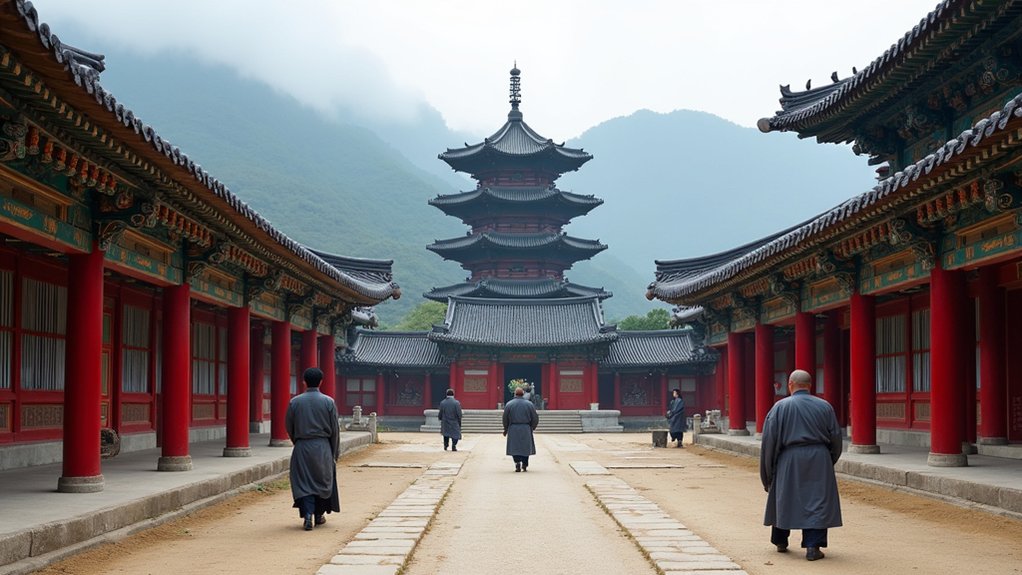
Though Guinsa Temple now stands as Korea’s largest Buddhist complex, it began in 1945 as nothing more than a three-room thatched hut. Fascinating, right?
The architectural evolution has been staggering. From humble beginnings to a sprawling sanctuary that houses 10,000 monks. Not your average growth story.
Grand Patriarch Sangwolwongak established this marvel with a simple mission: save all sentient beings. Pretty ambitious.
The temple’s historical significance extends beyond buildings—it’s home to thousands of irreplaceable artifacts from the Koryo and Joseon Dynasties. National Treasures, seriously.
Who’d have thought such grandeur started with three rooms?
This growth reflects a similar commitment to preserving cultural heritage, much like the architectural highlights found in Gyeongju’s historic sites.
Navigating the Sacred Gates and Buildings
Exploring Guinsa Temple feels like a spiritual treasure hunt through sacred architecture.
You’ll start at Iljoomun Gate—it’s not just pretty, it’s purposeful. Symbolizes your focused intention. No distractions here.
Next, meet the Four Heavenly Kings at Sacheonwangum Gate. They’re intimidating. That’s the point.
Standing face-to-face with the Four Heavenly Kings—their stern expressions aren’t accidental. They’re meant to shake you awake.
The real showstoppers? Gwaneumjeon Hall with its precious Bodhisattva statue and the unique three-story pagoda at Daejosajeon. The spiritual symbolism hits you everywhere.
Don’t miss the Covered Gallery connecting major halls. Practical? Yes. Stunning? Absolutely.
To ensure a respectful visit, always remember to follow essential Korean etiquette during your temple exploration.
The Heart of Korean Cheontae Buddhism
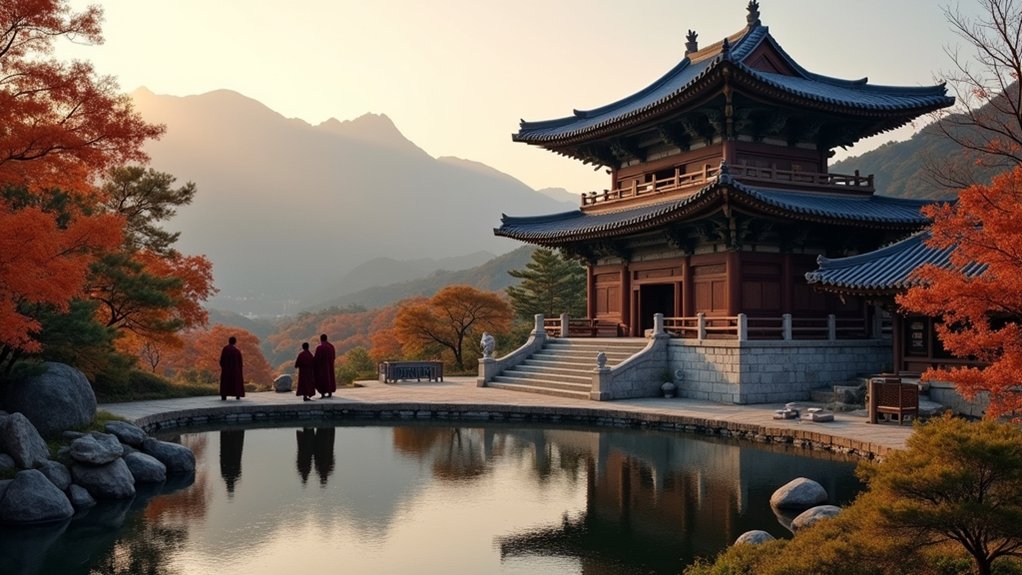
Standing at the heart of Guinsa Temple, you’re not just in a Buddhist complex—you’re witnessing the rebirth of an ancient tradition. The Cheontae Philosophy, practically extinct until 1945, came roaring back when Grand Patriarch Sangwolwongak established this mountain sanctuary.
Unlike other Buddhist sects, this place blends Zen meditation with doctrinal teachings. Pretty clever, right?
The Monastic Tradition here isn’t just about praying—monks work during daylight and practice self-discipline at night.
With 10,000 resident monks, it’s basically a spiritual city. Ancient. Powerful. Reborn from ashes.
For a deeper cultural immersion, travelers can experience hanok accommodations that blend tradition with comfort, as found in places like Jeonju.
Treasures and Cultural Heritage Within Guinsa
Beyond the spiritual practices, Guinsa Temple houses an astonishing collection of historical treasures that’ll make history buffs weak at the knees.
Thousands of ancient scriptures and artifacts sit within these walls—officially recognized as National Treasures by the Korean Government.
Treasures of immeasurable value rest here, bearing the highest honor a nation can bestow upon its cultural heritage.
You’ll find rare works dating back to the Koryo and Joseon Dynasties. No joke. The artifacts preservation efforts here are meticulous, maintaining their spiritual significance for generations.
The Three-story Stone Pagoda containing Buddha’s relics? Absolutely remarkable.
These aren’t just dusty old relics. They’re living connections to Korea’s Buddhist heritage. History breathing right in front of you.
Echoing the splendor of the Joseon Dynasty palaces, Guinsa Temple’s treasures provide a profound link to Korea’s royal and cultural past.
A Day in the Life of Guinsa Temple Monks
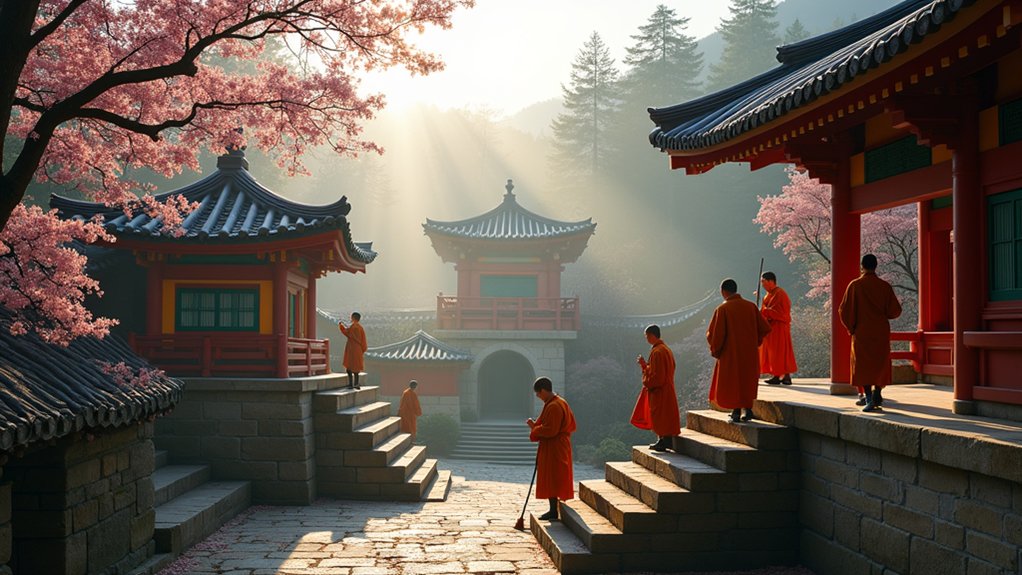
While most of us hit the snooze button repeatedly, the monks at Guinsa Temple rise before dawn, their day beginning at 3:00 AM sharp with the resonant sound of temple bells.
These dedicated practitioners follow a strict regimen. Meditation. Work. Study. Repeat.
Their mornings consist of intensive prayer and sutra recitation, followed by communal breakfast. No sleeping in here, folks.
Daytime? Physical labor. The temple’s self-sufficient economy doesn’t run itself.
Afternoons bring more meditation practices and scriptural study. Evening chants echo through mountain valleys before lights out.
Tough life? Maybe. Purposeful? Definitely.
Up to 10,000 monks maintain this disciplined existence daily at Korea’s largest Buddhist temple.
This disciplined life echoes the cultural preservation efforts seen in Korea’s traditional Hanok villages, where ancient customs and sustainable practices are kept alive.
https://thehistoriantraveller.com/guinsa-temple-guide/
Best Seasons to Visit This Mountain Sanctuary
The monks’ disciplined routine might seem intense, but timing your visit to Guinsa Temple matters just as much as their punctuality.
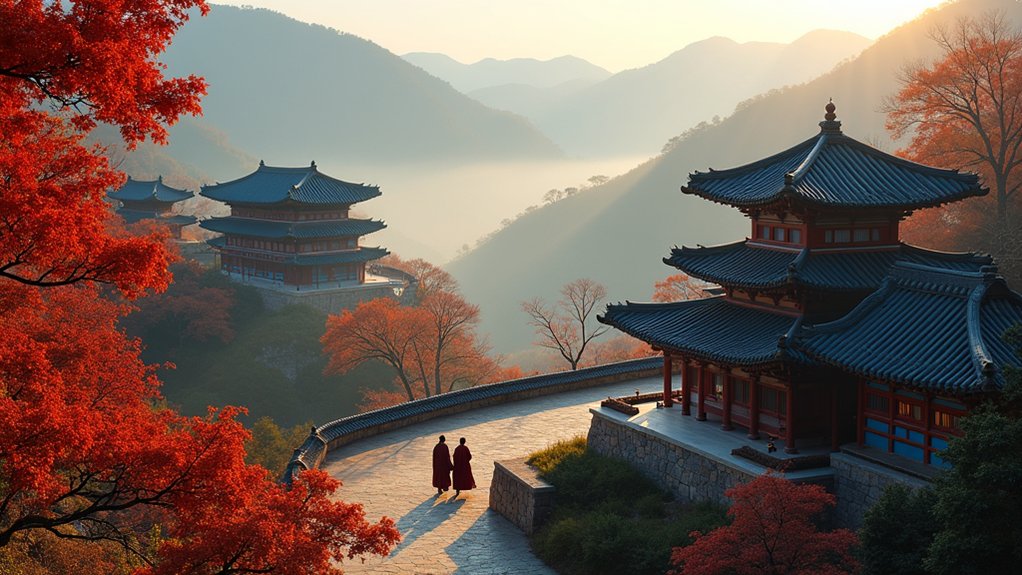
Autumn’s your best bet. Period. The mountain sanctuary transforms as trees explode with fiery autumn foliage, creating a photographer’s dream.
Winter offers a completely different vibe. Snow blankets the temple roofs and mountain paths. Fewer tourists. More silence. True winter serenity that’ll freeze your camera battery but warm your soul.
Spring and summer? They’re fine.
But honestly, why settle for “fine” when you could experience nature’s grand finale or its meditative slumber?
For spring visitors, the blooming cherry blossoms in Korea can enhance your temple visit with vibrant floral displays.
Transportation Guide: Seoul to Guinsa Temple
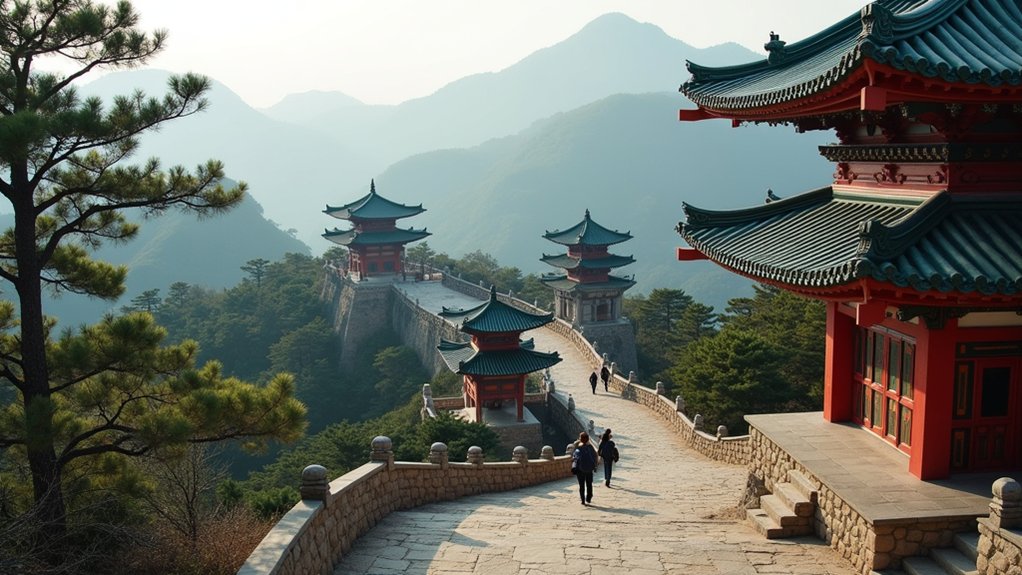
Getting to Guinsa Temple from Seoul requires three distinct travel options, none of them particularly convenient. Brace yourself.
Public transportation takes nearly 4.5 hours. You’ll need a bus, train, and another bus. Exhausting.
The temple tests your patience before you even arrive—bus, train, bus, nearly 5 hours. Some call it a pilgrimage. I call it exhausting.
Driving? Better. Just 2.5-3 hours if traffic cooperates. Not a driver? Taxis exist but they’ll drain your wallet faster than a temple donation box.
Travel duration varies wildly depending on day and season. Weekends? Nightmare. Summer pilgrimages? Worse.
The mountain roads are winding. The scenery’s gorgeous. The journey’s a pain. But that’s part of the experience, isn’t it?
For a potentially faster alternative, consider taking a domestic flight to a nearby airport like Cheongju before continuing by bus.
Participating in Traditional Temple Meals
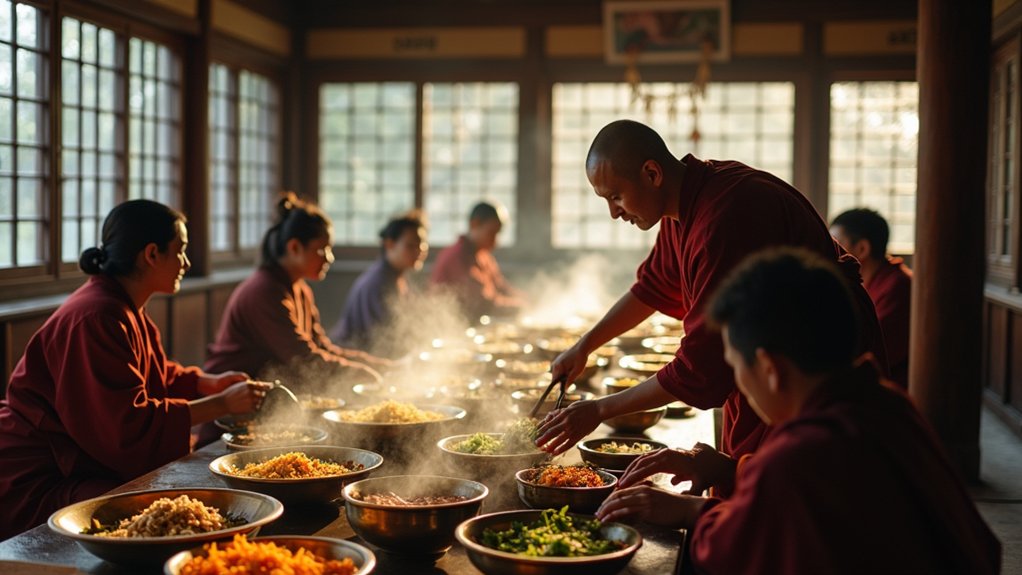
Sharing meals with Buddhist monks at Guinsa Temple offers visitors a rare glimpse into monastic life beyond tourist photography.
It’s completely free, too. Lucky you.
The kitchen here isn’t messing around—they can feed up to 3,000 people during busy times.
Traditional food is simple, vegetarian, and surprisingly tasty. No fancy stuff.
Communal dining happens on floor mats. No chairs. No talking, either.
The monks eat quickly, then they’re gone. Waste nothing. Clean your own dishes when finished.
Trust me, you’ll never look at mealtime the same way again. These meals are part of the daily rituals that include meditation and other temple activities.
Overnight Templestay Programs and Meditation Experiences
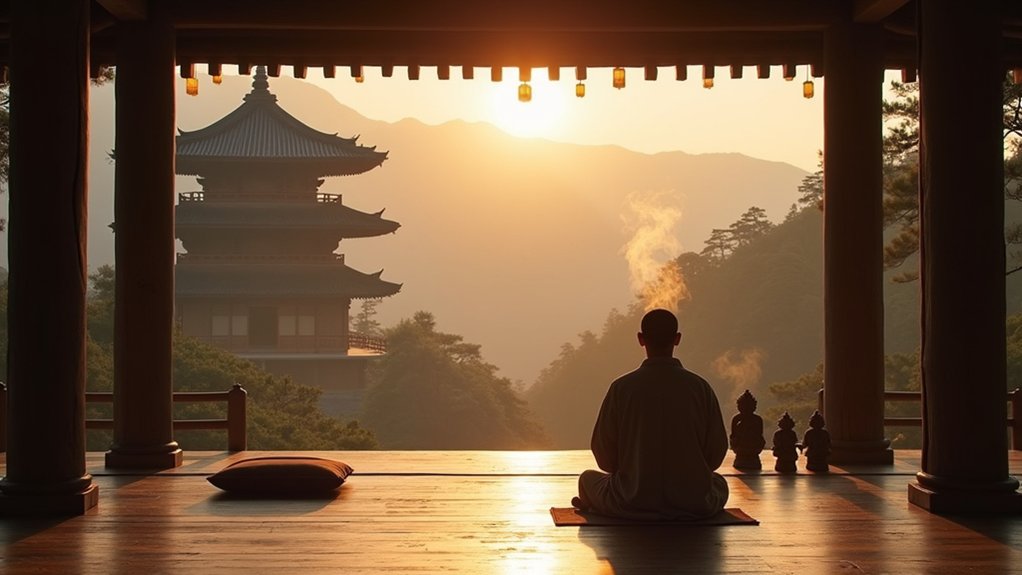
While most tourists snap photos and leave before sunset, serious spiritual seekers can fully immerse themselves in Guinsa’s monastic rhythm through overnight templestay programs.
You’ll get two options: “Let your Worries Go” or “A Day in a Lotus Flower.” Both cost 60,000 KRW. Worth every won.
The programs delve into authentic meditation techniques and mindfulness practices. You’ll eat with monks. Sleep like monks. Wake up at ungodly hours—just like monks.
Booking’s online. Not available every day, though. Plan ahead.
Trust me, nothing beats sitting in silent meditation while overlooking Sobaeksan Mountain. Pure bliss. Or pure torture. Depends on your knees.
For an effortless trip to Guinsa, consider booking tickets in advance to ensure a smooth journey on Korea’s train network.
Practical Tips for First-Time Visitors
So, you’ve decided to visit Korea’s largest temple complex, tucked away in those gorgeous Sobaek Mountains? Smart move.
You’ll need comfortable shoes—those stairs aren’t playing around. Trust me.
Remember, sacred practices deserve respect. Remove your shoes before entering halls. Bow slightly when greeting monks. No loud talking or selfie sticks during ceremonies. Just don’t.
Visitor etiquette matters. Dress modestly. Shoulders covered. No short-shorts. Simple stuff.
Bring coins for vending machines and stay hydrated. Those mountain paths are brutal in summer.
Arrive early. Fewer crowds. Better photos. More peace.
To connect better with the monks, consider learning basic Korean phrases for simple greetings and thanks during your visit.
Worth every step.
Frequently Asked Questions
Can Visitors Take Photographs Inside Guinsa Temple’s Sacred Halls?
You can take photos in most areas of Guinsa Temple, but mind your photography etiquette in sacred spaces.
Some halls might restrict photography, especially during ceremonies or meditation. Nobody wants your flash going off during someone’s spiritual moment.
Always look for signs or ask monks before snapping away. When in doubt, put the camera down. Sacred spaces deserve respect. Simple as that.
Are There English-Speaking Guides or Translations Available at Guinsa?
Serving up to 3,000 meals during peak times, Guinsa is massive—but English resources? Limited.
You won’t find regular English-speaking staff or thorough translations. Some basic English signage exists at major halls.
Guided tours happen occasionally but aren’t guaranteed. Your best bet? Bring a Korean-speaking friend or use translation apps.
Seriously, the language barrier is real here. Beautiful temple, though. Worth the effort.
What Should Women Wear When Visiting Guinsa Temple?
When visiting Guinsa, wear modest clothing that covers your shoulders and knees.
No shorts or tank tops, folks. Cultural appropriateness matters at Buddhist temples.
You’ll want loose-fitting pants or long skirts—nothing tight or revealing. It’s not a fashion show.
Comfortable shoes are a must since you’ll climb tons of stairs. Some visitors bring scarves to cover up if needed.
Simple, respectful attire works best.
Can Children Participate in the Templestay Programs?
Yes, children can join the templestay programs at Guinsa.
They’ll experience the same meditation activities as adults, but with age-appropriate modifications.
The templestay benefits for kids include learning focus, discipline, and cultural immersion.
No video games here! It’s a digital detox they probably need.
Just be prepared – the temple environment demands respect and some quiet.
Not ideal for toddlers.
Older kids? They’ll manage fine.
Are There Nearby Accommodations if the Templestay Program Is Full?
Yes, there are alternatives. Danyang County offers several lodging options if Guinsa’s templestay is booked.
You’ll find motels, hotels, and guesthouses within a 30-minute drive of the temple. Nothing fancy, just practical.
The area’s beautiful, though. While you’re there, check out local attractions like Gosu Cave or Dodamsambong Peaks. They’re worth your time.
The mountainous surroundings are stunning – a photographer’s dream, honestly.
Conclusion
At Guinsa, you’re not just visiting a temple—you’re stepping into living history. It’s massive. Impressive. Worth every minute of your journey. When you finally leave, you’ll carry a piece of this sacred mountain sanctuary with you. The chanting monks, ancient treasures, stunning architecture. In the blink of an eye, your day at Korea’s Buddhist headquarters is over, but the experience? That’ll stick with you like glue.

Written by East Asia Explorer Team
With years spent living, working, and exploring across Korea, Japan, and China, I share firsthand insights into East Asia's rich cultures, hidden gems, and everyday life. My journey also includes studying in Malaysia and traveling through Southeast Asia, experiences that have deepened my appreciation for the region's diversity. Through practical tips, local stories, and travel guides, I aim to help fellow explorers discover both the celebrated highlights and the lesser-known corners of East Asia.
