Last Updated: March 19, 2026 | Originally Published: April 28, 2025
Incheon, often overshadowed by its neighboring capital Seoul, is a vibrant city that seamlessly blends historical charm with modern innovation. From serene islands and ancient fortresses to cutting-edge architecture and bustling markets, Incheon offers a diverse array of experiences for every traveler.
Why Incheon? A Gateway to Korea’s Best-Kept Secrets
168 islands offer everything from UNESCO World Heritage sites to beach resorts and seafood havens.
Read our full South Korea Travel Guide 2026 for everything you need to plan your Korea trip.
Home to Korea’s largest Chinatown, the birthplace of jajangmyeon noodles, and a living museum of maritime history.
Songdo International Business District: A showcase of eco-friendly urban planning, luxury lodging, and Central Park’s tranquil waterways.
Budget-friendly: Enjoy Incheon for as little as $38 (KRW 50,000) a day, including local eats and public transport1.
Effortless transit: The T-Money card and extensive subway network make getting around a breeze-even for first-timers
🌸 Springtime Splendor: Cherry Blossoms in Incheon
Each spring, Incheon transforms into a floral paradise as cherry blossoms bloom across the city. The Incheon Grand Park Cherry Blossom Festival, typically held in early April, is a highlight, featuring over 2,000 cherry trees in full bloom. Visitors can enjoy scenic walks, picnics, and cultural performances amidst the blossoms.
Top Cherry Blossom Spots:
Incheon Grand Park: A vast park offering scenic trails lined with cherry blossoms.
Wolmi Park: Combines natural beauty with cultural attractions.
Jayu Park: Offers panoramic views of the city amidst blooming trees
Airport Transit Card Essentials
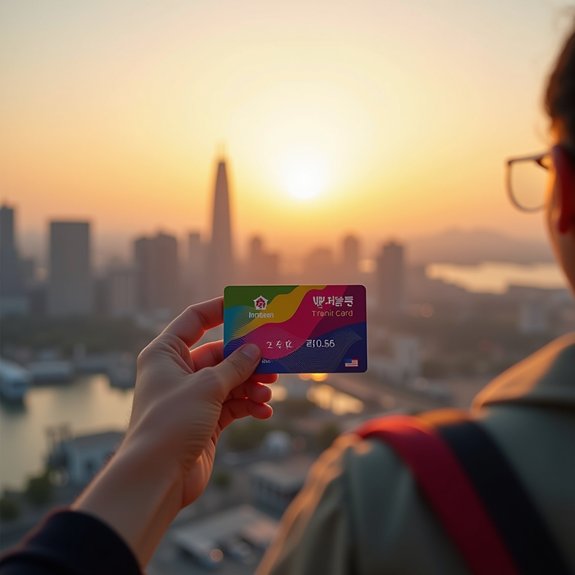
After you’ve had your fill of pink petals, you’ll need to figure out how to get around. The Airport Transit Card is your ticket to hassle-free navigation.
Seriously, don’t leave Incheon International Airport without one.
Load it with at least 10,000 KRW and you’re set. No fumbling for cash or juggling multiple tickets. Just tap and go. Simple.
The card works on subways and buses throughout the city. Transfers are seamless. No headaches.
You’ll save money too. Discounted fares on the AREX train to Seoul? Yes, please.
Running low on credit? No problem. Recharge at any convenience store or transit station.
Trust me, your travel experience will be infinitely better with this little plastic miracle. Public transport in Korea is actually pleasant when you’re prepared.
For traveling in Japan, having essential transportation apps like Google Maps or Japan Transit Planner can make navigating local transit systems just as easy.
Incheon’s Island Escapades: Ganghwa and Yeongjong
Incheon’s islands provide a tranquil escape from urban life.
Ganghwa Island: Rich in history, featuring sites like the Chojijin Fortress and Jeondeungsa Temple.
Yeongjong Island: Home to Incheon International Airport, it also boasts attractions like Eurwangni Beach and the Incheon Art Platform.
🚴♂️ Scenic Routes: Cycling and Hiking in Songdo
Songdo International Business District offers a blend of modern architecture and natural beauty.
Songdo Central Park: A man-made waterway surrounded by skyscrapers, ideal for leisurely walks and boat rides.
Coastal Trails: 11 km of cycling paths provide stunning views of the Yellow Sea and the city’s skyline.

Iconic Incheon Port Structures: Engineering, Heritage, and Creative Flair
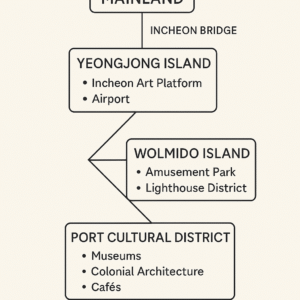
Incheon Port’s skyline is a striking fusion of industrial power, innovative engineering, and artistic vision. Here’s what makes it unmissable:
Incheon Bridge
One of the world’s longest cable-stayed bridges, connecting the mainland to Yeongjong Island.
Not just functional-its sweeping lines are breathtaking at sunset and a favorite for photographers.
Offers dramatic views of the Yellow Sea and the city’s skyline.
Wolmido Island
A lively waterfront escape just minutes from the port’s activity.
Features a bustling amusement park, scenic promenades, and the iconic Wolmido Lighthouse District.
Perfect for families and anyone seeking vibrant cafes, street food, and seaside strolls.
Port Cultural District (Open Port Area)
Home to 130 years of maritime history and colonial-era architecture.
Museums and historic banks tell the story of Incheon’s transformation from a gateway port to a cosmopolitan city.
Artsy cafes and galleries now fill these historic buildings, offering plenty of Instagram-worthy moments.
Incheon Art Platform
A creative hub near the port, hosting contemporary art exhibitions, workshops, and community events.
Attracts both local and international artists, adding a modern cultural layer to the port area.
Convenient for layover travelers, located close to Incheon International Airport.
How These Landmarks Connect
Songdo’s Coastal Hiking Trails
Swapping paint brushes for hiking boots, seasoned travelers discover Songdo’s coastal trails hide some of Incheon’s best-kept secrets.
These well-maintained paths aren’t just pretty—they’re downright spectacular, with Yellow Sea views that’ll make your Instagram followers weep with envy. Nature lovers, this is your jam.
Trails come in all flavors:
- Easy strolls for the weekend warrior
- Challenging routes for serious hikers
- Scenic spots with Central Park views (yes, urban meets nature)
Don’t miss hopping over to nearby Ganghwa Island. Rich history, cultural landmarks, zero crowds.
The amenities along Songdo’s coastal hiking trails aren’t too shabby either—rest areas when your legs give out, information signs when you’re clueless. Perfect for when the city’s concrete jungle becomes too much.
For those craving a taste of epic cycling routes, consider Japan’s Shimanami Kaido, a 70-kilometer path famed for jaw-dropping seascapes and bucket-list adventure.
From humble beginnings to national icon, Incheon’s jajangmyeon is the ultimate Korean comfort food-and its story starts right here in the heart of Chinatown.
:
Jajangmyeon was first created in Incheon’s Chinatown in the early 1900s by Qing dynasty immigrants, originally as a quick, hearty meal for Chinese laborers at Incheon Port. The dish evolved from Shandong-style noodles mixed with black bean paste into the savory, Korean-Chinese classic loved today.:
What began as a working-class staple is now a culinary symbol, with over 7 million bowls served daily at more than 24,000 restaurants nationwide1. Incheon even celebrates its noodle heritage with festivals and the dedicated Jajangmyeon Museum, housed in the historic Gonghwachun building-the birthplace of the dish.:
Thick wheat noodles are generously coated in a rich, glossy black bean sauce, often topped with pork, vegetables, and sometimes a fried egg for extra indulgence2. Each restaurant in Chinatown puts its own spin on the classic, from the mild, velvety “uni jajang” at Sinseung Banjeom to the peppery, robust flavors at Gonghwachun.:
Pair your noodles with tangy pickled radish for the perfect contrast.
Order a side of crispy tangsuyuk (sweet and sour pork) for the full Korean-Chinese experience.
Don’t miss the murals, historic gates, and vibrant markets while you slurp your noodles in Chinatown.
Incheon’s Chinatown is Korea’s oldest and largest, established in 1884.
The Jajangmyeon Museum preserves the dish’s history and the stories of early Chinese immigrants.
The Gonghwachun building is a registered cultural property, symbolizing the deep ties between Incheon’s port history and its food culture.
Once you’ve had your fill of noodles, head to the Wolmido Lighthouse District for a change of pace and scenery.
:
Wolmido’s picturesque promenade is a favorite escape for locals and visitors alike. The iconic lighthouse stands sentinel over the coastline, offering sweeping views and the perfect backdrop for your next Instagram post.:
Stroll along Wolmi Culture Street, lined with vibrant cafes, quirky shops, and street performers.
Enjoy the thrills of Wolmido Theme Park, where classic rides and carnival games delight both kids and the young at heart.
Hop on a ferry from Incheon Port for a breezy ride that’s as much a part of the adventure as the destination itself.
:
If you’re flying in or out of Incheon, the district’s proximity to the airport and range of comfortable hotels make it ideal for a layover or a relaxing overnight stay.
From the bustling lanes of Chinatown to the breezy shores of Wolmido, Incheon’s culinary and cultural heritage is as rich and layered as a bowl of jajangmyeon. Savor the flavors, soak in the history, and let Incheon’s unique blend of tradition and modernity surprise you at every turn.
Luxurious Songdo Harbor Stays
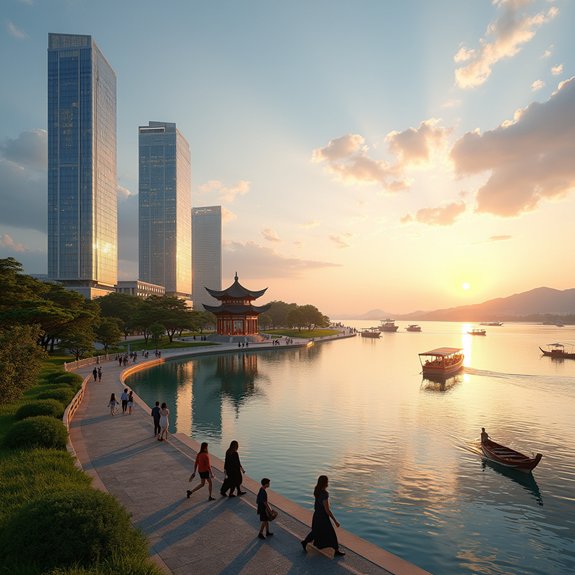
You’ll feel like royalty at Songdo’s waterfront boutique hotels, where floor-to-ceiling windows frame the harbor’s glittering waters.
The G-Tower offers killer skyline views that’ll make your Instagram followers green with envy—trust me, it’s worth the splurge.
For a more nature-infused luxury experience, try the upscale lodgings surrounding Songdo Central Park, where urban sophistication meets manicured greenery.
For those inspired by Seoul’s top-tier hospitality, consider the spacious rooms and breathtaking views offered by the city’s acclaimed luxury hotels.
G-Tower Skyline Views
The iconic G-Tower stands tall in Songdo International Business District, offering some of the most jaw-dropping views in all of Incheon. This architectural marvel was designed by Kohn Pedersen Fox and perfectly captures Songdo’s modern spirit.
Head up to the 33rd floor observation deck for a 360-degree spectacle that’ll make your Instagram followers jealous. Sunsets here? Absolutely unreal.
- Get a panoramic view of the harbor and Yellow Sea – trust me, your camera won’t do it justice
- Check out the building’s multiple facilities including exhibition spaces and a convention center
- Easily combine your visit with nearby Songdo Central Park – they’re practically neighbors
You’ll appreciate the convenient public transport options. The G-Tower isn’t just a pretty face – it’s a bustling business hub that welcomes tourists too.
For those planning a trip to Korea from China or Japan, be aware that passport validity requirements can impact your visa application process and overall travel experience.
Songdo Central Park Lodgings
Luxury finds you at Songdo Central Park’s upscale lodging options, where harborfront views come standard with your morning coffee. The Sheraton Grand Incheon and Oakwood Premier aren’t just places to crash—they’re destinations themselves. Modern amenities? Abundant. Think rooftop pools and spa treatments after a day exploring the park’s green spaces.
| Hotel | Highlights | Perfect For |
|---|---|---|
| Sheraton Grand | Fine dining, waterfront views | Business travelers |
| Oakwood Premier | Spacious suites, kitchen facilities | Extended stays |
| IBD Hotels | Proximity to Canal Walk, Tri-Bowl | Weekend explorers |
You’ll appreciate the family-friendly services when traveling with kids. Spacious suites mean everyone gets breathing room. No cramped quarters here. The entire Songdo International Business District caters to both work and play. Convenient? Absolutely. Luxurious? Without question.
For those craving a winter escape, consider the top 3 Gangwon-do ski hotels known for luxurious mountain views and world-class resort amenities.
Waterfront Boutique Hotels
Nestled along Songdo’s shimmering harbor, boutique hotels elevate the waterfront experience beyond mere accommodation. They’re not just places to sleep—they’re destinations themselves.
The Sheraton Grand and Oakwood Premier aren’t just fancy names; they’re eco-warriors disguised as luxury stays.
You’ll find these harbor havens offer ridiculous comfort while keeping you close to everything that matters:
- Rooftop pools with views that’ll make your Instagram followers actually jealous (for once)
- Easy access to cultural sites like the oddly-named Tri-Bowl and Incheon Urban History Museum
- Modern attractions right outside your door—Songdo Central Park is literally steps away
Business or pleasure? Doesn’t matter. These waterfront gems cater to both with exceptional service.
The harbor views alone are worth the splurge.
Thanks to Korea’s high-speed KTX train, you can travel from Incheon to other major cities with speed, comfort, and unbeatable efficiency.
Subway Line 1 Connections
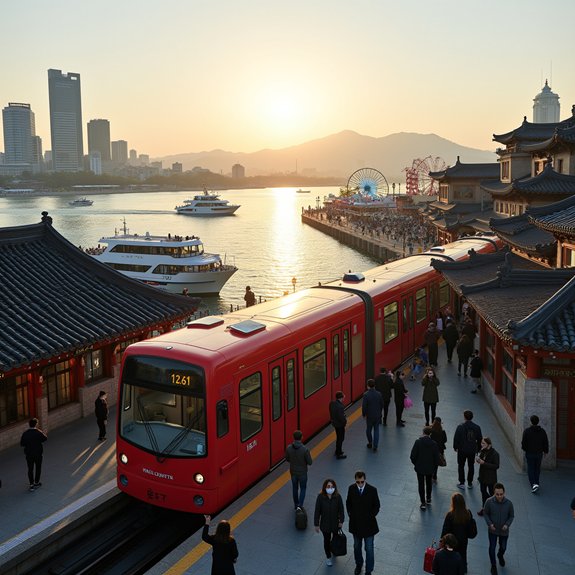
Grab a T-Money card for cheap, hassle-free rides on Line 1 and beyond – seriously, it’s way easier than fumbling with single tickets.
You’ll need an International Driver Permit if you’re planning to rent a car instead, though Line 1’s excellent connectivity makes driving pretty unnecessary.
When you’re ready to escape the urban jungle, hop off at Songdo to explore its gorgeous cycling paths that wind through Central Park and along the waterfront.
If you’re considering quick hops across Korea, essential domestic flight routes like Seoul to Jeju Island and Busan to Gimpo offer fast, convenient connections between major destinations.
Affordable T-Money Card System
How can you navigate Incheon without wasting time and money? Get a T-Money card. It’s not rocket science. This rechargeable smart card works across all public transportation in Incheon and Seoul, saving you cash and hassle.
The setup is simple:
- Purchase for 2,500 KRW (about $2) at convenience stores, subway stations, or airports
- Load it with whatever amount fits your travel plans
- Tap when entering and exiting – that’s it
You’ll save about 100 KRW per subway trip compared to cash. Who doesn’t like discounts?
Plus, you can use it at convenience stores and vending machines. No fumbling for change. No language barriers. Just tap and go. Public transportation in Incheon suddenly becomes ridiculously convenient.
For even easier travel, consider using a public transportation tool to check subway and bus schedules in real-time and plan your route like a local.
International Driver Permits Required
While renting a car in Incheon might seem appealing, don’t bother without an International Driver Permit. Seriously.
But here’s the good news—you don’t actually need one. The subway system is your best friend here. Forget driving hassles.
Line 1 connects everything worth seeing. Ganghwa Island? Yeongjong Island? All accessible without the permit drama. The trains run right to Incheon International Airport and back. Convenient? Absolutely.
English signage everywhere means you won’t get lost. Promise. Public transportation here makes exploring the region painless, even for first-timers.
Skip the rental counter and grab a subway map instead. You’ll thank me when you’re zipping between downtown and the waterfront while permit-less drivers are still filling out paperwork.
Islands, historical sites—all yours. No permit required.
For comparison, Tokyo’s subway network features 13 lines and over 280 stations—showing just how extensive and convenient Asian city transit can be.
Songdo’s Scenic Cycling Paths
Beyond the busy highways where permit-seeking drivers stress themselves out, Songdo’s scenic cycling paths offer the perfect escape for two-wheeled explorers. Spanning 11 kilometers, these well-maintained paths showcase both stunning modern architecture and natural beauty.
You’ll cruise past waterfront views, landscaped parks, and quirky art installations. No traffic headaches here.
Connect directly to Subway Line 1 when you’re ready to explore further. Seriously convenient.
- Access major attractions including Songdo Central Park, NC Cube Canal Walk, and the Business District
- Enjoy designated bike lanes that actually keep you safe – what a concept!
- Perfect for both leisurely sightseeing and practical commuting around town
Travelers looking for affordable adventures in Korea can also consider staying in budget hostels and guesthouses for a cost-effective, social, and convenient base during their visit.
The cycling network is Incheon’s best-kept secret. Skip the car rental. Your legs will thank you.
Respect Incheon’s Bathhouse Customs
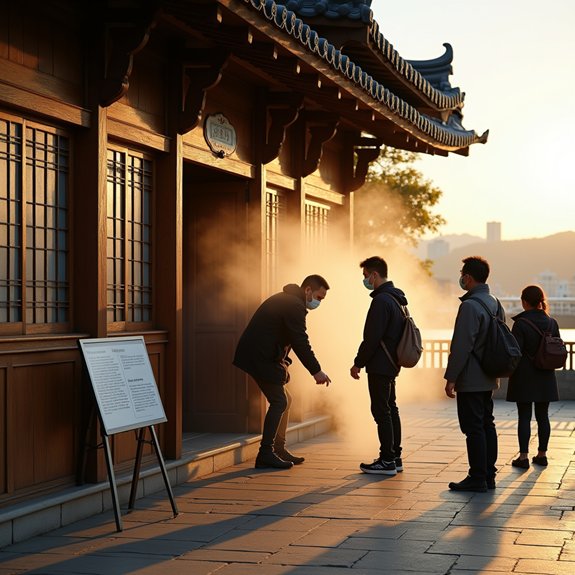
Stepping into an Incheon jjimjilbang requires more than just a desire to relax—it demands respect for deeply ingrained cultural practices.
These bathhouses aren’t your Western spa retreats. They’re communal sanctuaries with their own rulebook.
First thing’s first: cleanliness is non-negotiable. Shower thoroughly before even thinking about dipping into those communal baths. Seriously.
And leave your modesty at the door—along with your swimsuit. It’s not allowed. You’ll be naked. Everyone will be naked. Get over it.
Gender-segregated areas exist for a reason. Follow the signs. When in doubt, ask.
And please, for everyone’s sake, keep quiet in the bathing zones. Save your chit-chat for the relaxation areas. Nobody wants your life story while they’re soaking.
You’ll find luggage storage lockers at many Korean train stations, making it easy to enjoy a bathhouse visit without dragging your bags along.
Earthquake Emergency Protocol Guide
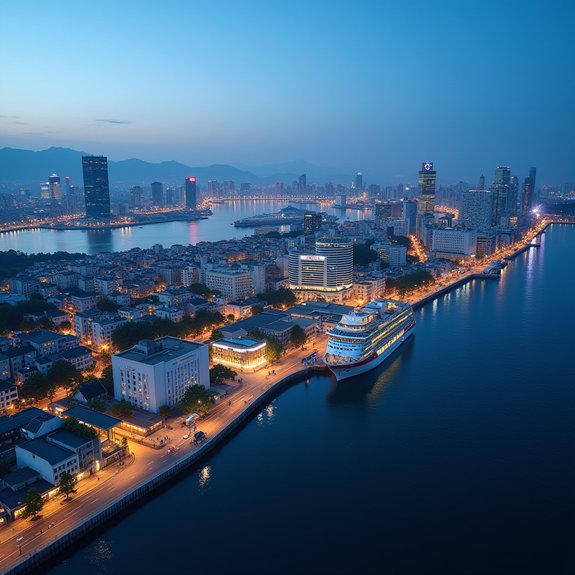
Though Incheon rarely experiences major earthquakes, you’d be foolish to travel anywhere without basic disaster knowledge.
Remember the golden rule: “Drop, Cover, and Hold On.” Forget what movies taught you—doorways aren’t your best bet unless it’s absolutely your only option. Stay inside during shaking. Period.
If you’re caught outdoors:
- Move to open areas away from buildings and power lines
- Protect your head and neck with your arms
- Stay put until the shaking stops completely
After an earthquake, check for injuries and hazards like gas leaks.
Aftershocks can strike without warning, so remain vigilant. Know your evacuation routes and emergency services before disaster strikes.
Travelers should also be aware that Japan’s national health insurance doesn’t cover tourists, so having travel medical insurance that includes natural disaster evacuation benefits is highly recommended.
Seriously, don’t be that tourist frantically googling safety protocol while the ground trembles beneath you.
KRW50,000 Daily Budget
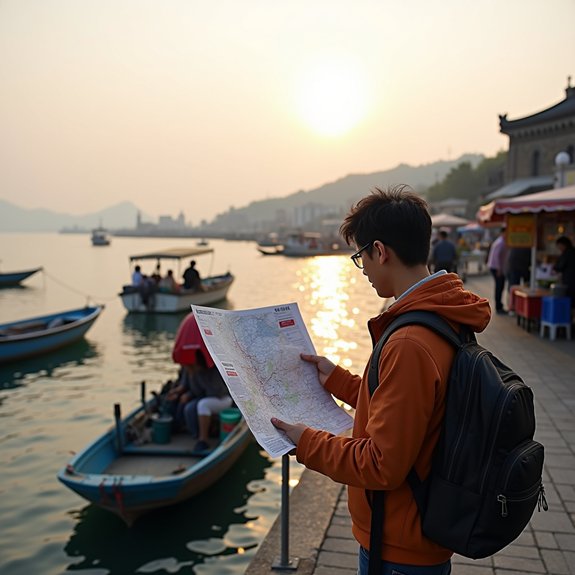
Traveling Incheon on a KRW 50,000 (about $38) daily budget is not only doable-it’s a great way to experience the city’s authentic flavors, culture, and hospitality without overspending. Here’s how to make every won count:
What You Can Expect to Spend
Meals:
Street food at Sinpo International Market, like the famous dakgangjeong (crispy sweet fried chicken), costs just KRW 5,000–10,000 per serving.
Snacks such as tteokbokki, hotteok, or kimbap range from KRW 2,000–5,000.
Even casual sit-down meals typically stay under KRW 10,000–12,000 per person.
Transportation:
Public transport is highly affordable, with subway and bus fares starting around KRW 1,250–2,000 per ride.
The AREX train from Incheon Airport to Seoul costs KRW 4,150–9,500, depending on the train type (all-stop or express).
Local journeys within Incheon are even less.
Attractions:
Many parks, scenic areas, and cultural districts are free to enter.
Markets like Sinpo and Chinatown are open to all, and exploring them is a cultural experience in itself.
Accommodation:
Budget guesthouses and hostels start from KRW 20,000–30,000 per night.
Mid-range hotels are available from KRW 40,000–70,000, but for strict budgeting, stick to guesthouses or jjimjilbangs (Korean bathhouses)
Jjimjilbangs (Korean Bathhouses):
Entry fees range from KRW 5,000–12,000, making them a unique and affordable place to relax-and even sleep overnight if you’re adventurous.
Facilities like Spasis in Incheon offer saunas, hot tubs, rest areas, and restaurants for around KRW 10,000–12,0006.
Sample Daily Budget Breakdown
| Category | Estimated Cost (KRW) | Notes |
|---|---|---|
| Breakfast | 3,000–5,000 | Gimbap or toast from a convenience store |
| Lunch | 5,000–10,000 | Street food or market meal |
| Dinner | 7,000–12,000 | Casual restaurant or market |
| Snacks/Coffee | 2,000–5,000 | Local treats or drinks |
| Transportation | 2,500–5,000 | Multiple subway/bus rides |
| Attractions | 0–5,000 | Most parks and markets are free |
| Accommodation | 20,000–30,000 | Hostel, guesthouse, or jjimjilbang |
| Total | KRW 39,500–67,000 | Easily fits a KRW 50,000 daily budget |
Tips for Stretching Your Budget
Eat Local:
Sinpo International Market and Incheon Chinatown offer filling, authentic meals for under KRW 10,000.Use Public Transit:
Subway and buses are efficient and cheap-get a T-money card for added convenience.Try a Jjimjilbang:
For about KRW 10,000–12,000, you can relax and even sleep overnight in a Korean bathhouse, saving on accommodation.Free Attractions:
Parks, waterfronts, and cultural districts like Chinatown and the Port Cultural District are free to explore.
Getting to Seoul on a Budget
AREX All-Stop Train: KRW 4,150–4,750 (about $3–$3.50), takes about 60 minutes.
Airport Limousine Bus: KRW 16,000–18,000 (about $12–$14), 35–80 minutes depending on traffic.
Taxi: Around KRW 48,000–75,000 ($32–$52), but not recommended for budget travelers.
Market Excursions: Eat, Shop, and Save
Sinpo International Market:
Dakgangjeong (KRW 5,000–10,000), mandu (dumplings), tteokbokki, and mor.
Local crafts and souvenirs are affordable and make for meaningful keepsakes.
Chinatown:
Meals under KRW 10,000, with plenty of snacks and sweets to sample.
Other Markets:
Look for Youth Mall and Snowflake Village inside Sinpo for unique photo spots and local snacks3.
Bottom Line:
A daily budget of KRW 50,000 is realistic for travelers willing to eat local, use public transport, and opt for budget accommodation. You’ll enjoy authentic Incheon experiences-great food, vibrant markets, and even a relaxing jjimjilbang-without breaking the bank.
Pro Tip:
Jjimjilbangs like Spasis are not only a local experience but also a practical, safe, and affordable place to sleep if you want to save even more on accommodation6. Markets aren’t just for eating-they’re a window into Incheon’s culture and daily life.
Hidden Coastal Island Adventures
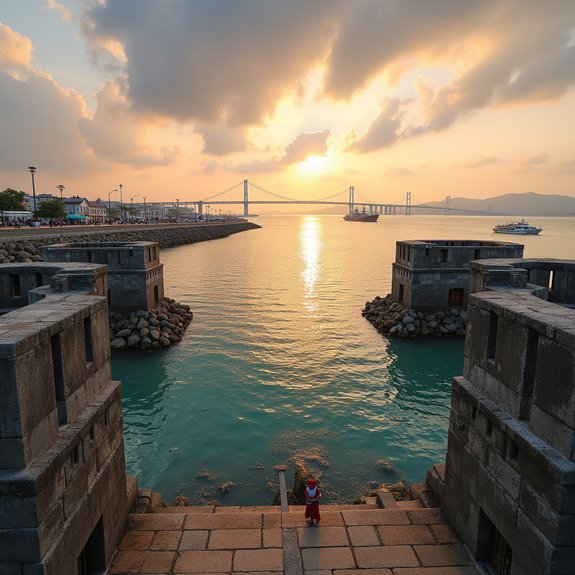
You’ll find adventure beyond Incheon’s city limits on its coastal islands, where the Gangwhado Temple Circuit Tour lets you explore Jeongdeungsa Temple while enjoying killer ocean panoramas.
The Coastal Museum Heritage Trail on Ganghwa Island takes you through Chojijin Fortress – yeah, the same place where locals stroll around in rental hanboks looking ridiculously happy.
For something more thorough, try the Port Exploration Path on Yeongjong Island, where you can hit Eurwangni Beach with its shallow waters perfect for non-swimmers who still want bragging rights about “swimming” in the Yellow Sea.
Travelers looking to explore Japan’s lesser-known archipelagos can rely on essential ferry services that connect remote islands, making access to unique culture and natural beauty easier than ever.
Coastal Museum Heritage Trail
Beyond the crowded tourist spots lies Incheon’s best-kept secret: the Coastal Museum Heritage Trail. This maritime journey takes you across scenic islands where history practically slaps you in the face.
Ganghwa Island isn’t just pretty—it’s packed with cultural treasures like Jeongdeungsa Temple and Chojijin Fortress. Trust me, these coastal heritage sites tell stories that textbooks never could.
You’ll get up close with local fishing communities. Real people. Real traditions. No tourist traps here.
- Guided tours showcase the region’s stunning biodiversity (nature nerds, rejoice!)
- Connect with local artisans practicing traditional maritime crafts
- Experience immersive exhibits that don’t feel like boring museum displays
The trail links everything together—islands, history, artisans—creating an authentic coastal experience that’s invigoratingly un-touristy.
For a completely different Korean experience, consider visiting the famous Boryeong Mud Festival where you can enjoy mud slides, mud wrestling, and benefit from the mineral-rich mud’s therapeutic properties.
Gangwhado Temple Circuit Tour
While most tourists cram into Incheon’s popular attractions, the Gangwhado Temple Circuit Tour offers something authentically Korean. You’ll explore Jeongdeungsa Temple—literally the oldest Buddhist temple in Korea. Not kidding. The spiritual vibes are intense. For an even more immersive cultural experience, consider staying at Bukchon Hanok Village where traditional Korean architecture meets modern comfort.
| Site | Experience | Best Time | Photo Op |
|---|---|---|---|
| Jeongdeungsa | Ancient prayers | Morning | Bell pavilion |
| Chojijin Fortress | Military history | Midday | Ocean views |
| Hanbok Rental | Cultural dress-up | Anytime | Temple gates |
| Coastal Paths | Nature walks | Sunset | Island panorama |
Ganghwa Island packs serious historical sites without the mainstream crowds. Rent a hanbok for the full experience—you’ll look ridiculous but feel amazing. The tour adapts to your interests. Want more temples? Got it. Prefer coastal views? No problem. This island’s cultural heritage runs deep. Perfect for history buffs who hate tourist traps.
Comprehensive Port Exploration Path
Nestled along Incheon’s jagged coastline, the hidden island adventures most tourists completely miss will change how you see this port city.
Beyond the airport lies a maritime playground waiting to be discovered. Seriously, it’s criminal how many people fly in and out without exploring these gems.
Things to do on Incheon’s islands:
- Visit Ganghwa Island’s historical sites like Chojijin Fortress – ancient stones with stories to tell
- Rent a hanbok on Yeongjong Island before hitting Eurwangni Beach – because swimming is better in traditional Korean attire, right?
- Island hop to fishing villages and devour seafood so fresh it’ll ruin restaurant fish for you forever
The sunset views alone are worth the trip.
For those who love the sea, consider a day trip to Busan’s must-visit beaches, where Haeundae, Gwangalli, and Songjeong each offer a unique blend of urban energy, water sports, and sandside relaxation.
Trust me, island hopping beats shopping malls any day. Sea air. Local traditions. Authentic experiences.
Seoul vs. Incheon Waterfront
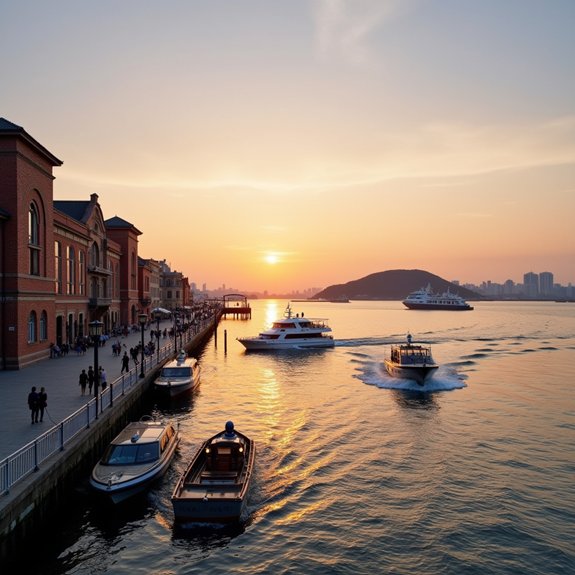
When comparing waterfronts, Incheon and Seoul offer dramatically different vibes. Incheon’s coastal charm shines through its stunning waterfront areas like Songdo Central Park and Incheon Grand Park. Beach activities, nature trails, impressive architecture.
Seoul? Just a river running through concrete.
Seoul’s waterfront? Nothing more than a concrete channel with river water flowing through. Hardly inspiring.
We’ve found Incheon’s waterfront seamlessly blends into its urban planning—modern buildings alongside peaceful parks. The Songdo International Business District is a perfect example. Sleek and sophisticated.
Meanwhile, Seoul’s Han River banks focus on urban recreation and entertainment spots. Different priorities, clearly.
Getting around Incheon’s coastal gems is surprisingly easy with various transportation options. Their public transit system actually makes sense for visitors wanting waterfront experiences.
Seoul’s urban transit? It’ll get you to the river, but you’re missing that true coastal feel. No comparison, really.
Just as Beijing’s traditional hutongs are living museums that tell the story of a city’s past, Incheon’s waterfront areas reflect the fusion of heritage and modernity.
Expat-Friendly Tech Neighborhoods
Unlike many Asian tech hubs, Songdo International Business District stands as Incheon’s crown jewel for expats seeking both innovation and livability.
The Songdo area blends work and play seamlessly, with smart living technologies that’ll make your hometown feel positively Stone Age. Pneumatic waste disposal? Yeah, they’ve got that.
The expat-friendly atmosphere isn’t just marketing fluff—it’s built into the district’s DNA:
- International schools and green parks within walking distance (parents, rejoice!)
- Tech networking events that don’t suck
- Multicultural dining options when you’re sick of kimchi
Songdo’s vibrant culture emerges from its diverse population. Tech professionals mingle in sleek coffee shops, families stroll along waterfront paths.
It’s not perfect—no place is—but for the tech-minded expat, it’s pretty damn close.
If you’re exploring Songdo during the rainy season, it’s worth packing a compact travel umbrella, which is lightweight, durable, and easy to stash in any bag for unpredictable weather.
Incheon WiFi Access Points
You’ll find WiFi pretty much everywhere in Incheon, no need to panic about staying connected.
The airport’s got you covered with free WiFi throughout all terminals, while the city itself boasts over 300 public hotspots in parks, squares, and transit hubs.
For constant connectivity, hit up local cafés or grab a portable WiFi router at the airport—problem solved.
If you need reliable coverage for multiple devices, consider renting a portable WiFi Korea router with unlimited data and convenient airport pickup options.
Public WiFi Hotspots
Staying connected in Incheon couldn’t be easier. The city has gone all-in on free public WiFi hotspots, making sure you’re never left desperately hunting for a signal.
Incheon International Airport offers WiFi from the moment you land—no roaming charges necessary. Thank goodness.
While exploring Incheon, you’ll find connectivity in:
- Songdo International Business District (perfect for those Instagram moments)
- Sinpo International Market (upload food pics in real-time)
- Parks and major tourist attractions (because nature is better with Google Maps)
Most cafés and restaurants throw in free WiFi with your meal.
Just a heads-up—you might need to register with an email or agree to terms. Small price for convenience. Seriously, who travels without WiFi these days?
If you plan to use public transportation in Korea, many stations and buses in major cities also offer free or easy-to-access WiFi for passengers.
Airport Connection Zones
Where else would an award-winning airport excel if not with its WiFi coverage? Incheon International Airport’s free WiFi service has you covered everywhere you turn. No passwords needed. Just select “Incheon Airport Free WiFi” and you’re online. Simple.
The airport’s strategically placed access points guarantee travelers stay connected throughout their journey. Got time to kill? WiFi’s there. Hungry but need to check emails? Connectivity in dining areas. Shopping while working? They thought of that too.
| Connection Zone | Device Compatibility | Speed |
|---|---|---|
| Waiting Lounges | All Devices | High-Speed |
| Dining Areas | Smartphones, Tablets | Streaming Quality |
| Shopping Zone | All Devices | Browsing Speed |
| WiFi Kiosks | Troubleshooting | Technical Support |
If you’re tech-challenged, head to one of the free WiFi kiosks. They’ll sort you out. Fast.
For smooth city travel, utilizing translation apps can help international visitors communicate with taxi drivers when leaving the airport.
Cafés With Free WiFi
Incheon’s café scene doesn’t just serve up killer brews—it delivers digital connectivity that’ll keep you scrolling while sipping.
Whether you’re killing time before a flight or planning your next move, free WiFi spots are everywhere. Just buy something first, okay? Basic etiquette.
Popular WiFi hotspots include:
- Chain cafés like Starbucks—predictable but reliable
- Local spots near tourist attractions in Chinatown and Songdo—perfect for uploading that food pic everyone’s definitely waiting to see
- Incheon International Airport—free connectivity throughout all terminals for those “my flight’s delayed again” moments
These digital oases save travelers from burning through precious data.
The best part? You won’t need to squat awkwardly outside random buildings trying to catch stray signals. Civilized travel, imagine that.
Conclusion and Final Thoughts on Visiting Incheon, South Korea
While many travelers overlook Incheon in favor of Seoul’s glitz, this coastal gem deserves your attention.
From the poignant Incheon Landing Operation Memorial to the futuristic skyline of Songdo, this city seamlessly blends historical significance with forward-thinking design. Trust me, it’s worth the trip.
The outdoor activities alone could fill your itinerary.
Ganghwa Island? Stunning.
Eurwangni Beach? Perfect for those temperate spring days.
And don’t get me started on the culinary scene—Jajangmyeon in Chinatown isn’t just food, it’s an institution.
With Incheon International Airport connecting you to everywhere, even a layover can become an adventure.
Come in autumn. Or spring.
Skip summer’s humidity.
Incheon isn’t just Seoul’s sidekick—it’s the main character in its own right.
Frequently Asked Questions
Is Incheon Safe for Solo Female Travelers?
Yes, Incheon is considered very safe for solo female travelers, much like the rest of South Korea. Crime rates are low, public transportation is reliable, and the city is well-lit even at night.
Precautions: As with any city, exercise standard caution-avoid isolated areas late at night and keep an eye on your belongings in crowded places.
Local Attitude: Locals are generally helpful if you need directions, though language barriers may occasionally arise.
Nightlife: Some areas near the port can get lively after dark, so use extra discretion if exploring late.
What Traditional Korean Foods Should I Try in Incheon?
Incheon is a culinary hotspot well beyond its airport fare.
Jajangmyeon: Try the original black bean noodles in Chinatown, where the dish was born.
Seafood: Indulge in fresh ganjang gejang (soy-marinated raw crab) and hwe (Korean sashimi), especially at Songdo Fish Market.
Haemul Pajeon: Yeongjongdo Island is famous for its savory seafood pancakes.
Street Food: Don’t miss Sinpo Dakgangjeong (sweet and spicy fried chicken), tteokbokki (spicy rice cakes), and hotteok (sweet pancakes) at Sinpo International Market.
Drinks: Pair your meal with makgeolli, the traditional milky rice wine.
When Is the Incheon Pentaport Rock Festival Held?
The Incheon Pentaport Rock Festival is typically held in early August.
2026 Dates: August 2–4, 2026, at Songdo Moonlight Festival Park.
About: Since 2006, this three-day event has featured top Korean and international acts, drawing music fans from across Asia.
Tip: Expect hot weather, energetic crowds, and a festival atmosphere comparable to major global music events.
Are English-Speaking Medical Services Available in Incheon?
Yes, English-speaking medical services are available, especially at major hospitals and international clinics.
Hospitals: Facilities like Inha University Hospital and Severance Hospital’s International Health Care Center offer English-speaking staff and interpretation services.
Emergency: Dial 119 for emergency medical assistance with translation support.
Note: While large hospitals cater to foreigners, smaller clinics may have limited English proficiency.
How Does Tipping Work in Incheon Restaurants?
Tipping is not customary in Incheon or anywhere in South Korea.
Restaurants: Service charges are typically included in your bill, and leaving a tip may cause confusion.
Exceptions: Upscale international hotels may accept tips, but local eateries do not expect them.
Bottom Line: Just pay the amount on your bill-no extra math required.
Conclusion
Incheon offers a blend of island escapes, vibrant food scenes, and modern urban adventures-all with the safety, convenience, and hospitality South Korea is known for.
Connectivity: Fast WiFi and seamless subway links make exploring easy.
Nature & Culture: Enjoy cherry blossoms in spring, luxury stays in Songdo, and rich maritime history.
Value: With efficient public transport and affordable markets, your budget stretches far.
Skip the capital for a day-Incheon’s unique mix of tradition and innovation makes it a destination worth discovering.
More on Incheon:

Written by East Asia Explorer Team
With years spent living, working, and exploring across Korea, Japan, and China, I share firsthand insights into East Asia's rich cultures, hidden gems, and everyday life. My journey also includes studying in Malaysia and traveling through Southeast Asia, experiences that have deepened my appreciation for the region's diversity. Through practical tips, local stories, and travel guides, I aim to help fellow explorers discover both the celebrated highlights and the lesser-known corners of East Asia.