Last Updated: March 19, 2026 | Originally Published: April 27, 2025
Read our full South Korea Travel Guide 2026 for everything you need to plan your Korea trip.
Seoul dazzles first-timers with its perfect blend of ancient and futuristic. You’ll wander through 14th-century Gyeongbokgung Palace, then gaze from the 555-meter Lotte World Tower. Grab a T-Money card to zip around efficiently on the subway. Don’t miss Gwangjang Market’s street food or the spectacular cherry blossoms in April. Budget travelers can get by on $47 daily. Pack seasonally – Seoul transforms completely throughout the year. (Source: UNESCO Korea Heritage Sites)
Explorer Insights
- Arrive at Gyeongbokgung Palace by 8:45 AM to avoid crowds and wear hanbok for free entrance.
- Use a T-Money card for efficient navigation on Seoul’s extensive subway system operating from 5:30 AM to midnight.
- Visit Gwangjang Market for traditional Korean food and try popular street foods like tteokbokki and gimbap.
- Experience cherry blossoms at Yeouido Park during early April or autumn foliage for stunning seasonal beauty.
- Stay in Myeongdong for first-time visitors as it offers a central location with excellent access to attractions.
Seoul’s Vibrant Cityscape Awaits
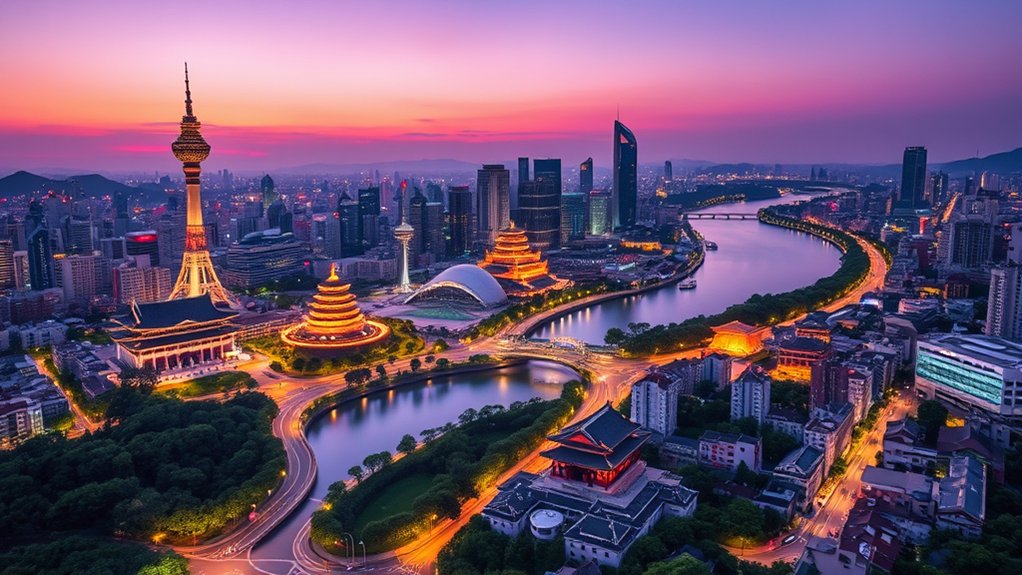
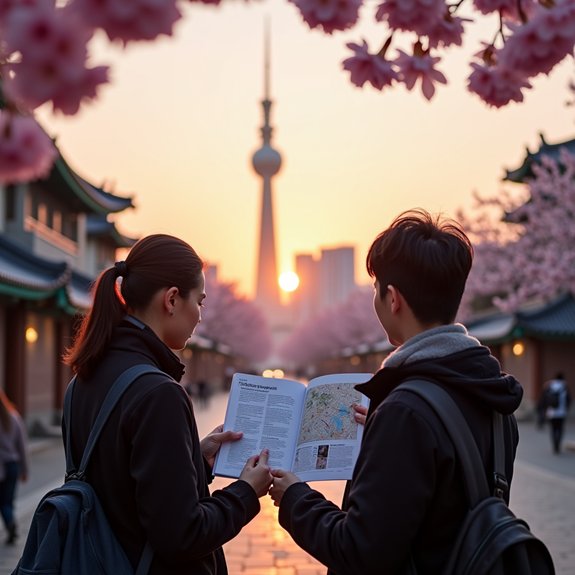
As you step into Seoul for the first time, the city’s striking skyline immediately commands your attention. The sleek Lotte World Tower—Seoul’s first supertall skyscraper—pierces the heavens at 555 meters. It’s kind of a big deal, ranking fifth highest worldwide.
Urban architecture here isn’t playing around. Zaha Hadid’s extravagant Dongdaemun Design Plaza looks like it landed from space. The contrast between old and new Seoul City Hall? Absolutely jarring. In the best way. For real-time transit information in navigating similar urban landscapes, travelers in cities like Tokyo often rely on specialized transportation apps. Visit the Design Plaza in the evening hours to see the building beautifully illuminated against the night sky.
For panoramic views that’ll make your Instagram followers jealous, N Seoul Tower is non-negotiable. Or splurge on Seoul Sky in Lotte World Tower—highest point in the country. Trust me.
Sunset views from Bugak Palgakjeong Pavilion hit different. For something more chill, the Han River observation decks offer killer cityscapes without the crowds. Not bad, Seoul. Not bad at all.
Enchanting Palaces and Markets
Seoul’s history unfolds before your eyes at Gyeongbokgung Palace, where ancient throne halls and pavilions stand as proud survivors of war and colonial destruction. As the first royal palace of the Joseon dynasty established in 1395, Gyeongbokgung represents the heart of Korean historical heritage. The convenience of navigating Seoul’s attractions is also aided by its extensive subway system, which efficiently connects popular spots like Gangnam to Gyeongbokgung Palace. You’ll need stretchy pants for the food adventure that awaits—from sizzling Korean BBQ to addictive street snacks at Gwangjang Market (trust me, “addictive” gimbap earned its nickname).
After gorging yourself silly, you’ll find perfect redemption in a jimjilbang, where you can sweat out yesterday’s excesses while lounging in heated rooms with stone floors—naked with strangers, because that’s just how Koreans roll.
Ancient Gyeongbokgung Palace
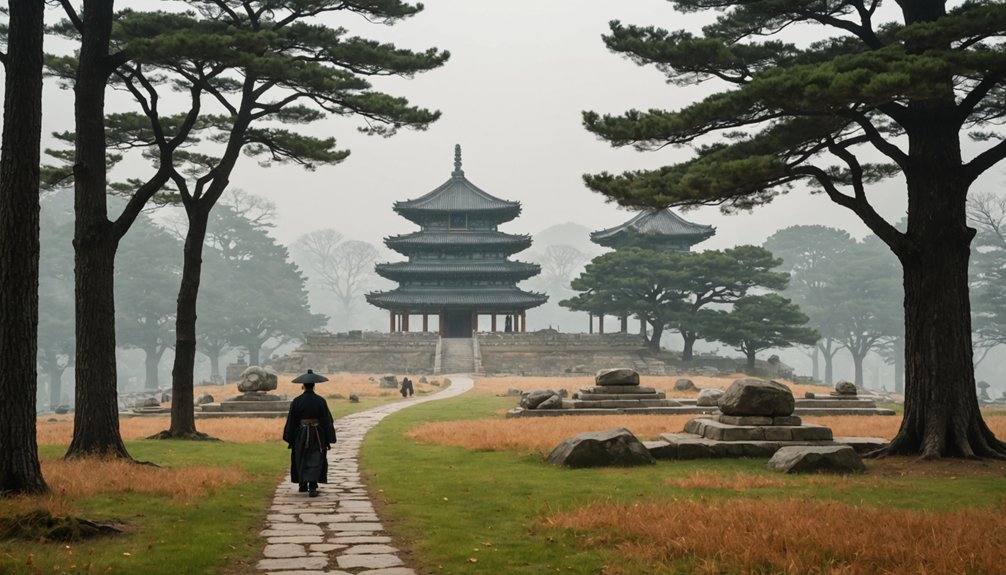
Standing majestically since 1395, Gyeongbokgung Palace dominates Seoul’s historical landscape as the first and grandest royal residence of the Joseon Dynasty. Its name literally means “Palace Greatly Blessed by Heaven.” Ambitious, right?
You’ll be walking through history here. Destroyed during the Imjin War, abandoned for 270 years, then restored—only to face systematic damage during Japanese occupation. Talk about resilience.
Don’t miss Geunjeongjeon Hall, where kings handled state affairs, or Gyeonghoeru Pavilion perched over an artificial pond. The architecture? Traditional Korean pagoda-style with curved roofs and intricate details. Beautiful stuff.
Come early (8:45 AM) to beat the crowds. Wear a hanbok for free entrance—plus killer photos. The changing of the Royal Guard happens daily except Tuesdays. Worth seeing. Located at 161 Sajik-ro, Jongno-gu, the palace is easily accessible with various transportation options. For visitors exploring beyond the palace, the KTX high-speed train network makes it remarkably convenient to reach other major cities and attractions across South Korea with impressive speed and efficiency.
Sizzling BBQ & Street Eats
Hungry yet? Seoul’s culinary scene isn’t messing around.
When tackling K BBQ, remember: restaurants typically specialize in one meat type. Beef’s pricier than pork, but that samgyeopsal (pork belly) is life-changing. You’ll cook it yourself—scissors provided, thank god—then wrap in lettuce with ssamjang. Don’t forget to grill the kimchi for an enhanced flavor experience. Banchan‘s refillable. You’re welcome.
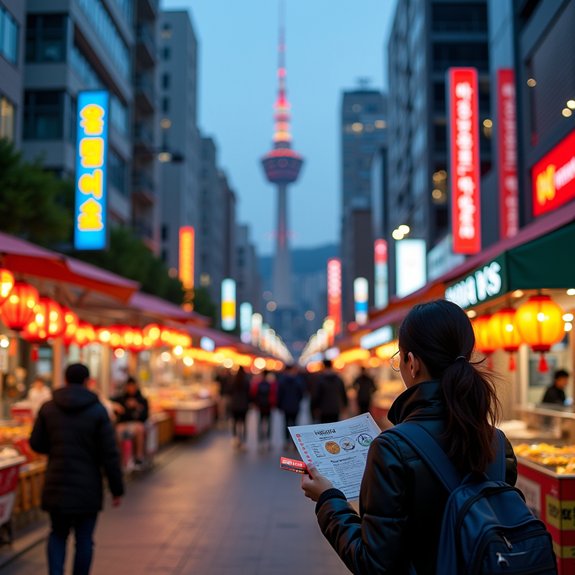
Street food? Absolute madness. Tteokbokki’s spicy rice cakes dominate every corner. Don’t miss gimbap (seaweed rolls) or those “narcotic rice rolls” (yes, really their name). When enjoying street food, securing your belongings in portable safes can help alleviate stress, allowing you to fully immerse in the vibrant food culture.
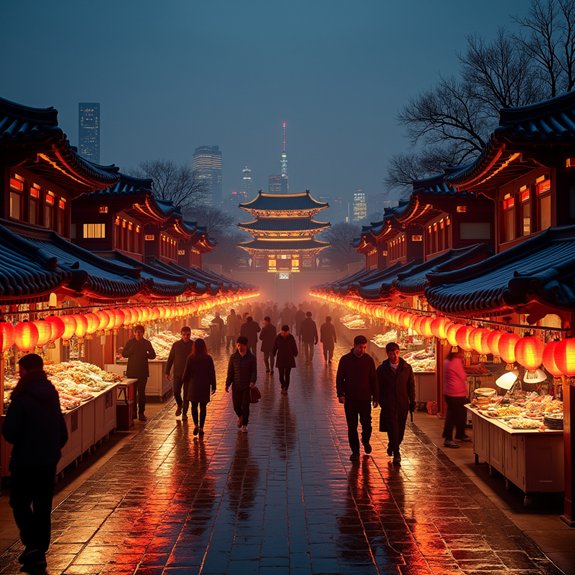
For the full experience, hit Gwangjang Market—Seoul’s oldest, opened 1905—where cooking techniques haven’t changed in decades. Locals crush bindaetteok and kalguksu here daily.
Myeongdong Night Market brings trendy options, while Namdaemun offers specific food alleys. Come hungry, leave broke.
Jimjilbangs for Ultimate Relaxation
A Korean jimjilbang is nothing like your neighborhood spa. It’s a 24-hour cultural institution where locals go to soak, scrub, and socialize.
You’ll strip down in gender-segregated bathing areas (yep, completely nude) before donning pajamas for the communal zones. Korean sauna etiquette is non-negotiable: shower thoroughly before entering any pools.
- Check in, grab your electronic wristband, and stash your shoes
- Brave the naked zone for hot/cold pools and legendary body scrubs
- Hit the communal areas for themed saunas and hard-boiled eggs
- Collapse on the floor with dozens of snoring Koreans for a dirt-cheap overnight stay
The health benefits are legit—improved circulation, stress relief, and detoxification. You’ll notice temperature indicators next to kiln entrances showing which saunas are mild and which are scorching hot. If you’re a fan of exploring traditional wellness experiences, consider taking a day trip to Hakone’s hot springs just outside Tokyo for a Japanese onsen adventure.
Best part? Entry costs less than dinner at a mediocre restaurant. Sleep on the floor. Wake up glowing.
Cherry Blossoms & Festivals
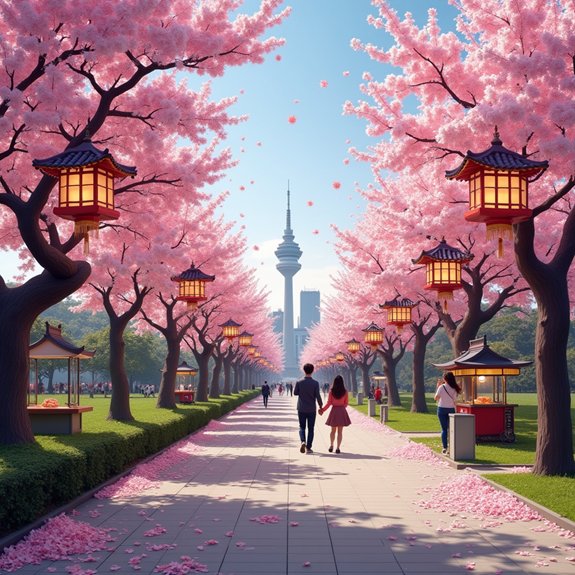
You’ll find Seoul’s streets bursting with energy during autumn festivals, where traditional performances meet modern spectacles and the air smells like street food heaven.
Seoul truly transforms with each season — cherry blossoms in spring, sweltering summer nights, fiery autumn leaves, and snow-dusted palaces in winter. Spring visitors can enjoy the stunning blooms at Yeouido Park where the famous Yeouido Spring Flower Festival features illuminated trees and street performances. For the best cherry blossom viewing experience in 2026, plan your visit to Seoul between April 2 to 9 when the blooms typically reach their peak.
No matter when you visit, it’s like experiencing four completely different cities in one location.
Dazzling Autumn Street Festivals
While cherry blossoms dominate Seoul’s spring, autumn transforms the city into a festival wonderland that’s perhaps even more spectacular.
Seoul’s autumn festivals offer a perfect blend of culture, art, and pure spectacle. Trust me, you won’t be bored. Free and budget-friendly experiences abound, allowing visitors to enjoy the city’s vibrant festival scene without overspending. Winter brings the spectacular Seoul Lantern Festival that illuminates Cheonggyecheon Stream with over 200 traditional lanterns and light installations.
- Seoul Street Arts Festival – Catch mind-bending street performances throughout downtown Seoul. Local and international artists take over public spaces with theater, dance, and interactive installations. It’s weird and wonderful.
- Seoul Silver Grass Festival – Wander through illuminated silver grass fields at Haneul Park. Once a landfill, now gorgeous. The city views? Killer.
- Seoul International Fireworks Festival – Massive pyrotechnic displays over the Han River. Grab a spot early.
- Seoul Kimchi Festival – Learn the art of kimchi-making. UNESCO heritage in action.
Four Distinct Seasonal Experiences
Seoul transforms dramatically with each passing season, offering four completely distinct experiences for travelers throughout the year.
Spring Festivals dominate March to May, when cherry blossoms explode across Yeouido Park and Seokchon Lake. Don’t miss it. Seriously. The blooms last barely two weeks. In 2026, cherry blossoms are expected to bloom 3 to 8 days earlier than usual across most regions. Observing cherry blossom traditions like packing a simple picnic, bringing a cozy blanket, and arriving early for the best spots adds a layer of authenticity to the hanami experience.
Summer Activities? Think water. Lots of it. Between monsoon rains and the wildly popular Waterbomb Festival, you’ll get soaked one way or another. It’s hot. Deal with it by ducking into museums.
Autumn Foliage brings breathtaking colors and merciful weather.
Winter Sports enthusiasts can hit Seoul Plaza’s ice rink before warming up in a jjimjilbang.
Freezing outside? Yes. Worth it for the snow-dusted palaces and steaming hotteok pancakes? Absolutely.
Three-Day Weekend Adventurers
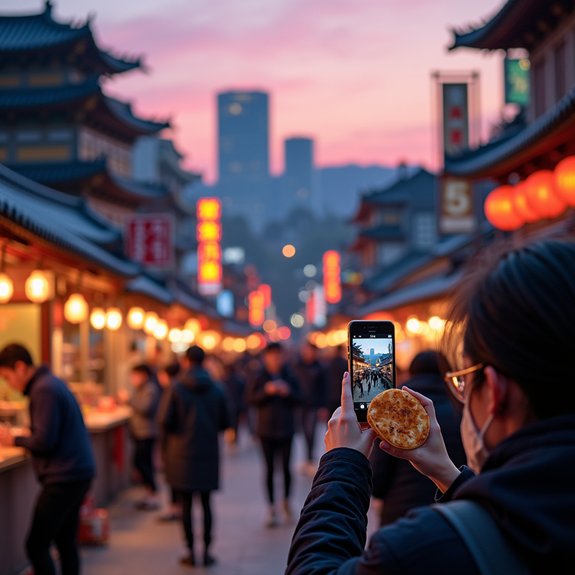
If you’ve only got three days to explore this sprawling metropolis, don’t panic. Seoul rewards the time-pressed traveler with efficient public transport and neighborhoods packed with cultural experiences and local attractions. Trust me, it’s doable. For digital nomads, Seoul and nearby Tokyo coworking spaces offer modern amenities and welcoming communities ideal for remote work.
Time-strapped in Seoul? Fret not. This city delivers cultural riches and urban adventures even on the tightest schedule.
1. Day One: Hit Gyeongbokgung Palace early (rent a Hanbok for free entry!), then wander through Bukchon Hanok Village. Make sure to catch one of the changing of the guard ceremonies at 10:00, 1:00, or 3:00 daily.
End in Myeongdong for cosmetics shopping and street food.
2. Day Two: Explore UNESCO-listed Changdeokgung Palace, browse traditional crafts in Insadong, catch sunset at N Seoul Tower, then immerse yourself in Hongdae’s youthful energy.
3. Day Three: Choose your own adventure – Gangnam’s modernity, historical markets, a DMZ tour, futuristic Dongdaemun Design Plaza, or a peaceful stroll along Cheonggyecheon Stream.
4. Base Yourself: Stay in Myeongdong. Central location. Perfect for first-timers.
T-Money Card Essentials
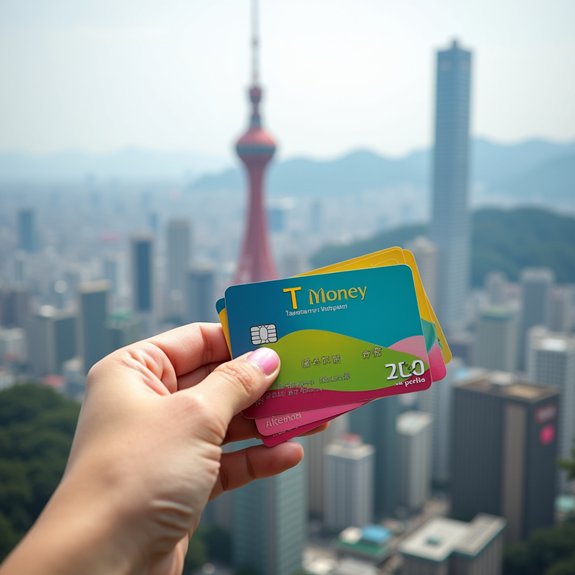
Seoul’s sprawling 24/7 subway system becomes your best friend with a T-Money card, saving you from the nightmare that’s the congested city center during rush hour. The T-Money card can also be purchased at convenience stores, subway stations, and vending machines throughout the city, making it easy to get started right away. You’ll tap in and out of subways and buses like a local, watching smugly as tourists fumble with cash. Using this convenient card also provides lower fare rates compared to paying with cash for each trip.
The card even works along the stunning riverside Han River paths, where you can escape the urban chaos and catch your breath between adventures.
Seoul’s 24/7 Subway System
Despite what some guidebooks claim, the Seoul subway system isn’t actually 24/7. It generally runs from around 5:30 AM until midnight. Not all night, folks. Sorry to burst your bubble.
If you’re planning late nights out, remember:
- Last trains typically depart around midnight on weekdays, earlier on weekends
- Line 9 shuts down at 11 PM daily – plan accordingly!
- Stations have different end times – check specific stations using Naver Maps or KakaoMetro
- Weekend/holiday schedules are reduced – don’t get stranded
Subway Etiquette matters here. Offer seats to elderly, pregnant women, and disabled passengers. It’s not just polite, it’s expected. For an added layer of respect, be aware that nonverbal gestures, such as offering seats and using two hands when handing over items, are essential in Korean culture.
Fare Calculation is distance-based, so longer trips cost more. Simple math. Starting October 7, 2023, you’ll encounter fare adjustments for different travel distances.
Seoul’s Congested City Center
Getting around Seoul’s congested city center requires more than just subway knowledge.
You’ll need a T-Money card. Non-negotiable. This rechargeable smart card is your golden ticket through Seoul’s endless traffic congestion.
Buy one at any convenience store—GS25, CU, whatever—for about ₩4,000. Empty, of course. Because nothing’s ever that simple. Load it with cash at subway stations or stores, up to ₩90,000 at a time. If you’re navigating the bus system, reviewing common bus terminology beforehand can make your journey significantly smoother.
Tap when entering and exiting subways. Same for buses. Don’t forget! The beauty? Transfer discounts. Up to four times daily.
Pedestrian safety improved too—no fumbling for change while crossing busy intersections.
Use it for taxis, convenience stores, even some cafes. Your wallet can stay buried. The card never expires. Small mercies in a bustling metropolis.
Discount cards are available specifically for teenagers and children who need to provide proper identification for eligibility.
Riverside Han River Paths{var1}
Along the mighty Han River, Seoul reveals its softer side. You’ll find a revitalizing escape from concrete chaos.
Get there easily by subway—each park has a nearby station. Ttukseom Resort Station? It’s literally above the park.
Here’s what awaits:
- Riverside cycling on dedicated paths—rent bikes right there
- Water sports galore: kayaking, paddleboarding, even water skiing
- Picnicking spots with rental tents, mats, and tables
- Seasonal events like cherry blossoms and fireworks shows
Don’t forget your T-Money card—it’s your key to getting around.
Tap when entering, tap when exiting. Simple. You’ll save ₩100 per ride compared to single tickets and get free transfers between lines. No brainer.
Standard bike rentals along the Han River cost ₩3,000 per hour, providing an affordable way to enjoy the scenic waterfront views.
For those on a budget, taking intercity buses across Korea is often cheaper than trains, making it easy to explore more of the country without overspending.
Packing for Seasonal Weather
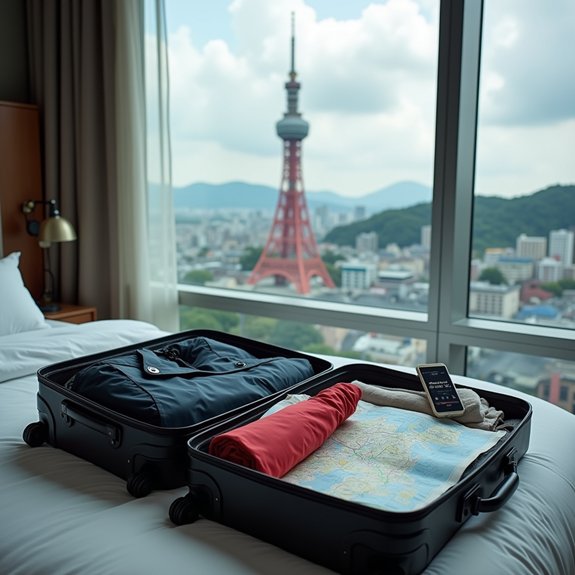
When visiting Seoul, your suitcase contents can make or break your trip. This city has four distinct seasons, and they don’t mess around.
Summer? Brutally hot and humid. Pack lightweight, breathable fabrics and rain gear for those monsoon downpours. Forget jeans—you’ll regret it. To stay extra comfortable while exploring, consider packing lightweight layers similar to recommendations for budget travel in Japan, where versatile clothing helps you adjust to changing conditions.
Seoul summers show no mercy. Pack light, breathable clothing and prepare for monsoons—those jeans will be your worst enemy.
Spring and autumn demand layers—the temperature swings are real. Light jackets, sweaters, scarves. That’s your seasonal clothing strategy.
Winter is serious business. Temperatures plummet below freezing, so thermal layers aren’t optional—they’re survival gear. Weather essentials include a heavy parka, gloves, and waterproof boots. Pack all your winter essentials in advance to avoid scrambling for warm clothing upon arrival.
Year-round, you’ll need comfortable walking shoes. Seoul requires walking. Lots of it.
Don’t forget a universal adapter and water bottle. The city waits for no one—especially the unprepared traveler.
Bowing Practices & Drinking Rules
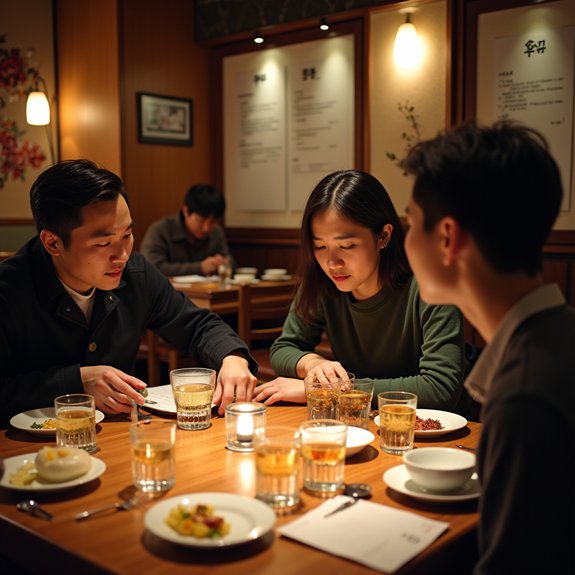
To navigate Seoul’s social waters successfully, you’ll need to master two critical customs: bowing and drinking etiquette. Locals live by these rules. You should too.
- Bow basics – It’s called “Jeol.” Younger bows to older. Keep arms at your sides, avoid eye contact, and always say something. Silent bowing? That’s rude. In Korean culture, the depth of the bow signifies the level of respect or formality toward the other person.
- Bow variations – Casual head nod for friends, 90-degree “Keunjeol” for CEOs. Service staff do the “navel bow.” Different situations, different angles. At funerals, people perform two consecutive keunjeol to honor the deceased’s portrait.
- Handshake protocol – Men often combine bows with handshakes. Use both hands when receiving business cards. Women rarely initiate handshakes.
- Drinking customs – Never pour your own drink. Use two hands to pour and receive.
Seoul’s Spotless Healthcare Network
Seoul’s healthcare system isn’t just good. It’s world-class. Ranked 2nd globally in 2026, this medical powerhouse delivers exceptional care with cutting-edge technology. Seriously impressive stuff.
Need a doctor while visiting? No problem. Major hospitals have International Healthcare Centers specifically for foreigners like you. English speakers everywhere in urban facilities. Some even offer Russian, Chinese, Japanese, and Arabic support. For those staying near Incheon Airport, comfortable layover hotels provide convenient access to city hospitals if needed.
Seoul’s become a medical tourism hotspot for a reason. First-rate cancer treatment, cosmetic surgery, and skin disease specialists. The big players—Asan Medical Center, Samsung Medical Center, Seoul National University Hospital—they’re all here.
Everything’s concentrated in Seoul, though. Rural areas? Not so lucky. The system focuses on treatment rather than prevention in its healthcare practices.
But as a visitor, you’ll have access to some of the planet’s best healthcare. Clean hospitals. Expert doctors. High-tech equipment. Done.
Budget & Costs in 2026
In Seoul, you’ll spend around ₩69,115 ($47) per day as a budget traveler, while mid-range folks need to budget ₩178,547 ($122) daily.
Budget hostels offer dorm beds for ₩25,000-33,000 ($18-24) per night—perfect if you don’t mind sharing space with snoring strangers. If you’re looking for authentic cultural experiences on a budget elsewhere in Korea, cities like Jeonju have guesthouses and hanoks for just $15–$30 per night. A five-day trip will cost approximately $612, excluding transportation to the city.
The money you save on accommodation means more cash for what really matters: stuffing your face with ₩3,232 gimbap and ₩11,462 naengmyeon.
Average Daily Costs in Won
Planning your Seoul budget? You’ll need to know what things actually cost in won. The numbers don’t lie – Seoul can be affordable or expensive depending on your style.
- Budget travelers survive on ₩69,000-₩120,000 daily, covering basic accommodation, street food (₩5,000-₩7,000 per meal), and subway rides (about ₩5,000-₩6,000 daily for transportation expenses). Investing in a T-Money card makes public transport more convenient and provides a small discount on each bus or subway ride.
- Mid-range travel costs ₩135,000-₩250,000 daily, getting you comfortable rooms and casual restaurants where meals run ₩7,000-₩15,000 each.
- Luxury seekers need ₩304,000-₩800,000+ daily. Fancy hotels, high-end dining, private cars. Not cheap. For a complete experience, these travelers often enjoy premium nightlife activities like the Itaewon Pub Crawl with unlimited drinks.
- Average travelers typically spend ₩172,000-₩178,000 daily – or ₩70,000-₩130,000 if accommodation is already paid for.
Budget Hostel Dormitories
Looking to stretch your won even further? Seoul’s hostel scene has you covered. The average dorm bed costs around $19 USD per night, with budget options starting at an incredibly cheap $3-4 USD. Not bad at all.
Most dorms feature standard bunk beds (some with privacy curtains if you’re lucky), lockers for your stuff, and shared bathrooms. Free Wi-Fi? Obviously. Kitchen access? Usually. Dorm features vary wildly though, so check before booking.
Booking tips: Book ahead during April and August when prices spike. Hostels in Hongdae are perfect if you want nightlife; Myeongdong for shopping addicts. Star Hostel Seoul Dongdaemun offers the cheapest stay at just ₩5,641.
May and September offer better deals. Weekend rates? Higher, naturally. The cheapest hostels aren’t always the best value. Reviews matter. Staying in hostels is a great way to find some new friends while keeping your accommodation costs low.
Frequently Asked Questions
Is Seoul Safe for Solo Female Travelers at Night?
Like a fortress after sunset, Seoul stands as a remarkably safe haven for solo female travelers.
You’ll find night travel surprisingly secure with well-lit subway systems and women-only cars during rush hour. Female safety is generally excellent—locals even leave belongings unattended!
But keep your wits about you. Digital sex crimes exist. Avoid isolated areas. Stick to populated streets. The city’s safe, but the world isn’t perfect.
Do Locals Speak English in Restaurants and Shops?
English proficiency among Seoul locals varies widely.
In tourist hotspots like Myeongdong and Itaewon? You’ll manage. Restaurant interactions in these areas often involve staff with basic English skills and picture menus. Don’t expect fluency, though.
Younger Koreans typically speak better English. Local shops? Hit or miss. Translation apps are your friends. Honestly, pointing works wonders too.
Learn a few Korean phrases—they’ll appreciate the effort.
How Reliable Is Public Wifi Throughout Seoul?
Worried about staying connected? Don’t be. Seoul’s public WiFi is ridiculously good.
With over 23,000 WiFi hotspots, you’ll rarely lose internet accessibility. Average speeds exceed 330Mbps – that’s blazing fast. Connection quality varies in crowded areas, obviously. But it’s reliable for maps, translation, and basic browsing.
Hotels, cafés, subways, buses, parks – all covered. Even the trains have it.
Security? That’s another story. Use a VPN.
Can I Use Credit Cards or Should I Carry Cash?
Credit cards work pretty much everywhere in Seoul. Hotels, department stores, restaurants – all take cards. Tap-to-pay is huge there.
But don’t ditch cash completely. You’ll need won for traditional markets, street food, and topping up that T-Money transit card. Some small shops still snub plastic.
Foreign cards? Sometimes a headache. Smart move? Carry both. Cash for the little stuff, cards for everything else.
Are There Any Common Tourist Scams to Avoid?
Watch out for transportation scams in Seoul!
Taxi drivers might “forget” to use their meter or take the scenic route. Ridiculous. Stick to official taxis or Kakao T app.
Currency exchange? Avoid those sketchy street booths with “no commission” signs. They’re lying.
Fake monks and overly friendly “students” are just waiting to drain your wallet.
And those cosmetics sellers? They smell tourist desperation from a mile away.
Conclusion
Seoul’s a rollercoaster for your senses. You’ll navigate ancient palaces in the morning, then party in Hongdae by night. The city never sleeps—and neither will you. Pack smart, respect locals, and bring that T-Money card everywhere. Weather changes like a teenager’s mood here. But once Seoul gets under your skin, you’re hooked for life. Like a first love, it leaves an indelible mark.
More on Seoul:

Written by East Asia Explorer Team
With years spent living, working, and exploring across Korea, Japan, and China, I share firsthand insights into East Asia's rich cultures, hidden gems, and everyday life. My journey also includes studying in Malaysia and traveling through Southeast Asia, experiences that have deepened my appreciation for the region's diversity. Through practical tips, local stories, and travel guides, I aim to help fellow explorers discover both the celebrated highlights and the lesser-known corners of East Asia.