Last Updated: March 19, 2026 | Originally Published: April 26, 2025
Read our full South Korea Travel Guide 2026 for everything you need to plan your Korea trip.
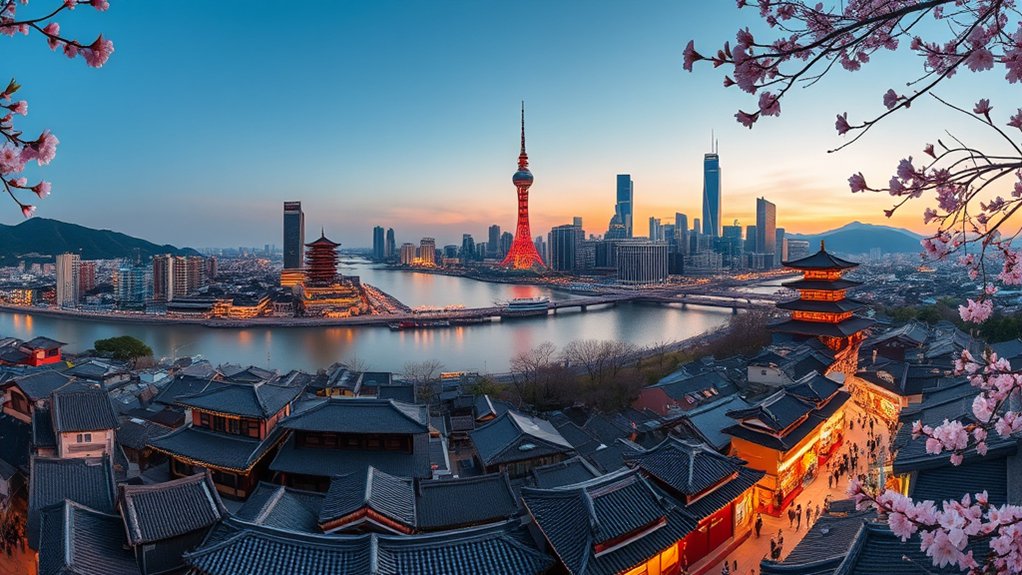
You’ll love Seoul’s royal palaces and cherry blossoms in April. Don’t miss Gyeongbokgung’s grand pavilions or hiking Bukhansan for killer views. Grab a T-Money card for easy subway access. Street food‘s cheap and delicious—try tteokbokki while exploring Insadong’s hidden tea houses. Stay in a traditional hanok for authentic vibes. Always receive gifts with both hands (it’s respectful). The perfect mix of ancient traditions and neon-lit modernity awaits just below the surface. (Source: UNESCO Korea Heritage Sites)
Explorer Insights
- Five grand palaces including Gyeongbokgung showcase Korea’s royal history with impressive architecture and cultural ceremonies.
- Cherry blossoms transform Seoul each April, with Yeouido and Seokchon Lake offering spectacular viewing for a brief 1-2 weeks.
- Hanok homestays provide authentic cultural immersion with traditional architecture while maintaining modern amenities.
- Street food vendors offer affordable authentic Korean flavors like tteokbokki and gimbap throughout vibrant markets.
- Bukhansan National Park features challenging trails and historic fortress walls, accessible via metro with stunning city views.
Cherry Blossom Spring Weeks
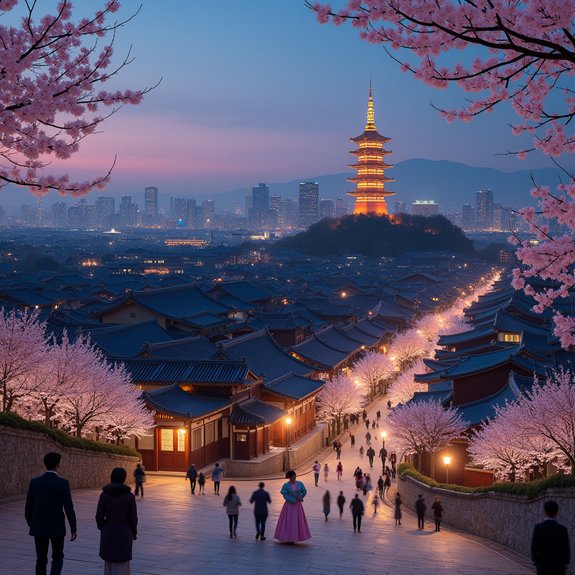
Magic is what happens when Seoul transforms every April. The city erupts in pink and white, with cherry bloom trends showing blossoms arriving earlier each year. Adding to the floral spectacle in East Asia, Japan’s spring flower festivals such as the Fuji Shibazakura Festival and Ueno Cherry Blossom Festival draw travelers seeking iconic blooms and vibrant celebrations. (Source: Korea Tourism Organization)
Seoul’s springtime alchemy—swirling pink and white petals arriving earlier each year, transforming concrete into canvas.
Mark your calendar for 2026—April 1st for first blooms, April 8th for peak beauty.
Yeouido’s nearly 2,000 trees? Unmatched. Festival highlights include nighttime illuminations, music, and enough street food to make your stomach scream.
Seokchon Lake offers reflections that’ll break your Instagram. Seriously.
For breathing room, try Yangjaecheon Stream. Fewer tourists, more locals, same gorgeous trees. Weather can significantly impact the blooms, with warm spells potentially causing them to appear earlier than forecasted.
The blooms only last 1-2 weeks. That’s it. They’re devastatingly temporary—which is exactly why they matter.
Go at night. Wear Hanbok at the palaces for free entry. Thank me later.
4-Hour Seoul Transit Cards
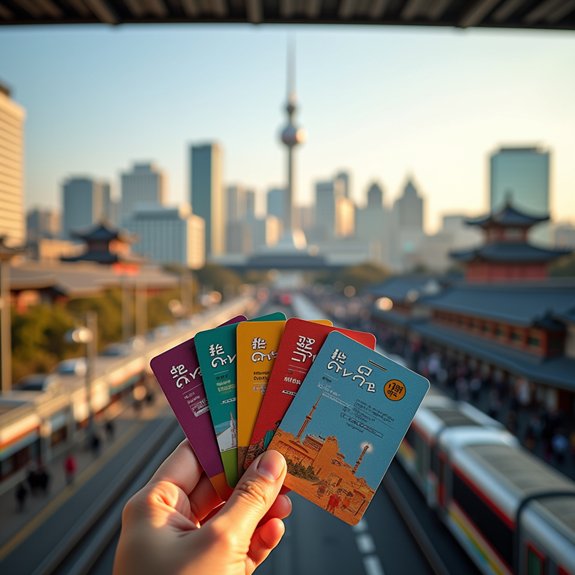
While cherry blossoms dazzle your eyes, Seoul’s transit system needs to impress your wallet. T-Money cards are your golden ticket. Seriously. You’ll save 100 KRW per ride compared to cash. Not earth-shattering, but it adds up.
T Money Benefits extend beyond just savings. Use them everywhere – buses, subways, taxis, even at convenience stores. Buy snacks at 7-Eleven with the same card that got you there. Efficient? Absolutely. For travelers who prefer technology-driven journeys, transportation apps in Japan like Suica App and Google Maps integrate cashless fare payment and real-time transit info for a seamless experience.
Card Customization options will make collectors drool. Popular franchises, cute charms, limited editions. Tourists might prefer the Korea Tour Card instead – up to 30% off attractions and restaurants. Your choice.
Purchase them anywhere. Convenience stores. Subway stations. The airport. Easy to refund unused balance too, though you’ll face a ₩500 fee when claiming your remaining funds.
Seoul’s transit system? Couldn’t be simpler.
Palaces and Historic Temples
Seoul’s five royal palaces aren’t just pretty backdrops for your Hanbok selfies—they’re living museums of Korea’s royal history.
At Gyeongbokgung, you’ll find the most impressive pavilions and perfect spots for those Instagram-worthy traditional costume photos, while Changdeokgung hides the breathtaking Secret Garden that most tourists miss. Gyeongbokgung Palace, constructed in 1395, stands as the primary palace of the Joseon dynasty and has been extensively restored to showcase Korea’s storied royal heritage. Deoksugung Palace stands out for its unique architectural blend of Western and traditional Korean styles.
After palace-hopping, recharge with authentic bibimbap paired with soju before discovering the hidden tea houses tucked away near Insadong—they’re tiny, ancient, and worth the hunt.
Gyeongbokgung’s Grand Pavilions
Stepping into Gyeongbokgung Palace is like walking straight into Korea’s royal past. Established in 1395, this massive complex once sprawled across 7,700 rooms—yeah, that’s not a typo.
The pavilion architecture will blow you away, especially Gyeonghoeru, where royal banquets once entertained foreign dignitaries over a stunning reflection pond supported by 48 granite pillars. Visiting in the morning on a weekday is a great way to enjoy the palace with fewer crowds, as is common practice at other world-famous sites like the Forbidden City. Don’t miss Hyangwonjeong, a hexagonal beauty perched on its own island. Also known as Bukgwol (north palace), Gyeongbokgung holds special significance relative to the other royal residences in Seoul.
- Check out the throne hall’s intricate wooden carvings—kings weren’t exactly subtle about their power
- Catch the Changing of the Guard ceremony for a taste of Joseon-era pomp
- Visit early morning or late afternoon for the best photos—fewer tourists blocking your perfect shot
Hanbok Photoshoot Opportunities
Dressing up in hanbok while exploring Seoul’s ancient landmarks isn’t just a photo op—it’s practically a rite of passage.
You’ll find studios like Hanbok That Day and Ari Hanbok offering rentals near Gyeongbokgung, with both traditional and fusion hanbok styles to suit your vibe.
Want killer shots? Hit up Changdeokgung for its secret garden backdrops or Jogyesa Temple for those vibrant lanterns. For an unforgettable spring cherry blossom photoshoot, pair your hanbok session with a stroll through Yeouido Park or Seoul’s palace grounds during peak bloom, when the city is draped in pink and white petals.
Deoksugung’s east-meets-west architecture creates some seriously unique photography opportunities. No amateur hour here.
Most rental places throw in professional photography services. Smart move. They know the best angles and lighting at each location.
For a truly authentic experience, many studios provide traditional accessories and hairstyling to complete your royal Korean look.
Plus—bonus!—wearing hanbok often gets you free palace admission. Cheap and fabulous.
Just remember to book ahead. These places get swamped on weekends.
Nobody likes waiting in line wearing layers of hanbok. Nobody.
Hiking Bukhansan National Park
Just a stone’s throw from Seoul’s bustling streets, Bukhansan National Park waits to kick your city-weary butt. Tackle the challenging Baegundae Peak for stunning panoramic views of Seoul, or take the less crowded Jaunbong Trail if you’re feeling antisocial. The park’s historic Bukhansanseong Fortress walls make for killer photo ops while you catch your breath. For those craving wilder adventures, Jiankou’s rugged Great Wall hikes offer similarly steep climbs through lush mountains and dramatic ancient ruins. Seriously. You’ll need it. As one of the world’s most visited national parks, Bukhansan has earned its place in the Guinness Book of Records for highest visitation per unit area.
- Access the trails easily via Metro Line 1 to Dobongsan Station, where nearby markets sell all the hiking gear you forgot.
- Download Maps.me for offline trail navigation – cell service gets spotty when you’re communing with nature.
- Visit the Buddhist temples near trailheads to add some cultural exploration to your nature adventure.
Oh, and the granite peaks aren’t just pretty – they’re ancient. Like, centuries-old ancient.
Bibimbap and Soju Pairings
After conquering Bukhansan’s peaks, you’ll need serious refueling. Bibimbap is your answer – a colorful rice bowl loaded with veggies and that perfect fried egg on top.
Mix it up. Get messy. The bibimbap toppings vary from restaurant to restaurant, but the umami flavor hits just right. If you’re hungry for even more local flavor, Seoul is famous for its Korean BBQ restaurants that offer an interactive grilling experience with premium meats.
Pair it with soju, Korea’s most beloved booze (nearly 48% of Koreans can’t be wrong). Different soju varieties range from mild to knock-your-socks-off strong. Trust me, you’ll feel it.
Head to Myeong-dong or Insadong for the full experience. It’s no surprise that bibimbap was ranked as the most preferred convenience food at 22.8% in a recent international survey.
Want culture with your meal? Gyeongbokgung Palace and Jogyesa Temple are nearby. Visit them first, then feast.
Fancy something different? Try makgeolli instead.
But honestly, bibimbap and soju? Classic combo. Iconic. Necessary.
Secret Tea Houses Off Insadong
While Insadong’s main street buzzes with tourists, the real magic hides in its labyrinthine alleys. Venture beyond the obvious to discover secret tea houses offering tranquil atmospheres you won’t find in guidebooks.
Shin Old Teahouse, tucked away in a secluded alley, welcomes you with traditional architecture and calming vibes. No Instagram influencers here, just authentic Korean tea culture. They serve a variety of traditional Korean teas including jujube, omija, red tea, and ginseng.
After steeping yourself in hidden tea culture, explore these nearby historical treasures:
- Gyeongbokgung Palace – Korea’s largest palace, perfect for pretending you’re royalty for an afternoon
- Bukchon Hanok Village – Traditional houses that’ll make your apartment seem pathetically modern
- Changdeokgung Palace – A UNESCO site with gardens worth the extra steps
For those planning to venture beyond Seoul, domestic flight routes make it easy to reach new regions and experience Korea’s diverse landscapes.
Don’t rush. The beauty of Insadong lies in slowing down. Sip slowly, wander aimlessly.
Hanok Homestays Near Changdeokgung
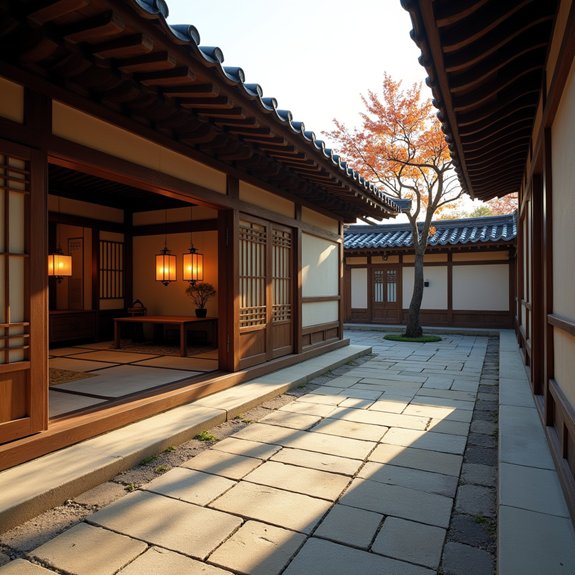
You’ll find no better cultural immersion than staying in a hanok, with its traditional sliding doors, heated ondol floors, and minimalist beauty just minutes from Changdeokgung Palace.
The Korean Traditional Hanok in Downtown Seoul – Seoul Ari offers an authentic experience with luxurious decor near the palace, while other options like AWIK Hanok Stay are just an 8-minute walk away. Many top hanok guesthouses, such as Bonum 1957 Hanok, feature serene courtyards and offer immersive cultural experiences, allowing guests to appreciate Korea’s rich heritage.
The Noble Hanok and SeoulStory Hanok balance authenticity with modern comforts like hot tubs and saunas, though simpler options offer more genuine experiences (and let’s be honest, sleeping on floor mats isn’t for everyone).
Prices vary widely based on amenities and location within Bukchon, with quieter spots off the main tourist paths commanding premium rates for their peaceful garden settings.
Authentic Cultural Immersion
For travelers seeking more than just tourist snapshots, hanok homestays deliver the real Seoul experience.
You’ll immerse yourself in centuries-old architecture while enjoying modern comforts like WiFi and AC. Staying at a traditional hanok pension house in Jeonju offers similar charm, complete with ondol floor heating, cultural workshops, and gardens for a genuine taste of Korean heritage.
Places like Irang and Bukchon Maru Hanok Guesthouses aren’t just accommodations—they’re cultural workshops in disguise. Irang Hanok Guesthouse is incredibly close to historic sites, situated just 370 meters from Changdeokgung Palace Complex.
Want local festivals? The surrounding neighborhoods buzz with traditional events year-round.
Live like a local. No pretending. Just authentic.
- Join cultural workshops at AWIK Hanok Stay, where traditional gardens become your classroom
- Experience genuine Korean hospitality at HAMhanokstay, known for warm welcomes and lightning-fast communication
- Explore nearby Gwangjang Market from Gilgaon Hanok Stay for street food that tourists rarely discover
The best part? You’re never more than 11 minutes from Changdeokgung Palace.
Convenience meets culture. Perfect.
Traditional Architecture Highlights
Just steps away from Changdeokgung Palace, authentic hanok homestays transport you to Korea’s architectural golden age. These traditional Korean homes aren’t just pretty places to crash—they’re living museums of historical preservation. Guests consistently rate Dajayon’s intimate 5-room experience as exceptional with a 9.1 overall rating.
| Hanok Stay | What Makes It Special |
|---|---|
| AWIK | Garden views, 8-min walk to palace |
| SeoulStory | Traditional sauna, balcony vibes |
| Dajayon | Just 590 meters from palace complex |
| The Noble | 5-minute stroll to royal grounds |
| JNPstay | Near Changgyeonggung, authentic design |
You’ll find modern adaptations (yes, there’s WiFi and AC) while experiencing the cultural significance of traditional design elements—those iconic tiled roofs aren’t just for show. The local neighborhood surroundings enhance your stay, with markets and shrines nearby. For travelers interested in immersing themselves in Korean culture and customs, hanok stays provide a unique and memorable perspective. Authentic stays. Zero tourist traps.
Booking and Prices
Securing the right hanok near Changdeokgung requires planning, but the payoff is worth every won.
Multiple options sit within 5-17 minutes walking distance, from shared guesthouses to entire private rentals. No surprise—hanok bookings spike during cherry blossom season, so book early or pay up. For food lovers, sampling traditional bibimbap hotspots nearby can enrich your stay with an authentic local dining experience.
Booking.com and Agoda offer the most inventory, though direct bookings sometimes yield better rates.
- Budget-conscious? Gilgaon Hanok Stay lacks fancy amenities but delivers authentic vibes without emptying your wallet.
- Mid-range spenders should check out SeoulStory or Memory Stay with garden access and saunas.
- Splurge-worthy Noble Hanok features hot tubs just 5 minutes from the palace—perfect for soothing feet after temple-hopping.
Pricing strategies vary wildly by season. Off-peak travelers can score serious discounts. For exceptional value, consider Bukchonmaru Hanok Guesthouse, where you can experience traditional Korean breakfast each morning while paying less than the average Seoul hotel price.
Fancy amenities? Higher rates. That’s just math.
Subway’s T-Money Efficiency
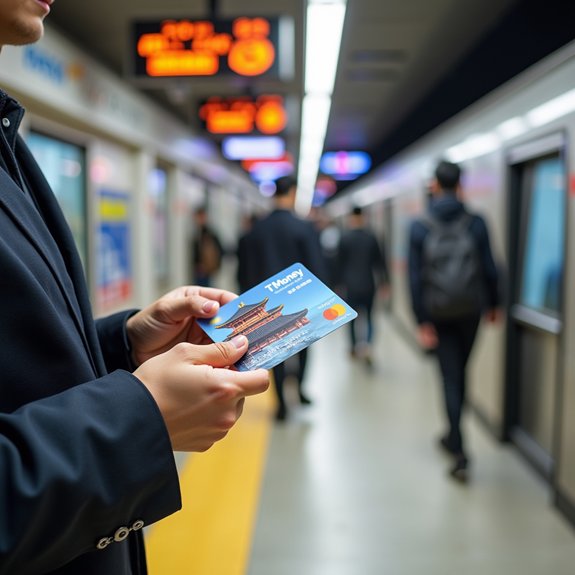
Seoul’s ultra-dense metro network makes getting around a breeze with your T-Money card, saving you precious vacation time at ticket machines. T-Money cards can be easily recharged at convenience stores and metro stations throughout the city.
You’re gonna need an International Driver Permit if you fancy driving here, but honestly, why bother? Translation apps like Papago Translate are a must-have for travelers in South Korea, offering instant camera and voice translation when navigating subway maps, ticket machines, or street signs.
For a revitalizing break from the underground, take a scenic stroll along Cheonggyecheon Stream path—perfect for when you’ve had your fill of subway transfers.
Ultra-Dense Metro Network
Maneuvering one of the world’s most intimidating metro systems just got easier. Seoul’s subway network features 18 color-coded lines with signage in Korean, English, and Chinese. The system is known for its intuitive color-coded map, helping travelers navigate efficiently between stations and transfer points. Running from 5:30 AM until midnight with trains arriving every 2-5 minutes during rush hour. Your T-Money card isn’t just convenient—it saves you KRW 100 per ride and eliminates fumbling for exact change. Various mobile apps provide route and transfer information to help navigate the complex subway system.
Born in the 1970s to combat car dependency, this eco-friendly transit marvel now boasts an 80% smartcard adoption rate.
Need to adjust your fare? Machines near turnstiles have you covered when your balance runs low.
- Transfer between up to 4 different lines/buses daily with automatic discounts
- Follow color-coded signage for seamless navigation between connections
- Check your remaining balance instantly after tapping at any entrance
International Driver Permits Required
Contrary to popular belief, international driver permits have absolutely nothing to do with Seoul’s T-Money card system.
Who needs a car anyway? Seoul’s public transport beats traffic any day.
Your travel documentation needs are minimal here. No applications, no ID checks, no bureaucratic nightmares. Just hand over ₩2,500-₩5,000 at any convenience store or subway station. Done.
Unlike international driving requirements, T-Money cards work for everyone—tourists, children, literally anyone with hands and money.
The plastic wonder gives you nationwide transit access, retail payments, and taxi rides. Tap in, tap out. Simple.
Plus, you’ll save ₩100+ per ride compared to cash fares. Transfer discounts too. You can even use T-Money to pay at participating coworking spaces in Seoul for a seamless commute.
Balance maxes at ₩500,000, but honestly, who’s spending that much on subway rides?
Remember to take advantage of the generous transfer discount system that allows free transfers between buses and subways within 30 minutes (1 hour during late night hours).
Scenic Cheonggyecheon Stream Path
Walking along Cheonggyecheon Stream‘s 11 km path feels like stumbling into Seoul’s hidden oasis, smack in the middle of concrete chaos.
This isn’t just some pretty water feature—it’s living urban ecology, transformed from a gross covered sewer into a breathing public space in 2005. To keep your valuables safe as you explore, consider the best portable travel safes that combine compact size, water resistance, and secure locking options—handy for travelers carrying cash, passports, or electronics.
The easiest access? Grab a T-Money card. Seriously, don’t mess around with paper tickets.
- Stream art installations change with the seasons—catch the Seoul Lantern Festival if you’re lucky
- Subway convenience with major access at Gwanghwamun (Line 5), Jongno 3-ga (Lines 1/3/5), and Dongdaemun stations
- Evening walks are non-negotiable—LED illuminations transform the waterway until 11pm
History bonus: look for Gwangtonggyo Bridge.
Ancient stone meets modern city. Perfect contrast.
If you need information during your exploration, the Tourist Information Center of Korea Tourism Organization is just a short walk away with a solid 4.4 rating.
Two-Handed Gift Giving
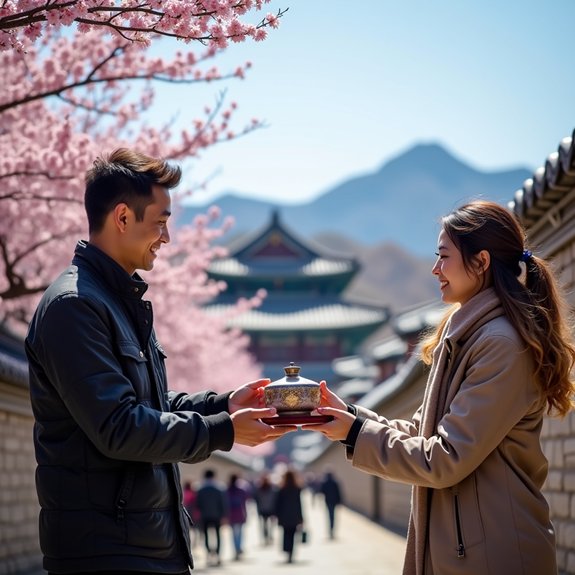
When you’re handing over a gift in Seoul, you’d better use both hands. It’s not optional, folks. This gift etiquette demonstrates cultural respect and acknowledges Korea’s Confucian values. Seriously, don’t mess this up.
The rules are simple. Both hands when giving or receiving anything—gifts, business cards, even money. Wrap it nicely, but skip black or white paper (funeral colors, yikes). And don’t tear into your gift immediately! Wait politely. Even using both hands when exchanging small items like business cards or money is seen as a sign of respect and is expected in daily interactions.
Younger Koreans might let it slide if you forget. They’re more relaxed among friends. But with elders? Never risk it.
Shopping? Notice how cashiers return your change with two hands. Same when pouring drinks. It’s everywhere. Small gesture, huge impact. Cultural harmony in action. This approach shows understanding of etiquette since respectful interactions are fundamental to Korean social customs.
Earthquake Alerts on Phones
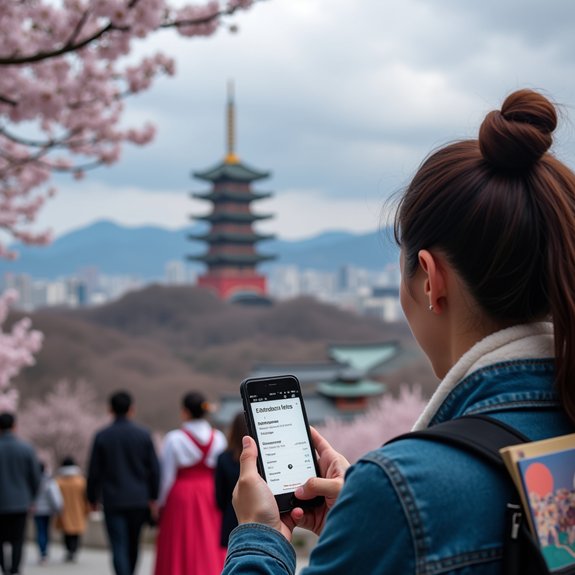
While Koreans prioritize respectful two-handed exchanges, they’re equally thoughtful about keeping you safe during rare seismic events.
Seoul experiences minimal earthquake activity, but the city doesn’t mess around with emergency alerts. Your phone will suddenly blare with multilingual warnings if tremors strike—even if it’s on silent mode. These messages include magnitude details and what to do next. Not optional. Just happens. After experiencing these alerts, consider visiting The War Memorial to learn about Korea’s historical resilience through various national challenges.
South Korea’s high-speed KTX train, renowned for its efficiency and safety, exemplifies the nation’s commitment to world-class infrastructure and public protection.
- Download the “Emergency Ready” app for additional earthquake preparedness info in English
- Memorize 119 (emergency) and 1330 (tourist hotline) immediately after landing
- Locate earthquake shelters near your accommodation (they’re everywhere)
The alerts bypass your settings completely. Annoying? Maybe. But you’ll appreciate the intrusion when everyone around you starts ducking for cover and you know exactly why.
Safety first, personal settings later.
Won Goes Further Here
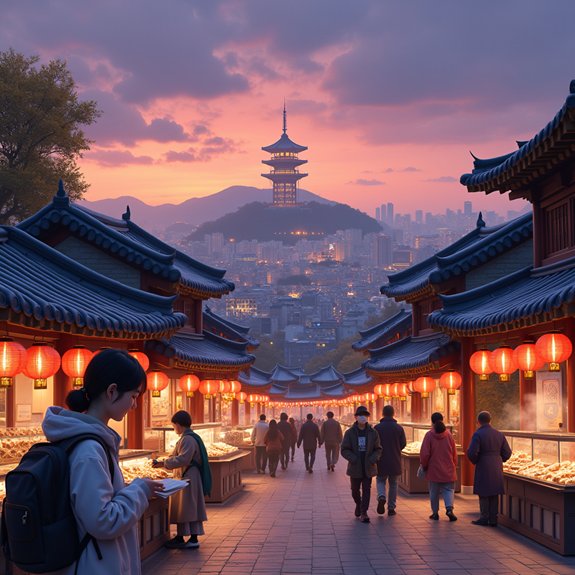
You’ll be shocked how far 100,000 won ($75) stretches in Seoul for a full day of exploration and adventures.
Skip the fancy restaurants and hit street food stalls where a filling meal costs under 10,000 won, leaving plenty for palace admissions and shopping at Myeongdong.
Your money works harder here than back home—trust me. Affordable favorites like Gwangjang Market street food offer some of the most authentic Korean meals for just a few thousand won each, packed with local flavor.
The spectacular Moonlight Rainbow Fountain at Banpodaegyo Bridge offers a free world-class attraction that won’t dent your budget.
Surprising $75 Daily Budget
Seoul might be the bargain you never expected. You can easily enjoy this vibrant city on just $75 a day. Forget those pricey Tokyo trips—Seoul delivers more bang for your buck.
Book a hostel for 15,000 KRW ($12) and zip around on public transport for pennies. A T-Money card is your best friend here. Honestly, it’s ridiculous how affordable it is. Remember to carry plenty of cash as foreign bank cards are frequently rejected at payment terminals.
- Explore traditional markets like Gwangjang without spending a dime on entry fees
- Attend free cultural festivals happening throughout the year
- Hike Bukhansan National Park for stellar views and minimal costs
- Experience spacious public parks and castle grounds for free, making both relaxation and sightseeing budget-friendly.
Accommodation runs cheap—from $5 dorm beds to $30 private rooms. Public transportation costs about a dollar per ride.
Walk when you can. The city’s designed for it. Seoul’s budget-friendly secret? Hidden in plain sight.
Street Food Over Restaurants
When comparing food options in this bustling metropolis, street vendors absolutely crush restaurants in the value department. You’ll pay a quarter of restaurant prices for authentic Korean flavors. No joke. A few thousand won gets you tteokbokki or gimbap while restaurants drain your wallet fast.
Tongin Market’s token system? Brilliant. Five thousand won for multiple dishes. Try that in a sit-down place. Impossible. Night markets in other countries, like those in China, also offer iconic street food dishes such as chuanr (grilled skewers) and jianbing, giving travelers the chance to experience incredible regional flavors without spending much.
The street food benefits extend beyond savings. You’re getting cultural experiences untouched by tourist menus. These vendors serve the real deal—traditional recipes in vibrant social settings. Most vendors operate from sturdy boat-like carts designed for mobility throughout Seoul’s busy streets.
Need convenience? Street food is grab-and-go perfection. No waiting for the check. Just eat and move on. Perfect for packed itineraries.
Smaller portions mean sampling more flavors without the food coma.
Magical First-Timer Routes
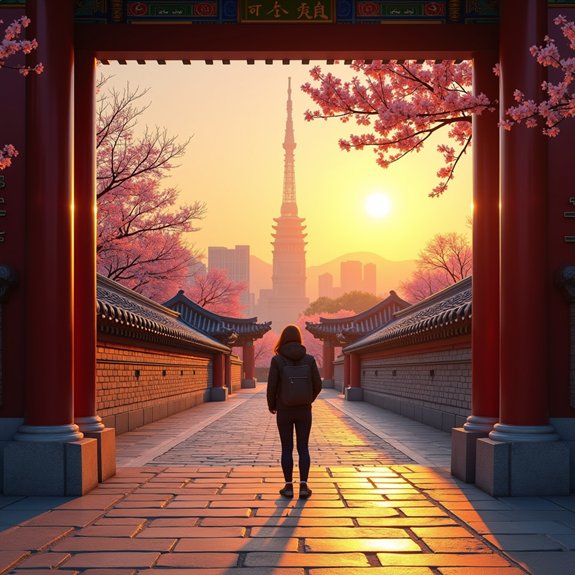
You’ll find Seoul’s magic in a few perfectly planned routes that connect the city’s best spots.
Try the Palaces-Markets-Namsan circuit for iconic landmarks like Gyeongbokgung Palace paired with Gwangjang Market’s street food before ending at Namsan for city views. With color-coded subway lines and English signage, navigating between these highlights is straightforward for first-timers.
Or switch it up with a Gangnam-to-Bukchon expedition that bridges modern K-pop culture with traditional hanok neighborhoods and colorful temple visits. The subway system is clean and reliable, making it easy to navigate between these attractions without worrying about transportation.
Palaces-Markets-Namsan Circuit
Standing at the crossroads of history and modernity, the Palaces-Markets-Namsan Circuit offers first-time visitors the quintessential Seoul experience.
Begin at Gyeongbokgung, the largest royal residence with jaw-dropping palace architecture, before heading to UNESCO-listed Changdeokgung. Trust me—you’ll want photos of both. Just a short stroll from the palace, you’ll discover the hidden alleys of Seochon Village, where traditional hanok houses and local art galleries create an atmospheric retreat.
Next, immerse yourself in market experiences at Gwangjang, Korea’s oldest traditional market. Stuff your face with street food. Seriously.
Then wander through Myeong-dong’s shopping chaos before escaping to Namsan Park, where you can enjoy well-maintained hiking trails that offer stunning views of the city.
Cap your day with a cable car ride to N Seoul Tower. The views? Ridiculous.
- Experience royal heritage at five grand palaces showcasing Joseon Dynasty splendor
- Sample authentic Korean cuisine while bargaining at bustling traditional markets
- End your day with panoramic city views from N Seoul Tower’s observation deck
Gangnam-To-Bukchon Cultural Expedition
The glittering modernity of Gangnam presents Seoul’s flashiest face—a stark contrast to the ancient elegance you’ve just witnessed. This is where Korea flaunts its wealth—upscale shopping districts, stylish lounges, and that famous Gangnam nightlife you’ve heard about. Yeah, the one from the song.
Hop on the subway or grab a bus to travel north toward Bukchon. The shift is striking. Suddenly, glass skyscrapers give way to traditional hanok rooftops.
In Bukchon, you’re stepping back centuries. You can dress in hanbok, sip tea ceremonially, or try your hand at calligraphy. The Bukchon Traditional Culture Center offers free entrance to visitors seeking a cozy rest stop during exploration. Bukchon traditions aren’t just for show—people actually live here, so keep it down! Discovering local handicrafts and souvenirs in this area is much like shopping near Kyoto’s famed shrines, where visitors find authentic crafts and symbolic keepsakes.
After exploring the narrow alleyways, hit nearby Gwangjang Market or continue to Changdeokgung Palace. Both perfectly complement your cultural deep-dive.
Colorful Markets to Temples
While Seoul sprawls across mountains and rivers, first-timers need anchoring points—not just random wandering.
Gwangjang Market’s 200+ food stalls will change your life. Period. Try kalguksu (knife-cut noodles) and crispy bindaetteok. Before you go, brush up on popular dishes to recognize must-try specialties and boost your confidence as you sample vibrant street foods.
Then contrast that market culture with Jogyesa Temple’s tranquility—headquarters of Korean Buddhism where they literally give you free meditation sessions. How cool is that?
Your temple festivals experience isn’t complete without the Lotus Lantern Festival. The colors! The lights! Breathtaking.
Be sure to visit the magnificent Gyeongbokgung Palace built in 1395, which served as the main royal residence during the Joseon dynasty.
- Visit Insadong’s traditional arts district for calligraphy and tea houses just 5 minutes from Jogyesa
- Explore Gyeongbokgung’s hourly guard-changing ceremonies (rent hanbok for the full experience)
- Wander through Namsangol Hanok Village for free cultural workshops—tea ceremonies and kite-making!
Tokyo-Seoul: 21st Century Neighbors
Tokyo spearheaded Japan’s post-war miracle while Seoul engineered the “Miracle on the Han River.” Now they’re evolving differently. Tokyo struggles with aging demographics while Seoul maintains impressive technological advancements despite growing inequality. For domestic travel, Seoul’s efficient train network makes getting around the country fast and convenient. The Economic Comparison is stark—Tokyo’s cost of living is 74% higher!
Urban Development differs too. Seoul packs twice the density of NYC, while Tokyo sprawls into suburbs.
Their Cultural Exchange thrives despite Historical Relations that remain tense (Dokdo/Takeshima, anyone?).
Public Sentiment varies by generation. Young people? Way more open to K-pop and anime crossing borders.
Both boast exceptional Safety Standards, though Tokyo edges ahead slightly. Seoul offers a vibrant nightlife scene with popular districts like Hongdae and Itaewon featuring indie music venues and expat-friendly bars.
Different paths, same destination: leading Asia into the future.
K-Pop Studios Welcome Foreigners
Ever dreamed of dancing like your favorite K-pop idol? Now’s your chance. Seoul’s dance studios are throwing open their doors to foreigners, no experience required. Seriously. You’ll find classes in Hongdae and Gangnam starting around $40.
These studios aren’t messing around. They offer:
- English instruction (so you won’t be lost in translation)
- Video services to capture your K-pop choreography attempts (blackmail material, anyone?)
- Flexible scheduling that works with your tourist timeline
It’s not just about learning moves. The classes double as cultural exchange opportunities where you’ll connect with locals and other visitors. Classes focus on learning exciting highlight choreography from popular K-pop songs.
The language barrier? Non-existent. Modern facilities? Exceptional. This isn’t just a dance class—it’s K-pop as a cultural ambassador. And it’s waiting for you.
Seoul’s Tap Water Safety
You can safely drink Seoul’s tap water straight from the faucet, despite what locals might tell you.
Their “Arisu” water system undergoes testing for 350 different criteria, far exceeding WHO standards, and actually contains minerals comparable to bottled spring water. The tap water contains 37.6 mg/L of minerals that help supplement your daily nutrient intake.
While many Koreans prefer bottled or filtered water due to taste preferences and outdated cultural skepticism, you’ll find public water fountains throughout the city with real-time monitoring — and you’ll save money too.
Water Quality Standards
Seoul’s tap water, officially called Arisu, isn’t just safe—it’s exceptional by global standards. Tested for 350 criteria items, it surpasses the WHO’s recommended 166 categories. That’s right—Arisu blows international standards out of the water. Literally.
The water quality speaks for itself—with a balanced pH of 6.7-7 and mineral content of 37.6 mg/L, similar to fancy bottled spring water. You’re getting health benefits without the plastic waste. And let’s be honest, your wallet will thank you too. The city has maintained a 99.9% achievement rate for tap water quality over the past five years.
- Contains essential minerals that purified water lacks
- Undergoes stricter testing than most bottled water brands
- Has the lowest risk of bacterial growth compared to home purifiers
Ironically, despite having some of the world’s safest tap water, many locals still reach for bottled options. Their loss, your gain.
Drinking Guidelines
While many tourists fret about drinking tap water abroad, don’t waste your money on bottled water in Seoul. The city’s water purification system is no joke—350 criteria tested, double WHO standards. Seriously impressive.
You can brush your teeth, wash fruits, even fill your water bottle straight from the tap. It’s completely safe.
The locals? They’re skeptical. Years of pipe issues created trust problems, so many Koreans install filters anyway. Seoul markets its tap water under the name Arisu to reassure consumers.
Hydration tips for your visit: Take advantage of public refill stations popping up around tourist areas. Chlorine taste bothering you? Let it sit for 30 minutes.
The government’s so confident they’ll compensate you if anything goes wrong (it won’t). Hotels use filtered systems anyway.
Bottom line—drink up. Your wallet will thank you.
Bottled vs. Tap
Let’s explore the curious case of Arisu—Seoul’s premium tap water that locals oddly refuse to drink.
Despite ranking among the world’s highest quality tap water, meeting 350 safety criteria, and containing healthy minerals comparable to bottled spring water, most Koreans simply won’t touch it.
Cultural perceptions trump scientific facts. Period.
When visiting Seoul, consider this tap water paradox:
- Arisu offers health benefits similar to expensive bottled water, yet locals spend millions on filtered alternatives
- The government literally bottles tap water to convince skeptical citizens it’s safe
- You’ll see locals boiling perfectly clean water before drinking it—a deeply ingrained cultural habit
Meanwhile, automatic monitoring systems check water quality 24/7.
It’s perfectly safe. The irony? You could drink straight from the faucet while Koreans nearby spend money avoiding it. This hesitation dates back to a toxic phenol leak in 1991 that contaminated the Nakdong River.
Conclusion and Final Thoughts on Visiting Seoul, South Korea
As your journey through this travel guide concludes, it’s clear that Seoul stands as a remarkable destination balancing tradition with cutting-edge modernity.
You’ll find Seoul nightlife electric and diverse—perfect after days spent exploring palaces. Cultural festivals happen year-round, giving you constant opportunities to experience Korean heritage firsthand.
The city’s surprisingly affordable. Way cheaper than Sydney or New York. Public transport? Efficient. Period.
Historical sites blend seamlessly with shopping districts, creating a city that never feels one-dimensional.
Removing your shoes before entering traditional Hanok homes is essential to experience authentic Korean hospitality and respect local customs.
Each season offers something different. Cherry blossoms in spring. Humid summers. Fall foliage that’ll make your Instagram followers jealous. Snowy winter scenes straight from a K-drama.
Seoul’s seasonal kaleidoscope dazzles—from spring blossoms to crisp autumn leaves—each frame worthy of your social feed.
Learn basic Korean phrases. Download Naver Maps. Eat street food.
Seoul awaits.
Frequently Asked Questions
Is Street Food in Seoul Safe to Eat?
Picture yourself at a bustling Seoul street corner, aromas wafting through the air.
Street food safety is generally acceptable, but it’s a mixed bag. Popular stalls with high turnover and clean operations are your best bet.
Let’s be real – only 8.3% have official hygiene certifications. Foods like gimbap can harbor bacteria. Vendors rarely have sick leave policies.
The cleanliness of utensils? That’s often the biggest concern.
What Are the Best Day Trips From Seoul?
You’ll love escaping Seoul’s bustle.
The DMZ Tour? Intense. Sobering. A rare glimpse into North-South tensions with abandoned sites that’ll make you shiver. Not your typical tourist trap.
Nami Island’s tree-lined paths are Instagram gold. Seriously gorgeous.
Alpaca World lets you cuddle fluffy beasts. Weird but fun.
Korean Folk Village? Cultural immersion without the textbook.
Heyri Art Valley’s for the artsy types. Bookshops everywhere.
How Much Should I Tip in Restaurants?
You don’t tip in South Korean restaurants. Period.
Tipping customs there don’t exist like in America – it’s just not part of their restaurant etiquette. Service charges? Already included. Leaving money on the table might actually confuse or offend staff.
Seriously. They’ll think you forgot your change. Want to show appreciation? Just say “gamsahamnida.” That’s it. No math required, no pocket full of coins needed.
When Is Typhoon Season in Seoul?
Typhoon season hits Seoul primarily July through September.
Peak impact? August to September. Not kidding around – these storms mean business.
You’ll need serious weather preparation if visiting then. Q3 brings about 7 typhoons yearly, with one typically reaching Seoul directly.
They’re not monsoons, totally different beast. Pack waterproof gear and watch those KMA alerts.
Floods happen, especially near the Han River. Don’t mess with Mother Nature.
Are There English-Speaking Medical Facilities for Tourists?
Nearly 90% of Seoul hospitals have English-speaking staff. You won’t struggle finding medical help.
Major facilities like Asan Medical Center and Seoul National University Hospital offer dedicated international services—perfect for medical tourism. Healthcare accessibility is surprisingly good for foreigners. Just walk in.
Costs? Cheaper than Western countries, better technology.
Emergency? The U.S. Embassy maintains lists of English-speaking doctors. No need to panic about getting sick here.
Conclusion
You’ve seen it all: ancient palaces next to K-pop studios, pristine tap water in a city that never sleeps. Seoul’s contrasts will hit you hard. One minute you’re scanning a T-Money card underground, the next you’re sleeping in a 500-year-old hanok. Modern efficiency, ancient spirituality. Tokyo’s nearby, but Seoul’s unique. It’s chaotic. Beautiful. Frustrating. Addictive. You’ll be back.
More on Seoul:

Written by East Asia Explorer Team
With years spent living, working, and exploring across Korea, Japan, and China, I share firsthand insights into East Asia's rich cultures, hidden gems, and everyday life. My journey also includes studying in Malaysia and traveling through Southeast Asia, experiences that have deepened my appreciation for the region's diversity. Through practical tips, local stories, and travel guides, I aim to help fellow explorers discover both the celebrated highlights and the lesser-known corners of East Asia.