Last Updated: March 12, 2026 | Originally Published: May 8, 2025
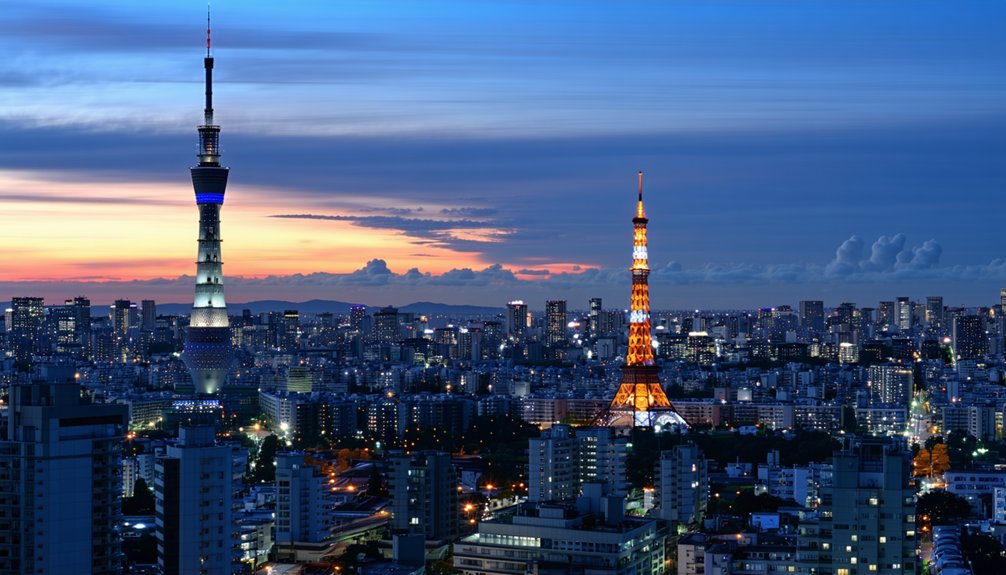
Tokyo Tower and Tokyo Skytree offer two distinct views of Japan’s capital—one rooted in history, the other in modern innovation. At 333m, Tokyo Tower delivers intimate skyline views, fewer crowds, and prime photo spots for ¥2,800. The soaring Tokyo Skytree reaches 634m, offering broader panoramas, upscale dining, and a sprawling shopping complex for ¥3,100. Tower reflects Japan’s post-war resilience; Skytree symbolizes its future-forward engineering. The right choice depends on what kind of Tokyo you want to see—nostalgic charm or sky-high spectacle? (Source: Japan National Tourism Organization)
Read our full Japan Travel Guide 2026 for everything you need to plan your Japan trip.
Explorer Insights
- Tokyo Skytree (634m) offers higher panoramic views while Tokyo Tower (333m) provides more intimate cityscape perspectives of downtown Tokyo.
- Tokyo Tower’s central location offers better views of iconic skyscrapers at a lower price (¥2,800 combo ticket).
- Skytree excels in dining and shopping with multiple restaurants and hundreds of retail shops compared to Tokyo Tower.
- Tokyo Tower represents post-war recovery with its Eiffel-inspired design, while Skytree embodies modern Japan with earthquake-resistant architecture.
- Tokyo Tower offers a less crowded experience with easier photography opportunities without glass reflections.
A Tale of Two Towers: History & Purpose
Titans of Tokyo’s skyline, born generations apart. Tokyo Tower rose in 1958, a post-war symbol of Japan’s economic resurrection.
Rising like phoenixes over Tokyo, these towers tell Japan’s story through steel and ambition.
Fast forward to 2012 – enter Skytree, the modern behemoth. Tower evolution, right before your eyes.
Tokyo Tower wasn’t just copying the Eiffel – it was Japan saying “we’re back” after WWII. Pretty bold statement for a fancy antenna.
Then digital broadcasting needed something taller. Solution? Build the world’s tallest tower.
Both structures transcend their broadcasting duties. Their cultural significance runs deep – landmarks that transformed from practical necessities into beloved icons.
For instance, Tokyo Tower was designated as a National Monument in 1974, emphasizing its role as a symbol of Japan’s post-war recovery.
Two towers, two eras. Same country, different Japans.
Reaching for the Sky: Height Comparisons
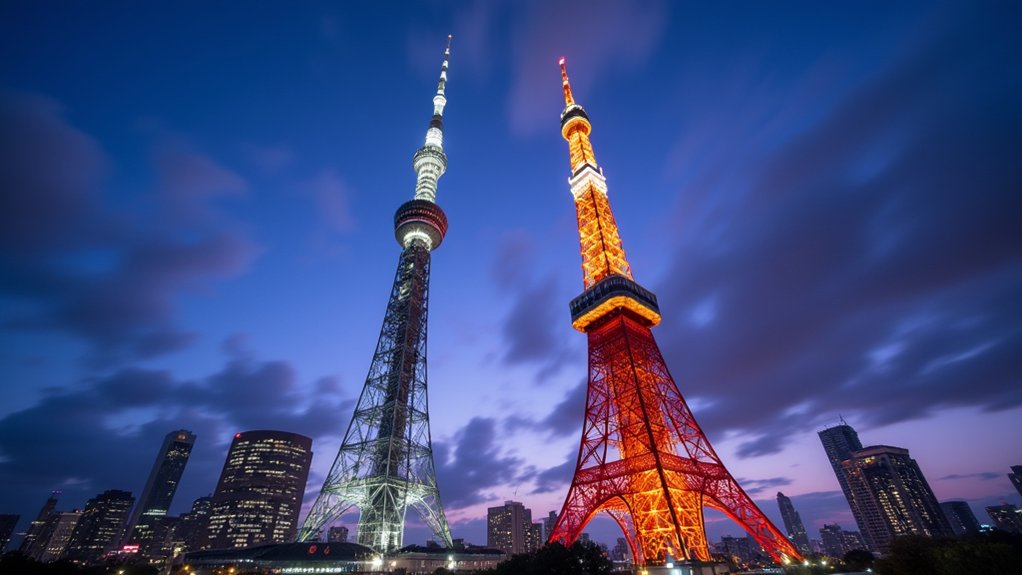
When comparing these Tokyo titans, size really matters. The Skytree absolutely dwarfs Tokyo Tower at a staggering 634 meters versus a modest 333 meters. That’s nearly twice as tall!
These height advantages aren’t just for bragging rights—they represent significant structural innovations.
Look at what you’re getting:
- Skytree’s triangular base evolving to circular—inspired by ancient pagodas but tough enough to handle earthquakes
- Tokyo Tower’s Eiffel-inspired design with a Japanese twist
- Skytree’s ridiculous 100km visibility on clear days (Mt. Fuji, anyone?)
Truth is, Skytree wins the height battle. No contest.
Reflecting Tokyo’s commitment to reliability, much like its subway system, Skytree’s design ensures enduring stability against challenges.
🏙️ Tokyo Skytree vs Tokyo Tower: Quick Comparison Table
| Feature | Tokyo Skytree 🗼 | Tokyo Tower 🎴 |
|---|---|---|
| Location | Sumida, Tokyo (near Asakusa) | Minato, Tokyo (next to Zojoji Temple) |
| Height | 634 meters (2,080 ft) | 333 meters (1,092 ft) |
| Observation Decks | Tembo Deck, Tembo Galleria | Main Observatory, Special Observatory |
| Best View | Mount Fuji on clear days, Tokyo Bay | Closer urban views, tower’s own shadow |
| Nearby Attractions | Sumida Aquarium, Tokyo Skytree Town | Shiba Park, Zojoji Temple |
| Dining Option | Sky Restaurant 634 (Musashi), skyline views | FootTown restaurants and café |
| Color Scheme | White & bluish-gray (Edo period aijiro) | Red and white (Eiffel Tower-inspired) |
| Opened | 2012 | 1958 |
| Main Purpose | Digital broadcasting, tourism, earthquake-resilient design | Analog broadcasting, tourism, national icon |
| Access | Oshiage Station, direct connection | Akabanebashi Station, short walk |
| Ticket Price | ¥2,100–3,100 (varies by floor/time) | ¥1,200–2,800 (varies by deck) |
| Crowd Level | Can be busy, timed entry recommended | More accessible, usually less crowded |
Architectural Marvels: Design & Aesthetics
Beyond their impressive heights, these towers represent two distinct architectural philosophies. Tokyo Tower’s Eiffel-inspired frame screams 1950s optimism, while Skytree’s futuristic silhouette embraces modern aesthetics with its neo-futuristic design.
| Feature | Tokyo Tower | Tokyo Skytree |
|---|---|---|
| Inspiration | Eiffel Tower | Horyuji Pagoda |
| Color | International orange | Blue/lavender lighting |
| Cultural symbolism | Post-war recovery | Neo-Japanese identity |
Let’s be honest – Tokyo Tower is the vintage classic your parents love, while Skytree is the sleek newcomer that makes architects drool. One’s iconic. The other’s instagram-worthy. Both are unmistakably Japanese, just from different centuries.
Visitors planning a trip to these iconic structures can benefit from Google Maps for efficient navigation across Tokyo’s complex transit system.
Panoramic Vistas: the View From Above
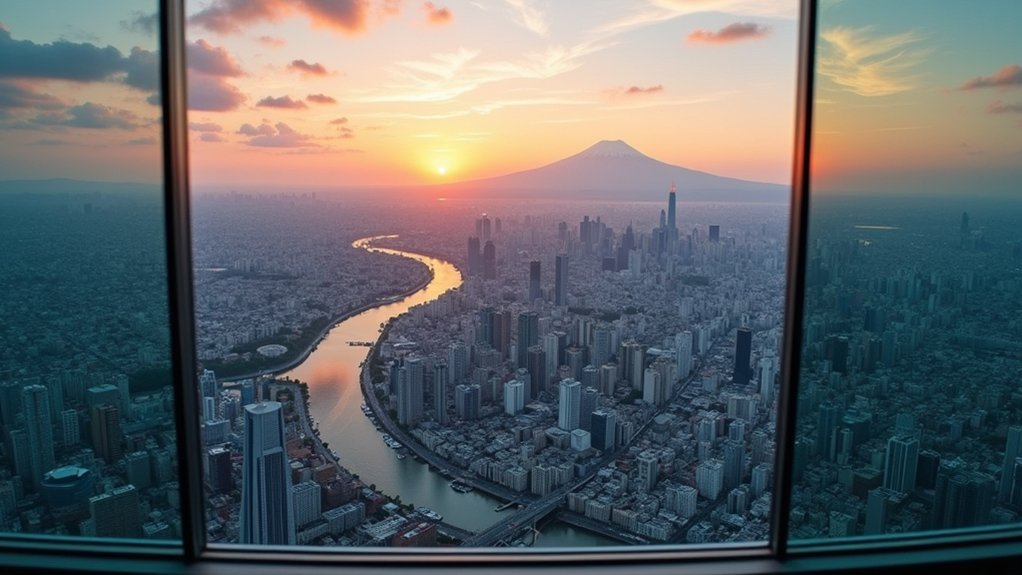
While architectural design dazzles from afar, the real showstopper begins when you step into those high-speed elevators.
Tokyo’s twin giants offer dramatically different vantage points. Skytree’s 634-meter summit makes even skyscrapers look like toys. Tokyo Tower gives you a more intimate cityscape – it’s lower, but sometimes closer is better for scenic photography.
- Skytree’s 100km visibility reveals Mount Fuji on clear days
- Tokyo Tower puts you eye-level with downtown’s architectural gems
- Both transform at sunset when Tokyo’s concrete jungle ignites with neon
Truth is, each tower shows you a different Tokyo. Choose wisely. Those reflective windows at Skytree? Total photo-killers.
For more adventure beyond the city, consider exploring Japan’s ferry services to its remote islands.
Picture Perfect: Photography Tips & Challenges
A photographer’s nightmare awaits at both towers, but for entirely different reasons.
At Skytree, you’ll fight reflection issues from those massive windows. Your photography techniques better include anti-glare filters.
Plus, everything looks tiny from 634 meters up. Good luck getting that perfect Instagram shot!
Tokyo Tower offers better photo ops with less reflective glass. You can actually get closer to windows.
The lower height means skyscrapers don’t look like miniature models.
Both have their challenges. Crowded observation decks. Annoying tourists blocking views.
But hey, that’s the price of capturing Tokyo’s skyline. Choose your poison.
To enhance your trip, remember to practice train etiquette when navigating the crowds at these popular spots.
Getting There: Access & Ease Around Tokyo’s Iconic Towers
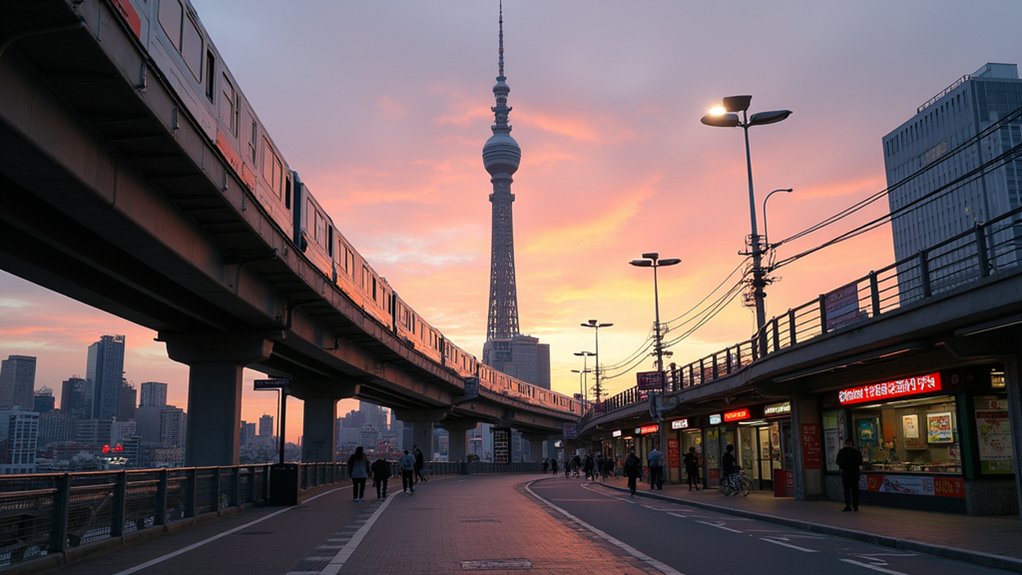
Visiting Tokyo Skytree or Tokyo Tower isn’t just about jaw-dropping views—it’s about navigating Tokyo’s vast transit network without wearing yourself out. Here’s what you need to know:
🚆 Tokyo Skytree (Sumida City)
Accessible via the Tobu Skytree Line, Tokyo Metro Hanzomon Line (Oshiage Station), or Toei Asakusa Line.
Located near Asakusa, making it a great combo for cultural sightseeing.
Offers priority elevators, barrier-free access, and wheelchair-friendly restrooms across multiple levels.
Service animals, including guide dogs, are welcome—even at the top!
🚇 Tokyo Tower (Minato City)
Just a short walk from multiple stations: Akabanebashi Station (Toei Oedo Line), Kamiyacho Station (Tokyo Metro Hibiya Line), and Onarimon Station (Toei Mita Line).
Centrally located near Roppongi and Shiba Park, making it ideal for quick visits or nighttime photos.
Features barrier-free entrances, wheelchair access, and accessible restrooms.
When you’re tired after a full day of sightseeing across places like Shibuya or Ueno, location matters. For ease and centrality, Tokyo Tower wins—hands down.
For efficient travel in Tokyo, consider using a prepaid card system similar to Korea’s T-money card.
Beyond the View: Dining & Shopping Experiences
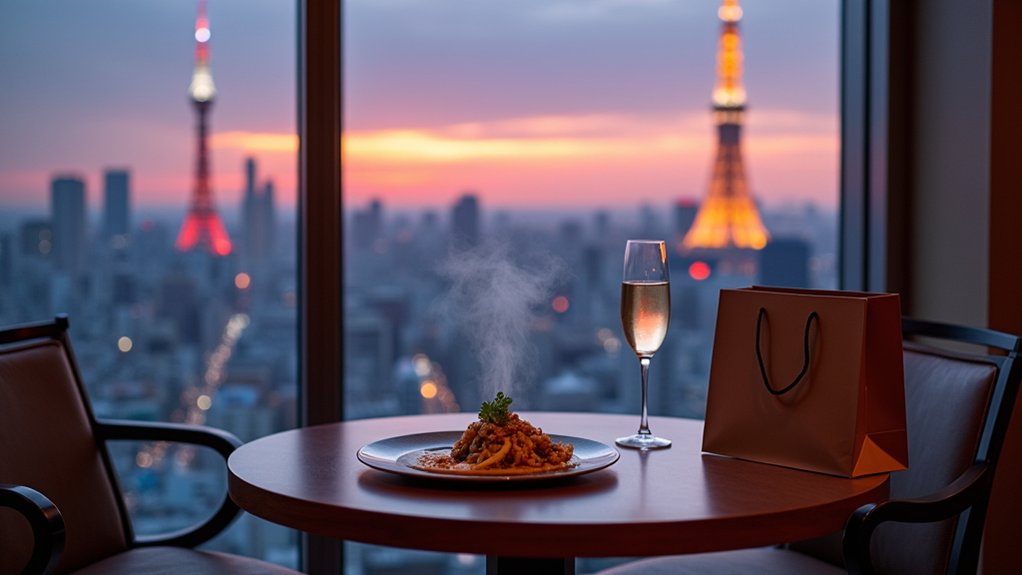
What’s the point of soaring above Tokyo if you can’t also savor some skyline-side sushi or snag the perfect souvenir? Both Tokyo Skytree and Tokyo Tower offer unique bites and buys—but with very different vibes.
🍜 Tokyo Skytree (Sumida City)
Sky Restaurant 634 (Musashi): Fine dining with floor-to-ceiling views from the Tembo Deck.
Two skycafés offer sweets, drinks, and unbeatable panoramic backdrops.
Tokyo Solamachi, the mega shopping complex at the base, features:
300+ shops, from Japanese fashion to quirky character goods.
Local eats, souvenir shops, and even a Sumida Aquarium and planetarium.
If you want a complete shopping and culinary destination, Skytree takes the crown.
☕ Tokyo Tower (Minato City)
Café La Tour on the Main Deck serves light fare and drinks with skyline views.
FootTown, the four-story base building, includes:
Casual restaurants and snack stalls.
Over 300 tower-themed souvenirs—some charming, some kitschy.
The experience is quaint, nostalgic, and classically Tokyo.
🛍️ Explorer Tip
Dining? Skytree wins with variety and altitude.
Shopping? Also Skytree—especially if you’re after volume and variety.
Vintage Tokyo charm and simplicity? Tokyo Tower delivers that in spades.
Crowd Control: Best Times to Visit
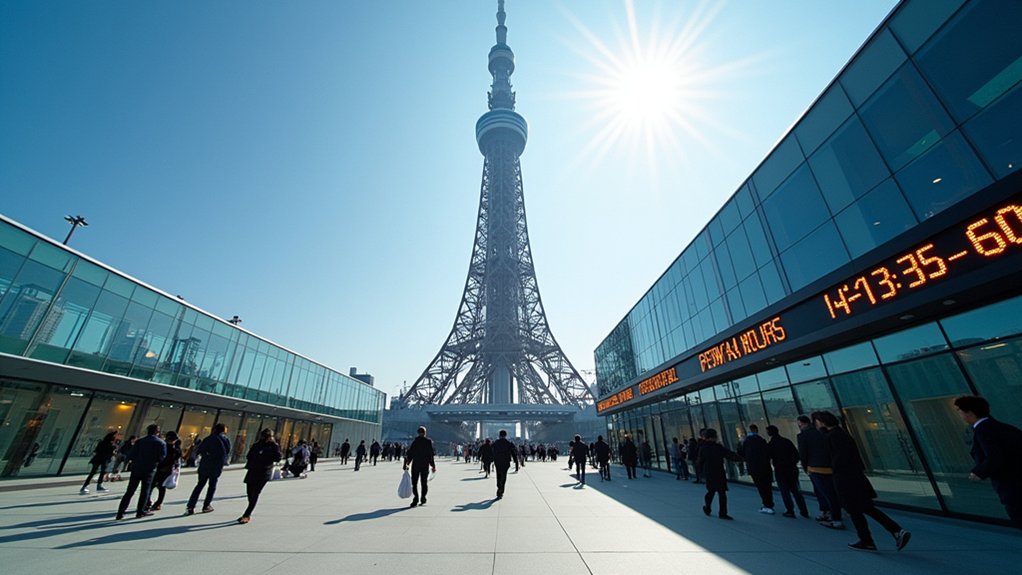
When exactly should you brave Tokyo’s vertical tourist traps? Both towers implement their own crowd management strategies, but timing is everything. Early mornings (before 10am) and weekdays deliver the smoothest visitor flow experience.
Weekends? Absolute madness.
- Skytree gets slammed during cherry blossom season (late March-early April) when everyone wants that pink-tinged panorama.
- Tokyo Tower sees massive crowds during summer vacation (July-August) when families flood in.
- Both towers are nightmares during Golden Week and New Year holidays – seriously, don’t bother.
Just as travelers are advised to arrive early for their trains in Korea to ensure a smooth journey, planning your visit to these towers during less crowded times can greatly enhance your experience.
Neighborhood Exploration: Surrounding Attractions
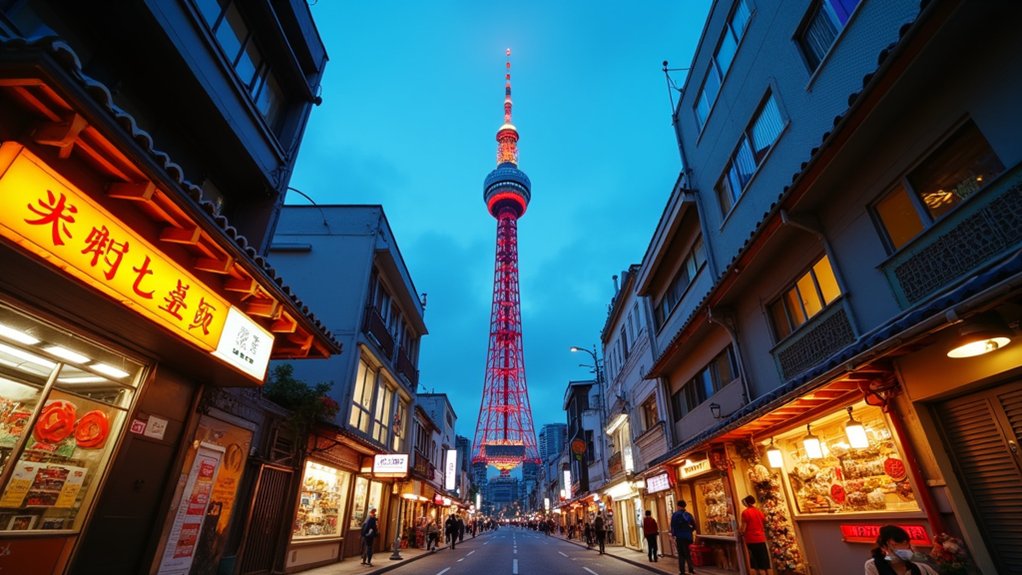
Neither Tokyo Skytree nor Tokyo Tower stands alone—both are surrounded by neighborhoods worth far more than a quick elevator ride and a souvenir shop stop.
🏮 Near Tokyo Skytree: Sumida & Asakusa
Just a short walk from Tokyo Skytree, the Asakusa district offers a throwback to old Tokyo.
Visit Senso-ji Temple, the city’s oldest and most iconic temple, surrounded by food stalls and Nakamise Street, packed with traditional crafts and snacks.
Hop on a Sumida River Cruise or explore nearby Tokyo Mizumachi for riverside cafés and family-friendly parks.
Perfect for: history lovers, street photographers, and first-time visitors seeking authentic vibes.
🏯 Near Tokyo Tower: Minato, Shiba & Roppongi
Steps from Tokyo Tower, the Zojoji Temple sits in striking contrast to the modern skyline—a tranquil, historic Buddhist site in the heart of Shiba Park.
Stroll to Roppongi Hills or Tokyo Midtown for upscale dining, art museums, and Tokyo’s contemporary edge.
Ideal for: those chasing Tokyo’s cultural contrasts, urban greenery, and a quieter walking experience.
🧭 Explorer Tip
Want temples and tradition? Skytree + Asakusa is your route.
Craving a more serene urban contrast? Tower + Zojoji + Shiba Park delivers.
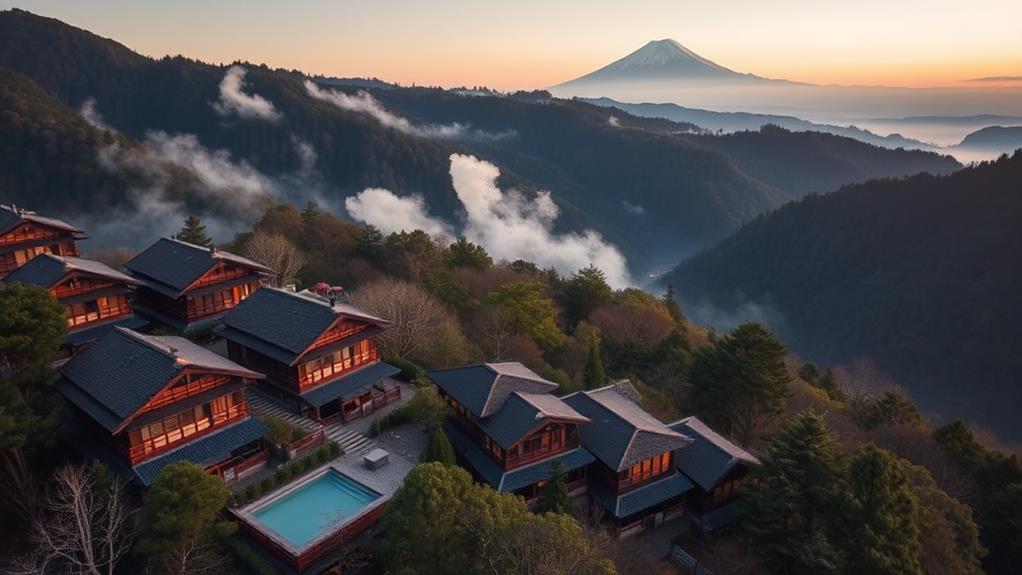
Bonus idea: After exploring either area, unwind with a day trip to Hakone—famous for its onsen (hot springs) and Lake Ashi views of Mt. Fuji.
For an easy escape from the city, consider a day trip to Hakone’s hot springs to unwind after your tower visit.
Night Lights: Evening Illumination Spectacles
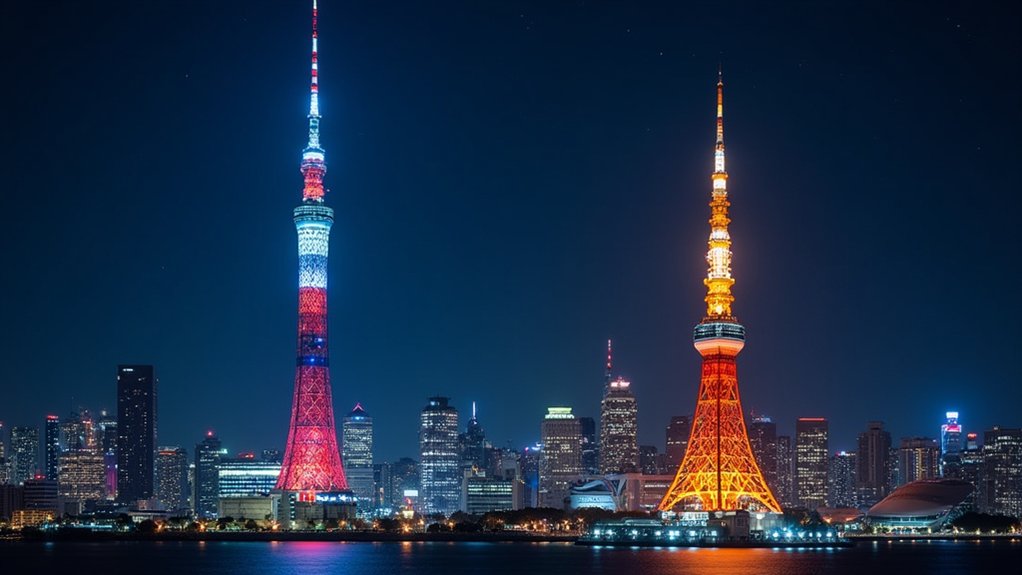
Tokyo transforms after sunset, and both towers become beacons in the darkness. The nighttime ambiance completely changes your viewing experience. Seriously, it’s like two different attractions.
Tokyo Tower’s classic orange-red glow looks like a fiery Eiffel Tower against the cityscape. Skytree’s modern illumination alternates between “Iki” blue and “Miyabi” purple, representing Japanese aesthetics. Let’s be honest—they’re both showing off.
- Light reflections dancing across Tokyo’s glass skyscrapers
- Twinkling city lights stretching to the horizon
- Glowing landmarks creating a sci-fi movie backdrop
Different vibes, same goal: dazzle you.
For a truly explosive night experience, consider visiting during the Sumida River Fireworks festival, where the sky lights up with over 20,000 fireworks.
Budget Breakdown: Ticket Prices & Value
Let’s talk money. Visiting these towers isn’t cheap.
Tokyo Skytree hits your wallet harder—¥3,100 for both decks versus Tokyo Tower‘s more reasonable ¥2,800 combo ticket. Ouch.
Tokyo Tower offers better ticket discounts throughout the year, especially for students and seniors.
Their family packages make it more affordable for groups. Four people? Save some yen.
Skytree’s higher price gets you higher views, sure.
But value? Debatable. You’re paying extra for those few hundred meters and bragging rights.
Tower gives you central Tokyo for less cash.
Simple math, really.
To make your visit more budget-friendly overall, consider using Japan Rail for efficient travel to these sites.
The Verdict: Which Tower Delivers the Ultimate Experience
So which towering giant actually deserves your time and money? After weighing visitor feedback and comparing tower experiences, Tokyo Tower edges out its taller, newer competitor. It’s simply more enjoyable.
- Tokyo Tower’s central location means better views of iconic skyscrapers up close.
- Photography is easier without the frustrating glass reflections that plague Skytree.
- The less crowded environment lets you actually enjoy the view without fighting for window space.
Look, Skytree’s height is impressive. But taller isn’t always better.
Tokyo Tower delivers the quintessential Tokyo experience without the tourist crush. Sometimes the classics win.
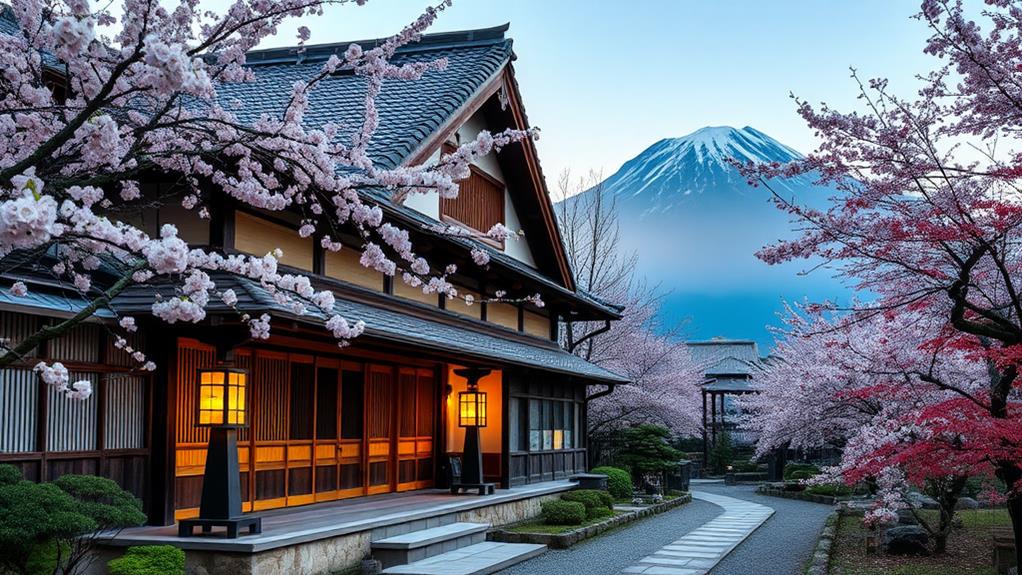
For those planning a visit during cherry blossom season, Tokyo Tower offers prime vantage points of the blooming trees across the city.
❓ Are the Towers Accessible for Visitors with Mobility Impairments?
Both Tokyo Skytree and Tokyo Tower offer excellent accessibility. Skytree has priority elevators, accessible toilets, and welcomes service animals. Tokyo Tower provides wheelchair-friendly entrances and barrier-free access on the Main Deck and in FootTown.
❓ Can You Bring Your Own Food and Drinks Inside?
No. Outside food and drinks are prohibited at both towers. Tokyo Tower and Skytree enforce strict policies, but both offer plenty of on-site dining options. Water fountains are available.
❓ Do Children Need Separate Tickets to Enter?
Yes. Both towers require child tickets, though prices are discounted based on age. Family passes are rare, but seasonal promotions are occasionally offered.
❓ Are There Any Age or Health Restrictions for Visitors?
Generally, no. However, visitors with heart conditions, pregnancy concerns, vertigo, or claustrophobia should use caution. Fast elevators and crowded spaces can be a factor—especially at peak times.
❓ How Does Weather Affect Visibility and Operations?
Poor weather—fog, rain, or typhoons—can affect views and may close the towers. Skytree is more impacted due to its height. Tokyo Tower offers better visibility on cloudy days. Visit in winter for a clear shot of Mt. Fuji.
Conclusion
You’ll get your Tokyo tower fix either way. Skytree’s futuristic presence—like something from Blade Runner—offers unmatched height and modern amenities. Tokyo Tower stands like an old friend, closer to the action with its warm, vintage glow. It’s David versus Goliath in steel form. Your choice? The nostalgic classic or the glass-clad giant. Both will empty your wallet. Both will fill your camera roll.
More on Tokyo:

Written by East Asia Explorer Team
With years spent living, working, and exploring across Korea, Japan, and China, I share firsthand insights into East Asia's rich cultures, hidden gems, and everyday life. My journey also includes studying in Malaysia and traveling through Southeast Asia, experiences that have deepened my appreciation for the region's diversity. Through practical tips, local stories, and travel guides, I aim to help fellow explorers discover both the celebrated highlights and the lesser-known corners of East Asia.