Last Updated: June 27, 2026 | Originally Published: October 10, 2024
- Gora Kadan — Former Imperial villa, ¥80,000–¥200,000/person/night, private outdoor rotenburo in every room
- Hakone Ginyu — Mountain-facing private onsen suites, ¥80,000–¥150,000/person/night
- Kinnotake Tonosawa — 16-room forest retreat, in-room onsen fed continuously from source, ¥60,000–¥120,000/person/night
- Best value: Yama No Chaya (¥40,000–¥80,000/person/night) includes tea ceremony access
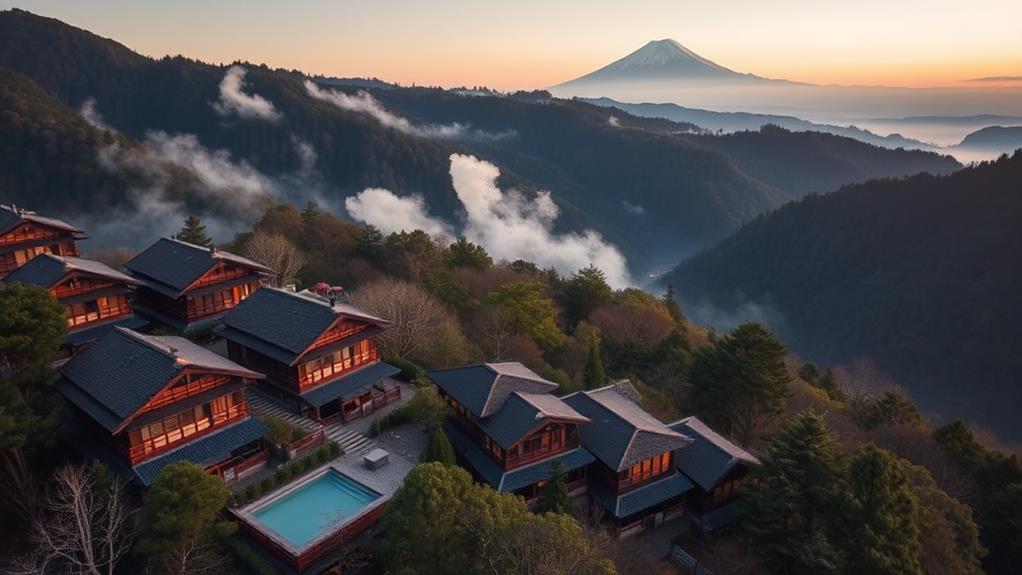
Hakone’s five best hot spring hotels (ryokan) all include kaiseki dinner and Japanese breakfast in the nightly rate — that’s standard ryokan pricing, not an upsell. What separates them is onsen type, seclusion level, and how far in advance they sell out.
Read our full Japan Travel Guide 2026 for everything you need to plan your Japan trip.
Price Comparison: What You’ll Pay at Each Hakone Ryokan
Rates below are per person per night and include kaiseki multi-course dinner plus Japanese breakfast. Prices as of 2026 and vary by room type, season, and occupancy.
| Ryokan | Rate (per person) | Onsen Type | Best For |
|---|---|---|---|
| Gora Kadan | ¥80,000–¥200,000 | Private outdoor rotenburo | Imperial heritage + luxury |
| Hakone Ginyu | ¥80,000–¥150,000 | Private + communal outdoor | Mountain-view couples |
| Yama No Chaya | ¥40,000–¥80,000 | Communal + private baths | Culture + value balance |
| Gora Tensui | ¥50,000–¥90,000 | Private indoor + outdoor | Modern ryokan aesthetic |
| Kinnotake Tonosawa | ¥60,000–¥120,000 | In-room private (kakehranashi) | Forest seclusion |
Getting to Hakone: Train Routes and the Hakone Free Pass
Hakone is approximately 90 km southwest of Tokyo. There are two practical routes from the city, and one pass that makes transport almost entirely prepaid.
Route 1 — Romancecar Express (Odakyu Line): Departs Shinjuku Station direct to Hakone-Yumoto Station. Journey takes approximately 85 minutes. The reserved seat fare is around ¥2,470. No transfers — the most convenient option for guests arriving from central or west Tokyo.
Route 2 — JR Shinkansen + Hakone Tozan Railway: Take the JR Tokaido Shinkansen from Tokyo Station to Odawara (about 35 minutes, ¥4,270 non-reserved). Transfer to Hakone Tozan Railway at Odawara Station (¥320 to Gora, 54 minutes). Best if you’re connecting from Kyoto or Osaka.
Gora Kadan — The Imperial Villa Experience
Gora Kadan began as a summer villa of Japan’s Imperial Family before converting to a luxury ryokan. The property preserves that heritage: wide engawa verandas, shoji screens, and a garden fieldd around seasonal change rather than year-round uniformity.
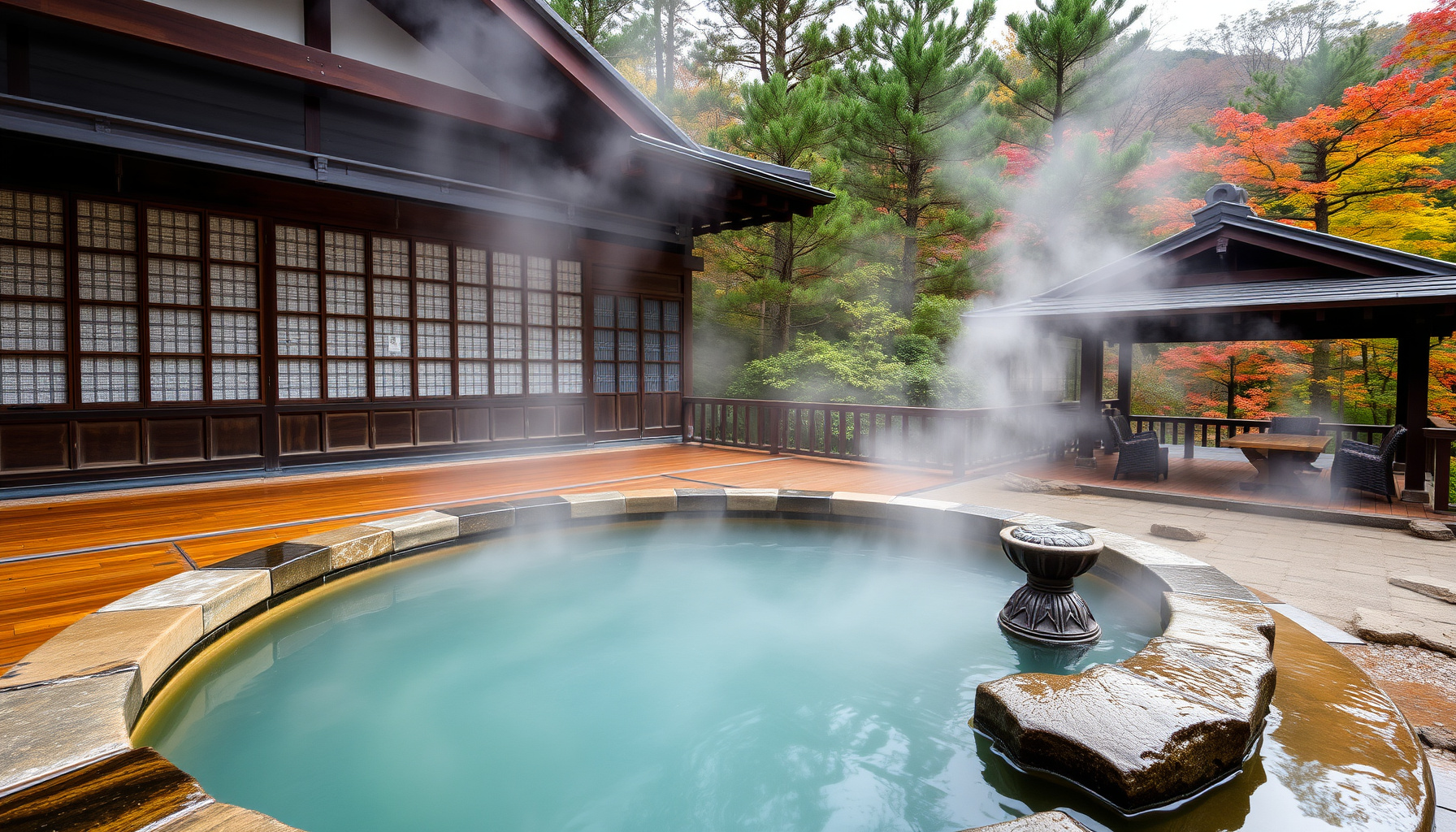
Each room includes a private open-air bath (rotenburo). Hakone’s 17 onsen zones draw from distinct volcanic sources with measurably different mineral compositions. According to the Japan National Tourism Organization (JNTO), Gora’s springs fall into the sodium chloride category — notably silky on skin, with a mild sulfur character that’s subtler than the fumarole-heavy Owakudani zone.
The kaiseki menu rotates monthly and sources seafood from Sagami Bay (roughly 30 km south) and vegetables from Odawara farms. Dinner is typically served in-room on lacquerware trays over 8–10 courses across 90 minutes.
Hakone Ginyu — Mountain Views and Private Onsen Suites
Every room at Hakone Ginyu is oriented toward the mountains and cedar forest. The private outdoor baths face the treeline rather than an interior wall — uncommon in Hakone, where adjacent buildings often limit bath views in denser areas.
The communal public baths are open 24 hours, separated by gender. Peak use runs 6–8 AM and 9–11 PM. Guests who want the communal bath essentially to themselves typically soak between 3–5 AM — the facility is open, staffed, and quiet.
“Hakone’s open-air onsen experience (rotenburo) represents one of Japan’s most distinctive wellness tourism assets,” according to the Japan National Tourism Organization (JNTO).
Yama No Chaya — Tea Ceremonies and Forest Baths
Yama No Chaya sits at a higher elevation than central Gora, resulting in cooler summers and heavier snowfall in winter. The surrounding cedar forest keeps the property quieter than valley-floor ryokan during Hakone’s autumn foliage peak (typically mid-November).
The property offers a tea ceremony session on request — approximately 45 minutes, conducted in a dedicated chashitsu (tea room) with tatami flooring. This is not complimentary: expect ¥3,000–¥5,000 per person added to your bill. The instructors practice Urasenke-style tea preparation, one of Japan’s three main tea ceremony lineages.
The onsen draws from a sodium bicarbonate spring. It feels noticeably softer and less sulfurous than Gora Kadan’s source. The communal baths rotate between genders at set times (confirm at check-in, typically around 11 PM).
Gora Tensui — Modern Ryokan in Central Gora
Gora Tensui is the most recently renovated property on this list. Common areas use exposed natural wood and slate tile rather than traditional tatami — a contemporary interpretation of ryokan aesthetic rather than a strict historical restoration.
The location is practical: Gora Station on the Hakone Tozan Railway is a 3-minute walk away. This makes day trips to the Hakone Open-Air Museum (Chokoku-no-Mori Station, one stop, 4 minutes) and the Hakone Ropeway to Owakudani straightforward without moving your luggage.
Kinnotake Tonosawa — Secluded Forest Retreat
Tonosawa is Hakone’s most isolated area accessible by rail. Kinnotake Tonosawa has 16 guest rooms — no tour group banquets, no conference overflow. The limited room count is intentional: each room receives a direct flow of spring water from the local source, and the spring’s yield can only support a small simultaneous draw.
Each room has a private bath fed by a continuous pipe from the onsen source (kakehranashi style). The water runs and drains constantly. You can soak any time without coordinating with other guests or watching a shared bath schedule.
When to Book: Advance Planning by Season
Hakone has two demand peaks: cherry blossom season (late March to early April) and autumn foliage (mid-November). During both windows, Gora Kadan and Hakone Ginyu typically sell out 4–6 months in advance.
Off-peak windows are July–August (rainy season) and January–February. Rates at Yama No Chaya and Gora Tensui often drop noticeably versus peak season, and same-week availability opens up. [unverified] The winter months also mean uncrowded communal baths and onsen steam visible against cold air.
New Year’s (December 28–January 4) is a distinct third peak driven by Japanese domestic travel. Plan at least 3 months ahead for that window at any of the five properties.
Frequently Asked Questions
What is the best time of year to visit Hakone for hot springs?
Late March and mid-November offer the most scenic settings but also the highest demand. January and February are quietest with the lowest rates — the mineral springs perform identically regardless of outside temperature, and winter snowfall adds atmosphere.
Are there day-use hot spring options in Hakone?
Yes. Gora Tensui and Yama No Chaya both offer day-use onsen access (higaeri nyuyoku) for approximately ¥1,500–¥3,000 per person. Slots are typically 10 AM–3 PM with limited availability. Call or email the property directly the day before to confirm a slot.
How do I get to Hakone from Tokyo?
Take the Odakyu Romancecar Express from Shinjuku Station to Hakone-Yumoto (85 minutes, ~¥2,470). Or take the JR Shinkansen from Tokyo Station to Odawara (35 min, ¥4,270) then the Hakone Tozan Railway to Gora (54 min, ¥320). The Hakone Free Pass (¥6,100 for 2 days from Shinjuku) bundles the Romancecar fare with unlimited Hakone transport including the ropeway and Ashi Lake ferry.
Are tattoos allowed in Hakone’s public hot springs?
The communal public baths at most Hakone ryokan, including Gora Kadan and Hakone Ginyu, follow the standard Japanese ban on visible tattoos. However, all five properties on this list have private onsen rooms or in-room baths where this restriction doesn’t apply. Clarify at booking if your group has visible tattoos — ryokan staff will usually direct you to the appropriate bathing option without issue.
What other activities are there in Hakone besides hot springs?
The Hakone Open-Air Museum (Chokoku-no-Mori Station) displays 120 outdoor sculptures and a dedicated Picasso gallery. The Hakone Ropeway provides aerial views of Owakudani’s active volcanic vents. Ashi Lake offers ferry crossings with Mount Fuji views on clear days. All three are covered by the Hakone Free Pass (¥6,100 for 2 days from Shinjuku).
Last updated: 2026-06-27
More on Wellness & Onsen:

Written by East Asia Explorer Editorial Team
Sam Konneh is an AI strategist and digital marketer based in Seoul, South Korea. With years spent living, working, and exploring across Korea, Japan, and China, he shares firsthand insights into East Asia's cultures, hidden gems, and everyday life. A graduate of Inha University and KDI Graduate School, Sam combines data-driven expertise with on-the-ground experience. His journey also includes studying in Malaysia and traveling through Southeast Asia. Through practical tips, local stories, and travel guides, he helps fellow explorers discover both the celebrated highlights and the lesser-known corners of East Asia.