Published: August 31, 2026
Last updated: July 25, 2026
- Metro: Line 10, Yuyuan Garden Station (Exit 1) — 2-minute walk to the gate
- Tickets: Approximately ¥30–40 adults; check at gate or Trip.com before visiting
- Hours: 8:30am–5:00pm daily (last entry 4:30pm)
- Beat crowds: Arrive before 9am on a weekday; avoid October 1–7 National Day entirely
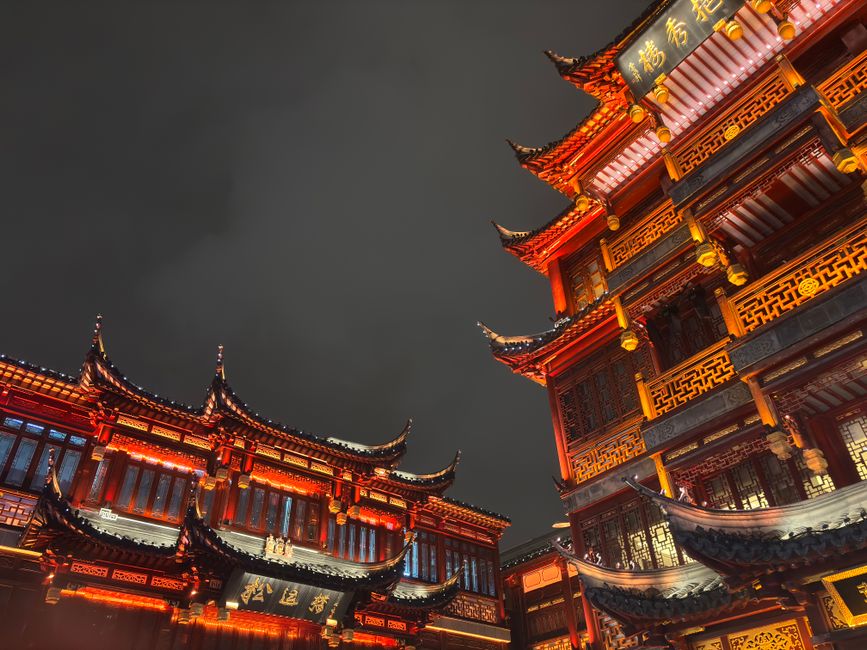
Yu Garden is Shanghai‘s best-preserved Ming Dynasty classical garden, built in 1559 by official Pan Yunduan as a retreat for his parents. It sits in Huangpu District, inside Old Town (南市), immediately beside the City God Temple Bazaar.
Most visitors budget 3–4 hours total: 90 minutes inside the garden, 30 minutes at the Huxinting Teahouse and Jiuqu Bridge photo area, and another 90 minutes eating xiaolongbao at Nanxiang and browsing the bazaar.
The garden itself draws over 3 million visitors annually, according to the Shanghai Municipal Bureau of Culture and Tourism. Crowd management matters here more than almost any other Shanghai sight.
How to Get to Yu Garden by Metro
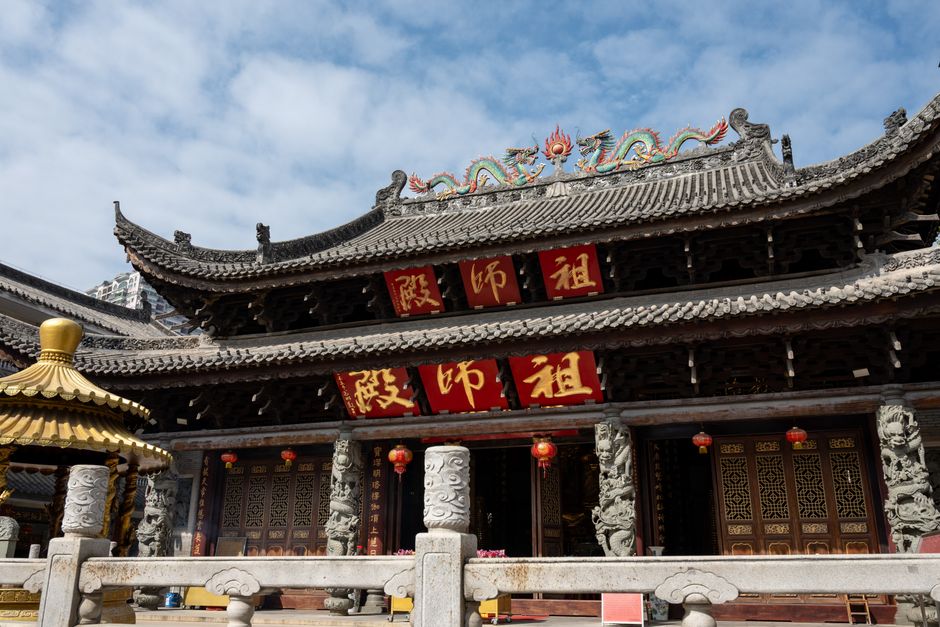
Take Metro Line 10 to Yuyuan Garden Station (豫园站). Use Exit 1. Walk south along Jiujiaochang Road for about 2 minutes — the garden gate is signposted in English.
From People’s Square (served by Lines 1, 2, and 8), switch to Line 10 at Xintiandi Station. That’s a single stop. Total journey from The Bund area: approximately 15 minutes including walking time from East Nanjing Road Station.
Taxis are available but not recommended during peak hours. Old Town traffic around Fuyou Road and Anren Street backs up severely on weekends. A taxi from The Bund can take 30+ minutes for a journey that’s 8 minutes on the metro.
If you’re coming from Pudong, take Metro Line 2 to East Nanjing Road, then transfer to Line 10. The journey from Lujiazui takes about 20 minutes total.
What Is Yu Garden? The 400-Year-Old Garden Behind Shanghai’s Old Town
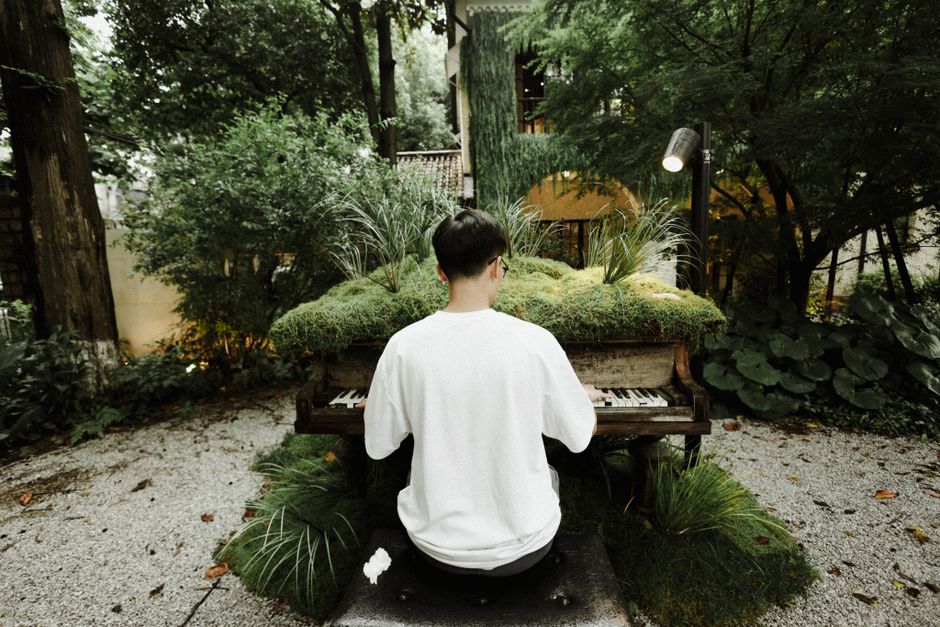
Pan Yunduan, a senior official under the Jiajing Emperor, broke ground on Yu Garden in 1559. Construction took 18 years. The name — 豫园 — translates as “Garden of Peace and Comfort,” reflecting its original purpose as a retreat for his aging parents.
The garden covers approximately 2 hectares (5 acres). Despite that modest footprint, the design creates the illusion of a much larger space through a deliberate sequence of rockeries, ponds, pavilions, covered corridors, and zigzag walls that break sightlines.
The Pan family lost the garden in the 18th century when financial difficulties forced its sale. It changed hands several times and fell into serious disrepair. The Shanghai Municipal Government undertook a full restoration in the 1950s under the guidance of traditional garden architects.
The garden is now listed as a National Key Cultural Relics Protection Site by the State Administration of Cultural Heritage (SACH). It is also included in China’s submission list for UNESCO World Heritage consideration alongside the classical gardens of Suzhou.
Yu Garden Tickets and Opening Hours 2026
Ticket prices for Chinese classical gardens have risen across the board in recent years. The figures below reflect current best estimates — always verify at the ticket booth or on Trip.com before your visit.
| Visitor Category | Estimated Price (2026) |
|---|---|
| Adult (full price) | ~¥30–40 |
| Students (with valid ID) | ~¥15–20 |
| Seniors (60+ with ID) | Reduced or free — verify on-site |
| Children under 1.2m | Free with paying adult |
| Opening hours | 8:30am–5:00pm (last entry 4:30pm) |
| Open on | Daily; may close for major maintenance |
Tickets are sold at the main gate on Anren Street. You can also check availability and current pricing on Trip.com, though buying online doesn’t always save time — e-ticket redemption and cash purchase queues are sometimes the same line.
Foreign card payments (Visa, Mastercard) are not always accepted at the gate. Bring CNY cash as a fallback, or set up Alipay or WeChat Pay with your foreign card in advance — both platforms have supported foreign card linking since 2023 per updates from China’s People’s Bank.
Inside Yu Garden: The Six Scenic Areas Explained
The garden is divided into six zones by decorative boundary walls topped with dragon sculptures. No single viewpoint reveals the entire garden — a deliberate classical design technique that rewards slow exploration.
1. Grand Rockery (大假山, Dà Jiǎshān): The oldest surviving feature in the garden, dating to the 16th century. Built from Wukang yellow stone, it stands 14 metres tall. Climb to the summit platform for a bird’s-eye view of the whole garden.
2. Wanhua Chamber (万花楼): Named “Ten Thousand Flowers Pavilion,” this hall is surrounded by bamboo groves and noted for its intricately carved wooden ceilings. Significantly less crowded than the Grand Rockery.
3. Dianchun Hall (点春堂): Used as the headquarters of the Small Swords Society during its 1853 uprising against the Qing Dynasty. The hall contains historical weapons and documents from that period. Most tour groups walk past without stopping.
4. Yuhua Hall and the Jade Exquisite Rock (玉华堂 / 玉玲珑): The Jade Exquisite Rock (玉玲珑) is a 3-tonne perforated Taihu limestone rock considered one of the three most famous “scholar’s rocks” in China.
Legend says that burning incense at any of its 72 holes produces smoke from all the others simultaneously.
5. Huijing Tower (会景楼): A multi-storey pavilion at the centre of the garden. Good for orientation when you’ve lost your bearings in the maze of corridors and courtyards. The view from the upper floor is particularly good in autumn.
6. Inner Garden (内园, Nèi Yuán): A separate garden-within-a-garden built in 1709. Smaller and quieter than the main sections. Many visitors exit through the main garden before reaching it — go there intentionally for a more contemplative experience.
The City God Temple Bazaar: What It Is and How to Navigate It
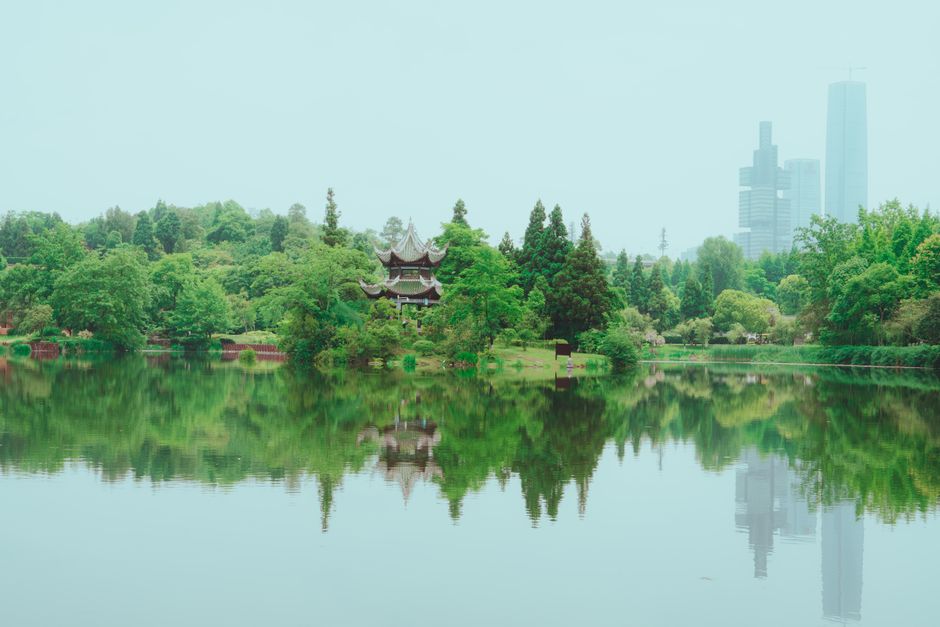
The City God Temple Bazaar (城隍庙商业街) surrounds Yu Garden as a separate, free-entry commercial precinct. No ticket is required to walk through it — it’s a pedestrian zone of shops, food stalls, and restaurants.
The City God Temple (城隍庙) itself — a functioning Taoist shrine — sits inside the bazaar. Entry costs approximately ¥10. The temple is an active place of worship, not a museum, and is worth a quiet 20-minute visit.
The bazaar dates to the Ming Dynasty when merchants began clustering near the garden and temple. Today it has a distinctly commercial character — expect crowds, souvenir stalls, and tourist-oriented restaurants on every block.
Best approach: treat the bazaar as a lunch-and-shopping stop after the garden, not a separate attraction. Set expectations accordingly and you’ll enjoy it; go in hoping for an authentic local market experience and you’ll be disappointed.
Where to Eat: Nanxiang Xiaolongbao and What It Actually Costs
The most famous eating destination in the bazaar is Nanxiang Steamed Bun Restaurant (南翔馒头店), which has been making xiaolongbao (soup dumplings) at this location since 1900. The building faces the square near Jiuqu Bridge.
There are two ways to eat here. The ground-floor takeaway counter sells basic pork xiaolongbao for approximately ¥25–35 for 10 dumplings in a bamboo steamer. The upstairs sit-down restaurant charges significantly more — expect ¥60–80 per cage of 8 for premium fillings like crab roe, plus service and drinks.
A useful but less-known option: Lv Bo Lang Restaurant (绿波廊) on Yuyuan Road, a 5-minute walk from the bazaar square, serves traditional Shanghainese cuisine in a restored Ming-style building. Prices run ¥80–150 per person. Less tourist-frantic than Nanxiang’s upstairs floor.
For budget street snacks, the bazaar’s open-air stalls sell shengjian bao (pan-fried pork dumplings), tang yuan (sweet rice balls in broth), and cong you bing (scallion pancakes) for ¥5–15 per portion. These stalls don’t have English menus; point at what looks good.
Huxinting Teahouse and Jiuqu Bridge: Shanghai’s Most Photographed Corner
Huxinting Teahouse (湖心亭茶楼, Húxīntíng) sits on a small island in the middle of the bazaar pond, connected to the shore by the Jiuqu Bridge (九曲桥, Nine-Turn Bridge). The zigzag design of the bridge was a traditional technique to confuse evil spirits, which folklore held could only travel in straight lines.
The teahouse was built in 1784 during the Qing Dynasty and is one of Shanghai’s oldest surviving buildings. Queen Elizabeth II visited and had tea here in 1986 — a photograph and plaque inside the tearoom commemorate this. Tea service costs approximately ¥60+ per person.
You do not need to enter the teahouse to get the famous photo. The best angle is from the midpoint of the Jiuqu Bridge, shooting back toward the teahouse with the garden’s pavilion rooflines in the background. Arrive at 8am (before the bazaar crowds) for empty foreground.
“Shanghai’s Yuyuan Garden demonstrates how classical Chinese garden design uses limited space to express expansive philosophical concepts — the mountain-water relationship, the circular path, the revealed-and-concealed view.” — China National Tourism Administration (now Ministry of Culture and Tourism), Heritage Site Documentation
Shopping in Old Town: What’s Genuinely Worth Buying
The bazaar has hundreds of shops across several blocks. The merchandise ranges from genuine artisan crafts to low-quality tourist souvenirs. The trick is knowing which is which before entering a shop.
Best buys:
- Silk fans — ¥20–80 for decorative-grade, higher for hand-painted. The larger silk boutiques on the main bazaar avenue are more reliable than kiosk stalls.
- Shanghainese embroidered accessories — pouches, handkerchiefs, and coin purses in traditional patterns. Budget ¥30–80 for good quality.
- Tea — Shops selling Longjing (Dragon Well) and pu-erh teas let you taste before buying. A 100g tin of mid-grade Longjing runs ¥50–120.
- Cloisonné decorative items — Enamel-on-metal vases and bowls. Authentic cloisonné is heavier and colder to the touch than the resin imitations.
Skip: “Antique” coins and jade pieces sold by roving vendors near Fuyou Road. Mass-produced items marketed as ancient are common. Genuine antiques require a certificate from the State Administration of Cultural Heritage for export, which no street stall can provide.
Bargaining is expected at market stalls but not in larger named shops. A reasonable opening offer is 50–60% of the asking price on small items. On larger purchases, sellers often settle around 70% of the initial quote.
How to Combine Yu Garden with Other Shanghai Highlights
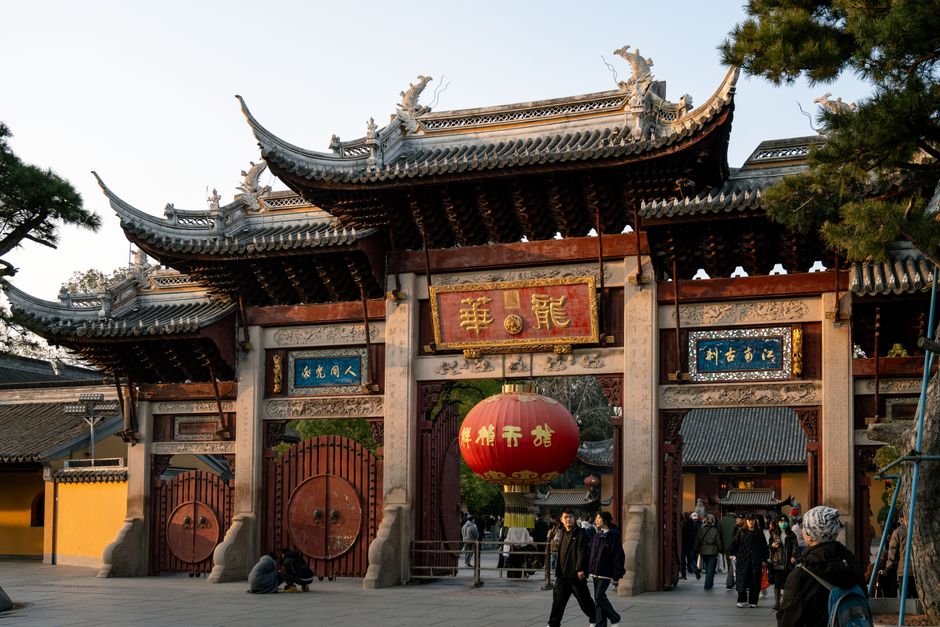
Yu Garden’s position in Old Town makes it a natural anchor for a full Shanghai itinerary. The key sites that pair well with it are all reachable within 20 minutes by metro or on foot.
| Destination | Distance / Route | Est. Travel Time |
|---|---|---|
| The Bund (外滩) | 2km north — walk via Henan South Road, or Metro Line 10 one stop to East Nanjing Road | 20 min walk / 8 min metro |
| Shanghai Museum | 1.5km north — walkable or 1 metro stop | 15 min walk |
| Xintiandi (新天地) | 2.5km — Metro Line 10 to Xintiandi Station | 12 min |
| French Concession (法租界) | 3km — Metro Line 10 to Jiashan Road Station | 15 min |
| Lujiazui (Pudong skyline) | Line 10 to Yuyuan, transfer Line 2 to Lujiazui | 25 min |
Recommended full-day sequence: Yu Garden at 8:30am → bazaar lunch at Nanxiang before noon (beat the queue) → walk 20 minutes north to The Bund for afternoon photos → Xintiandi for coffee and Shikumen architecture → French Concession dinner.
The walk from Yu Garden to The Bund passes through residential Old Town streets — not touristic, genuinely local. It’s worth doing at least once.
Best Time to Visit and How to Manage the Crowds
The garden’s 3 million annual visitors are not evenly distributed. Weekday mornings before 10am are dramatically less crowded than weekend afternoons. The difference is visible — not marginal.
Avoid these dates entirely: National Day Golden Week (October 1–7), Chinese New Year (late January/February), and the May Day holiday (May 1–5). During these periods, Shanghai’s Tourism Bureau reports visitor numbers at Old Town can exceed 200,000 per day — the bazaar restricts entry and the garden enforces timed-entry quotas.
Best months for visiting:
- Late March to May: Spring blossoms, mild temperatures (15–22°C), manageable crowds on weekdays
- September to November: Cooler and drier than summer, autumn foliage in the Inner Garden from late October
Avoid July and August: Shanghai’s summer is genuinely brutal — temperatures regularly exceed 35°C with high humidity. The garden’s stone pathways retain heat. You’ll spend more time finding shade than appreciating the architecture.
Practical Notes: Payments, Language, and What to Bring
Cash (CNY) remains the most reliable payment method throughout Old Town’s smaller stalls and restaurants. ATMs accepting foreign cards are available at the ICBC and Bank of China branches near Fuyou Road — both within a 5-minute walk of the garden gate.
Alipay and WeChat Pay now support foreign Visa and Mastercard linking. The setup takes about 10 minutes in the app — do it before leaving your home country if possible, as the verification process requires a working phone number and some users report intermittent issues on Chinese networks.
English signage inside Yu Garden is good — all main features have bilingual labels. The bazaar shops have far less English. Download Google Translate with offline Chinese packages before arriving; the camera translation feature works well on menus.
Wear comfortable flat shoes. The garden’s internal paths are uneven stone — not hostile, but enough to make heels or dress shoes genuinely uncomfortable after an hour.
Yu Garden plus the City God Temple Bazaar is a half-day, not a 45-minute stop. Budget 90 minutes in the garden, 30 minutes at Huxinting Teahouse and Jiuqu Bridge, and 90 minutes for lunch and shopping.
Arrive before 9am on a weekday for the garden, eat Nanxiang xiaolongbao before noon to beat the queue, and take Metro Line 10 everywhere — taxis bog down in Old Town traffic. The walk north to The Bund afterward is one of Shanghai’s better unplanned itinerary additions.
Frequently Asked Questions About Yu Garden
Is Yu Garden worth visiting in 2026?
Yes, for a first-time Shanghai visitor. It’s one of China’s most accessible examples of classical garden design, and the City God Temple Bazaar adds genuine context around it.
If you’ve already visited the larger classical gardens in Suzhou — such as the Humble Administrator’s Garden (拙政园) or Lingering Garden (留园) — Yu Garden will feel smaller by comparison, though still worthwhile.
How long should I spend at Yu Garden?
Plan 90 minutes inside the garden and at least another 90 minutes in the bazaar area, including time for food. Most visitors underestimate both. If you want to eat at Nanxiang’s sit-down restaurant, add another 45 minutes for queuing and service.
Can I pay with a foreign credit card at Yu Garden?
The ticket gate accepts Alipay and WeChat Pay, both of which have supported foreign card linking since 2023 following People’s Bank of China policy changes. Some bazaar vendors accept foreign cards directly — many do not. Bring CNY cash as a reliable fallback, particularly for food stalls and smaller shops.
Is the City God Temple Bazaar free to enter?
The commercial bazaar area is free to walk through. The City God Temple shrine inside charges approximately ¥10. Yu Garden, the classical garden itself, requires a separate paid ticket (approximately ¥30–40 for adults).
What’s the difference between Yu Garden and Yuyuan Shopping Mall?
Yu Garden (豫园) is the historic Ming Dynasty classical garden that requires a paid entry ticket. Yuyuan Shopping Mall (豫园商城) is a modern retail complex adjacent to the bazaar — free to enter, with a mix of traditional crafts and branded retail.
They are two different things despite the shared name in English-language searches.
How do I avoid the worst crowds at Yu Garden?
Arrive at 8:30am when gates open, visit on a weekday, and avoid national holidays entirely. The garden enforces entry quotas during peak periods. Weekday mornings between 8:30am and 10am offer the least congested conditions year-round.
Is Yu Garden accessible for wheelchair users or visitors with mobility limitations?
Partially. The garden’s stone paths are uneven, and several sections involve steps or narrow passages. A companion is recommended. The bazaar area is mostly flat and paved. Contact the Yu Garden administration in advance for specific accessibility arrangements — the main gate has staff who can provide guidance.
How far is Yu Garden from The Bund?
About 2 kilometres. Walk north along Henan South Road for approximately 20 minutes, passing through residential Old Town streets. Alternatively, take Metro Line 10 one stop from Yuyuan Garden Station to East Nanjing Road Station, then walk 10 minutes east to The Bund waterfront.
The metro is faster; the walk is more interesting.
More on China Destinations:
Planning a trip to China?
Check out our China Travel Hub for more guides, including China Digital Survival Guide.

Written by East Asia Explorer Editorial Team
Sam Konneh is an AI strategist and digital marketer based in Seoul, South Korea. With years spent living, working, and exploring across Korea, Japan, and China, he shares firsthand insights into East Asia's cultures, hidden gems, and everyday life. A graduate of Inha University and KDI Graduate School, Sam combines data-driven expertise with on-the-ground experience. His journey also includes studying in Malaysia and traveling through Southeast Asia. Through practical tips, local stories, and travel guides, he helps fellow explorers discover both the celebrated highlights and the lesser-known corners of East Asia.