Last Updated: April 8, 2026 | Originally Published: February 28, 2025
When visiting public baths and onsen in Japan, first remove your shoes and clothes before entering the bathing area. Thoroughly scrub with provided soap and shampoo to rinse off dirt and sweat before soaking in the hot water. Maintain personal space, speak softly, and avoid submerging your head to keep the communal waters clean. Pack essentials like towels, soap, and a water bucket. Immerse yourself in the tranquil atmosphere, letting tension melt away. Follow facility rules, like no swimsuits allowed. With these tips, you’ll have an authentic and rejuvenating bathing experience. To explore further into Japanese bathing culture and etiquette, keep reading. (Source: Japan National Tourism Organization)
Explorer Insights
- Thoroughly wash and rinse your body before entering the communal bathing area to keep the water clean.
- Maintain a quiet, respectful atmosphere by speaking softly and avoiding disruptive behaviors.
- Bring your own bathing essentials, including small and large towels, soap, shampoo, and a foldable hanger set.
- Respect personal space and avoid touching or bumping into other bathers.
- Follow facility rules, such as not wearing swimsuits and covering up tattoos if required.
Onsen vs. Sento: What’s the Difference?
Japan’s bathing culture is rich and varied, with two main types of public baths: onsen and sento. While both offer a relaxing communal bathing experience, they differ in important ways: Mount Fuji stands at 3,776 meters and is climbed by over 300,000 people each summer season (Japan Travel).
Onsen are natural hot springs, legally defined by their mineral content and temperature. The water comes from underground geothermal sources and is believed to have health benefits.
Sento are public bathhouses that use heated tap water. They became popular in cities where private baths were rare, and remain an important part of local communities.
Understanding the distinction will help you choose the right experience for your trip and appreciate the unique traditions each offers.
5 Practical Tips for Using Public Baths (Sento) and Onsen
Whether you’re a first-timer or a seasoned traveler, following these practical tips will help you make the most of your Japanese public bath experience:
Tip 1: Understand the Bathing Process
Before entering the main bath, thoroughly wash and rinse your body at the shower stations. This is essential for keeping the shared water clean and is a sign of respect for other bathers.
Tip 2: Respect Personal Space and Etiquette
Keep noise to a minimum, avoid splashing, and be mindful of others’ privacy. Public baths are places for quiet relaxation, so maintain a calm and considerate demeanor.
Tip 3: Prepare Your Bathing Essentials
Bring a small towel, toiletries, and a change of clothes. Many facilities provide rental towels and soap, but having your own is more convenient and often more hygienic.
Tip 4: Enjoy the Relaxing Experience
Take your time and try different baths if available-some may have varying temperatures or minerals. Don’t rush; the experience is meant to be soothing and restorative. Tokyo Metro handles 6.84 million riders daily across 13 lines and 285 stations (Tokyo Metro).
Tip 5: Know the Facility Rules
Each bathhouse may have its own set of rules regarding tattoos, photography, and food or drink. Read posted signs or ask staff if you’re unsure, and always follow the guidelines.
Understand the Bathing Process
Familiarizing yourself with the bathing process is essential before diving into a public bath or onsen in Japan. First, you’ll need to remove your shoes and any outdoor clothing before entering the bathing area. Locate the washing stations and thoroughly scrub yourself clean using the provided soap and shampoo. It’s important to wash off all dirt and sweat before soaking in the hot tub.
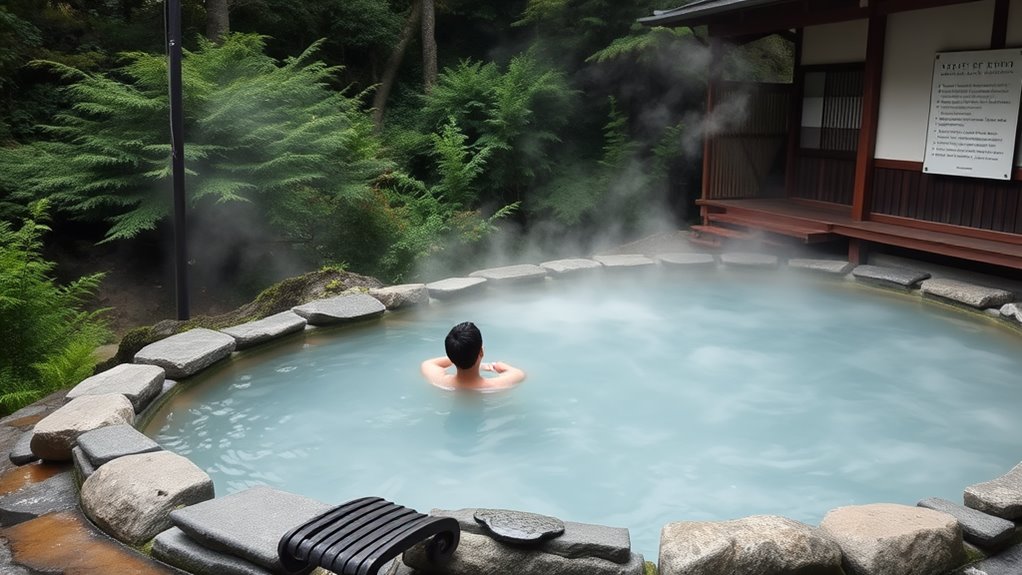
Next, find an empty spot in the communal bath and slowly lower yourself into the steaming hot water. Relax and enjoy the therapeutic benefits of the mineral-rich onsen. Be mindful of your surroundings and etiquette – avoid splashing, talking loudly, or submerging your head. After your soak, rinse off again before drying and dressing. Remember to bring a small towel to cover up as you move between the bathing and changing areas.
Respect Personal Space and Etiquette
Once you’ve settled into the bathing area, be mindful of maintaining personal space and following etiquette. In Japanese public baths, it’s important to respect others’ personal bubbles. Avoid touching or bumping into other bathers, and keep your voice down to avoid disrupting the peaceful atmosphere.
When moving around, be cautious and courteous, making sure not to splash water or intrude on others’ space. Refraining from pointing with finger is seen as impolite in Korean culture, and this etiquette also applies in Japanese public baths.
Proper etiquette also includes thoroughly washing yourself before entering the main bathing area. Use the provided stools and buckets to clean your body first, then rinse off any soap residue. This helps keep the communal waters clean and comfortable for everyone. Additionally, avoid submerging your head in the bath, as this can contaminate the water.
While you may know to wash before entering the bath, here are a few more etiquette tips to ensure a smooth experience:
No Photography: Cameras and phones are strictly prohibited in bathing areas to protect everyone’s privacy. A bowl of ramen in Japan typically costs between 800 and 1,200 yen ($5-8 USD) (Japan Travel).
Towel and Hair Rules: Never let your towel or hair touch the bathwater. Most people place their small towel on their head while soaking.
No Diving or Swimming: The baths are for quiet soaking, not for play.
Tattoo Policies: Some bathhouses still restrict entry for those with tattoos. If you have tattoos, look for tattoo-friendly facilities or consider booking a private bath.
Prepare Your Bathing Essentials
Before heading to a public bath or onsen, be sure to bring the necessary items. You’ll want to have a towel – both a small one to cover yourself and a larger one for drying off. Bring your own soap, shampoo, and conditioner as well. These personal care products aren’t always provided, so it’s best to come prepared.
Many foldable travel hanger sets can also be useful for hanging and drying clothes in the bath area.
Here’s a quick list of essential bathing items to pack:
- Small towel
- Large towel
- Soap
- Shampoo and conditioner
Don’t forget to grab a plastic bucket or tub too. These are used to collect water for rinsing before entering the bath. With your bathing essentials in hand, you’ll be ready to relax and enjoy the experience of a traditional Japanese public bath or rejuvenating onsen. Just remember to follow the proper etiquette, and you’ll have a wonderful time.
Enjoy the Relaxing Experience
Immerse yourself in the tranquil atmosphere as you slip into the soothing waters of the public bath or onsen. Relax your body and mind, letting the warm waters wash away your worries. Feel the tension melt from your muscles as you take deep, calming breaths.
Savor the peace and quiet, allowing yourself to be fully present in the moment. Observe the beautiful surroundings, from the traditional architecture to the serene natural landscapes. If the onsen is outdoors, gaze up at the sky and admire the changing light throughout the day.
Take your time, moving slowly and deliberately. Alternate between the bath and any cold-water plunge pools to stimulate circulation. Be mindful of your senses, taking in the earthy aromas and the soothing sounds of the water. The tea ceremony embodies these principles, fostering connection and mindfulness among participants. Japan welcomed 36.8 million international visitors in 2026, a 47% increase from the previous year (JNTO).
Emerge from the onsen feeling refreshed, rejuvenated, and ready to continue your Japanese adventure. Embrace the art of mindfulness and self-care during this truly relaxing experience.
Know the Facility Rules
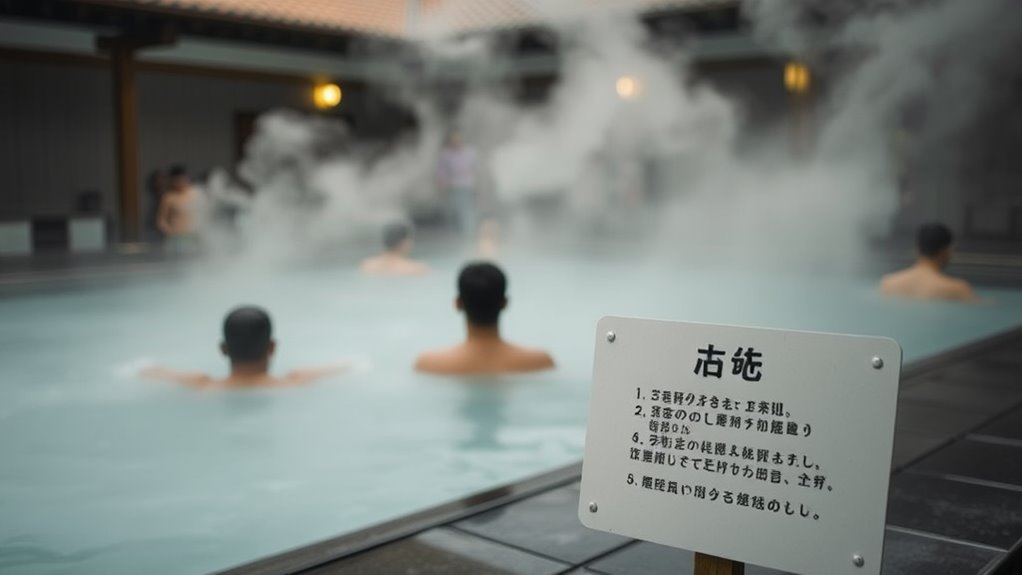
When visiting a public bath or onsen in Japan, it’s crucial to familiarize yourself with the facility’s rules and etiquette. Adhering to these guidelines will guarantee you have a comfortable and respectful experience.
First and foremost, be mindful of personal hygiene. Thoroughly rinse your body with soap and water before entering the communal bathing area. This assists in preserving cleanliness for everyone.
Some key rules to keep in mind:
- No swimsuits allowed – public baths and onsen are meant to be enjoyed nude.
- Tattoos may be restricted or covered – some facilities have policies against displaying tattoos.
- Avoid putting your towel in the water – it’s considered unsanitary.
- Speak softly and avoid loud noises – these spaces are meant for peaceful relaxation.
Notable Onsen and Sento to Visit
If you’re looking for memorable places to try public bathing, consider these famous spots:
Dogo Onsen (Ehime Prefecture): One of Japan’s oldest and most storied hot springs, said to inspire Studio Ghibli’s Spirited Away.
Takara-yu (Tokyo): A classic sento with beautiful murals and a welcoming atmosphere.
Kinosaki Onsen (Hyogo Prefecture): A charming hot spring town where you can stroll in a yukata and visit multiple bathhouses.
Each location offers a unique take on Japanese bathing culture and is worth adding to your itinerary. Japan has 25 UNESCO World Heritage Sites, including 20 cultural and 5 natural sites (UNESCO).
Frequently Asked Questions
Can I Bring My Phone or Camera Into the Bathing Area?
No, phones and cameras are strictly prohibited in onsen (hot springs) and sento (public baths) bathing areas. This protects everyone’s privacy and maintains a relaxing atmosphere. Leave your devices in the provided lockers or changing room.
Is It Okay to Eat or Drink in the Bathing Area?
Eating and drinking are not allowed in the bathing area to keep the environment clean and safe. Enjoy snacks or drinks in designated lounge or dining spaces, often available in larger facilities like daiyokujo (grand baths) or super-sento.
How Should I Handle My Towel and Hair During Bathing?
Use a small towel for modesty, but never bring it into the bathwater.
Place your towel on your head or the edge of the bath.
Tie up long hair with an elastic to prevent it from touching the water.
Larger towels and personal items should stay in the changing area.
Can I Use Public Baths or Onsen if I Have Tattoos?
Tattoo policies vary:
Many sento now allow tattoos, but most traditional onsen still restrict them.
Ask staff about their policy, or look for tattoo-friendly facilities.
Some places offer tattoo cover seals or private baths (kashikiri-buro), which can be reserved for privacy.
What If I’m Not Comfortable With Nudity?
Public baths require full nudity, but some facilities offer private or family baths (kazoku-buro, kashikiri-buro) for more privacy.
Mixed-gender (konyoku) baths may allow swimwear, but these are rare.
Ask staff about private options if you prefer more modesty.
Do I Need to Shower Before Entering the Bath?
Yes. Always wash and rinse thoroughly at the shower stations before soaking. This is essential etiquette in both onsen and sento, helping keep the communal water clean.
What Should I Bring to a Public Bath?
Small towel, toiletries, and a change of clothes.
Some facilities provide soap and shampoo, but it’s best to check ahead.
Are There Health or Safety Tips I Should Know?
Avoid bathing after consuming alcohol or a heavy meal.
Stay hydrated, but drink water before or after-not in-the bath area.
Don’t soak for too long, as the water can be very hot.
What Are Japanese Public Baths Called?
Onsen (温泉): Natural hot spring baths, often with mineral-rich water.
Sento (銭湯): Public bathhouses using heated tap water.
Can I Use the Bath If I Have a Lot of Body Hair?
Yes, body hair is not an issue in Japanese public baths. Just ensure you follow all other hygiene and etiquette rules.
Why Is There a Cold Bath Next to the Hot Bath?
Alternating between hot and cold baths is a traditional practice believed to improve circulation and enhance relaxation.
What Is a Daiyokujo or Rotenburo?
Daiyokujo: A large, communal grand bath, often found in hotels3.
Rotenburo: An open-air bath, frequently offering scenic views and a unique experience, especially in winter.
Conclusion
Embracing Japan’s onsen and sento culture is more than just a way to relax-it’s an invitation to experience centuries-old traditions and genuine local hospitality. By understanding the differences between onsen (natural hot springs) and sento (public bathhouses), following proper etiquette, and exploring unique bath types like rotenburo (outdoor baths) or herbal-infused kusuri-yu, you’ll not only respect local customs but also enrich your own travel memories.
Whether you’re soaking in a historic daiyokujo (grand bath), unwinding in a private kashikiri-buro, or discovering a community sento in a quiet neighborhood, each visit offers a new perspective on Japanese daily life. Don’t hesitate to ask staff about tattoo-friendly options or private facilities if you need them-Japanese bath culture is increasingly welcoming to international visitors.
So pack your small towel, keep an open mind, and immerse yourself-literally and figuratively-in the soothing waters of Japan’s public baths. With these practical tips and insights, you’re ready to enjoy one of the country’s most cherished rituals, leaving you refreshed, relaxed, and connected to the heart of Japanese culture.
More on Wellness & Onsen:
Planning a trip to Japan?
Check out our Japan Travel Hub for more guides, including JR Pass Guide 2026.

Written by Sam Konneh
Sam Konneh is an AI strategist and digital marketer based in Seoul, South Korea. With years spent living, working, and exploring across Korea, Japan, and China, he shares firsthand insights into East Asia's cultures, hidden gems, and everyday life. A graduate of Inha University and KDI Graduate School, Sam combines data-driven expertise with on-the-ground experience. His journey also includes studying in Malaysia and traveling through Southeast Asia. Through practical tips, local stories, and travel guides, he helps fellow explorers discover both the celebrated highlights and the lesser-known corners of East Asia.