Last Updated: August 21, 2026 | Originally Published: October 9, 2024
- Getting there: JR Nara Line from Kyoto Station → Inari Station (5 min, ¥150); the shrine is 2 minutes on foot from the platform
- Entry & hours: Free entry, open 24 hours — arrive before 8:00 AM or after 6:00 PM to photograph the Senbon Torii without tour groups
- Trail times: Yotsutsuji viewpoint (midway) takes ~45 minutes from the base; full summit hike to Ichi no Mine (233m) takes 2–2.5 hours round trip
- Eat before you hike: Buy kitsune inarizushi (fox-shaped rice pockets, ¥150–200 each) from the stalls at the main gate — the post-hike ones are the same price but the queue is longer
Last updated: August 21, 2026
The gates at Fushimi Inari-taisha are only 90 centimetres wide. In the middle of the day, tour groups walk both directions simultaneously through the double-arched Senbon Torii corridor — and the crowd shot everyone wants is physically impossible to take. I learned this at 10:30 AM on a Tuesday in March.
By 7:00 AM the same day, I’d had those same tunnels completely to myself for 20 minutes. Timing is the single most important thing to know about Fushimi Inari, and almost no guide tells you what time that means in practice.
This guide gives you the specific JR line, the exact yen amounts, and the named waypoints so you can plan a hike that matches your fitness level — not just “go early.”
How Do I Get to Fushimi Inari Shrine from Kyoto Station?
The fastest and cheapest route is the JR Nara Line from Kyoto Station (Platform 8 or 9) to Inari Station. Journey time: 5 minutes. Fare: ¥150. The shrine entrance is a 2-minute walk directly in front of the station exit — you’ll see the giant torii arch as soon as you step out.
Trains on the JR Nara Line run every 10–15 minutes. The first departure toward Nara from Kyoto is around 5:45 AM, which is early enough to reach the gates at dawn.
If you’re arriving from the Gion or Fushimi area, the Keihan Line is often faster. Take it to Fushimi-Inari Station (Keihan Main Line). The walk from that station to the shrine is about 7 minutes.
| Route | From | Journey Time | Fare | Walk to Shrine |
|---|---|---|---|---|
| JR Nara Line | Kyoto Station | 5 min | ¥150 | 2 min (directly in front) |
| Keihan Main Line | Gion-Shijo | 6 min | ¥160 | 7 min (past residential lane) |
| Kyoto City Bus | Kyoto Station | 15–25 min | ¥230 | 2 min |
What Are the Opening Hours and Entry Fee?
Fushimi Inari-taisha is open 24 hours a day, 365 days a year. Entry is completely free. There are no tickets to book, no timed entry slots, and no reservation system.
The main shrine buildings (romon gate, outer shrine, inner shrine hall) are accessible at all hours. The food stalls and souvenir shops along the lower trail open around 9:00 AM and close by 6:00 PM.
What Is the Senbon Torii and Why Does Everyone Photograph It?
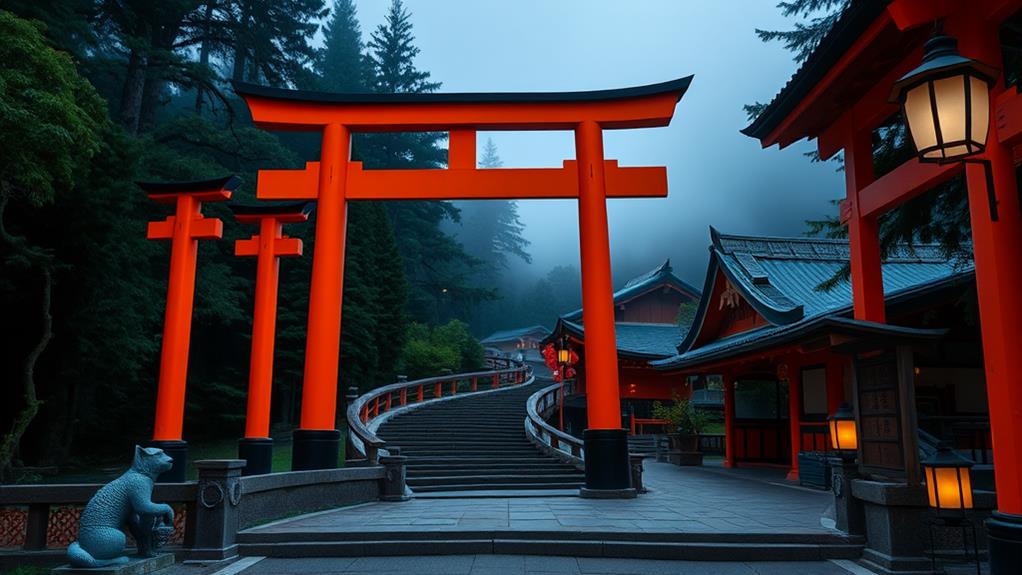
The Senbon Torii (“Thousand Torii Gates”) is the iconic double-tunnel section of vermillion gates that leads from the main shrine buildings up the mountain. In reality, the entire mountain holds over 10,000 torii gates, donated by individuals and businesses as offerings to Inari Ōkami, the Shinto deity of rice, sake, agriculture, and foxes.
Each gate was donated by a worshipper in exchange for a wish granted, particularly for business prosperity. The cost of donating a gate to the shrine ranges from roughly ¥400,000 (small, 60cm wide) to over ¥1 million (large, 1.5m wide), according to the shrine’s publicly posted donation schedule.
The donor’s name and date of donation are inscribed on the back pillar of each gate. Walking through, you pass the equivalent of a wall-to-wall receipt of 1,200 years of commercial prayer.
How Long Does It Take to Hike to the Summit?
The trail up Mount Inari has clear waypoints. Here’s an honest breakdown of the hike by section:
| Waypoint | Time from Base | Notes |
|---|---|---|
| Senbon Torii (start) | 0 min | Main gate corridor begins here |
| Yotsutsuji Intersection | ~45 min | Viewpoint over south Kyoto; most people stop here |
| Ni no Mine (Second Peak) | ~75 min | Quieter; fewer day-trippers; good rest point |
| Ichi no Mine (Summit, 233m) | ~90–100 min | Highest point; small shrine; descend via same trail |
| Full round trip | 2–2.5 hours | Moderate difficulty; paved throughout |
The path is paved the entire way, so trail shoes are sufficient. Water fountains are available at the base but not on the upper trail — bring at least 500ml per person.
What Is the Yotsutsuji Viewpoint and Is It Worth Reaching?
The Yotsutsuji intersection sits at roughly the midpoint of the mountain. It’s a crossroads where multiple trails converge, and it offers an open-air viewpoint across southern Kyoto toward Osaka. On a clear day you can see the Kansai International Airport if you know where to look.
This is where nearly all group tours end their hike. The bus schedule forces a turnaround — which means the upper trail (above Yotsutsuji) is consistently less crowded, even in peak season.
Per guidance from the Japan National Tourism Organization (JNTO), this viewpoint is one of the recommended mid-hike stops for visitors who want the Fushimi Inari experience without committing to the full summit.
“Fushimi Inari-taisha is particularly recommended for visitors who wish to combine a Shinto shrine visit with a natural mountain hike. The trail can be approached as a short cultural walk or a full two-to-three-hour trek depending on the visitor’s schedule.”
Best Photography Spots and Timing
The Senbon Torii corridor is the money shot — two parallel rows of vermillion gates forming a tunnel. The best photography conditions are early morning before 8:00 AM, when the light is soft and the paths are empty.
The Yotsutsuji viewpoint offers Kyoto panorama shots, best in late afternoon when the light comes from the west. Evening hikes (after 6:00 PM) give golden-hour gate shots and the occasional lantern-lit approach near the main shrine.
What to Eat Near Fushimi Inari Shrine
The street lining the approach to the shrine (Omotesando) has around 20 food stalls open from 9:00 AM. The signature food is kitsune inarizushi — triangular rice pockets wrapped in seasoned tofu skin, named after the fox (kitsune) messengers of the Inari deity. Expect to pay ¥150–200 per piece.
For a fuller meal, Suzuya (すずや), a long-running restaurant at the base of the shrine, serves inari-themed sets including soba noodles and tofu dishes. Budget ¥1,000–1,500 per person.
There are vending machines selling water and tea at the Yotsutsuji intersection for ¥150–200 per bottle — useful if you didn’t bring enough water for the summit hike.
Can I Combine Fushimi Inari with Other Kyoto Attractions in One Day?
Yes. The two most natural combinations are:
Tofuku-ji Temple is a 10-minute walk from Fushimi Inari-taisha (or 3 minutes from Tofukuji Station on both JR Nara Line and Keihan Line). One of Kyoto’s great Zen temple complexes, famous for autumn foliage and a modernist rock garden. Entry ¥600. Do Fushimi Inari early (7:00–9:00 AM), then walk to Tofuku-ji.
Nishiki Market and central Kyoto — take the JR Nara Line back to Kyoto Station (5 min), then bus or subway 20 minutes to Kawaramachi. Nishiki Market (Kyoto’s indoor food lane) is a 10-minute walk from the Kawaramachi bus stop. Add Gion or Kinkaku-ji from there.
What Is Fushimi Inari-taisha’s History?
Fushimi Inari-taisha was founded in 711 CE on Mount Inari, making it one of Japan’s oldest Shinto shrines. The current romon gate (Main Gate) was built in 1589 by the warlord Toyotomi Hideyoshi, who donated it in prayer for his mother’s recovery from illness.
The practice of donating torii gates as offerings grew dramatically during the Edo period (1603–1868), when merchant families across Japan sought Inari’s blessing for commercial success. The shrine now serves as the head shrine (sōsha) for approximately 30,000 Inari shrines across Japan.
The shrine’s biggest annual event is Hatsuuma Taisai, held every February on the first “Day of the Horse” in the traditional zodiac calendar — the date the deity is said to have descended to Mount Inari in 711 CE. Worshippers buy sasazuke (bamboo branches strung with paper charms) at the main hall for business-prosperity blessings, and the shrine grounds fill well beyond normal weekend crowds for the single day.
Fushimi Inari-taisha is Japan’s most-visited shrine, drawing roughly 10 million visitors a year. The single most crowded stretch isn’t Hatsuuma Taisai — it’s Hatsumode, the New Year’s first shrine visit, when around 3 million people pass through in the first few days of January alone. If your trip lands in that window, the 7:00 AM strategy above stops being optional.
Beyond the 10,000+ torii gates, the mountain is also dotted with roughly 10,000 smaller stone mounds called otsuka — miniature private shrines dedicated by individual worshippers over the centuries, each with its own small torii and nameplate. Most are along the upper trail past Yotsutsuji, which is part of why that stretch feels different from the main gate corridor: it’s less a monument and more an open-air record of a thousand years of personal prayer.
Shrine Etiquette: What You Need to Know
Fushimi Inari-taisha is an active place of worship, not just a tourist site. Basic etiquette that matters:
- Bow slightly as you pass through the main romon gate
- At the water purification fountain (temizuya), rinse hands left then right before entering the inner shrine area
- At the main hall (haiden), bow twice, clap twice, pray briefly, then bow once — this is the standard Shinto approach
- Do not touch the gates themselves. Many are aging and structurally fragile
- Keep noise low near shrine buildings, particularly early morning when worshippers are present
- The foxes (kitsune statues) throughout the shrine are messengers of the deity — treat them respectfully
Fushimi Inari is best experienced before 8:00 AM or after 6:00 PM. Take the JR Nara Line from Kyoto Station (¥150, 5 min) to Inari Station — the shrine gate is 2 minutes on foot. Entry is free, the trail is paved, and the full summit hike (Ichi no Mine, 233m) takes 2–2.5 hours. For a realistic day plan: arrive at 7:00 AM, hike to Yotsutsuji in 45 minutes or the summit in 90–100 minutes, combine with Tofuku-ji (10-min walk), and return to Kyoto Station by 11:00 AM with your afternoon free.
Frequently Asked Questions
Is there an entry fee for Fushimi Inari Shrine?
No. Fushimi Inari-taisha is free to enter and open 24 hours a day, 365 days a year. There are no tickets, no timed entry slots, and no booking required. The only costs are the optional purchase of ema (wooden wishing plaques, ¥500–1,000) or omamori (charms) inside the shrine.
Which JR train goes to Fushimi Inari?
Take the JR Nara Line from Kyoto Station (Platform 8 or 9) to Inari Station. Journey time is 5 minutes and the fare is ¥150. Trains run every 10–15 minutes throughout the day from around 5:45 AM. The shrine entrance is directly in front of the station exit — you cannot miss the giant orange gate.
How long does the hike take?
The Yotsutsuji viewpoint (midway) takes approximately 45 minutes of uphill walking from the shrine entrance. The full round-trip to the summit (Ichi no Mine, 233m elevation) takes 2–2.5 hours. The trail is paved throughout and does not require hiking boots, though trainers or walking shoes are recommended.
Is the Japan Rail Pass valid to Inari Station?
Yes. The JR Nara Line is a JR line, so all JR Pass variants (7-day, 14-day, 21-day, and regional JR West passes) cover the ¥150 fare to Inari Station at no extra cost. The Keihan Line is not covered by any JR Pass.
What is the best time to visit to avoid crowds?
Arrive before 8:00 AM or after 6:00 PM for the least crowded experience at the Senbon Torii corridor. The busiest period is 10:00 AM–4:00 PM, when tour buses arrive from Kyoto Station and Osaka. Weekday mornings are consistently quieter than weekends year-round.
Is there a restroom on the trail?
Yes. There are public restrooms at the main shrine entrance and at the Yotsutsuji intersection (approximately 45 minutes up the trail). There are no restrooms above the Yotsutsuji intersection. Use the facilities before continuing to the summit.
Can I hike Fushimi Inari at night?
Yes — the shrine is open 24 hours. Night hiking is popular, particularly in summer when evening temperatures are more comfortable. Some of the lower gate sections are lantern-lit. The upper trail is not lit above the Yotsutsuji intersection, so bring a phone torch or headlamp if you plan to summit after dark.
What nearby attraction can I combine with Fushimi Inari?
Tofuku-ji Temple is a 10-minute walk from Fushimi Inari-taisha. It’s one of Kyoto’s major Zen temples, with a famous rock-and-moss garden and autumn foliage season (November) that attracts serious photographers. Entry is ¥600. The two sites together make a natural 3–4 hour morning circuit.
More on Transportation:

Written by East Asia Explorer Editorial Team
Sam Konneh is an AI strategist and digital marketer based in Seoul, South Korea. With years spent living, working, and exploring across Korea, Japan, and China, he shares firsthand insights into East Asia's cultures, hidden gems, and everyday life. A graduate of Inha University and KDI Graduate School, Sam combines data-driven expertise with on-the-ground experience. His journey also includes studying in Malaysia and traveling through Southeast Asia. Through practical tips, local stories, and travel guides, he helps fellow explorers discover both the celebrated highlights and the lesser-known corners of East Asia.