Last Updated: April 8, 2026 | Originally Published: October 9, 2024
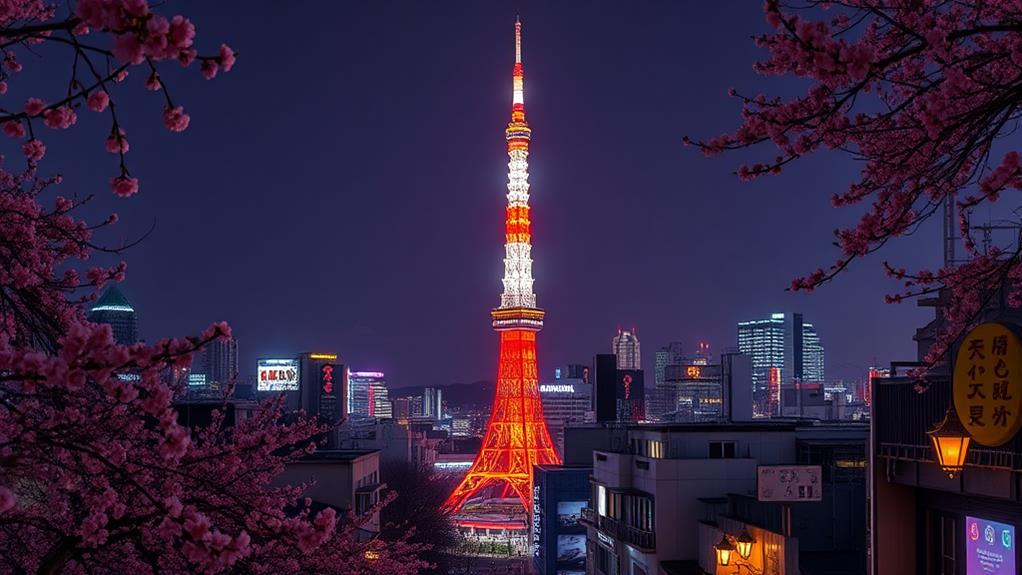
Tokyo Tower is a must-visit landmark that’ll captivate you with its rich history and stunning views. As a symbol of Japan’s post-war recovery, this 333-meter tall architectural marvel offers breathtaking 360-degree panoramas of Tokyo’s skyline. You’ll be amazed by the city’s vastness from the observation decks, where you can spot iconic sights like Mount Fuji on clear days. The tower’s not just about views; it’s packed with entertainment options, including museums and an aquarium. As a cultural icon featured in movies and anime, it’s a photographer’s dream, especially when illuminated at night. There’s so much more to discover about this fascinating landmark. (Source: Japan National Tourism Organization)
Read our full Japan Travel Guide 2026 for everything you need to plan your Japan trip.
Explorer Insights
- It symbolizes Japan’s post-war economic recovery and technological advancement since 1958.
- The tower offers breathtaking 360-degree views of Tokyo from two observation decks at different heights.
- It’s an architectural marvel designed to withstand earthquakes, with a unique lattice structure.
- The tower complex includes various attractions like museums, an aquarium, and restaurants.
- It’s a cultural icon featured in numerous media, offering excellent photographic opportunities day and night.
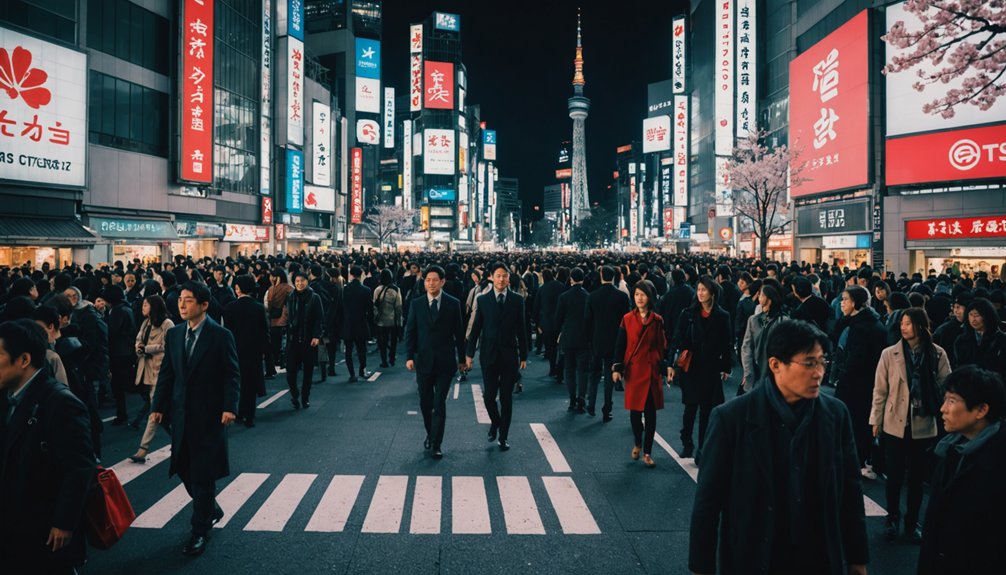
🌆 Quick Guide to Tokyo
City: Tokyo, Japan 🇯🇵
Region: Kanto
Population: ~14 million (largest city in Japan)
Time Zone: JST (UTC +9)
Major Districts: Shibuya, Shinjuku, Asakusa, Minato, Roppongi
Currency: Japanese Yen (JPY)
Airport Access: Haneda Airport (HND) is closest; Narita Airport (NRT) for most international arrivals
Transit Tip: Use a Suica or PASMO card for seamless metro travel across JR and Tokyo Metro lines
Weather Tip: Best seasons to visit Tokyo are spring (March–May) and autumn (September–November)

✈️ Getting to Tokyo
Getting to Tokyo is easier than ever, whether you’re flying in or arriving from another part of Japan. Most international travelers land at Haneda Airport (closer to the city) or Narita Airport in nearby Chiba Prefecture. Both offer direct access to central Tokyo via airport express trains, limousine buses, or taxis.
If you’re already in Japan, the shinkansen (bullet train) makes Tokyo accessible from cities like Osaka, Kyoto, Nagoya, or even Hakodate. Long-distance buses and domestic flights from airports like Kansai International (KIX) or Chubu Centrair are also convenient options.
Tokyo’s subway system—including the Tokyo Metro and Toei Subway—is efficient, clean, and foreigner-friendly. Grab a Suica or PASMO card for tap-and-go convenience across trains, metros, and buses.
Arriving by sea? The Tokyo International Cruise Terminal connects cruisers to major attractions like Odaiba and beyond within minutes.
Tokyo Tower’s Historical Significance
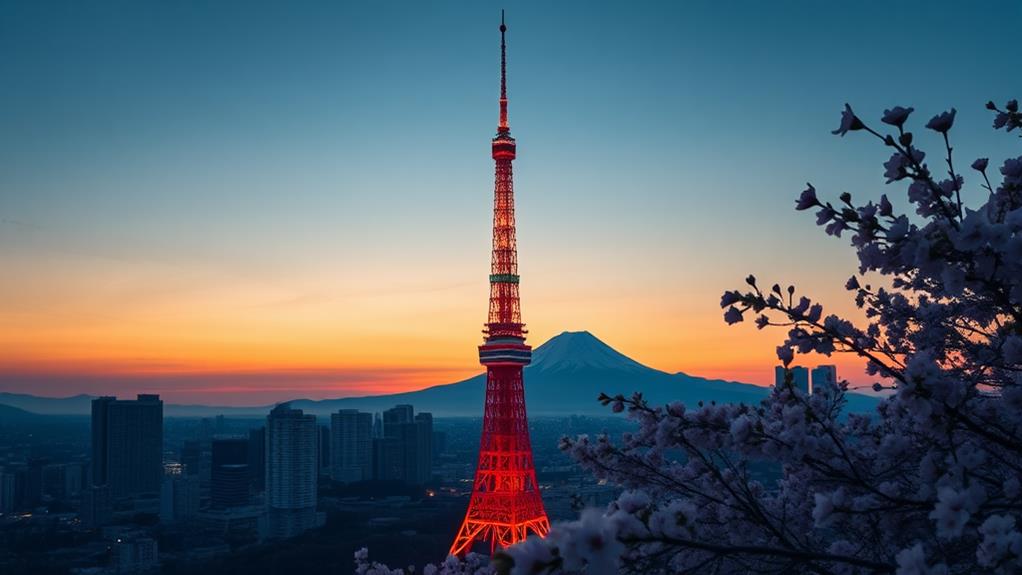
A towering symbol of Japan’s post-war economic recovery, Tokyo Tower has stood as an iconic landmark since 1958. You’ll find this 333-meter tall structure in the heart of Tokyo, painted in a striking white and orange color scheme. As you approach the tower, you’ll be struck by its resemblance to the Eiffel Tower, which inspired its design.
When you visit Tokyo Tower, you’re stepping into a piece of Japan’s modern history. It was built during a time when Japan was rebuilding and modernizing after World War II. The tower served as a beacon of hope and progress, showcasing the country’s technological advancements and economic growth.
Originally constructed as a radio and television broadcast antenna, Tokyo Tower quickly became a popular tourist attraction. It’s not just about the views; it’s about experiencing a symbol of Japan’s resilience and innovation. As you ascend the tower, you’ll find observation decks that offer breathtaking panoramas of the city. Don’t forget to check out the exhibits on the tower’s history and construction. You’ll leave with a deeper appreciation for this enduring icon of Tokyo’s skyline.
🏗️ Tokyo Tower: A Timeless Architectural Icon
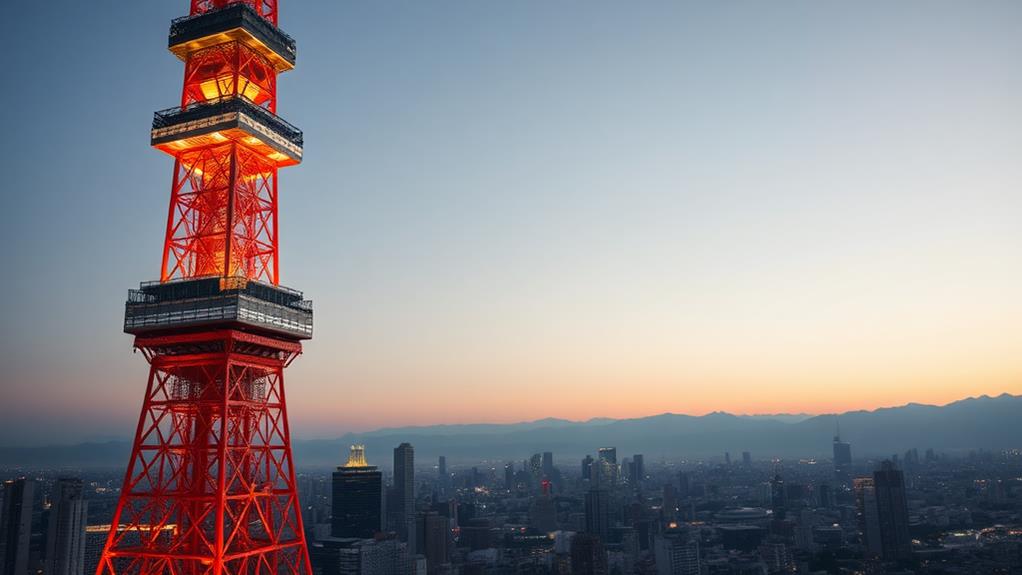
Standing at 333 meters, Tokyo Tower is a feat of engineering and a symbol of Japan’s post-war innovation. Inspired by the Eiffel Tower, its design blends European elegance with a uniquely Japanese aesthetic—most notably its striking orange-and-white color scheme, which complies with aviation safety standards and glows beautifully when illuminated at night.
Its lattice steel structure is not only visually striking but also engineered to withstand earthquakes and typhoons, a must in Japan’s seismic landscape. Remarkably, Tokyo Tower uses less steel than its Parisian counterpart while standing taller.
Visitors can ascend to the Main Deck at 150 meters for sweeping 360-degree views of the Tokyo skyline, including landmarks like Shibuya, Tokyo Bay, and on clear days, even Mount Fuji. For a next-level thrill, head to the Top Deck at 250 meters, where glass floor panels offer a vertigo-inducing view straight down.
Whether you’re admiring the tower from below or snapping panoramic shots from above, Tokyo Tower delivers some of the city’s most unforgettable photo moments.
Panoramic City Views
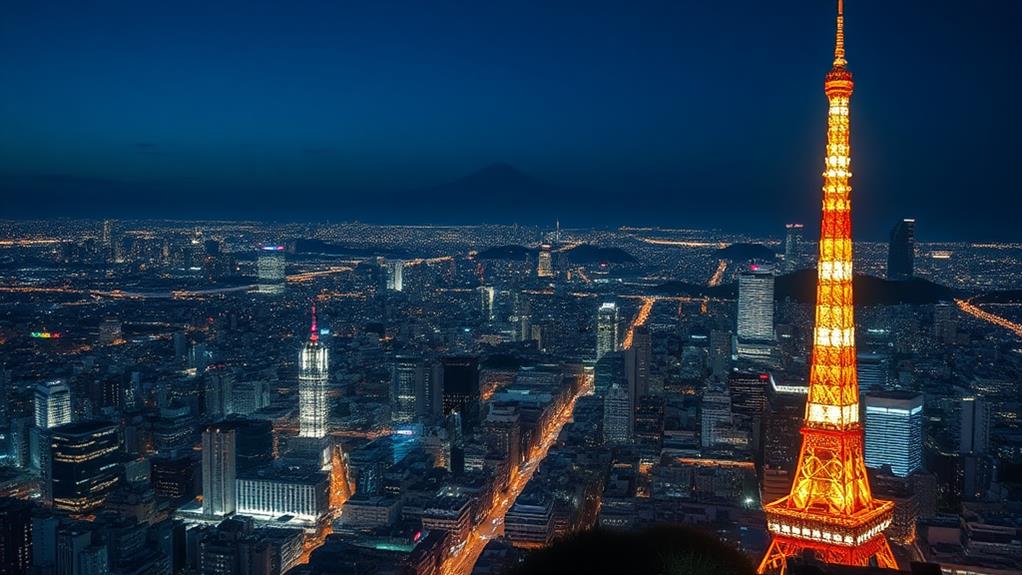
Tokyo’s sprawling cityscape unfolds before your eyes from Tokyo Tower’s observation decks. You’ll be treated to breathtaking 360-degree views of the city from two different levels. The main deck, at 150 meters, offers a stunning panorama, while the top deck, at 250 meters, takes your view to new heights.
On a clear day, you can see as far as Mount Fuji, Tokyo Skytree, and even the Tokyo Bay area. It’s a great spot to watch the sun set over the city, as the urban landscape transforms into a sea of twinkling lights. Don’t forget to bring your camera to capture these unforgettable moments!
For the best experience:
- Visit during golden hour for spectacular lighting
- Use the coin-operated binoculars for close-up views
- Check the weather forecast to guarantee good visibility
- Consider buying a combo ticket for both observation decks
🎡 Entertainment & Attractions at Tokyo Tower
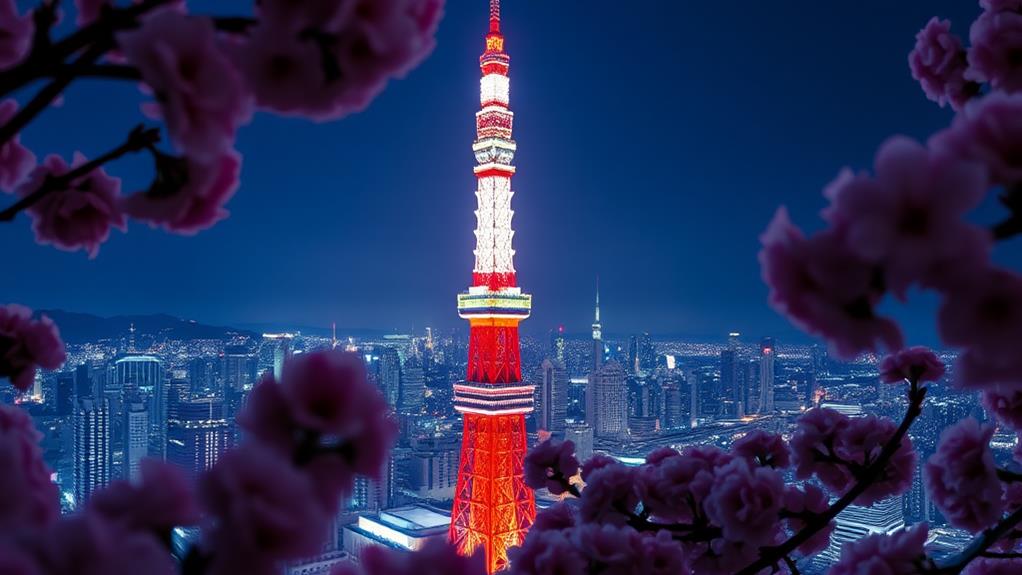
While the panoramic views steal the spotlight, Tokyo Tower offers plenty of attractions and activities that make your visit a full experience—not just a photo op.
🏢 Explore FootTown (Base Complex)
Located at the base of the tower, FootTown is a four-story entertainment hub packed with things to see and do:
🕴️ Tokyo Tower Wax Museum
Pose with realistic wax figures of global celebrities, cultural icons, and historical legends.🐠 Tokyo Tower Aquarium
Home to over 50,000 aquatic creatures from around the world—perfect for families and marine life lovers.🌍 Guinness World Records Museum
Discover mind-blowing records and interact with quirky exhibits celebrating human achievement.
☕ Dining & Souvenirs
Grab a snack at the first-floor café or enjoy a casual meal at the restaurants on the third floor.
Shop for exclusive tower-themed souvenirs at gift shops throughout FootTown—ideal for mementos or gifts.
👣 Unique Observation Experience
On the Main Deck, don’t miss the “Look Down Window”—a thrilling glass floor panel that lets you peer straight down from 150 meters above ground.
🎌 Tokyo Tower as a Cultural Icon
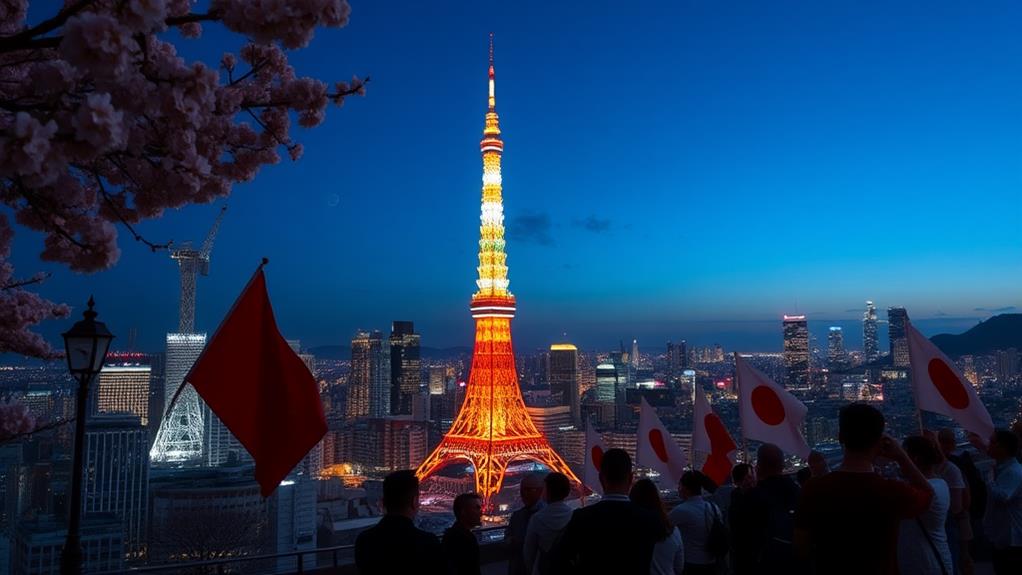
More than just a sightseeing spot, Tokyo Tower stands as a powerful symbol of Japan’s resilience, creativity, and cultural identity.
🗾 A Symbol of Post-War Rebirth
Built in 1958, Tokyo Tower represented Japan’s economic revival and technological ambition after World War II.
Its construction marked the country’s entry into the era of modern broadcasting and global visibility.
🎥 A Star of Japanese Pop Culture
Featured in movies, anime, and TV shows, the tower is instantly recognizable across the world.
Appears in iconic series like One Piece, Godzilla, and Tokyo Magnitude 8.0, reinforcing its status in Japanese media and storytelling.
🗼 Design That Inspires
Modeled after the Eiffel Tower, but with a Japanese aesthetic twist, including its vibrant orange-and-white color scheme.
A favorite subject for artists, photographers, and travelers—especially when illuminated at night.
💬 A Living Landmark
For many Japanese, Tokyo Tower evokes nostalgia and national pride.
It remains a beloved structure that bridges Japan’s past, present, and future.
Photographic Opportunities
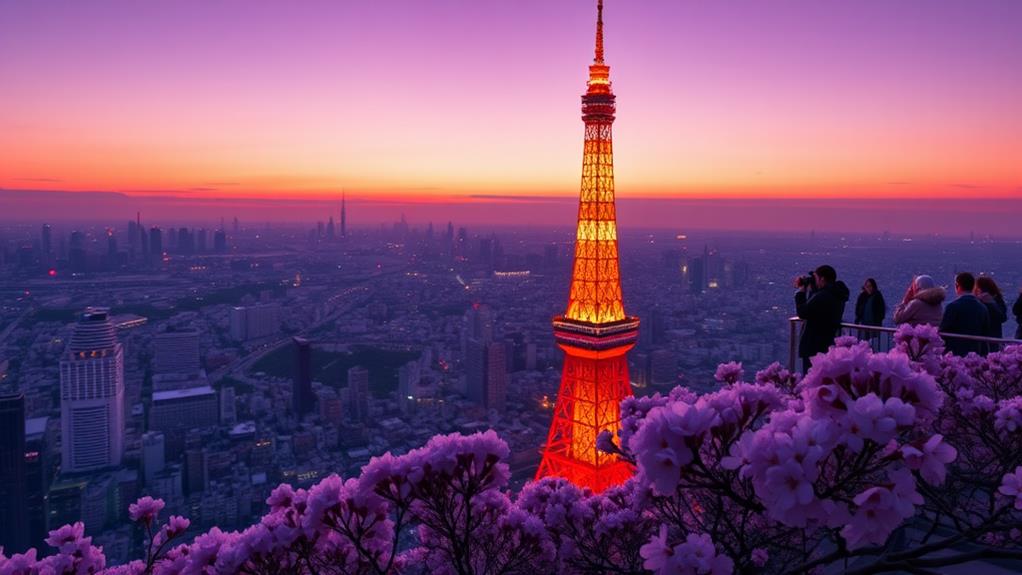
For photographers and Instagram enthusiasts, Tokyo Tower offers a treasure trove of stunning shots. You’ll find countless angles to capture this iconic structure, whether you’re aiming for a cityscape or a close-up of its intricate design.
During the day, you can snap photos of the tower against Tokyo’s sprawling skyline. The contrast between the vibrant orange-red tower and the surrounding buildings creates an enchanting image. If you’re lucky, you might even catch Mount Fuji in the background on a clear day.
As night falls, the tower transforms into a dazzling spectacle of lights. You’ll want to have your camera ready to capture the tower’s illuminated beauty, which changes colors for special occasions and holidays.
Here are some prime spots for photos:
- Shiba Park: Get a ground-level view with lush greenery in the foreground
- Roppongi Hills Observation Deck: Capture a panoramic view of the tower and city
- Zojoji Temple: Frame the modern tower with traditional Japanese architecture
Don’t forget to take pictures from inside the tower too. The views from its observation decks are breathtaking and offer a unique perspective of Tokyo’s vastness.
❓ Frequently Asked Questions About Tokyo Tower
🕒 How Long Does It Take to Reach the Observation Decks?
Reaching the observation decks at Tokyo Tower is fast and smooth. The Main Deck (150 meters high) is accessible by elevator in just 45 seconds. If you’re visiting the Top Deck (250 meters), you’ll transfer to a second elevator at the midpoint. The entire trip takes about 5–7 minutes from entry to sky-high views of the Tokyo skyline, including Roppongi Hills, Tokyo Bay, and even Mount Fuji on clear days.
🍱 Are There Restrictions on Bringing Food or Drinks?
Yes. While you can carry food and drinks inside FootTown (the tower’s base complex), outside food and beverages are not allowed on the Main Deck or Top Deck. For dining, you’ll find cafes and restaurants within FootTown and near the observation levels. These include Café La Tour and seasonal snack stands. Water fountains are available, and light refreshments can be purchased onsite.
♿ Is Tokyo Tower Wheelchair Accessible?
Absolutely. Tokyo Tower is wheelchair-friendly and supports visitors with mobility needs:
Elevators provide direct access to the Main Deck.
Ramps, barrier-free pathways, and wheelchair-accessible restrooms are available throughout FootTown.
Trained Tokyo Tower staff are on hand to assist.
Note: The Top Deck requires a transfer elevator and includes steps, making it partially inaccessible to some wheelchair users. But the Main Deck still offers impressive 360° panoramic views.
📅 What Are the Operating Hours During Holidays or Special Events?
Tokyo Tower is open daily from 9:00 AM to 11:00 PM, including weekends and most public holidays. During major events—like New Year’s Eve, Tanabata Festival, or special illumination shows—operating hours may be extended or adjusted. Always check the official Tokyo Tower website for the latest hours and last admission times (typically 30 minutes before closing).
🧗 Can Visitors Climb the Stairs Instead of Using the Elevator?
Yes—you can take the 600-step open-air staircase from FootTown to the Main Deck! The “Outdoor Walkway” is open on weekends and holidays (weather permitting). It’s a fun, active way to reach the observatory, and climbers receive a certificate of completion. However, the staircase does not go to the Top Deck, which is accessible only by elevator.
Conclusion
Tokyo Tower’s a must-visit landmark that’ll leave you in awe. While it stands tall as a symbol of Japan’s post-war rebirth, it’s also a hub of modern entertainment. You’ll marvel at its architectural beauty and soak in breathtaking city views. Don’t miss the chance to snap unforgettable photos and enjoy the attractions inside. Whether you’re a history buff or a thrill-seeker, Tokyo Tower offers something for everyone. It’s more than just a tower – it’s an experience you won’t forget.
More on Transportation:

Written by East Asia Explorer Editorial Team
Sam Konneh is an AI strategist and digital marketer based in Seoul, South Korea. With years spent living, working, and exploring across Korea, Japan, and China, he shares firsthand insights into East Asia's cultures, hidden gems, and everyday life. A graduate of Inha University and KDI Graduate School, Sam combines data-driven expertise with on-the-ground experience. His journey also includes studying in Malaysia and traveling through Southeast Asia. Through practical tips, local stories, and travel guides, he helps fellow explorers discover both the celebrated highlights and the lesser-known corners of East Asia.