Last Updated: September 25, 2026 | Originally Published: September 2, 2026
- Standard cruise: Zhujiang Pier (Guilin) to Mopanshan or Yangshuo dock, ~83km, roughly 4.5–5 hours downstream.
- Boat tickets typically run ¥300–680 depending on boat grade (4-star vs 5-star) and season — book through a Guilin travel agency or Trip.com, not a street tout.
- The stretch near Xingping — Yellow Cloth Shoal — is the scenery printed on the back of the ¥20 note. It’s the visual payoff most people are cruising for.
- Low water in winter (Dec–Feb) can shorten or cancel the full route; the shorter Mopanshan-to-Yangshuo cruise runs more reliably year-round.
Every China guidebook shows the same photo: limestone karst peaks rising out of green water, a bamboo raft in the foreground.
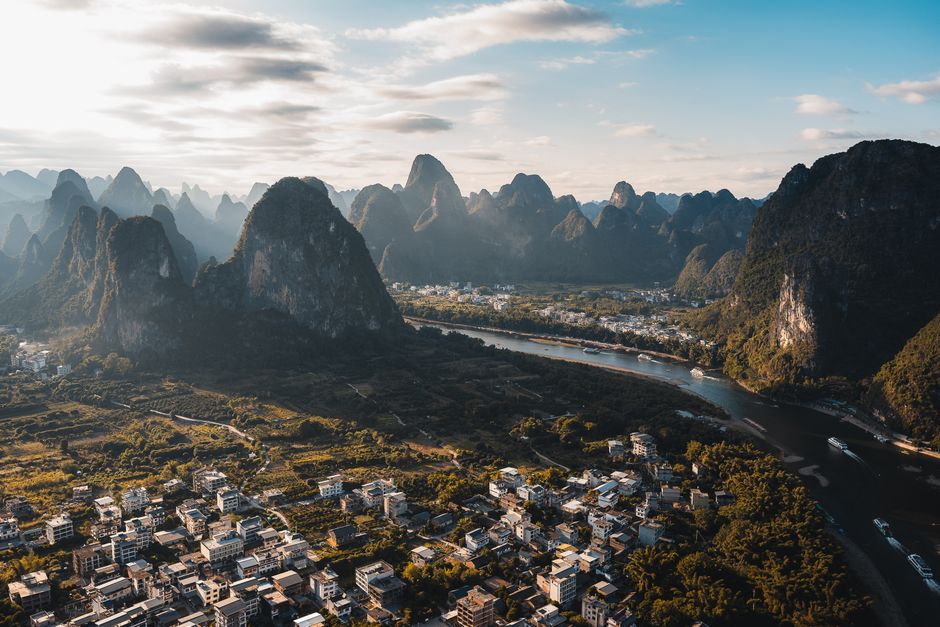
That photo is the Li River between Guilin and Yangshuo, and it’s one of the few “iconic China” shots that looks almost exactly like the postcard in person — the karst formations here are real, not a filtered angle.
What the postcard doesn’t tell you: which pier to leave from, which boat grade is worth the extra ¥200, and why the bamboo raft in the photo usually isn’t the boat you’ll be on for the main cruise.
How Do You Book the Li River Cruise from Guilin?
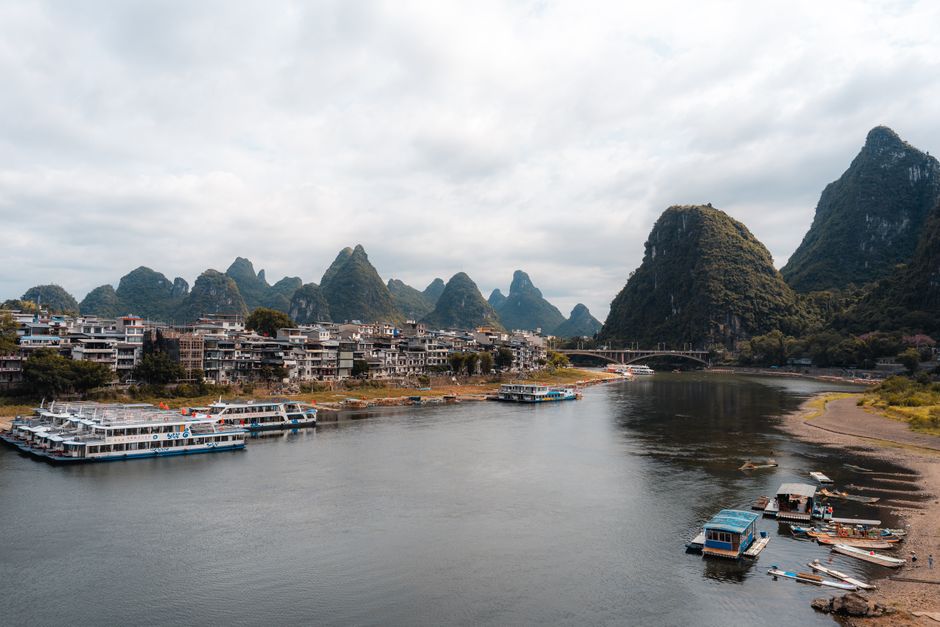
The standard route runs from Zhujiang Pier (also called Zhujiang Wharf), about 30 minutes by taxi from central Guilin, downstream to Mopanshan Pier near Yangshuo — roughly 83 kilometers, 4.5 to 5 hours on the water.
Tickets are sold through Guilin travel agencies, hotel tour desks, and platforms like Trip.com. Boat operators are state-licensed and run fixed daily departures, usually one or two morning slots.
Buy at least a day ahead in peak season (April–October) — boats sell out by grade, and the good river-view cabins on 5-star boats go first.
What’s the Difference Between the 4-Star and 5-Star Boats?
Both grades cover the same route and take roughly the same time. The differences are mostly comfort: 5-star boats have larger open-air upper decks, better window sightlines from the dining level, and marginally better food included in the ticket price.
4-star boats are older but functionally identical for the scenery, which is the whole point of the trip.
Neither grade includes air conditioning you’ll actually want — most of the cruise happens with people on the open upper deck for photos, regardless of boat class.
| Boat Grade | Typical Price | What You Get |
|---|---|---|
| 4-star | ¥300–450 | Standard cabin seating, open upper deck, included lunch |
| 5-star | ¥450–680 | Larger upper deck, better dining-level windows, upgraded lunch |
| Mopanshan–Yangshuo short cruise | Lower, ~2 hrs | Skips the Zhujiang–Mopanshan stretch; runs more reliably in low water |
What Do You Actually See on the Cruise?
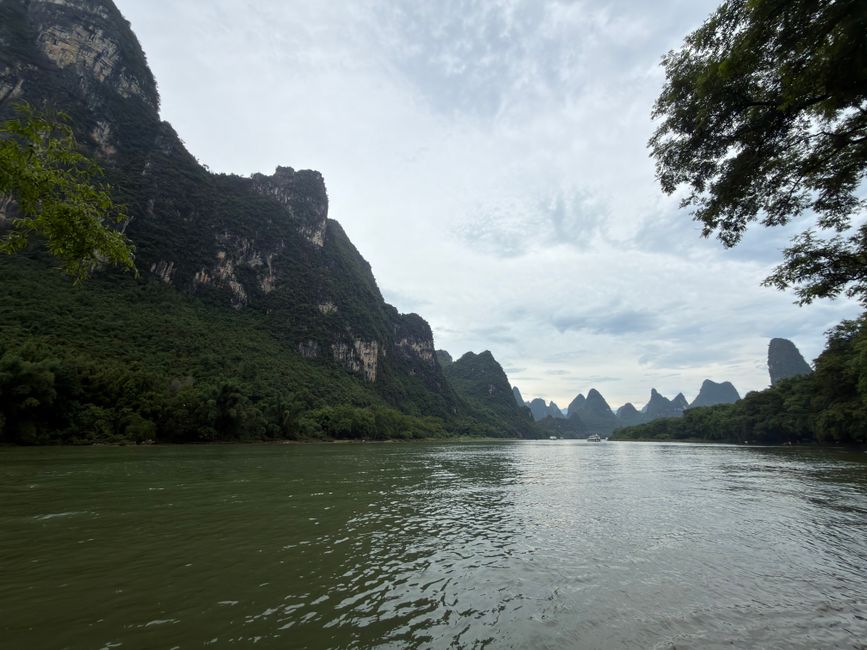
The scenery builds gradually for the first hour, then peaks in the Yangdi-to-Xingping stretch — the section most cruises are timed around.
Named formations along the way include Nine Horses Fresco Hill (a limestone cliff face where guides point out horse-shaped mineral streaks) and Yellow Cloth Shoal, the bend in the river that appears on the back of the Chinese ¥20 banknote.
Cormorant fishing demonstrations sometimes appear near Xingping — traditional fishing using trained birds, though today it’s staged for photos rather than actual fishing. It’s worth knowing that going in so it doesn’t feel like a bait-and-switch.
Is the Bamboo Raft a Real Alternative to the Cruise Boat?
Yes, but it’s a different trip, not a cheaper version of the same one. The bamboo rafts — technically PVC-pontoon rafts styled to look like bamboo — run on the Yulong River, a smaller tributary near Yangshuo, not the main Li River cruise route.
Trips are shorter, typically an hour or two, and motorized rather than poled except on request.
Raft trips cost roughly ¥150–200 per person and get you closer to the water and the karst backdrops for photos, but skip the Yangdi–Xingping stretch that the full cruise is built around. Most travelers do one or the other, not both, given the overlap in scenery type.
What Is West Street in Yangshuo, and Is It Worth the Time?
West Street (Xi Jie) is Yangshuo’s pedestrian tourist strip — bars, cafes, souvenir shops, and street food, with the karst peaks visible at the end of nearly every sightline down the street.
It’s touristy by design, but it’s also the practical base for onward trips: bicycle and scooter rental shops, rock-climbing tour operators (Yangshuo is a known limestone climbing destination), and Yulong River raft bookings all cluster here.
Evening is the better time to walk it — daytime heat plus tour-bus crowds make it feel more like a market than a town; after dark the bars and river-view rooftop cafes are the actual draw.
When Is the Best Time to Cruise the Li River?
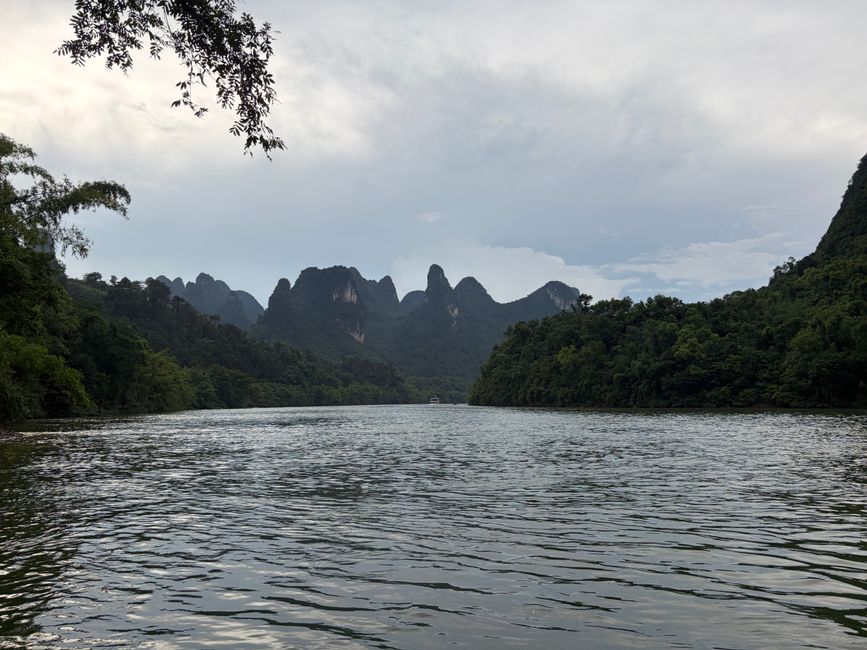
Water level drives the experience more than air temperature. Spring (March–May) and autumn (September–November) generally have higher, clearer water and the most reliable full-route departures. Summer (June–August) is hot and can bring heavy rain that occasionally suspends cruises for flood safety.
Winter (December–February) often has low water, and Guilin travel operators frequently truncate the route to the shorter Mopanshan–Yangshuo segment during this period.
According to China’s Ministry of Culture and Tourism’s regional tourism guidance, the Guilin-Yangshuo karst field is promoted as a year-round destination, but operators locally adjust cruise routing around seasonal water levels rather than running a fixed itinerary in every month.
How Do You Get from Yangshuo Back to Guilin?
The cruise itself is one-way downstream, ending at Mopanshan Pier, a short shuttle-bus ride into central Yangshuo.
Getting back to Guilin (or onward to Guilin Liangjiang International Airport) is by road — shuttle bus, private car, or a scheduled coach — roughly 60–90 minutes depending on traffic, since there’s no direct high-speed rail stop in Yangshuo itself.
Most cruise ticket packages include the return shuttle to Guilin as part of the price; confirm this when booking, since some budget tickets sell the cruise and the return transfer separately.
| Leg | Method | Approx. Time |
|---|---|---|
| Guilin → Zhujiang Pier | Taxi/shuttle | ~30 min |
| Zhujiang Pier → Mopanshan (cruise) | Cruise boat | 4.5–5 hrs |
| Mopanshan → Yangshuo town | Shuttle bus | ~20 min |
| Yangshuo → Guilin (return) | Coach/private car | 60–90 min |
Book the Zhujiang-to-Mopanshan cruise (¥300–680 depending on grade) a day ahead through a licensed agency, sit upper-deck starboard for the Xingping/Yellow Cloth Shoal stretch, and treat the Yulong River bamboo raft as a separate, shorter add-on rather than a cheaper substitute. Spring and autumn give the most reliable full-length departures; winter often means the shorter Mopanshan segment only.
Frequently Asked Questions
How long is the Li River cruise from Guilin to Yangshuo?
The full Zhujiang Pier to Mopanshan Pier route is about 83 kilometers and takes roughly 4.5 to 5 hours downstream, plus a short shuttle bus into Yangshuo town itself.
Do I need to book the cruise in advance?
Yes, especially April through October. Boats run fixed daily departures by grade, and 5-star cabins with the best sightlines sell out first. Book at least a day ahead through a licensed agency or a platform like Trip.com.
Is the bamboo raft the same as the Li River cruise?
No. The bamboo (PVC-pontoon) rafts operate on the Yulong River, a smaller tributary near Yangshuo, on a shorter route that doesn’t cover the main Zhujiang-to-Mopanshan cruise scenery.
What’s the best time of year for the full cruise route?
Spring and autumn generally have the highest, most reliable water levels for the full route. Winter often sees the route shortened to the Mopanshan–Yangshuo segment due to low water.
Can I skip the cruise and just visit Yangshuo directly?
Yes — Yangshuo is reachable by road from Guilin in about 60–90 minutes without taking the cruise. Many travelers do the cruise one direction and return by road, rather than doing the boat trip twice.
Is West Street worth visiting?
It’s touristy but functional — it’s the practical hub for bike/scooter rental, climbing tour operators, and raft bookings, and it’s genuinely more pleasant after dark than during the daytime tour-bus crush.
What should I pack for the cruise?
Sun protection — the upper deck has no shade — and a light layer for early morning departures, which can be cool on the water even when Guilin itself is warm.
Are meals included in the cruise ticket?
Yes, both 4-star and 5-star tickets typically include a lunch served during the cruise, with the 5-star version generally rated as the better meal.
Last updated: August 19, 2026
More on China Destinations:
Planning a trip to China?
Check out our China Travel Hub for more guides, including China Digital Survival Guide.

Written by East Asia Explorer Editorial Team
Sam Konneh is an AI strategist and digital marketer based in Seoul, South Korea. With years spent living, working, and exploring across Korea, Japan, and China, he shares firsthand insights into East Asia's cultures, hidden gems, and everyday life. A graduate of Inha University and KDI Graduate School, Sam combines data-driven expertise with on-the-ground experience. His journey also includes studying in Malaysia and traveling through Southeast Asia. Through practical tips, local stories, and travel guides, he helps fellow explorers discover both the celebrated highlights and the lesser-known corners of East Asia.