Published: November 3, 2026
Three countries, three tax refund systems, and in the space of eighteen months two of them moved in opposite directions.
If you shop across all three on one trip, the thing that catches people is not the paperwork. It is the luggage. In two of the three countries, checking your bag at the wrong moment forfeits the refund entirely.
Quick Answer
- Japan switched from instant exemption to refund-at-departure on 1 November 2026. You now pay the tax and reclaim it at the airport.
- China went the other way, expanding instant refunds paid at the till, with a “2.0” policy from May 2026.
- Korea has run both systems side by side since 2016, so nothing has changed there.
- In Japan and Korea, do not check your bags until customs has dealt with you. That single mistake costs the refund.
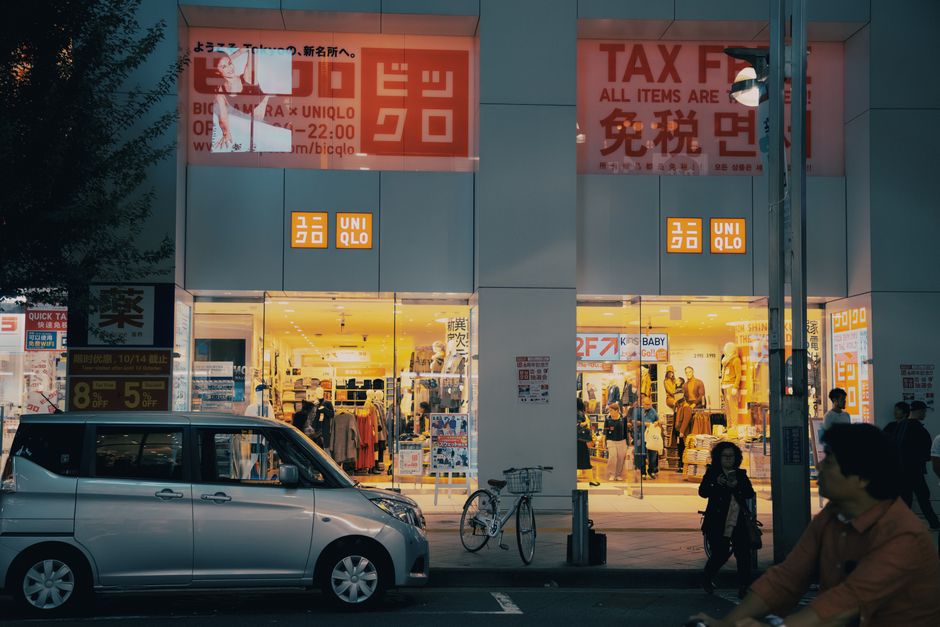
What Actually Changed, and When
Japan’s change is the recent one and the one that trips up returning visitors. Japan Customs states the old system, where the tax came off at the till, ran “until October 31, 2026”.
For purchases made on or after 1 November 2026, the system shifts to what it calls the Refund Method. You pay the full tax-inclusive price in the shop and reclaim the tax after customs confirms the goods are leaving the country.
This was a single national switchover. There is no store-by-store rollout, and no signage to check.
China has been moving the opposite way. Its State Taxation Administration describes an upgraded nationwide policy issued on 18 May 2026 by the Ministry of Commerce, the Ministry of Finance and the STA, which it calls a “2.0 version” of the one introduced in 2026.
Korea sits in the middle and has for a decade. The Korea Tourism Organization notes that travellers have been able to receive an immediate tax refund at certified stores since 1 January 2016, alongside the older claim-at-departure route.

The Luggage Rule That Costs People Money
This is the practical failure, and it works the same way in both Japan and Korea.
In Japan, you present your passport at a tax-free procedure terminal and it returns one of two outcomes. A Green Result means no inspection and you are finished. A Red Result means you must take the goods to the designated customs inspection area.
You cannot show goods that are already in the hold. Get your result before you check in.
Korea’s sequence is stricter still. The Korea Tourism Organization’s own steps are: claim your boarding pass but do not check your baggage, show the goods and refund receipts to the customs officer for a Customs Export Approval stamp, then take the luggage to the oversized baggage counter.
How Long You Have to Claim
The windows differ, and none of them is generous enough to ignore.
Japan gives you 90 days from the date of purchase to complete the procedure at the terminal.
Korea requires that you depart within three months of the purchase date, and that the goods are still new and unopened.
China’s instant refund route has a shorter clock. The STA’s 2.0 measures extend the allowable departure period for instant refunds to 28 days nationwide, which is an extension rather than a restriction, but it is still the tightest of the three.
The Three Systems Side by Side
| Japan | Korea | China | |
|---|---|---|---|
| When you get the money | At departure, since 1 Nov 2026 | At the till or at departure | Increasingly at the till |
| Time limit | 90 days from purchase | Depart within 3 months | 28 days for instant refunds |
| Minimum spend | See Japan Customs | 15,000 won | See the STA |
| Check bags first? | No | No | Customs verifies at departure |
| Direction of travel | Towards departure refunds | Unchanged since 2016 | Towards instant refunds |
Where Japan Lets You Skip the Queue
At seven airports you can complete the procedure online instead of using a kiosk: Narita, Haneda, Kansai, Chubu Centrair, Fukuoka, New Chitose and Naha.
The route is Visit Japan Web, connected to the dedicated Wi-Fi network in the international departure lobby, before you pass through security.
Japan Customs is specific that you must have Visit Japan Web set up and ready before you reach customs confirmation. If it is not working, you use the kiosk instead.
What China Simplified
The 2.0 measures target the queue rather than the money. From 1 July 2026, claims for goods valued under 10,000 yuan move to random spot checks, so only selected applications need physical verification by customs.
Paperwork went too. The STA states that travellers no longer need to submit physical refund application forms and sales invoices, because customs and the authorised agencies verify online.
Instant refunds also gained cross-region recognition. The STA’s own example is that goods bought at an instant refund store in Hebei can be claimed at departure ports in Shanghai, Sichuan or other eligible regions.
Where to Check Before You Shop
These rules move, and two of the three moved this year. Each government publishes its own version, and those pages are the ones that bind:
- Japan Customs: Tax Exemption (Refund) Program for Foreign Visitors
- Korea Tourism Organization: Duty Free and Tax Refunds
- State Taxation Administration: departure tax refund policy
Frequently Asked Questions
Does Japan’s change apply to things I bought in October?
Japan Customs draws the line at the purchase date rather than the travel date. The previous system covered purchases up to 31 October 2026, and the Refund Method covers purchases made on or after 1 November 2026.
What is Korea’s immediate refund limit?
The Korea Tourism Organization’s page does not state one, and travel guides give conflicting figures, so we are not repeating a number we cannot source.
What it does state is that downtown refund booths require the purchase not to exceed 6,000,000 won per receipt. Airport and port booths have no purchase limit.
Can I combine purchases across the three countries?
No. Each country refunds its own consumption tax under its own rules, and each claim is made when you leave that country. There is no regional scheme.
What happens in Korea if the refund counter is closed?
The Korea Tourism Organization describes a drop box: write the recipient’s details on the receipt and leave it in the designated box. If the claim goes through, the refund reaches an international credit card, Alipay or WeChat Pay within one to two months.
Is a duty free shop the same as a tax refund shop in Korea?
No, and the distinction matters. In a duty free shop the tax is never applied. In a tax refund shop you pay the full price including tax and reclaim it, either at the till or on departure.
Do I still get a refund if I open the item before leaving?
Korea requires that goods are new, unopened and unused. Japan treats consumables separately from other goods. If you plan to use something during the trip, do not assume it still qualifies.
For the Japanese system in full, including what counts as a consumable, see our Japan tax-free shopping guide.
Planning all three countries? Our entry rules guide covers what each government requires at the border, and Japan vs Korea vs China compares the destinations.
Figures in this guide were read from each authority’s own page on 3 November 2026. We have not claimed any refund ourselves; every figure links to the body that published it.
More on Travel Essentials:

Written by East Asia Explorer Editorial Team
Sam Konneh is an AI strategist and digital marketer based in Seoul, South Korea. With years spent living, working, and exploring across Korea, Japan, and China, he shares firsthand insights into East Asia's cultures, hidden gems, and everyday life. A graduate of Inha University and KDI Graduate School, Sam combines data-driven expertise with on-the-ground experience. His journey also includes studying in Malaysia and traveling through Southeast Asia. Through practical tips, local stories, and travel guides, he helps fellow explorers discover both the celebrated highlights and the lesser-known corners of East Asia.