Last Updated: September 22, 2026 | Originally Published: September 1, 2026
Quick Answer: Zhangjiajie Avatar Mountains Essentials
- Park ticket: Approximately ¥248 for a 4-day Wulingyuan Scenic Area pass — covers all four sub-parks including Zhangjiajie National Forest Park and Yuanjiajie
- Getting there: Fastest route: G-train from Changsha South to Zhangjiajie West (approx. 2h15m); or fly into Zhangjiajie Hehua Airport (DYG)
- Bailong Elevator: World’s tallest outdoor lift at 326m — included with park ticket; arrive before 8am to beat the queues
- Tianmen Mountain: Keep as a separate day — different park, different ticket (~¥258 all-inclusive), in Zhangjiajie city not Wulingyuan
I arrived at the Zhangjiajie National Forest Park south entrance at 7:20am on a Tuesday and the Bailong Elevator queue was already 40 minutes long. By 9:30am, the same queue was two hours. That single detail — getting there before the tour buses — defines the whole experience.
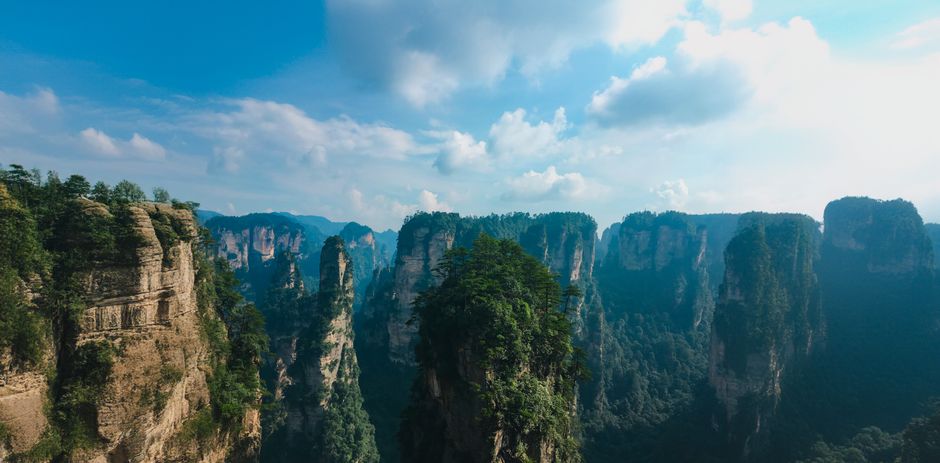
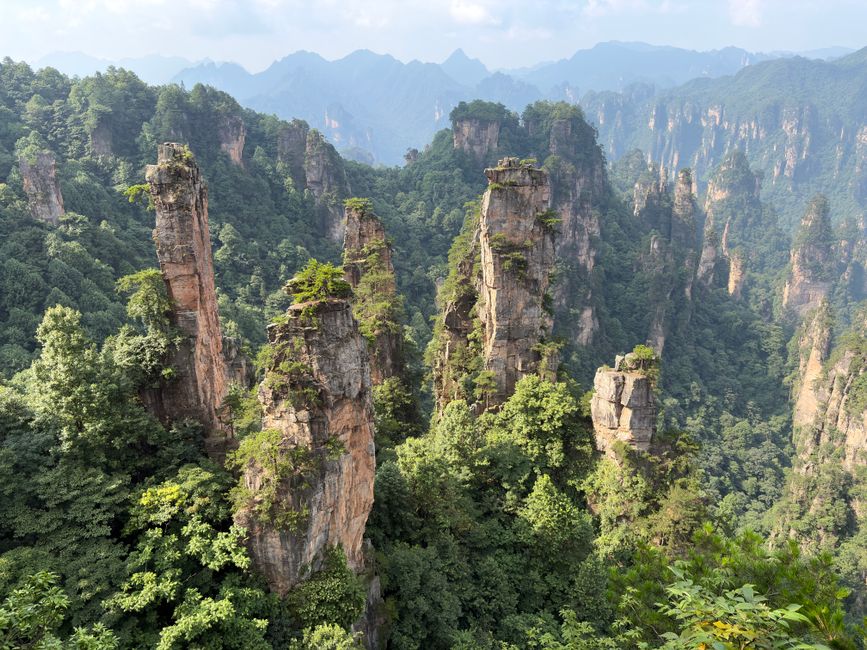
Zhangjiajie’s sandstone columns inspired James Cameron’s Pandora. Standing at Yuanjiajie watching morning cloud pour through the peaks at dawn, it’s not hard to see why.
This guide gives you the specifics: which trains to take from Changsha South, what the 4-day ticket covers, and the two operator-grade mistakes that most first-time visitors make.
What Is Wulingyuan Scenic Area — and Why the Name Confusion?
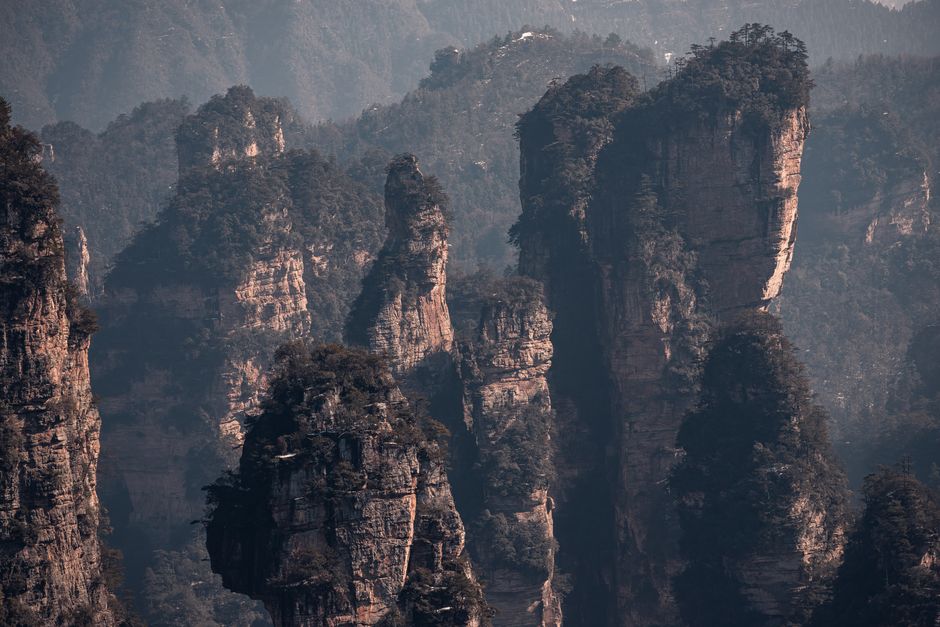
Most visitors search for “Zhangjiajie” but the park they actually visit is Wulingyuan Scenic Area (武陵源风景名胜区), designated a UNESCO World Heritage Site in 1992.
Wulingyuan covers 264 square kilometers and contains four connected sub-parks:
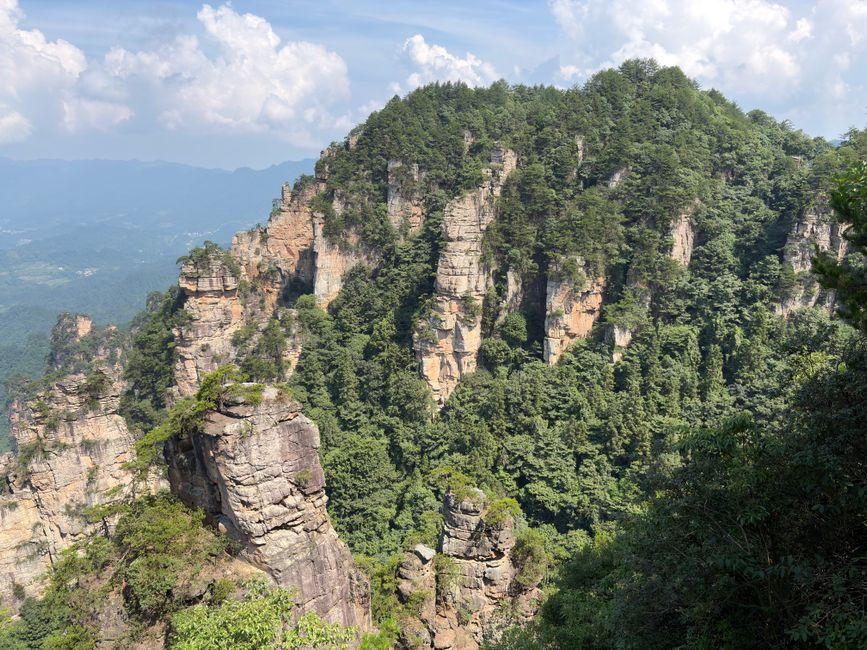
- Zhangjiajie National Forest Park — China’s first national forest park (1982); the most visited section
- Suoxi Valley Nature Reserve — waterfalls, Baofeng Lake, underground caves
- Tianzi Mountain Nature Reserve — highest elevation area; mist-shrouded peaks favored by photographers
- Yangjiajie Scenic Area — less crowded; sandstone arch bridges and cliff-side walks
One ticket covers all four. Shuttle buses connect the sections. You can walk between many areas if you have strong knees; the vertical relief is brutal on the descent.
According to the China National Tourism Administration, Wulingyuan receives approximately 8 million visitors annually — about 70% domestic tourists traveling during Golden Week or Chinese New Year.
How to Get to Zhangjiajie — HSR vs. Flying
Two practical options for international visitors: high-speed rail via Changsha or a direct flight into Zhangjiajie Hehua Airport (DYG).
Option 1: HSR from Changsha South (Recommended)
From Changsha South Station (长沙南站), G-trains to Zhangjiajie West Station (张家界西站) run approximately every 2–3 hours. Journey time on G-trains is roughly 2 hours 15 minutes; older D-trains take closer to 3 hours.
Book on Trip.com (English, international cards accepted) or via the official 12306.cn app (requires a Chinese phone number for registration). Seat classes: G-trains offer second class (~¥130–150), first class (~¥210–230), and business class.
From Zhangjiajie West Station to Wulingyuan town: taxi (~¥60, 40 min) or public bus #6 (~¥5, 50 min).
Option 2: Fly into DYG
Zhangjiajie Hehua International Airport (DYG) connects to Beijing Capital (PEK), Shanghai Pudong (PVG), Guangzhou Baiyun (CAN), and Chengdu (CTU). Flight time from Beijing is approximately 2 hours 30 minutes.
DYG is small — check-in and security clear quickly. Taxi to Wulingyuan (~¥120, 45 min) or to Zhangjiajie city (~¥35, 20 min). No metro.
| Route | Time | Approx. Cost | Notes |
|---|---|---|---|
| G-train, Changsha South → Zhangjiajie West | ~2h15m | ¥130–150 (2nd class) | Fastest land option; book via Trip.com |
| D-train, Changsha → Zhangjiajie | ~3h–3h30m | ¥80–100 | Slower, cheaper; fewer departure times |
| Flight to DYG | 2h–2h30m (from BJS/PVG) | ¥400–900 depending on date | Best from cities with no direct HSR |
| HSR from Wuhan (Wuhan → Changsha → Zhangjiajie) | ~4h total | ¥220–280 | Change at Changsha South; convenient if transiting Wuhan |
Park Tickets: What the 4-Day Pass Actually Covers
The Wulingyuan Scenic Area combined ticket costs approximately ¥248 per adult for a 4-day pass (prices adjust periodically — confirm at the park gate or on Trip.com before you travel). Children under 1.4m and seniors 60+ may be eligible for discounts with valid ID.
The ticket covers:
- All four sub-parks (Zhangjiajie National Forest Park, Suoxi Valley, Tianzi Mountain, Yangjiajie)
- Internal shuttle buses between park sections
- Bailong Elevator (百龙天梯) — included in the ticket; no additional charge
- Some cable car services within the park (Tianzi Mountain cable car and Yuanjiajie cable car are included; confirm at gate as inclusions change)
What is not included: External transport (taxi to/from Wulingyuan town), the Baofeng Lake boat (extra fee), Huanglong Cave (extra fee), and Tianmen Mountain (entirely separate ticket).
The Bailong Elevator: World’s Tallest Outdoor Lift
The Bailong Elevator (百龙天梯 — Hundred Dragons Sky Ladder) climbs 326 meters up the vertical face of a sandstone cliff inside Zhangjiajie National Forest Park. It was certified by the Guinness World Records as the world’s tallest outdoor elevator and has been operating since 2002.
The full ascent takes roughly 2 minutes. Three glass-fronted double-deck cars run simultaneously. Capacity is 50 passengers per car. At peak hours during Chinese holiday weeks, queues stretch past 2 hours.
I rode it on a Tuesday morning in late October, arriving at the base at 7:40am. The queue was 35 minutes — manageable. By 10:00am, the same queue was 90 minutes. That 90-minute gap at 7:30am opening is the single most valuable piece of advice I can give you.
What to expect at the top: The elevator deposits you at a junction point between Yuanjiajie and the Golden Whip Stream trail. Most visitors turn left for Yuanjiajie (Avatar territory). The path is wide, paved, and signed in both Chinese and English.
Avatar Hallelujah Mountain — The Peak That Inspired Pandora
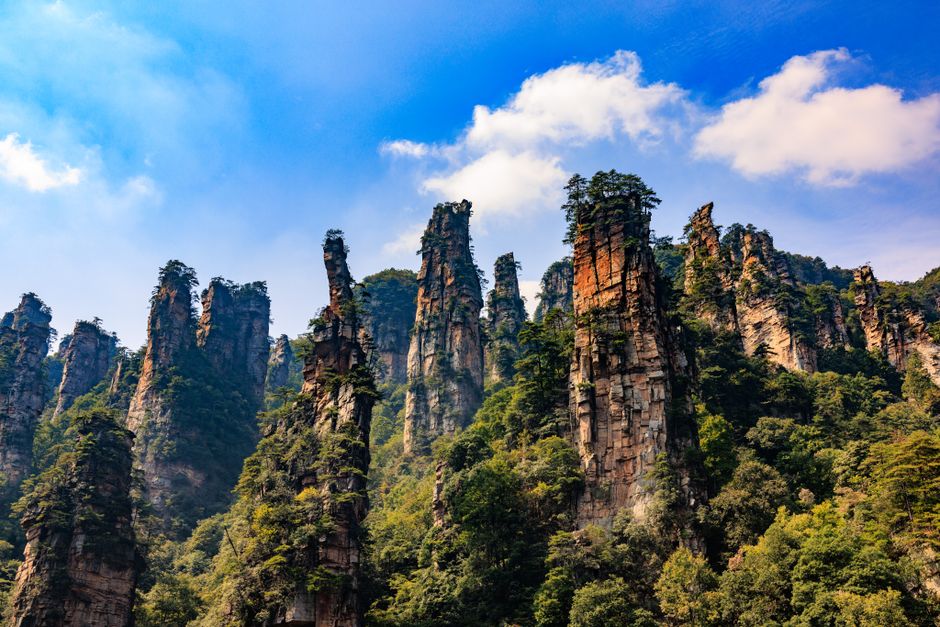
In the Yuanjiajie section, above the elevator, stands the South Sky Column (南天一柱 — Nántián Yīzhù). In 2010, following the release of James Cameron’s Avatar, the Zhangjiajie government officially renamed it Avatar Hallelujah Mountain (哈利路亚山) — an acknowledgment that Cameron’s team had photographed these peaks during production design research.
The pillar rises approximately 1,080 meters above sea level and is famous for the flat-topped trees that cling to its crown. On clear mornings, cloud formations pour through the valley below it in a way that genuinely looks like something from Pandora.
Best viewpoints:
- First Bridge Under Heaven (天下第一桥) — a natural stone arch connecting two peaks; 10-minute walk from the elevator exit
- No. 1 Scenic Viewing Platform at Yuanjiajie — direct sight line to Avatar Hallelujah Mountain; usually signed “Hallelujah Mountain Viewpoint”
- Early morning (7:30–9:00am) — most likely to catch low cloud and dramatic light; afternoon tends to flat, hazy light
Don’t rush this section. The full Yuanjiajie loop walk is about 3 kilometers, paved, with multiple viewpoints along the cliffs. Budget 2 hours minimum.
Other Must-See Spots in the Park
Tianzi Mountain (天子山)
The highest section of the park at approximately 1,262 meters. Famous for its dense column forests and the “Four Seasons Field” — the mountain changes dramatically in spring fog, summer green, autumn gold, and winter snow.
Cable cars serve this section; confirm operating hours before planning a visit as the weather closes them frequently.
Golden Whip Stream (金鞭溪 — Jīnbiān Xī)
A 7.5-kilometer flat valley walk through the base of the canyon alongside a stream. This is the park’s most accessible trail — no significant elevation change, suitable for all fitness levels. Takes approximately 3 hours to walk end-to-end. Shuttle buses run from both ends.
Macaque monkeys frequent the trail; don’t feed them.
Baofeng Lake (宝峰湖)
In the Suoxi Valley sub-park, a narrow lake surrounded by vertical cliffs. Rowboats carry visitors through the canyon. Separate ticket required (approximately ¥70). Crowds are lighter than the main Yuanjiajie area — worth the extra cost for the different field type. Book in advance during peak season.
Tianmen Mountain — Why It’s a Separate Day Trip
Tianmen Mountain (天门山) sits 30 kilometers from Wulingyuan in Zhangjiajie city. It is not part of the Wulingyuan park system and requires its own ticket (~¥258, all-inclusive).
The Tianmen Mountain ticket includes:
- The world’s longest gondola (approximately 7.5km from the city base station to mid-mountain)
- The glass-sided skywalk on the cliff face (Coiling Dragon Cliff, 999 steps)
- Heaven’s Gate — a massive natural arch 30 meters tall, 57 meters wide
- Shuttle bus within the mountain
I took the cable car on a clear afternoon and the gondola ride alone justified the ticket — it rises 1,400 meters in elevation over 7.5 kilometers, passing through cloud and forest, with the city shrinking below.
The glass walkway is busy but not as crowded as photos suggest at non-peak hours.
Where to Stay: Wulingyuan Town vs. Zhangjiajie City
Wulingyuan town is 300 meters from the north park entrance. Staying here saves 40 minutes each way vs. staying in Zhangjiajie city. Accommodation ranges from guesthouses at ¥150/night to mid-range hotels at ¥400–600/night on Trip.com. Booking.com also lists properties but fewer options than in the Chinese OTAs.
Zhangjiajie city (Yongding District) has more hotel brands (including international chains), better restaurants, and direct cable car access to Tianmen Mountain. Better if you’re dividing time between Tianmen and Wulingyuan.
“Wulingyuan Scenic Area has no tolerable accommodation right inside the park gates — the cluster of guesthouses in Wulingyuan town is the closest you can realistically get. The tradeoff is lower quality at equivalent prices compared to city hotels. Travelers who prioritize the first-light sunrise view over Yuanjiajie accept this tradeoff.”
Best Time to Visit Zhangjiajie
The park operates year-round but the experience varies significantly by season.
| Season | Months | Conditions | Crowd Level |
|---|---|---|---|
| Spring | March–May | Green, wildflowers, moderate rain; excellent visibility when clear | Moderate |
| Summer | June–August | Hot (30°C+), humid, frequent afternoon thunderstorms; lush green | High |
| Autumn | September–November | Best overall: cooler, clear skies, autumn foliage after October | Very high (Oct 1–7 Golden Week) |
| Winter | December–February | Cold (sub-zero possible at altitude), fog common; snow creates dramatic scenes but can close cable cars | Low |
Avoid at all costs: October 1–7 (National Day Golden Week) and Chinese New Year (late January/early February). Both see the park at 150–200% of comfortable capacity, with elevator queues exceeding 3 hours and shuttle buses standing-room only.
What Nobody Tells You: The Real Operator-Grade Pain Points
Most Zhangjiajie guides stop at “take the elevator and see the floating mountains.” Here’s what you actually need to know after spending time in the park.
The 4-Day Ticket Clock Starts When You Activate It
Activation happens at the first gate entry scan. If you enter on Day 1 at 4pm, your Day 1 is consumed even though you’ve seen almost nothing. Activate in the morning of your first real visit day — don’t scan in the evening just to “check it out.”
Mobile Payments Only at Most Vendors
Water, food, and souvenirs inside the park are almost exclusively Alipay or WeChat Pay — international cards are not accepted at the vast majority of vendors. Foreign travelers with a non-Chinese bank card linked to Alipay International (available since 2023) can manage.
Otherwise, bring enough cash for the day and load up at Wulingyuan ATMs before entering.
Phone Signal Is Intermittent
China Mobile and China Unicom signals drop to 2G in the valleys between sub-parks. Download offline maps (Amap / Gaode 高德地图) before entering. The Amap walking trails for Wulingyuan are detailed and accurate; Google Maps is usable via a VPN but less detailed for park internals.
The Shuttle Bus Stops Are Not Always Obvious
Shuttle buses run on fixed circuits inside the park, but the stops aren’t prominently signed in English. Screenshot the Chinese-character route map at the entrance (displayed on boards at the gate) and show drivers on your phone — they’re used to foreign visitors doing this.
The Best Photo Location Requires an Early Morning Commitment
The “Floating Mountains” effect — where low morning cloud sits below the Yuanjiajie peaks — only happens reliably in the first 90 minutes after sunrise. By 9:30am on most days, the cloud has lifted and the effect is gone. The elevator queue at 7:30am is absolutely worth it.
- Buy the 4-day Wulingyuan Scenic Area pass (~¥248); it covers the Bailong Elevator
- Fastest access: G-train from Changsha South (~2h15m); book via Trip.com
- Arrive at the Bailong Elevator by 7:20–7:30am to avoid 2-hour queues
- Tianmen Mountain is a separate full-day trip from the city — keep it on a different day from Wulingyuan
- The “Avatar floating mountains” effect only happens in the first 90 minutes after sunrise
- Avoid Golden Week (Oct 1–7) and Spring Festival unless you enjoy extreme crowds
Frequently Asked Questions
Is Zhangjiajie worth visiting in winter?
Yes, with caveats. Winter (December–February) sees the fewest crowds — you can walk up to the Bailong Elevator with no queue. Snow on the sandstone columns is genuinely spectacular. The risk: dense fog can blank out views for days at a time, and some cable cars close in icy conditions.
Budget an extra day compared to an autumn visit.
Do I need a visa to visit Zhangjiajie?
Zhangjiajie is not one of the 240-hour visa-free transit cities, so transit exemptions don’t apply here. Most nationalities require a standard Chinese tourist visa (L-visa). Check current exemption lists on the Chinese Ministry of Foreign Affairs website — China has expanded visa-free access significantly in 2026–2026.
How many days do I need in Wulingyuan?
Three full days is the sweet spot: Day 1 Zhangjiajie National Forest Park + Bailong Elevator + Yuanjiajie, Day 2 Tianzi Mountain + Golden Whip Stream, Day 3 Suoxi Valley + Baofeng Lake or a repeat of a missed view. Four days is comfortable; two is possible but rushed.
Is the Bailong Elevator included in the park ticket?
Yes, as of 2026 the Bailong Elevator ride is included in the Wulingyuan Scenic Area combined ticket. This changed from the earlier era when it carried a separate ¥72 charge. Confirm at the gate when you collect your ticket, as fee structures occasionally change.
Can I visit Avatar Hallelujah Mountain without using the elevator?
Yes. The alternative route to Yuanjiajie (where the mountain stands) uses a shuttle bus to the Yuanjiajie cable car station, then a 8-minute cable car ascent. This bypasses the Bailong Elevator queue entirely if it’s over 60 minutes. The views on the cable car route are different but equally impressive.
What’s the difference between Zhangjiajie National Forest Park and Wulingyuan?
Zhangjiajie National Forest Park is the original protected area and most visited section of the larger Wulingyuan Scenic Area. Wulingyuan is the UNESCO designation covering all four sub-parks.
One ticket covers everything — you don’t need to know the distinction to visit, but it explains why locals sometimes say “Wulingyuan” and foreigners search “Zhangjiajie.”
Can I do Zhangjiajie as a day trip from Changsha?
Technically possible on paper (2h15m each way by G-train), but a day trip is a waste. You’d arrive around 10am, face peak elevator queues, get 3–4 hours in the park, and leave by 3pm to catch a return train. Zhangjiajie rewards early mornings and multi-day visits.
At minimum, stay one night in Wulingyuan town.
What’s the best way to book Zhangjiajie attractions as a foreign visitor?
Trip.com is the most straightforward platform for English-speaking visitors — it handles park tickets, train tickets (with English interface and international card support), and accommodation in Wulingyuan/Zhangjiajie city. Alternatively, Klook lists some combined packages that include ground transport from Changsha.
More on China Destinations:
Planning a trip to China?
Check out our China Travel Hub for more guides, including China Digital Survival Guide.

Written by East Asia Explorer Editorial Team
Sam Konneh is an AI strategist and digital marketer based in Seoul, South Korea. With years spent living, working, and exploring across Korea, Japan, and China, he shares firsthand insights into East Asia's cultures, hidden gems, and everyday life. A graduate of Inha University and KDI Graduate School, Sam combines data-driven expertise with on-the-ground experience. His journey also includes studying in Malaysia and traveling through Southeast Asia. Through practical tips, local stories, and travel guides, he helps fellow explorers discover both the celebrated highlights and the lesser-known corners of East Asia.