Last Updated: July 21, 2026 | Originally Published: October 17, 2023
- Master pitch accent first — Standard Tokyo Japanese has 5 pattern types (flat, atamadaka, nakadaka, odaka, kifuku), and wrong pitch changes word meaning (箸/橋/端 all romanize as hashi)
- Use the free NHK Web Accent Dictionary and Prosody Tutor app to drill patterns; supplement with native pronunciations on Forvo Japanese
- Shadow 15–20 minutes daily with Nihongo con Teppei podcast (1,000+ episodes, natural speed) or NHK’s やさしい日本語 for clean Tokyo-standard diction
- Learn 10 key Kansai-ben phrases before visiting Osaka or Kyoto — locals immediately notice the effort and conversations open up
Last updated: July 21, 2026
Sounding natural in Japanese is less about vocabulary size and more about three mechanics: pitch, rhythm, and the small filler words that fill every real conversation. I spent three months shadowing Nihongo con Teppei episodes for 20 minutes every morning — and the first time a Tokyo taxi driver assumed I was a returnee (kikokushijo) rather than a foreigner, I understood why the method works.
This guide focuses on what actually moves the needle: named tools, specific techniques, and the dialect phrases that signal cultural fluency rather than textbook study.
Why Does Japanese Pitch Accent Matter So Much?
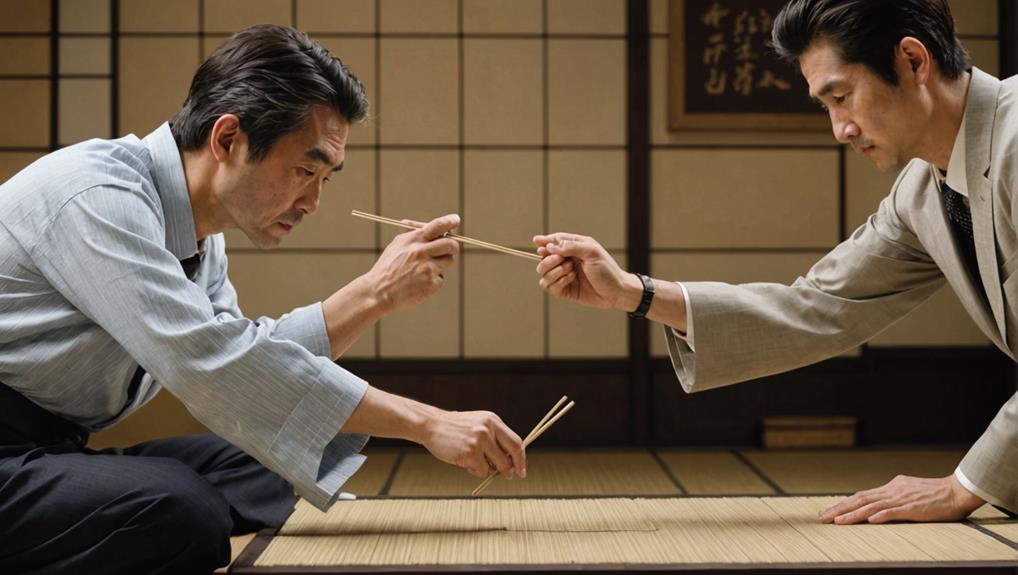
Pitch accent determines meaning in ways that no amount of correct grammar can fix. The word hashi (はし) means chopsticks (箸), bridge (橋), or edge (端) depending solely on pitch pattern — not spelling or context.
Standard Tokyo Japanese uses five accent types: flat (heiban), head-high (atamadaka), middle-high (nakadaka), tail-high (odaka), and compound (kifuku). According to the Japan National Tourism Organization (JNTO), most language learners plateau not at grammar but at natural-sounding pronunciation — and pitch is the main culprit.
The good news: pitch accent is learnable at any age. The Japan Foundation’s 2026 Japanese Language Survey found that learners who integrated pitch drilling within the first 200 study hours achieved significantly higher intelligibility scores than those who added it later.
What Are the Best Pitch Accent Tools in 2026?
The right tool depends on your learning stage. Below are the four most useful resources, tested by intermediate-to-advanced learners:
| Tool | Cost | Best For | Weakness |
|---|---|---|---|
| NHK Web Accent Dictionary | Free | Looking up any word’s official Tokyo standard pattern | No audio; pattern notation only |
| Prosody Tutor | Free (iOS/Android) | Real-time pitch feedback via microphone; sentence-level drilling | Limited vocabulary set; needs Wi-Fi for scoring |
| Anki + JPDB Pitch Deck | Free | Spaced-repetition for high-frequency words + their pitch patterns with audio | Setup time; deck quality varies — use the ToKini Andy or Dogen community deck |
| Forvo Japanese | Free (basic) | Native speaker audio for any word; useful for regional comparison | No pitch notation; audio quality inconsistent |
The most effective workflow: look up a word in the NHK Web Accent Dictionary for its official pattern, listen on Forvo to hear a real human say it, then add the word to your Anki JPDB deck for daily review.
What Is the Shadowing Method and How Do You Do It Correctly?
Shadowing means repeating speech simultaneously with a native speaker — not after, but with. It trains your mouth and ear at the same time, which passive listening cannot do.
The best free resource is Nihongo con Teppei, a podcast by Tokyo native Teppei Sensei with over 1,000 episodes recorded specifically for Japanese learners. Episodes run 5–15 minutes at natural conversational speed. Shadow each episode twice: once at full speed, once slowed to 0.8x.
For cleaner Tokyo-standard diction, use NHK’s やさしい日本語 (Easy Japanese) podcast — produced by Japan’s national broadcaster with controlled vocabulary and precise standard pronunciation.
Which Video Resources Best Teach Japanese Pitch Accent?
Video gives you something podcasts and dictionaries cannot: visual pitch-contour overlays and mouth-movement reference. These four resources each serve a different learner level:
| Resource | Cost | Level | Best For |
|---|---|---|---|
| Dogen (Patreon) | ~$8/month (50+ videos) | N4–N2 | The most systematic English-language pitch accent course; covers all five pattern types with visual H/L overlays |
| Comprehensible Japanese | Free (YouTube) | Complete beginner to native | Immersive input at graded speed; 300+ videos from N5 to advanced; slow, clear standard Tokyo pronunciation |
| ToKini Andy | Free (YouTube) | N5–N3 | Grammar + pitch accent playlist with visual H/L markers; pairs with his community Anki decks |
| JapanesePod101 | Free (basic) / $4–25/month | Beginner to advanced | Dialogue-based video lessons with PDF transcripts; stronger on vocabulary + cultural context than pitch accent specifically |
What Is Kansai-ben and Why Should You Learn It?
Kansai-ben is the regional dialect spoken across the Kansai region — Osaka, Kyoto, Kobe, and Nara. It differs enough from Standard Tokyo Japanese that native Tokyo speakers sometimes struggle to follow it.
If your trip includes Osaka or Kyoto, knowing 10 key phrases signals that you’re a serious learner rather than a phrase-book tourist. Locals in Osaka’s Dotonbori and the old machiya lanes of Kyoto’s Gion district respond noticeably differently when you use regional expressions.
| Meaning | Standard (Tokyo) | Osaka-ben | Kyoto-ben |
|---|---|---|---|
| Thank you | Arigatou (ありがとう) | Ookini (おおきに) | Ookini (same, softer tone) |
| Isn’t it? / Right? | Sou desu ne (そうですね) | Sou ya na (そうやな) | Sou doss-u na (そうどっすな) |
| I don’t know | Wakaranai (わからない) | Wakarehen (わかれへん) | Wakarahen (わからへん) |
| It’s no good / Stop | Dame (だめ) | Akan (あかん) | Akan (same) |
| Tasty / Delicious | Oishii (おいしい) | Meccha uma (めっちゃうま) | Oishuu-te (おいしゅうて) |
| Really? / No way | Hontou ni? (ほんとうに?) | Honma ka! (ほんまか!) | Honma doss-u ka (ほんまどっすか) |
One key difference: Kansai-ben uses ya where Standard Japanese uses da for the copula (to be). So “that’s good” is ええやん (ee yan) in Osaka instead of いいじゃん (ii jan) in Tokyo.
Which Sentence-Final Particles Make Japanese Sound Natural?
Native speakers load the ends of sentences with small particles that carry nuance, warmth, and conversational rhythm. These particles are often the biggest gap between textbook Japanese and real Japanese.
The core set to learn:
- ね (ne) — seeks agreement or shared feeling: “It’s cold today, isn’t it” (Kyou wa samui desu ne)
- よ (yo) — asserts information the listener may not know: “This shop is the best” (Kono mise ga ichiban desu yo)
- よね (yo ne) — combination: asserting while seeking confirmation (“You speak Japanese, right?”)
- さ (sa) — casual filler that softens: used between clauses in friendly conversation
- かな (kana) — expresses wondering: “I wonder if the train is late” (Densha osoi kana)
Filler words are equally important. Japanese uses ano (あの), eto (えーと), and sou desu ne the way English uses “um,” “uh,” and “well.” Inserting these naturally while thinking makes speech sound fluent even when vocabulary is limited.
How Does Japanese Rhythm Differ From English?
English is stress-timed — we compress or stretch syllables based on emphasis. Japanese is mora-timed: every mora (the basic unit of sound) takes approximately equal time.
This means tōkyō (東京, 4 morae: to-u-kyo-u) has equal weight on every unit. Rushing it like English creates an immediately foreign accent. Practice by tapping out morae while speaking — each tap is the same length.
Long vowels matter. Ojisan (おじさん) means uncle; ojīsan (おじいさん) means grandfather. The double vowel is not a stress — it’s a full extra mora of duration. According to the Japan Foundation, mispronounced long vowels are among the top three intelligibility errors in foreign-accented Japanese.
What Role Does Body Language Play in Sounding Natural?
Japanese conversation is built on aizuchi — the constant stream of small verbal and physical responses that signal you’re listening. Native speakers use hai, ee, naruhodo, sou desu ka throughout a conversation, not just at the end.
Foreigners trained in Western conversation often wait for pauses to respond. In Japanese, silence during someone else’s speech reads as disengagement or confusion. Insert a soft ee or hai every few sentences — not interrupting, but resonating.
Bowing while on the phone is real, not a joke. Physical habits reinforce verbal patterns. Slight nods during conversations synchronize your body with the language’s rhythm in a way that carries over into your pronunciation.
When Do Honorifics Make You Sound Unnatural?
Keigo (honorific language) sounds stiff and formal in casual settings. Using desu/masu forms with close friends or in izakayas signals that you’ve learned Japanese from textbooks rather than real conversation.
The most common over-formality mistake: saying ありがとうございます (arigatou gozaimasu) to a market stall vendor or convenience store cashier. Native speakers in casual commercial settings use doumo or arigatou — dropping the -gozaimasu shows social calibration.
The three speech levels you’ll actually encounter — and the verb forms that distinguish them — are worth memorising before hotel check-ins, department store (hyakkaten) interactions, or any business context:
| Verb | Plain / Casual | Teineigo (Polite) | Sonkeigo (Honoring others) | Kenjougo (Humbling yourself) |
|---|---|---|---|---|
| Eat | 食べる (taberu) | 食べます (tabemasu) | 召し上がる (meshiagaru) | いただく (itadaku) |
| Go | 行く (iku) | 行きます (ikimasu) | いらっしゃる (irassharu) | 参る (mairu) |
| Say | 言う (iu) | 言います (iimasu) | おっしゃる (ossharu) | 申す (mousu) |
| Do | する (suru) | します (shimasu) | なさる (nasaru) | いたす (itasu) |
| See / Meet | 会う (au) | 会います (aimasu) | お会いになる (o-ai ni naru) | お目にかかる (o-me ni kakaru) |
The critical distinction: sonkeigo elevates the other person’s actions; kenjougo lowers your own. Reversing them — using kenjougo when discussing what a customer is doing — is an intermediate error native speakers notice immediately at places like ANA All Nippon Airways ground staff interactions or Isetan department store service counters.
Frequently Asked Questions
How long does it take to sound like a native Japanese speaker?
Complete native-level accent is rare for adult learners. But sounding natural — not instantly identifiable as foreign — is achievable in 12–18 months of deliberate practice. The Japan Foundation’s research puts JLPT N3 (approx. 450–600 study hours) as the point where most learners achieve basic communication without repetition. Pitch accent work during the first 200 hours compresses this significantly.
Is Kansai-ben difficult to learn if you know Standard Japanese?
For Standard Japanese speakers, Kansai-ben is readable and mostly comprehensible — but the copula (ya vs da), the negation (hen vs nai), and pitch differences require specific study. Watching Osaka-set TV dramas with subtitles is the fastest exposure method. Don’t try to speak it from a phrasebook alone — intonation matters as much as vocabulary.
Can adults achieve native-like Japanese pronunciation?
Yes, to a functional degree. The critical period hypothesis suggests children acquire accent naturally; adults must acquire it deliberately. Research published in Second Language Research (2022) found adult learners who studied pitch accent explicitly achieved higher intelligibility scores than those who relied on immersion alone — even outperforming some early-onset learners who never formally studied pitch.
Is the NHK Accent Dictionary really free?
The NHK Web Accent Dictionary (nhk.or.jp/accent) is free and browser-based. It covers over 60,000 entries with official Tokyo-standard pitch notation for each. The physical book version (NHK日本語発音アクセント新辞典) costs around ¥3,500–4,000 at major bookshops — useful for offline reference and more detailed pattern explanations.
What is the best free shadowing resource for Japanese learners?
Nihongo con Teppei for Beginners is the top recommendation for intermediate learners: 1,000+ episodes, Tokyo native speaker, no textbook pacing. For absolute beginners, NHK World’s やさしい日本語 (Easy Japanese) provides slower, clearly articulated content. Both are free on Spotify and Apple Podcasts.
Does Kansai-ben affect pitch accent in a different way?
Yes — Kansai-ben has its own distinct pitch accent system that differs from Standard Tokyo Japanese. Some words have reversed pitch patterns (High-Low in Tokyo, Low-High in Osaka). This is why Kansai-ben sounds melodically distinctive to Tokyo ears. Don’t try to apply Tokyo pitch accent rules to Kansai words — they won’t sound right and may confuse locals.
How important are filler words for sounding natural in Japanese?
Very important. Native speakers use ano, eto, and sou desu ne constantly — removing them creates a mechanical, robotic delivery. The Japan Foundation notes that appropriate filler usage is one of the clearest markers of advanced conversational fluency. Integrate at least two natural fillers in daily practice conversations before worrying about expanding vocabulary.
More on Learn Japanese:
Planning a trip to Japan?
Check out our Japan Travel Hub for more guides, including JR Pass Guide 2026.

Written by East Asia Explorer Editorial Team
Sam Konneh is an AI strategist and digital marketer based in Seoul, South Korea. With years spent living, working, and exploring across Korea, Japan, and China, he shares firsthand insights into East Asia's cultures, hidden gems, and everyday life. A graduate of Inha University and KDI Graduate School, Sam combines data-driven expertise with on-the-ground experience. His journey also includes studying in Malaysia and traveling through Southeast Asia. Through practical tips, local stories, and travel guides, he helps fellow explorers discover both the celebrated highlights and the lesser-known corners of East Asia.