Last Updated: July 21, 2026 | Originally Published: October 17, 2023
- You do not need to speak Japanese to travel Japan — but learning 50 key phrases will unlock significantly better experiences at restaurants, stations, and local shops
- The most practical app for fast travel prep is Pimsleur Japanese (audio-only, usable on commutes) — 30 lessons cover the same ground as months on Duolingo for active speaking
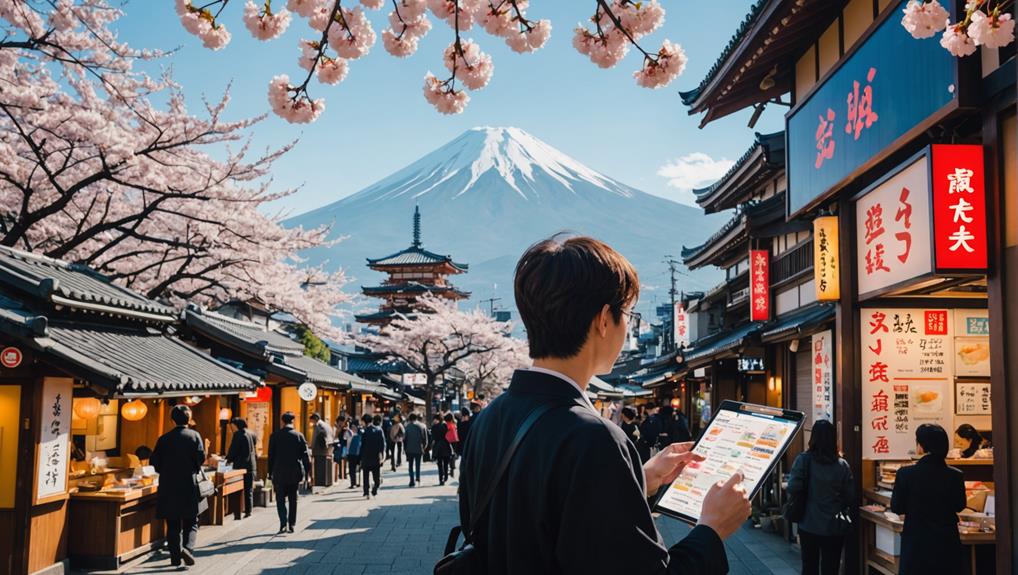
- Download Google Translate’s Japanese offline pack (45 MB) before you leave — camera mode reads Japanese menus and signs without internet
- Learning hiragana (46 characters, ~2 hours) is worth it: it unlocks phonetic menu reading, train signs, and the Japanese keyboard on your phone
- The Japan National Tourism Organization‘s free Japan Official Travel App includes a phrasebook and offline map — download it alongside your translator
Last updated: July 21, 2026
I’ve watched dozens of first-time Japan visitors spend entire evenings in the wrong restaurant — not because they couldn’t find food, but because they couldn’t read a menu or ask a single question. Japan is extraordinarily foreigner-friendly on infrastructure, but the communication gap remains the single biggest source of missed moments.
This guide covers what actually matters for travel Japanese: the specific phrases you’ll use multiple times per day, the apps worth your time (and which ones Japan travelers skip), and the single writing system worth learning in your first hour of study.
Why Even Minimal Japanese Changes Your Trip
Japan has the lowest English penetration of any major tourism destination. According to the Japan National Tourism Organization (JNTO), fewer than 30% of Japanese hospitality workers rate themselves as “comfortable” communicating in English — a figure that drops sharply outside Tokyo and Osaka.
That gap is most painful at three specific moments:
- Ordering at a ramen shop or izakaya with no English menu
- Asking a station attendant which platform to use when the app is wrong
- Explaining a dietary restriction (no pork, no shellfish) to kitchen staff
Each of these has a one-sentence Japanese solution. Knowing it shifts the interaction from an awkward pointing exercise to a 10-second exchange that locals actually appreciate.
The Only Writing System Worth Learning Before You Arrive
Japanese uses three scripts: hiragana, katakana, and kanji. Kanji requires years to learn. Katakana is useful for reading foreign loan-words on menus. But hiragana is the one script that pays off in 2–3 hours of study.
Here’s why it matters:
- Train displays: Tokyo Metro and JR lines display hiragana beneath kanji station names — reading hiragana lets you confirm the stop
- Menus at ramen and soba shops: Cheaper local spots often use hiragana-heavy menus with no photos or English
- Japanese keyboard: The hiragana input method on your smartphone keyboard lets Google Translate’s camera mode work in real-time as you type
The 46 hiragana characters follow a completely regular vowel pattern (a-i-u-e-o) with no exceptions. Free resources: Tofugu’s hiragana guide covers all 46 in one focused session with mnemonics designed for English speakers. Most learners complete it in 90–120 minutes.
50 Essential Japanese Phrases by Travel Scenario
These are the phrases that actually come up during a Japan trip — organized by where you’ll use them.
| Situation | English | Romaji | Japanese |
|---|---|---|---|
| Airport / Arrival | I don’t understand | Wakarimasen | わかりません |
| Airport / Arrival | Where is the exit? | Deguchi wa doko desu ka? | 出口はどこですか? |
| Airport / Arrival | Do you have English? | Eigo wa arimasu ka? | 英語はありますか? |
| Station / Transit | One ticket to [place] | [Basho] made ichi-mai | 〇〇まで一枚 |
| Station / Transit | Which platform? | Nanbansen desu ka? | 何番線ですか? |
| Station / Transit | Does this stop at [X]? | [X] ni tomarimasu ka? | 〇〇に止まりますか? |
| Station / Transit | How many minutes? | Nan-pun kakarimasu ka? | 何分かかりますか? |
| Restaurant | Excuse me (to call waiter) | Sumimasen | すみません |
| Restaurant | What do you recommend? | Osusume wa nan desu ka? | おすすめは何ですか? |
| Restaurant | The same as that (pointing) | Are to onaji mono | あれと同じもの |
| Restaurant | I cannot eat [pork] | [Buta] wa taberaremasen | 〇〇は食べられません |
| Restaurant | I am allergic to [seafood] | [Kaisan-butsu] ga arerugi desu | 〇〇がアレルギーです |
| Restaurant | It’s delicious! | Oishii! | おいしい! |
| Restaurant | Check, please | O-kaikei onegaishimasu | お会計お願いします |
| Restaurant | Can I pay by card? | Kaado de haraemasu ka? | カードで払えますか? |
| Hotel / Accommodation | I have a reservation | Yoyaku shite imasu | 予約しています |
| Hotel / Accommodation | Where is my room? | Heya wa doko desu ka? | 部屋はどこですか? |
| Hotel / Accommodation | What time is checkout? | Chekku-auto wa nanji desu ka? | チェックアウトは何時ですか? |
| Hotel / Accommodation | Is there WiFi? | Wai-fai wa arimasu ka? | Wi-Fiはありますか? |
| Shopping | How much is this? | Ikura desu ka? | いくらですか? |
| Shopping | Do you have a larger size? | Motto ookii saizu wa arimasu ka? | もっと大きいサイズはありますか? |
| Shopping | I’m just looking | Mite iru dake desu | 見ているだけです |
| Shopping | Can I have a receipt? | Ryoshusho wo onegaishimasu | 領収書をお願いします |
| Shopping | Tax-free please | Menzei de onegaishimasu | 免税でお願いします |
| Emergency / Help | Help! | Tasukete! | 助けて! |
| Emergency / Help | Please call an ambulance | Kyuukyuusha wo yonde kudasai | 救急車を呼んでください |
| Emergency / Help | I need a doctor | Isha ga hitsuyou desu | 医者が必要です |
| Emergency / Help | I am lost | Michi ni mayoimashita | 道に迷いました |
| General | Good morning | Ohayou gozaimasu | おはようございます |
| General | Hello (afternoon) | Konnichiwa | こんにちは |
| General | Good evening | Konbanwa | こんばんは |
| General | Thank you very much | Arigatou gozaimasu | ありがとうございます |
| General | Please (making a request) | Onegaishimasu | お願いします |
| General | Yes / No | Hai / Iie | はい / いいえ |
| General | I don’t speak Japanese | Nihongo ga hanasemasen | 日本語が話せません |
| General | Please speak slowly | Yukkuri hanashite kudasai | ゆっくり話してください |
| General | Nice to meet you | Hajimemashite | はじめまして |
| Numbers / Counting | 1, 2, 3, 4, 5 | Ichi, ni, san, shi/yon, go | 一、二、三、四、五 |
| Numbers / Counting | Two people (for restaurant) | Futari desu | 二人です |
| Numbers / Counting | One more, please | Mo hitotsu onegaishimasu | もう一つお願いします |
Best Apps for Learning Japanese Before Your Trip
The market has too many Japanese learning apps, most of them designed for language students rather than travelers with 4–6 weeks until departure. Here is what each major app actually does for your specific use case.
| App | Monthly Cost | Best For | Travel Prep Rating | Japan-Specific Note |
|---|---|---|---|---|
| Duolingo | Free / $7–13 Super | Gamified daily habit, vocabulary building | ⭐⭐⭐ (3/5) | Teaches hiragana and katakana well. Caution: Japanese course front-loads anime-style vocabulary (“neko” = cat) before travel essentials — manually skip ahead to restaurant/transport units |
| Pimsleur | $20.95/month | Audio-only speaking fluency, commute learning | ⭐⭐⭐⭐⭐ (5/5) | 30-minute audio lessons designed specifically for spoken output. Level 1 (30 lessons) covers exactly the restaurant/hotel/transit phrases a traveler needs. No reading required — works entirely while commuting or walking |
| Anki + Japandict | Free (Anki desktop) / $25 iOS one-time | Spaced repetition vocabulary, self-study | ⭐⭐⭐⭐ (4/5) | Download the “Core 2000” Anki deck — the first 300 cards are travel-relevant. Use Japandict.com to look up any word with audio pronunciation. Steep setup curve but extremely efficient long-term |
| JapanesePod101 | $4–25/month (tiers) | Structured lessons, audio + PDF transcripts | ⭐⭐⭐⭐ (4/5) | Best structured course for travelers. “Survival Phrases” beginner series is exactly travel-focused. The Basic plan ($4/month) gives full audio access — sufficient for trip prep without the full subscription |
| LingQ | Free / $13.99/month Premium | Input-based reading and listening immersion | ⭐⭐⭐ (3/5) | Better for post-trip continuation than pre-trip sprint. Excellent for reading authentic Japanese content once you have basic hiragana — not the fastest route to spoken travel phrases |
| Google Translate (Offline) | Free | In-trip real-time translation, menu camera mode | ⭐⭐⭐⭐⭐ (5/5) | Download the 45 MB Japanese offline language pack before departure. Camera mode translates printed Japanese text in real time — works on menus, signs, and packaging without internet. Accuracy is ~90% for common travel contexts (lower for handwritten text) |
“Even the simplest greeting in Japanese — a polite ‘Konnichiwa’ paired with a slight bow — signals genuine respect for local customs and often transforms how locals respond to foreign visitors.”
4-Week Pre-Trip Japanese Study Schedule (15–20 Min/Day)
Most travelers download Duolingo, complete three lessons, then abandon it. The problem is not motivation — it is wrong sequencing for travel Japanese. I used the schedule below before my first Japan trip, spending exactly 15–20 minutes each morning during my commute. By arrival day I could navigate Shinjuku Station, order at a ramen counter, and read most station signs.
| Timeframe | Daily Task | Tool | Target |
|---|---|---|---|
| 4 weeks out | Learn hiragana | Tofugu Hiragana Guide (free) | All 46 characters in 90 min total; review daily via Anki SRS flashcard deck (free desktop app) |
| 3 weeks out | Survival phrases + restaurant script | Pimsleur Japanese Lessons 1–10 | Greetings, apologies, asking for help, basic restaurant ordering — 10 lessons = 5 hours total (audio-only, commute-safe) |
| 2 weeks out | Transport + shopping phrases | Pimsleur Lessons 11–20 + scenario table above | Station vocabulary, price questions, directional phrases; WaniKani Level 1 kanji optional (150 vocabulary items = JLPT N5 core) |
| 1 week out | Listening practice at natural speed | Nihongo con Teppei for Beginners | 3–4 episodes at 0.75× speed; focus on rhythm and filler words (eto, ano, ne, yo) |
| Day before departure | Download offline resources | Google Translate offline pack (45 MB) + Japan Official Travel App phrasebook | Camera mode for menus; offline maps; no internet required at Narita or Haneda immediately after landing |
What JLPT Levels Mean for a Traveler (And Why They Don’t)
The Japanese Language Proficiency Test (JLPT) runs from N5 (beginner) to N1 (near-native). You’ll see these levels referenced in learning resources. For travelers, here’s what they actually mean:
- JLPT N5: 800 vocabulary words, ~100 kanji. Sufficient for reading simple menu items and making basic requests. Most people reach N5 level in 80–150 hours of study.
- JLPT N4: 1,500 vocabulary words, ~300 kanji. Comfortable ordering food, navigating transport, and understanding announcements. Requires 300+ hours.
- For a 4-week trip prep: You don’t need to reach N5. You need approximately 200 vocabulary items and 20 key phrases. That’s achievable in 2–3 weeks of daily 15-minute sessions.
The JLPT framework is useful for motivation and measurement — but don’t mistake N5 certification as the travel readiness milestone. The scenario phrases in the table above cover more practical ground than the first 200 JLPT N5 vocabulary words.
Using Technology in Japan: Apps to Download Before You Leave
Beyond language apps, these translation and navigation tools will carry more daily weight than any phrase you memorize:
- Google Translate offline pack (45 MB Japanese) — camera mode reads menus and signs. Download before departure — the installation fails on slow Japanese hotel WiFi
- Japan Official Travel App (by JNTO, free) — includes an offline phrasebook, disaster alerts in English, and map integration with tourist information center locations
- Google Maps offline area — download your Japan region before flying; the app works without data for navigation and transit routes
- DeepL — produces more natural-sounding Japanese translations than Google Translate for longer sentences; useful for writing out meal requests or hotel notes in advance
Common Pronunciation Traps for English Speakers
Japanese pronunciation is more consistent than English — once you understand the five vowels (a, i, u, e, o), they never change. But English speakers regularly get these wrong:
- Long vowels: The macron matters. “Otōsan” (father) and “Otosan” are different. Japanese distinguishes vowel length — hold the long vowel for exactly twice as long
- The “u” sound: Japanese “u” is unrounded — closer to the English “uh” than “oo.” The city name “Kyushu” is pronounced “KYOO-shoo” in English but closer to “Kyoo-shh” in Japanese
- Silent vowels: In “desu” (is) and “masu” (verb ending), the final “u” is almost always silent in natural speech. So “desu” sounds like “des” and “ikimasu” sounds like “iki-mas”
- Pitch accent: Tokyo Japanese has pitch accent — some syllables are high-pitched, others low. It doesn’t affect comprehension for travel purposes, but aware learners will notice Japanese people saying “ha-SHI” (chopsticks) vs “HA-shi” (bridge)
- Learn hiragana first (46 characters, ~2 hours) — it unlocks menus, signs, and the Japanese keyboard on your phone
- Use Pimsleur for spoken phrase acquisition or JapanesePod101’s “Survival Phrases” series for structured audio lessons
- Download Google Translate’s offline Japanese pack (45 MB) before departure — camera mode reads menus without internet
- Memorize the allergy phrase in Japanese before you arrive if you have any dietary restrictions: 「〇〇がアレルギーです」
- The 50-phrase scenario table above covers every common travel situation — start there rather than with a JLPT word list
Japanese Body Language: Non-Verbal Signals That Work When Words Fail
Japan has a rich vocabulary of non-verbal signals that communicate faster than any phrase. A taxi driver in Hiroshima once gave me the crossed-arm “X” — both arms crossed in front of the chest — as I pointed at a street. It means dame (prohibited / not possible), in this case a pedestrian zone. No words needed.
Based on official Japan Rail Pass documentation, learning these six gestures supplements your phrase list and prevents miscommunication when neither party has language in common.
| Gesture | Meaning | When you will see it |
|---|---|---|
| X arm cross (both arms cross in front of chest) | No / Not possible / Prohibited | Taxi drivers (pedestrian zone), shop staff (closed), restaurant staff (reservation only) |
| Index finger pointing down at own chest | Me / Myself (self-referential) | Staff confirming which person in a group the instruction applies to |
| Open-palm wave in front of face | No / I don’t know / I cannot help | Staff redirecting you to a colleague — not a dismissal, they are finding someone who can help |
| Bow at 15° (slight head dip) | Casual thanks / Acknowledgement | Konbini staff, cashiers, anyone handing you something — reciprocate this one always |
| Bow at 30° | Sincere apology / Formal gratitude | Use when you have caused an inconvenience: wrong platform, mistaken order, blocking an aisle |
| Small hand wave over the bag at konbini counter | “I don’t need a bag” | Cashier asks 「袋はよろしいですか?」(fukuro wa yoroshii desu ka?). Wave = no bag; nod = yes. Skips the language exchange entirely. |
Frequently Asked Questions
How much Japanese do I need to know for a trip to Japan?
Realistically, 20–30 key phrases cover 90% of traveler interactions. The core set is: greetings, “excuse me,” “where is X?”, ordering food (“this one please” + pointing), paying, and the allergy/dietary restriction phrase. Japanese infrastructure — transit apps, hotel staff in tourist areas, ATMs — is well-adapted for non-Japanese speakers.
Is it rude to speak English in Japan?
No. Japanese people are generally not offended by foreign visitors not speaking Japanese. However, opening with a Japanese greeting — even just “Konnichiwa” or “Sumimasen” — signals respect and is almost always received positively. Attempting basic phrases, even imperfectly, creates noticeably warmer interactions than going straight to English.
Should I learn hiragana or katakana first?
Hiragana first, then katakana. Hiragana covers native Japanese words and is used throughout menus, train signs, and children’s literature. Katakana covers foreign loan-words (コーヒー = coffee, ビール = beer) which appear on café and restaurant menus constantly — learn it as the second step. Kanji can wait unless you’re planning extended study.
Which app is actually best for learning Japanese before a trip?
Pimsleur is the fastest route to speaking confidence — 30 audio lessons of 30 minutes each cover everything a traveler needs to say out loud. If you prefer a free option, JapanesePod101’s “Survival Phrases” series (available without a paid account in limited form) is the most travel-focused free resource. Duolingo Japanese is better as a maintenance tool post-trip than for fast travel prep.
Can I survive in Japan without speaking any Japanese?
Yes, especially in Tokyo, Osaka, and Kyoto. Major stations have English signage, convenience stores have point-and-pay registers, and many restaurants use picture menus or plastic food displays. That said, off-tourist-circuit experiences — local izakayas, rural onsen, small ramen shops — will be significantly richer with even minimal Japanese. The gap is widest exactly where the best experiences are.
Is Google Translate reliable for Japanese?
For printed text (menus, signs, packaging), Google Translate camera mode performs well on standard Japanese — handling most restaurant menus, station signs, and product packaging reliably. Accuracy drops for handwritten text, classical Japanese on temple signs, and some regional dialects. Download the offline pack (45 MB) before departure — camera mode requires the offline pack to function without internet.
What Japanese phrases are most important in an emergency?
Three phrases: 「助けて!」(Tasukete! = Help!), 「救急車を呼んでください」(Kyuukyuusha wo yonde kudasai = Please call an ambulance), and 「医者が必要です」(Isha ga hitsuyou desu = I need a doctor). Japan’s emergency number is 119 (ambulance/fire) and 110 (police). Both dispatch centers have English interpretation lines available.
How long does it take to learn basic travel Japanese?
To memorize the most-used travel phrases: many travelers find they can cover the core set with a focused weekend of study. To add hiragana reading: another 2–3 hours. For a full survival vocabulary of 200 words with pronunciation: 2–3 weeks of daily 15-minute sessions using Pimsleur or Anki. This is a meaningfully achievable goal before most trip departures.
More on Budget Travel:
Planning a trip to Japan?
Check out our Japan Travel Hub for more guides, including JR Pass Guide 2026.

Written by East Asia Explorer Editorial Team
Sam Konneh is an AI strategist and digital marketer based in Seoul, South Korea. With years spent living, working, and exploring across Korea, Japan, and China, he shares firsthand insights into East Asia's cultures, hidden gems, and everyday life. A graduate of Inha University and KDI Graduate School, Sam combines data-driven expertise with on-the-ground experience. His journey also includes studying in Malaysia and traveling through Southeast Asia. Through practical tips, local stories, and travel guides, he helps fellow explorers discover both the celebrated highlights and the lesser-known corners of East Asia.