Last Updated: October 20, 2026 | Originally Published: March 7, 2026
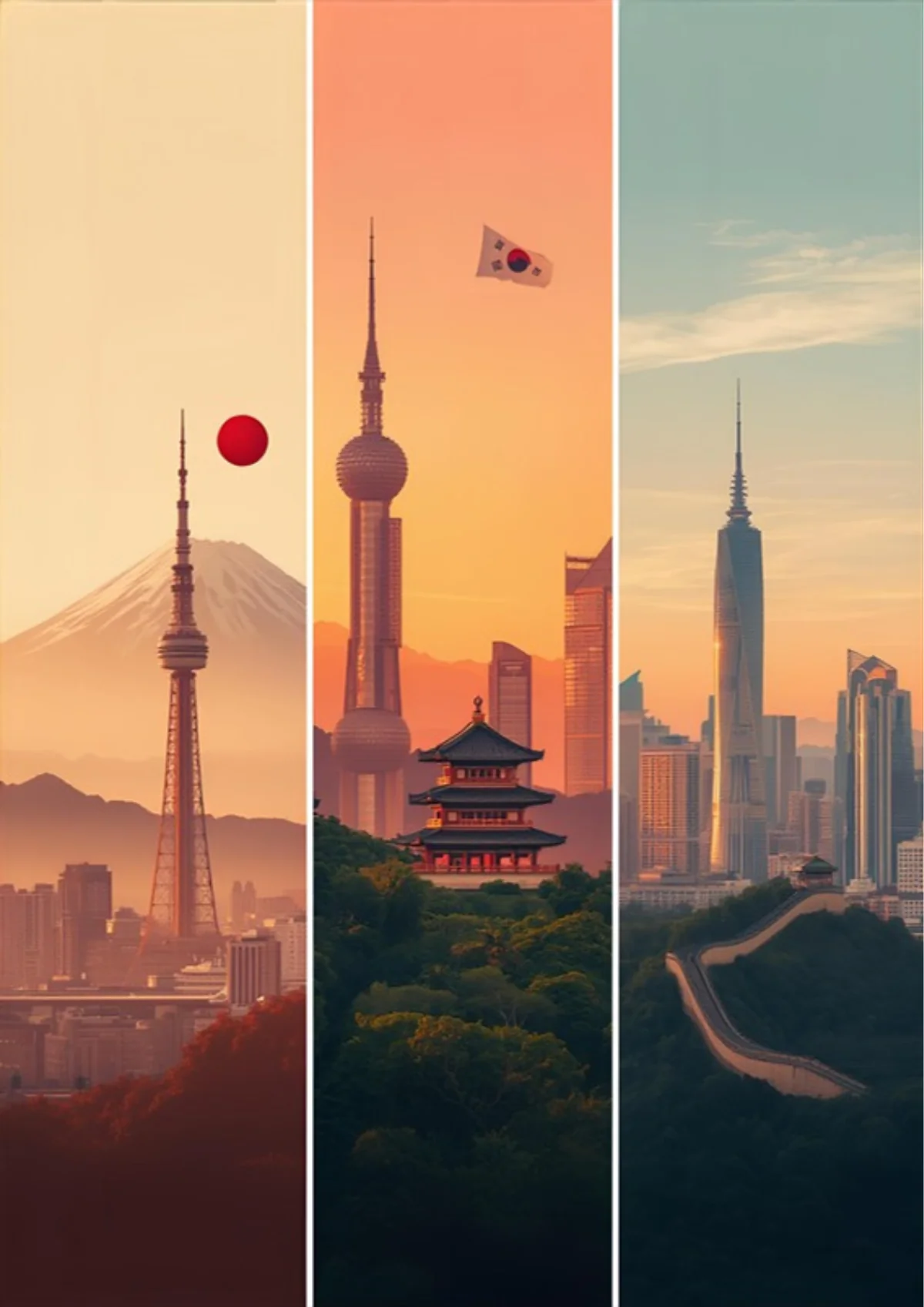
The bottom line is: Japan is the easiest first trip, Korea is the cheapest, and China is the most rewarding if you’re willing to prep. Your budget and comfort with language barriers should decide it.
You’ve cleared two weeks of PTO and the real question hits: Japan, Korea, or China first? After 37 months across all three countries, here’s the honest answer. (see Japan National Tourism Organization (JNTO))
Japan suits first-time visitors with the smoothest logistics and best English signage. South Korea costs 20-30% less and has the strongest food and nightlife scene. China offers the most dramatic sightseeing but requires a VPN, visa planning, and WeChat Pay setup before arrival.
This guide breaks down every factor — cost, food, transport, safety, and culture — with side-by-side comparisons and 2026 prices.
This guide contains affiliate links. If you book through our links, we earn a small commission at no extra cost to you. This helps us keep creating free travel guides.
You’ve cleared two weeks of PTO, the flight alerts finally pinged at $700 round-trip, and now the hard part hits: Japan, Korea, or China? I’ve logged 37 months on the ground across the three—slurping ¥900 bowls of Sapporo miso ramen at 2 a.m., sweating through Chengdu hotpot at a plastic-table joint where the bill came to $6, and singing Seoul karaoke until the subway reopened at 5:30 a.m. Each country is addictive, but they reward different cravings and punish different mistakes. This 2026 guide is the only English comparison written by someone who has missed the last train in all three capitals, queued for Tiananmen sunrise, and been scolded by three generations of Kyoto ryokan owners. If you want the fastest route to the right first choice, keep reading.
📖 How to Use This Guide
Short on time? Jump to The Quick Answer for a snapshot table. Planning a trip? Read the Cost Comparison and Travel Style sections. Thinking about visiting multiple countries? Skip to The Multi-Country Option for routes and budgets.
The bottom line is: Japan is the safest bet for first-time visitors to Asia — it’s the easiest to navigate solo, has the most English signage, and offers the widest range of experiences. Korea is better if you’re budget-conscious or obsessed with food and nightlife. China rewards adventurous travelers with the lowest daily costs and the fewest Western tourists.
Quick answer: Budget per day: China $40–$60, Korea $60–$90, Japan $80–$120. Ease of travel: Japan > Korea > China. Food variety: China > Korea > Japan. Nightlife: Korea > Japan > China.
📊 Quick Stats Comparison
International Tourism (2026)
| Country | Value | Notes |
|---|---|---|
| Japan | 36.8 million | +47% vs 2023 |
| South Korea | 16.3 million | +62% vs 2023 |
| China | 52.0 million | +60% vs 2023 |
Average Daily Budget (USD)
| Country | Value | Notes |
|---|---|---|
| Japan | $120-180 | Mid-range traveler |
| South Korea | $80-130 | Mid-range traveler |
| China | $50-100 | Mid-range traveler |
High-Speed Rail Network
| Country | Value | Notes |
|---|---|---|
| China | 45,000 km | World’s largest HSR network |
| Japan | 3,041 km | Shinkansen – first in world |
| South Korea | 1,102 km | KTX network |
English Proficiency (EF Index 2026)
| Country | Value | Notes |
|---|---|---|
| South Korea | Rank #49 | Moderate proficiency |
| Japan | Rank #92 | Low proficiency |
| China | Rank #82 | Low proficiency |
Safety Index (Numbeo 2026)
| Country | Value | Notes |
|---|---|---|
| Japan | 76.9/100 | 2nd safest in Asia |
| South Korea | 72.3/100 | Very safe |
| China | 67.8/100 | Generally safe |
Average Hotel Prices/Night (USD)
| Country | Value | Notes |
|---|---|---|
| Japan | $85-150 | Business hotel average |
| South Korea | $60-100 | Mid-range hotel |
| China | $40-80 | 4-star hotel average |
Average Meal Costs (USD)
| Country | Value | Notes |
|---|---|---|
| Japan | $8-15 | Casual meal |
| South Korea | $6-12 | Casual meal |
| China | $3-8 | Casual meal |
UNESCO World Heritage Sites
| Country | Value | Notes |
|---|---|---|
| China | 59 sites | 2nd most in world |
| Japan | 26 sites | Cultural & natural |
| South Korea | 16 sites | Mostly cultural |
Mobile Internet Speed (2026)
| Country | Value | Notes |
|---|---|---|
| South Korea | 142 Mbps | World’s fastest 5G |
| Japan | 68 Mbps | Excellent coverage |
| China | 125 Mbps | Widespread 5G |
⚡ The Quick Answer
💰 Cost Comparison: The Real Numbers
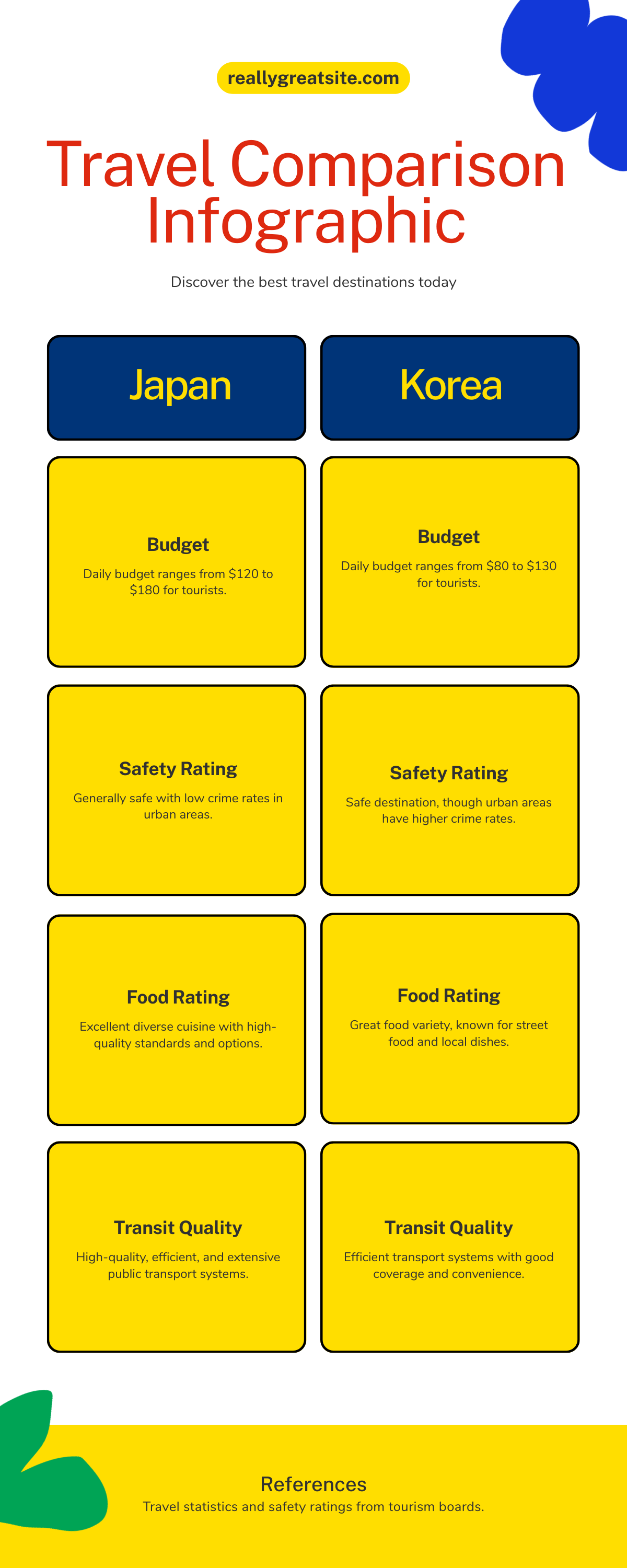
Daily Budget Breakdown
Sample 10-Day Trip Totals (excluding airfare)
- Japan moderate: $1 400 → Tokyo 4 n (business hotel, day trip to Nikko), Kyoto 4 n (ryokan 1 n), Osaka 2 n, activate 7-day JR Pass ($260) for Shinkansen stretch, eat 60 % konbini/chain, 40 % sit-down.
- South Korea moderate: $950 → Seoul 5 n (Hongdae guesthouse), Busan 3 n (Haeundae AirBnB $65/n), day-trip to Jeonju hanok village via KTX, night out in Seomyeon, average meal $7.
- China shoestring + splurge: $650 → Beijing 4 n (hostel $12/n, Mutianyu Great Wall tour), Xi’an 3 n (bullet train, $45, Terracotta + Muslim street snacks), Yangshuo 3 n (bamboo raft + $40 4-star river view), Chengdu 2 n (panda base $12). Mix of $1.5 noodle breakfasts and $12 hotpot blow-outs.
Bottom line: if cash is tight, China gives you 2-3× the days for the same dollars. Korea is the sweet middle. Japan is priciest but the efficiency means you waste zero money on scams or delays.
Let me break down precisely what you’ll spend on the ground in each country, based on my own receipts from 2026 trips.
Accommodation Costs by Category
Japan’s capsule hotels offer a middle ground I often recommend—$30-50 for your own pod with better privacy than dorms. In Korea, love motels (perfectly respectable, despite the name) deliver surprising value at $40-60 with amenities rivaling business hotels. China’s budget tier can be unpredictable; I’ve found $30 hotels in Chengdu that outperformed $80 options in Shanghai.
What You’ll Actually Pay for Food
These aren’t estimates—these are prices from my last visits:
Japan: A satisfying bowl of tonkotsu ramen runs $8-12. Conveyor belt sushi starts at $1 per plate (color-coded pricing), though I typically spend $15-20 for a full meal. Convenience store onigiri at $1.20 each have saved me countless times. The real budget hack: department store basement food halls (depachika) discount prepared foods after 7 PM—I’ve assembled gourmet dinners for under $8.
Korea: Korean BBQ sets you back $12-20 per person, depending on meat quality. Army stew (budae-jjigae) feeds two for $8-12. Street food tteokbokki costs $3-5. My weekly chimaek ritual—fried chicken and beer—runs $12-15 total. Korea offers the best value for eating out; cooking at home rarely saves money.
China: Street food lunches cost $2-5. A full Sichuan meal with multiple dishes might total $6-10. Restaurant prices vary wildly by city—Beijing and Shanghai cost 2-3x what you’ll pay in Chengdu or Xi’an. I tracked $18/day food spending in Sichuan versus $35 in Shanghai for similar meals.
Transportation Costs
Getting around adds up differently in each country. Tokyo’s metro day pass costs about $6, while individual rides run $1.50-3 depending on distance. Seoul’s T-money card charges roughly $1.30 per ride with free transfers within 30 minutes. Beijing’s subway remains absurdly cheap at $0.50-1 per ride regardless of distance.
For intercity travel, Japan’s Shinkansen tickets (Tokyo-Kyoto ~$100) dwarf Korea’s KTX (Seoul-Busan ~$45) and China’s high-speed rail (Beijing-Shanghai ~$85). Factor this into your route planning—it often determines whether a rail pass makes financial sense.
Money-Saving Strategies That Actually Work
Japan: Convenience store meals aren’t surrender—they’re genuinely good. Download the Point app for restaurant discounts. Avoid taxis entirely; the train system reaches everywhere. Stay in business hotels rather than international chains—their ¥6,000-8,000 rates include excellent breakfasts.
Korea: T-money cards offer transfer discounts. Street food replaces restaurant meals without sacrifice. Accommodation in university neighborhoods (Hongdae, Sinchon) costs less than Gangnam with better nightlife. The KORAIL pass rarely pays off unless you’re doing extreme distances.
China: Always ask for the local price menu at restaurants—many maintain dual pricing. Didi (ride-hailing) costs fractions of taxi meters. High-speed rail “second class” is perfectly comfortable; don’t upgrade. Free walking tours in major cities provide orientation without the group tour trap.
🍜 Food: The Honest Showdown
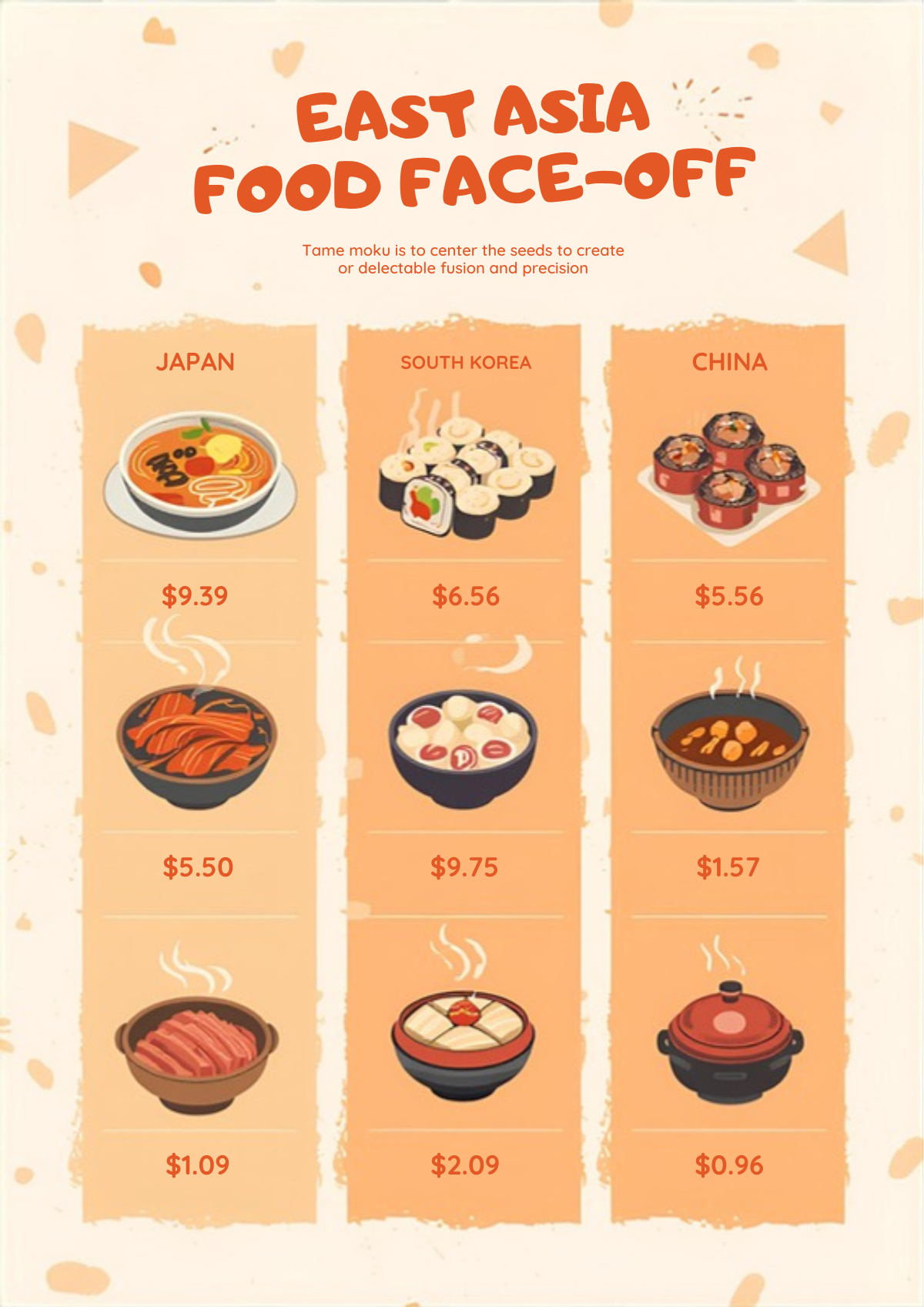
Japan – Precision & Seasonality
I’ve stood at 5 a.m. outside Sukiyabashi Jiro’s successor, paid $300 for 20 perfect bites, and still swear the $7 takeaway sashimi pack at Lawson is 8/10 quality. Ramen alone can anchor a trip: rich Sapporo miso, light Tokyo shoyu, peppery Hakata tonkotsu—every prefecture a new broth. Izakaya culture means you can order by pointing at plastic models; even solo diners feel welcome. Convenience stores are micro-restaurants: fried karaage, seasonal strawberry sandwiches, canned highballs. The only downside: cost climbs fast if you insist on Michelin every meal.
South Korea – Social Fire & Late-Night Delivery
You haven’t lived until a 2 a.m. fried-chicken-and-beer delivery arrives at your Seoul hostel door, still crackling. Korean meals are built for groups: Samgyeopsal pork on a tabletop grill, lettuce wraps, soju shots poured by new friends. Street food markets—Gwangjang for mung-bean pancakes, Myeongdong for tornado potatoes—stay buzzing past midnight. Banchan (free side dishes) keeps refilling, so $8 can stuff you. The spice level is real; ask for “mild” and you’ll still sweat.
China – 8 Great Cuisines, Infinite Corners
One week in Sichuan numbed my lips with peppercorn; the next I was dipping delicate Cantonese shrimp dumplings in Guangzhou tea halls for $3 a basket. In Xi’an, hand-pulled biang-biang noodles stretch longer than your arm; in Kashgar, lamb skewers sizzle over charcoal for 30 ¢ each. The variety per mile is unmatched: you can breakfast on soup dumplings, lunch on Kung-pao chicken, and dinner on yak-butter hotpot 500 km away. Hygiene standards vary—stick to busy stalls, use translation apps for ingredients, and you’ll eat like royalty for under $15 a day.
Verdict
- Best single high-end meal: Japan (kaiseki or omakase).
- Most fun communal eating: Korea (BBQ + soju bombs).
- Highest flavor-to-dollar ratio: China (especially interior provinces).
Food isn’t just sustenance in these countries—it’s the primary reason I return. Here’s what eating actually looks like on the ground.
Japan: Precision on Every Plate
I still remember my first conveyor belt sushi experience in Osaka: plates gliding past, each color indicating price (yellow ¥100, red ¥180, black ¥380). I ate until satisfied for $12. This isn’t compromise sushi—it’s prepared by chefs in open kitchens, often with fish from the same markets supplying Michelin restaurants.
Ramen culture demands its own vocabulary. Tonkotsu (pork bone) broths dominate Kyushu; miso-based bowls rule Hokkaido. My standard order—chashu-men with extra noodles—runs ¥1,200-1,800 ($8-12). The ticket machine outside removes language barriers: insert cash, press photo, receive ticket, hand to staff.
Convenience store onigiri at ¥180 ($1.20) sustained me through three weeks of rural cycling. Lawson, 7-Eleven, and FamilyMart compete fiercely on quality—heated fried chicken (karaage-kun), salmon onigiri, and egg salad sandwiches that put American equivalents to shame.
Depachika basement food halls represent Japan’s edible obsession. Ikebukuro’s Seibu, Tokyo’s Takashimaya—these underground markets display hundreds of prepared foods. Arrive after 7 PM for 30-50% discounts. I’ve assembled bento combinations of grilled fish, pickled vegetables, and wagashi sweets for under $8 that would cost $40 in restaurants.
Dietary notes: Vegetarians face challenges—dashi (fish stock) permeates everything. Vegan options expand in Tokyo and Kyoto, but rural travel requires preparation. Allergy awareness is excellent; restaurants provide detailed ingredient lists upon request.
Korea: Communal Heat and Comfort
Korean food rewards the adventurous. Army stew (budae-jjigae, $8-12) originated from post-war scarcity—Spam, hot dogs, and instant noodles simmered with kimchi and gochujang. It shouldn’t work, yet I’ve craved it on cold Seoul nights more than any refined cuisine.
Tteokbokki (spicy rice cakes, $3-5) appears at every street corner. The best versions come from ajummas who’ve operated the same cart for decades. Gwangjang Market (광장시장) offers the ultimate concentration—bindaetteok (mung bean pancakes), live octopus, and blood sausage in chaotic abundance. I budget $10 and leave stuffed.
Chimaek—fried chicken and beer—deserves its cultural status. Two chains dominate: Kyochon (crispy, soy-garlic glaze) and BHC (cheese powder coating). A whole chicken plus beer costs $12-15. Koreans take it seriously; I’ve seen delivery scooters with heated boxes maintaining optimal crispiness.
Korean BBQ operates on a different rhythm than Japanese yakiniku. You control the grill while drinking soju. All-you-can-eat options start at $15, though premium hanwoo beef runs $40+. The banchan side dishes—kimchi variations, pickled radish, bean sprouts—refill endlessly.
Dietary notes: Buddhist temple cuisine (sachal eumsik) provides excellent vegan options, particularly in temple stay programs. Halal restaurants cluster around Itaewon and Dongdaemun. Seafood allergies require vigilance—fish sauce and shrimp paste hide in unexpected dishes.
China: Regional Complexity Worth Years
Chinese cuisine defies generalization. Sichuan’s mapo tofu ($3-5) numbs with Sichuan peppercorns while warming with chili oil—the ma la sensation that hooked me immediately. Cantonese dim sum ($8-15) demands weekend mornings: har gow, siu mai, char siu bao, eaten from rolling carts. I’ve spent three hours at Lung King Heen in Hong Kong and $12 at Guangzhou’s Panxi—both transcendent.
Beijing duck ($15-25) requires strategy. Reserve at Da Dong or Siji Minfu, or queue at local favorites. The ritual matters: crispy skin dipped in sugar, meat wrapped in pancakes with hoisin and cucumber, carcass simmered into soup.
Xi’an’s biang biang noodles ($2-3) stretch arm-length, tossed with chili oil and vinegar. The character for “biang” requires 58 strokes—appropriately complex for something so satisfying. Muslim Quarter street food extends late into night: lamb skewers, pomegranate juice, persimmon cakes.
I’ve eaten better for less in China than anywhere else. Chengdu’s hole-in-the-wall hotpot ($6 per person), Shanghai’s soup dumplings ($4 for eight), Harbin’s Russian-influenced bread and sausage—the range exhausts and exhilarates.
Dietary notes: Vegetarian Buddhism (sù) is understood nationwide, though cross-contamination occurs. Halal restaurants (marked 清真) are common in western regions and major cities. Dairy intolerance is prevalent; milk products appear rarely outside Mongolian-influenced cuisines. (see Official Japan Rail Pass)
🚄 Ease of Travel
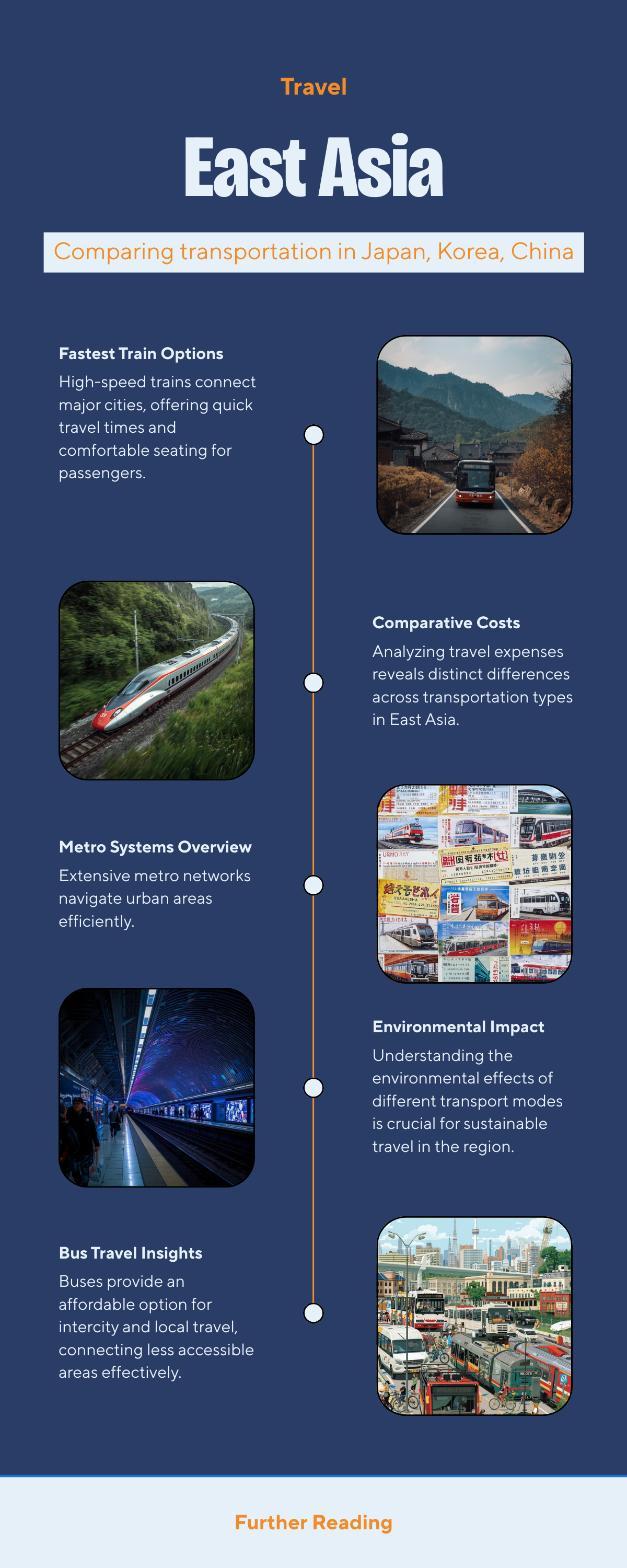
Getting Around
Japan: Buy a JR Pass before the 2026 price hike (7-day ordinary now $260). Shinkansen speeds hit 320 km/h, seats reserved in English. City metros are silent, clean, and signed in romaji. Only snag: rural buses taper after 8 p.m.
South Korea: KTX trains Seoul-Busan in 2 h 15 min ($56). Seoul’s metro is denser than Tokyo’s, with free Wi-Fi and platform screen doors. Taxis are cheap—$12 cross-town at midnight.
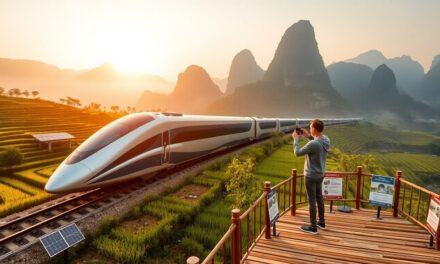
China: The 40 000 km high-speed network is the planet’s largest. Book via Trip.com or station kiosks; copy names in Chinese. Guide here. City metros are modern but expect security x-ray at every entrance. rush-hour queues dwarf Tokyo.
Language Barrier
In Japan, I’ve had entire conversations using bowing and pointing. Pictogram signage is world-class; Google Translate camera decodes menus. Korea blends English loanwords—“coffee,” “ticket”—so survival is easier. China is the steepest: taxi drivers rarely speak English, Didi app needs Chinese text, and hotel addresses must be shown in characters. Download WeChat & Alipay before arrival; life is impossible without them.
Visa Requirements 2026
How you move determines what you see. Each country has engineered radically different solutions to the same problem of moving millions efficiently.
Japan: The Gold Standard
I arrived in Tokyo convinced I’d need the JR Pass. After mapping my actual itinerary—Tokyo base with regional day trips—I bought a Suica IC card instead. The calculus is simple: the 7-day pass costs ~$280. You need roughly $40/day in Shinkansen travel to break even. Most travelers don’t.
The IC card system (Suica, PASMO, ICOCA—all interoperable) transforms movement. Tap in, tap out, automatic fare calculation. It works on trains, buses, convenience stores, even some vending machines. I keep ¥5,000 loaded and rarely think about transportation.
The Shinkansen justifies its reputation. Tokyo to Kyoto in 2 hours 15 minutes—I’ve done this run a dozen times, and the punctuality still astonishes me. The average delay is under one minute. Reserved seats ($10 extra) guarantee window views of Fuji on clear days.
Last train culture shapes Japanese nightlife. Subways stop around midnight; missing it means expensive taxi rides or waiting until 5 AM first trains. I’ve watched entire bars empty at 11:30 PM as patrons rush for connections. Plan accordingly, or embrace the capsule hotel option near your evening location.
For detailed pass calculations, see my JR Pass guide.
Korea: Efficiency Without Friction
Korea’s T-money card functions identically to Japan’s IC system—tap and go across Seoul, Busan, and other cities. The critical difference: transfers. Within 30 minutes of exiting, your next ride receives discount pricing. I’ve crossed Seoul for under $2 using this.
The KTX high-speed rail connects Seoul to Busan in 2.5 hours for ~$45. I prefer the standing-room “standing seats” for short hops—they’re cheaper and you can stretch. The SRT (Super Rapid Train) offers identical speeds with newer carriages and slightly lower prices on some routes.
Airport buses deserve special mention. For $10-15, comfortable coaches connect Incheon to virtually any Seoul neighborhood with luggage storage and WiFi. I’ve taken the 6701 to Gangnam at 2 AM after delayed arrivals—reliable when trains have stopped.
Taxis remain affordable. A cross-Seoul trip costs $15-20 versus Tokyo’s $50+. Uber exists but Korean apps (Kakao T) offer better pricing and driver acceptance.
China: Scale and Speed
China operates the world’s largest high-speed rail network—over 40,000 kilometers. The Beijing-Shanghai corridor (4.5 hours, ~$85) moves more passengers annually than all domestic US flights combined. I’ve watched countryside blur past at 350 km/h while eating $3 box lunches.
Booking requires strategy. The 12306 app and website (Chinese ID required for foreigners) release tickets 30 days ahead. Popular routes sell out instantly—I missed Spring Festival travel by hours and paid triple for flights. Station counters work with passports but queue endlessly.
Every Chinese city I’ve visited has extensive metro systems. Beijing’s reaches 27 lines; Shanghai’s, 20. Fares start at ¥3 ($0.50) regardless of distance. Signage includes English; navigation apps (Baidu Maps, Amap) handle Chinese addresses better than Google.
DiDi dominates ground transport. The app accepts foreign credit cards and offers English interfaces. Rides cost 30-50% less than street taxis, with price estimates before booking. I’ve used DiDi in 15 Chinese cities without issues—though drivers sometimes call to confirm location in rapid Chinese.
For booking strategies and route recommendations, consult my China bullet train guide.
🎯 Which Country for Your Travel Style?
First-Time Asia Traveler
Start with Japan if you crave predictability: spotless toilets, quiet queues, and zero haggling. Start with Korea if you want nightlife plus easy English. Skip China for a debut unless you’re adventurous—visa hoops and translation needs can spook newbies.
Budget Backpacker
China first: $20 dorm beds, $1 noodle soups, 50 ¥ beers. Add Korea second—ferry from Tianjin to Incheon costs $90 and you’ll appreciate the upgrade. Japan last, when your tolerance for $8 vending-machine coffees is higher.
Foodie
Can’t pick? Do Korea → Japan → China in that order; your spice tolerance and price ceiling expand progressively. Vegetarians survive best in Japan (shojin ryori temples). Carnivores should book China immediately.
History & Culture Buff
China wins on sheer timeline: 5 000 years, 52 UNESCO sites. Japan offers living tradition—monks chanting in 1 200-year-old Kyoto temples you can sleep beside. Korea’s Joseon palaces sit inside modern cities, perfect if you like your history walkable.
Couples & Honeymoons
Japan for ryokan + private onsen under maple leaves. Korea for matching couple outfits in Myeongdong and sunset rail-bike on Ganghwa Island. China for karst-river sunsets in Yangshuo and $40 spa hotels that feel like royalty.
Solo Travelers
Korea is the most social—hostels organize pub crawls, Korean BBQ tables merge strangers. Japan is safest but can feel isolating; capsule hotels are silent. China requires more prep but hostel staff will escort you to the police station for registration and become instant friends.
Adventure Seekers
Trek Tiger Leaping Gorge, cycle 1 200 km from Chengdu to Lhasa, or sand-board Dunhuang dunes—China dwarfs the others. Korea offers Jeju’s Olle trails; Japan has the 88-temple pilgrimage—both stunning but gentler.
K-Pop & Pop-Culture Fans
Book Seoul during Music Bank recordings (free tickets via website lottery), hit HYBE Insight museum, and dance till 6 a.m. in Gangnam. Add a DMZ tour for bragging rights. Japan’s anime mecca is Nakano Broadway and Tokyo’s Odaiba teamLab; China’s pop scene is mostly local-language, so Korea wins for global fans.
Your travel identity matters more than passport stamps. Here’s how each country responds to specific needs I’ve observed over years of visiting.
First-Time Asia Traveler
Japan has the gentlest learning curve. Everything just works. Signage appears in English automatically. Staff apologize for problems they didn’t cause. The cultural barrier dissolves through sheer operational competence.
I recommend this sequence: Tokyo (4 days) for urban orientation, Kyoto (3 days) for traditional culture, with day trips to Nara or Hakone. The Japan Rail Pass decision becomes irrelevant with this limited geography—individual tickets suffice. Stay in Shinjuku or Shibuya; the density of English-speaking resources helps enormously.
Korea follows naturally as a second trip. Similar convenience, slightly less English infrastructure, more affordable mistakes. China rewards experience—attempt it first and you might not return to Asia.
Budget Backpacker
China wins decisively on daily costs. My actual spending in Sichuan: $32/day including accommodation, food, transport, and attractions. This breaks down as $10 hostel, $12 food, $5 transport, $5 activities. Shanghai or Beijing push this to $50-60; rural provinces drop below $25.
Korea offers middle-ground sustainability. Seoul hostels at $18, food at $15/day, transport minimal with T-money. I survived comfortably on $40/day, splurging occasionally on BBQ.
Japan requires discipline. My cheapest sustainable trip ran $65/day: capsule hotels ($35), convenience store meals ($20), walking instead of trains. The $100/day “comfortable budget” allows actual restaurants and occasional taxis.
History and Culture Enthusiast
The numbers tell part of the story. China claims 57 UNESCO World Heritage sites, Japan 25, Korea 16. But density and accessibility matter more than totals.
Japan’s cultural preservation impresses through intentionality. Kyoto’s 1,600 temples include 17 UNESCO sites within bicycle range. Nara’s Todai-ji has operated continuously since 752 CE. I spent a week in Kansai without exhausting significant sites.
China’s historical depth overwhelms. The Forbidden City, Terracotta Army, Great Wall sections, Mogao Caves—each demands days. The challenge is crowds and distance. I’ve had sublime moments at obscure Shanxi temples where I was the only visitor, then endured shoulder-to-shoulder shuffling at the Temple of Heaven.
Korea punches above its weight. Gyeongju’s concentration of Silla dynasty tombs, temples, and museums rivals Kyoto with fraction of visitors. Joseon dynasty palaces in Seoul offer changing-of-guard ceremonies and hanbok rental for immersive history. The DMZ tour provides irreplaceable contemporary political context. (see JR East)
Solo Female Traveler
Safety statistics favor all three countries over most Western alternatives. Japan reports the lowest sexual assault rates among developed nations. Korea’s violent crime rates similarly minimize. China’s statistics are less transparent, but my female travel companions report minimal harassment compared to Europe or South America.
Cultural considerations vary. Japan’s chikan (groping) on crowded trains prompted women-only cars during rush hour—use them. Korea’s drinking culture can pressure solo women in restaurants; counter-seating at BBQ places reduces interaction. China’s street harassment is more verbal than physical; ignoring advances usually suffices.
Accommodation strategies: Japan’s women-only capsule hotels and floors provide comfort. Korea’s love motels accept solo women without judgment. China’s hostels increasingly offer female dorms.
For visa requirements affecting solo travelers, check my Korea visa guide.
Tech and Modernity Seeker
Korea satisfies most completely. Seoul’s 5G coverage, smartphone integration, and futuristic architecture (Dongdaemun Design Plaza (동대문디자인플라자), Lotte World Tower) deliver cyberpunk aesthetics with functional convenience. PC bangs (gaming cafes) operate 24 hours for $1/hour.
Japan offers technological subtlety— toilets with more buttons than my phone, vending machines for everything, customer service automation that actually helps. Less flashy, more integrated.
China’s digital ecosystem requires adaptation. Cashless society dominance means foreign cards often fail. WeChat Pay and Alipay demand Chinese bank accounts or increasingly available tourist versions. The Great Firewall blocks familiar services—preparation essential. See my China digital survival guide.
🌏 The Multi-Country Option
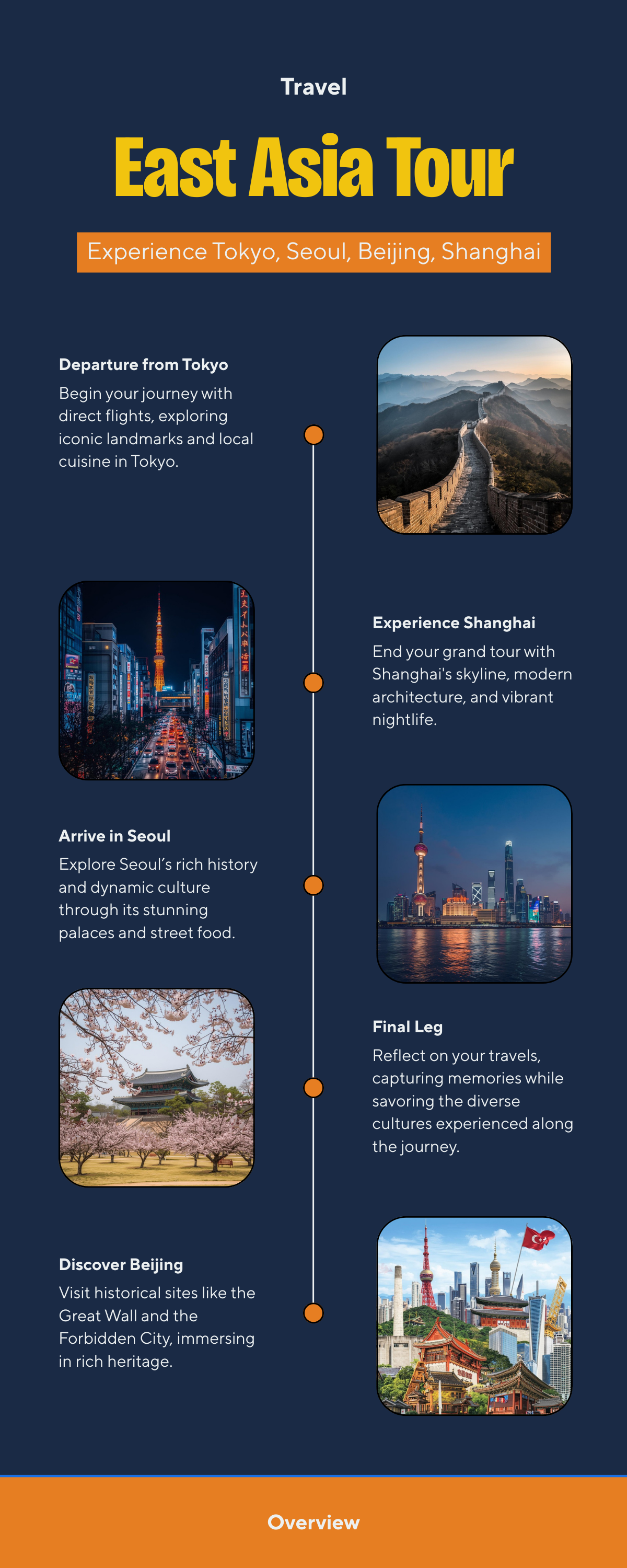
Japan + Korea Combo (14 days)
Fly into Tokyo (deal hub), 7 days across capital + Kyoto. Activate 7-day JR Pass, fly Seoul-Gimpo on Peach or Jeju Air ($90) or ferry Sakaiminato-Donghae ($195 with bed) for adventure. 7 days Seoul, Busan, and Jeju. Budget: $2 000 moderate, $1 300 backpacker.
Korea + China Combo (14 days)
Start Seoul 4 days, KTX to Busan 2 days, fly Busan-Qingdao $70 (no visa 144 h), train to Beijing 3 days, overnight soft-sleeper to Xi’an 2 days, fly Xi’an-Shanghai 3 days. Budget: $1 400 moderate, $900 backpacker.
Grand East Asia Tour (24 days)
Tokyo 5 → Kyoto 4 → Osaka 2 → fly Osaka-Seoul 5 → Busan 2 → ferry or fly to Qingdao → Beijing 3 → Xi’an 2 → Shanghai 3. Total surface travel $550, flights $280. Moderate budget $3 300, shoestring $2 000. Visas: JR Pass, K-ETA, China 144-hour transit TWOV if you keep it under 6 days on the mainland.
Combining these countries transforms separate trips into genuine exploration of East Asian civilization. The logistics are more manageable than they appear.
Flight Connections
Geography favors triangular routing. Tokyo-Seoul flights run 2.5 hours with competition from JAL, ANA, Korean Air, and budget carriers. Seoul-Beijing takes 2 hours; Tokyo-Shanghai, 3 hours. I’ve paid $80 for Tokyo-Seoul on Peach Aviation, $120 Seoul-Beijing on Spring Airlines.
Routing strategy matters. Tokyo-Seoul-Beijing-Tokyo creates efficient loops. Open-jaw tickets (arrive Tokyo, depart Beijing) reduce backtracking. I saved $400 and three days by flying home from Shanghai rather than returning to Tokyo.
Budget Airline Reality
Peach, Jetstar Japan, and Spring Japan connect Tokyo-Osaka-Fukuoka domestically with international extension. Jin Air, T’way, and Air Busan dominate Korea-Japan routes with $50-100 fares. China’s Spring Airlines and Lucky Air offer unpredictable reliability—I’ve experienced 6-hour delays without compensation.
Luggage restrictions punish unprepared travelers. Peach allows 7kg carry-on only; checked bags cost $30-50 each segment. I travel with 40L backpacks to avoid fees and airport delays.
Ferry Alternatives
The Busan-Fukuoka ferry (3 hours, $60-80) offers genuine appeal. I took the Beetle hydrofoil in March—customs in both directions, but no airport security theater. Arrive in Fukuoka’s city center rather than distant airports. The Camellia Line overnight ferry (slower, cheaper, with sleeping berths) suits relaxed schedules.
Shanghai-Osaka and Tianjin-Kobe ferries exist but run infrequently. I’ve never found the time savings worth the scheduling constraints versus flying.
Sample Budget: Three-Week Grand Tour
My actual spending on Tokyo-Seoul-Beijing-Shanghai (21 days):
- Flights between countries: $340 (Peach + Jin Air + Spring)
- Intra-country transport: $580 (JR Pass 7-day, KTX, China HSR)
- Accommodation: $720 (mix of hostels, business hotels, one splurge)
- Food: $510 ($24/day average—higher in Japan, lower in China)
- Activities and attractions: $280
- Miscellaneous: $150
Total: $2,580. Comfortable version with better hotels and restaurants: $3,800. This excludes initial international flights.
Visa Complexity
Japan and Korea offer visa-free entry for most Western passports (90 days and 30-90 days respectively). China requires advance visas for almost everyone—apply 1-2 months ahead, with precise itinerary documentation.
Multi-country sequencing affects planning. I obtain my China visa first, as it requires the most documentation. Korea’s K-ETA (electronic authorization) takes 24 hours. Japan needs nothing beyond a valid passport.
Transit without visa programs help. China offers 144-hour visa-free transit in major cities—I’ve used this for Beijing stopovers without full visa applications. Korea allows 30-day visa-free transit for continuing to third countries.
Digital preparation for China is non-negotiable. VPN installation before arrival, payment app setup, and offline map downloads prevent isolation. My China digital survival guide covers essential preparation.
📋 Practical Comparison Table
❓ Frequently Asked Questions
Is Japan or Korea cheaper to visit?
Across 10 days Korea averages $500 less than Japan for mid-range travelers, mainly because accommodation and meals run 30-40 % lower. See the daily table above for exact numbers.
Can you visit Japan and Korea in one trip?
Yes—budget 14 days minimum. Fly open-jaw into Tokyo, out of Seoul; low-cost carriers Peach/Jeju Air link Osaka-Seoul for under $100. Ferries from Shimonoseki to Busan start at $190 with dorm beds.
Which East Asian country is safest for solo female travelers?
Japan and Korea tie: violent crime near zero, lit streets, women-only train cars at rush hour. China is safe too, but night taxis require more vigilance—use Didi’s women-only carpool after 10 p.m.
Do I need a visa for Japan, Korea, and China?
US/Canada/UK citizens get 90 days visa-free in Japan, 90 days with K-ETA ($7) for Korea, and must secure a Chinese L visa ($140) or use 144-hour transit without visa if staying within allowed zones.
Which country has the best street food?
China wins on price and variety—$1 lamb skewers in Xi’an, 50 ¢ stinky tofu in Taipei-night-market-style lanes. Korea is runner-up for late-night tteokbokki culture. Japan’s street scene is smaller; even Osaka’s Dotonbori is mostly sit-down stalls.
Is China worth visiting despite the language barrier?
Absolutely. Install Baidu Translate camera, preload addresses in Chinese, and the payoff is massive: $30 five-star hotels, empty sections of wild Great Wall, and dishes you’ll never find elsewhere. The barrier is real but surmountable.
How many days do I need in each country?
Minimums: Japan 10 (Tokyo-Kyoto-Osaka), Korea 7 (Seoul-Busan-Jeju), China 12 (Beijing-Xi’an-Shanghai). Add 3-5 days per extra region—Hokkaido, Jeju, Yunnan.
Can I use my phone in China?
Only if you enable international roaming before arrival; Google-Fi and T-Mobile roam on China Unicom but still need a VPN. Cheaper: buy China Unicom 50 GB eSIM ($25) plus VPN subscription ($6) before landing.
Which country is best for cherry blossom season?
Japan’s hanami is iconic—预测 bloom dates released Jan 2026, peak Kyoto Apr 1-7. Korea’s yeoudeok blossoms follow one week later and crowds are thinner. China’s cherry parks in Wuhan bloom late March but lack festival culture.
Should I visit Japan or Korea for anime and pop culture?
Anime pilgrimage = Japan: Nakano Broadway, Odaiba Gundam, Nara’s itasha taxis. For K-pop and dramas = Korea: HYBE Insight, Gangnam COEX K-pop square, drama filming tours in Petite France. Do both if you can swing the multi-country route.
🏆 Final Verdict
Visit Japan first if…
- You want a frictionless intro to Asia—clean, quiet, everything on time.
- Sakura or autumn foliage is on your bucket list.
- You can stomach $150/day for a once-in-a-lifetime standard of service.
Visit Korea first if…
- You crave 24-hour cities + K-culture but still need English signage.
- Your budget tops out at $100/day yet you want developed-world comfort.
- You love social eating, nightlife, and don’t want to navigate a visa.
Visit China first if…
- You’re a value maximalist—$50/day for 5 000 years of history.
- You want adventure on a continental scale—deserts, karst, Tibetan Plateau.
- You’re tech-savvy enough to set up WeChat and enjoy the challenge.
Can’t decide? Start with Korea. It’s the mildest culture shock, cheapest flight, and offers a bridge between Japanese polish and Chinese scale—then you’ll know which direction to head next.
Whichever country you choose, we’ve got detailed guides to help you plan. Check out our Japan Travel Guide 2026, South Korea Travel Guide 2026, and China Travel Guide 2026 for step-by-step itineraries, rail pass hacks, and the best street-food alleys only locals know. Happy wandering—and may your chopsticks never splinter.
🇯🇵 Visit Japan First If…
- You want the smoothest first-time Asia experience
- You’re a foodie who prizes precision and quality
- You love temples, gardens, and seasonal beauty
🇰🇷 Visit Korea First If…
- You’re into K-pop, K-drama, or modern pop culture
- You want great food and nightlife at lower prices than Japan
- You’re a solo traveler who loves social, energetic cities
🇨🇳 Visit China First If…
- You want the biggest adventure and culture shock
- Your budget matters — you’ll get 2-3x more for your money
- You crave mind-blowing scale (Great Wall, terracotta warriors, megacities)
Can’t decide? Start with Japan — it has the gentlest learning curve, the most reliable infrastructure, and you’ll fall in love with Asia before tackling China’s beautiful chaos.
Ready to Plan Your East Asia Adventure?
We’ve got in-depth guides for each country to help you plan the perfect trip:
Related Reading
More on Transportation:

Written by East Asia Explorer Editorial Team
Sam Konneh is an AI strategist and digital marketer based in Seoul, South Korea. With years spent living, working, and exploring across Korea, Japan, and China, he shares firsthand insights into East Asia's cultures, hidden gems, and everyday life. A graduate of Inha University and KDI Graduate School, Sam combines data-driven expertise with on-the-ground experience. His journey also includes studying in Malaysia and traveling through Southeast Asia. Through practical tips, local stories, and travel guides, he helps fellow explorers discover both the celebrated highlights and the lesser-known corners of East Asia.