Last Updated: September 12, 2026 | Originally Published: July 12, 2026
- Tteokbokki (spicy rice cakes) and eomuk (fish cake skewers) are the cheapest and most ubiquitous — both under ₩2,000 as of 2026.
- Gwangjang Market is the best single destination: mayak gimbap, bindaetteok, and kalguksu all in one covered market in Jongno-gu.
- Myeongdong street food has shifted to tourist-facing items (tornado potatoes, cheese corn dogs) — still fun, but less authentic than Namdaemun or Hongdae.
- Carry cash in small bills (₩1,000 and ₩5,000 notes) — many pojangmacha tent stalls do not accept cards, especially after midnight in Hongdae.
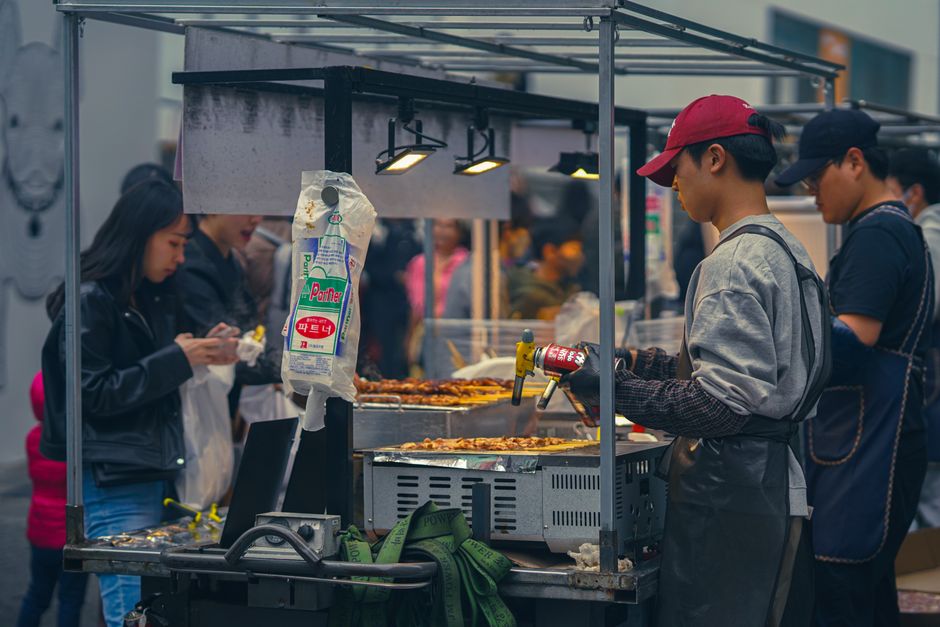
The first time I bought eomuk from a street cart outside Gyeongbokgung Palace, the vendor handed me a skewer and gestured toward a pot of free broth to drink alongside it. I did not ask for it. That is just how it works.
Korean street food is not just about eating quickly. It is part of how people move through the city — grabbing tteokbokki between subway stops, arguing about which hotteok stall near Namdaemun Gate 6 is better, sitting at a pojangmacha tent until 2 AM over soju and grilled mackerel.
This guide covers 20 dishes with real 2026 prices, exactly where to find the best versions in Seoul, and a few honest notes on what to skip.
The Core Five: What Everyone Eats First
1. Tteokbokki (떡볶이) — Spicy Rice Cakes
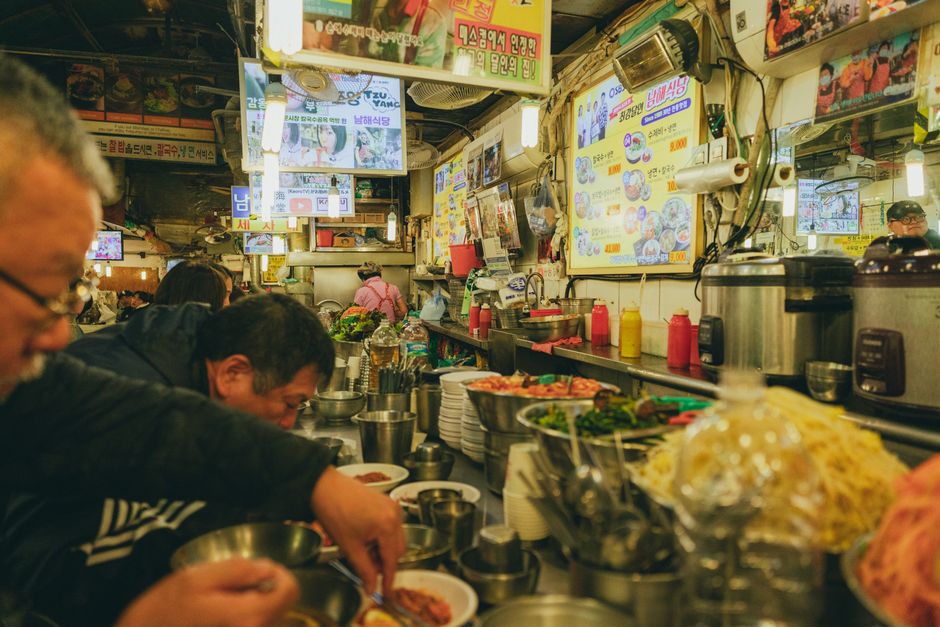
Thick, chewy rice cake cylinders simmered in gochujang sauce with fish cakes and sometimes ramen noodles added in. The sauce is sweet, spicy, and slightly fermented in a way that becomes immediately addictive.
Prices range from ₩2,000 for a small cup to ₩5,000 for a full portion as of 2026. The Sindang-dong Tteokbokki Town, just outside Sindang Station on Lines 2 and 5, has multiple restaurants that invented the modern style.
Ask for “로제 떡볶이” (rose tteokbokki) at newer vendors in Seongsu and Insadong — the 2026 trend version made with cream and gochujang together, much milder and richer. Around ₩5,000–₩7,000.
2. Eomuk / Odeng (어묵) — Fish Cake on a Skewer
Processed fish cake pressed onto a skewer and simmered in mild anchovy-kelp broth. It looks like an afterthought but the broth is what makes it — warm, slightly salty, free to drink from paper cups at most stalls.
Each skewer costs ₩500 as of 2026. You will find eomuk carts outside almost every subway station entrance from October through March. In summer they are less common but still present near markets.
3. Hotteok (호떡) — Sweet Filled Pancakes
Yeasted dough pressed flat on a griddle, filled with brown sugar, cinnamon, and crushed peanuts or sunflower seeds that melt into a liquid caramel center.
Wait at least 30 seconds before biting in. The sugar inside is molten and will burn the roof of your mouth — I learned this at a Namdaemun stall on my first visit and have not forgotten it. Price: ₩1,500–₩2,000 per piece.
The stalls near Gate 6 of Namdaemun Market are generally considered the Seoul standard for hotteok. Arrive before noon; they sell out by early afternoon on weekends.
4. Dakkochi (닭꼬치) — Grilled Chicken Skewers
Bite-sized chicken pieces threaded on wooden skewers, grilled over charcoal and painted with either sweet soy glaze or spicy gochujang sauce. Sold at dedicated dakkochi stalls and pojangmacha tents.
Each stick costs approximately ₩500 as of 2026. You can usually buy 3–4 for a light snack. Hongdae’s main walking street has multiple competing stalls; the charcoal smoke is how you find them.
5. Bungeoppang (붕어빵) — Fish-Shaped Pastry
Waffle-press pastry shaped like a carp, filled with sweet red bean paste (팥) or — increasingly — custard cream or pizza filling. A cold-weather staple that disappears in summer and resurfaces in October.
Traditional vendors sold them three for ₩2,000 for years. Prices have climbed in central Seoul — some Myeongdong vendors now charge ₩1,000 per piece. At Hongdae and Insadong you will still find the better value.
Market Destinations: Where to Go Beyond the Cart
Gwangjang Market (광장시장)
Gwangjang Market opened in 1905 and is the oldest continuously operating traditional market in Korea. It sits 1.8 kilometers east of Gyeongbokgung Palace in Jongno-gu — exit 8 of Jongno 5-ga Station on Line 1.
The covered food hall runs the full center of the market. Go hungry, go in the late morning before the lunch rush, and bring cash.
| Dish | Price (2026) | Best Stall Area |
|---|---|---|
| Mayak Gimbap | ₩3,000 for 10 pieces | Center hall, east side |
| Bindaetteok | ₩5,000 per pancake | Center hall, ajumma stalls |
| Kalguksu | ₩9,000–₩12,000 per bowl | Fabric section upper level |
| Suyuk (boiled pork) | ₩15,000 per plate | Left entrance near main gate |
6. Mayak Gimbap (마약 김밥) — Addictive Mini Rice Rolls
“Mayak” means narcotic in Korean — the name is a joke about how impossible these are to stop eating. Thumb-sized rice rolls with yellow pickled radish, seasoned rice, and sesame, served with a mustard-soy dipping sauce.
₩3,000 for ten pieces as of 2026. The ajummas at Gwangjang Market’s center hall have been making these for decades. Order two portions before sitting down — one is never enough.
7. Bindaetteok (빈대떡) — Mung Bean Pancake
Thick savory pancakes made from ground mung beans, kimchi, pork, and bean sprouts, fried in oil until the exterior is shatteringly crispy while the inside stays dense and slightly gritty in a satisfying way.
₩5,000 per pancake at Gwangjang Market as of 2026. Eat immediately — bindaetteok gets soggy quickly once it cools. Do not photograph this dish extensively before eating.
At Gwangjang, sit down at a stall table rather than taking food away — you will get complimentary kimchi and dipping sauces. The covered market is open daily 9 AM to 6 PM, with food vendors active until around 5 PM.
8. Kalguksu (칼국수) — Knife-Cut Noodle Soup
Hand-rolled wheat dough cut with a knife (not extruded) into irregular, slightly thick noodles served in a mild anchovy-kelp broth. It is filling, warming, and resolutely unsexy — exactly what you want after a cold morning in a market.
₩9,000–₩12,000 per bowl at Gwangjang as of 2026. The upper level near the fabric section has several dedicated kalguksu restaurants with handmade noodles cut fresh daily.
The Street Snacks: Eat While Walking
9. Tornado Potato (회오리 감자)
A whole potato spiralized on a skewer, deep-fried, and dusted with cheese powder, spicy seasoning, or honey butter. A Myeongdong specialty that has since migrated to Hongdae and Insadong.
₩4,000–₩6,000 depending on toppings as of 2026. One skewer is more potato than it looks. It is impossible to eat gracefully, and it is worth it.
10. Pajeon / Haemul Pajeon (파전 / 해물파전) — Savory Pancakes
A flat pancake made with green onions folded into savory batter, pan-fried until crispy on the outside. The haemul version adds squid, shrimp, and oysters — order this one.
Simple pajeon: ₩6,000–₩8,000. Haemul pajeon: ₩12,000–₩15,000. Gwangjang Market and the Insadong area around Ssamziegil both have good versions.
Myeongdong street food prices run 30–50% higher than Namdaemun or Hongdae for the same items. Vendors here target tourist foot traffic. Fine for convenience — not for value.
11. Twigim (튀김) — Korean Tempura Fritters
Battered and deep-fried vegetables, shrimp, and glass noodle rolls. Usually sold alongside tteokbokki — you dip the twigim into the spicy gochujang sauce. One without the other feels incomplete.
₩500–₩1,000 per piece as of 2026. Order a mixed assortment for about ₩3,000 and you will have a satisfying snack plate. Most tteokbokki stalls sell twigim on the side.
12. Gyeranppang (계란빵) — Egg Bread
A small rectangular sweet bread baked with a whole egg cracked inside, half-submerged in the dough. The result is a fluffy sweet exterior wrapped around a soft-cooked egg. It sounds wrong and it works.
₩1,000–₩1,500 each as of 2026. Particularly good in winter from cart vendors near Insadong-gil and Bukchon Hanok Village, where people actually queue on cold mornings.
“Gwangjang Market has operated continuously since the Japanese colonial period. The bindaetteok vendors have cooked the same recipe for 30–40 years in some cases — it is living culinary heritage, not tourist theater.” — Korea Tourism Organization, documentation on traditional market cultural preservation
13. Sundae (순대) — Korean Blood Sausage
Glass noodles, barley, and sometimes coagulated blood packed into pig intestine casing, then steamed. The texture is dense and slightly springy. Served with salt and chili pepper, or in a broth bowl called sundae gukbap (순대국밥).
₩3,000–₩5,000 for a portion at Gwangjang Market and Namdaemun as of 2026. It is the dish most first-timers walk past and most returning visitors eventually try.
14. Korean Corn Dogs (핫도그)
Not the American version. Korean corn dogs use rice flour batter for extra chewiness, often include a piece of mozzarella cheese alongside the sausage, then coat the outside in panko crumbs and fry. Some versions are rolled in sugar after frying.
₩3,000–₩5,000 depending on fillings as of 2026. Myeongdong and Hongdae have the highest concentration. The sugar-coated exterior is confusing the first time and completely logical every time after that.
15. Tteok-kkochi (떡꼬치) — Rice Cake Skewers
Individual rice cakes threaded on skewers and coated in sweet soy sauce or gochujang, then grilled or pan-fried. A lighter, less saucy version of tteokbokki — good for people who want the chewy rice cake without the full spice hit.
₩1,000–₩2,000 per skewer. Widely available at traditional markets and street cart clusters near subway stations.
Evening Eating: Pojangmacha Culture
16–20. The Pojangmacha Menu
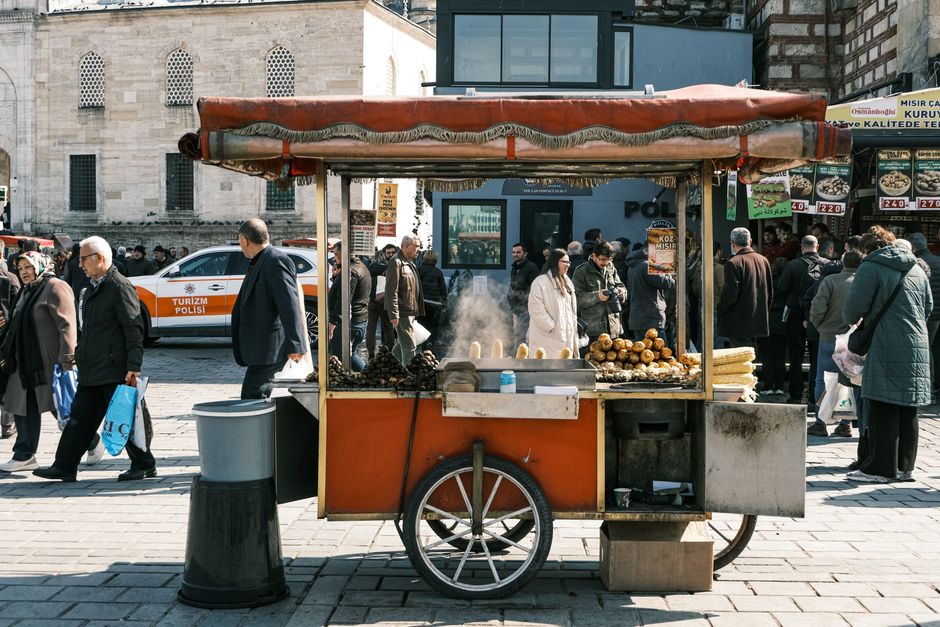
Pojangmacha (포장마차) are orange-tented stalls that appear at dusk in neighborhoods like Jongno, Euljiro, and Namdaemun. They are less about specific dishes and more about an atmosphere of eating late, drinking soju, and sitting at folding tables on the sidewalk.
Standard pojangmacha dishes include ramyeon (instant noodles, ₩2,000–₩3,000), ojingeo (grilled squid, ₩5,000–₩8,000), godeungeo (grilled mackerel, ₩6,000–₩10,000), eomuk, tteokbokki, and somaek (soju-beer mix, ₩3,000–₩5,000 for the combo).
Beondegi (번데기) — steamed silkworm pupae in paper cups — is also sold at pojangmacha and traditional market carts for ₩1,000–₩2,000. The smell is earthy and polarizing; the flavor is nutty and less alarming than the aroma suggests.
Pojangmacha are evening-only and mostly cash operations. They open around 6–7 PM and run until 1–2 AM. The Jongno-3-ga area around the old cinema blocks and Euljiro 3-ga have the highest concentration of authentic pojangmacha culture in Seoul as of 2026.
Where to Eat: Neighborhood Guide
| Area | Best For | Hours | Cash Needed? |
|---|---|---|---|
| Gwangjang Market | Mayak gimbap, bindaetteok, kalguksu | 9 AM – 6 PM daily | Yes — strongly recommended |
| Namdaemun Market | Hotteok (Gate 6), kalguksu alley, sundae | 24/7 (food stalls 7 AM–9 PM) | Yes |
| Myeongdong | Tornado potatoes, corn dogs, tteokbokki | Noon – 11 PM | Cards usually accepted |
| Hongdae | Dakkochi, corn dogs, bungeoppang, late-night | 2 PM – 2 AM | Cash after midnight |
| Insadong | Hotteok, gyeranppang, novelty sweets | 10 AM – 9 PM | Mixed |
| Jongno / Euljiro | Pojangmacha (evening only) | 6 PM – 2 AM | Yes |
Seoul is almost entirely cashless for sit-down restaurants and convenience stores — but traditional market vendors, pojangmacha stalls, and older street cart operators often do not accept cards. Withdraw ₩30,000–₩50,000 at a 7-Eleven ATM before hitting Gwangjang or Namdaemun.
Practical Notes (As of 2026)
Food allergy note: eomuk contains wheat and fish paste — avoid if you have gluten intolerance or fish allergies. Sundae contains blood and pork. Many market stalls share cooking oils and cannot easily separate allergens.
Hygiene is generally reliable. Gwangjang Market stalls operate under established health department compliance. Myeongdong sidewalk vendors are frequently inspected. Pojangmacha operate in a more informal zone — the food is generally safe but the setups are casual.
Prices listed are as of early 2026. Street food prices in Seoul have increased roughly 10–15% per year since 2023 — verify before travel.
The most underrated move: spend a full morning at Gwangjang Market eating mayak gimbap and bindaetteok, then stop at Namdaemun Gate 6 for hotteok on the way back. Four hours, roughly ₩15,000–₩20,000 total, and one of the best food mornings Seoul offers. No restaurant reservation required.
FAQ
What is the most popular Korean street food?
Tteokbokki is the most widely eaten Korean street food — available at nearly every market, subway station area, and pojangmacha tent across the country. Eomuk (fish cake skewers) is a close second, especially during colder months.
Is street food in Seoul safe to eat?
Yes, generally very safe. Korea has strict food vendor licensing and markets are regularly inspected. The main risks are food allergies (fish paste is in many dishes) and spice tolerance. Ask for “덜 맵게” (less spicy) if tteokbokki sauce is too intense.
Where is the best area for street food in Seoul?
Gwangjang Market is the best single destination for traditional Korean street food variety. For a modern street food walk, Myeongdong covers tourist-friendly options; Hongdae is best for late-night eating; Jongno and Euljiro for pojangmacha culture.
How much should I budget for Korean street food?
A substantial street food lunch at Gwangjang Market — gimbap, bindaetteok, and eomuk broth — runs ₩8,000–₩15,000 as of 2026. An evening pojangmacha session with food and soju: ₩15,000–₩25,000 per person. Street snacking while walking (tornado potato + corn dog + bungeoppang): ₩8,000–₩12,000.
Do I need to speak Korean to order street food?
No. Most market stalls display food visually and vendors communicate through pointing and gestures effectively. Saying the dish name is enough. The Papago translation app handles anything unusual and works well offline for camera-based menu translation.
Last updated: May 2026. Prices and hours based on Korea Tourism Organization data and 2026 visitor reports. Verify current prices before travel.
Frequently Asked Questions
What is the number one Korean street food I should try first?
Tteokbokki. Spicy simmered rice cakes in gochujang sauce are the baseline Korean street food experience — found at every market stall, cost roughly 3,000-5,000 won per portion, and define what Korean street food tastes like.
Follow it with a hotteok (sweet filled pancake, ~2,000 won) to cool the heat.
Is Korean street food vegetarian-friendly?
Limited but possible. Hotteok, bungeoppang (fish-shaped pastry), gyeran-bbang (egg bread), and tteokbokki are plant-based at their core, but sauces and broths often contain fish sauce or anchovy stock. Confirm with vendors — say “gogi eopseoyo?” (no meat?). Gwangjang Market has more vegetable-based options (bindae-tteok, vegetable jeon) than Myeongdong.
What are the best street food markets in Seoul?
Gwangjang Market (Jongno 5-ga Station) is the undisputed king — go weekdays for fewer crowds. Myeongdong Night Market runs evenings and skews toward younger, Instagram-ready foods. Namdaemun Market (Hoehyeon Station) is better for older-style street foods less aimed at tourists.
How much money should I bring for street food?
20,000-30,000 won feeds one person generously across 4-5 different dishes at any major market. Individual items range from 1,500 won (fish cake skewer) to 8,000 won (mayak gimbap or a hotteok-and-drink combo). Cash is preferred at most stalls, though T-money works at some Gwangjang Market vendors.
What street foods should I try in Busan?
Eomuk (fish cake) on a stick from a stand at Haeundae Beach or BIFF Square — Busan‘s version is widely considered better than Seoul’s. Ssiat hotteok (seed-filled sweet pancake) is a Busan specialty you will not find in Seoul.
Milmyeon (cold wheat noodles) is Busan’s signature summer street dish, not widely available elsewhere.
Are Korean street food stalls open year-round?
Most permanent markets operate year-round. Outdoor night-market style stalls (Myeongdong, Hongdae) run heaviest March-November and may thin out or close early in January-February cold snaps. Covered markets like Gwangjang and Namdaemun are reliable rain-or-shine, 12 months a year.
More on Korea Destinations:
Planning a trip to Korea?
Check out our Korea Travel Hub for more guides, including Korean BBQ Guide.

Written by East Asia Explorer Editorial Team
Sam Konneh is an AI strategist and digital marketer based in Seoul, South Korea. With years spent living, working, and exploring across Korea, Japan, and China, he shares firsthand insights into East Asia's cultures, hidden gems, and everyday life. A graduate of Inha University and KDI Graduate School, Sam combines data-driven expertise with on-the-ground experience. His journey also includes studying in Malaysia and traveling through Southeast Asia. Through practical tips, local stories, and travel guides, he helps fellow explorers discover both the celebrated highlights and the lesser-known corners of East Asia.