Last Updated: July 13, 2026 | Originally Published: July 11, 2026
- China’s 240-hour (10-day) visa-free transit applies to 53 nationalities at 24 cities including Beijing, Shanghai, and Chengdu.
- You must have an onward ticket to a third country — you cannot arrive from the US and return to the US.
- Apply on arrival at the immigration counter — there is no advance application or fee.
- Shorter 72-hour and 144-hour transit options exist at more ports; the 240-hour option is available at the largest 24 hubs only.
China’s 240-hour visa-free transit policy is one of the most underused tools in budget travel. You can legally spend 10 full days in China — visiting Beijing, Shanghai, or Chengdu — without a tourist visa, as long as you’re transiting to a third country.
The catch: the third-country rule is where most travelers get tripped up. This guide explains exactly who qualifies, which airports accept it, and what happens at the immigration counter.
Last updated: July 2026
What Is China’s 240-Hour Visa-Free Transit Policy?

The 240-hour transit policy, administered by China’s National Immigration Administration (NIA), allows passengers transiting through China to leave the airport and explore designated cities for up to 10 days — without a Chinese tourist visa.
It replaced and expanded the earlier 144-hour (6-day) policy. The key word is “transit” — you must be traveling between two countries, not simply visiting China as a standalone trip.
The 240-hour clock starts the moment you clear immigration — not at midnight. If you arrive at 11 PM on a Monday, your 240 hours expires at 11 PM on the Thursday 10 days later. Book your onward flight conservatively.
There are also shorter variants — 24-hour, 72-hour, and 144-hour transit policies — available at a wider range of ports. The 240-hour option is only available at the 24 largest cities listed below.

Which 24 Cities and Ports Are Eligible for 240-Hour Transit?
As of 2026, the following cities accept the 240-hour visa-free transit. Each region covers specific airports, rail stations, and sea ports within that city’s administrative area:
| City | Province / Municipality | Primary Entry Points |
|---|---|---|
| Beijing | Beijing | Capital International (PEK), Daxing International (PKX) |
| Shanghai | Shanghai | Pudong International (PVG), Hongqiao International (SHA) |
| Chengdu | Sichuan | Tianfu International (TFU), Shuangliu International (CTU) |
| Guangzhou | Guangdong | Baiyun International (CAN) |
| Chongqing | Chongqing | Jiangbei International (CKG) |
| Xi’an | Shaanxi | Xianyang International (XIY) |
| Wuhan | Hubei | Tianhe International (WUH) |
| Kunming | Yunnan | Changshui International (KMG) |
| Tianjin | Tianjin | Binhai International (TSN) |
| Hangzhou | Zhejiang | Xiaoshan International (HGH) |
| Nanjing | Jiangsu | Lukou International (NKG) |
| Shenyang | Liaoning | Taoxian International (SHE) |
| Dalian | Liaoning | Zhoushuizi International (DLC) |
| Harbin | Heilongjiang | Taiping International (HRB) |
| Qingdao | Shandong | Jiaodong International (TAO) |
| Xiamen | Fujian | Gaoqi International (XMN) |
| Zhengzhou | Henan | Xinzheng International (CGO) |
| Changsha | Hunan | Huanghua International (CSX) |
| Hefei | Anhui | Xinqiao International (HFE) |
| Fuzhou | Fujian | Changle International (FOC) |
| Nanning | Guangxi | Wuxu International (NNG) |
| Guilin | Guangxi | Liangjiang International (KWL) |
| Haikou | Hainan | Meilan International (HAK) |
| Sanya | Hainan | Phoenix International (SYX) |
Important: You may travel freely between cities within your designated transit zone during your 240 hours. You are not confined to the city where you entered.
Which 53 Nationalities Qualify for the 240-Hour Transit?
The 240-hour visa-free transit applies to passport holders from 53 countries. The full list includes all EU member states, plus:
- Americas: United States, Canada, Brazil, Argentina, Mexico, Chile
- Asia-Pacific: Japan, South Korea, Australia, New Zealand, Singapore
- Europe (non-EU): United Kingdom, Switzerland, Norway, Iceland, Russia
- Middle East / Africa: UAE, Qatar, Saudi Arabia
Who does NOT qualify: Most South and Southeast Asian passports (India, Pakistan, Bangladesh, Vietnam, Philippines, Indonesia) do not qualify for the 240-hour policy. Some qualify for the 72-hour version instead — check the NIA website before booking.
Eligibility lists update. The US State Department China travel page and the Chinese National Immigration Administration website (en.nia.gov.cn) both publish current lists. Check within 2 weeks of your flight booking.

What Documents Do You Need to Apply?
The third-country rule is where most applications fail. Here’s exactly what you need:
| Document | Requirement | Common Mistake |
|---|---|---|
| Passport | Valid 6+ months, eligible nationality | Expired or near-expiry passport |
| Inbound ticket | Flight from Country A arriving in China | — |
| Onward ticket | Flight departing China to Country B (not Country A) | Departing to the same country you arrived from |
| Valid destination visa | Your onward country must legally admit you | Booking Japan onward but lacking a Japanese visa |
| Accommodation proof | Hotel booking or confirmed address in China | Not always checked, but carry it |
You cannot fly New York → Beijing → New York under this policy. The onward leg must land in a genuinely different country. Common approved routes: London → Beijing → Tokyo, or New York → Shanghai → Seoul.
Book your onward ticket before you land — you will be asked to show it at the immigration desk.
How to Get the 240-Hour Stamp on Arrival
There is no advance application. You apply in person at the immigration counter on arrival. Here’s what happens step-by-step:
- Land at an eligible airport (e.g., Beijing Capital International or Shanghai Pudong).
- Join the international arrivals immigration queue — not the domestic or crew queue.
- At the counter, tell the officer: “I’d like to apply for the 240-hour transit.”
- Present your passport, inbound ticket, and onward ticket to a third country.
- The officer checks your documents, stamps your passport, and writes the expiry date.
- Collect your baggage and exit the secure zone — you’re now free to travel within China.
At Beijing Capital (PEK), the process takes 10–25 minutes during off-peak hours. At Shanghai Pudong (PVG), immigration lines can run 45+ minutes during peak morning arrivals from Europe and North America. Arrive on early-morning flights if possible to clear faster.
According to China’s National Immigration Administration, transit passengers who receive the 240-hour stamp are granted visa-free access to the approved geographic zone — typically the entire province or municipality of their entry port, not just the city.
“China’s transit visa-free policy reflects our commitment to facilitating international travel and people-to-people exchanges.” — China National Tourism Administration, 2026 policy briefing

What You Can (and Cannot) Do During Your 240 Hours
You can:
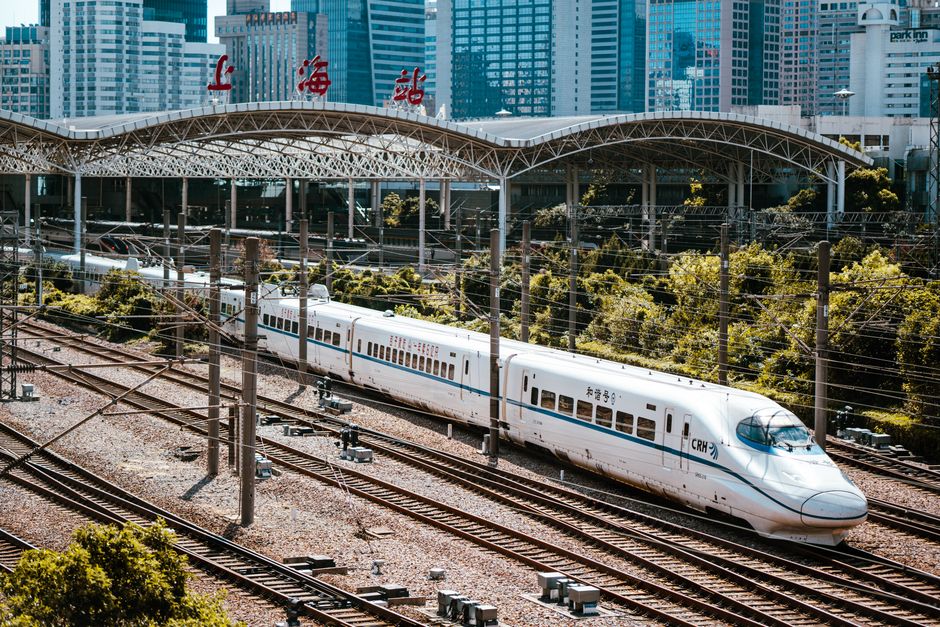
- Travel freely between cities within China — take HSR from Beijing to Shanghai to Xi’an
- Use Alipay and WeChat Pay with a foreign debit/credit card linked via the app’s international feature
- Book hotels through Trip.com or Booking.com (both accept foreign cards)
- Use local SIM cards — pick up an Airalo eSIM before arrival or a local card at the airport for ¥10–30/day
You cannot:
- Work or conduct business requiring a work visa
- Stay beyond 240 hours — overstaying triggers a fine of ¥500/day and can affect future visa applications
- Use the policy again immediately after departure — there is a waiting period before reuse
For eligible nationalities transiting between, say, London and Tokyo or New York and Seoul, the 240-hour policy lets you add a substantial China leg at zero extra visa cost.
A typical route: fly in via Shanghai Pudong, spend 4 days in Shanghai + 5 days in Beijing, then fly on to your final destination. Book your onward ticket from Beijing — not Shanghai — to maximize flexibility.
Frequently Asked Questions
Can I extend the 240-hour transit if I want to stay longer?
No. The 240-hour transit cannot be extended. If you want more time, you need a proper Chinese tourist (L) visa applied for in advance at a Chinese embassy or consulate.
Do I need to leave China through the same city I entered?
No. You can enter via Shanghai Pudong and depart from Beijing Capital — this is common and fully allowed. Just ensure your onward ticket departs from an eligible airport within the 240-hour window.
What happens if my onward flight is cancelled?
Contact the nearest Public Security Bureau (PSB) Entry-Exit Administration. They can issue a short extension in documented airline-disruption cases. Carry your airline’s documentation — verbal explanation alone is not sufficient.
Can I use the 240-hour transit multiple times?
Yes, but not consecutively. You must leave China between uses. Some travelers do circular routes (e.g., Japan → China → Korea → China) but the second entry requires a fresh third-country departure leg — plan accordingly.
Is a hotel booking required for the application?
Officially, immigration officers can ask for accommodation proof. In practice, many travelers are not asked. Carry a hotel confirmation from Trip.com or Booking.com just in case — a printed or screen-captured booking on your phone is sufficient.
Which nationalities qualify for the shorter 72-hour or 144-hour transit instead?
The 72-hour policy covers more nationalities and more ports than the 240-hour. Check the National Immigration Administration website (en.nia.gov.cn) for the current nationality-by-policy breakdown. The 144-hour option sits between the two in both eligibility and geographic scope.
Does the 240-hour transit work if I arrive overland (train or bus)?
The 240-hour option is primarily designed for air arrivals at designated airports. Some land/sea ports offer 72-hour or 144-hour transit but not the full 240-hour version. Check the specific port’s policy before planning an overland entry.
More on China Destinations:
Planning a trip to China?
Check out our China Travel Hub for more guides, including China Digital Survival Guide.

Written by East Asia Explorer Editorial Team
Sam Konneh is an AI strategist and digital marketer based in Seoul, South Korea. With years spent living, working, and exploring across Korea, Japan, and China, he shares firsthand insights into East Asia's cultures, hidden gems, and everyday life. A graduate of Inha University and KDI Graduate School, Sam combines data-driven expertise with on-the-ground experience. His journey also includes studying in Malaysia and traveling through Southeast Asia. Through practical tips, local stories, and travel guides, he helps fellow explorers discover both the celebrated highlights and the lesser-known corners of East Asia.