Last Updated: October 2, 2026 | Originally Published: July 12, 2026
- Tteokbokki (₩3,000–5,000), odeng (₩1,000–1,500), and hotteok (₩2,000) are the essential Seoul staples — skip Myeongdong and head to Gwangjang or Mangwon Market for local prices.
- Busan’s must-eat is ssiat hotteok (seed-stuffed pancake, ₩1,500) near Gukje Market — completely different from Seoul’s version and impossible to find anywhere else.
- Jeonju is South Korea’s UNESCO-designated Gastronomy City — its street food scene runs through Hanok Village and is built around fermented, slow-cooked flavours, not deep-fried snacks.
- Most vendors are cash only — carry at least ₩30,000 in small bills for a solid street food afternoon. Prices as of 2026.
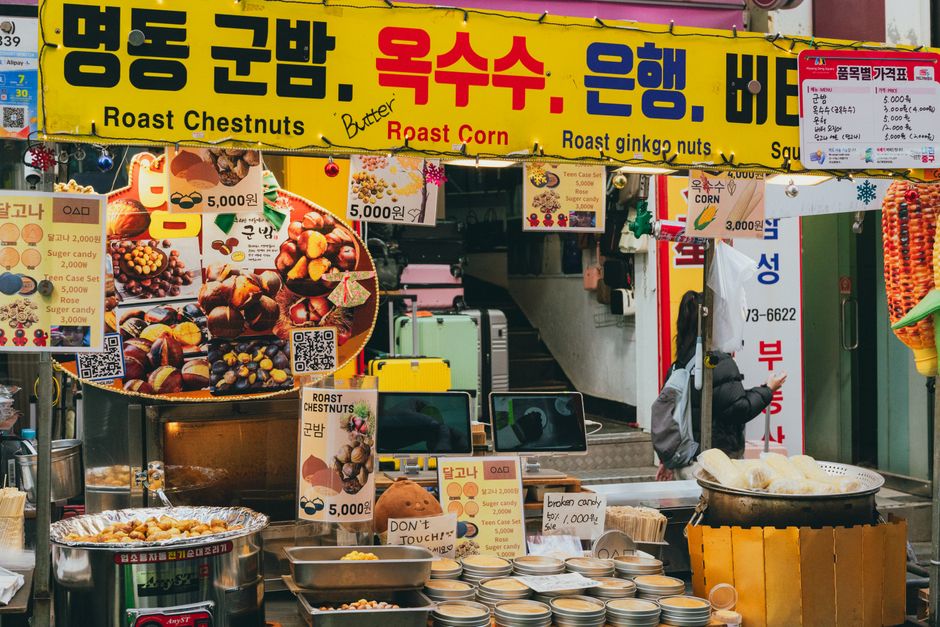
Every Korean travel article sends you to Myeongdong. It’s convenient, photogenic, and completely geared toward tourists — with prices to match.
The real street food story in South Korea runs through three cities: Seoul’s neighbourhood markets, Busan’s seafood-heavy alleyways, and Jeonju’s slow-food culture. Each one tastes completely different.
I’ve eaten my way through all three. Here’s what to actually order, where to go, and what locals eat instead of what the tour groups eat.
Seoul Street Food: Go Beyond Myeongdong
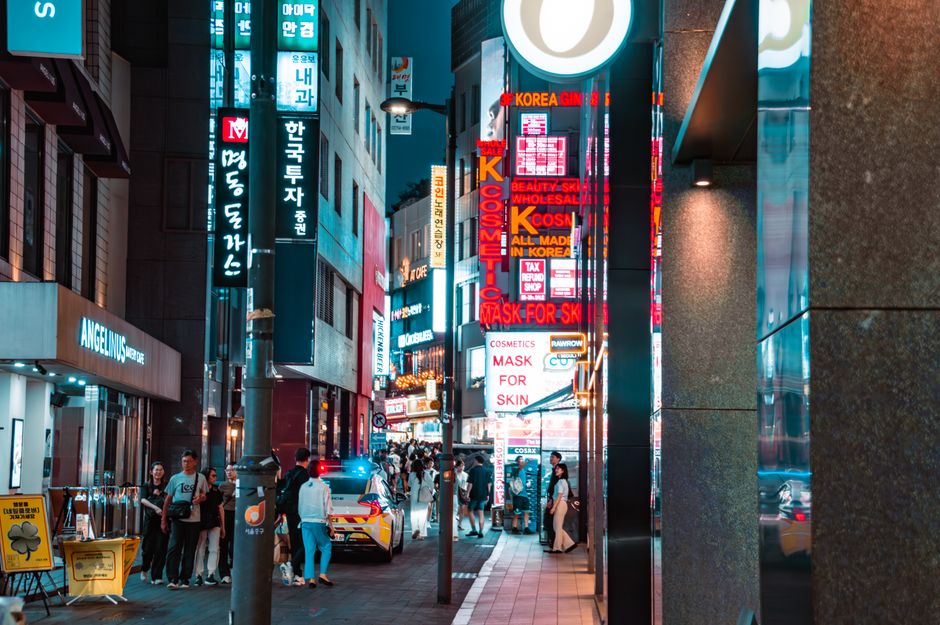
Myeongdong is fine for a first taste. But once you’ve had tteokbokki from a cart next to a thousand tourists, it’s worth knowing where Seoulites actually go.
What Is Gwangjang Market — And Why Does It Matter?
Gwangjang Market (광장시장) is the oldest continually operating traditional market in South Korea, open since 1905. The covered food alley runs the length of the market’s centre and serves real lunches to real locals, not walking snacks for groups.
The must-order here is bindaetteok — mung bean pancakes fried to order on a flat iron griddle. A large portion runs ₩5,000–8,000 (as of 2026). The vendors have been making these for decades and the recipe hasn’t changed.
Sit at a vendor’s counter and wait for eye contact before pointing at what you want. Most vendors speak minimal English but understand “this one” with a gesture. Don’t try to order from a standing position — you’ll get redirected to sit down first.
What Does Tteokbokki Actually Cost Outside Tourist Areas?
Tteokbokki (spicy rice cakes, 떡볶이) is Korea’s most iconic street food. In Myeongdong, expect to pay ₩5,000–6,000 for a portion. At Mangwon Market or a neighbourhood pojangmacha, the same dish costs ₩3,000–3,500.
The recipe is identical: chewy rice cylinders simmered in gochujang (fermented chilli paste) sauce, usually with fish cakes and boiled eggs. The price difference is entirely location markup.
Odeng: The One You Eat Standing in the Cold
Odeng (어묵), or fish cake skewers, is the working commuter’s snack. Skewers go for ₩1,000–1,500 each, and the vendor always has a pot of warm dashi broth you can ladle into a paper cup for free.
On a winter morning near Jongno or Dongdaemun, this is what locals eat between subway transfers. It’s not glamorous — it’s practical, warm, and genuinely good.
Seoul Street Food: Local vs Tourist Pricing
| Dish | Myeongdong Price | Local Market Price | Best Local Spot |
|---|---|---|---|
| Tteokbokki | ₩5,000–6,000 | ₩3,000–3,500 | Mangwon Market |
| Odeng (fish cake) | ₩2,000/skewer | ₩1,000–1,500 | Dongdaemun area |
| Bindaetteok | Not sold here | ₩5,000–8,000 | Gwangjang Market |
| Hotteok | ₩3,000 | ₩1,500–2,000 | Near any subway exit |
| Tornado potato | ₩4,000–5,000 | ₩3,000 | Hongdae street stalls |
Prices as of 2026 — verify before travel, as vendor prices fluctuate seasonally.
Most Korean street food looks vegetarian but isn’t. Odeng broth is fish-based. Tteokbokki sauce often contains anchovy stock. Kimchi is typically made with salted fermented shrimp. If you’re vegetarian, ask vendors specifically — some markets in Jeonju offer fully plant-based options, but don’t assume.
Pojangmacha: Seoul After Dark
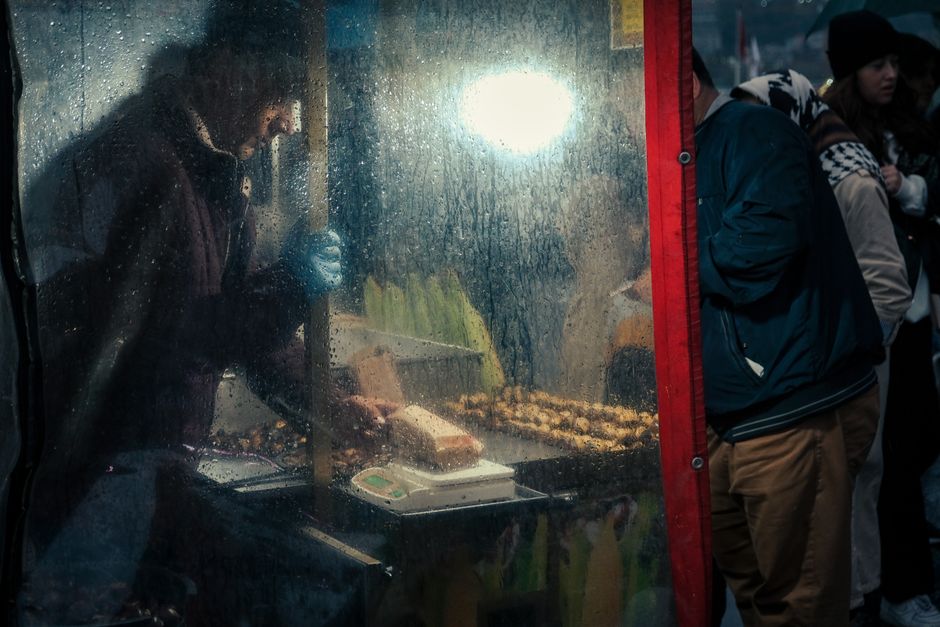
Pojangmacha (포장마차) are the orange-tented street stalls that appear after 8 PM near busy transit hubs. They’re where office workers decompress with soju and anju (drinking snacks).
The Jongno 3-ga and Euljiro areas have the densest concentration. When I sat at one near Euljiro 3-ga Station at 10 PM on a Wednesday, every table was packed with groups splitting bottles of soju alongside tteokbokki, sundae (blood sausage), and haemul pajeon (seafood pancake).
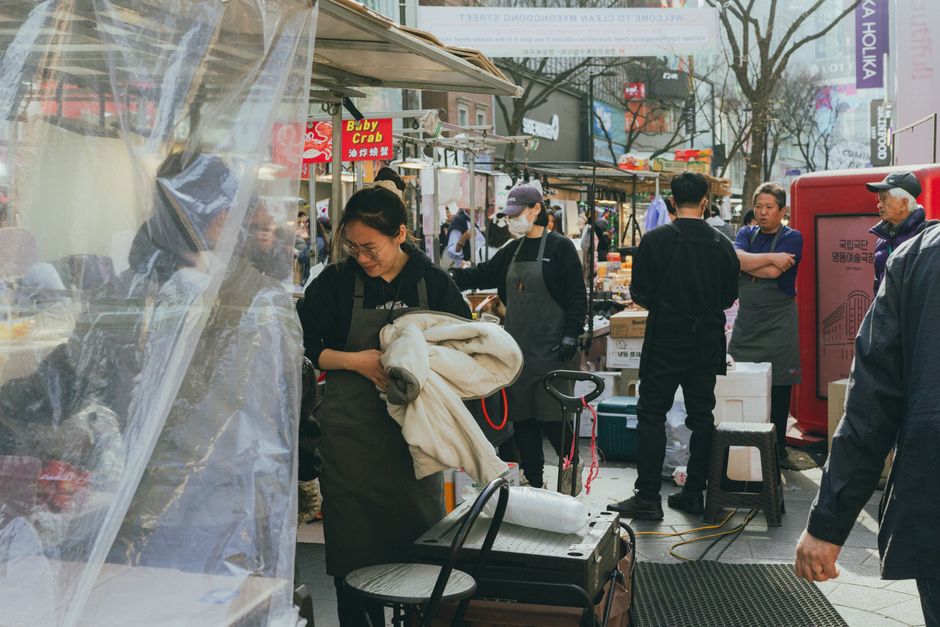
Busan Street Food: Seafood, Ssiat Hotteok, and the Gukje Market Alley
Busan is a port city, and its street food reflects that. The flavours here lean saltier, smokier, and more seafood-forward than anything in Seoul.
What Makes Ssiat Hotteok Different From the Seoul Version?
Ssiat hotteok (씨앗호떡) is Busan’s signature street food and bears almost no resemblance to Seoul’s hotteok. Instead of the brown sugar and cinnamon filling, Busan’s version is packed with sunflower seeds, pumpkin seeds, pine nuts, and a touch of sugar.
The result is nutty, slightly caramelised, and genuinely addictive. One piece costs ₩1,500 (as of 2026). The most famous vendors cluster near the north entrance of Gukje Market (국제시장) in Bupyeong-dong — look for the queue, because there’s always one.
Gukje Market’s food alley is at its best between 11 AM and 2 PM when vendors run fresh batches of ssiat hotteok. After 4 PM the filling sometimes sits longer between batches and loses its crunch. Go early if you can.
Jagalchi Fish Market: The Snack You Can’t Plan For
Jagalchi Market (자갈치시장) is Korea’s largest seafood market. The outdoor section along the waterfront sells boiled shellfish, grilled squid on sticks, and raw sea squirt (meongge) by the cup.
These aren’t polished snacks — they’re eaten standing up, sometimes with plastic gloves, with the sea in front of you. Grilled squid runs ₩3,000–5,000 depending on size. It’s charred over open coals, not gas, giving it a smokiness you won’t replicate inland.
“What struck me most at Jagalchi wasn’t the seafood — it was that nobody around me seemed impressed by it. A woman two stools over was eating raw shellfish and reading her phone. This wasn’t a food experience for her. It was just lunch.”
Milmyeon: The Cold Noodle Busan Invented
Milmyeon (밀면) is a cold wheat noodle dish unique to Busan. It was created by Korean War refugees who couldn’t source buckwheat for traditional naengmyeon, so they substituted wheat flour — and it became a city staple.
It’s served in chilled beef broth with cucumber, a boiled egg, and sesame oil. A bowl at a sit-down shop runs ₩8,000–10,000 (as of 2026). Technically a restaurant dish, but you’ll see it everywhere in Busan and nowhere in Seoul.
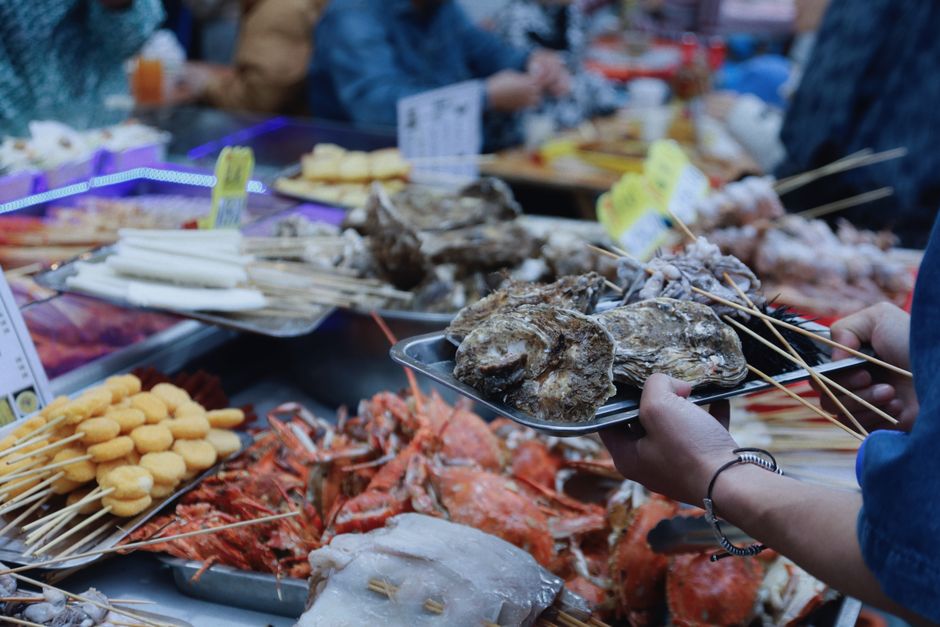
Jeonju Street Food: UNESCO Gastronomy City
Jeonju was designated a UNESCO Creative City of Gastronomy in 2012 — the first Korean city to receive that recognition. Its food culture is slower, more fermented, and rooted in Jeolla Province’s agricultural tradition.
Hanok Village: Where to Eat in Jeonju
The food stalls in Jeonju Hanok Village (전주 한옥마을) line the main walking street through the traditional neighbourhood. This is a tourist area, but the food itself is genuinely regional — you won’t find it in Seoul.
The most important thing to eat is Jeonju bibimbap. The city’s version uses yukhoe (raw beef) mixed with seasonal namul (vegetable sides) and a locally produced gochujang paste. A full bowl at a restaurant inside the village runs ₩12,000–15,000.
Makgeolli Culture: Jeonju’s Drinking Tradition
Local Jeonju makgeolli is milky, slightly fizzy, and brewed on-site — not the mass-produced bottled version. A bowl (the traditional serve) costs ₩4,000–5,000 (as of 2026) and traditionally comes with a complimentary pajeon (scallion pancake).
Walking through Hanok Village you’ll also pass vendors selling hanjeongsik-style snack sets — small banchan bites for ₩2,000–3,000 each — alongside street desserts like nurungji (scorched rice snacks).
KTX from Seoul to Jeonju takes roughly 1 hour 40 minutes and costs ₩27,300 one way (as of 2026). Leave Seoul by 9 AM, arrive at Hanok Village by 11 AM, eat until 3 PM, and catch an afternoon train back. Most food stalls close by 6–7 PM.
Practical Notes: What to Know Before You Eat
How Much Cash Do I Need for Korean Street Food?
Most traditional market vendors and street carts are cash only. Some Myeongdong stalls now accept card, but assume cash everywhere else.
Carry at least ₩30,000–50,000 in ₩1,000 and ₩5,000 denominations for a proper street food afternoon. Larger bills cause delays at busy stalls.
When Are Korean Street Food Markets Busiest?
Gwangjang Market peaks at noon on weekdays. Myeongdong stalls set up from 11 AM but are most crowded 6–9 PM. Pojangmacha don’t get going until after 8 PM.
Gukje Market in Busan is best late morning. Jeonju Hanok Village is most pleasant on weekday mornings — weekends bring bus tours from Seoul and the main street gets crowded by 1 PM.
What Does a Full Street Food Day Cost?
A reasonable one-afternoon budget for one person: odeng x2 (₩3,000) + tteokbokki (₩3,500) + bindaetteok (₩6,000) + hotteok (₩2,000) + a drink (₩2,000) = roughly ₩16,500 (~$12 USD at 2026 rates).
Add a pojangmacha session with soju and anju: budget an extra ₩15,000–25,000 per person.
Korean street food is not one thing — it’s three distinct regional cultures. Seoul’s scene is fast-paced and snack-driven. Busan’s is seafood-anchored and port-city pragmatic. Jeonju’s is slow-fermented and agricultural. Each city rewards eating the way locals do, not where the tour groups point.
Frequently Asked Questions
Is Korean street food safe to eat for travellers?
Generally yes. Ingredients turn over quickly at busy market stalls. Stick to vendors with visible queues of locals — high turnover means fresh ingredients. Avoid stalls where food sits visibly unattended for long periods.
What Korean street food is vegetarian?
Hotteok (sweet pancakes) and tornado potato are typically vegetarian. Tteokbokki sauce and odeng broth often contain fish or anchovy stock — ask vendors specifically. Jeonju Hanok Village has the widest selection of plant-forward options.
Can I find Korean street food outside Seoul?
Yes — and the regional versions are often better. Busan’s ssiat hotteok and milmyeon are unique to that city. Jeonju’s bibimbap and makgeolli culture can’t be replicated elsewhere. Both cities are worth the travel time.
How do I order at a Korean street food stall if I don’t speak Korean?
Point at what the person next to you is eating. Most vendors in tourist-adjacent areas understand basic gestures. Learning “이거 주세요” (igeo juseyo — “this one, please”) covers most situations. The Papago app works offline for Korean-English translation.
What time do Korean street food markets close?
Gwangjang Market: 9 AM–6 PM. Myeongdong street vendors: wind down by 10–11 PM. Pojangmacha: 8 PM to 1–2 AM. Gukje Market, Busan: closes around 6–7 PM. Jeonju Hanok Village stalls: most close by 7 PM. Hours as of 2026 — verify before visiting.
More on Korea Destinations:
Planning a trip to Korea?
Check out our Korea Travel Hub for more guides, including Korean BBQ Guide.

Written by East Asia Explorer Editorial Team
Sam Konneh is an AI strategist and digital marketer based in Seoul, South Korea. With years spent living, working, and exploring across Korea, Japan, and China, he shares firsthand insights into East Asia's cultures, hidden gems, and everyday life. A graduate of Inha University and KDI Graduate School, Sam combines data-driven expertise with on-the-ground experience. His journey also includes studying in Malaysia and traveling through Southeast Asia. Through practical tips, local stories, and travel guides, he helps fellow explorers discover both the celebrated highlights and the lesser-known corners of East Asia.