Last Updated: July 13, 2026 | Originally Published: July 12, 2026
- I tapped through Seoul’s gates on all three over a week, reloading at CU and GS25 counters, to work out where each one actually saves money — and where each one quietly costs you
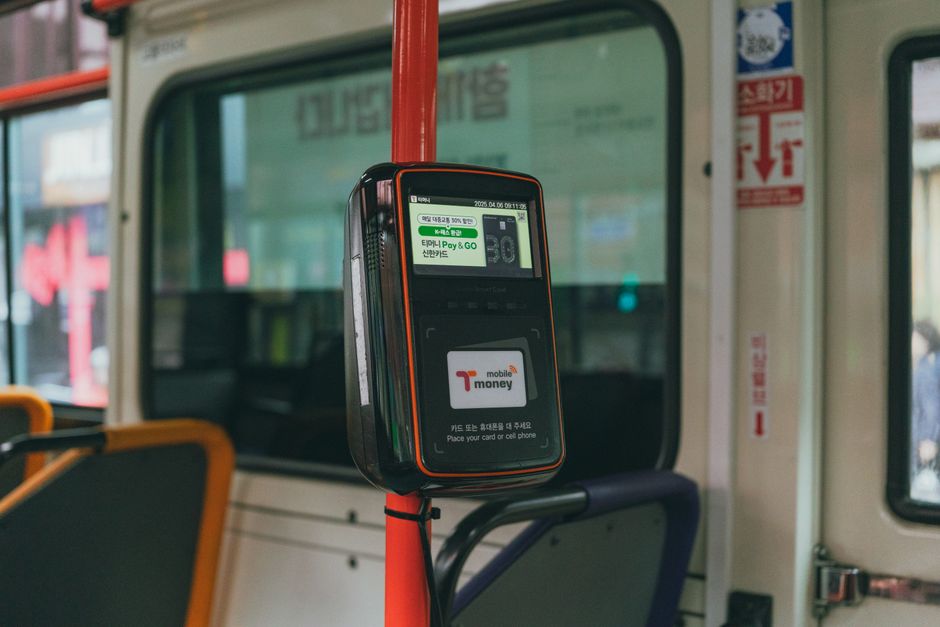
- T-money is Korea’s default rechargeable transit card
- It works on the Seoul Metro, city buses, most taxis, and public transport in other cities like Busan and Daegu
Quick answer: which Seoul transit card?
- Most visitors: a rechargeable T-money card (~₩2,500–₩4,000 for the card). Works on subway, buses, taxis, and convenience-store purchases nationwide.
- Staying 3–7 days in Seoul and riding a lot: the Climate Card short-term pass — ₩5,000 (1-day) up to ₩20,000 (7-day) for unlimited Seoul subway and bus rides.
- Cashbee is functionally the same as T-money on almost every system, so don’t overthink which one a store hands you.
- Pay-as-you-go fares start at about ₩1,400 per Seoul subway ride (as of 2026), with transfer discounts between bus and subway.
You land at Incheon, you need to reach your hotel, and a vending machine is asking whether you want T-money, Cashbee, or a Climate Card. Three names, one turnstile, and a queue forming behind you.
Here is the short version, then the detail. For most trips, buy a T-money card and forget about it. If you are spending several full days inside Seoul on the subway and buses, the Climate Card can pay for itself.
I tapped through Seoul’s gates on all three over a week, reloading at CU and GS25 counters, to work out where each one actually saves money — and where each one quietly costs you.
What is T-money and why do most tourists buy it?
T-money is Korea’s default rechargeable transit card. You buy the blank card once, load won onto it, and tap in and out.
It works on the Seoul Metro, city buses, most taxis, and public transport in other cities like Busan and Daegu. You can also spend the balance at convenience stores and some vending machines.
The card itself costs roughly ₩2,500 to ₩4,000 depending on the design, and that amount is not refundable. The balance you load on top of it is.
Buy it at any CU, GS25, 7-Eleven, or Emart24, plus the machines inside subway stations. Reload in cash at the same counters or machines.
Pro tip: Load ₩20,000–₩30,000 to start. Seoul subway rides run about ₩1,400 each, so that covers a full day of sightseeing plus a few bus transfers without a reload stop.
How is the Climate Card different from T-money?
The Climate Card (기후동행카드) is Seoul’s unlimited-ride pass, launched by the Seoul Metropolitan Government in early 2026. It is a flat fee for unlimited travel, not a pay-per-ride balance.
Residents typically buy the monthly version (around ₩62,000, or ₩65,000 with the Ttareungi public bike share). Tourists usually want the short-term passes instead.
As of 2026, the short-term Climate Card passes are priced roughly: ₩5,000 for 1 day, ₩8,000 for 2 days, ₩10,000 for 3 days, ₩15,000 for 5 days, and ₩20,000 for 7 days. You also pay about ₩3,000 once for the physical card.
The catch is coverage. The Climate Card works on the Seoul subway only within Seoul city limits, plus Seoul city buses and Ttareungi bikes.
Watch out: The Climate Card does not cover the Shinbundang Line, wide-area “red” buses, or subway trips that run past the Seoul boundary into Gyeonggi Province. Tap out beyond the zone and you can get stuck at the gate owing the difference.
Where does Cashbee fit in?
Cashbee is the main alternative to T-money, run by Lotte. On the rider’s side, the two are nearly interchangeable.
Both cover the Seoul subway, city buses, taxis, and nationwide intercity transport. Both are sold at the same convenience stores and reloaded the same way.
Some travelers find one brand stocked when the other is sold out. For a tourist, the practical advice is simple: take whichever rechargeable card the counter has. The fare and the tap-in experience are the same.
There is one edge case worth knowing. A handful of regional bus systems accept only one brand, but in Seoul, Busan, and the major tourist cities both cards are accepted everywhere a card reader exists.
If you already own a T-money from a past trip, it does not expire. Dig it out, reload it, and skip buying a new card entirely.
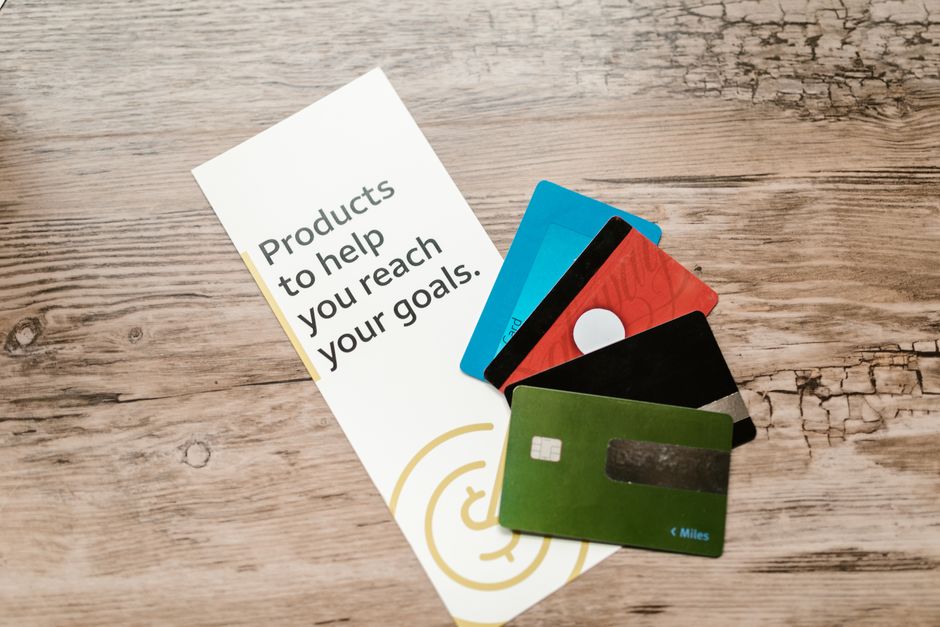
T-money vs Climate Card vs Cashbee: side-by-side
| Feature | T-money | Climate Card | Cashbee |
|---|---|---|---|
| Pricing model | Pay per ride from balance | Flat unlimited pass | Pay per ride from balance |
| Upfront cost | ~₩2,500–₩4,000 card | ~₩3,000 card + pass (₩5,000–₩20,000) | ~₩2,500–₩4,000 card |
| Coverage | Nationwide transit + stores | Seoul-only subway/bus + Ttareungi | Nationwide transit + stores |
| Best for | Most visitors, mixed cities | Heavy Seoul-only riders, 3–7 days | Same as T-money |
| Pay at stores? | Yes | No (transit only) | Yes |
When does the Climate Card actually save money?
Do the math against ₩1,400 base subway rides. The 1-day Climate Card at ₩5,000 breaks even after roughly four rides in a day.
If you are bouncing between Gyeongbokgung, Myeongdong, Hongdae, and Gangnam, four-plus rides is an easy day. The pass wins.
If you walk a lot, take only two or three rides a day, or plan day trips outside Seoul, a pay-as-you-go T-money card almost always costs less. You only pay for what you tap.
Pro tip: Mixing a Seoul stay with a Busan or Gyeongju leg? Skip the Climate Card and keep a single T-money card. It rides the Busan subway and local transport too, so you carry one card for the whole trip.
How do refunds work when you leave?
This is where travelers lose money they did not need to. You can refund a leftover T-money or Cashbee balance at convenience stores, but with limits.
Stores refund balances up to about ₩20,000, minus a small processing fee of roughly ₩500. Larger balances must be handled at a T-money customer center, which is a hassle on departure day.
The card deposit is never refunded. Neither is an unused portion of a Climate Card pass once it is active, so do not buy a 7-day pass for a 4-day trip.
A common mistake is reloading a big balance late in the trip to avoid running dry. Then you fly out with ₩15,000 stranded on a card you may not use again. Reload in smaller amounts as you go.
The Korea Tourism Organization’s official visitor guidance recommends a rechargeable transit card as the simplest way to use buses, the subway, and taxis across the country, since a single card works city to city without buying separate tickets.
What about WOWPASS and Discover Seoul Pass?
Two other cards come up constantly in tourist forums, and both layer extra functions on top of transit.
WOWPASS is a prepaid card aimed at foreigners. You load foreign cash or a card at a WOWPASS machine, and it doubles as both a spending card and a T-money transit card in one piece of plastic.
It is handy if you want to avoid carrying won and tapping for the subway from the same card. The trade-off is an exchange-rate spread on top of fares, so check the rate before loading a large amount.
Discover Seoul Pass is different again. It is an attraction pass that bundles free or discounted entry to sites like the Gyeongbokgung-area palaces and N Seoul Tower, and it also carries a T-money function for transport.
It only pays off if you visit enough paid attractions to clear the pass price. If your trip is mostly food, markets, and neighborhoods, a plain T-money card is the cheaper call.
Pro tip: Whichever card you carry, plan routes in Naver Map or Kakao Map rather than Google Maps. Google’s directions are unreliable inside Korea, while the local apps show live subway timing, exits, and bus arrivals.
How do I actually tap in and out?
On the subway you tap a card reader on the way in and again on the way out. Skip the tap-out and the system can charge a penalty fare on your next trip.
On city buses you tap as you board, and tap again as you exit if you plan to transfer. That exit tap is what unlocks the discounted transfer between buses and the subway within 30 minutes.
Hold the card flat on the reader until it beeps. A red beep usually means low balance, so step aside and reload at the nearest machine rather than blocking the gate.
Key takeaway
Default to T-money (or Cashbee — same thing) for a flexible, nationwide card. Add a short-term Climate Card only if you will ride Seoul transit heavily for several days. Keep your end balance under ₩20,000 so you can cash it out at any convenience store before you fly home.
Frequently asked questions
Can I use one T-money card for two people?
No. Each person taps their own card on the subway because you tap in and out. On most city buses you can sometimes pay multiple fares from one card by telling the driver, but for the subway it is one card per rider.
Do I need the Climate Card on a physical card or can I use my phone?
Android phones with the right app can run a mobile Climate Card. iPhone users need the physical card, sold at subway station machines and nearby convenience stores for about ₩3,000.
Does T-money work at Incheon Airport?
Yes. You can buy and load a card at the airport and use it on the AREX airport train’s all-stop service, buses, and the subway into the city right away.
Will my foreign credit card work instead of a transit card?
Some gates and buses are rolling out open-loop contactless payment, but it is not universal in 2026. A T-money card is still the reliable option that works everywhere.
Is the Climate Card worth it for a 2-day Seoul trip?
Only if you ride heavily. At ₩8,000 for 2 days, you need about three rides per day to break even. Light riders are better off on pay-as-you-go T-money.
Last updated: 2026-05-28. Card prices and pass fares are set by the operators and the Seoul Metropolitan Government and can change — confirm current rates at the station or convenience store when you buy.
More on Korea Destinations:
Planning a trip to Korea?
Check out our Korea Travel Hub for more guides, including Korean BBQ Guide.

Written by East Asia Explorer Editorial Team
Sam Konneh is an AI strategist and digital marketer based in Seoul, South Korea. With years spent living, working, and exploring across Korea, Japan, and China, he shares firsthand insights into East Asia's cultures, hidden gems, and everyday life. A graduate of Inha University and KDI Graduate School, Sam combines data-driven expertise with on-the-ground experience. His journey also includes studying in Malaysia and traveling through Southeast Asia. Through practical tips, local stories, and travel guides, he helps fellow explorers discover both the celebrated highlights and the lesser-known corners of East Asia.