Last Updated: July 13, 2026 | Originally Published: December 19, 2024
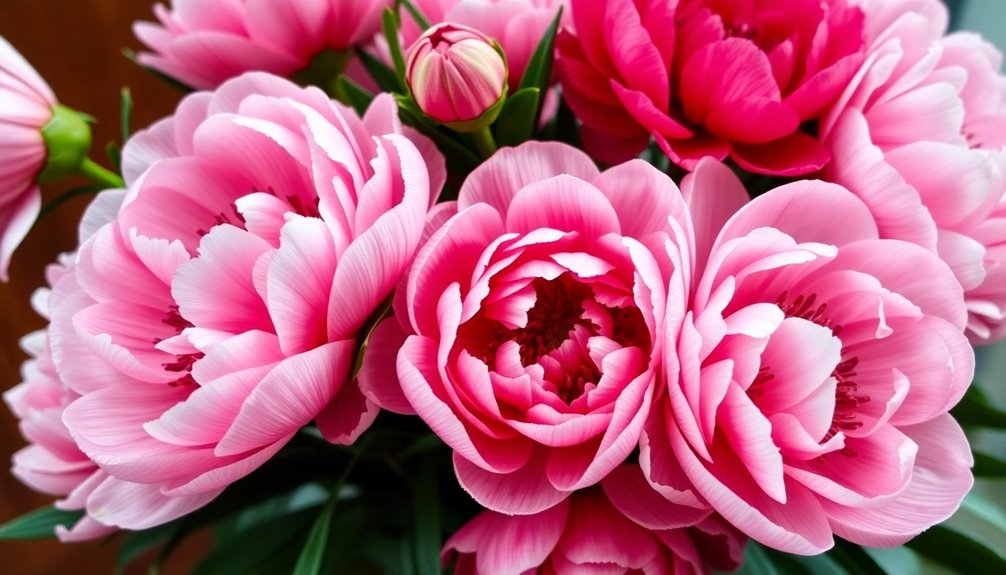
- Peonies (mǔdān, 牡丹) symbolize wealth, honor, and romance — China’s unofficial national flower since the Tang Dynasty (618–907 CE).
- The Luoyang International Peony Festival (April 1–25 each year) draws 8+ million visitors to the historic capital of peony cultivation.
- Heze City in Shandong Province is widely recognized as China’s largest commercial peony cultivation base, with fields that dwarf those in Luoyang.
- In Traditional Chinese Medicine, Bai Shao (白芍, white peony root) and Chi Shao (赤芍, red peony root) appear in 80+ classical formulas for pain and circulation.
I spent two days at the Luoyang Peony Festival in April 2026, surrounded by hillsides of blossoms that ranged from cream-white to deep burgundy. What struck me wasn’t just the beauty — it was how deliberately embedded peonies are in every layer of Chinese life, from Tang Dynasty palace records to the pharmacy counter at a Beijing TCM clinic.
This guide covers where peonies fit in Chinese history, art, food, medicine, and modern travel — with specific festivals, cities, and facts that go beyond the generic.
Historical Roots: How the Peony Became China’s “King of Flowers”
The peony’s elevation began under Emperor Wu Zetian (武则天) of the Tang Dynasty, who reportedly ordered peonies planted throughout the imperial gardens of Chang’an (modern Xi’an) and Luoyang. Court poets like Liu Yuxi (772–842 CE) declared the peony “the true national color and heavenly fragrance” — a phrase still quoted today.
By the Song Dynasty (960–1279 CE), Luoyang had become the undisputed peony capital. The botanist Ouyang Xiu wrote the first dedicated peony treatise, Luoyang Mudan Ji (洛阳牡丹记), cataloguing over 30 cultivated varieties. Today, the Luoyang Peony Research Institute maintains a living library of 1,200+ named varieties.
Where to See Peonies in China: Luoyang vs Heze vs Chengdu
Most visitors only know Luoyang, but China has three distinct peony destinations — each with a different emphasis.
| City | Province | Peak Season | Key Feature | Entry Cost (2026) |
|---|---|---|---|---|
| Luoyang | Henan | Apr 1–25 | International festival, 1,200+ varieties in National Peony Garden | ¥80–¥120 |
| Heze (菏泽) | Shandong | Apr 10–May 5 | China’s largest cultivation base; vast commercial + ornamental fields | ¥50–¥70 |
| Chengdu | Sichuan | Late Mar–Apr | Peonies alongside Tianfu Flower City displays; combined with panda base visits | Free–¥30 |
Heze is the underrated pick. The city hosts the annual China Heze Peony Fair alongside Luoyang’s festival, and its scale is genuinely staggering — fields extend to the horizon. Visitors flying into Jinan (济南) Yaoqiang International Airport can reach Heze by high-speed rail in about 90 minutes (¥65 second class).
Luoyang’s 6 Most Celebrated Peony Cultivars: A Visitor’s Field Guide
With 1,200+ named varieties in Luoyang alone, knowing which cultivars to look for transforms a casual visit into something memorable. These six varieties are historically significant — and have distinct characteristics that make them worth seeking out.
| Cultivar Name | Chinese | Color | Historical Note | Where to Find It |
|---|---|---|---|---|
| Luoyang Hong | 洛阳红 | Deep rose-red, 200+ petals | Tang Dynasty imperial cultivar; Luoyang’s signature variety | Wang Cheng Park, National Peony Garden |
| Zhao Fen | 赵粉 | Pale pink, delicate fragrance | Song Dynasty Zhao family origin; most widely cultivated variety nationally | All major Luoyang gardens |
| Er Qiao | 二乔 | Bicolor: pink AND purple on one plant | Named after the Two Qiao beauties of the Three Kingdoms period; unique botanical chimera | Guohua Peony Garden (国花牡丹园) |
| Wei Zi | 魏紫 | Rich purple, rare | Song Dynasty’s most prized variety; nearly lost in Ming Dynasty; revived from a single specimen at the Luoyang Peony Research Institute | Luoyang Peony Research Institute (not all gardens) |
| Dou Lü | 豆绿 | Greenish-white, extremely rare | One of China’s few genuinely green-flowering peonies; fewer than 50 specimens in public gardens | National Peony Garden specialty block (ask staff for location) |
| Guan Shi Mo Yu | 冠世墨玉 | Deep burgundy-purple, appears almost black | Modern cultivar; one of only a handful of “black peonies” in Chinese horticulture | Wang Cheng Park (limited display block) |
Getting to Luoyang for the Peony Festival: Rail Routes from Major Cities
Luoyang Longmen Station (洛阳龙门站) is on China’s national high-speed network, making it straightforward to reach from Beijing, Shanghai, and Xi’an. All prices below are approximate second-class fares as of 2026 — check Trip.com or 12306.cn for current schedules.
| From | Train Type | Journey Time | Approx. 2nd Class Fare | Notes |
|---|---|---|---|---|
| Beijing West | G-series | ~2.5 hours | ¥260–¥310 | Multiple daily departures from 07:00; book 3+ weeks ahead during festival |
| Shanghai Hongqiao | G/D-series | ~4.5–5 hours | ¥350–¥430 | Some trains require transfer at Zhengzhou East; direct G-trains are faster |
| Xi’an North | G-series | ~1.5 hours | ¥115–¥145 | Most convenient option; Xi’an + Luoyang makes a strong 5–7 day itinerary |
| Zhengzhou East | G/C-series | ~40–50 min | ¥54–¥70 | Best base if Luoyang hotels are full; Zhengzhou has far more availability during festival |
Peonies in Traditional Chinese Art: More Than Decoration
The peony’s dominance in Chinese visual culture is precise, not vague. During the Tang Dynasty, peony motifs appeared on Tang Sancai (唐三彩) tri-color glazed ceramics as status markers — a peony-decorated vessel signaled aristocratic ownership.
In classical brush painting (gongbi style, 工筆), artists like Chen Hongshou (1598–1652) established the compositional rules for peony painting that are still taught at the China National Academy of Arts today. The Forbidden City (Palace Museum) holds over 300 peony-themed imperial artifacts in its ceramics collection, including a Qing-era famille rose vase from the Yongzheng period (1723–1735) that sold for HK$8.5 million at Sotheby’s Hong Kong in 2019.
Peonies in Traditional Chinese Medicine: Bai Shao and Chi Shao
The medicinal use of peonies in China is centuries older than the ornamental tradition. The Shennong Bencao Jing (神农本草经), China’s foundational TCM pharmacopoeia written around 200 CE, lists peony root as a primary herb for pain relief and blood disorders.
Modern Chinese Pharmacopoeia (2020 edition) recognizes two distinct peony medicines:
- Bai Shao (白芍, Radix Paeoniae Alba) — dried root of Paeonia lactiflora; used to nourish blood, calm liver qi, relieve spasms. Appears in formulas like Siwu Tang (四物汤, Four-Substance Decoction) and Guizhi Fuling Wan.
- Chi Shao (赤芍, Radix Paeoniae Rubra) — dried root of Paeonia veitchii or wild-sourced P. lactiflora; used to clear heat, cool blood, reduce inflammation. Common in formulas for cardiovascular conditions.
According to the China Association of Chinese Medicine, Bai Shao and Chi Shao together appear in over 80 classical formulas still in licensed use across Chinese hospitals. Heze City is not only China’s largest ornamental peony source — it also supplies a major share of the nation’s medicinal peony root for TCM pharmaceutical factories.
“The peony has served Chinese civilization as both a cultural icon and a clinical tool for over 2,000 years. Its dual role — ornamental and medicinal — is unique among China’s celebrated plants.”
— China National Tourism Administration, Cultural Heritage Brief (2023)
Peonies in Chinese Culinary Traditions
In Luoyang’s older tea houses, you can order mudan hua cha (牡丹花茶) — dried peony petals steeped alone or blended with green tea. The flavor is delicate: faintly sweet, mildly astringent, with a floral finish that’s lighter than rose tea.
Beyond tea, the culinary applications are region-specific:
- Heze, Shandong: Peony petals crystallized in sugar (tang zhì mǔdān) — sold at local markets for ¥18–¥25 per package.
- Luoyang, Henan: Peony petal dim sum at traditional banquets, particularly during festival weeks.
- Chengdu, Sichuan: Peony bud fritters (mǔdān huā zhá) — petals dipped in light batter and fried, served with Sichuan pepper salt.
The Luoyang International Peony Festival includes a dedicated “Peony Food Street” (牡丹美食街) that runs approximately 400 meters along the Sui Tang Heritage Zone, with 60+ stalls selling peony-themed snacks, liqueurs, and skincare products.
- Luoyang (April 1–25) is the headline festival, but Heze in Shandong offers a quieter, larger-scale viewing experience — and supplies most of China’s commercial and medicinal peonies.
- TCM treatments using Bai Shao or Chi Shao are clinically licensed at major Chinese hospitals; visitors interested in TCM consultations can book through the Beijing Tongrentang (同仁堂) chain, which has English-language services at select locations.
- Plan around the festival calendar — not just the destination — to avoid peak crowds and inflated accommodation prices.
Frequently Asked Questions
When is the best time to see peonies in Luoyang?
The Luoyang International Peony Festival runs April 1–25 each year. Peak bloom typically falls between April 10–20, depending on the winter’s cold accumulation. The festival has been held annually since 1983 and is now rated a national-level cultural event by China’s Ministry of Culture and Tourism.
How is Heze different from Luoyang for peony viewing?
Heze (菏泽) in Shandong Province is China’s largest commercial peony cultivation base, with over 200,000 acres planted — roughly 15 times the garden area of Luoyang. It’s less tourist-developed, making it better for photography and agricultural immersion. Heze Airport (HZA) operates domestic routes from Beijing, Shanghai, and Chengdu.
What is the difference between Bai Shao and Chi Shao in TCM?
Bai Shao (white peony root, 白芍) nourishes blood and softens liver qi — typically used for gynecological conditions and muscle cramps. Chi Shao (red peony root, 赤芍) clears heat and moves blood stasis — more commonly used in cardiovascular and inflammatory formulas. Both are dried roots from Paeonia species listed in China’s 2020 Pharmacopoeia.
Are peonies actually China’s national flower?
Officially, China has not formally designated a national flower — a parliamentary vote in 2019 proposed the peony, but the decision was deferred. The peony was designated as the “national flower of the Republic of China” in 1903 under the Qing Dynasty. The China Flower Association currently recognizes both the peony and plum blossom as co-candidates in ongoing national consultations.
Can I buy peony products to take home from China?
Yes. Dried peony petals, peony tea, and Bai Shao root powder are widely available and legal to export in quantities under 500g. Luoyang Festival vendors and the Tongrentang pharmacy chain (which has airport branches in Beijing Capital and Chengdu Shuangliu airports) carry certified product. Avoid unlabeled market stalls — look for the QR-code traceable product seal required by China’s 2023 TCM Quality Standards.
Last updated: June 2026
More on China:
Planning a trip to China?
Check out our China Travel Hub for more guides, including China Digital Survival Guide.

Written by East Asia Explorer Editorial Team
Sam Konneh is an AI strategist and digital marketer based in Seoul, South Korea. With years spent living, working, and exploring across Korea, Japan, and China, he shares firsthand insights into East Asia's cultures, hidden gems, and everyday life. A graduate of Inha University and KDI Graduate School, Sam combines data-driven expertise with on-the-ground experience. His journey also includes studying in Malaysia and traveling through Southeast Asia. Through practical tips, local stories, and travel guides, he helps fellow explorers discover both the celebrated highlights and the lesser-known corners of East Asia.