Last Updated: September 12, 2026 | Originally Published: October 9, 2024
- Getting there: JR San-in Line from Kyoto Station → Saga-Arashiyama (15 min, ¥240); shrine gate is a 7-minute walk from the station exit
- Entry & hours: The bamboo grove path is free and open 24 hours — arrive before 8:00 AM to photograph without crowds
- Nearby paid attractions: Tenryu-ji garden ¥500 (¥900 with buildings), Okochi Sanso Villa ¥1,000 (matcha included), Jojakko-ji ¥500
- Half-day circuit: Bamboo grove → Okochi Sanso → Nonomiya Shrine → Togetsukyo Bridge → Tenryu-ji — 3–4 hours on foot
Last updated: September 12, 2026
The bamboo grove at Arashiyama is 200 metres long. That’s the part every guide mentions. What they don’t mention is that those 200 metres become a photo-blocking bottleneck by 9:30 AM, when the first tour buses from Kyoto Station and Osaka arrive simultaneously.
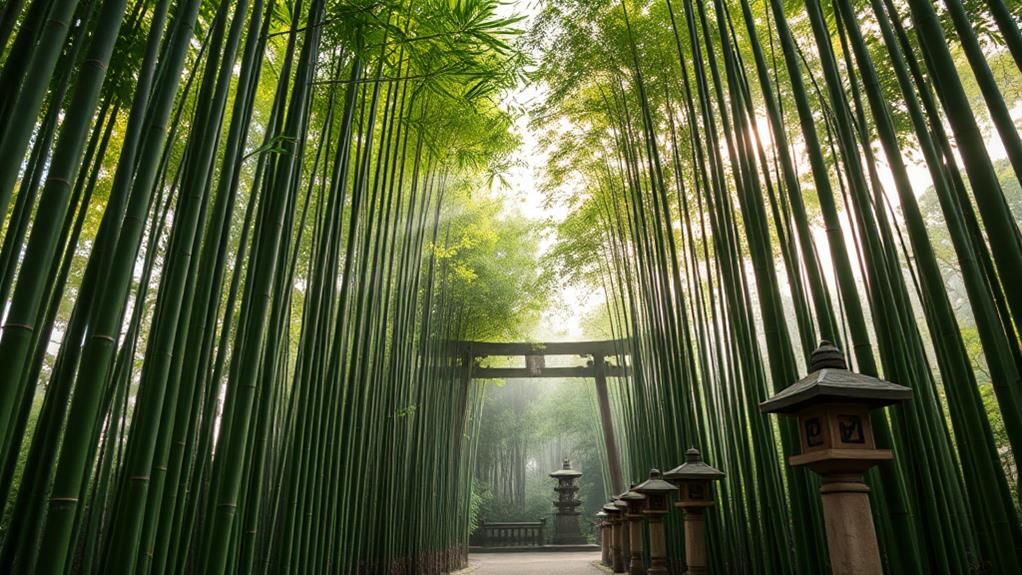
I walked through the grove at 7:00 AM on a weekday in early April. The path was empty for the first 20 minutes. The bamboo stalks creak in wind, and the light through the canopy turns pale green — a genuinely unusual visual that disappears the moment 60 people walk into frame.
This guide covers the specific train, the yen amounts, the named temples with their individual entry fees, and the optimal circuit so you get the bamboo grove experience rather than the bamboo grove queue.
How to Get to Arashiyama Bamboo Grove: Trains, Tram, and Bus Options
There are three practical routes to Arashiyama from central Kyoto. Each suits different itinerary styles:
| Route | Departure | Journey Time | Fare | JR Pass? |
|---|---|---|---|---|
| JR San-in Line (Sagano Line) | Kyoto Station (Platform 32–34) | 15 min to Saga-Arashiyama | ¥240 | Yes — all JR Pass types |
| Randen Arashiyama Line (Keifuku Electric Railroad) | Shijo-Omiya (near Gion) | 20 min to Arashiyama Terminal | ¥250 | No |
| Kyoto City Bus 72 | Kyoto Station (Bus Terminal) | 30–40 min (traffic-dependent) | ¥230 | No |
The JR San-in Line (also called the Sagano Line) is the fastest and most convenient option. From Kyoto Station, take trains departing from Platforms 32–34 toward Kameoka or Sonobe. Saga-Arashiyama Station is two stops after Nijo Station. From the station exit, the bamboo grove entrance is a 7-minute flat walk north.
Saga-Arashiyama Station has coin lockers on the concourse — ¥300–700 depending on size, coin or IC card payment. Useful if you’re doing Arashiyama as a stopover between Kyoto and Kansai Airport rather than from a Kyoto hotel: drop the suitcase, walk the grove, retrieve it before the next train.
The Randen tram is a slow, charming alternative. Keifuku Electric Railroad runs single-car trams from Shijo-Omiya through western Kyoto neighborhoods. The final stop, Arashiyama, deposits you directly near the Togetsukyo Bridge — a slightly different approach route that avoids Saga-Arashiyama Station’s crowds.
Is There an Entry Fee for the Arashiyama Bamboo Grove?
The main bamboo grove path — the iconic corridor — is completely free and open 24 hours a day. There are no gates, no tickets, and no reservation system required to walk through the bamboo.
The surrounding temples and gardens each charge separate admission:
- Tenryu-ji Temple garden: ¥500 adult / ¥300 elementary & middle school students / preschool free (garden only); ¥900 (garden + main buildings + hojo tatami rooms). Open 8:30 AM–5:00 PM daily, last admission 4:50 PM — the garden opens early at 7:30 AM from November 15–30 for autumn foliage viewing
- Okochi Sanso Villa: ¥1,000 per person, includes a bowl of matcha and a wagashi sweet at the teahouse inside
- Jojakko-ji Temple: ¥500; multi-level pagoda with the best elevated views over Arashiyama
- Nonomiya Shrine: Free — a small moss-garden Shinto shrine tucked inside the bamboo grove itself
- Tenryu-ji Sogenchi garden (UNESCO World Heritage Site pond garden): included in the ¥500 ticket above
The Bamboo Grove Path: What You’re Actually Walking Through
The main bamboo grove corridor is approximately 500 metres long (including the approach and exit paths), with the densest bamboo section spanning roughly 200 metres. The bamboo species here is primarily Mōsō bamboo (Phyllostachys edulis), which grows to 20 metres height with stalks up to 30cm in diameter.
The grove is part of the Sagano area, historically used as a retreat by Heian-period aristocracy. The famous bamboo canopy effect — where the tall stalks filter light into a diffuse green glow — is most pronounced in the morning when sunlight enters at a low angle from the east.
Nonomiya Shrine sits within the bamboo grove. It’s a small Shinto shrine associated with the Tale of Genji, where court ladies historically performed purification rituals before serving at the Ise Grand Shrine. The black torii gate — unusual in Japan, where most torii are red or orange — is the easiest photographic landmark inside the grove itself.
Best Times to Visit Arashiyama Bamboo Grove
Timing is the most consequential planning decision for Arashiyama. Here’s what each time window actually gives you:
Before 8:00 AM: The bamboo path is genuinely quiet. Food stalls are closed, rickshaw operators haven’t started, and tour groups haven’t arrived. This is the only window where solo or small-group photographs are consistently possible.
8:00–10:00 AM: Crowd numbers build gradually. Individual visitors from Kyoto hotels and guesthouses arrive. Still manageable for photography with patience.
10:00 AM–4:00 PM: Peak hours. Tour buses arrive from both Kyoto Station and Osaka. The grove path becomes a slow-moving single-file queue in the densest section. Photography of an empty grove corridor is essentially impossible.
After 5:30 PM: Tour groups depart. Evening light through the bamboo is excellent in spring and summer. In winter, the grove closes to dusk and the bamboo may be lit with lanterns during special events.
Seasonal highlights:
- March–April: Cherry blossom season. Trees along the Hozu River and Togetsukyo Bridge bloom late March to mid-April
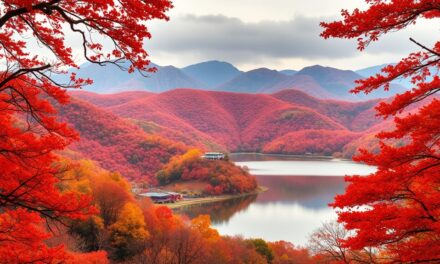
- November: Autumn foliage. Jojakko-ji Temple’s multi-level pagoda surrounded by red maple is one of Kyoto’s signature November scenes
- July–August: Arashiyama Hanatoro illumination event — lanterns light the bamboo grove and the Tenryu-ji gardens on select evenings
Named Attractions in the Arashiyama Area: A Practical Circuit
The bamboo grove is one component of a broader area. A natural half-day circuit covers five named sites, all within 15 minutes on foot of each other:
- Arashiyama Bamboo Grove (free, 24h) — Start here before 8:00 AM if possible
- Nonomiya Shrine (free) — Inside the grove; black torii gate, Tale of Genji history
- Okochi Sanso Villa (¥1,000, incl. matcha) — 10-minute uphill walk from grove exit; panoramic garden views
- Jojakko-ji Temple (¥500) — 5-minute walk from Okochi Sanso; pagoda and autumn foliage focal point
- Tenryu-ji Temple (¥500 garden / ¥900 garden+buildings) — 10-minute walk back toward Togetsukyo Bridge; UNESCO Sogenchi pond garden
A sixth stop worth the extra 20 minutes: Daikaku-ji Temple, about 1.5km north of the main grove. It’s skipped by most first-timers, which is exactly the appeal — Osawa Pond on its grounds is considered one of Japan’s oldest surviving garden ponds, built for Heian-era moon-viewing boat trips, and the temple halls have doubled as a filming location for period dramas for decades. Entry runs ¥500. Walk or take a rental bicycle from Saga-Arashiyama Station (see FAQ below); there’s no direct train.
According to the Japan National Tourism Organization (JNTO), Tenryu-ji’s Sogenchi garden — designed by Zen master Musō Soseki in the 14th century — is one of Japan’s finest surviving examples of Heian-period garden design, centered on a pond that frames Arashiyama’s forested hillside as a borrowed field.
“The Arashiyama district represents one of the most concentrated collections of traditional Japanese field architecture in Kyoto, combining Zen temple gardens, Heian-era shrine sites, and the natural field of Mount Arashiyama in a single walkable area.”
Photography at Arashiyama Bamboo Grove
The bamboo grove corridor’s visual signature is the overhead canopy — bamboo stalks at 20-metre height, meeting at the top to form a green tunnel. This shot requires:
- Wide-angle lens: 16–24mm equivalent captures the full overhead canopy. A standard 35mm shows only the mid-section
- Low position: Shooting from knee height with the lens angled upward emphasizes the corridor depth
- Soft light: Morning or overcast days. Harsh midday sun creates high-contrast shadows through the stalks
- Timing: Before 8:00 AM or after 5:30 PM for empty path shots
The Togetsukyo Bridge — “Moon Crossing Bridge” — spanning the Ōi River (a section of the Hozu River) is the area’s second major photographic landmark. The mountain and river framing is best in early morning when mist sits over the water, or in November when Arashiyama’s red foliage frames the bridge.
Where to Eat Near Arashiyama
Two spots cover most of a half-day visit without a sit-down reservation.
% Arabica Kyoto Arashiyama, right on the riverbank near Togetsukyo Bridge, is the specialty-coffee stop every guidebook photo of the bridge seems to include someone holding a cup from. A latte runs roughly ¥500–600. It’s a walk-up counter, not a café with seating — expect a short line even on weekday mornings.
Arashiyama Yoshimura, a soba restaurant a few steps from the bridge, has river-facing counter seats upstairs. A bowl of cold zaru soba is the standard order in warmer months; hot nishin soba (herring soba) is the cold-weather version. Budget ¥1,200–1,800 for a full meal.
Monkey Park and Kimono Forest: Two Named Stops Most Guides Skip
Across the Togetsukyo Bridge, a 20–30 minute uphill hike leads to Iwatayama Monkey Park, home to around 120 wild Japanese macaques roaming a hillside with a summit clearing that looks back down over Kyoto. Entry is ¥800 for adults (16+) and ¥400 for children 4–15; under-4s are free. The park is cash-only — no cards — and tickets are sold at the entrance on the day, not online. Inside the summit hut, staff sell food so visitors can hand-feed the macaques through wire mesh; outside the hut, feeding or approaching the monkeys isn’t allowed.
Near Saga-Arashiyama Station’s sister stop, the Kimono Forest at Randen Arashiyama Station is free and unticketed — about 600 acrylic-encased pillars wrapped in Kyo-yuzen dyed kimono fabric, lining the station forecourt. The pillars are backlit after dark, when the patterns glow through the acrylic; it’s a five-minute stop on the way to or from the Randen tram platform, not a destination that needs its own trip.
Can I Combine Arashiyama with Other Kyoto Areas in One Day?
Yes — Arashiyama works naturally with either central Kyoto or the southern Fushimi area in the same day.
Arashiyama + Central Kyoto: Finish the Arashiyama circuit by 11:00 AM. Take the JR San-in Line back to Kyoto Station (15 min, ¥240), then continue by bus or subway to Gion, Nishiki Market, or Kinkaku-ji. This is a practical full-day itinerary for first-time visitors.
Arashiyama + Fushimi Inari: Take the JR San-in Line from Saga-Arashiyama back to Kyoto Station (15 min), then switch to the JR Nara Line to Inari Station (5 min, ¥150). Total transfer time: 25–30 minutes. This requires starting Arashiyama before 8:00 AM to reach Fushimi Inari by 11:00 AM while both are still manageable.
Arashiyama + Kinkaku-ji (Golden Pavilion): From Saga-Arashiyama Station, take the JR San-in Line back to Kyoto Station and then bus 101 or 205 to Kinkakuji-michi stop (40 min total). Both sites together make a western Kyoto full-day circuit.
Arashiyama’s History: Why the Bamboo Grove Is Where It Is
Arashiyama was a Heian-period aristocratic retreat from the 9th century. The name combines “arashi” (storm) and “yama” (mountain), referring to the turbulent winds that seasonally sweep down from the hillsides.
The bamboo grove was deliberately planted and maintained as part of the estates and temple grounds of the Saga Imperial Villa and Tenryu-ji. The current Tenryu-ji was founded in 1339 by shogun Ashikaga Takauji to honor the memory of Emperor Go-Daigo — the temple’s Sogenchi garden was created by the garden designer and Zen monk Musō Soseki, one of Japan’s most influential field architects.
The Togetsukyo Bridge has existed in various forms since the Heian period. The current concrete structure dates from 1934, though it was designed to replicate the appearance of traditional wooden bridges that preceded it.
Arashiyama Bamboo Grove is free and open 24 hours. The best experience is before 8:00 AM. Take the JR San-in Line from Kyoto Station to Saga-Arashiyama (15 min, ¥240) — covered by JR Pass. Build the half-day circuit: bamboo grove → Nonomiya Shrine (free) → Okochi Sanso Villa (¥1,000, matcha included) → Jojakko-ji (¥500) → Tenryu-ji garden (¥500). Budget ¥2,000–2,500 for all paid sites plus lunch. If you arrive at 7:00 AM and leave by noon, you’ll have the afternoon free for central Kyoto or Fushimi Inari.
Frequently Asked Questions
Is the Arashiyama Bamboo Grove free to enter?
Yes. The bamboo grove path is completely free and open 24 hours. The surrounding temples and gardens — Tenryu-ji, Okochi Sanso Villa, Jojakko-ji — charge separate entry fees of ¥500–1,000 each. Nonomiya Shrine within the grove is also free.
Which train goes to Arashiyama from Kyoto Station?
Take the JR San-in Line (Sagano Line) from Kyoto Station to Saga-Arashiyama Station. Journey time is 15 minutes, fare is ¥240. The bamboo grove is a 7-minute walk north of the station exit. All JR Pass types cover this route at no additional cost.
What is the best time to visit to avoid crowds?
Arrive before 8:00 AM for the quietest experience. Tour buses from Kyoto Station and Osaka typically arrive between 9:30 AM and 10:30 AM. The peak crowd period is 10:00 AM–4:00 PM. After 5:30 PM, crowds thin again and evening light on the bamboo is excellent in summer.
How long should I spend in Arashiyama?
Allow 3–4 hours for the bamboo grove plus the key surrounding temples (Okochi Sanso Villa, Jojakko-ji, Tenryu-ji). If you add the Sagano Scenic Railway along the Hozu River gorge (round trip ¥880), budget 5–6 hours total.
Is the Randen tram worth taking?
If you’re staying near Gion or Shijo-Omiya, the Randen Arashiyama Line tram is a scenic alternative (¥250, 20 min). It drops you near Togetsukyo Bridge rather than Saga-Arashiyama Station — a different approach route with less initial crowd pressure. Not covered by JR Pass.
What is Tenryu-ji and is it worth visiting?
Tenryu-ji is one of Kyoto’s most important Zen temples and a UNESCO World Heritage Site. Its Sogenchi garden — a 14th-century pond garden designed by Musō Soseki — uses Arashiyama’s mountain as a borrowed field backdrop. Entry is ¥500 for garden only or ¥900 for garden plus interior rooms. Worth visiting if you have 45 minutes to spare.
Are there restrooms at Arashiyama Bamboo Grove?
Yes. Public restrooms are available at Saga-Arashiyama Station, near the Tenryu-ji entrance, and at the Togetsukyo Bridge tourist area. There are no restrooms inside the bamboo grove corridor itself.
Can I rent a bicycle in Arashiyama?
Yes. Multiple rental shops operate near Saga-Arashiyama Station and the Togetsukyo Bridge, typically charging ¥1,000–1,500 for a full day. Bicycles are useful for reaching sites beyond the main grove area, such as Daikaku-ji Temple (1.5km north) and the quieter Sagano neighbourhood streets. Note: bicycles cannot be ridden on the bamboo grove path itself.
More on Hiking & Nature:
Planning a trip to Japan?
Check out our Japan Travel Hub for more guides, including JR Pass Guide 2026.

Written by East Asia Explorer Editorial Team
Sam Konneh is an AI strategist and digital marketer based in Seoul, South Korea. With years spent living, working, and exploring across Korea, Japan, and China, he shares firsthand insights into East Asia's cultures, hidden gems, and everyday life. A graduate of Inha University and KDI Graduate School, Sam combines data-driven expertise with on-the-ground experience. His journey also includes studying in Malaysia and traveling through Southeast Asia. Through practical tips, local stories, and travel guides, he helps fellow explorers discover both the celebrated highlights and the lesser-known corners of East Asia.