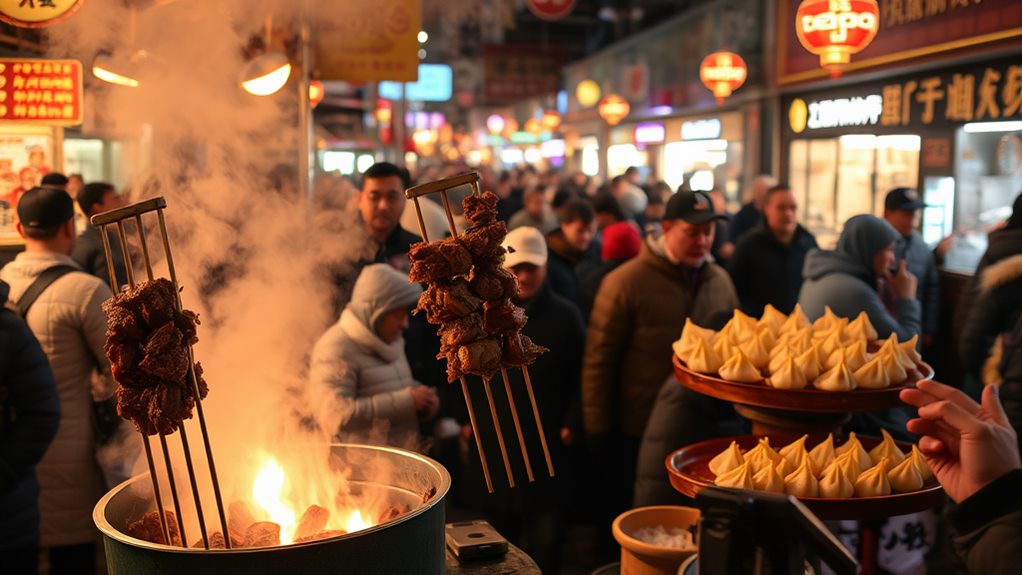
Last Updated: September 8, 2026 | Originally Published: November 22, 2024
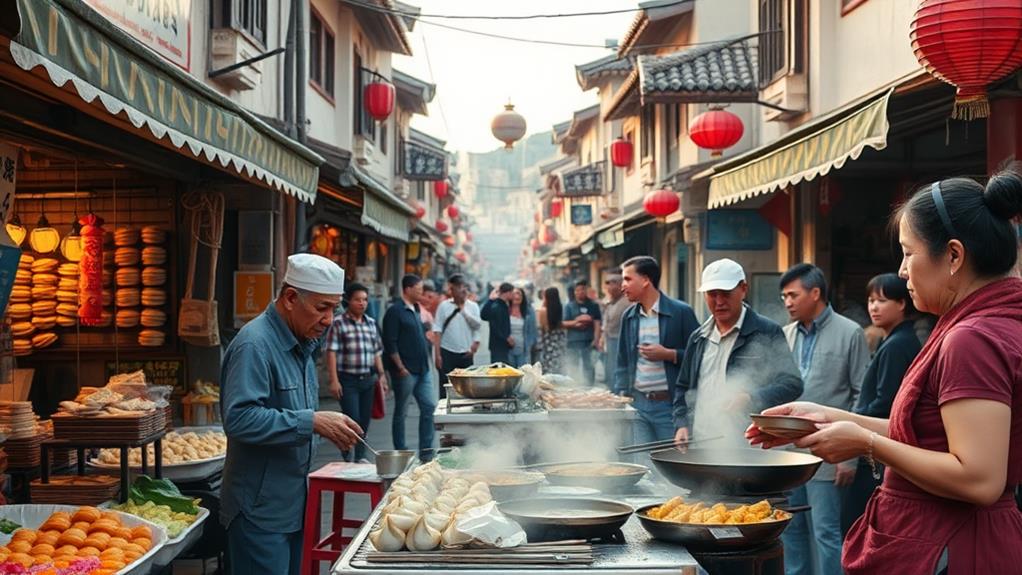
- Where to go: Zhongyang Dajie (Central Street) — a cobblestone pedestrian strip lined with vendors, best walked slowly
- Don’t skip: Madie’er ice cream, eaten frozen-solid outdoors even at -20°C, and fresh tanghulu — candied hawthorn skewers
- Signature dish: Guobaorou, a sweet-and-sour crispy pork dish invented in Harbin in the early 1900s
- Best months: December through February, when the Harbin Ice and Snow World festival is running
Last updated: September 8, 2026
Harbin sells ice cream outdoors in weather cold enough to freeze exposed skin in minutes. That’s not a novelty stunt — at -20°C, ice cream doesn’t melt, so there’s no reason to eat it indoors.
That detail separates Harbin’s street food scene from generic “try the local snacks” advice. This guide covers the specific dishes worth seeking out and where the historic Russian-railway influence shows up on the menu.
Table of Contents
Where Does Harbin’s Street Food Actually Happen?
Zhongyang Dajie (Central Street) is the roughly 1.4km cobblestone pedestrian street through Harbin’s Daoli District. It’s lined with early-20th-century buildings in Baroque, Byzantine, and Renaissance Revival styles — a legacy of the Russian engineers who built the Chinese Eastern Railway.
Walking the full street takes about 30 minutes without stopping. Budget closer to two hours if you’re actually eating your way down it: small portions from several vendors beats one large meal from one stall.
| Snack | What it is | Best eaten |
|---|---|---|
| Madie’er ice cream | Century-old brand, plain milk-flavored bar, eaten frozen solid | Walking, outdoors, any time of day |
| Tanghulu | Skewered hawthorn fruit dipped in hardened sugar syrup | Fresh — the shell cracks best within minutes of dipping |
| Hongchang (red sausage) | Russian-style smoked sausage, adapted with local spicing | Sliced on its own, or with black bread |
| Guobaorou | Sweet-and-sour battered pork, Harbin-invented dish | Sit-down restaurant, not a walking snack |
What Are Harbin’s Signature Street Food Dishes?
Harbin sits in China’s Dongbei (Northeast) region, and its food overlaps with broader Northeastern cuisine. A few dishes, though, are tied specifically to the city’s own history.
Guobaorou is the dish most associated with Harbin. It’s commonly credited to Zheng Xingwen, a chef at the Daotai Mansion (the former regional governor’s office), in the early 1900s. He reportedly adapted a savory pork dish into a sweet-and-sour version for visiting Russian officials.
The result: thin-sliced pork, battered and fried crisp, tossed in a tangy glaze closer to sweet-and-sour than a typical Chinese braise.
Suan cai (pickled napa cabbage) stewed with pork and vermicelli noodles is Dongbei comfort food broadly. Harbin’s winter version leans hard on the fermented, sour cabbage flavor against fatty pork — built for cold weather, not a light lunch.
Dabing (large flatbread) and red-bean-stuffed buns show up hot from steam trays at bakery stalls along Central Street — useful as a handwarmer before it’s a snack.
Why Does Harbin’s Food Taste Different?
Harbin grew rapidly after 1898 as a hub for the Chinese Eastern Railway, built by the Russian Empire to link the Trans-Siberian Railway to Vladivostok through Chinese territory. Russian engineers and administrators settled in large numbers, and the culinary fingerprint is still visible today.
Hongchang (red sausage) is the clearest example — descended from Russian-style smoked sausage, adapted over a century into a distinctly Harbin product. Dense, slightly sour “lieba” bread loaves, sold in bakeries on the same street, follow the same pattern.
Harbin’s Central Street architectural ensemble reflects a rare concentration of European architectural styles — Baroque, Byzantine, and Art Nouveau among them — built during the city’s development as a railway hub in the early twentieth century.
What Actually Works When Eating Outdoors at -20°C?
Harbin’s January temperatures regularly sit between -25°C and -15°C (-13°F to 5°F), during the Harbin Ice and Snow World festival season that runs roughly early January through February.
Ice cream works because it’s already frozen — no temperature differential to manage. Hot foods like dumplings, sausage, and flatbread work because they’re eaten fast, in a few bites, before they cool.
What doesn’t work is anything meant to be savored slowly at room temperature; it’s either too cold to enjoy, or if hot, cools faster than it would anywhere warmer.
Walk Zhongyang Dajie slowly and eat from multiple vendors rather than one restaurant. Prioritize Madie’er ice cream and fresh tanghulu as street snacks, and save guobaorou for a sit-down meal. Layer up for -25°C to -15°C daytime temperatures, and confirm prices before ordering anything sold by weight.
Frequently Asked Questions
What is the most famous street food in Harbin?
Madie’er ice cream and tanghulu are the two most iconic walking snacks. Guobaorou is the most famous single dish overall, though it’s typically eaten at a restaurant rather than as a street snack.
When is the best time to visit Harbin for street food?
December through February, overlapping the Harbin Ice and Snow World festival season and the city’s peak winter tourism period. Vendor density on Zhongyang Dajie is highest during these months.
Is Harbin street food safe to eat?
Favor stalls with visible turnover and locals in line — standard advice at any Chinese street food market. Confirm prices before ordering, particularly for items sold by weight.
What is guobaorou and where did it come from?
A sweet-and-sour crispy pork dish credited to a chef at Harbin’s Daotai Mansion in the early 1900s, reportedly created to suit visiting Russian officials’ taste for less strongly savory flavors. It remains the dish most closely identified with the city.
Are there vegetarian options among Harbin’s street food?
Vegetable-filled buns and dumplings are available at most bakery and dumpling stalls. Harbin’s signature dishes — guobaorou, hongchang — are meat-based, so vegetarians will have more luck at sit-down restaurants than at the meat-heavy street stalls.
More on Food & Dining:

Written by East Asia Explorer Editorial Team
Sam Konneh is an AI strategist and digital marketer based in Seoul, South Korea. With years spent living, working, and exploring across Korea, Japan, and China, he shares firsthand insights into East Asia's cultures, hidden gems, and everyday life. A graduate of Inha University and KDI Graduate School, Sam combines data-driven expertise with on-the-ground experience. His journey also includes studying in Malaysia and traveling through Southeast Asia. Through practical tips, local stories, and travel guides, he helps fellow explorers discover both the celebrated highlights and the lesser-known corners of East Asia.