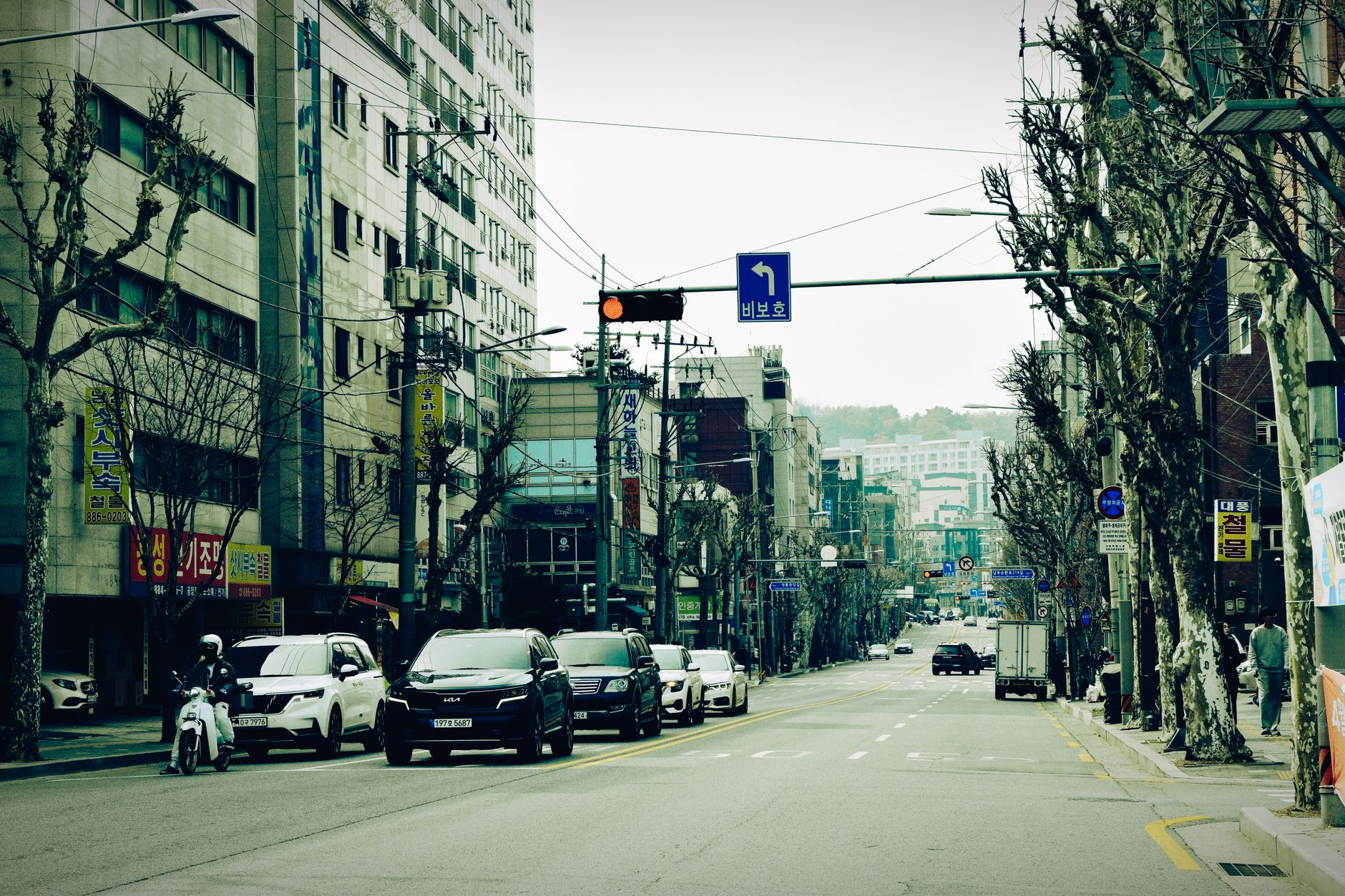
Last Updated: July 4, 2026 | Originally Published: July 5, 2026
- Insadong is Seoul’s traditional culture street—a pedestrian-friendly alley of antique shops, tea houses, art galleries and craft stores. It is free to walk and open daily, though individual shops set their own hours (most 10:00–20:00).
- Get there on Line 3, Anguk Station, Exit 6 (steps from the north end) or Line 1, Jonggak Station, Exit 3 (a 5-minute walk to the south entrance).
- Key stops: Ssamziegil (spiral artisan mall), traditional tea houses, the Hangul-lettered Starbucks, and the gilt-string candy (kkul-tarae) stalls mid-street.
- Walk 5 minutes west to Jogyesa Temple, the headquarters of Korean Buddhism, with its 500-year-old white pine tree and free entry courtyard.
Insadong packs more hanbok fabric, calligraphy brushes and tea-sipping expats into one street than anywhere else in Seoul. It is part souvenir strip, part serious antiques quarter, and entirely walkable in an afternoon.
My first visit I spent 45 minutes watching a street vendor pull sixteen thousand strands of honey into edible thread. I bought the candy. I regretted nothing.
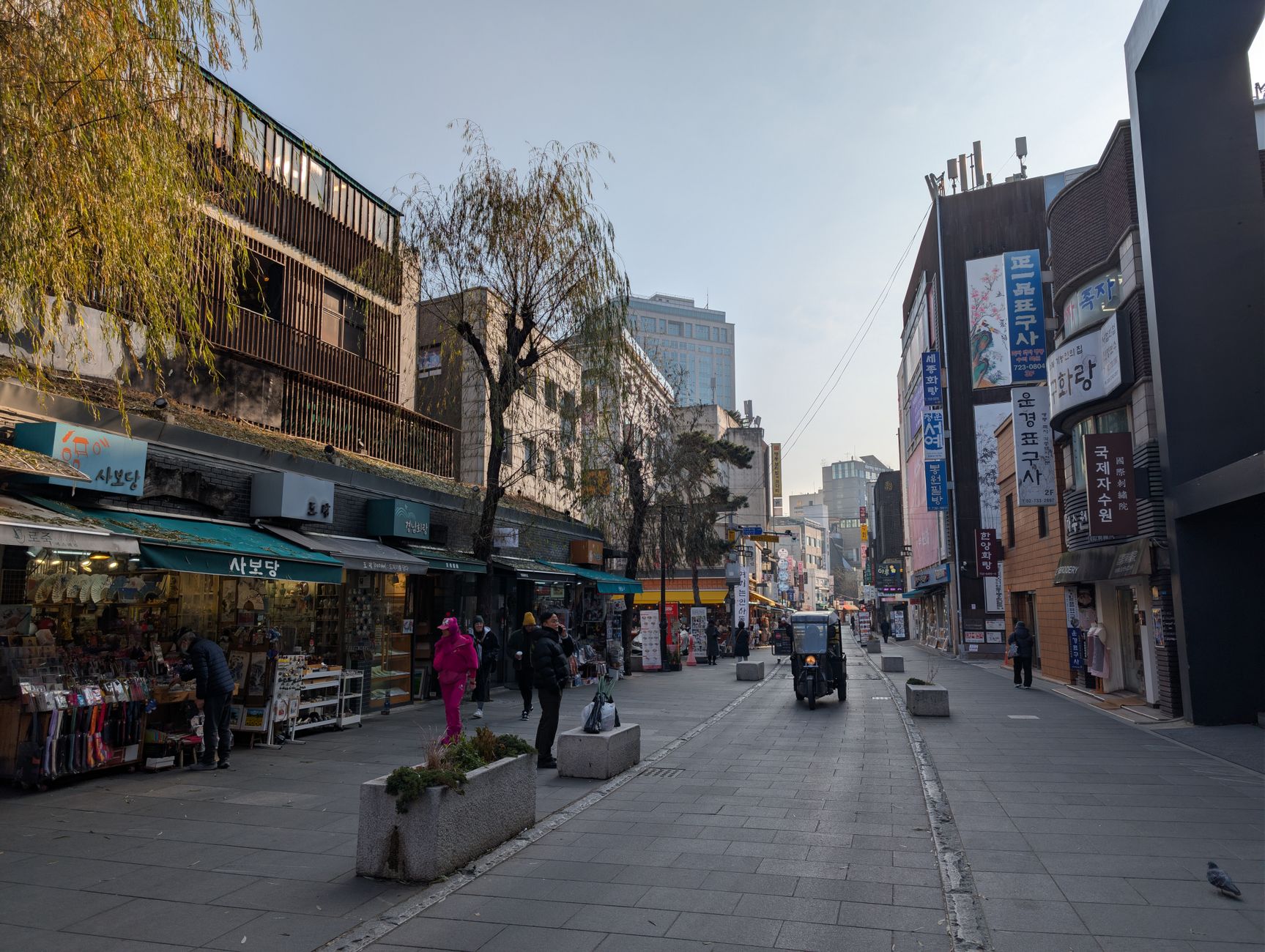
A short history of Insadong
Insadong’s story starts in the Joseon era, when the area housed government officials and scholars near the royal palaces. The name comes from the Insa-dong administrative district, though locals just call it “Insa.”
After the Korean War, the neighbourhood became Seoul’s centre for antiques, art and traditional crafts. By the 1980s it was the de facto gallery district, and today it contains roughly 40 percent of the nation’s antique shops and art galleries.
The street went car-free on weekends in the early 2000s, and a pedestrian-first redesign has made it one of Seoul’s most relaxed stretches. Queen Elizabeth II walked it in 1999—the plaque marking the visit is still there.
What to see and do in Insadong
Ssamziegil is the star of the modern Insadong—a four-storey shopping mall built around an open courtyard with a spiral walkway. No stairs between floors; the ramp wraps upward past some 70 artisan shops selling ceramics, jewellery, calligraphy supplies and handmade paper.
Opened in 2004, it was designed as a modern hanok, with the courtyard hosting craft workshops at weekends. The rooftop has a small garden and a decent budget cafe with views over the alley rooftops.
The street itself is lined with antique shops and art galleries. Tongmungwan is Seoul’s oldest bookstore, still operating. Kyung-in Art Gallery doubles as a traditional tea house set around a small courtyard—worth stepping into even if you skip the tea.
Mid-street, vendors perform kkul-tarae (gilt-string candy)—a show as much as a snack. They stretch honey-and-malt mixture into 16,000 hair-thin strands, wrap it around crushed nuts, and hand you a sample with theatrical flair. It costs about 5,000 KRW per box.
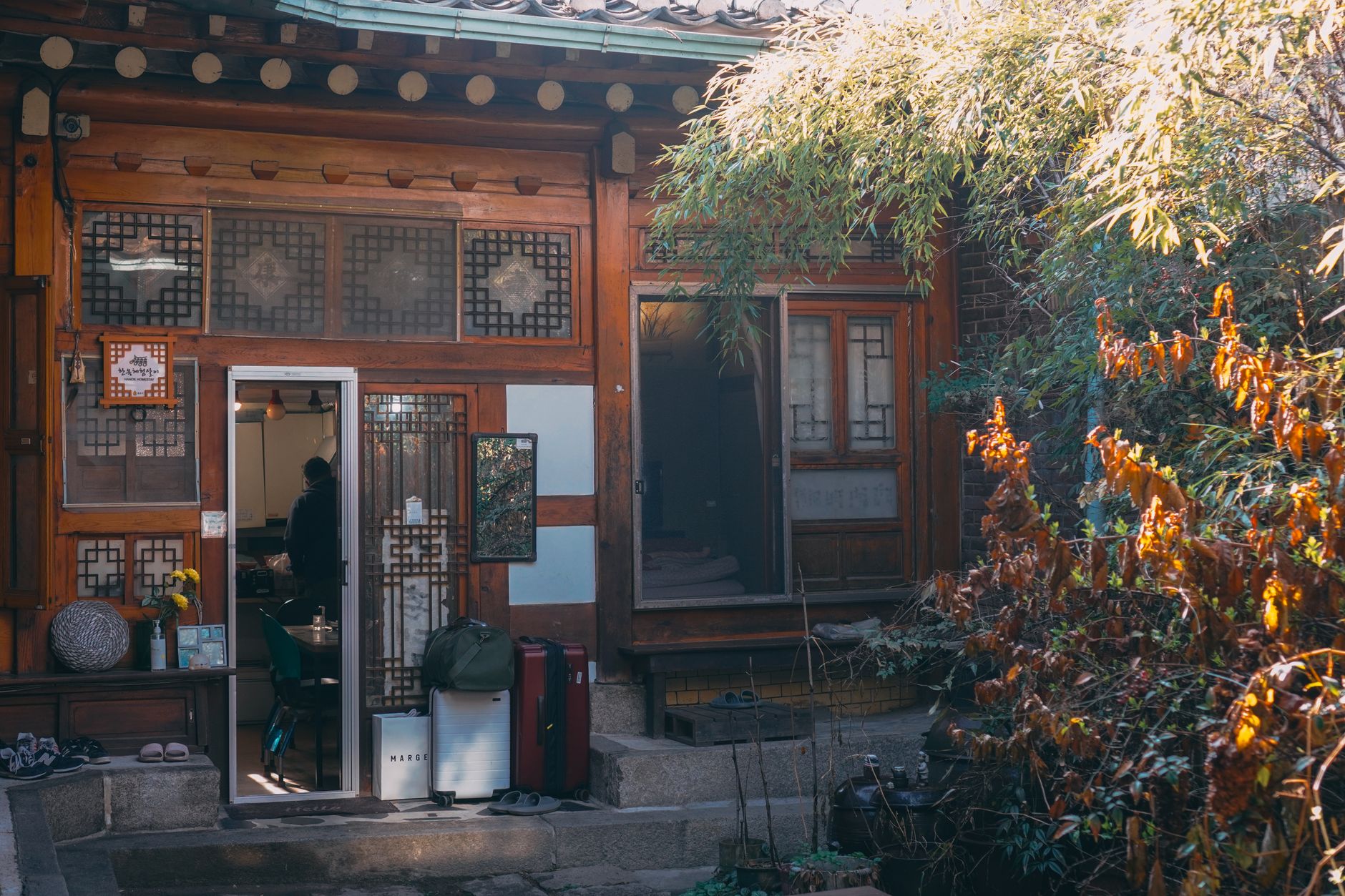
Duck down any side alley and you will find traditional tea houses serving omija (five-flavour berry), yuja (citron), and ssanghwacha (medicinal herb tea) in stoneware cups. Most have floor seating and bamboo matting—shoes off at the door.
On weekends the main street hosts calligraphy demonstrations, traditional music performances, and sometimes pansori (Korean folk opera) near the south entrance.
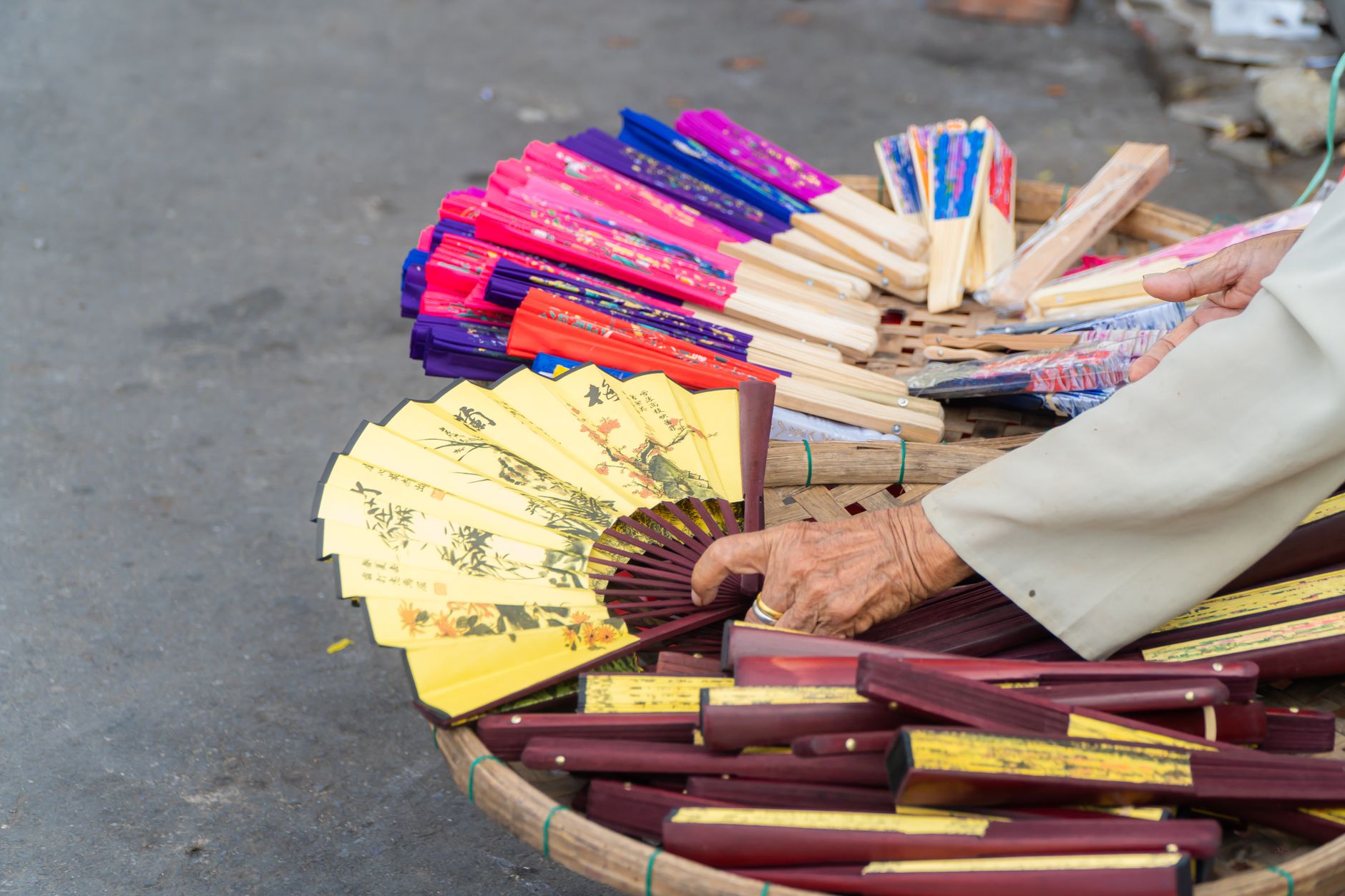
Insadong at a glance
| Detail | Info |
|---|---|
| Cost | Free to walk; shops and tea houses priced individually |
| Typical shop hours | ~10:00–20:00 (some close earlier on Sundays) |
| Best days | Weekend afternoons for performances and craft workshops |
| Quietest time | Weekday mornings before 11:00 |
| Length | ~500m main stretch; allow 1.5–3 hours to browse |
“Insadong contains 40 percent of the nation’s antique shops and art galleries as well as 90 percent of the traditional stationery shops.”
How to get there
| Subway line | Station & exit | Walk to Insadong |
|---|---|---|
| Line 3 (orange) | Anguk, Exit 6 | ~1 min (north entrance) |
| Line 1 (dark blue) | Jonggak, Exit 3 | ~5 min (south entrance) |
| Lines 1, 3, 5 | Jongno 3-ga, Exit 4/5 | ~7 min (mid-street via alley) |
Anguk Exit 6 is the easiest drop—you surface almost at the north mouth of the street. Jonggak Exit 3 puts you a block from the south end, past Bosingak Pavilion. Both are flat walks.
Best time to visit
Weekend afternoons (13:00–17:00) bring the best energy—the street performers, temporary craft stalls and calligraphy demos appear, and the kkul-tarae vendors put on their full show.
Weekday mornings give you near-empty alleys and tea houses to yourself. Spring and autumn offer comfortable walking temperatures and pretty light for photos through the hanok rooftops.
Avoid national holidays (especially Seollal and Chuseok) when many independent shops close for family gatherings. Rain tends to thin the crowds but doesn’t shut the street—bring an umbrella.
Where to eat nearby
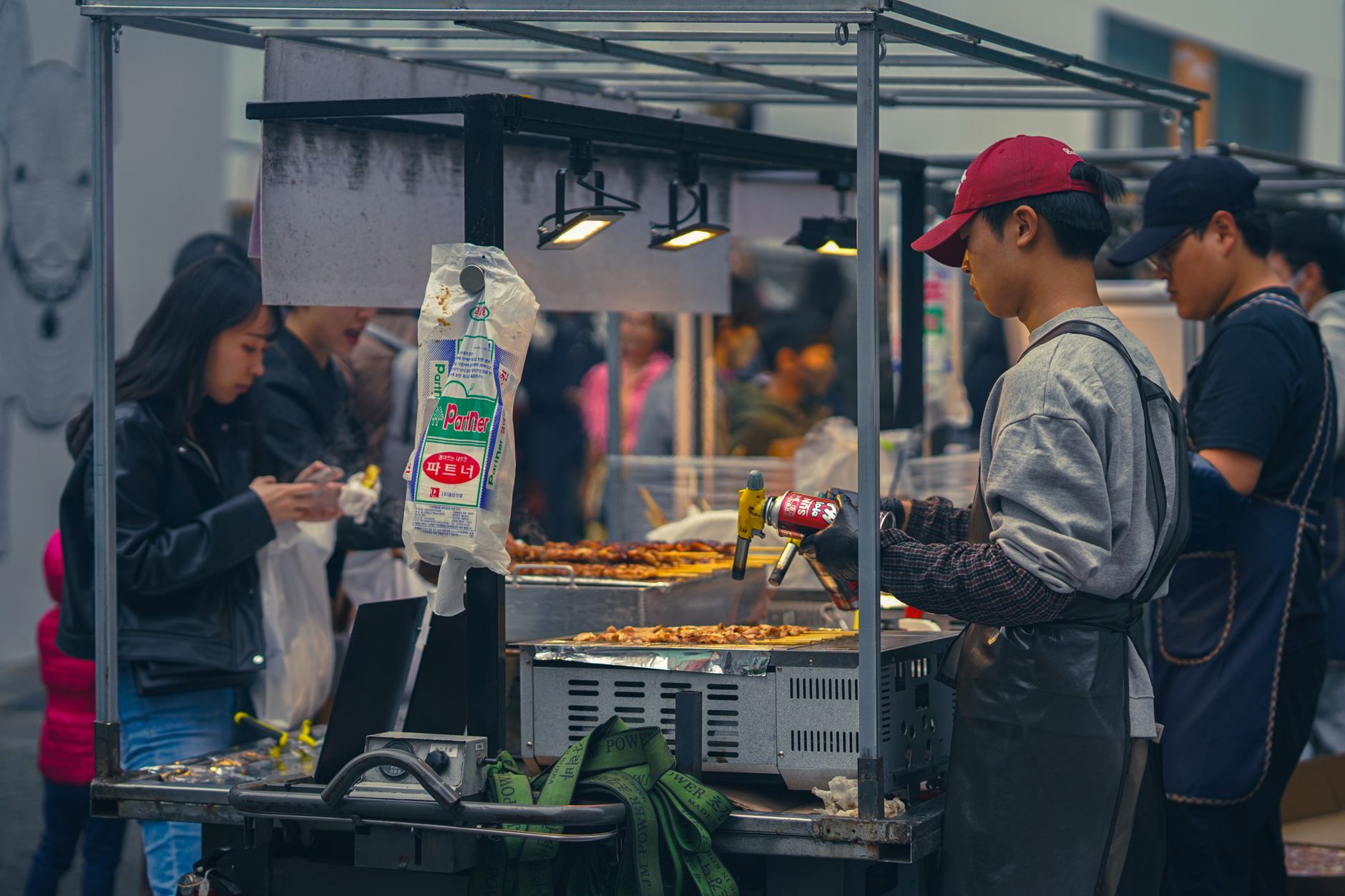
Insadong’s main street has quick bites: tteokbokki (spicy rice cakes), hotteok (stuffed pancakes), and bungeoppang (fish-shaped pastry with red bean). The area was named to a list of Asia’s top street food cities for exactly this stretch.
For a sit-down meal, Insadong Geujip serves hanjeongsik (Korean set meal) in a hanok setting, while the alleys around Jongno 3-ga hide excellent sujebi (hand-torn noodle soup) and bossam (boiled pork wraps) spots popular with local office workers.
The tea houses themselves serve light food—rice cakes and seasonal fruit—though you are really there for the atmosphere and a two-hour pot of jujube tea.
Combine Insadong into a Seoul day
09:00 – Start at Jogyesa Temple (free, quiet morning light, 500-year-old pine tree). It is a 5-minute walk west of Insadong.
10:00 – Enter Insadong from the north (Anguk). Browse Ssamziegil before the crowds arrive. The rooftop cafe opens at 10:00.
11:30 – Walk the main street south, stopping for kkul-tarae and a tea house. Pick one of the old tea houses with a courtyard—Kyung-in is the classic.
13:00 – Lunch at a hanjeongsik spot nearby or grab street food. Try hotteok with seeds and brown sugar filling.
14:30 – Walk to Cheonggyecheon Stream (10 minutes south). Sit by the water. Feet cooling: optional but recommended.
15:30 – Cross to Gwanghwamun Square, a 15-minute walk west, for the King Sejong statue and free museum below it.
17:00 – If you still have energy, Bukhansan is not the right next stop after this much eating. Call it a day.
Is Insadong worth visiting?
Yes, and it earns its place on almost every Seoul itinerary. It manages to be both touristy and genuinely good—the antiques are real, the tea is excellent, and the craft shops stock things you will not find at a department store.
The one caution: if you hate souvenir shopping and have no interest in tea or calligraphy, you will be done in 30 minutes. For everyone else, budget a lazy two hours and expect to wander longer.
What’s nearby
- Korea travel hub — every Korea guide on the site
- Gwanghwamun Square — Seoul’s civic plaza, a 15-minute walk west
- 7-day Seoul itinerary for culture lovers — a full week built around neighbourhoods like this
- Ikseondong Hanok Village — restored hanok café alleys, 10 minutes east of Insadong on foot
Frequently Asked Questions
How do I get to Insadong by subway?
Take Line 3 to Anguk Station, Exit 6, for the north end (1-minute walk). Line 1 to Jonggak Station, Exit 3, puts you a 5-minute walk from the south entrance. Both are flat, easy walks.
Is Insadong free?
Yes. Walking the street, browsing shops, and watching street performances cost nothing. Tea houses, food, and purchases are what you spend.
What is Insadong famous for?
Traditional Korean crafts, antique shops, art galleries, tea houses, calligraphy supplies, and the Korean-lettered Starbucks. It is Seoul’s concentration point for pre-modern and handmade Korean culture.
What is Ssamziegil?
A four-storey spiral artisan mall opened in 2004, with about 70 independent craft shops, a rooftop garden, and weekend craft workshops. The design is a modern take on a traditional hanok courtyard.
What is kkul-tarae (gilt-string candy)?
A traditional honey-and-malt candy pulled into 16,000 hair-fine strands and wrapped around crushed nuts. Vendors perform the pulling as street theatre before selling boxes for about 5,000 KRW.
What is the nearest temple to Insadong?
Jogyesa Temple is a 5-minute walk west. It is the headquarters of Korean Buddhism’s Jogye Order, with a 500-year-old white pine tree and a free-entry courtyard. The main hall (Daeungjeon) dates to 1938.
How long should I spend in Insadong?
Budget 1.5 to 3 hours. A quick walk takes 30 minutes, but browsing Ssamziegil, sitting in a tea house, and exploring the side alleys easily fills an afternoon.
When do shops in Insadong close?
Most open around 10:00 and close between 19:00 and 20:00. Some independent shops close earlier on Sundays. Antique galleries tend to keep shorter hours than the craft and food stalls.
More on Seoul:

Written by East Asia Explorer Editorial Team
Sam Konneh is an AI strategist and digital marketer based in Seoul, South Korea. With years spent living, working, and exploring across Korea, Japan, and China, he shares firsthand insights into East Asia's cultures, hidden gems, and everyday life. A graduate of Inha University and KDI Graduate School, Sam combines data-driven expertise with on-the-ground experience. His journey also includes studying in Malaysia and traveling through Southeast Asia. Through practical tips, local stories, and travel guides, he helps fellow explorers discover both the celebrated highlights and the lesser-known corners of East Asia.